STENDHALBiblio.com
64 résultats
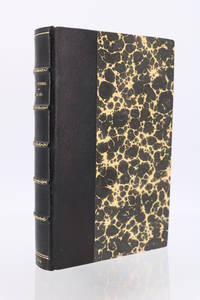
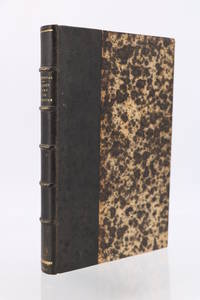
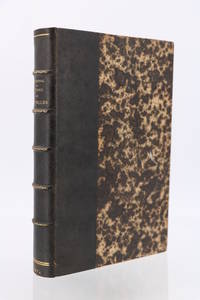
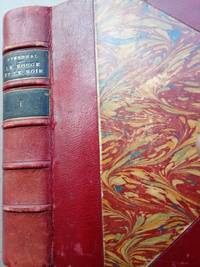
188889597Paris 1888. Fine. Paris 1888 11.8 x 18.8 cm Relié First edition on ordinary paper.Half black shagreen binding spine with five raised bands decorated with gilt garlands gilt date at foot a small tear at the foot of the spine marbled paper boards comb-marbled endpapers and pastedowns gilt top edge.Scattered foxing. hardcover
186892881Paris - Londres - New-York : Germer BailliÂre 1868. 215x140mm. planches en n/b reliure pleine toile avec piÂce de titre dÕauteur dorÂŽs au dos. Couvertures conservÂŽes. Bel exemplaire. 882 Germer BailliÂre unknown
183989931Paris: Ambroise Dupont 1839. Fine. Ambroise Dupont Paris 1839 13 x 21.7 cm 2 volumes reliés sous étui First edition printed on thick wove paper. Bound in contemporary half brown shagreen smooth spines decorated with black typographic motifs marbled paper boards hand-marbled endpapers and pastedowns modern slipcase edged in brown morocco with matching marbled paper sides and olive-green felt lining. Some occasional foxing the note ""Henri Beyle"" in black ink at the upper corner of the title page of the first volume without the final catalogue leaf at the end of the second volume small corner restorations to four leaves of the first volume. ""Very rare and extremely sought after. Usually quite simply bound at the time. Often foxed"" Clouzot. ""This work is of great rarity in fine condition"" Carteret. A handsome and very rare copy large-margined and attractively bound at the time of this masterpiece by Stendhalrarer still than Le Rouge et le Noir. Ambroise Dupont hardcover
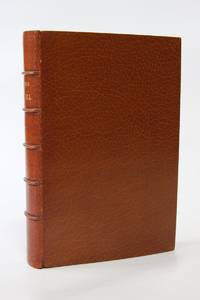
188971152Paris: Librairie moderneMaison Quantin 1889. Fine. Librairie moderne Maison Quantin Paris 1889 13 x 19 cm relié First edition one of 12 numbered copies on Hollande the only deluxe issue. Complete with the folding map at the end. Full fawn morocco binding five raised band spine date at foot comb-marbled paper pastedowns framed with a rich gilt roll comb-marbled endpapers gilt fillet to headcap gilt fillet to leading edges gilt roll to headcaps original wrappers and spine preserved all gilt deckled edges housed in a fawn morocco-edged slipcase. Binding signed by Semet & Plumelle.  Provenance: From the libraries of Dr André Chauveau Lucius Wilmerding and RBL with their bookplates affixed.  A splendid deluxe copy of exceptional rarity. Librairie moderneMaison Quantin unknown
1889255662Librairie moderne 1889. Etat Correct couverture abîmée déchirure superficielle sur le premier plat bords frottés intérieur propre jauni bonne tenue de la reliure. in12. 1889. Relié. 342 pages. plan de Carville dépliant in fine Librairie moderne unknown
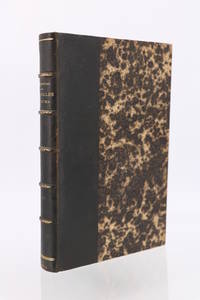
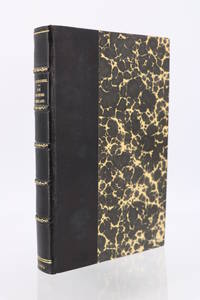
188989585Paris 1889. Fine. Paris 1889 11.8 x 18.9 cm Relié First edition on ordinary paper.Half black shagreen binding spine with five raised bands framed by gilt garlands gilt date at foot marbled paper boards comb-marbled endpapers and pastedowns gilt top edge.Scattered foxing a few reading marks in red and blue pencil in the margins of certain paragraphs printed stamp of the Armand Colin bookshop on the title page. hardcover
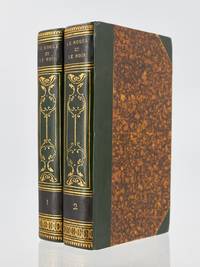
183187102Paris: A. Levavasseur 1831. Fine. A rare copy with no foxing A. Levavasseur Paris 1831 13.10 x 20.80 cm 2 volumes reliés First edition ""very rare and extremely sought-after"" Clouzot one of 750 copies on laid paper with title vignettes engraved by Henri Porret after Henry Monnier. Skilful restoration of a tear at the foot of a page with slight damage to a letter. A rare copy with no foxing. Green half calf binding smooth spines with arabesques stamped in gilt black title labels and volume labels; marbled paper boards spine boards and endpapers speckled edges later bindings in the Romantic style. Stendhal began writing 'Le Rouge et le Noir' under the Restoration and completed it just four months after the July Revolution of 1830. The seminal novel was published in the last weeks of 1830. All critics immediately praised the novel's exceptional qualities although even its most enthusiastic supporters were shocked by the hero's harsh judgment of society and Jacobinism. A handsome first-edition copy of this great classic of French literature. A. Levavasseur hardcover
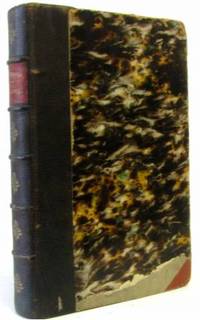
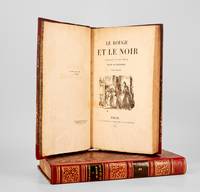
183188395Paris Paris: A. Levavasseur 1831. Fine. First edition in contemporary binding of one of the rarest and most sought-after Romantic novels A. Levavasseur Paris Paris 1831 14 x 22 cm 2 volumes reliés First edition untrimmed with wide margins very rare and highly sought-after see Clouzot. Some occasional foxing. Illustrated on the title pages of both volumes with two engraved vignettes by Porrêt. This copy contains the publishers notice leaf in the first volume and the authors note leaf in the second volume. Contemporary red half calf over marbled boards calf corners spines ruled in gilt with double gilt panels decorated with typographic gilt tooling black calf title and volume labels some minor rubbing to joints marbled endpapers and pastedowns lower corners a bit worn bookplate pasted on the front pastedown of volume one contemporary bindings. A very rare and desirable copy entirely untrimmed and preserved in a handsome contemporary binding an even rarer feature. As noted by Clouzot: Contemporary bindings are most often rather plain; one should not be overly particular regarding their quality. A. Levavasseur hardcover
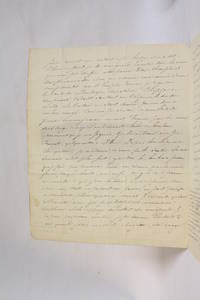
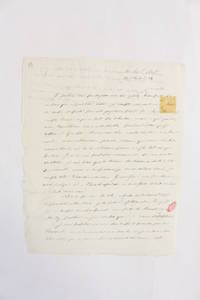
1808689671808. Fine. 26 mars 1808 20 x 24.80 cm 3 pages 1/2 sur un double feuillet Long autograph letter by Stendhal addressed to his sister Pauline written in fine handwriting with black ink. Address of Stendhal's father where his sister resides in Grenoble with the stamp ""n°51 Grande Armée."" Red wax seal bearing Stendhal's coat of arms. Several original folds inherent to postal delivery. A paper loss due to the unsealing of the letter has been skillfully restored. Published in his Correspondance ed. Henri Martineau Paris Le Divan 1933 vol. 3 no. 262 A pp. 26-29. A very beautiful letter filled with romantic passion blending childhood nostalgia with sentimental tales and foreshadowing The Red and the Black. This letter is part of the correspondence between twenty-five years old Henri Beyle and his sister Pauline three years his junior. This epistolary relationship which quickly took the form of a ""journal"" as Pauline's responses were rare. It is deemed a crucial milestone in the intellectual development of the future Stendhal: ""Here are my dreams my dear friend; I am almost ashamed of them; but after all you are the only person in the world to whom I dare confess them."" In this letter which attests to the strong bond between brother and sister Stendhal then in Germany expresses his deep nostalgia: ""I revisited in my memory all the time we spent together: how I did not love you in our childhood; how I once hit you at Claix in the kitchen. I hid in the little book cabinet; my father came back a moment later furious and said to me: 'Wicked child! I would eat you!' Then all the woes inflicted upon us by poor Aunt Séraphie; our walks along those paths surrounded by stagnant water towards Saint-Joseph."" These regrets about the past are accompanied by a typically Stendhalian melancholy: ""Alas! That delightful happiness I once imagined I glimpsed it once at Frascati and a few other times in Milan. Since then it has not returned; I marvel at my inability to feel it. The mere memory of it is more powerful than all the present joys I can procure."" This evocation of the Italy he longs for is intertwined with memories of the women he loved: ""I told you that while in Frascati at a charming fireworks display at the moment of the explosion Adèle leaned on my shoulder for an instant; I cannot express how happy I was. For two years whenever I was overwhelmed with sorrow this image gave me courage and made me forget all my troubles. I had long forgotten it; I tried to recall it today. Against my will I see Adèle as she is; but as I am now there is no longer the slightest joy in this memory."" This lengthy account of Adèle Rebuffet his cousin with whom he had a profound romantic relationship before forming a closer bond with her mother reflects Stendhal's sentimentality. He also mentions another of his great passions Angelina Pietragrua the ideal Italian woman and embodiment of his Milanese memories: ""Madame Pietragrua is different: her memory is linked to that of the Italian language; whenever something pleases me in a role for a woman in a work I involuntarily put it into her mouth."" This ""role for a woman"" that Stendhal refers to echoes the central theme of this letter the work Il Matrimonio segreto by composer Cimarosa: ""Do you sometimes play the Matrimonio Its the passage Cara sposa at the beginning between Carolina and Paolino. . But play the Matrimonio for my sake especially Signor deh permettette and the finale Io rival de mia sorella."" This opera by Cimarosa remained a constant throughout the writer's life and work. In his Memoirs of an Egotist 1832 he explains: ""In Milan in 1820 I wanted to have this written on my tomb . I wanted a marble tablet in the shape of a playing card: ""Errico Beyle - Milanese - Visse scrisse amò - Quest'anima adorava Cimarosa Mozart e Shakspeare - Morì di anni. il . 18."" ""Henri Beyle - Milanese - He lived wrote loved - This soul adored Cimarosa Mozar unknown
186789582Paris: Michel Lévy frères 1867. Fine. Michel Lévy frères Paris 1867 12 x 18.7 cm Relié  Partly original edition with no mention of a deluxe paper issue. Half black shagreen binding spine with five raised bands tooled with gilt garlands gilt date at foot marbled paper boards comb-marbled endpapers and pastedowns gilt edges contemporary binding. Pleasant copy.   Michel Lévy frères hardcover
185589587Paris: Michel Lévy frères 1855. Fine. Michel Lévy frères Paris 1855 11.8 x 18.8 cm Relié Partly first edition.Half black shagreen binding spine with five raised bands decorated with gilt garlands date gilt at foot marbled paper boards combed paper endpapers and pastedowns gilt edges.Some scattered foxing. Michel Lévy frères hardcover
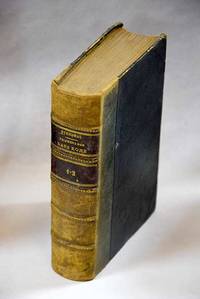
18981501274Paris.: Calmann Lévy. 1898. Hardcover. Cubierta deslucida. CONTIENE PARRAFOS SUBRAYADOS Y ANOTACIONES A BOLIGRAFO NEGRO. Good. 18 cm. 2 vols. en un tomo. Encuadernación en tapa dura artesanal lomo en piel con dorados nervios decorados y doble tejuelo. Idioma francés . Cubierta deslucida. CONTIENE PARRAFOS SUBRAYADOS Y ANOTACIONES A BOLIGRAFO NEGRO. Geografía del mundo antiguo. Geografía regional. Roma. R. Siglo XIX. 913450.621 R."18" 913 Literatura francesa. Descripción de viajes. Siglo XIX. 821.133.1-992"18" 821.133.1 Calmann Lévy. hardcover
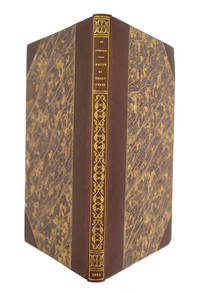
182366771A Paris: Chez Bossange Delaunay Mongie & Les Marchands de Nouveautés 1823. M. de. Beyle Henri. Racine et Shakspeare. and No. II. À Paris: Chez Bossange père DeLaunay Mongie and Les Marchands De Nouveautes 1823 1825.<br> <br> Very scarce first edition of both volumes. Two octavo volumes in one 8 3/16 x 5 inches; 209 x 127 mm. 1-55 1 blank; 4 3 advertisements 1-103 1 errata pp. Half-titles for both volumes.<br> <br> Bound together in twentieth-century half brown levant morocco over marbled paper boards by Stroobants. Spine decoratively tooled and lettered in gilt. Marbled endpapers. Top-edge gilt others partially uncut. Red silk page-marker. A few pages trimmed shorter at the fore-edge but with no loss of text. Some minor marking to back board. A bit of very light foxing. Overall an excellent near fine copy.<br> <br> Marie-Henri Beyle known under his pseudonym de Stendhal was born in Grenoble France in 1783 and died in Paris in 1842. Although employed at various military and government posts throughout his life his underlying passion for art and literature is expressed in his writings penned between 1812 and 1839. His peers and contemporaries included Honoré de Balzac Victor Hugo and George Sand. Perhaps most famous for his novel Le Rouge et le Noir 1831 his earlier essays and short works reveal his artistic and literary development. This polemic treatise signaled Stendhal's entry into the struggle between classicism and romanticism. A second essay on Racine and Shakespeare referred to as 'Shakespeare II' was published in 1825 of which is also present here.<br> <br> Ebisch & Schüking A Shakespeare Bibliography p. 151; Lalanne Dictionnaire Historique de la France p. 284-5; Lanson Gustave Manuel Bibliographique de la Litterature Française Moderne 19078. Not in OCLC Bibliotheque Nationale de France or Brunet.<br> <br> HBS 66771.<br> <br> $3500. Chez Bossange, Delaunay, Mongie & Les Marchands de Nouveautés unknown
185489589Paris: Michel Lévy frères 1854. Fine. Michel Lévy frères Paris 1854 11.7 x 18.8 cm Relié Edition largely original.Half black shagreen binding spine with five raised bands decorated with gilt garlands gilt date at foot marbled paper boards comb-marbled endpapers and pastedowns gilt edges.Some foxing chiefly at the beginning and end of the volume. Michel Lévy frères hardcover
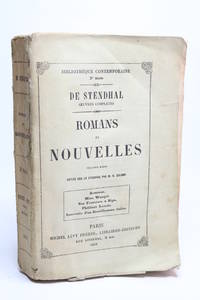
185473653Paris: Michel Lévy frères 1854. Fine. Michel Lévy frères Paris 1854 11.50 x 19 cm broché Edition with most parts in first edition. Joints cracked and reglued one restoration using an adhesive strip on the reverse of the front cover. Contains: Armance Mina de Wangel San Francesco à Ripa Philibert Lescale and Souvenirs d'un gentilhomme italien. Michel Lévy frères unknown
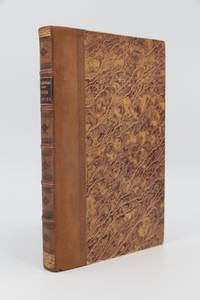
181788398Paris Paris: DelaunayPelicier 1817. Fine. Delaunay Pelicier Paris Paris 1817 13 x 20 cm Relié Rare first edition as referenced by Clouzot see Guide du bibliophile français XIXe siècle p. 256. A few insignificant spots of foxing a small black ink stain at the bottom of pages 354355. Complete with the errata leaf at the end of the volume. Caramel half calf binding spine with five raised bands ruled with gilt dotted lines and decorated with gilt and black tools gilt fillets at head and foot of spine. Minor rubbing to the spine. Brown morocco title label. Marbled paper-covered boards framed with blind-stamped vertical rolls endpapers and pastedowns in cats-eye paper all edges gilt. Roman booksellers label at the top of a pastedown. Period-style binding signed in blind by Durvand. Rare and important work cf. Carteret notable for being the first to bear Stendhals pseudonym on the title page. DelaunayPelicier hardcover
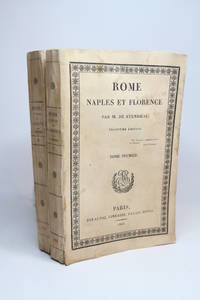
182673643Paris: Delaunay 1826. Fine. Delaunay Paris 1826 13.50 x 21.50 cm 2 volumes brochés Third original edition: ""In reality an entirely new work completely rewritten by Stendhal and expanded by one volume"" cf Clouzot. The second edition was in fact only a reissue after a few weeks of the original edition with a new title page bearing publisher Colburn's address and mention of ""second edition"". This ""third edition"" is therefore the true second original edition much more complete than the first. Covers slightly and partially browned without gravity some minor foxing. Very rare copy as issued in original wrappers. Delaunay unknown
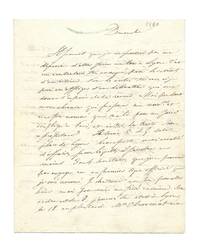
1810Stendhal3<p><strong>STENDHAL Henri Beyle dit 1783-1842</strong></p><p>Autograph letter to his sister Pauline Périer-Lagrange<br />N.p " Sunday " 13rd May 1810 3 p. 1/4 in-4°<br />Autograph address on fourth page<br />Missing wax seal without affecting the words small tears on folds</p><p><strong>Stendhal despairs of know Victorine Mounier escaping him and consoles himself in the arms of another woman</strong></p><p><em>" Il paraît que je ne pourrai pas me dispenser d'aller faire un tour à Lyon. C'est un contre-temps très marqué pour les intérêts d'ambition. <strong>Pour les autres tu sens si je puis m'affliger d'une destination qui me donne l'espoir de te revoir</strong>. Mais pendant mon absence qui pressera ma nomination et une fois nommé qui sera là pour me faire employer à Paris et éviter la triste sous-préfecture Je serai C</em>ommissaire <em>d</em>es <em>G</em>uerres <em>de la place de Lyon beau poste mais accablé d'affaires pour lesquelles il faudra au moins trois ou quatre secrétaires que je ne pourrai pas engager car au premier signe officiel que je suis nommé je déserterai non pas pour aller boire mais pour me faire examiner. Mon ordre est du 8 j'aurais dû être à Lyon le 18 au plus tard. M. Charmat mon ordonnateur sera en colère d'avoir été chargé tout ce temps de l'ennuyeuse besogne de sous-ordre. Ce cruel-là me refusera la permission d'aller passer vingt-quatre heures à Grenoble. <strong>Voilà le plan du drame que je vais exécuter cet été</strong>. Je n'ai pas le temps de te parler de ta simple et charmante lettre. <strong>Tu ne m'annonces que de mauvaises nouvelles et cependant en lisant ta lettre j'étais beaucoup plus occupé de la finesse et de la simplicité charmante que j'y trouvais que du plat renard qui vient m'enlever ce qu'il n'appréciera pas et ce que j'aimais mieux que lui</strong></em> allusion au mariage de Victorine Mounier. <em>J'ai pris sans qu'il y parût des renseignements sur l'homme. C'est l'égoïste le plus sec et le cœur le plus étroit que nous connaissions me dit-on de toutes parts. <strong>Comment ton amie à qui je fais la justice de ne pas la croire aveuglée par l'amour ne voit-elle pas ce qui frappe tout le monde </strong></em><br /><em>Connais-tu quelqu'un à Lyon Envoie-moi une lettre de recommand</em>ati<em>on poste restante. J'y serai d'un beau sombre. <strong>Mes journées sont remplies ici par une femme dont je ne suis pas amoureux mais à laquelle je pense sans cesse. Depuis que je vois le départ sous mes pas je ne puis plus lire tant je pense à elle. Je crois qu'il ne faut qu'un peu d'absence à tout cela pour me remplir de la mélancolie la plus ridicule. Ce qui me le fait craindre c'est que je ne l'ai pas</strong>. Je te conterai tout ça et tu te moqueras de moi ferme. Je me conduis comme un respectable membre de Lycée. <strong>Il me semble que je partirai d'ici à huit jours par conséquent le commencement de juin me verra aux rives du Rhône en grossissant le cours de mes larmes amères</strong>.</em><br /><em>Ne dis pas mon voyage à Gr</em>enoble<em> même à nos parents. Il y a encore quelque possibilité de l'éviter. "</em></p><p>The feelings expressed here for Victorine Mounier 1783-1822 are not recent. He met her in 1806 in Grenoble when his friend Édouard Mounier introduced him to his sister. Knowing her little he imagines a thousand qualities and dreams of marriage. However she remains a "disembodied" love. He wrote first to his brother hoping that he would have his sister read the letters and then to Victorine herself without receiving a reply. Stendhal learned with spite of Victorine's marriage in 1811.<br />The year 1810 marked for Stendhal the beginning of his social ascent. Having been ordered to go to Lyon on May 11 1810 but which he finally decided to ignore he continued to frequent theaters read walk and write. Appointed auditor to the Council of State on 1 August he became inspector of furniture and buildings of the Crown in the autumn. Stendhal then frequented powerful characters and lived in the intimacy of Count Daru's family. He bought himself a fashionable convertible stamps with his initials rents an apartment more in line with his new status. His social situation put an end to his financial worries and made him hope for the barony mentioned at the beginning of the second letter but left him dissatisfied. In need of love he says: "This happiness of dress and money is not enough for me I must love and be loved".</p><p>Favorite sister of Henri Beyle Pauline 1786-1857 had married in 1808 François-Daniel Périer-Lagrange and lived then at the castle of Thuellin near Brangues where will take place the news item at the origin of the novel <em>Le Rouge et le noir</em>.<br />Widowed at the age of 31 Pauline must have been embarrassed because her husband had mismanaged his property. She escaped with the help of her brother who regularly paid her an annuity and bequeathed her modest possessions upon her death.</p><p><u>Bibliography:</u><br /><em>Lettres à Pauline</em> éd. L. Royer La Connaissance 1921 p. 79-80<br /><em>Correspondance générale</em> éd. V. Del Litto Honoré Champion t. II n°566</p><p><u>Provenance:</u><br />Dr Jean Marchand's collection</p>
189089586Paris: G. Charpentier & Cie 1890. Fine. G. Charpentier & Cie Paris 1890 11.7 x 18.8 cm Relié First edition of which no copies were printed on deluxe paper.Half black shagreen binding spine with five raised bands decorated with gilt garlands gilt date at foot marbled paper boards combed paper endpapers and pastedowns gilt top edge original wrappers preserved.Scattered foxing some reading marks in red and blue pencil in the margins of certain paragraphs ink stamps of the Etienne Vion bookshop and stationery in Amiens on the title page a library shelfmark at the head of the title page. G. Charpentier & Cie hardcover
1805669741805. Fine. 10 Floréal 13 30 avril 1805 18.50 x 23.10 cm une feuille Stendhal's autograph letter addressed to his sister Pauline. 28 lines written with a fine writing in black ink. First name ""Pauline"" from the hand of the sender at the bottom of the letter. Inventory number ""36"" in ink from another hand. Two small traces of stamp and stamp a small tear restored in the bottom margin of the page. A few tiny folds inherent in the enveloping of the letter. Rare and beautiful letter of Stendhal addressed to his sister Pauline in which all the sensitivity of the young man and his love for the dramatic art shows more than twenty years before his big romantic successes. This letter comes from the correspondence between Henri Bayle here twenty-two years with his sister Pauline three years younger. This true epistolary liaison which quickly took the form of a ""diary"" - Pauline's answers were rare - is an essential milestone in the constitution of the intellectual journey of the future Stendhal. Our letter of a great lyricism testifies to the strength of the bond uniting the young writer and his sister: ""Let's shake each other my good friend. We will never find anyone who loves Pauline as Henry nor will Henry ever find a more beautiful soul than Pauline. ""The use of the third person and a lover vocabulary erects the young woman to the rank of alter ego a sister-soul and even perfect mistress. The young Henri is then precisely under the yoke of a devouring passion for the actress Melanie Guilbert whom he met during his declamation classes at Dugazon: "" I'm going to be bored perhaps by my dark sadness. I know very well that the seriousness of ardent passions is not pleasant. "" Contrasting with this passionate relationship Pauline symbolizes reason and balance a figure that Henri like a pygmalion can fashion at leisure. In good tutor he advises: ""Learn by heart roles. About declamation I will teach you a thousand things. I'm bringing you a Gil Blas and a Tracy. ""We understand here worship Stendhal devoted to the theater from his earliest years both as a player as a playwright the fund of its archives to the Grenoble Library contains nearly 700 sheets of blanks:"" I am in despair at not being able to wear you Beanies. But wait maybe someday will come . as Ulino says. ""This passion for theater Henry intends to pass it to his sister:"" We will work like hell during the time that I stay in Grenoble. ""In total opposite view with the education of women in his time he put a point of honor that Pauline is an educated person; In several letters moreover we find injunctions from the brother ordering his sister to give up needlework in favor of the reading he recommends. Truly obsessed with theater and convinced that he will become an author of successful comedies he works tirelessly: ""I am told a room where I will not be free and where I can not just declaim. Try to disturb this arrangement. ""Years before writing great novels that make her famous Stendhal already understands that loneliness is for him a source of creation and says:"" A lonely is jealous of his freedom. It is his greatest good as that of all men. "" unknown
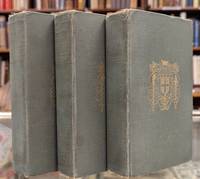
18956000610George H. Richmond 1895. Hardcover. Very good/No jacket. #119/700cc. First edition. Three volumes. Covers shelfworn. George H. Richmond hardcover
1886253251Paris: Lemerre 1886. Halbleder. Lemerre unknown
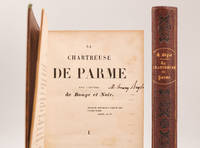
1883977Q30Paris: Librairie L. Conquet 1883 . Leather. Very Good Indeed. 10.5" by 7". V. Foulquier . A stunning Ramage-bound limited edition copy of Stendhal's popular historical novel La Chartreuse de Parme signed by the publisher. Limited edition.Number 73 out of 500 copies the first 150 of which were printed on Japanese paper as this one.Bound by Ramage in a lovely full crushed morocco with gilt tooling and dentelles.With the original wraps bound in. Signed by the publisher to the small paper prospectus "L. C. to Monsieur Henry Bretherton" with Bretherton's pencil inscription to the title page. With a specimen prospectus to the front of Volume I containing an example of one of Foulquier's vignettes and other material for subscribers. In the original French. Written by Marie-Henri Beyle a French author best known under his pseudonym Stendhal. Beyle received wide acclaim for this novel alongside 'Le Rouge et Le Noir' and is particularly praised for his pioneering use of realism in his writings. This novel is cited as an early example of realism a stark contrast to the Romantic style popular while Stendhal was writing. It is considered by many authors to be a truly seminal work; Honore de Balzac considered it the most significant novel of his time while Tolstoy was heavily influenced by Stendhal's treatment of the Battle of Waterloo. Wonderfully illustrated with a frontispiece 29 vignettes and 1 page adornment - also included are proofs of each illustration each of which is protected with a tissue guard. Collated complete. Bound by Ramage in full crushed morocco. With the original wraps bound in and silk moire to the endpapers and paste downs. Externally lovely with light rubbing to the extremities and a few marks to boards. Spine has darkened slightly. Internally pages 327-330 to volume I are disbound but present. Otherwise firmly bound. Pages are bright with light scattered spotting. Pencil note to title page. Very Good Indeed Librairie L. Conquet hardcover