1 297 résultats
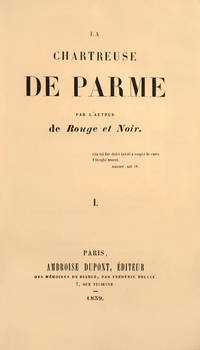
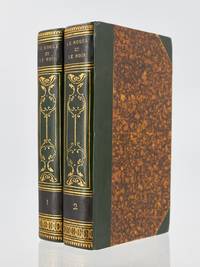
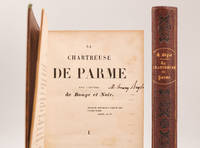
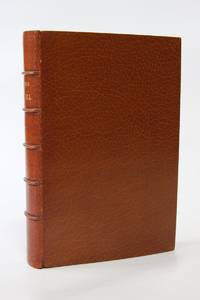
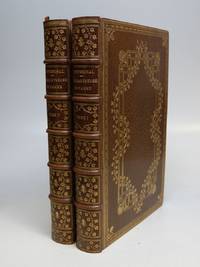
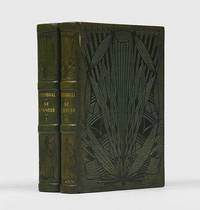
27512Paris Ambroise Dupont 1839. 2 vol. 125 x 200 mm de 2 f. 402 p. et 1 f. ; 2 f. et 445 p. Maroquin havane contreplats et gardes de chèvre velours sable titres dorés sur les pats tranches dorées sur témoins chemises avec titre et tomaison étui bordé reliure signée de Renaud Vernier - Claude Ribal 2025. . Édition originale. Exemplaire de première émission sur papier vélin. Envoi autographe signé : « À Madame d'André hommage respectueux de l'auteur ». « La Chartreuse de Parme est dans notre époque et jusqu'à présent à mes yeux le chef-d'oeuvre de la littérature à idées . M. Beyle a fait un livre où le sublime éclate de chapitre en chapitre. Il a produit à l'âge où les hommes trouvent rarement des sujets grandioses et après avoir écrit une vingtaine de volumes extrêmement spirituels une oeuvre qui ne peut être appréciée que par les âmes et par les gens vraiment supérieurs ». -- Balzac Revue parisienne 25 septembre 1839. À peine rentré de ses voyages de « touriste » en août 1838 Beyle commença à rédiger une nouvelle L'Origine de la grandeur des Farnèse puis s'interrompant décida d'en faire un « romanzetto » dont il imagine dès le 3 septembre en situer l'action au XIXe siècle. C'est l'acte de naissance de La Chartreuse de Parme. Deux mois plus tard saisissant un congé de son poste de consul il tient son récit : le 4 novembre il s'enferme dans son appartement parisien de la rue Caumartin. Quelques cinquante jours plus tard le 26 décembre le travail était achevé et Stendhal peut envoyer ses cahiers à son cousin et homme de confiance Romain Colomb afin qu'il défende ses intérêts éditoriaux dans une tractation où il ne souhaitait pas voir son nom cité se trouvant dans l'impossibilité « sous peine de perdre sa place de livrer son nom à la notoriété publique » Vittorio Del Litto. Colomb se tourne comme il venait de le faire pour les Mémoires d'un touriste quelques mois plus tôt vers l'éditeur Ambroise Dupont. Avec succès : le libraire acheta les droits d'édition pour 2 500 francs via un contrat passé le 24 janvier 1839 lequel enregistre la vente de « la propriété entière et exclusive pendant cinq années consécutives d'un manuscrit intitulé : La Chartreuse de Parme par l'auteur de Rouge et Noir ». L'ouvrage parut la première semaine d'avril 1839 ; l'édition n'en sera épuisée qu'à la fin de l'année suivante. Un succès poussif donc dont la presse ne s'occupa guère. Stendhal a dédié l'ouvrage « to the happy few » et le public le lui rend bien : élitiste difficile documenté l'ouvrage ne trouve pas son lectorat. Mais un dans le landerneau littéraire ne le rata point. Honoré de Balzac dans sa Revue parisienne publie le 25 septembre 1939 une Étude sur M. Beyle qui est un véritable éloge de La Chartreuse de Parme sur plus de 70 pages : « Il a écrit Le Prince moderne le roman que Machiavel écrirait s'il vivait banni de l'Italie au dix-neuvième siècle. Aussi le plus grand obstacle au renon mérité de M. Beyle vient-il de ce que la Chartreuse de Parme ne peut trouver de lecteurs habiles à la goûter que parmi les diplomates les ministres les observateurs les gens du monde les plus éminents les artistes les plus distingués enfin parmi les douze ou quinze cents personnes qui sont à la tête de l'Europe. Ne soyez donc pas étonnés que depuis dix mois que cette oeuvre surprenante a été publiée il n'y ait pas un seul journaliste qui l'ait lue ni comprise ni étudiée qui l'ait annoncée analysée et louée et même y ait fait attention. Moi qui croit m'y connaître un peu je l'ai lue pour la troisième fois ces jours-ci : j'ai trouvé l'oeuvre encore plus belle et j'ai senti dans mon âme l'espèce de bonheur que cause une bonne action à faire.» « Jamais peut-être un auteur vivant ne s'était vu loué aussi splendidement » indique Paupe p. 123. Et cela durera puisque La Chartreuse de Parme « livre unique » « livre complet » devient un livre mythique dès le XIXe siècle grâce à Gobineau Barbey d'Aurevilly ou Henry James pour qui le roman de Stendhal « compte parmi les plus beaux qui soient ». « Plus beau roman du monde » selon André Gide Marcel Proust considérait La Chartreuse de Parme comme « le plus beau roman français qui ait jamais existé » ; Julien Gracq développera un peu dans En lisant en écrivant : « ils sont fortunés les livres dont on sent que derrière l'agitation même frénétique qui peut à l'occasion les habiter ils ont été écrits de bout en bout comme dans la poussière d'or . La Chartreuse de Parme est écrite tout entière et se profile pour moi de bout en bout contre ce nimbe de soleil mûrissant . L'allegro de La Chartreuse est celui de voyageurs sans bagage qui ne s'encombrent même pas des volumineux fourgons balzaciens. Il m'arrive en lisant La Chartreuse de me figurer que j'écoute un thème musical envoûtant mais unique une 'petite phrase' à la Vinteuil qui reprise inépuisablement mais chaque fois avec un timbre différent par les groupes d'instruments successifs suffit à mon plaisir. Avouons-le : il faut pour lire ce merveilleux roman un certain état de grâce qu'on ne retrouve pas à volonté . car c'est le climat de l'amour qui soutient le livre mais ce n'est pas tellement celui de la Sanseverina pour Fabrice ou de Fabrice pour Clélia Conti ; c'est l'amour manifeste du romancier pour son roman comme pour un Éden revisité en songe. » L'italien Italo Calvino joueur conclura que « le plus beau roman du monde ne peut être que celui-ci » d'autant qu'il est d'abord pour lui - et surtout - « Le Grand roman italien » du titre d'un article qu'il donne en 1983 pour Le Magazine littéraire. Belle unanimité moderne autour d'une oeuvre écrite et dictée en cinquante-trois jours ! Écrire une fresque complexe et profonde en moins de deux mois relève sans doute du génie ; des armées napoléoniennes aux intrigues de la cour de Parme ce roman d'apprentissage retrace l'itinéraire spirituel de Fabrice del Dongo « héros fort peu héros » reflet sublime d'une âme à la fois frustrée et exaltée du Mal du siècle celui d'une génération de jeunes français qui comme lui s'étaient rangés derrière Napoléon. Lors de sa chute voyant le retour des idées réactionnaires au pouvoir ces jeunes hommes deviennent mélancoliques. Fabrice Del Dongo à ce titre est une incarnation de cette rupture entre l'homme et son époque passant le roman à « chasser le bonheur ». Mais comment peut-on être heureux dans un monde qui ne nous comprend pas C'est là tout le propos du roman qui puise son charme dans les « paysages sublimes » de la Lombardie. Le tirage total de l'édition fut de 1 200 exemplaires partagés en deux tranches : la première sur papier vélin sans mention ; la seconde dont les exemplaires portent la mention de « deuxième édition » est imprimée sur papier vergé. La collation des volumes est identique pour les deux tirages. Lorsque la première édition paraît en mars 1839 Stendhal est encore à Paris. Il ne regagnera sa résidence consulaire de Civita Vecchia que le 10 août. Stendhal y est consul de France pour l'ensemble des États pontificaux depuis 1831. Ce sera l'époque la plus féconde pour l'écrivain qui durant cette décennie rédige Lucien Leuwen La vie d'Henri Brulard Lamiel les Chroniques italiennes et en 1839 ce chant du cygne cette Chartreuse de Parme en qui se fondent son amour pour l'Italie et une vision apaisée des choses où se mêlent les inspirations du Corrège de Cimarosa et de Mozart. Les beaux exemplaires d'époque bien conservés sont rares et ceux offerts par l'auteur se comptent sur les doigts des deux mains. Nous n'avons pu recenser que sept exemplaires portant un envoi autographe de Stendhal autant que pour Le Rouge et le noir : - Envoi à Frédéric Soulié exemplaires Destailleur 1891 puis Montgermont 1912 cité par Vicaire et Carteret - le seul avec envoi cité dans ces deux bibliographies - Envoi à Romain Collomb Bibliothèque de Grenoble ; - Envoi à Albert Stapfer vente 1931 puis Drouot Rive gauche Bibliothèque Sacha Guitry mars 1976 n° 222 ; - Envoi à Paul-Émile Daurand Forgues Christie's mai 2013 n° 208 ; 38 000 € reliure moderne de Devauchelle ; - Envoi au Comte Amédée de Pastoret Pierre Bergé & Associés Bibliothèque Michel Audiard mai 2016 n° 76 reliure moderne ; - Envoi au docteur Jean-Louis Prévost exemplaires Paul Voûte Robert Fleury puis collection Ribes Sotheby's II n° 187 reliure moderne - Envoi à Joseph Lingay tome 1 seul retourné à l'auteur qui y apporta des corrections autographes ; Bibliothèque historique de la ville de Paris Rés. 739841 Un manuscrit autographe de 117 pages complété d'un exemplaire de l'édition originale annoté par Stendhal est entré à la BnF en 2006. C'était alors le plus important manuscrit littéraire d'une oeuvre romanesque française du XIXe siècle encore en mains privées initialement catalogué dans la sixième vente Bérès 20 juin 2006 n° 91. L'exemplaire fut in fine 'cédé' à l'amiable à la Bibliothèque nationale. Citons enfin en guise de complétude un troisième exemplaire annoté le pendant du précédent propriété d'Eugène Chaper sans envoi. Il est aujourd'hui conservé à la Pierpont Morgan Library de New York H.572. Précieux exemplaire offert à Madame Claire d'André épouse du comte Antoine d'André 1788-1860 gouverneur de Rome et de Strasbourg baron d'Empire et préfet de gendarmerie de Paris. Ce dernier élève officier à l'école militaire de Vienne puis lieutenant dans le régiment des chevau-légers de l'Empereur d'Autriche est rappelé en 1809 au service de la France et mène campagne en Russie. Promu lieutenant adjudant major en 1813 il participe aux campagnes d'Espagne de Russie et d'Allemagne. Au retour des Bourbons il reprend son poste à la gendarmerie qu'il contribue à réorganiser et réprime les troubles à Paris. Sous Louis-Philippe il devient inspecteur général de la gendarmerie remplaçant à ce poste le lieutenant-général Latourg-Maubourg. Aucun autre exemplaire de La Chartreuse de Parme n'a été offert à une femme et cet exemplaire est donc le premier à détenir une telle provenance. Notons que c'est également le cas du Rouge et le Noir dont on ne connaît avec certitude en provenance féminine que celui de la baronne Charles de Rothschild - le seul nominatif - puisque les six autres exemplaires connus avec dédicace ne portent que la simple mention « hommage de l'auteur » - et parmi ceux-ci seuls deux destinataires sont identifiés : Félix Faure et le baron Adolphe de Mareste. « Très rare et extrêmement recherché. Souvent piqué » d'après Clouzot « cet ouvrage est d'une grande rareté en belle condition » Carteret. Précieux exemplaire merveilleusement et parfaitement établi par Renaud Vernier. Le tome 1 est incomplet de deux feuillets p. 72-74 qui étaient manquants dans la première reliure d'époque malheureusement trop délabrée pour être conservée. L'exemplaire nettoyé nous avons décidé de ne pas y ajouter des feuillets d'un autre exemplaire ou en fac-similé afin de conserver à ce volume sa condition d'origine quand bien même elle fut fautive sans doute par la faute du relieur. Cordier 125 ; Vicaire 458 ; Carteret II 358 ; Cordier Bibliographie stendhalienne n°87 ; Cordier Comment a vécu Stendhal p. 188-189; V. Del Litto E. Williamson et J. Houbert éd. Correspondance générale de Stendhal Paris Champion 1997-1999 III ; La Chartreuse de Parme: J. Houbert «Le Contrat d'édition de La Chartreuse de Parme» in L'Année stendhalienne n° 5 Paris Champion 2006 325-329 ; Stendhal Journal in: Oeuvres intimes Paris La Pléiade 1982 ; Paupe Histoire des oeuvres de Stendhal 120 et sq. ; Stendhal La Chartreuse de Parme édition de Mariella Di Maio Paris Gallimard 2003. Paris, Ambroise Dupont, 1839. 2 vol. (125 x 200 mm) de [2] f., 402 p. et 1 f. ; [2] f. et 445 p. Maroquin havane, contreplats et unknown
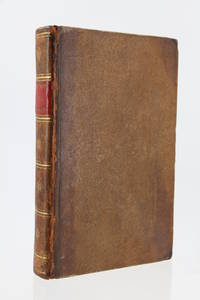
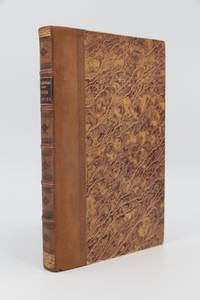
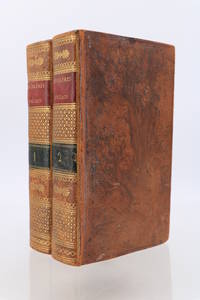
183188395Paris Paris: A. Levavasseur 1831. Fine. First edition in contemporary binding of one of the rarest and most sought-after Romantic novels A. Levavasseur Paris Paris 1831 14 x 22 cm 2 volumes reliés First edition untrimmed with wide margins very rare and highly sought-after see Clouzot. Some occasional foxing. Illustrated on the title pages of both volumes with two engraved vignettes by Porrêt. This copy contains the publishers notice leaf in the first volume and the authors note leaf in the second volume. Contemporary red half calf over marbled boards calf corners spines ruled in gilt with double gilt panels decorated with typographic gilt tooling black calf title and volume labels some minor rubbing to joints marbled endpapers and pastedowns lower corners a bit worn bookplate pasted on the front pastedown of volume one contemporary bindings. A very rare and desirable copy entirely untrimmed and preserved in a handsome contemporary binding an even rarer feature. As noted by Clouzot: Contemporary bindings are most often rather plain; one should not be overly particular regarding their quality. A. Levavasseur hardcover
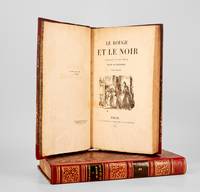
ABAA25-44<p>Paris Dupont 1839.</p><p>2 parts in 2 volumes 8vo of : I/ 2 ll. for the half-title and the title 402 pp. ; II/ 2 ll. for the half-title and the title 445 pp.</p><p>Full red morocco six gilt fillets around the covers ribbed spines decorated the same way inner border of five gilt fillets gilt edges. Elegant binding by <em>Chambolle-Duru.</em></p><p>213 x 126 mm.</p><p><strong>First edition printed on vellum of one of the most coveted novels of the 19th century. </strong></p><p>Carteret <em>Le Trésor du bibliophile romantique</em> 358; Vicaire <em>Manuel de l'amateur de livres du XIXe siècle</em> 458; Picot <em>Catalogue du baron Rothschild</em> 1584.</p><p><em>"Very rare and extremely sought after".</em> M. Clouzot 257.</p><p><em>"Balzac published a glowing article about Stendhal and his book in the Revue parisienne of 25 September 1840: 'M. Beyle has written a book in which the sublime bursts forth from chapter to chapter. He has produced at an age when men rarely find grandiose subjects and after having written some twenty extremely spiritual volumes a work that can only be appreciated by truly superior souls and people. Finally he wrote the modern Prince the novel that Machiavelli would write if he lived banished from Italy in the nineteenth century".</em></p><p>Stendhal dreamed of writing a novel about the life of Alexander Farnese 1468-1549; he was also working on a story about the Battle of Waterloo.</p><p>His work took shape on 3 September 1838 when he decided to bring the events revealed to him by the Italian chronicle into the 19th century so that his hero would be at Waterloo and Stendhal could indulge in a satire of absolutism by depicting a small Italian court around 1820.</p><p><em> "In this 'Chartreuse de Parme' Stendhal excels in translating all his ideals of art and life the now distant mirage of glory and the Napoleonic epic the passion for adventure the deep love for contemporary Italy and for the much admired Italy of the Renaissance but above all the love of love.</em></p><p><em>The refined psychological analyses the obstinate and precise rigour of the style the philosophical and moral considerations everything is transfigured in the rare joy of a lyrical vision which in the best pages reaches the rhythmic purity of a song".</em></p><p><strong>It has now taken its place in French literature as one of the landmark books of 19th century literature and the culmination of the refined psychology of the 18th century.</strong></p><p><strong>Bibliographers are unanimous in emphasizing the rarity of this first edition.</strong></p><p>Stendhal wrote <em>La Chartreuse de Parme</em> between 4 November and 26 December 1838 after having written <em>L'Abbesse de Castro</em>. <em>La Chartreuse de Parme</em> written in a state of grace lasting fifty-two days has since become the perfect image of the "joy of writing".</p><p>His novel grew out of his plans for a Napoleonic narrative centered on the Battle of Waterloo and his interest in the history of Alexander Farnese the future Pope Paul III whose life overlapped with many of the events in Fabrice del Dongo's life.</p><p>Stendhal's contemporaries gave the novel an enthusiastic reception as evidenced by Balzac's famous letter to Stendhal: "<em>La Chartreuse is a great and beautiful book I tell you without flattery without envy because I would be incapable of doing it".</em></p><p><strong>A very fine copy of this great classic of French literature preserved in a superb binding by Chambolle-Duru.</strong></p><p>FR</p><p>Paris Dupont 1839.</p><p>2 tomes en 2 volumes in-8 de : I/ 2 ff. pour le faux titre et le titre 402 pp. ; II/ 2 ff. pour le faux-titre et le titre 445 pp.</p><p>Plein maroquin rouge large encadrement de six filets dorés autour des plats dos à nerfs ornés de même double filet or sur les coupes encadrement intérieur de cinq filets dorés tranches dorées. Élégante reliure signée de <em>Chambolle-Duru.</em></p><p>213 x 126 mm.</p><p><strong>Edition originale imprimée sur vélin de l'un des romans les plus convoités du XIXe siècle. </strong></p><p>Carteret <em>Le Trésor du bibliophile romantique</em> 358 ; Vicaire <em>Manuel de l'amateur de livres du XIXe siècle</em> 458 ; Picot <em>Catalogue du baron Rothschild</em> 1584.</p><p>" <em>Très rare et extrêmement recherché</em> ". M. Clouzot 257.</p><p><em>Balzac publia dans la Revue parisienne du 25 septembre 1840 un article élogieux sur Stendhal et son livre : 'M. Beyle a fait un livre où le sublime éclate de chapitre en chapitre. Il a produit à l'âge où les hommes trouvent rarement des sujets grandioses et après avoir écrit une vingtaine de volumes extrêmement spirituels une œuvre qui ne peut être appréciée que par les âmes et par les gens vraiment supérieurs. Enfin il a écrit le Prince moderne le roman que Machiavel écrirait s'il vivait banni de l'Italie au dix-neuvième siècle'.</em></p><p>Stendhal rêvait de tirer un roman de la vie d'Alexandre Farnèse 1468-1549 ; il travaillait aussi à un récit de la bataille de Waterloo.</p><p>Son œuvre prend forme le 3 septembre 1838 quand il décide de transporter au XIXè siècle les événements que lui a révélés la chronique italienne ainsi son héros sera à Waterloo et Stendhal pourra se livrer à une satire de l'absolutisme en peignant une petite cour italienne vers 1820.</p><p>" <em>Dans cette " Chartreuse de Parme " Stendhal excelle à traduire tout son idéal d'art et de vie le mirage désormais lointain de la gloire et de l'épopée napoléonienne la passion de l'aventure l'amour très profond pour l'Italie contemporaine et pour l'Italie si admirée de la Renaissance mais surtout l'amour de l'amour.</em></p><p><em>Les analyses psychologiques raffinées la rigueur obstinée et précise du style les considérations philosophico-morales tout est transfiguré dans le rare bonheur d'une vision lyrique qui atteint dans les meilleures pages à la pureté rythmique d'un chant.</em> "</p><p><strong>Elle prend place à présent dans la littérature française comme un des livres phares de la littérature du XIXe siècle et l'extrême aboutissement de la psychologie si raffinée du XVIIIe siècle.</strong></p><p><strong>Les bibliographes sont unanimes à souligner la rareté de cette édition originale.</strong></p><p>Stendhal écrivit <em>La Chartreuse de Parme</em> entre le 4 novembre et le 26 décembre 1838 après avoir composé <em>L'Abbesse de Castro</em>. <em>La Chartreuse de Parme</em> rédigée dans un état de grâce de cinquante-deux jours est devenue depuis l'image parfaite du " bonheur d'écrire ".</p><p>Son roman naquit de son projet de récit napoléonien centré sur la bataille de Waterloo et de son intérêt pour l'histoire d'Alexandre Farnèse futur pape Paul III dont la vie recoupe bien des événements de la vie de Fabrice del Dongo.</p><p>Les contemporains de Stendhal firent un accueil enthousiaste au roman comme en témoigne la célèbre lettre de Balzac à Stendhal : " <em>La Chartreuse est un grand et beau livre je vous le dis sans flatterie sans envie car je serai incapable de le faire</em> ".</p><p><strong>Très bel exemplaire de ce grand classique de la littérature française conservé dans une superbe reliure de Chambolle-Duru.</strong></p> hardcover
183187102Paris: A. Levavasseur 1831. Fine. A rare copy with no foxing A. Levavasseur Paris 1831 13.10 x 20.80 cm 2 volumes reliés First edition ""very rare and extremely sought-after"" Clouzot one of 750 copies on laid paper with title vignettes engraved by Henri Porret after Henry Monnier. Skilful restoration of a tear at the foot of a page with slight damage to a letter. A rare copy with no foxing. Green half calf binding smooth spines with arabesques stamped in gilt black title labels and volume labels; marbled paper boards spine boards and endpapers speckled edges later bindings in the Romantic style. Stendhal began writing 'Le Rouge et le Noir' under the Restoration and completed it just four months after the July Revolution of 1830. The seminal novel was published in the last weeks of 1830. All critics immediately praised the novel's exceptional qualities although even its most enthusiastic supporters were shocked by the hero's harsh judgment of society and Jacobinism. A handsome first-edition copy of this great classic of French literature. A. Levavasseur hardcover
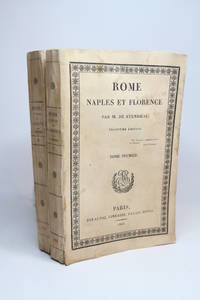
183989931Paris: Ambroise Dupont 1839. Fine. Ambroise Dupont Paris 1839 13 x 21.7 cm 2 volumes reliés sous étui First edition printed on thick wove paper. Bound in contemporary half brown shagreen smooth spines decorated with black typographic motifs marbled paper boards hand-marbled endpapers and pastedowns modern slipcase edged in brown morocco with matching marbled paper sides and olive-green felt lining. Some occasional foxing the note ""Henri Beyle"" in black ink at the upper corner of the title page of the first volume without the final catalogue leaf at the end of the second volume small corner restorations to four leaves of the first volume. ""Very rare and extremely sought after. Usually quite simply bound at the time. Often foxed"" Clouzot. ""This work is of great rarity in fine condition"" Carteret. A handsome and very rare copy large-margined and attractively bound at the time of this masterpiece by Stendhalrarer still than Le Rouge et le Noir. Ambroise Dupont hardcover
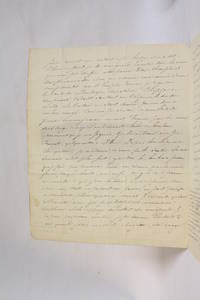
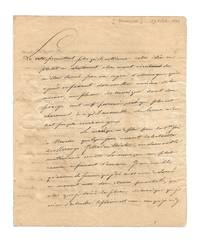
1808689671808. Fine. 26 mars 1808 20 x 24.80 cm 3 pages 1/2 sur un double feuillet Long autograph letter by Stendhal addressed to his sister Pauline written in fine handwriting with black ink. Address of Stendhal's father where his sister resides in Grenoble with the stamp ""n°51 Grande Armée."" Red wax seal bearing Stendhal's coat of arms. Several original folds inherent to postal delivery. A paper loss due to the unsealing of the letter has been skillfully restored. Published in his Correspondance ed. Henri Martineau Paris Le Divan 1933 vol. 3 no. 262 A pp. 26-29. A very beautiful letter filled with romantic passion blending childhood nostalgia with sentimental tales and foreshadowing The Red and the Black. This letter is part of the correspondence between twenty-five years old Henri Beyle and his sister Pauline three years his junior. This epistolary relationship which quickly took the form of a ""journal"" as Pauline's responses were rare. It is deemed a crucial milestone in the intellectual development of the future Stendhal: ""Here are my dreams my dear friend; I am almost ashamed of them; but after all you are the only person in the world to whom I dare confess them."" In this letter which attests to the strong bond between brother and sister Stendhal then in Germany expresses his deep nostalgia: ""I revisited in my memory all the time we spent together: how I did not love you in our childhood; how I once hit you at Claix in the kitchen. I hid in the little book cabinet; my father came back a moment later furious and said to me: 'Wicked child! I would eat you!' Then all the woes inflicted upon us by poor Aunt Séraphie; our walks along those paths surrounded by stagnant water towards Saint-Joseph."" These regrets about the past are accompanied by a typically Stendhalian melancholy: ""Alas! That delightful happiness I once imagined I glimpsed it once at Frascati and a few other times in Milan. Since then it has not returned; I marvel at my inability to feel it. The mere memory of it is more powerful than all the present joys I can procure."" This evocation of the Italy he longs for is intertwined with memories of the women he loved: ""I told you that while in Frascati at a charming fireworks display at the moment of the explosion Adèle leaned on my shoulder for an instant; I cannot express how happy I was. For two years whenever I was overwhelmed with sorrow this image gave me courage and made me forget all my troubles. I had long forgotten it; I tried to recall it today. Against my will I see Adèle as she is; but as I am now there is no longer the slightest joy in this memory."" This lengthy account of Adèle Rebuffet his cousin with whom he had a profound romantic relationship before forming a closer bond with her mother reflects Stendhal's sentimentality. He also mentions another of his great passions Angelina Pietragrua the ideal Italian woman and embodiment of his Milanese memories: ""Madame Pietragrua is different: her memory is linked to that of the Italian language; whenever something pleases me in a role for a woman in a work I involuntarily put it into her mouth."" This ""role for a woman"" that Stendhal refers to echoes the central theme of this letter the work Il Matrimonio segreto by composer Cimarosa: ""Do you sometimes play the Matrimonio Its the passage Cara sposa at the beginning between Carolina and Paolino. . But play the Matrimonio for my sake especially Signor deh permettette and the finale Io rival de mia sorella."" This opera by Cimarosa remained a constant throughout the writer's life and work. In his Memoirs of an Egotist 1832 he explains: ""In Milan in 1820 I wanted to have this written on my tomb . I wanted a marble tablet in the shape of a playing card: ""Errico Beyle - Milanese - Visse scrisse amò - Quest'anima adorava Cimarosa Mozart e Shakspeare - Morì di anni. il . 18."" ""Henri Beyle - Milanese - He lived wrote loved - This soul adored Cimarosa Mozar unknown
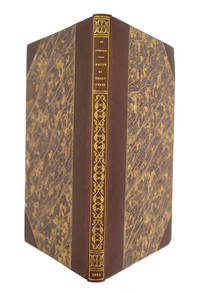
188971152Paris: Librairie moderneMaison Quantin 1889. Fine. Librairie moderne Maison Quantin Paris 1889 13 x 19 cm relié First edition one of 12 numbered copies on Hollande the only deluxe issue. Complete with the folding map at the end. Full fawn morocco binding five raised band spine date at foot comb-marbled paper pastedowns framed with a rich gilt roll comb-marbled endpapers gilt fillet to headcap gilt fillet to leading edges gilt roll to headcaps original wrappers and spine preserved all gilt deckled edges housed in a fawn morocco-edged slipcase. Binding signed by Semet & Plumelle.  Provenance: From the libraries of Dr André Chauveau Lucius Wilmerding and RBL with their bookplates affixed.  A splendid deluxe copy of exceptional rarity. Librairie moderneMaison Quantin unknown
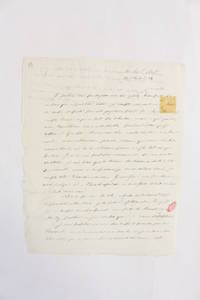
1805669741805. Fine. 10 Floréal 13 30 avril 1805 18.50 x 23.10 cm une feuille Stendhal's autograph letter addressed to his sister Pauline. 28 lines written with a fine writing in black ink. First name ""Pauline"" from the hand of the sender at the bottom of the letter. Inventory number ""36"" in ink from another hand. Two small traces of stamp and stamp a small tear restored in the bottom margin of the page. A few tiny folds inherent in the enveloping of the letter. Rare and beautiful letter of Stendhal addressed to his sister Pauline in which all the sensitivity of the young man and his love for the dramatic art shows more than twenty years before his big romantic successes. This letter comes from the correspondence between Henri Bayle here twenty-two years with his sister Pauline three years younger. This true epistolary liaison which quickly took the form of a ""diary"" - Pauline's answers were rare - is an essential milestone in the constitution of the intellectual journey of the future Stendhal. Our letter of a great lyricism testifies to the strength of the bond uniting the young writer and his sister: ""Let's shake each other my good friend. We will never find anyone who loves Pauline as Henry nor will Henry ever find a more beautiful soul than Pauline. ""The use of the third person and a lover vocabulary erects the young woman to the rank of alter ego a sister-soul and even perfect mistress. The young Henri is then precisely under the yoke of a devouring passion for the actress Melanie Guilbert whom he met during his declamation classes at Dugazon: "" I'm going to be bored perhaps by my dark sadness. I know very well that the seriousness of ardent passions is not pleasant. "" Contrasting with this passionate relationship Pauline symbolizes reason and balance a figure that Henri like a pygmalion can fashion at leisure. In good tutor he advises: ""Learn by heart roles. About declamation I will teach you a thousand things. I'm bringing you a Gil Blas and a Tracy. ""We understand here worship Stendhal devoted to the theater from his earliest years both as a player as a playwright the fund of its archives to the Grenoble Library contains nearly 700 sheets of blanks:"" I am in despair at not being able to wear you Beanies. But wait maybe someday will come . as Ulino says. ""This passion for theater Henry intends to pass it to his sister:"" We will work like hell during the time that I stay in Grenoble. ""In total opposite view with the education of women in his time he put a point of honor that Pauline is an educated person; In several letters moreover we find injunctions from the brother ordering his sister to give up needlework in favor of the reading he recommends. Truly obsessed with theater and convinced that he will become an author of successful comedies he works tirelessly: ""I am told a room where I will not be free and where I can not just declaim. Try to disturb this arrangement. ""Years before writing great novels that make her famous Stendhal already understands that loneliness is for him a source of creation and says:"" A lonely is jealous of his freedom. It is his greatest good as that of all men. "" unknown
181478167Paris: De l'Imprimerie de P. Didot l'aîné 1814. Fine. De l'Imprimerie de P. Didot l'aîné Paris 1814 12.50 x 20.50 cm relié De l'Imprimerie de P. Didot l'Aîné Paris 1814 125 x 205 cm bound in calf First edition of Stendhal's very first book published under the pseudonym of Louis-Alexandre-César Bombet. Contemporary binding in half brown calf spine decorated with gilt fillets and tooling as well as a red morocco title piece. Very rare according to Clouzot De l'Imprimerie de P. Didot l'aîné unknown
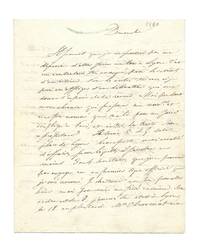
1810Stendhal3<p><strong>STENDHAL Henri Beyle dit 1783-1842</strong></p><p>Autograph letter to his sister Pauline Périer-Lagrange<br />N.p " Sunday " 13rd May 1810 3 p. 1/4 in-4°<br />Autograph address on fourth page<br />Missing wax seal without affecting the words small tears on folds</p><p><strong>Stendhal despairs of know Victorine Mounier escaping him and consoles himself in the arms of another woman</strong></p><p><em>" Il paraît que je ne pourrai pas me dispenser d'aller faire un tour à Lyon. C'est un contre-temps très marqué pour les intérêts d'ambition. <strong>Pour les autres tu sens si je puis m'affliger d'une destination qui me donne l'espoir de te revoir</strong>. Mais pendant mon absence qui pressera ma nomination et une fois nommé qui sera là pour me faire employer à Paris et éviter la triste sous-préfecture Je serai C</em>ommissaire <em>d</em>es <em>G</em>uerres <em>de la place de Lyon beau poste mais accablé d'affaires pour lesquelles il faudra au moins trois ou quatre secrétaires que je ne pourrai pas engager car au premier signe officiel que je suis nommé je déserterai non pas pour aller boire mais pour me faire examiner. Mon ordre est du 8 j'aurais dû être à Lyon le 18 au plus tard. M. Charmat mon ordonnateur sera en colère d'avoir été chargé tout ce temps de l'ennuyeuse besogne de sous-ordre. Ce cruel-là me refusera la permission d'aller passer vingt-quatre heures à Grenoble. <strong>Voilà le plan du drame que je vais exécuter cet été</strong>. Je n'ai pas le temps de te parler de ta simple et charmante lettre. <strong>Tu ne m'annonces que de mauvaises nouvelles et cependant en lisant ta lettre j'étais beaucoup plus occupé de la finesse et de la simplicité charmante que j'y trouvais que du plat renard qui vient m'enlever ce qu'il n'appréciera pas et ce que j'aimais mieux que lui</strong></em> allusion au mariage de Victorine Mounier. <em>J'ai pris sans qu'il y parût des renseignements sur l'homme. C'est l'égoïste le plus sec et le cœur le plus étroit que nous connaissions me dit-on de toutes parts. <strong>Comment ton amie à qui je fais la justice de ne pas la croire aveuglée par l'amour ne voit-elle pas ce qui frappe tout le monde </strong></em><br /><em>Connais-tu quelqu'un à Lyon Envoie-moi une lettre de recommand</em>ati<em>on poste restante. J'y serai d'un beau sombre. <strong>Mes journées sont remplies ici par une femme dont je ne suis pas amoureux mais à laquelle je pense sans cesse. Depuis que je vois le départ sous mes pas je ne puis plus lire tant je pense à elle. Je crois qu'il ne faut qu'un peu d'absence à tout cela pour me remplir de la mélancolie la plus ridicule. Ce qui me le fait craindre c'est que je ne l'ai pas</strong>. Je te conterai tout ça et tu te moqueras de moi ferme. Je me conduis comme un respectable membre de Lycée. <strong>Il me semble que je partirai d'ici à huit jours par conséquent le commencement de juin me verra aux rives du Rhône en grossissant le cours de mes larmes amères</strong>.</em><br /><em>Ne dis pas mon voyage à Gr</em>enoble<em> même à nos parents. Il y a encore quelque possibilité de l'éviter. "</em></p><p>The feelings expressed here for Victorine Mounier 1783-1822 are not recent. He met her in 1806 in Grenoble when his friend Édouard Mounier introduced him to his sister. Knowing her little he imagines a thousand qualities and dreams of marriage. However she remains a "disembodied" love. He wrote first to his brother hoping that he would have his sister read the letters and then to Victorine herself without receiving a reply. Stendhal learned with spite of Victorine's marriage in 1811.<br />The year 1810 marked for Stendhal the beginning of his social ascent. Having been ordered to go to Lyon on May 11 1810 but which he finally decided to ignore he continued to frequent theaters read walk and write. Appointed auditor to the Council of State on 1 August he became inspector of furniture and buildings of the Crown in the autumn. Stendhal then frequented powerful characters and lived in the intimacy of Count Daru's family. He bought himself a fashionable convertible stamps with his initials rents an apartment more in line with his new status. His social situation put an end to his financial worries and made him hope for the barony mentioned at the beginning of the second letter but left him dissatisfied. In need of love he says: "This happiness of dress and money is not enough for me I must love and be loved".</p><p>Favorite sister of Henri Beyle Pauline 1786-1857 had married in 1808 François-Daniel Périer-Lagrange and lived then at the castle of Thuellin near Brangues where will take place the news item at the origin of the novel <em>Le Rouge et le noir</em>.<br />Widowed at the age of 31 Pauline must have been embarrassed because her husband had mismanaged his property. She escaped with the help of her brother who regularly paid her an annuity and bequeathed her modest possessions upon her death.</p><p><u>Bibliography:</u><br /><em>Lettres à Pauline</em> éd. L. Royer La Connaissance 1921 p. 79-80<br /><em>Correspondance générale</em> éd. V. Del Litto Honoré Champion t. II n°566</p><p><u>Provenance:</u><br />Dr Jean Marchand's collection</p>
1808Stendhal4<p><strong>STENDHAL Henri Beyle dit 1783-1842</strong></p><p>Autograph letter signed with one of his numerous pseudonyms " Dubois " to his sister and confident Pauline Périer-Lagrange<br />Brunswick " 29 8bre October 1808 " 5 p. in-4°<br />Frayed margin on last folio tears repaired see scans usual folds<br />Red wax seal</p><p><strong><u>From one of the most prestigious Stendhalian collections</u></strong></p><p><strong>A remarkable letter in which the young Stendhal who was still only Henri Beyle deputy to the war commissioners stationed in Brunswick describes his passion for music Italy and women</strong></p><p><strong><em>" I am astonished every day at the little pleasure that German women give me French women bore me I place my happiness of this kind in Italy</em></strong><em> "</em></p><p>Stendhal begins his missive by comparing the emotions of the arts to those of love. He confides in his younger sister without arranging his thoughts and describes the excitement caused by an organ playing in a street next to his own</p><p><em>" <strong>Les arts promettent plus qu'ils ne tiennent</strong> : cette idée ou plutôt ce sentiment charmant vient de m'être donné par un orgue d'Allemagne qui a joué en passant dans une rue voisine de la mienne une phrase de musique dont deux passages sont neufs pour moi et qui plus est charmants à ce qu'il me semble ; <strong>les larmes m'en sont presque venues au yeux.</strong></em><br /><em>La musique m'a plus pour la première fois à Novare</em> Commune dans la région du Piémont<em> quelques jours avant la bataille de Marengo</em> qui eut lieu le 14 juin 1800<em>. J'allais au théâtre ; on donnait Il Matrimonio segreto</em> opéra bouffe de Domenico Cimarosa <em>; <strong>la musique me plut comme exprimant l'amour</strong>.<strong> Il me semble qu'aucune des femmes que j'ai eues ne m'a donné un moment aussi doux et aussi peu acheté que celui que je dois à la phrase de musique que je viens d'entendre</strong>. <strong>Ce plaisir est venu sans que je m'y attendisse en aucune manière il a rempli toute mon âme</strong>. Je t'ai conté une sensation semblable que j'eus une fois à Frascati </em>Commune dans la banlieue de Rome <em>lorsque A</em>dèle Rebuffel une jeune cousine dont il s'était épris <em>s'appuya sur moi en regardant un feu d'artifice. Ce moment a été ce me semble le plus heureux de ma vie. Il faut que le plaisir ait été bien sublime puisque je m'en souviens encore quoique la passion qui me le faisait goûter soit entièrement éteinte</em>.<br /><em>Tout cela me fait penser ma chère Pauline que</em> <strong><em>les arts qui commencent à nous plaire en peignant les jouissances des passions et pour ainsi dire par réflexion comme la lune s'éclaire peuvent finir par nous donner des jouissances plus fortes que les passions. Je suis tous les jours étonné du peu de plaisir que me donnent les femmes allemandes les françaises m'ennuient je place mon bonheur de ce genre en Italie</em></strong><em>. Si le hazard me donnait 40 mille liv</em>res<em>. de rente j'irais en Italie. <strong>Je présume qu'au bout d'un an ces belles romaines ces spirituelles vénitiennes seraient pour moi comme des Allemandes. Ces dernières ont la fraîcheur la plus parfaite leurs couleurs sont de la santé visible les autres ont la passion mais la passion qu'on inspire et qu'on ne partage pas ennuie.</strong><br />Dans les arts c'est tout autre chose il peut chaque jour y avoir du nouveau. Qui nous dit que nous ne verrons pas un musicien supérieur à Cimarosa Et quand il n'aurait pas tout à fait son mérite il nous donnerait du nouveau.<br />Pour les autres à qui j'écris j'arrange mes pensées : pour toi non. J'ai remarqué que quand une chose me gênait quelque peu que ce fût je finissais par ne la plus faire et <strong>je veux t'écrire toute ma vie au-delà même comme madame Necker</strong></em> Germaine de Staël … <em><br />Je crois m'appercevoir que ce bonheur est plus fort que celui que donne les passions. Si cela se confirme je serai bien près du bonheur que je me figurais jusqu'ici dans une passion quelconque l'Ambition l'amour etc. donnant continuellement des moments comme celui de Frascati.</em></p><p>Finally he goes on to talk about the situation of his sister who is married to an "excellent" man and whom he encourages to cultivate artistic pleasures. Pauline had married Daniel Perrier-Lagrange six months earlier on May 25 1808.</p><p><em>Je ne puis te parler de ta position : je ne la connais pas ; mais ayant pour mari un homme excellent elle ne peut qu'être heureuse. Cependant il ne t'en coûtera rien de cultiver ce côté de ton âme auquel les arts font plaisir. <strong>Si tu as le bonheur de ne pas être grosse de sitôt </strong></em>phrase remplacée dans l'édition Martineau par "si rien ne t'arrête" <em>tu pourrais faire un tour à Turin et pousser jusqu'à Milan qui n'est qu'à trente lieues. </em>… <em><br /><strong>Une nouvelle raison pour vous mesdames de cultiver la sensibilité aux arts c'est le changement total qui vous attend au milieu de votre carrière</strong>. Il faut être diablement bien à cheval pour n'être pas désarçonné au moment où les hommes commencent à dire de vous ho c'est une femme raisonnable. Je parie que cette réflexion te paraîtra outrée c'est que tu t'es fait une âme d'artiste tu as suivi d'avance mon conseil. Embrasse Périer pour moi. Je désire aller en Espagne. J'ai le projet d'apprendre la langue et de revenir ensuite en Italie vers trente ans.<br />Dubois "</em></p><p>Autograph address on sixth page</p><p><em>" A Madame</em><br /><em>Madame Périer-Lagrange place Grenette </em><br /><em>Grenoble Isère "</em></p><p>Appointed assistant to the commissioners of war and sent to Brunswick Stendhal was busy with his job. Nevertheless he found time to take riding lessons to go to the theatre to café-concerts to balls… and falling in love with Wilhelmine von Griesheim the daughter of the city's former governor while sleeping with other women. On 11 November he received the order to return to Paris. A doctor confirmed that he had syphilis and ordered him to undergo rigorous treatment.</p><p><u>Provenance:</u><br />Drouot 13-15 novembre 1935. Catalogue A. Blaizot n°585<br />Then Alain Schimel's collection</p><p><u>Bibliography:<br /></u><em>Lettres à Pauline</em> Seuil 1994 p. 421-423<u><br /></u><em>Correspondance générale</em> Tome I éd. V. Del Litto 1997 Honoré Champion n°519<u><br /></u>Both editions have the same mistakes as in the Martineau edition so we restore here the exact transcription of the text</p>
1883227519Paris: Conquet 1883. hardcover. fine. 2 volumes. Reimpression textuelle de l'edition originale. Preface by Francisque Sarcey. 33 illustrations by V. Foulquier including a full- page frontispiece and 29 other magnificent etchings as chapter headings and endings; plus 3 portraits. & xxix 304pp.; & iv 432pp. Tall 8vo exquisitely bound by Chambolle-Duru in full olive crushed morocco; elaborate delicate gilt-stamped covers and spines; inner & outer dentelles with patterned silk doublures a.e.g; original wrappers bound-in. Paris: Librairie L. Conquet 1883. A very fine copy in a superb binding that must be seen.<br/> <br/> Limited Edition. Number 80 of 150 copies on Japan in large paper format total edition of 500.<br/> <br/> Conquet unknown
8625481Short description: In Russian. Stendhal. Collection of Works. Leningrad: The Art Litas 1933-1950. Please feel free to contact us for a detailed description of the copies available. SKU8625481 unknown
181788398Paris Paris: DelaunayPelicier 1817. Fine. Delaunay Pelicier Paris Paris 1817 13 x 20 cm Relié Rare first edition as referenced by Clouzot see Guide du bibliophile français XIXe siècle p. 256. A few insignificant spots of foxing a small black ink stain at the bottom of pages 354355. Complete with the errata leaf at the end of the volume. Caramel half calf binding spine with five raised bands ruled with gilt dotted lines and decorated with gilt and black tools gilt fillets at head and foot of spine. Minor rubbing to the spine. Brown morocco title label. Marbled paper-covered boards framed with blind-stamped vertical rolls endpapers and pastedowns in cats-eye paper all edges gilt. Roman booksellers label at the top of a pastedown. Period-style binding signed in blind by Durvand. Rare and important work cf. Carteret notable for being the first to bear Stendhals pseudonym on the title page. DelaunayPelicier hardcover
182673643Paris: Delaunay 1826. Fine. Delaunay Paris 1826 13.50 x 21.50 cm 2 volumes brochés Third original edition: ""In reality an entirely new work completely rewritten by Stendhal and expanded by one volume"" cf Clouzot. The second edition was in fact only a reissue after a few weeks of the original edition with a new title page bearing publisher Colburn's address and mention of ""second edition"". This ""third edition"" is therefore the true second original edition much more complete than the first. Covers slightly and partially browned without gravity some minor foxing. Very rare copy as issued in original wrappers. Delaunay unknown
182366771A Paris: Chez Bossange Delaunay Mongie & Les Marchands de Nouveautés 1823. M. de. Beyle Henri. Racine et Shakspeare. and No. II. À Paris: Chez Bossange père DeLaunay Mongie and Les Marchands De Nouveautes 1823 1825.<br> <br> Very scarce first edition of both volumes. Two octavo volumes in one 8 3/16 x 5 inches; 209 x 127 mm. 1-55 1 blank; 4 3 advertisements 1-103 1 errata pp. Half-titles for both volumes.<br> <br> Bound together in twentieth-century half brown levant morocco over marbled paper boards by Stroobants. Spine decoratively tooled and lettered in gilt. Marbled endpapers. Top-edge gilt others partially uncut. Red silk page-marker. A few pages trimmed shorter at the fore-edge but with no loss of text. Some minor marking to back board. A bit of very light foxing. Overall an excellent near fine copy.<br> <br> Marie-Henri Beyle known under his pseudonym de Stendhal was born in Grenoble France in 1783 and died in Paris in 1842. Although employed at various military and government posts throughout his life his underlying passion for art and literature is expressed in his writings penned between 1812 and 1839. His peers and contemporaries included Honoré de Balzac Victor Hugo and George Sand. Perhaps most famous for his novel Le Rouge et le Noir 1831 his earlier essays and short works reveal his artistic and literary development. This polemic treatise signaled Stendhal's entry into the struggle between classicism and romanticism. A second essay on Racine and Shakespeare referred to as 'Shakespeare II' was published in 1825 of which is also present here.<br> <br> Ebisch & Schüking A Shakespeare Bibliography p. 151; Lalanne Dictionnaire Historique de la France p. 284-5; Lanson Gustave Manuel Bibliographique de la Litterature Française Moderne 19078. Not in OCLC Bibliotheque Nationale de France or Brunet.<br> <br> HBS 66771.<br> <br> $3500. Chez Bossange, Delaunay, Mongie & Les Marchands de Nouveautés unknown
1883977Q30Paris: Librairie L. Conquet 1883 . Leather. Very Good Indeed. 10.5" by 7". V. Foulquier . A stunning Ramage-bound limited edition copy of Stendhal's popular historical novel La Chartreuse de Parme signed by the publisher. Limited edition.Number 73 out of 500 copies the first 150 of which were printed on Japanese paper as this one.Bound by Ramage in a lovely full crushed morocco with gilt tooling and dentelles.With the original wraps bound in. Signed by the publisher to the small paper prospectus "L. C. to Monsieur Henry Bretherton" with Bretherton's pencil inscription to the title page. With a specimen prospectus to the front of Volume I containing an example of one of Foulquier's vignettes and other material for subscribers. In the original French. Written by Marie-Henri Beyle a French author best known under his pseudonym Stendhal. Beyle received wide acclaim for this novel alongside 'Le Rouge et Le Noir' and is particularly praised for his pioneering use of realism in his writings. This novel is cited as an early example of realism a stark contrast to the Romantic style popular while Stendhal was writing. It is considered by many authors to be a truly seminal work; Honore de Balzac considered it the most significant novel of his time while Tolstoy was heavily influenced by Stendhal's treatment of the Battle of Waterloo. Wonderfully illustrated with a frontispiece 29 vignettes and 1 page adornment - also included are proofs of each illustration each of which is protected with a tissue guard. Collated complete. Bound by Ramage in full crushed morocco. With the original wraps bound in and silk moire to the endpapers and paste downs. Externally lovely with light rubbing to the extremities and a few marks to boards. Spine has darkened slightly. Internally pages 327-330 to volume I are disbound but present. Otherwise firmly bound. Pages are bright with light scattered spotting. Pencil note to title page. Very Good Indeed Librairie L. Conquet hardcover
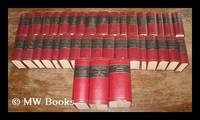
1927201018Paris : Le Divan 1927-37 1927. 1st Edition in this form. Hardback. Finely bound in later burgundy buckram with contrasting gilt-blocked black labels to spines. Each volume is in a protective clear plastic cover. Limitation statement facing title page of each volume - limitation number varies. Remains particularly and surprisingly well-preserved overall; tight bright clean and strong. Unread copies with unopened pages. ; 8vo 8"" - 9"" tall; Physical description: 70 vols. in 37. 16cm. Incomplete series of Stendhal's works published by Divan 1927-1937. Includes 64 volumes of Stendhal's works in 34 with 6 additional critical works in 3. Contents: I La Chartreuse de Parme. 2 v. - III Le rouge et le noir. 2 v. - IV Vie de Henri Brulard. 2 v. - V Armance. - VI Rome Naples et Florence. 3 v. - VII Souvenirs d' egotisme. - IX Lamiel. - X Vies de Haydn de Mozart et de Metastase. - XI Romans et nouvelles. 2 v. - XII Vie de Rossini. 2 v. - XIII Lucien Leuwen. 3 v.- XIV Histoire de la peinture en Italie. 2 v. - XVI Memoires d'un touriste. 3 v. - XVII Voyage dans le Midi de l aFrance. XIX Moliere Shakspeare la comedie et le rire. - XXI Pensees. 2 v. - XXII Idees italiennes. - XXIII Theatre. 3 v. - XXIV Melanges d' art. - XXV Ecoles italiennes de peinture. 3 v. - XXVII Melanges de litterature. 3 v. - XXVIII Melanges de politique et d'histoire. 2 v. - XXVIX Correspondance. 10 v.-XXX Courrier anglais. 5 v. - XXXI Melanges intimes et marginalia. 2 v. - XXXII Journal. 5 v. Lacks 15 volumes: - II De l'amour. 2 v. - VIII Racine et Shakspeare. - XV Chroniques italiennes. 2 v. - XVIII Napoleon. 2 v. - XX - Promenades dans Rome. 3 v. - XXVI Pages d'Italie. - XXXIII Table. 4 v. Note: Volume numbers assigned according to Bibliotheque Nationale Paris. Additional critical works: Petit dictionnaire stendhalien / Henri Martineau 1948 - Le calendrier de Stendhal / Henri Martineau avec la collaboration de Jules Lefranc et de Marion Lievre 1950 - La vie intellectuelle de Stendhal : genese et evolution de ses idees 1802-1821 / par Victor del Litto 2nd ed. 1962 - En marge des manuscrits de Stendhal : complements et fragments inedits 1803-1820 / suivis en appendice d'un courrier italien par V. del Litto 1955 - Le coeur de Stendhal : histoire de sa vie et de ses sentiments / Henri Martineau 2 vols. 1952 & 1953 - L' oeuvre de Stendhal : histoire de ses livres et de ses pensees / par Henri Martineau revised edition 1966. Subjects: Stendhal 1783-1842 - Marie-Henri Beyle - French literature - 19th century - Collected works - Fiction - Realism - France - Correspondance - Travel literature - Literary criticism - Studies and criticism - Biography. Language: French. Paris : Le Divan, 1927-37 hardcover
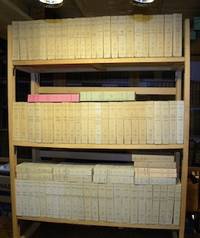
192729275Paris : Le Divan 1927-1947. 160x100mm. brochÂŽ. Exemplaires numÂŽrotÂŽs sur papier vergÂŽ Lafuma. Rare ensemble complet de la collection des oeuvres de Stendhal ÂŽditÂŽes par Henri Martineau 1882-1958. Joint: Du mÂme ÂŽditeur Petit Dictionnaire Stendhalien 1948. - Le Calendrier de Stendhal 1950. 20337 Le Divan unknown
1924145085Paris: René Kieffer Éditeur et Relieur d'Art 1924. Stendhal's great study of love crystallized in a superb art deco Kieffer binding First Kieffer edition in a striking Kieffer binding number 50 of 50 copies on japon from an edition limited to 1050 copies only of this art deco edition of Stendhal's great study of love which was originally published in 1822. In De l'Amour known in English as On Love Stendhal shared his concept of "crystallization" as "the process whereby the lover discovers new perfections in the beloved. This first crystallization is most often reinforced by a second one" Schehr. An argument however can be made that "Stendhal's crystallization has mainly been read from the masculine subject position however sympathetically. In the formula for crystallization Stendhal counts five steps to the completeness of it the fifth culminating in 'proof of love'. That is when the beloved loaded with all the imaginary perfections with which he can endow her grants him sexual access le don de merci in courtly terms. This moment marks of course precisely when a negative crystallization begins - for her. Having 'given herself' as 'proof' of love to him she finds that his final step is her first one into the state of the cruellest doubt did he just use me. Masculine and feminine positions within crystallization thus overlap only at this step and take opposing attitudes toward the same central experience" MacCannell. René Kieffer 1875-1964 worked for ten years at the famed Chambolle-Duru bindery in Paris before establishing his own workshop in 1903 and going on to become one of the leading binders in Paris. In 1909 he launched himself in the edition of illustrated luxury books. He learned the trade from Georges Crès and from Auguste Blaizot who joined his name to the first editions of René Kieffer; even the Mercure de France entrusted him with the direction of some volumes for their own editions. From 1919 to 1923 he executed bindings designed by Pierre Legrain for Jacques Doucet and his workshop quickly became important producing up to 2000 volumes a year with bindings of all kinds from the most luxurious to the more modest one. His bookshop opened in 1923 and his three activities were then combined in one place. Kieffer's consistent endeavour was to retain large poorly published texts have them illustrated by the great names of the time and when possible offer them in luxury or publisher's bindings. 2 vols octavo 196 x 138 mm. Printed in black and blue. Finely bound by René Kieffer with his ticket to versos of front free endpapers in green morocco preserving the original pink wrappers art déco decorative motifs blocked in blind to boards and spine end compartments titles in gilt direct to spine marbled endpapers white silk page markers top edges gilt others untrimmed. Occasional light pencil marks. Joints sometime expertly and discreetly repaired and refurbished spines and edges sunned the bindings otherwise sound and clean internally fresh; an attractive set. Juliet Flower MacCannell "The Hysteric's Guide to the Future Female Subject" 2000 p. 310; Lawrence Schehr "Rendering French Realism" 1997 p. 38. hardcover
1898140948475New York: Brentano's 1898. First Edition. Very Good. First American trade edition. ii 439 pp. Bound in publisher's red cloth stamped with black chevrons and lettered in gilt. Very Good with light rubbing to cloth more pronounced at corners sunning to spine and light stains to upper edge of textblock. Front hinge exposed and tender owner signature in an old hand to front free endpaper and small bookseller stamp to back pastedown. Overopened at several places contents lightly toned.<br /> <br /> <p>A scarce early English-language appearance of the novel Le Rouge et le Noir published the same year as the limited edition from G.H. Richmond & Son translated by Robins priority unknown. Precedes the first UK by two years. Encylopedia of Literary Trans. O. Classe 1331. Brentano's unknown
181491120Paris: Chez H. NicolleDe l'Imprimerie de C.-F. Patris 1814. Fine. Anonymous work attributed to Anna Maria Porter which inspired Stendhal's masterpiece ""La Chartreuse de Parme"" Chez H. Nicolle De l'Imprimerie de C.-F. Patris Paris 1814 10.2 x 17.4 cm Relié First edition of the French translation by Élisabeth de Bon gathering in 2 volumes the 4 parts of this anonymous English novel originally printed in 1809 which according to André Marc in his Dictionnaire des romans anciens et modernes of 1819 is the work of Anna Maria Porter younger sister of the novelist Jane Porter. The Porter sisters contemporaries of Jane Austen and famous before the Brontës were close to the Scottish poet Walter Scott. Contemporary full brown tree sheep smooth spines divided into compartments richly gilt in decorative rolls of laurels annulets and lozenges two compartments with a lozenge network formed by interlacing fillets with fleurons at the corners red and green morocco lettering-piece and numbering-piece blind-tooled fillet border to boards gilt fillet to turn-ins edges sprinkled red marbled endpapers in pebbled pattern. Some light surface wear and minor offsetting to boards corners slightly worn. On volume 1 a charming error in the decorative roll at foot of spine corrected by the binder. On volume 2 small piece of leather at the edge of the numbering-piece slightly detaching. Scattered foxing and faint marginal damp-staining to upper margins. In volume 3 two minor marginal repairs to half-title and p. 8. Several period textual corrections in brown ink and pencil: volume 1 p. 131 volume 2 p. 90 and volume 3 p. 21. In the early nineteenth century English novels were widely translated into French. According to the critic signing as ""E."" in the Journal de l'Empire Les Frères Anglais is a success and according to another reviewer writing for the Gazette de France the French translation as much as the original text deserves praise: ""We have already had the opportunity in this Gazette to praise the translator. English novels are much vaunted but the choice is vast; some prove mediocre and even detestable. This one does honour to the good sense of Madame Elisabeth de B. The situations are lively and varied the characters well drawn; the work pleases and holds one's attention from beginning to end."" Gazette de France December 4 1814 ""What astonishes readers who cannot transport themselves into the society whose customs are depicted and who insist on judging everything by the habits of their own circle is the liberty of young English ladies. If their novels offer a faithful picture of their manners and habits these young women converse familiarly in tête-à-tête with their suitors; they write to them even give them their portraits; they tell their parents without ceremony that their heart is engaged. Never would a French demoiselle make such a frank avowal; at most she allows her secret to be guessed."" Journal de l'Empire May 10 1815 our own translation Two women of letters were behind this literary success: Élisabeth de Bon a translator renowned in her lifetime also a novelist short-story writer and co-proprietor of the periodical the Mercure de France and a mysterious authoress. The name of Anna Maria Porter absent from the title-page would be revealed by the bookseller André Marc as that of the author in 1819. Precocious and prolific Anna Maria began writing and publishing books during adolescence nearly a decade before her elder sister Jane. In 1807 she published The Hungarian Brothers and in 1809 she is thought to have written The English Brothers. These two works with their near-identical titles like false twins are the starting point according to Richard Bolster for the attribution of the latter novel to Anna Maria Porter. It was precisely the same translator Élisabeth de Bon who undertook the translation of the third edition of The Hungarian Brothers in 1818 and in 1815 that of another of the author's works The Recluse of Norway. The En Chez H. NicolleDe l'Imprimerie de C.-F. Patris hardcover
1900170923005London: Downey and Company Limited 1900. First Edition. Hardcover. Near Fine. First British trade edition. vi 439pp. Original black cloth lettered in gilt with red decoration. A Near Fine copy with light rubbing along bottom edge offsetting from long-gone bookplate or slip on paste down otherwise intenally clean and bright. Lengthy gift inscription from former owner on front free endpaper in remembrance of mutual service in World War I British munitions unit small stamp from said unit below and owners' emboss on rear endpaper. <p>An elegant copy of the French masterpiece widely considered one of the world's first psychological novels. An extremely scarce edition with no other copies for sale in the trade few institutional copies shown in OCLC and none recorded at auction. Downey and Company, Limited hardcover
1898140949339New York: Brentano's 1898. First edition. Very Good. First American trade edition. ii 439 pp. Bound in publisher's red cloth stamped with black chevrons and lettered in gilt. Very Good with sunned spine moderate rubbing to covers and light soiling to cloth and textblock edges. Light dampstaining to upper corners of boards and endpapers smudges and ownership signature dated 1913 to front free endpaper. A little overopened at several places.<br /> <br /> <p>A scarce early English-language appearance of the novel Le Rouge et le Noir published the same year as the limited edition from G.H. Richmond & Son translated by Robins priority unknown. Precedes the first UK by two years. Encylopedia of Literary Trans. O. Classe 1331. Brentano's unknown
197757428Penguin. As New. 1977. Paperback. 0140440305 . FREE UPGRADE to Courier/Priority Shipping Upon Request IN STOCK AND IMMEDIATELY AVAILABLE FOR SHIPMENT - -- with a bonus offer-- . Penguin paperback