2 649 résultats
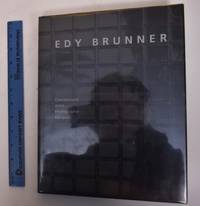
1995174262Kilchberg Zurich: Edition Stemmle 1995. Hardcover. VG. Black boards with black stamped lettering. Black illustrated dust jacket with gray lettering. 215 pp. Color and BW illustrations. Text in English. Summaries in German French Spanish and Japanese. Includes bibliographical references. Edition Stemmle hardcover books
2000Q-0439139945Scholastic Paperbacks 2000-06-01. Paperback. New. In shrink wrap. Looks like an interesting title! Scholastic Paperbacks paperback
1995Q-059048298XScholastic 1995-04-01. Library Binding. New. New. In shrink wrap. Looks like an interesting title! Scholastic unknown
1994BN49245Berlin ; Basel ; Boston : Birkhäuser 1994. Erstauflage EA. <br/><br/>Politik Berlin ; Basel ; Boston : Birkhäuser unknown
192527671Brüll Karl 1925
1996305449Morsak Druck und Verlag, 1996. Mit zahlreichen Schwarz-Weiß- Abbildungen. 239 Seiten Originalpappband mit Original-Schutzumschlag.Originalhalbleinen mit Original-Schutzumschlag.
1990Q-0937708216Great Northwest Pub & Distributing 1990-08-01. Paperback. New. In shrink wrap. Looks like an interesting title! Great Northwest Pub & Distributing paperback
1998Q-0792381866Springer 1998-06-30. Hardcover. New. In shrink wrap. Looks like an interesting title! Springer hardcover
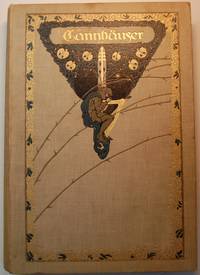
1910BN24494Gustav Weise Verlag 1910. Leinen. Für die Jugend ausgewählt und bearbeitet. Mit 4 Farbdruckbildern nach Aquarellen von Walter Zweigle und 15 Tondruckbildern von Willy Planck. sehr gut erhalten! Seiten altersbedingt nachgedunkelt! Gustav Weise Verlag unknown
196317406Frankfurt am Main, Suhrkamp, 1963-1967. 8°. 114 S., 3 Bl.; 106 S., 7 Bl.; 94 S., 5 Bl.; 148 S., 6 Bl. (= im Dialog. Neues Deutsches Theater). Orig.-Karton mit farb. Orig.-Schutzumschl. - Beiliegend ein Zeitungsartikel zur Erstaufführung von "Eiche und Angora" in Hannover. Schutzumschläge etwas randbestoßen . Schnitte angestaubt.
197026188Stuttgart, Stuttgarter Hausbücherei, 1970. 176 Seiten , 29 cm, Hardcover/Pappeinband
191855752Vienna: M. Munk. Good. 1918. First Edition. Softcover. Original pictorial wraps. Spine worn pages loose in binding. 26 of 27 un-numbered leaves. Color illustrations. Text in German. ; quarto . M. Munk paperback
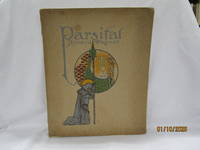
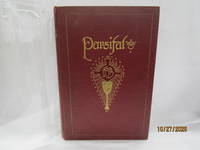
191254914NY: Thomas Y. Crowell. Very Good. 1912. First Edition. Hardcover. Original gilt-stamped burgundy cloth. First American trade edition. Illustrated by Pogany including tipped-in color plates. Spine gilt darkened wear to spine ends/edges with small loss to spine heel. Long closed tear along gutter of one of the preliminary pages. ; quarto . Thomas Y. Crowell hardcover
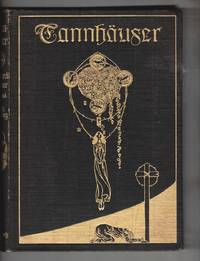
191059033NY: Brentano's. Very Good with no dust jacket. 1910. Hardcover. Light scratch to back cover No DJ; Gilt-decorated black cloth hardback. Unpaginated apprx 150 pp . Color & B&W illustrations. Epic poem. Date uncertain ca 1910; 8vo . Brentano's hardcover
19111124630<p>London: George G. Harrap & Co. 1911. Hardcover. Collectible - Very Good/No Jacket. Large hardcover with light gray cloth covers. Embossing with blue and gilt decoration on covers. Gilt lettering on spine. Spine has darkened. Cover wear at edges and spine tips. Owners inscription on front free endpaper dated 1919. No publisher date in book. Small paste down illustration facing title page with 16 tipped in illustrations by Willy Pognay. Every page is on a gray card stock with Pognay illustrations. 11.25x8x1.25 with 230 pp.</p> George G. Harrap & Co. hardcover
191170440New York:: Thomas Y. Crowell & Co 1911. publisher's cloth decorated in gold and colors in glassine wrapper and publisher's two-part decorated box. Ink gift inscription on the illustrated front free endpaper; otherwise a lovely copy in slightly used glassine. The box shows the lightest of use. . Large 8vo. Illustrated throughout by Willy Pogany. Thomas Y. Crowell & Co,, hardcover
191161781London:: G. G. Harrap & Co. 1911. First trade edition. publisher's gilt full morocco t.e.g. Leather slightly rubbed at corners and joints; tight and sound; contents fine. Large 8vo. Illustrated throughout by Willy Pogany. G. G. Harrap & Co., hardcover
191124558London: G. G. Harrap & Co 1911. Limited edition. Hardcover. Very good. 4to. Full calf embossed on the spine and upper board. Top edge gilt. Illustrated throughout by Pogány in black and white and tipped-in full color plates. Leather rubbed at hinges and edges with some light soiling else this is a very good copy.<br /> <p><br /> One of 525 numbered copies signed by Pogány. This is number166.<br /> <p>. G. G. Harrap & Co hardcover
191324584London: G. G. Harrap & Co 1913. First edition. Very good. Hardcover. Three volumes. 4to. Quarter green calf spine blocked in gilt; Cloth sides with gilt title and design on the upper boards. Top edges gilt. Illustrated throughout by Pogány in black and white and 40 mounted full color plates Spines sunned to a pleasing tan color else this is a very good set. In the publisher's slipcase which has some light wear.<br /> <p>. G. G. Harrap & Co unknown
195040304Leipzig, J.A. Barth, 1950. Orig. full cloth. XVIII,471 pp.
195526187Stuttgart, S. Hirzel Verlag, 1955. 45 Seiten , 30 cm, kart.
19621010130.32Johann Ambrosius Barth Verlag Leipzig 1962. 3 verbesserte Auflage. Hardcover. Very Good. 8vo hardcover. Tan cloth no dj. Vg condition. Ex-US Air Force copy markings to opening pgs. pocket in rear spine label removed; otherwise contents bright & clean binding tight. 489 pp. Johann Ambrosius Barth Verlag, Leipzig hardcover
192724331Berlin: Julius Springer 1927. First Edition. Cloth. Very Good. First Edition. viii 418 2-ads pages. 8vo. Publisher's blue/black boards with gilt lettering and publisher's device on spine and titles on front panel. Bookstore tag on front pastedown. Binding glued in gutter at Vorwort foreword. Otherwise a nice clean bright copy. Text in German. Cloth. Wagner was a full member of the Academy of Sciences Berlin and was made in 1931 an Honorary Member of the American Academy of Arts and Sciences Boston. He held numerous other awards including in 1930: Slaby-Plakette des Deutschen Funktechnischen Verbandes. In 1924 he founded the magazine Zeitschrift Elektrische Nachrichtentechnik.<br /> <br /> In the foreword Wagner notes that the sudden onset of broadcasting has created high demand for wireless telephony and has accelerated technical developments dramatically. The new building blocks of broadcasting can be built on the progress made in radio technology. In addition to the general relations of electrodynamics the laws of transmission propagation and reception of electric waves the events occurring in the electron tubes and their mode of action in the various circuits as rectifiers amplifiers and vibration exciters and finally the laws of acoustics and the operation of the electro-acoustic devices all play a role. Knowing all of these things is essential for building a good broadcast radio but is not easy to acquire because so far there has been no where to go for sound details regarding all of these issues.<br /> <br /> The Heinrich Hertz Society in 1925 created a plan to promote broadcasting over the airwaves by organizing a series of lectures about "The scientific basis of radio communications". This book was the much enlarged result. Wagner is probably best known for the development of what we now call wave filterswork he did starting in 1915.<br /> <br /> "The most prominent researchers G. A. Campbell in the United States and K. W. Wagner in Germany explored selective filter circuits for telephone applications in the early years of World War I thus paving the way for the first ideas about electrical circuit synthesis. They designed sophisticated filter circuits simply by cascading elementary sections of lossless inductors and capacitors. The circuits obtained in this way had a striking similarity to circuit models in engineering transmission line theory and henceforth were called ‘wave filters’." Life and Work of Wilhelm Cauer 1900 – 1945 Cauer et al Proc. MTNS2000 Perpignan France June 19 - 23 2000<br /> <br /> Waveguide filters today are most useful in the microwave band of frequencies where they are a convenient size and have low loss. Examples of microwave filter use are found in satellite communications telephone networks and television broadcasting. <br /> <br /> Davis Electrical and Electronic Technologies #372 noting that in 1915 filter technology came into being with the independent proposal of it by Campbell and Wagner. Julius Springer unknown
192724331Berlin: Julius Springer 1927. First Edition. Cloth. Very Good. First Edition. viii 418 2-ads pages. 8vo. Publisher's blue/black boards with gilt lettering and publisher's device on spine and titles on front panel. Bookstore tag on front pastedown. Binding glued in gutter at Vorwort foreword. Otherwise a nice clean bright copy. Text in German. Cloth. Wagner was a full member of the Academy of Sciences Berlin and was made in 1931 an Honorary Member of the American Academy of Arts and Sciences Boston. He held numerous other awards including in 1930: Slaby-Plakette des Deutschen Funktechnischen Verbandes. In 1924 he founded the magazine Zeitschrift Elektrische Nachrichtentechnik.<br/><br/>In the foreword Wagner notes that the sudden onset of broadcasting has created high demand for wireless telephony and has accelerated technical developments dramatically. The new building blocks of broadcasting can be built on the progress made in radio technology. In addition to the general relations of electrodynamics the laws of transmission propagation and reception of electric waves the events occurring in the electron tubes and their mode of action in the various circuits as rectifiers amplifiers and vibration exciters and finally the laws of acoustics and the operation of the electro-acoustic devices all play a role. Knowing all of these things is essential for building a good broadcast radio but is not easy to acquire because so far there has been no where to go for sound details regarding all of these issues.<br/><br/>The Heinrich Hertz Society in 1925 created a plan to promote broadcasting over the airwaves by organizing a series of lectures about "The scientific basis of radio communications". This book was the much enlarged result. Wagner is probably best known for the development of what we now call wave filterswork he did starting in 1915.<br/><br/>"The most prominent researchers G. A. Campbell in the United States and K. W. Wagner in Germany explored selective filter circuits for telephone applications in the early years of World War I thus paving the way for the first ideas about electrical circuit synthesis. They designed sophisticated filter circuits simply by cascading elementary sections of lossless inductors and capacitors. The circuits obtained in this way had a striking similarity to circuit models in engineering transmission line theory and henceforth were called ‘wave filters'." Life and Work of Wilhelm Cauer 1900 - 1945 Cauer et al Proc. MTNS2000 Perpignan France June 19 - 23 2000<br/><br/>Waveguide filters today are most useful in the microwave band of frequencies where they are a convenient size and have low loss. Examples of microwave filter use are found in satellite communications telephone networks and television broadcasting. <br/><br/>Davis Electrical and Electronic Technologies #372 noting that in 1915 filter technology came into being with the independent proposal of it by Campbell and Wagner. Julius Springer unknown books
197811127Neuchâtel, éditions de la Baconnière, 1978. Petit in-8 broché, couverture imprimée en deux tons. Tout petit choc au coin supérieur du second plat.