10 104 résultats
174152847Göttingen 1741. Von der Regierungskunst eines Fürsten. Mit historischen und politischen Anmerkungen. Aus dem Französischen übersetzt Insgesamt guter Zustand mit geringen Alterungsspuren Erste deutsche Ausgabe Königliche Universitäts-Buchhandlung 8°. Ldr. Philosophie unknown
17898851O. O., o. V. 1789.
A Berlino, presso G. J. Decker regio stampatore, [circa 1779?], in-8, brossura fittizia, pp. 32. Con la figura intera di Voltaire incisa in rame su una tavola in antiporta. Non comune.
19162411150410xbvkBerlin, Verlag von Reimar Hobbing, 1913-1914 / 1914 / 1916. XV, 244 (4); VIII, 277 (5); VII, 238 (5); 209 (5); VII, 248 (4); VIII, 433 (9); X, 291 (6); VIII, 318 (3); IX, 316 (3); VI, 285 (1) / 319 (2); 284 (2) / Frontispiz, XII, 463 Seiten; Insgesamt ca. 4.000 Seiten, mit vielen Abbildungen im Text und historischen Portraits auf Karton sowie Zeichnungen von Adolf von Menzel auf Tafeln sowie einer Kartenskizze. - Dunkelblaue Original-Leineneinbände mit reicher Rücken- und dezenter Deckelvergoldung, goldgeprägtem Deckelmonogramm und -Rückentitel, Kopf-Rotschnitt; gr.-4to.(ca. 29 x 21 x 38 cm; ca. 21 kg.).
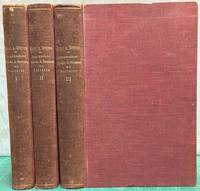
191116277Leipzig: Verlag Von S Hirzel. Good with no dust jacket. 1911. Hardcover. Heavily annotated with underlining and marks light tone otherwise light wear. Solid hardcovers. ; French language letters; Vorwort Zur literarischen Einführung Anhang and footnotes in German language. Three of three volumes complete set: I 1908 II 1909 and III 1911. Ownership signature of George R Havens on front paste-down of Volume III noted scholar of the French Enlightenment and Ohio State professor. The letters document the nearly half-century intellectual and personal relationship between Frederick the Great of Prussia and Voltaire begun with correspondence from Crown Prince Frederick in 1736. Documentation from the Prussian archives of Friedrich's correspondence with Voltaire a significant part of 18th century intellectual history from the library of an outstanding scholar of the period. ; 0 pages . Verlag Von S Hirzel hardcover
174120801Marseille Colomb 1741 in-8 plein-veau 3 parties reliées en un volume, reliure plein veau brun raciné in-octavo (binding full calfskin in-8) (12,6 x 20 cm), RELIURE D'EPOQUE, dos à nerfs (spine with raised band), décoré or et à froid (gilt and blind stamping decoration), titre frappé or, pièce de titre sur fond bordeaux avec filet "or" et filet perlé "or" en encadrement, entre-nerfs à fleuron or dans un encadrement à filet or et filet perlé or avec rinceaux "or" aux angles, filet à froid de part et d'autre des nerfs, roulette or en tête et en pied, plats décorés à froid d'un filet à froid en encadrement, coins trés légèrement émoussés, roulette or sur les coupes avec manque de dorure, toutes tranches lisses rouges, titre imprimé en rouge et noir, sans illustration (no illustration), (XXXII + 82 + 112 + 67+ [3 p. de table]) Pages, 1741 A Marseille, chez les frères Colomb Editeurs,
Torino, Unione Tipografico-Editrice Torinese, [c. 1984], in-8, br. editoriale, pp. [142]. Si tratta dell'introduzione di Fubini, estratta dal volume dedicato agli scritti politici di Voltaire nella collana "Classici politici", diretta da Luigi Firpo.
194361512Genève Impr. Albert Kundig 1943 1 vol. broché in-4 (250 x 200 mm), broché, 48 pp. et 16 planches hors-texte. Tiré à part de Genava, Bulletin du Musée d'Art et d'Histoire de Genève, N° XXI, 1943. Piqûres en marges du plat supérieur de couverture. Sinon bon état général.
130507TVTiré à part de la « Nouvelle revue de Hongrie » octobre 1942. L’aristocrate transylvanien en question est le comte Joseph Teleki (1738-1796). Il a entrepris de 1759 à 1761 un voyage en Suisse, Hollande et France pendant lequel il a tenu un journal. D’un esprit proche des Lumières, il s’est attaché à visiter les grandes villes et à rencontrer les personnalités qui comptaient à l’époque (physiciens, mathématiciens, philosophes, …). Gabriel Tolnai nous présente le comte, son journal et les extraits relatant ses rencontres avec Voltaire et Rousseau. Brochure format 18 x 25 cm, 9 pages.
In -8°, pp. (4), 314 + foglio di errata; pelle con titolo al dorso e fregi. È la prima edizione del trattato scritto da Galiani durante il soggiorno a Parigi, il lavoro affronta in forma apparentemente leggera alcuni temi nevralgici dell’economia tardo settecentesca, sul libero mercato e sul monopolio. I Dialogues suscitarono l’attenzione (e il consenso) dello stesso Voltaire, che li descrive come allo stesso tempo divertenti “come un romanzo” ma anche istruttivi “come i nostri migliori libri seri”. Ferdinando Galiani, detto l'abate Galiani (Chieti 1728 – Napoli 1787), importante economista italiano: “Ordinato abate, pubblicò il trattato Della moneta (1751). Nell’opera, che gli diede una immediata fama internazionale, G. respinse le teorie contrattualiste sull’origine della moneta. Considerato un precursore della teoria marginalista, formulò la teoria del valore di un bene in termini di utilità, rarità e lavoro necessario per produrlo (‘fatica’). Segretario all’ambasciata del Regno di Napoli a Parigi, frequentò i maggiori intellettuali dell’epoca. Rientrato a Napoli, ricoprì vari incarichi pubblici”. (Dbi, s.v.) Cossa 139 (47); Einaudi 2334; Gosdsmiths' 10640; Higgs 4941; INED 1948; Kress 6730 First edition of the Galiani’s treaty, written during his Paris stay, in which in an outwardly light form the most nevralgic economic subject of the time are discussed, particularly on freedom of commerce and monopoly. The “Dialogues” pulled the attention of Voltaire, that describes the book as pleasant “like a novel” but at the same time useful as like “our best serious books”. The “Abate” Galiani (Chieti 1728-Naples 1787) was an important Italian economist: his treaty on money (“Della moneta”, 1751) gave him international celebrity since his youth. Secretary of the Naples embassy in Paris, he was in touch with the most important thinkers of his time.
199813162Zürich, Pendo, 1998. Pappband, Schutzumschlag, 8°, 219 S., zahlreiche Abbildungen; -Umschlag etwas berieben, sehr gutes Exemplar.
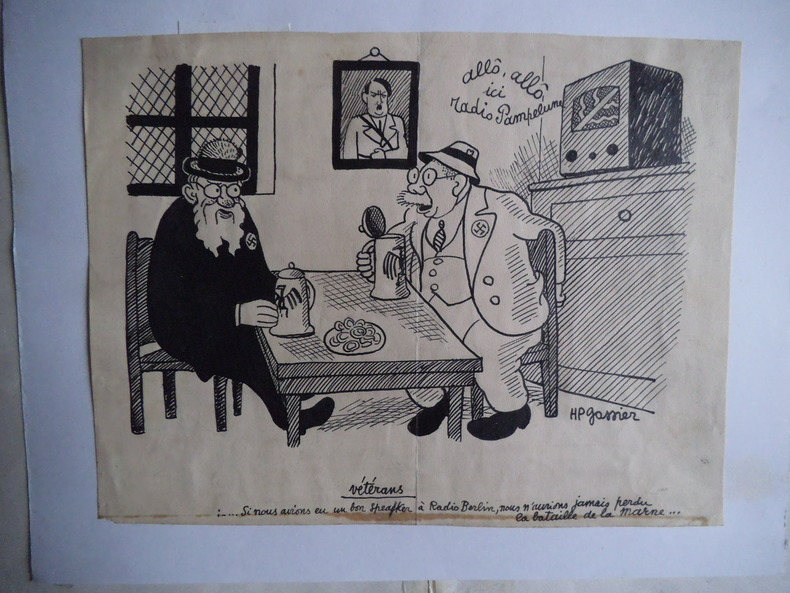
8043Dessin original crayon et encre de chine de H .P GASSIER format 265x205mm signature.A signaler une petite décoloration en marge inférieure sans gravité
Finale, nella stamperia di Giacomo Rossi, 1779. Due volumi rilegati in uno in mezza pelle coeva con fregi e titolo al dorso. Pp. XIX, 202; 250, (2). Prima ed unica edizione. Bell’esemplare su carta forte. Contiene Alzira, La morte di Cesare, La madre confidente e varie poesie come Per santa Caterina da Genova, in onore di san Tommaso d’Aquino, a Nice, a Lesbia, contro la guerra, etc. € 280
1878024347Paris GERMER BAILLIÉRE et Cie 1878 un volume in-18°, XI (2) 10-356 pp. Reliure époque en demi-chagrin vert, dos à nerfs orné de l'auteur et du titre dorés, gardes peignées. (coupes et plats frotté.e.s). Ex-libris : BARON de NEUFLIZE.
1988234395San Francisco: GAPA 1988. 6p. includes covers 8.5x11 inches news stories calendar of events services and resources photos reports very good newsletter in unbound folded sheets bright yellow covers. Yet another incarnation of the house organ for GAPA. GAPA had several organs including the Newsletter a Bulletin and a semi-slick magazine. GAPA unknown books
199327219Paris Fayard / Les Chemins De La Musique 1993 In-8 233 pp
B9781461137900Paperback / softback. New. paperback
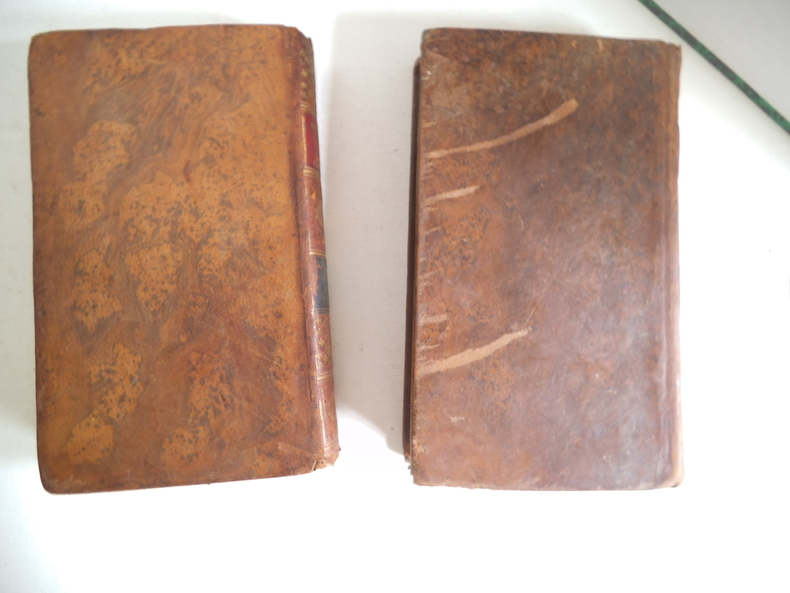
14581Deux tomes en deux volumes in 12 plein cuir fauve raciné, dos lisse, pièce de titre cuir rouge, pièce de tomaison cuir bleu, roulette, filets, fers semis d’étoiles, dorés ;105x170mm. Tome premier : faux-titre, titre, XXXIX-364pages (une charnière coupée, coins émoussés) Tome second : faux titre, titre 418 pages. 2 coins émoussés. Tranches mouchetées. Chez MARADAN 1819.
11461No publisher or date late C19th. Broadsheet one page 44 x 21.5cm fold marks two small closed tears staining at top not affecting text mainly good condition. The item has introductory remarks on the verses presumably manuscript being sent by Keate with a gift reminding readers of Keate's work on the Pellew Islands and patronage of Lee Bow another Marcellus. These are followed by 34 lines of verse offering support and help with complimentary phrases. It commences "'Tis not I readily confess My virgin hue or silv'ry dress" concluding "My last drop will flow for you. Such the aid I mean to give If with you allow'd to live." This is followed by brief words on the death burial and nature of Keate with 10 lines from the epitaph on or near his grave with a few words about "a Gentleman who distinguished himself in his early years at the Scotch Bar" who "prepared" the Epitaph. Apparently not published elsewhere. Notes: a.James Carmichael Smyth features in both" An account of the Pelew Islands" and "The History of Prince Lee Boo son of Abba Thulleking of the Pelew Islands". e b.DNB "Smyth experimented with nitrous-acid gas for the prevention of contagion in cases of fever. At the request of the government he continued the experiments at the prison and hospital at Winchester Hampshire where there was an epidemic of typhus. He conducted a similar experiment to destroy contagion in 1795 on the HMS Union a hospital ship which between September 1795 and January 1796 had taken on board 479 typhus sufferers from the Russian fleet. He heated crude nitre presumably with carbon and the oxides of nitrogen given off would in fact have been fatal to the lice which spread typhus a disease not yet distinguished from typhoid. In addition Smyth thought washing and cleanliness very important. For his experimental work parliament voted Smyth in 1802 a reward of £5000. His claim to the discovery was disputed by Dr John Johnstone of Birmingham for his father Dr James Johnstone and by M. Chaptal for Guyton de Morveau. After a keen controversy Smyth's claims were upheld. Shortly afterwards he was elected physician-extraordinary to George III. He then went to the south of France for his health and on his return settled at Sunbury Middlesex. He died at Sunbury on 18 June 1821". From the papers of the Carmichael-Smyth Family. See also #11462 these verses in a different format. No publisher or date, [late C19th?] unknown
11462No publisher or date late C19th. Handbill four pages 8vo bifolium minor staining mainly good condition. The item has introductory remarks on the verses presumably manuscript being sent by Keate with a gift reminding readers of Keate's work on the Pellew Islands and patronage of Lee Bow another Marcellus. These are followed by 34 lines of verse offereing support and help with complimentary phrases. It commences "'Tis not I readily confess My virgin hue or silv'ry dress" concluding "My last drop will flow for you. Such the aid I mean to give If with you allow'd to live." This is followed by brief words on the death burial and nature of Keate with 10 lines from the epitaph on or near his grave with a few words about "a Gentleman who distinguished himself in his early years at the Scotch Bar" who "prepared" the Epitaph. Apparently not published elsewhere. Notes: a.James Carmichael Smyth features in both" An account of the Pelew Islands" and "The History of Prince Lee Boo son of Abba Thulleking of the Pelew Islands". e b.DNB "Smyth experimented with nitrous-acid gas for the prevention of contagion in cases of fever. At the request of the government he continued the experiments at the prison and hospital at Winchester Hampshire where there was an epidemic of typhus. He conducted a similar experiment to destroy contagion in 1795 on the HMS Union a hospital ship which between September 1795 and January 1796 had taken on board 479 typhus sufferers from the Russian fleet. He heated crude nitre presumably with carbon and the oxides of nitrogen given off would in fact have been fatal to the lice which spread typhus a disease not yet distinguished from typhoid. In addition Smyth thought washing and cleanliness very important. For his experimental work parliament voted Smyth in 1802 a reward of £5000. His claim to the discovery was disputed by Dr John Johnstone of Birmingham for his father Dr James Johnstone and by M. Chaptal for Guyton de Morveau. After a keen controversy Smyth's claims were upheld. Shortly afterwards he was elected physician-extraordinary to George III. He then went to the south of France for his health and on his return settled at Sunbury Middlesex. He died at Sunbury on 18 June 1821". From the papers of the Carmichael-Smyth Family. See also #11461 these verses in a different format. The handbill has a full Epitaph 32 lines with a lengthy encomium not just 10 lines as the broadside. No publisher or date, , [late C19th?] unknown
1885808Tome Deuxième orné du portrait de A.-J.-Q. Beuchot. Couverture rempliée satisfaisante. Mors fragile. Intérieur avec rousseurs.Tome Troisième orné de deux fac-similés. Enrichi de plus de 100 lettres de Voltaire qui ne figurent dans aucune édition de ses oeuvres et suivi du Répertoire chronologique de sa correspondance de 1711 à 1778. Couverture rempliée convenable. Intérieur avec rousseurs. Non coupé. Tome Quatrième et dernier orné d'un portrait de Voltaire gravé par JEANNIN, d'après l'original de Largillière. Couverture rempliée convenable. Intérieur avec quelques rousseurs. Non coupé.
18834550Genève et Paris, J. Jullien et G. Fischbacher, 1883 ; in-8, broché ; 84 pp. et (1) f. de table.