Volney, Constantin-FrancoisBiblio.com

765 résultats
1017592535.Ghardcover. Good. Access codes and supplements are not guaranteed with used items. May be an ex-library book. hardcover
3744756866.Gpaperback. Good. Access codes and supplements are not guaranteed with used items. May be an ex-library book. paperback
3744762491.Gpaperback. Good. Access codes and supplements are not guaranteed with used items. May be an ex-library book. paperback
1788121627London: G.G.J. and J. Robinson 1788. Second Edition. Hardcover. Very good. 2 vols.: xii 418; iv 500 15 p. 22 cm. 5 engraved fold-out plates including 2 maps. 1. Full tree-calf leather. Corners lightly bumped. Vol. 2. Small dent on bottom of rear board in vol. 1 as well as a bit of soiling to lower edge of text block. Vol. 2 has large horizontal tear in p. 327 chip in third plate and dampstains to front pastedown and inner margins of first pages. Paper bright and clean. <br/><br/>Title continues: "Containing The present Natural and Political State of those Countries their Productions Arts Manufactures and Commerce; with Observations on the Manners Customs and Government of the Turks and Arabs." Volney 1757-1820 was a well-travelled learned man. He embarked on a journey to the Near East in late 1782 and spent nearly seven months in Ottoman Egypt. Afterwards he lived for nearly two years in Greater Syria in what is today Lebanon and Israel in order to learn Arabic. He returned to France in 1785 where he spent the following two years compiling his notes and writing these volumes. He continued to travel in later years being expelled from the U.S.A. as a suspected spy in 1797. It seems his life was always an adventure for he narrowly escaped the guillotine during the French Revolution. Of interest in these well-preserved volumes is the account given of the Arabic press at the convent of Marhanna vol. 2 pp. 190-191 with a catalogue of books printed there p. 196. On the macabre side is the extensive discussion of diseases prevalent in Egypt including smallpox blindness cutaneous eruptions plague and Neapolitan Disease which seems to be syphilis vol. 1 pp. 240-258. Indexed. G.G.J. and J. Robinson hardcover
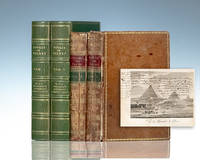
1788ST10830London: Printed for G. G. J. and J. Robinson 1788. Second Edition in English. 216 x 137 mm. 8 1/2 x 5 3/8". Two volumes. <br/> VERY FINE CONTEMPORARY FLAMED CALF flat spines ruled in gilt red morocco label on each spine. Three engraved folding plates views and plan and two engraved folding maps. Front pastedowns with the armorial bookplate of Penelope Vaughn. Cox I 235 citing French edition of 1787; Lowndes IV 2790; Graesse VI 389 both citing English edition of 1787. ◆A handful of paper flaws one causing a short tear without loss just into text a half dozen leaves with light marginal soiling apparently incurred in the print shop top inch of front joint of second volume slightly cracked two bottom corners a bit bumped and rubbed but A VERY FINE COPY INSIDE AND OUT the bindings lustrous and scarcely worn the text bright and clean and the plates all remarkably well preserved.<br/> <br/> The author's first book this item is called by Chambers "one of the most exact and valuable works of its kind ever published" Cox quoting Chambers' "Cyclopaedia: or an Universal Dictionary of Arts and Sciences". The Blackmer catalogue says that "Volney's popular and highly-regarded work was the result of three years' travels a good deal of which time was spent in Cairo. His account has never really been surpassed. Volney went to great lengths in preparation which included a year devoted to exercise and self-deprivation and three months learning the language required in a convent in the mountains of Lebanon." Volney 1757-1820 was a learned man a frequent traveller and an important governmental official who was expelled from America as a suspected spy and who narrowly escaped the guillotine during the French Revolution. The present bindings obviously are not notable for their decoration but they are wonderful examples of attractively executed flamed calf bindings typical of those making up the bulk of country gentlemen's libraries all over Great Britain. The condition of the present copy is nothing short of extraordinary very nearly capturing the look and feel of the volumes as they would have appeared on their original shelf. Printed for G. G. J. and J. Robinson unknown
1853London: printed for G.G.J. and J. Robinson Pater-Noster-Row 1788. Hardcover. Good. Octavo. Two volumes. I:iv xii 418pp.; II: iv iv 500 xvpp. Second English edition. I: 2 A6 B8-Z8 Aa8-Dd8 Ee2; II: 4 B8-Z8 Aa8-Ii8 Kk2 Ll8. With half-titless to both volumes present. Contemporary calf rehinged at an earlier date. Some scuffing and wear to covers hinges still tender. With two folding maps of Syria and Egypt and two plates of buildings in the two countries plus a folding plan. ESTC T12218. <br/> <br/> London: printed for G.G.J. and J. Robinson, Pater-Noster-Row, 1788 hardcover
0483238627.Ghardcover. Good. Access codes and supplements are not guaranteed with used items. May be an ex-library book. hardcover
0666113629.Gpaperback. Good. Access codes and supplements are not guaranteed with used items. May be an ex-library book. paperback
114243561X.Gpaperback. Good. Access codes and supplements are not guaranteed with used items. May be an ex-library book. paperback
1241418179.Gpaperback. Good. Access codes and supplements are not guaranteed with used items. May be an ex-library book. paperback
1340870169.Ghardcover. Good. Access codes and supplements are not guaranteed with used items. May be an ex-library book. hardcover
1146564627.Gpaperback. Good. Access codes and supplements are not guaranteed with used items. May be an ex-library book. paperback
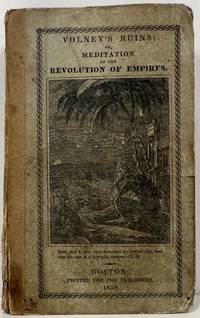
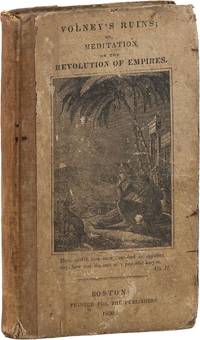
183567296Printed in the USA: Charles Gaylord 1835. 1835 edition. Cloth and paper over boards. As described. Hardcover cloth tan over paper illustrated over boards. 12mo. 216 pp. Illustrated with a b/w engraved frontispiece. No edition marks. Remnants of a paper label on the spine. Faded partially legible inscription on the front flyleaf. Ownership signature P. S. Van Wagner Hamilton 1844 R. R. on the front flyleaf and title page. Small enclosed tear on the back flyleaf. Text block is age browned around the edges and mildly foxed throughout. Binding is strong and square. Spine and boards are soiled rubbed and worn. Edges of the boards are frayed in sections. Small enclosed tear on the fore edge of the front board. Crack in the bottom of the front hinge. Bumped corners. Despite its appearance this copy's bindings are still strong and its pages legible. Charles Gaylord unknown
183588767Boston: Charles Gaylord 1835. Early US Edition. Twelvemo. 17cm. Publisher's original linen spine lacking paper title label over decorated publisher's paper covered boards. 216pp. Strong and solid scuffed to the corners with the paper worn allowing the board to show through rubbed and a little battered in places with some light cosmetic fraying to the spine ends and a general unform wear that is oddly not unappealinig; internally foxed in a pale similarly uniform fashion with some truly eccentric oak gall ink inscriptions to the preliminary blanks stating that the book was part of the library of the Transylvania Whig Society of Kentucky and presented by a visiting Englishman the inscriptions seem to serve as a kind of lending record denoting that the book was especially approved of by Kathleen O'Pinkerly who seems to have borrowed it twice; the page block is worn and a little stained but solid and eminently handleable and the rear flyleaf blank is covered with small neat pencil annotations with a corner of the blank torn away. Cosmetically unappealing perhaps but aesthetically rather charming and undeniably a survivor. A very good copy by dint of completeness eccentricity and stubbornness.<br /> <br /> An early US reprint the US first was issued in New York in 1828 by Dixon and Sickles and it is likely there is a Gaylord edition from 1833 with all US imprints being pretty thin on the ground especially with illustrated publisher's boards. This is in addition an uncredited Jefferson-Barlow translation translated with the approval and co-operation of the author by none other than Thomas Jefferson who managed the first 20 chapters or so before distracting himself with political fripperies whereupon it was subsequently completed by Joel Barlow. Of the various translations the Jefferson-Barlow is considered superior by dint of Volney's close relationship with Jefferson their common views and sympathies and frankly the fact that it renders the whole piece rather more poetically than might be found elsewhere. <br /> <br /> Controversial and madly popular it's far more a work of radical philosophy than anything else; like Jefferson Volney was a committed Deist and a firm believer in the separation of church and state for reasons clearly expressed by him through Jefferson in this work. Even more radically for the time he was a propogator of the "Christ Myth" which suggested that there was little or no evidence for the actual existence of Christ as a historical personage and that He was far more likely to be an inspiring assemblage. As might be expected such views were polarizing engendering either inspired revolutionary support or cries of heresy and treason depending upon the reader. The upshot of this and a number of other controversies was that Volney in common with the Founding Fathers not being a man known for keeping his mouth shut was ejected from the United States on more or less invented charges of espionage and his philosophical musings on the ashes of Empires and the sad destiny of mankind somewhat discredited. This had little effect upon the historical importance of Volney's "Ruins" however and it was for example widely embraced by the Romantics and their followers with Shelley having a virtual addiction to its evocative embracing of decay and his wife Mary for reasons of her own making it the text from which Frankentein's monster learned what he could about the nature of mankind and developed a rather stereotypically male interest in the Roman Empire. An unusual edition of an influential and incendiary work. Charles Gaylord unknown
3337173314.Gpaperback. Good. Access codes and supplements are not guaranteed with used items. May be an ex-library book. paperback
185316954Philadelphia: F. W. Thomas 1853. Dritte Stereotyp Ausgabe. Hardcover. fair. Sm. 8vo. 220pp. Blind-stamped brown cloth with gold decorated spine. Small plate with "27" handwritten near head of spine. Chipping to head and tail of spine. Wear to edges. Staining and rubbing to boards. Sporadic foxing throughout. Bookplate of school-district on inside of front board and name of the same handwritten on title-page. Ex libris.Text in Gothic script. Binding in fair interior in good condition. Rare. F. W. Thomas hardcover
1108493106.Ghardcover. Good. Access codes and supplements are not guaranteed with used items. May be an ex-library book. hardcover
1108717268.Gpaperback. Good. Access codes and supplements are not guaranteed with used items. May be an ex-library book. paperback
2024SKU0604400Cambridge University Press 2024-02-15. paperback. Good. 5x0x8. Textbook May Have Highlights Notes and/or Underlining BOOK ONLY-NO ACCESS CODE NO CD Ships with Tracking Cambridge University Press paperback
2024SKU0651907Cambridge University Press 2024-02-15. paperback. New. 5x0x8. New Textbook Ships with Tracking Cambridge University Press paperback
0428113362.Gpaperback. Good. Access codes and supplements are not guaranteed with used items. May be an ex-library book. paperback
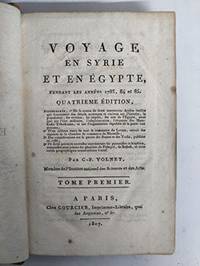
51-5720Paris: Courcier 1807. 8vo. 12 x 20 cm. 2 vols. Contemporary tree calf with labels and gilt spine.Engraved views and folding maps. Very good. OCLC Number / Unique Identifier:312942222. Paris: Courcier, 1807 unknown
1799146536A Paris: Chez Dugour et Durand Libraires Rue et Hotel Serpente 1799. Volney's important work on Egypt and Syria from the library in exile of Napoleon Bonaparte with his annotations and corrections throughout several made as he was dictating details from the Egyptian Campaign for his own Memoirs. This copy may also have accompanied him during his Egyptian Campaigns; it is known that Napoleon brought along a copy of Volney's book to Egypt and it served as the standard reference source for the members of the campaign. Octavo two volumes bound in full contemporary French sprinkled calf with gilt tooling to the spine morocco spine labels lettered in gilt gilt scrolling to the front and rear panels with 3 engraved folding maps and 5 folding plates. First published in 1787 this important travel account by the renowned French historian orientalist philosopher and politician Constantin Francois de Chasseboeuf comte de Volney 1757-1820 is considered the best exposition of Egypt from Ottoman Syria in the late eighteenth century. It served as a basis for later Egyptian expeditions and many scientists as well as Bonaparte himself took this work with them on their expeditions. His candid descriptions did not romanticize Egypt's history or its contemporary social and political conditions but discussed the ills that plagued the country and explored the military weakness of the Ottoman Empire. Based on his observations Volney discouraged a conquest of Egypt and while he supported his friend Bonaparte politically he declined the invitation to accompany Napoleon's expedition in person. It is known that Napoleon brought along a copy of Volney's book to Egypt and it served as the standard reference source for the members of the campaign. The French campaign in Egypt and Syria 1798--1801 was a Napoleonic campaign in the Ottoman territories of Egypt and Syria executed by Bonaparte. Napoleon proclaimed to "defend French trade interests" and to establish "scientific enterprise" in the region. Despite early victories and an initially successful expedition into Syria Napoleon and his Armee d'Orient were eventually defeated and forced to withdraw especially after suffering the defeat of the supporting French fleet by the British Royal Navy at the Battle of the Nile. However on a scientific front the expedition was a success that led to the discovery of the Rosetta Stone creating the field of Egyptology. This important copy contains numerous annotations in ink and pencil in Bonaparte's hand mostly concerning measurements and other calculations including a heavily annotated folding plate of the pyramids "Vue de Pyramides de Djize" in Vol. I. The first volume contains ink annotations on pages 188 232 272 273 277-79 281 plate at page 229 cited above and map "Carte de la Syrie" at p. 288 outlines drawn in red pencil. The second volume contains mostly pencil annotations on pages 223 225 227 229 272 ink and pencil and 333. These corrections were made by Napoleon as he was dictating details from the Egyptian Campaign for his own Memoirs see provenance below. After Napoleon's death on St. Helena a large portion of his last library was divided by the executors among heirs and friends. The remainder was removed from St. Helena by order of the British Government and sold to the important French bookseller in London Martin Bossange. The lots that failed to sell almost half were quickly consigned by Bossange to Sotheby's and sold on 23 July 1823. The lengthy catalogue entry for the present lot in the Sotheby's catalogue reads: "This Work is one of the most interesting books that has occurred for sale for many years. Most persons are aware that Napoleon wrote very little but dictated to his favorite Generals Bertrand Montholon and Count Las Casas. The Egyptian Campaign which forms a part of two volumes just published of his Memoirs have been dictated from these volumes: he has taken notice of the most trifling error in the book; hence the many CORRECTIONS BY HIM. The Plate at page 229 vol. i is entirely covered with his hand writing. This unique Book forms an historical document which will be looked at with a mixture of pleasure and pain by the admirers of so great a man." Provenance: Napoleon I each title-page with circular hand-stamp in brown ink from Napoleon's library at Longwood House on St. Helena; and with his numerous ink annotations to plates and text in both volumes; Sir James Lewis Knight-Bruce bookplates; and with a note from his grandson regarding this copy: "These two volumes of 'Volnay's Voyages' which belonged to Napoleon the first were understood to have accompanied him during his Egyptian Campaigns and contain many notes in his the Emperor's handwriting. My grandfather the late Lord Justice Sir James Lewis Knight-Bruce of Roehampton Priory purchased these books presumably about 1821-2 when they were sent to England from St. Helena for sale. They being in Napoleon's possession there until his death in 1821." In very good condition with splitting to the spine and joints small section of leather torn from the upper cover of Vol. II; some wear to extremities. Occasional pale spotting internally final blank leaves 30/8 of both volumes removed presumably at the time of binding. First map in Vol. I with small marginal tear repaired near gutter margin second and third maps each with 2-inch tear repaired at gutter a few other plates with small marginal tears or reinforcements. Housed in a custom full crushed levant morocco clamshell box by Riviere & Son. Third edition revised and corrected. An exceptional piece of history with fascinating provenance. Chez Dugour et Durand, Libraires, Rue et Hotel Serpente hardcover
1108066674.Gpaperback. Good. Access codes and supplements are not guaranteed with used items. May be an ex-library book. paperback