6 183 résultats
New German Original bdg. HC. Elephant folio. (67 x 51 cm). -Text book: 30 x 24 cm- In German. 2 volumes set: ([xii], [vii], [Lii], 140 p., 2 plates.; 39 color and b/w plts. (Tafeln)). Limited reprint edition (all copies are numbered) of 1854-1855 Berlin edition of Salzenberg's book exemplifying a growing 19th-century appreciation of Romanesque and 'Byzantine' architecture. For the original edition see Blackmer 1483; Brunet V, 103. "Salzenberg's important work remains the major source of information about the mosaics of St. Sophia". (Blackmer). 1000 copies were printed for individual persons. This copy belonged to 'Ender S. Özer Bagciman. All copies were numbered. (651/1000). The churches Salzenberg describes illustrating the development of a Christian architecture away from the secular long nave basilica or of the classical temple (never intended for congregational use), to a Greek-cross plan with a central dome, allowing greater accessibility to the altar table. Most of the text is devoted to the cathedral of the Holy Wisdom [i.e. Hagia Sophia], built-in Constantinople for Justinian I by Anthemius of Tralles and Isidore of Miletus, who dared to set a large dome over a square with the support of pendentives, achieving, with eastern and western half-domes, an uninterrupted span of over 200 feet. This building provided a model or inspiration to architects of the Middle East and Europe seeking to experiment with central, domed structures. Contents: Titelblatt.; Frontispiz.; Titelblatt.; Inhalt des Textes.; Vorwort.; Einleitung.; Verschiedene Baureste der aelteren Zeit.; Agios Johannes, Klosterkirche des Studios.; Agios Sergios, Kirche des Klosters Hormisdas.; Agia Sophia.; Agia Irene.; Agia Theotokos, Klosterkirche des Lips.; Agios Pantokrator.; Saalbau des Hebdomon.; Cisterne des Philoxenos (Bin-Bir-Direk).; Wasserpfeiler oder Suterasi.; Kirchen aus Klein-Asien.; Anmerkungen.; Anhang: Des Silentiarius Paulus: Beschreibung der Heiligen Sophia und des Ambon.; Vorwort.; I-VI i: Die H. Sophia des Silentarius Paulus.; VII-XIV Der Ambon.; Verzeichniss der Abbildungen.; Blatt I - XXXIX.; Maßstab/Farbkeil.
187316450Paris, Lemerre (Imprimerie Claye), 1873 ; in-18 (188118 mm), broché ; (8), 258 pp., (1) f. blanc, couverture imprimée.
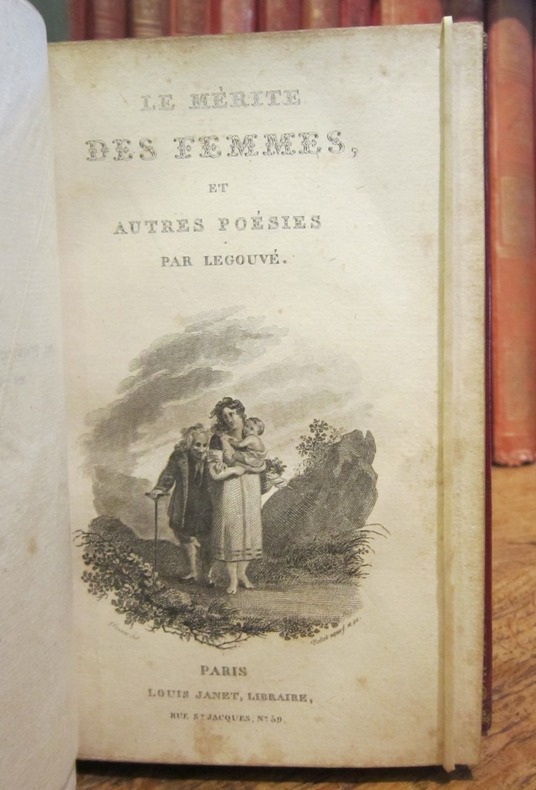
000199Paris Louis Janet, Imprimerie de Jules Didot aîné
Very Good Turkish, Ottoman (1500-1928) Original illustrated wrappers. Cr. 8vo. (20 x 13 cm). In Ottoman script (Old Turkish with Arabic letters). 220, [2] p., 41 unnumbered plates (incl. 68 b/w photos), and 3 maps. Pages are partly untrimmed and uncut. Slight stains on cover and wear at spine. Overall a good copy. Roumi: 1326 = Hegira: 1327 = Gregorian: 1910. First and only edition of this extremely rare book, including a historically significant eyewitness account of Cami Baykurt, who was an Ottoman officer during the Tripoli War (1911-1912), describing the flora, and the fauna in the Sahara desert and around Libya; the Bedouins and their customs with their social life, their culinary culture and their special drinks in his book during his travels to the south of Libya, to the Fezzan region, to participate in the Ottoman military operations at the fortress of Ghat, serving as a commander and governor. This book was prepared to present Tripoli, located in the Libyan lands today, Fezzan in the south, and the desert roads in between to the Ottoman court as well as the intelligentsia. Baykurt was a Turkish politician and soldier who served as deputy of the first period of the Turkish Republican Parliament. He was the first minister of Turkish foreign affairs in the Republican period. He had participated as an officer in the Battle of Tripoli back in the day. The provinces of Tripoli and Fezzan were accepted as destinations of exile in the last period of the Ottoman Empire. The province of Tripoli, the last center of a few Ottoman sanjaks, had been the granary of ancient Rome in the past with its large villages. Özege 21177.; Kursun p. 294.; Not in ATYB I (Askeri Tarih Yayinlari Bibliyografyasi).; OCLC 165148162 (with some misread and misspelled words; Kursun mentioned in his bibliography those misread words, especially 'Kazan mebusu -deputy of Kazan- instead of a deputy of Fizan about his title in some catalogs like OCLC. Kursun has a short but useful biography of Câmî).
Very Good Turkish, Ottoman (1500-1928) Original illustrated wrappers. Chipping on top edge and front cover. Occasional foxing on pages. Overall a good copy. Roy. 8vo. (23 x 15 cm). In Ottoman script (Old Turkish with Arabic letters). 103 p., b/w plates (19 unnumbered b/w plates and 1 map). First edition of this extremely rare first-hand and historically significant eyewitness account of the Syrian and the Suez Canal Operations during the Great War by an Ottoman soldier and statesman. Erden describes in this book his return to Istanbul after his military attaché duty in Paris and his departure to Damascus to join the 4th Army in Syria under the command of Cemal Pasha (1872-1922). He then discusses the Arab Revolt in Hejaz and its possible effects on the Ottoman Empire (The Arab Uprising was initiated by Sharif Hussein bin Ali in June 1916 during the Great War with the aim of creating an independent and united Arab state comprising of Aden in Yemen and Aleppo in Syria against the Imperial Ottoman). After disclosing his views and the actions of the army in the region, he goes on to describe Jerusalem, the Suez Canal, and the wars that took place there. Erden gave new information on the reasons and results of the Canal operation, the condition of the Turkish army along Palestine and Syria fronts, the relations among the Turkish staff, and the nature of the Arab revolt through his views and observations in Egypt, Palestine, and Syria fronts accumulated as he was Cemal Pasha's chief of staff. Erden was a Turkish soldier and war historian. After graduating from the Military Academy in 1903, he worked in the units and headquarters in Yemen, as the staff of the 3rd Corps in the Balkan War and as the Paris Military Attaché. During the Great War, he served as the Chief of Staff of the 4th Army within the entourage of Admiralty Minister Cemal Pasha in Syria. Özege 16174. Kursun p. 51.
Fine Turkish, Ottoman (1500-1928) Original quarter leather bdg. Roy. 8vo. (24 x 16 cm). In Ottoman script (Old Turkish with Arabic letters). 911 p., profusely illustrated with many color and b/w plates, one folded map. Slight marginal foxing and light tears on extremities. Heavy tears on the map, no missing pieces, it needs to be restored. Overall a good copy. Hegira: 1291 = Gregorian: 1874. First and only Turkish edition of this rare and attractively and profusely illustrated book including Schweinfurth's travel account of the African continent, from Central Africa to Egypt, printed in the last Imperial period of the Ottomans. Schweinfurth was a Baltic German botanist and ethnologist who explored East-Central Africa. He was born in Riga, Latvia, then part of the Russian Empire. He was educated at the universities of Heidelberg, Munich, and Berlin (1856-1862), where he particularly devoted himself to botany and paleontology. Commissioned to arrange the collections brought from Sudan by Adalbert von Barnim and Robert Hartmann, his attention was directed to that region, and in 1863 he traveled around the shores of the Red Sea, repeatedly traversed the district between that sea and the Nile, passed on to Khartoum, and returned to Europe in 1866. His researches attracted so much attention that in 1868 the Berlin-based Alexander von Humboldt Foundation entrusted him with an important scientific mission to the interior of East Africa. Starting from Khartoum in January 1869, he went up the White Nile to Bahr-el-Ghazal, and then, with a party of ivory dealers, through the regions inhabited by the Diur (Dyoor), Dinka, Bongo, and Niam-Niam; crossing the Congo-Nile watershed he entered the country of the Mangbetu (Monbuttu) and discovered the river Uele (March 19, 1870), which by its westward flow he knew was independent of the Nile. Schweinfurth formed the conclusion that it belonged to the Chad system, and it was several years before its connection with the Congo was demonstrated. The discovery of the Uele was Schweinfurth's greatest geographical achievement, though he did much to elucidate the hydrography of the Bahr-el-Ghazal system. Of greater importance were the very considerable additions he made to the knowledge of the inhabitants and of the flora and fauna of Central Africa. He described in detail the cannibalistic practices of the Mangbetu, and his discovery of the pygmy Aka people settled conclusively the question as to the existence of dwarf races in tropical Africa. Unfortunately, a December 1870 fire in his camp destroyed nearly all that he had collected. He returned to Khartoum in July 1871 and published an account of the expedition, under the title of Im Herzen von Afrika (Leipzig, 1874; English edition, The Heart of Africa, 1873, new ed. 1878). In 1873-1874 he accompanied Friedrich Gerhard Rohlfs in his expedition into the Libyan Desert. Settling at Cairo in 1875, he founded a geographical society, under the auspices of the Khedive Ismail, and devoted himself almost exclusively to historical and ethnographic African studies. In 1876, he traveled into the Arabian Desert with Paul Güssfeldt, and continued his explorations therein at intervals until 1888, and during the same period made geological and botanical investigations in the Fayum, in the valley of the Nile. In 1889 he returned to Berlin; but he visited the Italian colony of Eritrea in 1891, 1892, and 1894. Schweinfurth died in Berlin. The accounts of all his travels and researches have appeared either in book or pamphlet form or in periodicals, such as Petermanns Mitteilungen, the Zeitschrift für Erdkunde. Among his works may be mentioned Artes Africanae; Illustrations and Descriptions of Productions of the Industrial Arts of Central African Tribes (1875). Özege 19040.
Very Good Turkish, Ottoman (1500-1928) Original wrappers. No bdg. Wear spine, dispersed pages. Roy. 8vo. (24 x 17 cm). In Ottoman script (Old Turkish with Arabic letters). 197, 6 p., 5 panoramic folded huge b/w plates (Including the photographic plts.; 1-) Turkish Convention May, 13, 1923, Detroit, Mich by Photo Craft Byallen -23x39 cm-; 2-) [Among the Young Turks in Detroit, -23x106 cm-; 3-) In the White House with the President, -23x106 cm-; 4-) Islamic Society in the US, -32x40 cm-; 5-) Among the Young Turkish people in Chicago, -23x26 cm-). First and only edition of this exceedingly rare travel account of America by Dr. Mehmed Fuad [Umay], (1885-1963), who was a Turkish doctor and the founder of Himâye-i Etfâl [i.e. Society for the Protection of Orphans], a society that was established in 1921 to provide orphanages to children of the deceased soldiers in the Turkish War of Independence; began visiting many of the Turkish colonies in the US, giving lectures and raising a considerable amount of money for the establishment of these orphanages in Turkey. On 21 March 1923, Fuad Bey was granted permission from the Grand National Assembly of Turkey to go to the US in order to raise funds among the Ottoman immigrants for immediate war relief. Thus, for the first time, humanitarian action became an organized effort by fostering diaspora mobilization. Fuad Bey arrived in Ellis Island on 6 April 1923 on a ship named SS Aquitania and headed to the Ottoman Welfare Association at 35 Rivington Street. In the first meeting held by the Ottoman Welfare Association for the benefit of Turkish Orphan Society, Fuad Bey notes that a total of USD 17,500 was raised in just six hours. To those who donated over USD 1,000, a personally autographed picture of Mustafa Kemal was given by Fuad Bey. He visited the Turkish colonies in Wisconsin, Illinois, Michigan, New York, New Jersey, Massachusetts and Rhode Island. He lectured about the Turkish War of Independence (1919-1922) and the success of the struggle, and many Turkish and Kurdish workers residing in these cities donated their life savings to support the construction of orphanages and the reconstruction of the entire country. Fuad's visit to Peabody, Massachusetts aroused exceptional excitement among the Turkish and Kurdish immigrants. It was the first chance for the Muslim Anatolian immigrants to manifest their national pride and attachment to the homeland. At the same time, their socioeconomic achievement was evidenced with the arrival of Fuad Bey in Peabody in an auto decorated with a large American flag and followed by a dozen autos filled with Turks, the machines decorated with American and Turkish flags.". A day before his arrival, the Turks refrained from work and "went around with badges in honor of his coming. Mehmed Fuad noted that there were around 600 Turks when he visited Peabody in 1923. Despite their small number, they had established Kizilay [i.e. Turkish Red Crescent] society. After being shown some of the tanneries in Peabody and Salem, Fuad gave an address to the Turks and Kurds at the Peabody Institute. The scene was described as: "All the Turks in town were present. They made a spectacle of the doctor's visit, many of them taking a day off. They wore badges in his honor and displayed in front of the Institute the American and Turkish flags. Great enthusiasm was shown. Baskets of roses were carried down the aisles and the flowers were bought at any price, bunches of money being put in the baskets. It was said that USD 8,000 was raised among the Turks of this city for Dr. Fuad Bey to take back with him.". Fuad Bey visited Peabody for a second time on 14 August 1925, as he came for the National Conference of Social Workers held in Denver, Colorado in June, 1925. When he arrived in Massachusetts, he was met by a delegation of Turkish people from [.]". (Source: Ottoman Immigrants and the Formation of Turkish Red Crescent Societies in the United States). No printed copy in OCLC.; Özege 727.; TBTK 11126.
Very Good Arabic Original manuscript without binding. 12mo. (16 x 11 cm). In Arabic. [40] p., drawings, and tables. Marginal texts additionally. A linear wormhole on the bottom from beginning to the end, the thread in the spine is broken hence two separate parts. Otherwise a good copy. Rare manuscript compiled from works related to astronomical instruments written by probably Sibtu'l-Mardînî, copied anonymously in the early 19th century on the paper with 'ahar' with four marginal drawings and tables. The copier of this manuscript is not described. An 'Ebced' notes on the last blank page. The manuscript starts with a calendar in the Islamic system which is prepared with red and black inks and annotated info around the table. The first part includes how to use an almucantar, directions on the sphere, location of the stars in the sky. On the last two pages, the author describes the preparation of an almucantar. The second part is titled "Hadhâ risâle-i cenûb tarafi" [i.e. Tractate on the South direction], and the third and last part titled " Hadhâ risâle-i cenûb taraf, Hadha mukharrar latashich al-shaat fî taraf al-cayb min al-rub'u' mu'âl-ihtizâr", includes some 'sinus mathematics' with two impressive tables on the opposite page. Sibt al-Maridini, the full name Muhammad ibn Muhammad ibn Ahmad ibn Muhammad ibn al-Ghazal (1423-1493), was an Egyptian-born astronomer and mathematician. His father came from Damascus. The word "Sibt al-Maridini" means "the son of Al-Mardini's daughter". His maternal grandfather, Abdullah al-Mardini, was a reputed astronomer of the eighth century AH. He was a disciple of the astronomer Ibn al-Majdi (d. 850/1506). Sibt al-Mardini taught mathematics and astronomy in the Great Mosque of al-Azhar, Cairo. He was also a timekeeper (muwaqqit) of the mosque. He wrote no fewer than fifty treatises in astronomy (sine quadrants, sundials, astronomical tables, and prayer times) and wrote at least twenty-three mathematics textbooks. Al-Sakhawy counted two hundred books that were written by Sibt al-Mardini, on Islamic law, astronomy, and mathematics. Libraries that specialize in ancient manuscripts, all over the world, have transcripts of his works. Sibt al-Mardini's declared that "the opinion of the muezzins (those who call people to prayer) is less correct than that of the legal scholars and it is the latter that should be used as the basis for the determination of prayer time". (Wikipedia). Sib? al-Maridini was a prolific author of astronomical texts, which were still being used and studied into the 19th century. Little is known with certainty about his life. It is thought that he grew up in Damascus, where his maternal grandfather, Abd Allâh ibn Khalîl ibn Yûsuf Jamâl al-Dîn al-Mâridînî (died: 1406), was the muwaqqit (timekeeper) in charge of regulating the daily rituals of the Islamic community) of the Umayyad Mosque. Later he traveled to Cairo, where tradition places him as a student of Ibn al-Majdî. Sib? al-Mâridînî wrote extensively on mathematics and mathematical astronomy. Like his grandfather, he was especially interested in astronomical instruments. The bio-bibliographical sources list some 25 treatises, many of which exist today in multiple copies. According to the historian al-Jabarti (died: 1822), Sib? al-Mâridînî's works on mîqât (ritual timekeeping) and astronomical instruments were still being studied in the curriculum of Cairo's al-Azhar, one of the preeminent educational institutions in the Islamic world, at about the beginning of the 19th century. (Biographical encyclopedia of astronomers, 2007).
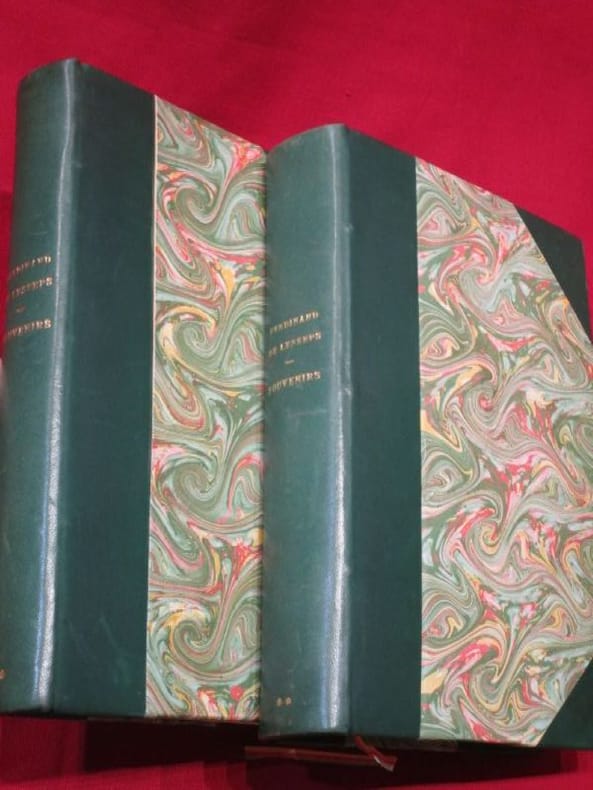
119106Paris, Nouvelle revue, 1887, 2 volumes in-8 de 155x230 mm environ, 550 pages, (1) f. - 768 pages, (1) f. Première édition, avec un envoi de Ferdinand de Lesseps. Reliure postérieure, demi-basane verte à coins, dos long portant titres dorés, gardes de papier marbré. Quelques frottements sur le cuir, intérieur propre, bon état général.
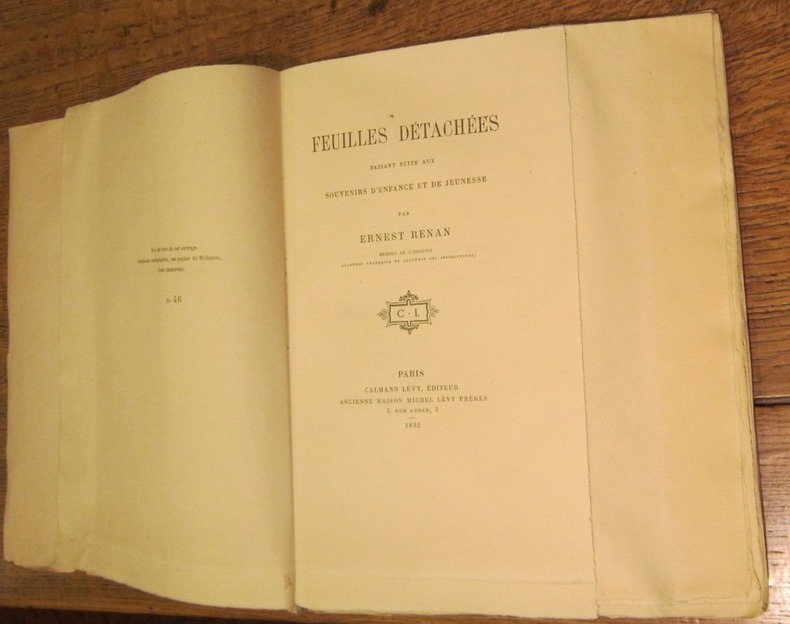
1892002820Paris, Calmann Lévy, 1892
1888CSP-1087Pau Imprimeur Vignancour, 1888 Extrait de la préface: "Pour éviter l'incohérence et le désordre, défauts qu'on ne pardonne jamais en France, j'ai adopté dans ces récits ce qu'on pourrait appeler l'ordre "naturel", au lieu de l'ordre "chronologique".…" L'auteur nous emmène d'Ouest en Est, d'un bout à l'autre des Pyrénées, d'une mer à l'autre, afin de suivre ses ascensions. Commençant à Biarritz, elles se terminent à Perpignan.
Sensational vintage compilation of thirty-five 1930s lumberjack songs from the Pacific Northwest. Elmore Vincent was known as "The Northwest Shanty Boy" and the front cover art features his image superimposed over a scene of tall timber being brought down by hand, as chainsaws were but a dream at that time. 64 pages. Includes lyrics, guitar chords and piano sheet music for these songs: A Lumber Lad's Love, Ballad of the Lumberjack, Billy the River Driver, Canaday-I-O, Come With Me In My Little Canoe, Darling Janet, Down in That Lonely Valley, Drinking Song, Fair Charlotte, Grizzly Hogan, Lonesome Lumberjack, Lumberjack Memories, Moose Meat, Smart Johnny the Logger, Song of the Lumberjack, Strawberry Lane, The Death of George Phalen, The Flying Cloud, The Gambling Lumberjack and the Jim Creek Girl, The Good Old Times, The Great Fit, The Green River Girl, "The Jam at Gerry's Rock", The Lakes of Pontchartrain, Three Leaves of Shamrock, The Little Brown Bulls, The Lumberjack and the Pretty Girl, The Lumberjack's Alphabet, The Lumberjack's Bible, The Lumberjack in Town [as sung on Seattle's "Skid Road" by Syd Johnson], The Sandy Stream Song, The Stranger and the Maiden Fair, The Two Sisters, Who Feeds Us Beans, and Yodeling Lumberjack. Most songs have several verses or more. Unmarked with above-average wear. Binding intact. A rare and wonderful musical memento of the glory days of Northwest lumberjacking. Book
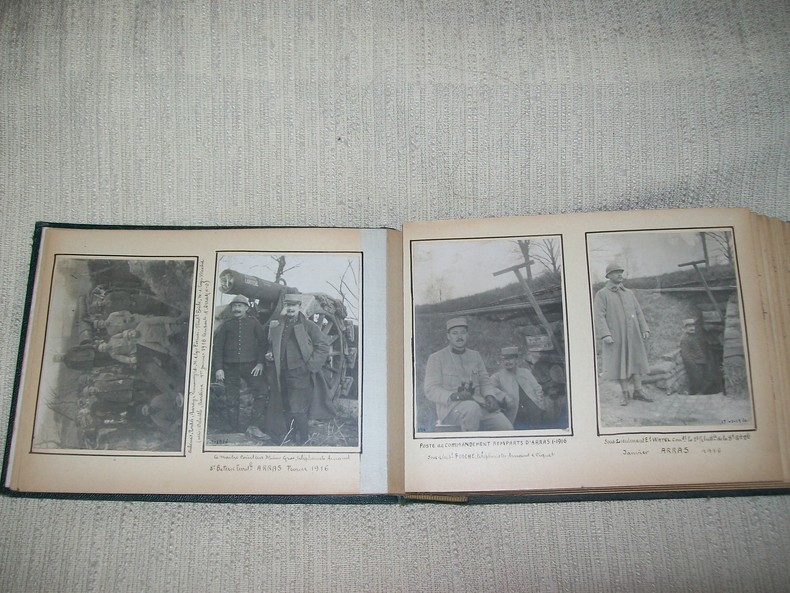
1915GITg864Registre cartonné au dos toilé, hauteur 22,5cm, largeur 17cm, feuilles quadrillées, recouvert de papier brun portant le titre manuscrit et le nom de l'auteur sur une vignette blanche appliquée, composé de 93 feuillets non chiffrés: 3 feuillets réunissant 13 photographies originales de l'auteur entre 1915 et 1919, avec une réflexion manuscrite sur la guerre, 1 feuillet avec une petite photo de l'auteur en uniforme en médaillon accompagnée de son identité, 81 feuillets recto verso sans marges, entièrement écrits (écriture serrée bien lisible) constituant le carnet de route tenu pratiquement au jour le jour du 1er mai 1915 au 1er février 1919, 8 feuillets de documents contrecollés (8 petites coupures de journaux intitulées "pensée sur la guerre", 1 sauf-conduit, 1 ordre de service, 8 laissez-passer, 4 permissions, 2 ordres de mouvement, 1 demande tapuscrite relative à des canons,, 1 nomination à la fonction de vaguemestre), auxquels s'ajoutent un certificat de carnets de pécule, 2 programmes ronéotypés illustrés (éclaircis) pour le spectacle aux armées, 1 feuilles de chêne séchée et gravée "Yser", 1 buvard (manques en bordure, traces d'encre) des Galeries Lafayette, 1 petit timbre aux couleurs des drapeaux alliés portant au centre "The Allies War Stamp". Petits manques et petite usure du papier recouvrant le registre, intérieur en bon état et bien complet du texte, des photos et des documents collés ou indépendants, 4 photos éclaircies. ACCOMPAGNE DE SON ALBUM de photographies in-12 oblong (hauteur 16cm, largeur 21,5cm) de percaline chagrinée vert foncé, dos lisse muet, plats ornés d'un double encadrement de filets à froid, composé de 25 feuillets de papier fort montés sur onglet, réunissant 117 photographies originales contrecollées dans un cadre de filet noir tracé à l'encre, datées et légendées: 1 photo d'identité de l'auteur en uniforme au moment de sont incorporation, les autres de divers formats, représentant l'auteur, des camarades de combat, des pièces d'artillerie, un sergent-pilote aviateur et son avion, des trous d'obus, des ruines, un groupe de Royal Scotch Artillerie, des tombes, abris, cuisines de campagne, roulotte de vaguemestre, téléphonistes... les photos, dans l'ensemble, sont nettes ou légèrement éclaircies, 4 sont totalement volées. Album bien complet de toutes les photos.
21319Paris, Masson, 1854. Deux vols in-8 (180x115mm) reliés en demi cuir et percaline violine, plats estampés à chaud et froid, aux "armes" du Lycée impérial d'Agen, dos droits ornés de dorures, tranches jaspées ; 507-549 p. Très bon état général : quelques frottements d'usure légers sur les coiffes, dos un peu décoloré, quelques petites rousseurs intérieures. Très bon ensemble.
Very Good Urdu Extremely rare first and only edition (not in institutional catalogues and market) of this travel book to America in the mid 20th century by Pakistani journalist and intellectual Sharif Farooq, who was invited to visit the USA on the Leader Specialist Programme in 1958. Sharif Farooq visited America in 1958. In his travelogue, he highlights the lifestyle, educational system, and foreign policy of America in detail. He also introduces the economical situation of the country, economical trends, and the condition of different institutions. Reports of press conferences are also a part of this travelogue. (Source: Travelogues of America in the Urdu Language: Trends and Tradition). "Wherever the Americans deserve appreciation for their intense patriotism and enthusiasm for labor, the author has given unstinted praise but where criticism is due he has not spared them, though the language used is very sober and moderate. I am confident that this book will be widely read and aimed as one of the good travel books written about America". (From the preface of the book by advocate-general Muhammad Ali). In original boards with lettering in both Latin and Arabic, spine missing. Otherwise a good copy. Demy 8vo. (22 x 14 cm). Text is in Urdu with a one-page English preface. 387, [1] p. In the Land of Lincoln. First Edition. No copy in OCLC.
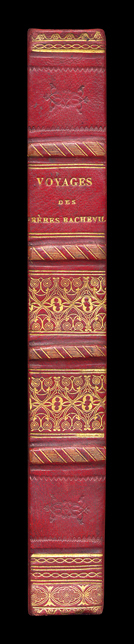
182215861Paris, Béchet Ainé et chez le Capitaine Bacheville, 1822 ; in-8 ; demi-veau glacé grenat à petits coins, dos à quatre nerfs plats décorés encadrant le titre et deux caissons décorés "à la cathédrale", palette et roulettes décoratives dorées, fleurons et roulettes à froid, tranches marbrées (reliure de l'époque) ; XII, 432, (2) pp., frontispice lithographié par G. Engelmann montrant les frères Bacheville se séparant pour toujours en Turquie d'Europe.
Very Good Turkish, Ottoman (1500-1928) Original illustrated wrappers. Cr. 8vo. (19 x 13 cm). In Ottoman script (Old Turkish with Arabic letters). 105 p., 8 b/w plates. First edition of this illustrated travel account of one of the exiled Young Turks to Afghanistan, who was invited to the country by the reformist Afghan Emir Habibullah Khan (1872-1919), who was the ruler of Afghanistan from 1901 to 1919. The news that the reformist Afghan Emir Hamidullah Khan was looking for well-educated Turkish youth to help the development of his country, reached the Young Turks in exile in Egypt. The author of this book, Mehmet Fazli was one of the Young Turks (A reformist group in the early 20th century that favored the replacement of the Ottoman Empire's absolute monarchy with a constitutional government), and he followed this royal invitation and set off with his friends. He reached Kabul via an adventurous journey through Austria-Hungary, Russia, Azerbaijan, Turkmenistan, and Iran. With his guide and friend who was an Afghan and his Turkish friend Hüseyin Hüsni Bey, Fazli met in Cairo and they went to Afghan lands. He described Kabul, Herat, Ghazna, Belh, and Kandahar cities during their travel, wrote about the Afghan Emîr and the dynasty. His book revolves around the many details on Afghan peoples' customs, social life, education, industry, roads, antiquity, postage system and organization, arms and army, etc. The book has a photo of the Afghan Emir beside other attractive illustrations and photographs. (Sources: Afganistan'da Bir Jöntürk: Misir Sürgününden Afgan Reformuna., Prep. by Kenan Karabulut.; History of Geographical Literature during the Ottoman Period., Edited by Ekmeleddin Ihsanoglu). Özege 16749.; OCLC 868007927.; MKAHTBK, II 948.
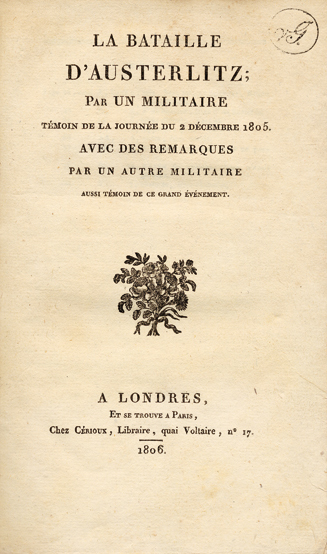
180615664Londres et Paris, Cérioux, 1806 ; in-8 ; demi-veau glacé marron clair à petits coins, dos à faux-nerfs décoratifs dorés, fleurons-soleils dorés, pièce de titre rouge (reliure de l'époque) ; 123 pp., (1 bl.), (1) f. d'errata.
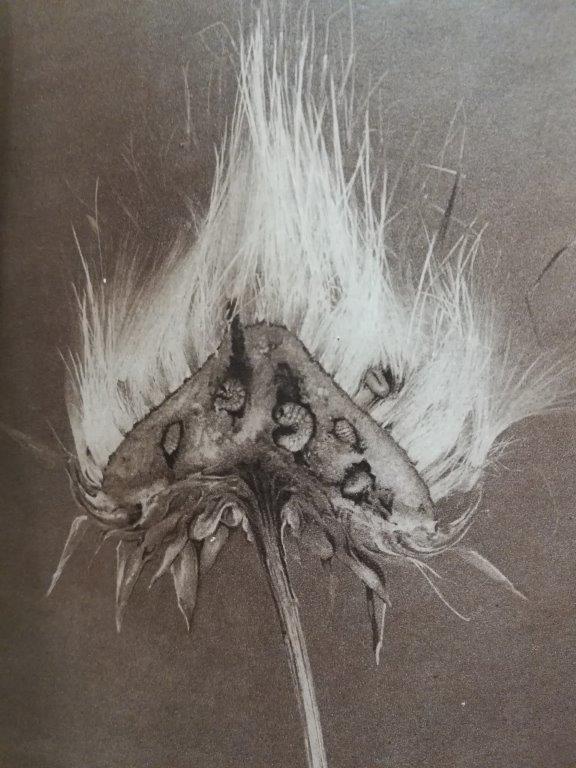
39271Paris,Delagrave.1921-1924. 11 volumes in-4 en demi-reliure fauve,marbrée ,au dos richement orné ,décoré de papillons.Pièces de titre et de tomaison en maroquin rouge.Tête rouge.Plats en papier marbré dans les tons.Très nombreuses planches et croquis dans chaque volume.Le 11ème et dernier est "La Vie de Fabre" par le Dr.G.-V.Legros avec des reproductions de photos dont le portrait de Fabre.In fine,répertoire général analytique. Très belle édition . Certaines pièces de titre ou de tomaison un peu décolorées.
1826813321826 Paris, Baudouin 1826, et Paris, de Goetschy, 1834, 3 tomes reliés en deux forts volumes in 8°, demi-veau tabac, dos lisses ornés de filets dorés, 336 et 599 pages et 317 pages ; trace de mouillure ancienne dans la gouttière du volume des "Mémoires" ; petits frottis au volume du "Supplément".
194816348Paris, Flammarion, 1948 ; in-12 ; demi-maroquin à coins bleu-gris, dos à nerfs pincés, titre et date en queue dorés, tête dorée sur témoins, couverture et dos conservés, non rogné (Hélène Alix) ; (1) f. blanc, 284 pp., (1) f. de Table et Achevé d’imprimer, couverture beige clair décorée et imprimée en bleu et noir, 4 planches hors-texte recto-verso.
Very Good German Original color lithograph maps in 7 special cloth cases. Cases large 8vo., only seventh one is smaller which is covered by European marbling. Bookseller and bibliothek stamps on some maps, plans and sketches; and cases interior. A fine map collection. Contents: V.1: Includes 1 map, 2 plans and 5 skecthes, 1 uebersichtskarte. Uebersichtskarte für die Geschichte des Iten und IIten schlesisschen Krieges von 1740-1745. Kriege Friedrichs des Grossen. 1/740000. 73x81 cm.; Plan zur Erstürmung von Glogam am 9 Marz 1741 (Entworfen nach alten Planen). 1/6250 / 1/100000. 48x52 cm; Plan der Schlach bei Mollwitz am 10 April 1741. 1/25000. 43x59 cm.; (Skizze) Stellung der preussischen und oesterreichischen Truppenam, 3 Januar 1741. 1/740000. 30x30 cm.; Skizze zum Scharmützel bei Ellguth und zum Gefecht bei Ottomachall am 9. Januar 1741. 1/67500. 34x26 cm.; Skizze zu den Winterquartieren des preussen mit Stellung der Truppen am 20 Februar 1741. 1/740000. 46x52 cm.; Skizze zum Ueberfall bei Baumgarten am 27 Feb. 1741. 1/50000. 29x34 cm.; Marsch der oesterreichischen Armee unter F. M. Neipperg und der preussischen Truppen unter dem Könige von der Schlacht bei Mollwitz. 1/1480000. 36x42 cm.; [.] Standorte des preussischen Heeres bei Ausbruch des Krieges 1740. 1/2400000. 34x55 cm.; V.2: 12 pieces: 3 uebersichtskarten, 2 planen, 7 skizzen. ... von Europa im Jahre 1756. 1/18000000. 33x46 cm.; ... des südöstlichen Kriegsschauplatzes. 1/740000. 65x95 cm.; Standorte des preussischen uns sachsischen Heeres und Stellung des oestreichischen Truppen in Böhmen, Mahren, oestrç Schlesen und Erzth. oesterreich var Beginn des siebenjahrigen Krieges. 1/2200000. 56x72 cm.; Plan der Schlacht bei Lobositz am 1. Oktober 1756. Verlauf des Schlact bis etwa 12 Uhr Mittags. 1/25000. 47x60cm (Also includes Plan der 2ten Attacke des preussischen Kavallerie and Skizze des beiderseitigen Vormarsches am 30ten September 1756).; ... Weiterer Verlaufdes Schlact bis etwa 3 Uhr Nachtmittags. 1/25000. 47x60 cm.; Skizzen: 1. Vormarssch 28. 8 bis 10.9.56. 2.-3. Pirna 1.10.56. 4. Bewegungen Schwerins 56. 5. Pirna 10.10.56. 6. Pirna 12.10.56. 7. Pirna 13.10.56. V.3: 5 skizzen (No: 8-12) und 3 plannen (No: 3, 4-A, 4-B). Plan 4-A-4-B: Prag, 6.5.1757.; Plan 3: Reichenberg, 21.4.57. Skizze 8: Postrungen und Winterquartiere Dezember 56 (Huge size).; Versammlung der Heere, Marz und April 57.; Einmarsch bis 30.4.57.; Stellungen am 1.5.57.; Stellungen am 5.5.57. V.4: Karten 1,2,3,5 (4 is missing); skies 31,32; uebersichtskarte 5; Plan 12-B. ... des nordöstlischen Kriegsschauplatzes (Huge size).; Skizze 31: Heeresbewegungen vom 11.11.57 bs zum Einrücken in die Winterquartiere, Winter 1757-58.; (World War 1): Karte 1: Belgien und nordost-frankreich. Ostpreussen, polen, kurland, Weissrussland.; Galizien und Wolkynien.; Kleinasien , Schweizes Meer, Kaukasien, Kurdistan, Armenien, Aserbeidschan, Arabier, Mittellandisches Meer: Vordasien map. V.5: Sizzen 20-24 - Planen 6-A, 6-B - 9. Planen: Gr. Jagersdorf, 30.8.57.; Jager b. Goerlitz, 31.8.-9.9.57. Moys, 7.9.57.; Breslau, 22.11.57.; Schweidnitz, 24.10-12.11.57.; Skizze 20: Feldzung in ostpreussen Vormarsch des russischen Heeres bis 6.7.57.; 21: Heeresbewegungen vom 6.7.57 bis zur Schlact bei Gr. Jagersdorf. 22: ... nach der Schlact bei Gr.-Jagersdorf bis zum Schluss.; 23: Bewegungen i. d. Lausitz u. i. Schleisen, 20.8.-30.11.57.; 24: Lager bei Liegnitz, 19.-27.9.57. V.6: Plan 5-A, 5-B - Skizzen no: 13-19. Plans: Kolin, 18.6.57.; Kolin, 18.6.57.; Skizzen 13: Beiderseitige Stellungen 8.5.57.; 14: Operationen Beverns u. d. Königs gegen Daun 10.5.-17.6.57.; Bewegungen vom 20.6.-1.7.57. Stellungen vom 1.7.57.; Rechten Elbufer in der ersten Halfte des Juli 1757.; ... vor Zittau, 12.-20.8.57. V.7: 4 plans in cloth covered with European marbling. These last 4 plans from "Suworow und Polens untergang. Nach archivalischen Quellen dargestellt" von Friedrich von Smitt, 1858 First Edition. Pl. 1: Der Schlact am Rymnik den 11/22 Septeember 1789. Pl. 2: ... der
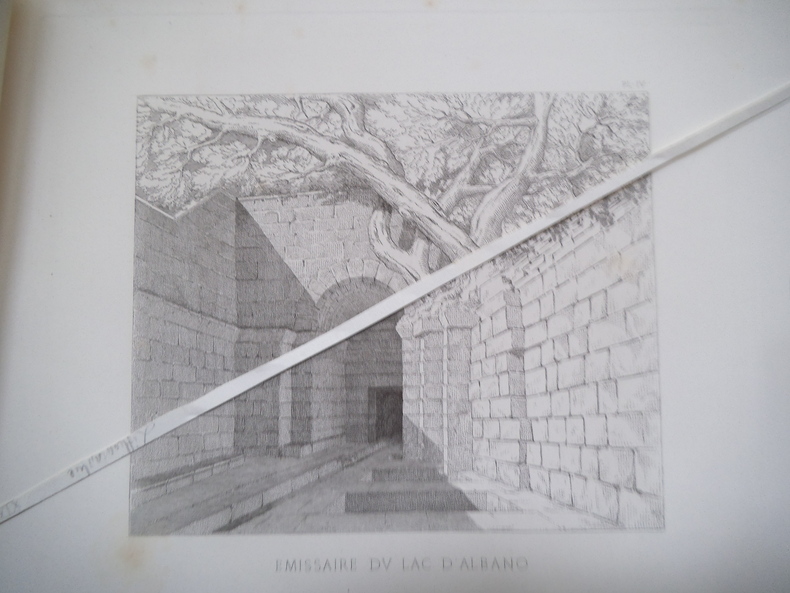
13767CHEVANARD Antoine Marie Architecte. Vues d’Italie de Sicile et d’Istrie. Album cartonné de l’éditeur, in 4 à l’italienne avec titre sur le premier plat, dos toilé360x270mm. faux-titre, titre illustré, envoi 2 pages, Suite de 12 planches gravées, sous serpentes, la planche portait de l’auteur à l’époque de son voyage en Italie, reproduit en fac-similé d’après un dessin fait à Rome par M. INGRES, plus table. L’ensemble monté su onglets. Lyon Imprimerie de Louis PERRIN 1861. Quelques rousseurs page de titre, sinon bon exemplaire.
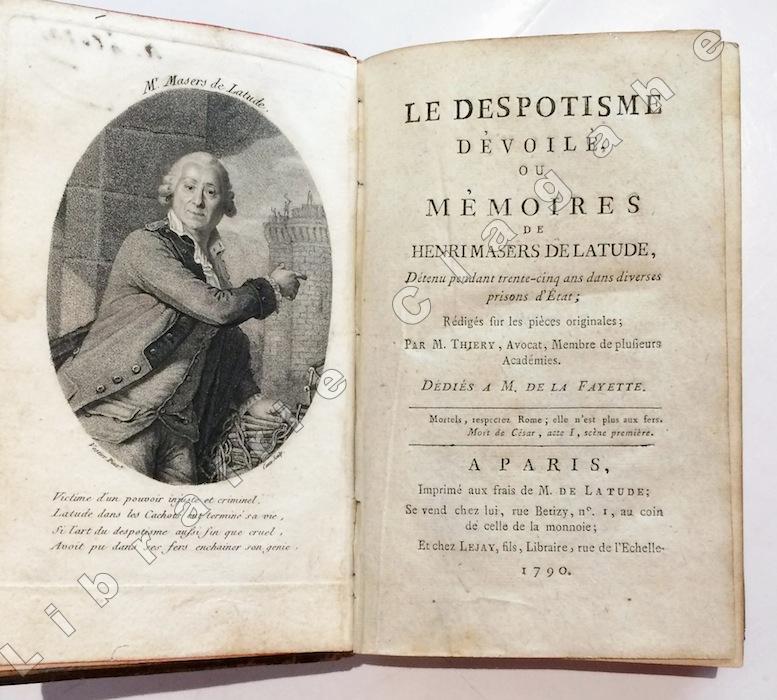
179016333Paris, imprimé aux frais de M. de Latude et chez Lejay fils, 1790 ; 3 tomes reliés en un volume petit in-8 ; veau fauve marbré, dos décoré "à la grotesque", pièce de titre grenat, filet sur les coupes, tranches rouges (reliure de l’époque) ; (4), 240 ; (2), 225, (1) bl. ; (2), 174 pp., portrait en frontispice, sur lequel on le voit pointer du doigt la Bastille en train d’être démolie, dessiné par Vestier et gravé par Canu.
1967006857Forcalquier Robert Morel 1967 In-8 triangulaire Cartonnage toilé illustré Edition originale Dédicacé par l'illustrateur