12 326 résultats
234282Paris, Ladvocat, puis Mame-Delaunay (1833-1834), puis Mame (1834-1835), 1831-1835 18 vol. in-8, demi-veau blond, dos à nerfs, filets dorés, pièce de titre et tomaison de maroquin vert, tranches marbrées (reliure de l'époque).
186638Paris, À la cité des Livres, 1928-1930 6 vol. in-12, broché. Exemplaire numéroté sur vélin du Marais.
168467Paris, Garnier Frères, s. d. (1893) 10 vol. in-8, plus de 500 pp. par vol., 2 planches de fac-similés (T. VII), demi-chagrin rouge à coins, dos ornés à nerfs, fleurons dorés, têtes dorées (rel. de l'époque). Qqs rares rousseurs, qqs menus accidents à certains coins, trois coins plus particulièrement abîmés, néanmoins bon exemplaire.
222260Paris, Garnier, s.d. 10 vol. in-12, bradel demi-percaline olive, filets dorés au dos (reliure de l'époque). Bon exemplaire.
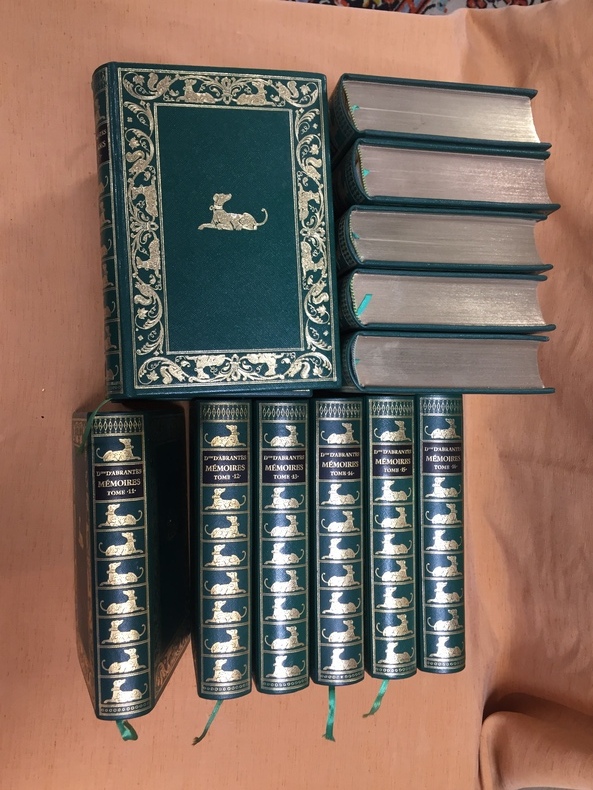
1967es287Jean de Bonnot Reliure d'éditeur 1967 Seize volumes in-8 (14,5 x 21 cm), reliure d'éditeur pleine peau, décor doré sur le dos et sur les plats, têtes dorées ; très bon état général. Livraison a domicile (La Poste) ou en Mondial Relay sur simple demande.
1967B.L2.L10Jean de Bonnot, Paris, première édition complète, 1967-1969, 16 volumes, 404, 402, 404, 415, 388, 397, 401, 383, 351, 372, 374, 394, 383, 386, 404 et 387 pp + tables des matières. Un des derniers exemplaires du tirage de tête. Ce tirage de tête porte sur la première page du premier volume un tampon et la signature de l'éditeur pour le différencier du tirage normal.
18Paris Garnier frères sd 5 volumes in12, demi toile. , pièce de titre cuir, filets dorés.
1992100121243Fondation nationale Carthage 1992 129 pages 15 6x1x23 2cm. 1992. Broché. 129 pages.
Very Good Turkish, Ottoman (1500-1928) Original wrappers. Foolscap 8vo. (18 x 13 cm). In Ottoman script (Old Turkish with Arabic letters). 112 p. On the first page, written 'copies without seals are fake', and this copy is with a seal. Slightly faded and chipped on extremities. Foxing on first pages. Uncut marginal extremities Otherwise a good copy. Exceedingly rare first edition of the first Ottoman voyage to Cape of Good Hope and first-hand travel account of the Ottoman qadi Abubakr Effendi (1814-1880) of South Africa and Mozambique, who was sent in 1862 by Sultan Abdulaziz at the British Queen Victoria's request in order to teach and assist the Muslim community of the Cape Malays. The presence of the Muslim population in South Africa dates back to the 16th century, South Africa and the Cape of Hope have become a colony of Western countries such as Portugal, the Netherlands, and the United Kingdom. The Ottoman Empire was interested in the Far East, Javanese, and South African regions in the 16th century and then tried to establish a relationship. The direct relationship between the Ottoman Empire and South Africa in the 19th century, upon the request of the Muslim people and England, was formed through Abubakr Effendi. The Muslims in conflict with various religious issues have found the remedy by consulting a scholar from the Ottoman Empire through England. After all, Abubakr Effendi reached Cape Town in 1862 and tried to resolve the conflicts among the Muslim people. (Abubakr Effendi: An Ottoman Scholar in South Africa in the Nineteenth Century: Yilmaz, Yusuf). "Abubakr Efendi was sent to Cape Town by Ottoman Sultan Abdulaziz. When chaos reigned in the Islamic society because of the imams who declared themselves as leaders in the region, Muslim leaders in Cape of Good Hope conveyed their letters to the Queen of England in 1862 declaring that they needed a religious leader. Since they had not been educated for years, they had forgotten their Java language and could not read their own books. They sent a letter to the Queen of England, informing them that help could be sought from the Ottoman court, the center of Muslim countries in the period. The issue was refused in the Parliament and the Ottoman Ambassador Musurus Pasha was offered it to the Ottoman Sultan. Abubakr Effendi's mission was to prevent Muslims in Cape of Good Hope to clash with each other and teaching them authentic Islamic knowledge free of superstition. Although Abubakr Efendi had some Arabic translators in his service, he still learned English and African languages in a short time and wrote books in order to benefit the Muslims there. On the fifteenth day he set foot on the continent, he opened a madrasah called the "Ottoman School" and enrolled three hundred students in twenty days. He traveled to Mauritius and Mozambique. He wrote his famous book 'Bayan al-Din' (a sort of catechism) in Afrikaan in Arabic letters. Then he married Rukiye Hanim, but they divorced after a while since they had to communicate by using an English and Arabic dictionary. Then he married James Cook's nephew Tahota Saban Cook. In his memoir, Ömer Lütfi wrote down all the travels of Abubakr Efendi for two years. Abubakr Efendi stayed in South Africa for 22 years and died there." (140 yillik miras: Güney Afrika'da Osmanlilar: Uçar, Ahmet). Abubakr Efendi first traveled to London and then to South Africa by a ship with his assistant Omar Lutfi. He established the first Ottoman School in Cape Town and then wrote his work Bayan Al-Din in Afrikaans with Arabic letters and distributed it to the Muslim population of South Africa. Four printed copies in OCLC: 427674106 (Three copies); 635151131 (One copy). Özege 22397. First Edition. Extremely rare.
Very Good English Original bdg. HC. Demy 8vo. (21 x 14 cm). In Azerbaijani. 301, [3] p., b/w ills. Bu manim taleyimdir. Elçibay was an Azerbaijani political figure. His real name was ?bülf?z Q?dirqulu oglu ?liyev in Azeri but he changed his name when he started to agitate for political reform. He was the first non-communist President of Azerbaijan, serving from June 16, 1992 until he was overthrown on September 1, 1993. Elections in June 1992 resulted in him becoming the country's second president as a member of the Azerbaijan Popular Front Party. His election came at a time when Azerbaijan was fighting a war with Armenians over the Nagorno-Karabakh region. Colonel Alparslan Türkes, the leader of the Grey Wolves, went to Baku in 1992 to support Elçibay, who openly described himself as sympathiser of the ultranationalist group. Once elected, Abülfaz Elçibay chose as ministry of Interior Isgandar Hamidov, a member of the Grey Wolves who plead for the creation of a Greater Turkey which would include northern Iran and extend itself to Siberia, India and China. Isgandar Hamidov resigned in April 1993 after having threatened Armenia with a nuclear strike.
5526, Bruxelles, Imprimeur de l' academie royale, 1858., Relie, demi veau, 22x29cm, 566pp, dos endomage.
3989, Bruxelles, Palais des Academies, 1964., broche, 260 p., 165 + 250 mm.
114453aafThonon, Imprimerie A. Dubouloz, 1887-94, in-8vo, env. 250 p. par vols., brochure originale.
1867100096973M. Hayez (impr.) 1867 in8. 1867. Relié.
1943ga1391Mercure de France Broché 1943 In-8 (14 x 22,5 cm.), broché, 430 pages, portrait noir et blanc de l'auteur en frontispice ; coiffes, bords et coins manquants, dos plissé, ensemble jauni, plats piqués, mors frottés, en l'état. Livraison a domicile (La Poste) ou en Mondial Relay sur simple demande.
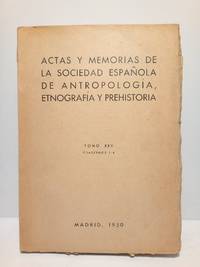
195047892Madrid: Sociedad Española de AntropologÃa EtnografÃa y Prehistoria 1945.- 127 p. 1 h.: ilustraciones entre el texto y láminas fuera de texto en papel cuché; 4º mayor 255 x 179 cm; Cartulina Ed.- Tomo 25 año 1950 Cuadernos 1-4. CONTIENE: La superstición de "aojo" plasmada en una manecita de azabache por Ismael del Pan; Posición de Africa en la historia universal de la cultura por PÃa Laviosa-Zambotti; Yacimientos arqueológicos de Campo de Criptana La Mancha por Deogracias Estavillo Villaumbrosa este último trabajo de 37 página RARO. ANTROPOLOGÃA ETNOLOGÃA Y SOCIOLOGÃA HUMANA EN GENERAL Libro en español Sociedad Española de Antropología, Etnografía y Prehistoria paperback
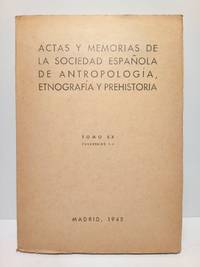
19456599Madrid: Sociedad Española de AntropologÃa EtnografÃa y Prehistoria Imp. Diana Artes Gráficas 1945.- 128 p.: ilustraciones entre el texto y láminas al final fuera de texto en papel cuché; 4º mayor 255 x 179 cm; Cartulina Ed.- Tomo 20 año 1945 Cuadernos 1-4. CONTIENE: El Castro de Vilanova de San Pedro por Eugenio Jalhay y Alfonso Paço de 91 pags.; La humanidad fósil alpina en la época glacial por Oswald Menghin; El Seminario de Historia Primitiva del Hombre de la Universidad y sus actividades africanistas por J. Martinez Santa-Olalla.etc. RARO. PALEONTOLOGÃA PREHISTORIA Y PROTOHISTORIA Libro en español Sociedad Española de Antropología, Etnografía y Prehistoria paperback
72915Paris, Lemerre, sans date (1930), in 12 broché, VIII-370 pages ; couverture fanée, manque de papier au dos.
190551081905 Paris, Lemerre, 1905, in 12, broché, 480 pages ; couverture fanée et effrangée, dos recollé.
190555151905 Alphonse Lemerre, Paris, 1905. In-16 reliure demi chagrin, plats marbrés, dorures au dos. 480 pages.
29055P., Lemerre, 1910, fort in 12 broché, II-495 pages ; en grande partie non coupé ; qq. rousseurs ; couverture fanée.
1906GITc526Paris Lemerre 1906. In-12 broché 350pp. Petits manques en bordure du 1er plat de la couverture, intérieur frais.
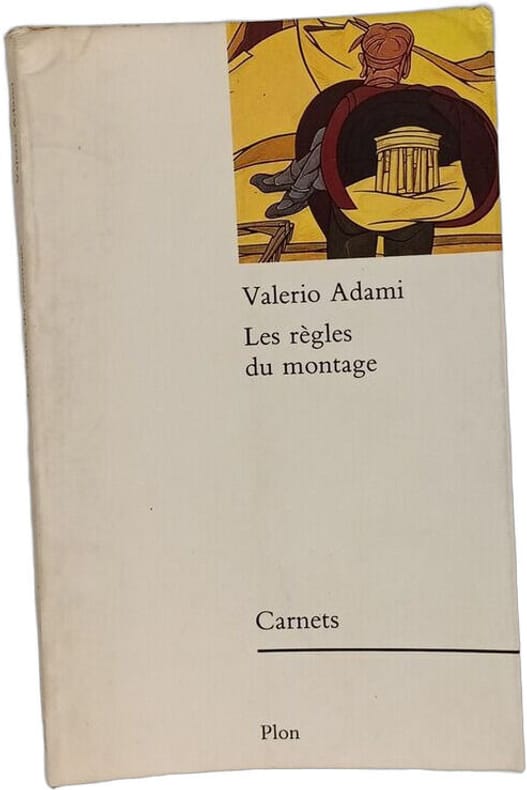
1989100145971Plon 1989 in12. 1989. Broché. Ce livre de Valerio Adami traduit de l'italien par Françoise Gaillard semble aborder des réflexions personnelles et artistiques de l'auteur évoquant notamment un séjour en Bavière à la fin des années 60 et la création d'un livre important sur l'histoire des trois Reich avec le poète Helmut Heissenbüttel
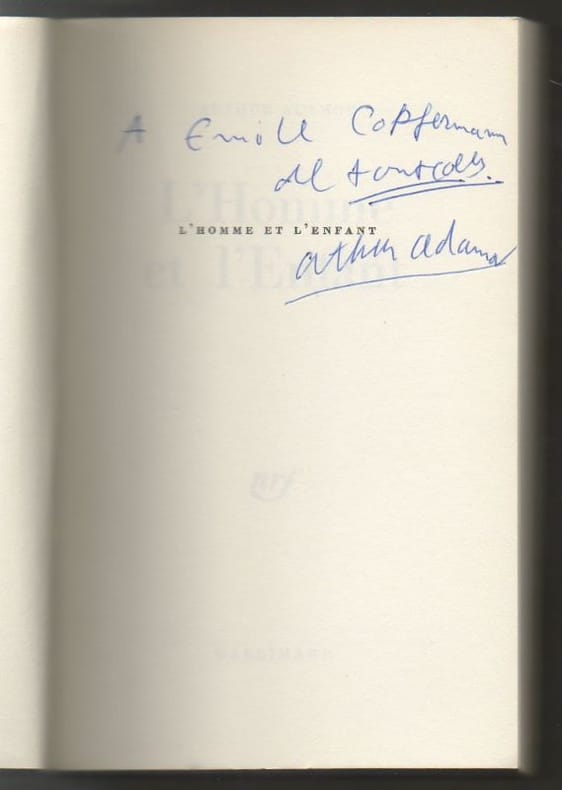
11792Paris, Gallimard, 1968. Exemplaire du service de presse, enrichi d'un envoi autographe signé de l'auteur à l'éditeur Émile Copfermann. In-12 broché de 245 pp. Couverture un peu usagée, intérieur bon.
194721084ed. Luf (Librairie Universelle de France) 1947 in-12 br., les memoires de ce poete russe, traducteur de Baudelaire, Voltaire, Heredia, emigre en France et engage volontaire dans l’armee française en 39… edition originale, un des 50 ex. numerotes sur pur fil Johannot (seul grand papier), quelques rousseurs sur les premieres et dernieres pages, ex-libris et mot au crayon papier de l’ancien proprietaire qui a consacre quelques pages à ce poete dans un livre