13 728 résultats
19370001788BUDAPEST HUNGARY EASTERN EUROPE. Very Good. 1937. On offer is a unique original September 1937 through August 1938 manuscript diary that relates the life a young American girl named Sue as per the gift inscription who travels back to her ancestral country of Hungary for an extended holiday whose purpose was likely to find her a traditional husband. The pressure or desire for her to marry is apparent within days of her meeting her European relatives. 'Went to visit Gene's grandmother and aunt. Real congenial people .they talked to me as if I were to become Gene's wife .some dope thought I would fall in love with him within three days.' Sue writes wonderfully of her times traveling regularly to Budapest and the activities of a 17 year old American teenager abroad. There were movies and shows and skating and shopping and dining and more dining and opera and chess and so much more. She also enrolled in the Fodor School of Music. She begins with her travels crossing the Atlantic on the Normandie and then across Europe to Hungary where she stays with relatives dates dozens of men - mostly doctors - and visits the local sites for nearly a year. She does a super job also capturing the tone of the country and the events in other parts of Europe. In one she comments on Germany annexing Austria and how her parents want her to come home. In another she comments on the "Jewish laws" that they are unfair and that "everything is dead". Sue was insightful and articulate and one cannot but be a little chilled reading her personal account with the knowledge that World War II looms on the horizon. Green leather has a leather strip for locking the diary had to be cut. Overall VG.; Manuscript; 16mo - over 5¾" - 6¾" tall; KEYWORDS: HISTORY OF PRE WORLD WAR II WWII HUNGARY TRAVEL AMERICANA BUDAPEST AMERICAN YOUTH IN EUROPE GENDER STUDIES WOMEN'S STUDIES EASTERN EUROPE SOCIAL STUDIES HANDWRITTEN MANUSCRIPT DOCUMENT LETTER AUTOGRAPH DIARY JOURNAL LOG KEEPSAKE WRITER HAND WRITTEN DOCUMENTS SIGNED LETTERS MANUSCRIPTS HISTORICAL HOLOGRAPH WRITERS DIARIES JOURNALS LOGS AUTOGRAPHS PERSONAL MEMOIR MEMORIAL PERSONAL HISTORY AMERICANA ANTIQUITÉ CONTRAT VÉLIN DOCUMENT MANUSCRIT PAPIER ANTIKE BRIEF PERGAMENT DOKUMENT MANUSKRIPT PAPIER OGGETTO D'ANTIQUARIATO ATTO VELINA DOCUMENTO MANOSCRITTO CARTA ANTIGÜEDAD HECHO VITELA DOCUMENTO MANUSCRITO PAPEL . hardcover
18360002182ABOARD THE USS SHARK MEDITERRANEAN 1836. On offer is a super original 19th Century manuscript relic of United States post Barbary Wars naval actions in the Mediterranean handwritten by an unidentified naval officer serving on the U.S.S. SHARK which was part of the Mediterranean Squadron protecting American commerce in 1836. The four page tightly written abstract log dated August 12th through September 29th details a trip up the Adriatic Sea to anchor off Trieste wherein they are quarantined for 14 days as there was Cholera ashore. Despite the quarantine the log records that Cholera broke out after they left Trieste and the loss of three crew on the passage from Trieste to Milos Greece where they again were quarantined. From there sailed to Jaffa Israel where they joined the squadron consisting of the ships and frigates: USS CONSTITUTION 'OLD IRONSIDES' USS UNITED STATES USS JOHN ADAMS and USS POTOMAC. The writer goes to Jerusalem during this time while the fleet is quarantined. After the quarantine they made repairs and during that time the log records that guns were fired and her flag was hoisted at half staff in memory President James Madison who had died in June. At Jaffa he and other officers are ordered to the U.S.S CONSTITUTION. Our author loved the SHARK as he writes in conclusion: "Good-bye Shark - After nine months close acquaintance I love thee no better than at the first interview albeit thou hast the Kentuckians mark of diving down deeper and staying under longer than any other craft which I remember to have encountered in my nautical career - then coming up dryer is quite another sort o' thing. Again farewell Shark -- Farewell". The SHARK was built in 1821 as a topsail schooner. It was involved in the suppression of the Slave Trade and in the 1840s was ordered to the Pacific. She was lost at the mouth of the Columbia River in 1846 and today several artefacts from the Shark are preserved in museums on the Northwest coast. Some chipping to the edges a small inconsequential dampstain but overall G. Good. 4to - over 9¾" - 12" tall. Manuscript. unknown
18790001475SALEM NEW JERSEY NJ. Fair. 1879. On offer is an original very full manuscript diary handwritten by an unidentified prominent citizen of Salem New Jersey dated 1879 through 1882. The coverless 8 x 6.5 inch book written in sepia ink has 448 hand numbered pages. While the writer is unknown there many many clues that should help local researchers and historians identify the man. We learn that he is an educator a Quaker a carpenter and that he is 69 years old in 1879. Dozens if not hundreds of friends visitors business contacts are fully named. Beyond the local history and conditions of the era the writer disseminates the state of local religion and education in detail as he was a member of Board of Education and obviously a 'friend' of importance. Each entry begins with the obligatory weather report. Among the personal accounts are some current events including the attack on President Garfield in 1881 and his subsequent death. Many of the entries relate to his activities in managing or overseeing the construction of various schools in the Salem area including the school for "Coloured Children" on East Broadway. With some surprise we note he records hearing a sermon given by a woman preacher. The writer also operated what seems to have been a very successful insurance company. He was a trained carpenter as evidenced in one entry where he is visited by his friend Josiah L. Haines from Philadelphia "a fellow Apprentice at the Carpentering when we were of age." Numerous other entries attest to his knowledge of carpentry and his overseeing work at the schools. The writer often mentions attending Meeting and the different speakers he has heard. He makes a point of writing whether he was able to hear the speaker indicating he is hard of hearing. There is a ledger page laid in that gives a synopsis of the contents of "Book 10" from 1874 so the diary offered here seems to be one of a series. The spine is lacking so most of the pages are detached or becoming detached and there may be a page or pages missing from the end of the book. The first two pages have diagonal cuts to the bottom right corners causing some small loss of text. In poor condition binding wise but otherwise Fair. ; 12mo - over 6¾" - 7¾" tall; KEYWORDS: SALEM NEW JERSEY QUAKERS RELIGIOUS SOCIETY OF FRIENDS FRIENDS CHURCH HISTORY OF EDUCATION EDUCATION CHRISTIAN CHRISTIANITY QUAKERISM HICKSITE PACIFISM HANDWRITTEN MANUSCRIPT AUTOGRAPHED AUTHORS AMERICANA MANUSCRIPT DOCUMENT LETTER AUTOGRAPH KEEPSAKE WRITER HAND WRITTEN DOCUMENTS SIGNED LETTERS MANUSCRIPTS HISTORICAL HOLOGRAPH WRITERS AUTOGRAPHS PERSONAL MEMOIR MEMORIAL PERSONAL HISTORY ARCHIVE DIARY DIARIES antiquité contrat vélin document manuscrit papier Antike Brief Pergament Dokument Manuskript Papier oggetto d'antiquariato atto velina documento manoscritto carta antigüedad hecho vitela documento manuscrito Papel . unknown
1914000122USA: Coalport Pennsylvania PA. Good. 1914. Full-Leather. The unidentified author of this journal has created a fascinating study and detailed assessment of Canals in the north-eastern USA. We believe the writer is based in or near Coalport Pennsylvania as most of the charts and schedules relate to Coalport as the starting point. It is a pocket sized multi-ring notebook with 101 numbered pages and three extended pull out maps an index and some printed articles about canals are glued in. It has drawings of canal boats. Important details are neatly underlined in red ink. The author spent a huge amount of time and attention into the details. It measures 3.25" by 5.5". The notebook cover is in very rough shape there are a few pages that are no longer attached but all appear present and very legible. There is some age-toning evident. Lehigh Delaware Barge Cape Cod Panama Morris are some of the canals mentioned. Some of the subjects are boat-canal dimensions coal rates tolls aqueducts distances between places dams on the Lehigh Tides . ; Manuscript; 24mo - over 5" - 5¾" tall; HANDWRITTEN MANUSCRIPT DOCUMENT LETTER AUTOGRAPH DIARY JOURNAL LOG KEEPSAKE WRITER HAND WRITTEN DOCUMENTS SIGNED LETTERS MANUSCRIPTS HISTORICAL HOLOGRAPH WRITERS DIARIES JOURNALS LOGS AUTOGRAPHS PERSONAL MEMOIR MEMORIAL PERSONAL HISTORY AMERICANA CANALS CANAL LIFTS LOCKS NAVAL WATER RIVERS PORTS BOATING TIDES PENNSYLVANIA CAPE COD PANAMA CANAL AQUEDUCTS . Coalport, Pennsylvania PA hardcover
19450009123ABOARD THE U.S.S. GENERAL H.F. HODGES AP-144. Very Good. 1945. On offer is a diary and logbook of a crewman on the maiden voyage and many others of the U.S.S. General H.F. Hodges AP-144 in 1945 and 1946. The diary begins on April 6 1945 the day the General H.F. Hodges was commissioned. The next day sets the scene for what will come in the rest of the diary: April 10. As a member of the crew I was put in the 2nd division. We loaded and then went to a few other docks. We went out on our shake down. That was various drill and mostly to get aquainted with the ship and the fellows. We went to San Diego and made Liberty. I made one Liberty in Mexico. Boy what a place that was. From there we went back to Frisco. We loaded again. On May 10th the ship begins its maiden voyage after taking on troops and a contingent of 42 nurses. Over 3000 troops were on board for this first trip. THe ship heads west towards Indonesia in support of the accelerating push toward Japan in the last few months of the War. The author writes of the ship crossing over the equator and the line-crossing ceremony that follows. The voyage seems mostly simple and easy. The author writes of boxing and wrestling to amuse the troops listening to records and watching movies. At the end of May the ship arrives in Hollandia in Indonesia where the author has some shore leave got mail. Had 3 cokes. Then onto Manila where most of the troops on board departed. The author stays with the ship as it picks up troops returning home and casualties of the war some looked good others not too good in Tacloban and Biak. The ship sails back for San Francisco on June 18th and the maiden journey ends on July 4th where the author writes of a huge Independence Day celebration. A few days later the second voyage begins as the ship leaves the U.S. for for New York via the Panama Canal Sure was a sight to see. They really got things down pat. The ship leaves New York and departs for Naples on a troop rotation voyage. On August 14th as the ship is passing through the Strait of Gibraltar the ship received the news that the war was over. It returned to Boston in late August with passengers from Naples then made two long voyages through the Suez Canal to India bringing home American troops returning back to America when she reached New York on Christmas Eve. The author writes of leaving Boston arriving in Port Said going through the Suez Canal It took 10 hours to get through arriving in Calcutta People live the same. All dirty. The married woman have a red dot between their eyes. rounding the Cape of India going back through the Suez Canal and returning to New York. The second voyage to India goes roughly the same. After the end of the authors fourth trip he writes that the ship is moved to Yonkers New York for repairs. It moves back down to New York City at the end of January and the author departs on his fifth and last trip with the U.S.S. General H.F. Hodges going Ceylon and India continuing by way of the Pacific Islands back to the United States and arriving back in Seattle at the end of March 1946. The ship is decommissioned in April and then transferred at 0900 to Operating Base in May. On May 10th the author leaves for St. Louis presumably his hometown. The last entry of the book comes on May 15 1946: At 1530 was Discharged. The book is in very excellent condition with no dog eared pages no tears and the cover is clean with 4 firm corners along with a tight spine. There are roughly 150 pages in the whole book but only the first 27 pages have writing in them with 14 pages total written in. The handwriting is clean and extremely easy to read throughout and shows no smudging and little fading. The title page reads: U.S.S. General H.F. Hodges. AP-144. Commissioned 6-April-1945. 50174. Manufactured by the U.S. Printing Office. On the back page there is a log of the 13 places outside of the United States that the ship docked during the time in which it was commissioned as well as the dates in which the ship was in that port. The book is in very good condition with no dog eared pages little sign of any wear or tear and the cover is clean and with a tight spine. Overall. VG. Sample text: May 19. I was initiated into the Royal Order of the Shellbacks. It is a world wide thing. They go for it in a big way. They dress all up in costumes. You are called up before the judge an he reads your sentence. Then they send you to the paint and you get a paint job. Then to the stock and cut your hair. What a hair cut. From there you are sent to the cleaners. Then they put you in a chair and maybe cut your hair or put oil an grease all over you. Then they throw you back in a tub of salt water and ducked you until you yell shellback. Then you crawl out and they dose you with a hose to help you a little. You are then a Shellback. Before you are called up they make you do all kinds of things. They call you a Pollywog. The ship an men received the Golden Dragon that is for crossing the date line and equator at the same time. We skipped from Sunday to Tuesday.; June 6. Manila. Got 4 hours Liberty. Things sure is a mess. The people are poor as hell. I bought a few things. All of the buildings are blown to pieces or are all shot up.; July 4th San Francisco. We arrived in Frisco at 2300. Anchored out. Tied up at the dock at 0800.All the troops were off by noon. They cried and kissed the ground when they got off. Went back out and anchored. Loaded a few supplies. Made two Liberties. The fellows really spent the money. This was the Maiden Voyage and all went well. Some of the fellow are over the hill. Joe Brock is one. End of Maiden Voyage; Aug. 14. We arrived at the Straight of Gilbralter. On the starboard side was French North Africa. On the port side was Portigual and Spain. You could see the Rock good and plain. Got the news that the war was over at 2400. The fellows really had a big time.; Aug. 17. We passed the Isle of Capri at 0700. We arrived in Naples Italy at 0930. We got Liberty. Had a fairly good time. More whores than anything else. Bought a few things. Started loading the Doggies gear. The cities wasnt bombed too much just along the water front.; Sept. 21. Arrived at Port Said at 1000 in the morning. Took on oil. And at 1700 started through the Canal. It took 10 hours to get through. Suez Town arrived at 0500. Left at 0700 through the Red Sea. I got a few things and best of all some mail.; Nov. 29. Arrived in Karachi India at 1900. Got 3 hrs. Liberty. Loaded the 30th. People live as poor as all the other places.; Mar. 2 1946. Arrived at river. Anchored out. Started up river at 1000. Tied up at 1600. Made Liberty. Saw burning bodies. Background: USS General H. F. Hodges AP-144 was a General G. O. Squier-class transport ship for the U.S. Navy in World War II. The ship was crewed by the U.S. Coast Guard until decommissioning. She was named in honor of U.S. Army general Harry Foote Hodges. She was transferred to the U.S. Army as USAT General H. F. Hodges in 1946. She was launched 3 January 1945 under Maritime Commission contract MC #711 by Kaiser Co. Inc. Yard 3 Richmond California; sponsored by Mrs. Hodges Dickson; acquired by the Navy and commissioned 6 April 1945 Comdr. C. H. Hilton USCG in command. On 1 March 1950 she was transferred to the Military Sea Transportation Service MSTS as USNS General H. F. Hodges T-AP-144. She was later sold for commercial operation under the name SS James before being scrapped in 1979.; Manuscript; 4to - over 9¾" - 12" tall; KEYWORD: HISTORY OF U.S.S. GENERAL H.F. HODGES AP-144 WORLD WAR TWO ERA TRANSPORT SHIPS GENERAL G.O. SQUIRE CLASS UNITED STATES NAVY TROOP SHIP U.S. NAVY IN WW2 USN LAST MONTHS OF WWII MAIDEN VOYAGE LINE CROSSING CEREMONY SERVICE DIARY AFTERMATH OF THE SECOND WORLD WAR SHORE LEAVE MARINE NAVAL SHAKEDOWN CRUISE AMERICANA HANDWRITTEN MANUSCRIPT DOCUMENT LETTER AUTOGRAPH WRITER HAND WRITTEN DOCUMENTS SIGNED LETTERS MANUSCRIPTS HISTORICAL HOLOGRAPH KEEPSAKE WRITERS AUTOGRAPHS PERSONAL MEMOIR MEMORIAL ARCHIVE DIARY DIARIES JOURNAL LOG ANTIQUITÉ CONTRAT VÉLIN DOCUMENT MANUSCRIT PAPIER ANTIKE BRIEF PERGAMENT DOKUMENT MANUSKRIPT PAPIER OGGETTO D'ANTIQUARIATO ATTO VELINA DOCUMENTO MANUSCRITTO CARTA ANTIGÜEDAD HECHO VITELA DOCUMENTO MANUSCRITO PAPEL . unknown
19190001099EGYPT NORTH AFRICA SUEZ ISMAILIA. Good. 1919. On offer are two super original handwritten notebooks by what appears to be an unidentified British Army Officer who states that he has lived in the Near East for 4 years and was on leave in 1919.One gets the impression the officer intended write a book and lecture on the subjects contained: Book 1 deals with Egyptian occult practices and amulets in great detail. The author of this manuscript affects a very skeptical tone overtly Christian and may be writing as a counterpoint to Sir Ernest Alfred Wallis Budge who wrote extensively on Egyptian occult amulets and who translated the Egyptian Book Of The Dead which helped increase the public appetite for the subject. Skeptical he may be but clearly he is fascinated by the occult beliefs of the mass of the people he has met in his travels. The text covers: evil spirits - ginns amulets - ornamental charms - paper tin lead wood magic powders plants curses the healing cup the black magic trembling cup good and bad angels six pages on the evil eye and cures rabies beads etc. etc. The second book is the text to accompany a slide show: "Up the Nile to Assouan and a glimpse of Abu Simbel". 100 pages with an index no slides but very erudite. This is not tourist stuff but scientific discourse. The books are in very good condition and measure 9" x 7" and 44 and 100 pages respectively. Handwriting is very clear. Overall G.; Manuscript; 4to - over 9¾" - 12" tall; MYSTICISM ANKH CULT OF THE DEAD EGYPTOLOGY EGYPTIAN EGYPT OCCULT AMULETS ENGLAND ARCHAEOLOGY ANTIQUITIES COPTIC SORCERY COPTS CAIRO HIEROGLYPHICS PYRAMIDS PHARAOHS HANDWRITTEN MANUSCRIPT DOCUMENT LETTER AUTOGRAPH KEEPSAKE WRITER HAND WRITTEN DOCUMENTS SIGNED LETTERS MANUSCRIPTS HISTORICAL HOLOGRAPH WRITERS AUTOGRAPHS PERSONAL MEMOIR MEMORIAL PERSONAL HISTORY . unknown
19230007013ALBANY NEW YORK. Good. 1923. On offer is an interesting group of four 4 diaries of a car salesman in his senior years and very soon before his demise in the years immediately prior to the Great Depression being 1923 through 1926. The author is Vedder A. Peters who lives in Albany New York. He is married to Kit and in 1926 he mentions a son. There is a burial record of Vedder A Peters in Albany NY showing date of death as 1927 at 64 years of age. This being so the diaries written when he is in his 60s make for interesting reading given the reader's knowledge that Vedder has only a few years to live. The diaries' entries revolve around either his car - a 1923 Buick Touring Sedan of which he appears very proud or his activities as a salesman and investor. '. Ran Buick to service station 11:30 AM for quick inspection Jan 2nd 1923 . This was first time out with Buick. She ran true Apr 1st 1923 He notes planning an advertising campaign Jan 14th 1923 and begins to put in place the following day: Ran double col 3 inch deep Ad today in Journal Union on Advertising Lectures and Speeches Jan 15th 1923 Another entry notes his running an ad to try and get work writing: First answer to ad came from LaBadie to write his biography. He is a splendid type French Canadian - 60 years old and educated. My price $20.00 Jan 29th 1923 April 13th he notes that he is still trying to sell ads and: Commenced buttonholing various people and firms for their advertising. Dorwaldt Wallenstein Badgeley Schutter Raven and a host of others. Schutter & Badgeley look good. Oct 1st 1923 The diaries for the next three years continue in the same vein. Many are entries about his car such as a detailed description of a car accident Mar 29th and the associated repair costs $1.50 for fender repair and another accident where: . a girl ran from the curb and into the right front fender . Apr 10th 1924 On May 29th he quit his job at a newspaper noting: . job no good not one sale May 29th 1924 Among the very few personal comments is a reference to the death of an acquaintance Nov 19th 1924 In 1925 he notes that he plays in a stock market pool. This is an example of the type of stock market speculation that was one of the leading causes of the Great Depression. In Peters case: Played in stock market pool. Never heard a word. Mar8th 1925 The entry list 3 groups of numbers possibly betting combinations. This was followed by: Won stock market pool 3d money with 412 splits on Nos 5-11-7-10-9 having 20 each day for 4 days and 18 one day. Wow - $12.90 Mar 29th 1925 Later he notes another investment this time also mentioning another person VB - possibly his son as there is a Vedder B. Peters noted in the records of Albany and as he frequently refers to himself as VAP: Subscribed 105 to Masonic Temple Fund - payable 35 annually each year for three years. VB subscribed $72 - $24 a year for 3 years May 25th 1925 Other entries focused on his Buick. In 1926 he contracts to build a house Feb 18th rents an upstairs floor in his home to a couple Mar 27th sold a couple of building lots Apr 14th Apr 21st and moved into a new shop to run a mail order business Apr 29th. All-in-all Peters comes across as a busy man who looks for and takes advantages of opportunities as they come his way. This is an excellent concise chronicle of a small entrepreneur in small-town America in the years during the Roaring Twenties. A researcher would appreciate his careful expense record over this time as they present a good idea of prices especially those that are automotive-related. Each leather-covered volume measures about 4 3/4 inches by 3 inches and contains 120 diary pages plus memoranda and information pages. Each diary is about 20% complete. The diaries are in good condition with the leather covers of the 1923 and 1924 volumes showing obvious signs of wear. All pages are intact. The handwriting is legible.; Manuscript; 8vo - over 7¾" - 9¾" tall; KEYWORDS: HISTORY OF VEDDER A PETERS; ALBANY NEW YORK; ROARING TWENTIES; GREAT DEPRESSION STOCK MARKET SPECULATION PRE DEPRESSION ERA ROARING TWENTIES AUTOMOBILE SALES BUICK EARLY CAR DEALERSHIPS UPSTATE NEW YORK EMPIRE STATE AMERICANA HANDWRITTEN MANUSCRIPT DOCUMENT LETTER AUTOGRAPH WRITER HAND WRITTEN DOCUMENTS SIGNED LETTERS MANUSCRIPTS DIARY DIARIES JOURNALS PERSONAL HISTORY SOCIAL HISTORY HISTORICAL HOLOGRAPH WRITERS AUTOGRAPHS PERSONAL MEMOIR MEMORIAL ANTIQUITÉ CONTRAT VÉLIN DOCUMENT MANUSCRIT PAPIER ANTIKE BRIEF PERGAMENT DOKUMENT MANUSKRIPT PAPIER OGGETTO D'ANTIQUARIATO ATTO VELINA DOCUMENTO MANOSCRITTO CARTA ANTIGÜEDAD HECHO VITELA DOCUMENTO MANUSCRITO PAPEL . hardcover
19110001331USS YORKTON USS CLEVELAND USS COLORADO. Good. 1911. Hardcover. On offer is an interesting historical manuscript diary and personal log handwritten by United States Navy seaman Vernon Vernie K. Kuntzelman. The service provided 'Account Book Diary and Log' has about 75 pages of entries dated November 16th 1911 through November 15th 1915. Vernon not writing daily makes notes over the four years and two days of time in the Navy from the banal but notable dates: training assignments ship changes and movement sights like the passing of the Golden Gate transfers ship board duties etc. to the bombastic and historical: "Watched a battle between rebels and federals on the beach at Acapulco. Rebels won losing 25. Federals lost 80. Saw several men get shot." "Left Acapulco to pick up some castaways who were shipwrecked on Clipperton Island." "All hands were sent to Mt. Tamalpois to fight a forest fire." "Arrived in Mazatlan anchored an hour fell overboard." "Rebel artillery ashore opened fire on Federal transport. Fired ten shots. The transport moved behind the US ships for protection." "Arrived Mazatlan Mexico 15 ships in harbor. Fighting on the beach all this time. German Jaop Mexican English and US ships in Harbor." Other entries note: USS alert convoying convoy two Submarines; Santa Cruz paraded; 500 visitors every day on ship; coal ship steamed through Golden Gate; all hands ashore marching inland tents dug trenches; patrolled town; Smith Pelkey fight at Daly City San Mateo; Towing yacht "Lola" "Gola" "Dola"; Party of moving picture men; held speed run averaged 21.45 knots at end of last hour 4 boilers blew up killing nine men and seriously injuring others; swimming party on beach climbed mountain; taking first place 1st in the navy turret gun firing; overtook a Japanese cruiser and much more. After 1915 the author fills the pages with poems and songs about his time on the sea: Back on the farm: "I'm not in the navy now I'm back behind the plow No more I'll roam The white sea foam I am a farmer now." Damage to the spine but overall G.; 12mo - over 6¾" - 7¾" tall; USN UNITED STATES NAVY MEXICO MEXICAN REVOLUTION FEDERALES REBELS MAZATLAN KUNTZELMAN LATIN AMERICA SOUTH AMERICA USS YORKTON WORLD WAR I WWI HANDWRITTEN MANUSCRIPT DOCUMENT LETTER AUTOGRAPH DIARY JOURNAL LOG KEEPSAKE WRITER HAND WRITTEN DOCUMENTS SIGNED LETTERS MANUSCRIPTS HISTORICAL HOLOGRAPH WRITERS DIARIES JOURNALS LOGS AUTOGRAPHS PERSONAL MEMOIR MEMORIAL PERSONAL HISTORY AMERICANAAls antiquité contrat vélin document manuscrit papier Antike Brief Pergament Dokument Manuskript Papier oggetto d'antiquariato atto velina documento manoscritto carta antigüedad hecho vitela documento manuscrito Papel . hardcover
19440009010PACIFIC THEATRE WW2 LEYTE LINGAYEN BAY PHILIPPEANS. Good. 1944. On offer is the fascinating 1944 diary of Walter Trent a hard-drinking tough carpenter on the SS Joliet during World War 2. Trent works on the ship as it makes stops in the Mediterranean first and then moves on to the Pacific theater of World War 2. This diary is a very interesting document of WW2 history showing the tasks and life of a non-combat naval personnel during the war. Most of the longest entries in the diary are accounts of shore leave and downtime. These passages are where this document is most interesting. The diary shows the curious day-to-day events that transpired in the life of someone during war as opposed to the specifics of combat or military campaigns. The diary is signed on the front page Walter W. Trent 320 N. Rosine Ave. Somerset PA. The diary is interesting in that each entry uses both the verso and recto of the whole page. The first entry spanning both the left and right page is dated June 4 1944 and states Left N.Y.C. and went to Baltimore in the afternoon. Arrived and could not find a room in any hotel. Finally went to the Officers Club and got a room through them at Mr.s Florence Blades at 1220 Park Ave. Had a big front room and bath. Very nice place. The next day he joins the S.S. Joliet to take coal to Naples Italy. He has a few days before he departs on the SS Joliet so he returns to N.Y.C. takes a girl possibly a girlfriend Rose out to dinner and dancing then returns to Baltimore to depart on the ship. On June 12 Tuesday. Went aboard by 9 to find everybody had signed Articles Monday. So I went up to the Commissioners to sign on while there it came up that there was no carpenter. So I signed on as A.B. with the understanding that if no carpenter signed by 1 P.M. that I got the job. No carpenter signs and after the ship departs Baltimore there are many entries of the carpenter tasks that Trent does. Mad a towel rack for 2nd mate and started to grease the windlass and booms.; worked all day just on the doors cleaning and greasing them. Had to fix No. 1 storm batten because it had no turnbuckle. On July 1st the SS Juliet arrives in Augusta Sicily. On arrival there were bum boats around the ship all morning. Trying to buy cigarettes for $9.00 a carton American $. Soap went for 3 to 4 cakes a 100 Lira. A lira is worth 1¢. I swapped some soap for some Cognac. Received orders around 1030 AM to go to Naples Italy for further orders. He goes to Sicily and then soon to Gallipoli. For the next month or so Trent writes the tasks and odd carpentry jobs that he did around the boat commenting that the crew always seems to be breaking everything. He swims often talks about buying selling and swapping cigarettes soap booze etc. From Gallipoli the ship moves to Naples and then to Marseilles France. At the end of July he goes to the sick bay with a fever and infection. He mentions soon after that he went ashore and saw a girl about a dog in a house possibly a euphemism for using a prostitute. By early August his entries are rather short including one August 4. Saturday. Same old shit. On August 14 he has his first entry directly related to the ongoing war. Received and talking over the news it does not seem possible that peace is around the corner. 7 PM. My birthday and peace at last. The SS Joliet goes from the mediterranean to Balboa spain and then sails for the Philippines. Trent mostly works but when he goes ashore he seems to be quite the drinker and partier. Went ashore after breakfast and met Foskey and Cavelsky had some drinks. Tried to go back to the ship but Leon was dragging some Tape that held a bottle and the guard turned him back. So went to a hotel and took a room. Went to to sleep till 4 P.M. woke up and drank the bottle. Went out and had some dinner. Went back to the ship around 11 P.M.; Had a terrible hangover and a slight stuttering around 3PM.; I woke up laying out in the jungle so weak that I could not move until 10 AM when two gave me some water and helped me to there came shoes watch gone. He also seems to have a bit of a mean streak to him as there are a few entries in which he speaks of quarrels and insubordination with the mates on the ship. On October 3 the ship lands in Lingayen Bay in the Philippines. From Lingayen Bay the Joliet moves onto Eniwetok. October 25 Thursday. Arrived at Eniwetok at 4:30 PM. It is a big lagoon surrounded by small islands of 1/2 mile size in a circle of 22 miles a lot of them are submerged. Before the war the Atoll had 130 people now there are 300000 army navy. There were around 200 ships tankers & freighters and some navy. The main island was covered with buildings and only a few palm trees and was very hot. The Philippines Trent notes is hot musty and awful. A rainy day and I have Ring worms where I sit down and don't seem able to get rid of them. Everybody seems to have them or the jock itch between her legs. The SS Joliet is not long in the Philippines though. After their orders are completed they make their way back to the U.S. On November 29 the SS Joliet arrives back in Miami. Its a good thing too. The day before on November 28 Trent writes Looked in my locker and found that my wallet was stolen with 18 dollars in. Damn it I will be glad to get off this god damned ship. From Miami the ship goes back to N.Y.C. Trent parties hard on December 3rd and stays out all night. The last entry of the diary is December 4th and just says still out. Background - Launched as the SS Joliet Victory in 1944 Maritime Commission hull number MCV 114 a type VC2-S-AP3 Victory ship. She served in the Pacific War participating in the landings on Leyte in late 1944. SS Joliet Victory Naval Armed Guard crews earned Battle Stars in World War II for war action in during the Invasion of Lingayen Gulf from 4 Jan. 1945 to 18 Jan. 1945. Also a second "Battle Stars" for the Leyte landings in the Battle of Leyte from 5 March 1945 to 13 March 1945. Joliet Victory was active in delivering support for the Battle of Iwo Jima from 19 February to 26 March 1945. In each battle she had to use her deck guns to defend against air attacks. Joliet Victory and the SS Columbia Victory had the dangerous job of supplying artillery ammunition for the Iwo Jima battle. The ship was laid up in the Hudson River as part of the National Defense Reserve Fleet on 1 July 1948 and was reactivated during the Korean War serving from 27 July 1950 until 31 October 1953 when she was again laid up in the NDRF in the James River. She was acquired by the U.S. Navy on 8 February 1958 renamed Michelson and converted to an Oceanographic Survey Ship AGS at the Philadelphia Naval Shipyard.; Manuscript; 8vo - over 7¾" - 9¾" tall; KEYWORDS: HISTORY OF SS JOLIET VICTORY USNS MICHELSON T-AGS-23 BOWDITCH CLASS OCEANOGRAPHIC SURVEY SHIP UNITED STATES NAVY TYPE VC2-S-AP3 VICTORY SHIP PACIFIC THEATRE OF WORLD WAR 2 LANDINGS ON LEYTE WALTER TRENT YOUNG MEN IN WAR SOMERSET PENNSYLVANIA AMERICANA HANDWRITTEN MANUSCRIPT DOCUMENT LETTER AUTOGRAPH WRITER HAND WRITTEN DOCUMENTS SIGNED LETTERS MANUSCRIPTS HISTORICAL HOLOGRAPH WRITERS AUTOGRAPHS PERSONAL MEMOIR MEMORIAL AMERICANA ANTIQUITÉ CONTRAT VÉLIN DOCUMENT MANUSCRIT PAPIER ANTIKE BRIEF PERGAMENT DOKUMENT MANUSKRIPT PAPIER OGGETTO D'ANTIQUARIATO ATTO VELINA DOCUMENTO MANOSCRITTO CARTA ANTIGÜEDAD HECHO VITELA DOCUMENTO MANUSCRITO PAPEL . unknown
19090008050LOS ANGELES CALIFORNIA. Good. 1909. On offer is an outstanding travel journal written by a young girl in California in the early years of the 20th century. This well-written journal measures 9.25 inches by 7.5 inches and contains 60 pages. It is 60% complete. The cover and pages are in good condition and the handwriting is legible and quite easy to read. Also included is a black and white photograph a map/itinerary and a number of newspaper clippings - all in very good condition. The author is Zola Grace Strawser a 14 year old school girl. Born in 1895 she grew up in Los Angeles where her father Bert was a successful businessman. She had 3 sisters - Nellie Merle and Bertie. Casual research has not discovered any additional biographical information. In July of 1909 she left on a long train trip from Los Angeles to the Worlds Fair in Seattle. Along the way she makes stops in Las Vegas and Salt Lake City amongst other places. She is a keen observer and her descriptions are detailed and well-written. "The train slowly pulled out of the Salt Lake City Station and our long hoped for journey began. Nellie Merle Bertie Papa and Daisy Clark were there to say "goodbye." Daisy Clark gave us our first box of candy and also a beautiful bunch of carnations. The ride to Pomona was not so interesting as we made so many trips to San Bernardino before. Our next stop was Ontario. From Ontario you have a very beautiful view of the mountains which is very interesting. We next passed through Riverside and Coulton and arrived in San Bernardino 12:12. Between Los Angeles and San Bernardino can be seen orange trees and mountains while from San Bernardino is a vast stretch of desert. We then went to lunch and from the window you could see right down between the mountains on which were some snow. I saw an automobile filled with men and for a long time had great fun waving back and forth. They at last got ahead of us. We had to go so slow up a high incline . the rest of the landscape was desert desert desert. ." July 8. In Salt Lake City she visited a number of sites: ". we saw all the important buildings the temple tabernacle the Lion House Bee Hive grave of Brigham Young and the "Eagle Gate" July 9. She goes out to visit Saltair - an amusement park and resort built at the south end of Great Salt Lake. At one time Saltair was the largest and most popular family resort west of New York. Today it is abandoned a victim of shrinking water and the ravages of a changing climate. Each day's entry is accompanied by a small pen and ink drawing representing some remark in the entry. She writes an excellent description of a wedding accompanied by a drawing of wedding bells and music notes and the inscription "No Wedding Bells For Me.: "THE WEDDING: Talk about your presents you ought to have seen Bessie's. Cut glass china silverware well it was enough to make anyone wish it was them getting married. She also received four chairs three tables bedding and linen. The few people assembled to see her married arrived about half past seven. Bessie who was naturally nervous broke right down and cried but as soon as the ceremony was over she was as happy as a lark and was receiving many congratulations. Well while we are waiting for the guests to arrive I will describe the appearance of the house. The rooms were all decorated in carnations roses ferns palms and small trees. On the electric lights were twined smilax and over the globes were different color flower shades. The long porch was made beautiful with small green palms and at the father end a Hawaiian orchestra played the whole evening. The yard which was very large was strung with lanterns of all manner and shapes. There was a wall of canvas all around so as to keep intruders out. The guests have now arrived and the air was sweet with lavender and violet perfume. Ladies with low neck chiffon dresses; with white satin evening coats; ladies with the tight fitting empire ladies in simple white ladies in red pink blue and every imaginable color. In the evening lunch was served and while the bride and groom were eating they threw handfuls of rice at them. Of course their dinner was spoilt and they had to get more dinner. About an hour after the bride and groom were missed and the whole party set out to look for them. The bride was found and the girls who were quite rough drew her across the bed and a hat pin stuck in her and hurt her. Mrs. Brook fought them and Bessie got free again and escaped in the crowd and hid in the cellar. She was so scared and sick that she could hardly stand. She then slipped in the back bedroom and changed her wedding dress for her brother's clothes. There she slipped in the automobile barn until the crowd had gone around the front and slipped over the fence and went in the house next door and mingled with the crowd who did not know her dressed as a boy. Cora the girl next door put on a long black coat and put something over her head. Her brother was waiting in a buggy outside. With one jump Cora was in the buggy and was driving away as fast as possible. The whole party thought it was Bessie and Vic and started after the buggy. Cora's brother had heart trouble and when they were about a block away he fainted and Cora had to drive home with her brother in her arms. When she reached home she fainted and they had an awful time. Of course the crowd found it was not the bride and groom. The bride and groom left for the canyon 20 min. to one. While all the excitement was going on the groom was next door asleep." July 14. After a number of adventures she continues her trip to Seattle and the World's Fair: "In the morning Irene mother and I went to the fairgrounds. I can't very describe how they look only by showing you postcards. They have an imitation geyser which goes up and down all the time. "The Cascades" are simply beautiful. You can stand at the top and look right over the falls and the geyser and see Mt. Rainier. The buildings are all white and the flowers are beautiful. In the evening we went to a show and saw the smallest woman in the world "Princess Checita" July 31. We again went to the fair and visited many buildings. Our feet were just covered with blisters from all the walking up the hills. Mama isn't feeling well. She is lonesome for papa. Aug 1 "As this was to be our last day at the fair we visited all the buildings we had not seen before. In the government building were articles from the "Dead Letter Office." Skulls snakes a pig's tail money jewelry a bustle the hair of a woman who had been scalped guns swords and all manners of weapons beads small funny statues locks of hair old books and dirty table covers pencils and everything imaginable. We had a nice time at the fair and had our pictures taken several times."Aug 6. Before they return to Los Angeles they travel up to Portland on August 8th and on the 9th take a boat trip up the Columbia River all the way to The Dalles. There are two brochures included from this trip and two pages of wonderful descriptions. On Aug 11th they board their train for their return trip. She arrived back in San Francisco on Aug 12th and met her father the next day: ". In the evening we took dinner at the Cafe Bismark a German-influenced restaurant in San Francisco in the 1900s. It was called "the largest and finest café in the city." and then went to the Orpheum a long-vanished vaudeville theatre. After the theatre we met papa on his way to Chicago. Aug 13. Her trip ends when she reaches home on Aug 17th. Following her account of the trip are 4 pages with some notes made in 1910 and 1911. "Nellie and I gave a masquerade party" Dec 3 1910 "Merle Bertie and Mother and I start for Catalina to spend the month."Aug 3 1911. A historian looking at the early history of California would find this journal simply rich in local detail. The descriptions are excellent and her keen eye misses nothing. There are interesting observations about the towns she visits and the people she encounters. It is clear that she comes from a well-to-do family and this would be an interesting contrast to the majority of people living in California at this time.; Manuscript; 4to - over 9¾" - 12" tall; KEYWORDS: HISTORY OF EARLY 20TH CENTURY 1900S PROGRESSIVE ERA UNITED STATES CALIFORNIA LOS ANGELES ZOLA GRACE STRAWSER; BERT STRAWSER; ACME LAUNDRY; SAN BERNARDINO; SEATTLE WORLD FAIR 1909 BISMARK CAFE; ORPHEUM THEATRE DEAD LETTER OFFICE DLO TRAVEL JOURNALS TRAVEL BY RAIL EXPOSITIONS FAIRS TRAIN JOURNEYS TRAIN TRIPS WEDDING CEREMONIES BLACK AND WHITE PHOTOS MAPS DRAWINGS SOCIAL HISTORY AMERICANA HANDWRITTEN MANUSCRIPT DOCUMENT LETTER AUTOGRAPH WRITER HAND WRITTEN DOCUMENTS SIGNED LETTERS MANUSCRIPTS DIARY DIARIES JOURNALS PERSONAL HISTORY SOCIAL HISTORY HISTORICAL HOLOGRAPH WRITERS AUTOGRAPHS PERSONAL MEMOIR MEMORIAL ANTIQUITÉ CONTRAT VÉLIN DOCUMENT MANUSCRIT PAPIER ANTIKE BRIEF PERGAMENT DOKUMENT MANUSKRIPT PAPIER OGGETTO D'ANTIQUARIATO ATTO VELINA DOCUMENTO MANOSCRITTO CARTA ANTIGÜEDAD HECHO VITELA DOCUMENTO MANUSCRITO PAPEL . hardcover
199736884New York: Farrar Straus & Giroux 1997-01-01. First Edition. Hardcover. Like New. 8vo - over 7¾" - 9¾" tall. Stated first edition no print line presumed first looks unread absolutely NO age toning tight clean unmarked boards undamaged dust jacket NOT price-clipped dj shows ordinary mild shelf wear Near Fine/Very Good. Farrar Straus & Giroux hardcover

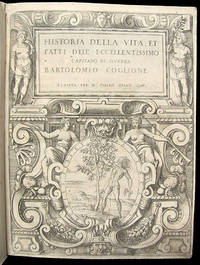
156925095Vinetia: Appresso Gratioso Percaccino 1569. Hardcover. 24 283 1p. Old quarter calf over marbled boards spine lettered in gold all edges blue. Copper engraved title portrait frontispiece one foldout plate with the coats of arms of the Colleoni family initials head-pieces tail-pieces and printer's device. The fascinating life and times of one of the most famous Italian soldiers of fortune. Small labels on the front panel and the front free endpaper short tear and wear to the spine. There are some old annotations on the margins and on the last page and some very sporadic underlining. Overall a nice well-preserved copy. In the Italian language. Cicogna 2845. Gamba 1658. Graesse VI.469. ; Quarto. Appresso Gratioso Percaccino hardcover
188330937Boston: James R. Osgood and Company 1883. First Edition. Hardcover. First edition second state with no tailpiece on page 441 and "The St. Charles Hotel" on page 443. 624pp. Dark brown pictorial cloth stamped in black and gold on the front panel and spine panel. With more than three hundred illustrations. Barely a hint of foxing to the fore edge. A superb near fine copy. BAL 3411. Howes C480.; Large Octavo. James R. Osgood and Company hardcover
19330001532IRON MINNESOTA MN. Very Good. 1933. On offer is an outstanding archive of seven 7 original manuscript diaries one 1 autograph book 16 vacation photos from 1953 and other ephemera. The diaries were handwritten by Mary Elizabeth Kendall b. March 5th 1919 Iron Minnesota. Researchers and collectors of the area or of women's of gender studies of the era will find an interesting grouping with dates taking the reader from watching Mary evolve from a cowboy crazy kid to a University of Minnesota graduate to a middle aged family woman librarian hospital volunteer and basic salt of the earth American woman. From the outset we find she is such a charming and engaging young lady who details what life was like for a teen-age girl during the Great Depression. She loved her movies and movie actors and bought all the latest star magazines she loved reading westerns and considered herself somewhat of a cowgirl and listened to "Uncle Sam's Forest Rangers" radio show along with Hopalong Cassidy and Buck Rogers; she calls herself "Cowboy crazy." She belonged to the "Lone Wolf Tribe" and was always receiving different things in the mail from them. She owned a "Cutex Miniature Manicure Set" and an "Orphan Annie Shake-up mug" and couldn't wait until the new Sears Roebuck catalogue came out. She also collected cereal box tops grew "Depression Flowers" and entered all the latest contests. During her college years she receives a bachelor degree in science at the University of Minnesota. Most of the ephemeral items are from her college years. Here are snippets: 1933 "January 7th Went to town with mother this morning. Bought a notebook for pictures of movie stars. The "men of the family" sawed wood. Went to a movie called "The All American." It was neat. Richard Arlen was the hero and Gloria Stuart was the heroine." "February 19th Got 16 in the General Science test! The passing score was about 20!! There is one question in the test that we didn't mark yet so 16 isn't my real score. Took my makeup algebra test after school. Entered a contest by sending a limerick. Hope I win. Fed my goldfish." "March 5th Today is my birthday and I'm fourteen years old!!!!!!! Yesterday mother gave me a dollar for a present. I'm going to subscribe to a magazine. These are pretty hard times now. Yesterday the Virginia banks closed." "March 11th Went to town with mother and Boots. Went to the movie "Sherlock Holmes". It was great. It showed the time when Holmes killed professor Moriarty. Clive Brooke played the title role. I'm fixing over a silk dress that one of my aunts sent. All I do is raise the belt. Listened to the KMOX County Fair. I like Wyoming Jack best." "April 13th Easter vacation began today. Mother and Boots sold 40 chickens at the market I guess today. Mother and John played cribbage and bridge against Books and me tonight. Death Valley Days was extra good today. About Red Carson the outlaw and the widow's mortgage. Fed my goldfish." "April 17th Helped wing band chicks this afternoon. Cleaned out my room a little. Fed my goldfish. Received my Lone Wolf Tribe bracelet. It certainly isn't as nice as I thought it would be. It turns my arm sort of green like the 10 cent store rings." "May 27th Went to town with mother and Mrs. Johnson and her baby Mary Ann who is sick. Went into the bank vault for the first time with mother. It seemed so simple. I don't see how the vault can be so safe. Went to "The Kid from Spain" starring Eddie Cantor. Pretty good. Fed my goldfish." "June 16th Went up town with mother. Filled in some more entries for the hog naming contest. Bought the first ice cream cone I've had this year. Received my Buck Rogers book. It's great. Heard the last Buck Rogers program on the radio. Wish it wasn't the last. Fed my fish." "July 4th Someone stole 6 or 7 of our chickens last night or this morning. We think we know who did it. Went to the fourth of July picnic for the Farmer's Club. Had four ice cream cones and some fun. Fed my fish. Didn't light my fire crackers." "August 3rd Quite cool. Went on the 4-H Club tour today. We went to most of the houses for dinner. I was in Johnson's car. For lunch we had ice cream cake lemonade and sandwiches. Don bought a tube of toothpaste for me. I'm going to use it for that contest. I'm going to send in the picture of Charles J." "August 11th & 12th Cool. Got my Orphan Annie Shake-up Mug. Made a glass of Ovaltine in it. Boots and I played cribbage tonight. Heard President Hoover's speech of acceptance. The audience yelled like Indians. There are some people who net fish during the night in our lake. Boots and Don are trying to find out who they are .Received letter from Ethyl Stanning. She's only thirteen years old but she goes out with boys and stays till 5 in the morning! Read some in "Arizona Ames." Went to a 4-H Club meeting tonight. At the last meeting one of the Virta twins found the school keys outside and put them on the desk. A girl had to go thru a window to get them." "September 30th Brought some Japanese lanterns to Miss Risjard. Had a test in Domestic Science. Mr. Jerdee showed us how a fire extinguisher works. Didn't add anything to my "Depression Flowers" today. There are some "flowers" on the bottom of the dish now. A California man whistled for us. He was wonderful. Miss Sheldon whistled with him." "October 10th Had an assembly. I got on the honor roll. My average was 93.9 Got our report cards at noon. Melba failed in two subjects. I got 90 on my essay on Honesty for Character Education. Heard the worst speech ever tonight. It was just awful. It was about Hoover and it was all lies " "November 1st Made oatmeal cookies but we used rolled oats. Gee I'm certainly Cowboy crazy but not boy crazy please understand. Heard the Lonesome Cowboy and the Perkin's Boys. Wish I could play a guitar like the Lonesome Cowboy can ." "December 24th Mother and Boots went to town. I put some of the strings on my gypsy marionette. Mother decorated the dining and living rooms with the holly she got from Oregon. Don Boots and John got the Christmas tree and we decorated it. John and I hung up our stockings." The books breakdown as follows: 1. 1933 age 14. Full of entries; 2. 1937 age 18. Full; 3. 1938 age 19. Full; 4. 1939 age 20. Full. 5. 1940 age 21. Full; 6. 1956 age 37. This one is typed and in a 3 ring binder. 198 pages; 7. 1968 age 49. Full; 8. 1927 Autograph book full of handwritten signatures. BIO NOTES: Mary was born on March 5th 1919 to Hugh F. and Bessie Kendall. She had four older brothers; Hugh Donald Richard and John. Casual research informs that Mary's brother Richard became a geologist for the Standard Oil Company in California and later was sent to work in Africa. There are a few of his report cards in this lot but all of the diaries and other pieces of ephemera belonged to Mary. Overall VG.; 12mo - over 6¾" - 7¾" tall; KEYWORDS: MARY KENDALL IRON MINNESOTA UNIVERSITY OF MINNESOTA WOMENS STUDIES HISTORY OF MID TWENTIETH CENTURY AMERICA GENDER STUDIES DEPRESSION ERA HANDWRITTEN MANUSCRIPT AMERICANA DOCUMENT LETTER AUTOGRAPH DIARY JOURNAL LOG KEEPSAKE WRITER HAND WRITTEN DOCUMENTS SIGNED LETTERS MANUSCRIPTS HISTORICAL HOLOGRAPH WRITERS DIARIES JOURNALS LOGS AUTOGRAPHS PERSONAL MEMOIR MEMORIAL PERSONAL HISTORY antiquité contrat vélin document manuscrit papier Antike Brief Pergament Dokument Manuskript Papier oggetto d'antiquariato atto velina documento manoscritto carta antigüedad hecho vitela documento manuscrito . unknown
19230001428Good. 1923. On offer is a super original 1923 manuscript diary handwritten by Cora Welch Smith wife of the famous composer David Stanley Smith of New Haven Connecticut. The 116 pp diary represents a European trip Cora and David took in the year 1923. Collectors and historians of musical personages or Yale related famous figures will find a great deal of retrospective biographical entries relating to Smith's early travels as Cora relates anecdotes of their past trips to Europe and her husband's previous life as a student abroad. Cora and David traveled to Europe in the summer of 1923 on board the White Star line ship Regina and both are shocked by how the war has affected Europe. At one point they go to stay with a family by the name of Henderson in Surrey England. It's called the Randall's estate which is noted for its relationship with the novels of Jane Austen. Cora is a super diarist very descriptive and she adds even more depth with the several 8 quaint little drawings adding even more charm. When the diary starts out they are leaving New Haven and head to Montreal where they stay at the "Mont Royal" Hotel. Here are snippets: 1923 "June 9th In a taxi to the White Star Dominion Line Docks. The "Regina" Named for a city in Saskatchewan 16500 tons. Cabins on C Deck chairs on B. Sailed about 10:30 standard. Down to St. Lawrence to Quebec. A pleasant day. Landscape unimproved in interest as the day progressed. The banks changing from flats to hills with an occasional village with it's one spire church. Was glad to see the promontory of Quebec again. The new tower of "Frontenac" does not improve the hotel and unfortunately dwarfs the citadel. We took a few passengers on board that evening." "June 10th A fine sunny day. From our chairs on the south side we looked at the beautiful shores of New Brunswick. Very green and hilly with pretty white towns in the bays. Later there were mountain ranges with a streak of snow here and there. From our porthole in the early morning we saw a small steamer come out from "Father Point" and when alongside our ship mail was taken on board and two men left our boat. The next morning before breakfast we saw the high embankment of Newfoundland to the North. It had much snow upon it and looked very bleak. Then came the fog. It is still with us Friday. On the next day very little fog that day the only incident was the passing by two ice bergs she has a drawing of them " Then they dock at Liverpool and end up staying at Harker's Hotel. Several pages about Liverpool and then on to Edinburgh. "June 20th We reached Edinburgh in the evening. We entered Scotland by crossing the Tweed at Berwick. Pretty ride along the coast. Saw "Holy Island" from which the Lindisfarne Monks went to Durham taking with them the bones of St. Cuthbert. North British or Waverly Station. Hotel from Wednesday night till Sunday. An improving city. View of the old town and castle from Princes St. very impressive ." "July 1st In the afternoon of that first Sunday we took a train to Leatherhead about a half hour ride. There we visited until Tuesday morning at Randall's Park the estate of the Henderson family. Mr. and Mrs. Henderson and their three daughters Mabel Frances and Cicely were at home. The two sons are married and living elsewhere. Mr. Leslie Smith came for Monday night. Miss Marjorie Still came in for tea on Monday. Randall's Park is a delightful place. The present house of Grey Stone was built about 1820. The former house was on the Mole River which flows placidly by and beyond the long front lawn. It was the former house in which Jane Austin placed Miss Taylor Emma's governess who married and went to live nearby at Randall's Leatherhead is the "Highway of Emma". On one side of the front lawn is the wilderness a wood with splendid trees. Many rabbits live in holes in the ground there. On the other side of the lawn are the gardens. These are surrounded by a high brick wall with fruit trees trained up the sides. The flower beds were filled with bloom. On the outside of our long wall is glass to protect the peaches and make them ripen earlier. Mrs. Henderson was vice president of the local Red Cross and head of a hospital. Frances was a nurse in the war for four years. The people do not talk much about the war or complain but it is always there in the background. The Henderson's have been obliged to sell the farm part of their estate " "July 3rd On the afternoon of our return from Randall's July 3rd we had the opportunity through tickets sent by Mrs. Dewick of being present at the memorial service for our war ambassador Mr. Walter Hines Page in Westminster Abbey. Mrs. Smith and cousin Alice smith were in the North Transept and David and I were in the Poet's Corner. The memorial tablet was unveiled by Viscount Grey of Fallodon on the staircase entering the Chapter House beneath a tablet and window in memory of James Russell Lowell .After the service we talked with the Ludington's and as a gate was closed in the side aisle down which we were moving we went through a small opening into the next and soon realized that we had involuntarily entered the outgoing assembly of dignitaries ambassador's members of Parliament and such ." Now on to Norwich Ely Cambridge Bath Bruges Ghent Brussels: "July 19th From Ghent we came to Brussels arriving about five. We chose the "Grand Hotel Brittanique" from a list. It is a good hotel and pleasantly situated on the "Place du Trone" by the side gates of the Royal Palace. We happened to arrive at the time for celebrating the Fete Nationale July 21st being the anniversary of the occasion of Leopold ." "July 23rd On Saturday morning we went by train to Lorraine a ride of 45 minutes or so. There a cocker with another Victoria took us to the library which is being rebuilt and about the center purposely burned by the Germans by means of explosions. The cathedral near the library can be used only at the choir end. The nave is boarded up. From outside we could see the demolition of the nave and the partial destruction of the west towers. There were ruins of houses about a square where a university building had stood. A good deal of reconstruction has been completed however the houses are built of a pretty reddish brick with cream color stone trimmings The cocker told us a little about the German occupation a four year's horror. He said that the Saxon's were worse than the Bavarian's ." "July 30th The eight o'clock train from Paris brought us to Montreux about 7:15 A.M. and there an auto was waiting to bring us the short distance to the Grand Hotel at Territet which Mrs. Willinger told us about. We have lovely rooms on a corner of the fourth floor with two balconies. On the front balcony looking at the lake and mountains across. We had our breakfast. It is a wonderful spot. At the end of the lake the mountains on the sides of the Rhone Valley frame the long jagged mountain la Dent du Midi " " On several evenings there was a beautiful pink glow on the snow tops on our last evening in particular it was so striking that we all left the dining room for the balcony. Twice in the evening we went to the Palace Hotel to hear Mr. Harold Monro Poet and Editor read poetry. The last time he gave a lecture much too condensed on Poetry of Today and Tomorrow. He read from various anthologies ." "August 19th Our passports were taken from us as we landed and looked over and returned later amid a good deal of confusion and no explanation of the proceedings was made. At Menaggio we took a boat which after a stop at Bellagio landed us at Cadenabbia about 6. Here we are at the Grand Hotel Britannia recommended by Miss Gifford. As usual we have a room facing the lake a corner room with two little balconies. The lake is very lovely .One day we spent many hours on the water going by steamer to the end of the Lake Como. At Bellagio we climbed the hill behind the Grand Hotel at which I stayed with father and mother in 1909 to the Villa Serbelloni ." Then also head to Pisa Florence Rome and this is where the diary entries stop. BIO NOTES: YALE: "David Stanley Smith was born in Toledo Ohio on July 6 1877. He grew up in a musical household and by the age of fifteen he had found employment as a church organist. In 1895 he went to Yale where Charles Ives Class of 1898 was numbered among his friends; he would later serve as the organist at Center Church in New Haven a position formerly held by Ives. Smith was an outstanding student and he became the protégé of Professor Horatio Parker. Smith's graduation ceremony in 1900 featured a performance of his Ode for Commencement Day conducted by Parker. After college Smith traveled throughout Europe where he took lessons with Ludwig Thuille and Charles-Marie Widor. In 1903 Smith returned to Yale as an instructor in music theory. He would remain a member the Yale faculty until his retirement in 1946. Horatio Parker died in 1919 and the next year Smith succeeded him as Dean of the School of Music a post he would hold until 1940. Again following in Parker's footsteps he also became the conductor of the New Haven Symphony Orchestra. Despite his duties as a teacher administrator and conductor Smith was able to compose a substantial amount of music including one opera Merrymount five symphonies ten string quartets many sacred works and a variety of other compositions. Smith married On offer is a super original 1923 manuscript diary handwritten by Cora Welch Smith wife of the famous composer David Stanley Smith of New Haven Connecticut. The 116 pp diary represents a European trip Cora and David took in the year 1923. Collectors and historians of musical personages or Yale related famous figures will find a great deal of retrospective biographical entries relating to Smith's early travels as Cora relates anecdotes of their past trips to Europe and her husband's previous life as a student abroad. Cora and David traveled to Europe in the summer of 1923 on board the White Star line ship Regina and both are shocked by how the war has affected Europe. At one point they go to stay with a family by the name of Henderson in Surrey England. It's called the Randall's estate which is noted for its relationship with the novels of Jane Austen. Cora is a super diarist very descriptive and she adds even more depth with the several 8 quaint little drawings adding even more charm. When the diary starts out they are leaving New Haven and head to Montreal where they stay at the "Mont Royal" Hotel. Here are snippets: 1923 "June 9th In a taxi to the White Star Dominion Line Docks. The "Regina" Named for a city in Saskatchewan 16500 tons. Cabins on C Deck chairs on B. Sailed about 10:30 standard. Down to St. Lawrence to Quebec. A pleasant day. Landscape unimproved in interest as the day progressed. The banks changing from flats to hills with an occasional village with it's one spire church. Was glad to see the promontory of Quebec again. The new tower of "Frontenac" does not improve the hotel and unfortunately dwarfs the citadel. We took a few passengers on board that evening." "June 10th A fine sunny day. From our chairs on the south side we looked at the beautiful shores of New Brunswick. Very green and hilly with pretty white towns in the bays. Later there were mountain ranges with a streak of snow here and there. From our porthole in the early morning we saw a small steamer come out from "Father Point" and when alongside our ship mail was taken on board and two men left our boat. The next morning before breakfast we saw the high embankment of Newfoundland to the North. It had much snow upon it and looked very bleak. Then came the fog. It is still with us Friday. On the next day very little fog that day the only incident was the passing by two ice bergs she has a drawing of them " Then they dock at Liverpool and end up staying at Harker's Hotel. Several pages about Liverpool and then on to Edinburgh. "June 20th We reached Edinburgh in the evening. We entered Scotland by crossing the Tweed at Berwick. Pretty ride along the coast. Saw "Holy Island" from which the Lindisfarne Monks went to Durham taking with them the bones of St. Cuthbert. North British or Waverly Station. Hotel from Wednesday night till Sunday. An improving city. View of the old town and castle from Princes St. very impressive ." "July 1st In the afternoon of that first Sunday we took a train to Leatherhead about a half hour ride. There we visited until Tuesday morning at Randall's Park the estate of the Henderson family. Mr. and Mrs. Henderson and their three daughters Mabel Frances and Cicely were at home. The two sons are married and living elsewhere. Mr. Leslie Smith came for Monday night. Miss Marjorie Still came in for tea on Monday. Randall's Park is a delightful place. The present house of Grey Stone was built about 1820. The former house was on the Mole River which flows placidly by and beyond the long front lawn. It was the former house in which Jane Austin placed Miss Taylor Emma's governess who married and went to live nearby at Randall's Leatherhead is the "Highway of Emma". On one side of the front lawn is the wilderness a wood with splendid trees. Many rabbits live in holes in the ground there. On the other side of the lawn are the gardens. These are surrounded by a high brick wall with fruit trees trained up the sides. The flower beds were filled with bloom. On the outside of our long wall is glass to protect the peaches and make them ripen earlier. Mrs. Henderson was vice president of the local Red Cross and head of a hospital. Frances was a nurse in the war for four years. The people do not talk much about the war or complain but it is always there in the background. The Henderson's have been obliged to sell the farm part of their estate " "July 3rd On the afternoon of our return from Randall's July 3rd we had the opportunity through tickets sent by Mrs. Dewick of being present at the memorial service for our war ambassador Mr. Walter Hines Page in Westminster Abbey. Mrs. Smith and cousin Alice smith were in the North Transept and David and I were in the Poet's Corner. The memorial tablet was unveiled by Viscount Grey of Fallodon on the staircase entering the Chapter House beneath a tablet and window in memory of James Russell Lowell .After the service we talked with the Ludington's and as a gate was closed in the side aisle down which we were moving we went through a small opening into the next and soon realized that we had involuntarily entered the outgoing assembly of dignitaries ambassador's members of Parliament and such ." Now on to Norwich Ely Cambridge Bath Bruges Ghent Brussels: "July 19th From Ghent we came to Brussels arriving about five. We chose the "Grand Hotel Brittanique" from a list. It is a good hotel and pleasantly situated on the "Place du Trone" by the side gates of the Royal Palace. We happened to arrive at the time for celebrating the Fete Nationale July 21st being the anniversary of the occasion of Leopold ." "July 23rd On Saturday morning we went by train to Lorraine a ride of 45 minutes or so. There a cocker with another Victoria took us to the library which is being rebuilt and about the center purposely burned by the Germans by means of explosions. The cathedral near the library can be used only at the choir end. The nave is boarded up. From outside we could see the demolition of the nave and the partial destruction of the west towers. There were ruins of houses about a square where a university building had stood. A good deal of reconstruction has been completed however the houses are built of a pretty reddish brick with cream color stone trimmings The cocker told us a little about the German occupation a four year's horror. He said that the Saxon's were worse than the Bavarian's ." "July 30th The eight o'clock train from Paris brought us to Montreux about 7:15 A.M. and there an auto was waiting to bring us the short distance to the Grand Hotel at Territet which Mrs. Willinger told us about. We have lovely rooms on a corner of the fourth floor with two balconies. On the front balcony looking at the lake and mountains across. We had our breakfast. It is a wonderful spot. At the end of the lake the mountains on the sides of the Rhone Valley frame the long jagged mountain la Dent du Midi " " On several evenings there was a beautiful pink glow on the snow tops on our last evening in particular it was so striking that we all left the dining room for the balcony. Twice in the evening we went to the Palace Hotel to hear Mr. Harold Monro Poet and Editor read poetry. The last time he gave a lecture much too condensed on Poetry of Today and Tomorrow. He read from various anthologies ." "August 19th Our passports were taken from us as we landed and looked over and returned later amid a good deal of confusion and no explanation of the proceedings was made. At Menaggio we took a boat which after a stop at Bellagio landed us at Cadenabbia about 6. Here we are at the Grand Hotel Britannia recommended by Miss Gifford. As usual we have a room facing the lake a corner room with two little balconies. The lake is very lovely .One day we spent many hours on the water going by steamer to the end of the Lake Como. At Bellagio we climbed the hill behind the Grand Hotel at which I stayed with father and mother in 1909 to the Villa Serbelloni ." Then also head to Pisa Florence Rome and this is where the diary entries stop. BIO NOTES: YALE: "David Stanley Smith was born in Toledo Ohio on July 6 1877. He grew up in a musical household and by the age of fifteen he had found employment as a church organist. In 1895 he went to Yale where Charles Ives Class of 1898 was numbered among his friends; he would later serve as the organist at Center Church in New Haven a position formerly held by Ives. Smith was an outstanding student and he became the protégé of Professor Horatio Parker. Smith's graduation ceremony in 1900 featured a performance of his Ode for Commencement Day conducted by Parker. After college Smith traveled throughout Europe where he took lessons with Ludwig Thuille and Charles-Marie Widor. In 1903 Smith returned to Yale as an instructor in music theory. He would remain a member the Yale faculty until his retirement in 1946. Horatio Parker died in 1919 and the next year Smith succeeded him as Dean of the School of Music a post he would hold until 1940. Again following in Parker's footsteps he also became the conductor of the New Haven Symphony Orchestra. Despite his duties as a teacher administrator and conductor Smith was able to compose a substantial amount of music including one opera Merrymount five symphonies ten string quartets many sacred works and a variety of other compositions. Smith married Cora Deming Welch in 1913. They had one son Christopher Stanley Smith. David Stanley Smith died in New Haven on December 17 1949." The diary 4 ¼" x 6 ½" the cover is very worn the pages and binding look good. G. in 1913. They had one son Christopher Stanley Smith. David Stanley Smith died in New Haven on December 17 1949." The diary 4 ¼" x 6 ½" the cover is very worn the pages and binding look good. G.; 24mo - over 5" - 5¾" tall; KEYWORDS: COMPOSERS MUSIC MUSICAL CELLO CELLIST WOMEN'S STUDIES GENDER STUDIES TRAVEL SINGERS OPERA PERFORMANCE ART GRAND TOUR EUROPE CULTURE JANE AUSTEN SYMPHONY SYMPHONIES NEW HAVE SYMPHONY ORCHESTRA THUILLE WIDOR WELCH DAVID STANLEY SMITH MERRYMOUNT RANDALLS Hand Written Personal Americana Memoir Handwritten autograph autographs signed letters document documents manuscript manuscripts writers writer author Holograph personal Ephemera antiquité contrat vélin document manuscrit papier Antike Brief Pergament Dokument Manuskript Papier oggetto d'antiquariato atto velina documento manoscritto carta antigüedad hecho vitela documento manuscrito . hardcover
19180001899CAMP JACKSON SOUTH CAROLINA FORT JACKSON. Good. 1918. On offer is a very interesting original 95 page manuscript relic of World War I being the diary of Private Grover Perry Deerwester Battery D 6th Regiment F.A.R.D. Field Artillery Replacement Depot of Bucyrus Ohio handwritten in incredible intimate and graphic detail. It appears that Grover 1888 - 1938 was the son of Commodore Perry Deerwester. The private is at Camp Jackson South Carolina in the Base Hospital and then the Convalescent Hospital. Deerwester on the one hand proves to be somewhat typical of the times and of the sort flinging racial slurs and his thoughts about being in this "hell hole" but he is also a super diarist giving the a long very sad description of a young man that hung him self in the hospital ward a sand storm which he almost did not survive about the men with venereal diseases and much more. The 2 ½" x 5 ½" book begins with over 2 dozen pages of names some autographs and addresses of some of his friends with notes as to what happened to them later on in life for example: "Timothy Dempsey 240 West 67th St. New York City. Gone over seas in O.A.R.D. from 6th regt. F.A.R.D. Edward H. Germit Napoleon Ohio. RFD #8 Box 55. Transferred from 6th Regt. F.A.R.D. to 4th Regt. Cook in Supply until sent back to Camp Sherman." Another rather startling note is crossed out and by it he writes "Deserter". The balance of 60 pages begin in July of 1918 and provide lengthy daily entries about the hospital and his antics and adventures. Here are some snippets: "My Experience in a sand storm. October 18th which I was on guard in the 6th Reg. The moon was shining thru the pines in the Gun Park. It was so light by the moon and the sky was clear. It was a beautiful southern night and as I walked my post I forgot about the war. I forgot that I was in the land of horn toads sand fleas and sand storms. I suppose I even forgot my general and special orders as I walked along on my post. I was thinking of home of my old hometown and the people who lived there. I thought of dad and mother and though how I'd like to surprise them by going home on pass. I was also thinking of my little blue eyed blondie. I wondered if they would all look the same as they did when I last saw them I don't recall what relief was on that night anymore. I think it was the 3rd the watch from 10 to 12 P.M. I had Post No. 10 and was stationed the farthest away from the guard house and as I walked my rounds thinking over those cherished memories I noticed that a thick fog was gathering then a little breeze sprang up and I thought it was going to rain. I had charge of the gun park and we had to keep a strict watch on them. There were 56 pieces or guns in this park No. 10. Both French and American 75's and the guns and caissons were all covered with heavy tarpaulin covers. Ropes on the covers to tie them down with. It was only a few minutes till it was quite windy .the air was full of sand and dust so thick that a man could hardly see. Not saying anything about what it meant to breath .The storm covers a great territory and are much fiercer than our little whirl winds. I walked my post till I could hardly see and breathing seemed impossible and when the full blast struck I dispensed with general orders and everything else. I called "Corporal of the Guard No. 10 Relief" and repeated the call twice. I heard my calls repeated from other posts but no relief came. I didn't quit my post. I only stopped making the rounds. I took my 45 from its holster and put in a clip of 3 blanks and turned the blanks first for use. But I didn't use them for signal. I had no instructions to use them. So I held the pistol in my right hand gripped and ready to fire and took off my heavy overcoat and laid flat on the ground on left side and put my over coat over my head so I could breath and covered my pistol too. As I lay there in that fiendish storm I thought my wind pipes would burst. As I lay there I said my prayers and cursed that sunny southern land. From many a time I was caught in a storm but never one so fiendish as this one was. I thought to myself so long Ohio and so long my little Blondie .I'll never see any of you anymore. I guess the gig is up for me and when relief came at last the storm was over and the moon was shinning brightly again ." He also relates how he almost shot his relief because his eyes were nearly swollen shut. He also tells of how his face had patches of blood and sand; he was relieved from duty and taken to the Infirmary. It takes an hour for them to get the sand all out of him and they let him sleep in the Regimental Police Sergeants bunk. They had to help him out of bed the next day and gave him a cold shower bath and rubbed him down sprayed "some kind of dope" up his nose and sprayed his throat and dropped some "liquid fire" into his eyes. 1918 "July 17th This date finds me still in the hospital still in ward H-3 under the care of Capt. Latin. I will be released from the hospital tomorrow morning or tomorrow July 18th some time. My old comrades of the Smoky City leave for overseas tomorrow morning at 6 O'clock. I trained for the same purpose of going over with this same bunch of Devil May Care lads and now I'll be getting out of the hospital in time to be transferred into some rotten outfit. Any civilized man would call that "Sho Nuff". Some were to pass the artillery exam for overseas. Some had venereal disease and some were flat footed like a duck. My old pal Hudson from N.Y was too short in one end ." "July 18th Today I will be released from this temporary purgatory on earth. God how happy a man should be to get out of this place alive. It isn't a fit place for the dead. No mentioning the living. Last night another lad ended it all by taking his own life. Oh! I could never do that never. I'd let them chop me up in 1 inch squares before I'd do that. A lad by the name of McGown from Ward H-4 next ward to ours or the one I was in. He had some kind of growth in his throat some thing like a goiter and the surgeons were going to operate on it in a few days and he refused them. Last night the 17th of July he committed suicide by hanging himself with a bed sheet. I don't know how he tore the sheet without his pals hearing him but he took a sheet from his cot and tore it into strips and braided these strips together forming a rope. The head of the hospital cot is about two feet to the top from the mattress. McGown tied the rope like a cord about his neck in a slip knot and then tied the other end to the head of his cot at the top and threw the covers over his head and this morning the orderly found him dead at 4:30 A.M. and his bunk mates never heard him struggle or anything from him last night " "July 19th Oh! Yes. One important feature about this here Convalescent camp is that it doesn't matter as to your complexion. You may be red white black or blue and you are accepted here. The different races don't sleep in the same tent with the whites but the tents are side by side. One tent has white folks and the other black. You needn't worry if the cover of your nearest neighbors skin doesn't compare with yours of you don't like niggers you can find em from a "high yallow" to an octoroon. If you don't like that kind you can pick out a wop or guinea. The blacks fall in a line by themselves and start for the patient's mess hall which is a good half mile away from this camp and the whites fall in and march to the mess hall in charge of a N.C.O. Well when we reach the mess hall the walks are all screened in like a penitentiary and we must wait out side until these darn coons eat first. After the shines have had their mess the white birds go in and eat next. Every time we enter themes hall some one says "The American Eagle won't scream on skimmed milk." "July 21st The convalescent is the filthiest place I ever got into. Hope it won't be ling that I have to stay here. There are men here who have all kinds of diseases. Some are very contagious and some aren't. There are some here who are quarantined to their quarters who have that dread and very contagious disease called "Meningitis." Nearly every victim of this disease is a cripple after he gets over it if he ever does. I have seen many of the boys who have had it who are cripples for life. No operation can cure them. Many of them walk with a cane as their legs have been drawn crooked so that they can never walk straight again. Their days of soldiering are limited and they are handicapped for life. The men with this disease have their own quarters and bath rooms and they are not allowed to be out with any of the other men. There is one disease here that should be kept in a place by its self too that is the "venereal diseases". But they are not. They are allowed to be out with all the other men eat in the same mess hall bathe in the same bath house use the same toilets and all. In this way I think many a lad who is clean and tires hard to keep his body pure from these hellish diseases of a venereal nature are often a victim by contracting it from the others who have it. Where if these boys were kept in a separate place they wouldn't be exposing innocent lads to the dread of these awful diseases. These boys who have it are low down dirty damn slackers if they don't try to keep a clean lad from getting it." "July 23rd The bathroom is a little shack here about 8ft x 16ft. All classes bathe here. Once a week once a month or when ever they feel like it. Venereal's and all in the same latrine. I have never taken a bath here and thank God I don't have to. I take a bath every other night but not here. I go over to the hospital and get permission to take my bath there .Every lad has a dread for this place. It is so much more like a prison then a detachment of the hospital. It seems more like the mouth of the infernal regions than a place of rest and quiet. We have no freedom here. We can not go to the canteen without falling into line and a N.C.O. takes us over and back again ." "August 6th Oh Boy! After mess today noon I get looked over by Dear old Captain Latin himself and two majors of the medical staff and maybe I'll get to go back to my old 17th this afternoon yet. Oh! Gee Oh! Gee! Gosh "Wow" whoopee. I hear mess call now. I hope this is my last feed of poor old rotten cantaloupe and dried up tomatoes .I wish they would hurry up with that old buzz cart. Gee I'll bet the boys will wonder back at headquarters where I blew in from anyway. Wonder if there is any mail there for me. I haven't gotten but three letters all the time I was in the hospital and convalescent. Oh! Here it comes the Buzz car. We are off " It should be noted we found 2 pages excised from the book. Overall G.; Manuscript; 24mo - over 5" - 5¾" tall; KEYWORDS: HISTORY OF GROVER PERRY DEERWESTER BATTERY D 6TH REGIMENT F.A.R.D. FIELD ARTILLERY REPLACEMENT DEPOT BUCYRUS OHIO CAMP JACKSON SOUTH CAROLINA RACISM GENDER STUDIES MEN'S STUDIES UNITED STATES ARMY WORLD WAR I WWI WW1 THE WAR TO END ALL WARS AMERICANA HANDWRITTEN MANUSCRIPT AUTOGRAPHED AUTHORS MANUSCRIPT DOCUMENT LETTER AUTOGRAPH KEEPSAKE WRITER HAND WRITTEN DOCUMENTS SIGNED LETTERS MANUSCRIPTS HISTORICAL HOLOGRAPH WRITERS AUTOGRAPHS PERSONAL MEMOIR MEMORIAL PERSONAL HISTORY ARCHIVE DIARY DIARIES antiquité contrat vélin document manuscrit papier Antike Brief Pergament Dokument Manuskript Papier oggetto d'antiquariato atto velina documento manoscritto carta antigüedad hecho vitela documento manuscrito Papel . unknown
18860001549KEYPORT WHALE CREEK NEW JERSEY NJ. Good. 1886. On offer is a very interesting and intriguing 1886 manuscript diary dated July 11th 1886 through to December 25th 1886 handwritten by a young woman named Sherburne M. Graham of we believe New Jersey. Her passing references to Whale Creek Keyport the boat Wm. E. Bishop assuredly pinpoint New Jersey as her locale. Historians and collectors of the place and times will find this diary unique inasmuch that Miss Graham brings a soap opera quality to her writings describing the politics back stabbing inter personal relations and gossip that occurs at work in a retail store. Upon her return from a vacation she writes that she is worried that while away from the store 'some serious mistake discovered during my absence and for which I would get a laying out.' She then admits to poor work ethic prior to her vacation as she was disconsolate she was refused a raise. The back drop of her family: a preacher father and an ill mother and her other close personal relationships add to the narrative. In one example her father calls in an allopathic doctor for her mother. After some time the Doctor performs an "operation" on her mother who had a side abscess. The doctor had been treating her to no avail and after several days gave her some ether and lanced her side after the gruesome description he said he thought he had accidentally cut the intestines. The largish flip style diary has approximately 160 pages measuring about 8-1/4" x 4-1/2". Overall G.; 8vo - over 7¾" - 9¾" tall; KEYWORDS: HISTORY OF WHALE CREEK BOAT 'WM. E. BISHOP' KEYPORT SHERBURNE M. GRAHAM NEW JERSEY ALLOPATHIC ALOPATHIC WOMEN'S STUDIES GENDER STUDIES PRE SUFFRAGE AMERICAN HANDWRITTEN MANUSCRIPT DOCUMENT LETTER AUTOGRAPH DIARY JOURNAL LOG KEEPSAKE WRITER HAND WRITTEN DOCUMENTS SIGNED LETTERS MANUSCRIPTS HISTORICAL HOLOGRAPH WRITERS DIARIES JOURNALS LOGS AUTOGRAPHS PERSONAL MEMOIR MEMORIAL PERSONAL HISTORYantiquité contrat vélin document manuscrit papier Antike Brief Pergament Dokument Manuskript Papier oggetto d'antiquariato atto velina documento manoscritto carta antigüedad hecho vitela documento manuscrito papel. . unknown
19110001538LAMAR INDIANA SPENCER COUNTY. Very Good. 1911. On offer is a super original unique 1911 manuscript diary handwritten Indiana tobacco farmer. Beside the details of his life pertaining to his main occupation we learn that he runs a very interesting sideline being him owning and operating a "Medicine Wagon". He lives in Spencer County Indiana near Lamar and he points out he plants 4000 plants. He also mentions going to Lincoln City Chrisney Kennedy Station Newtonville Tell City and Grandview. In all there are about 130 handwritten pages. Eighty nine of those pages are diary entries and 40 of the pages have customer names and what they purchased from the Medicine Wagon. Here are some snippets: 1911 "Clear and cool. Wind from North West. We all went fishing. Did not catch any fish. Clear tonight. I went to IOOF lodge tonight .Clear and warm. We all went to Church this morning. Vernin and Clyde went to Newtonville. Drove Cricket. Second time she was drove. The rest of the family went to Meek's Church. Clarence Hagan preached .Clear and warm. Boys plowed this morning. I worked in prospect hole. Floyd helped me. Vernin Clyde and Floyd went fishing this afternoon to stay all night. I plowed potatoes in afternoon. Went to lodge IOOF at night .Pretty cloudy and pleasant. Boys planted corn for late harvesting. Plowed tobacco rolled peas and planted corn. I went to M. E. Bullock's after medicine wagon. Eat dinner with William Learner's family. Rained little in afternoon late .Pretty cloudy and warm. Boys planed corn and tobacco in forenoon. Rained in afternoon. I come home from M. E. Bullock's today. Eat dinner with William Learner's family. Get home about 6:30 o'clock. Left medicine wagon at Chrisney to have repaired .Partly cloudy and pleasant. Clyde plowed tobacco in morning and Vernin and I made log pile in field where we want to plow for grass. Lola and I went to funeral in afternoon. Ade Brady's baby. Rained little but not enough to do any good .Clear and cold but did not do much. I worked some on medicine wagon. Went over to William Schroder's. Have some additional insurance put on list. Went to Chrisney in afternoon. Got flour and have Julia shod. Got me pair shoes and some shirts and underwear ." Near the end of the diary the writing changes and it looks like one of the sons is writing now for their father because he talks about his "pa Canvising all day". Also says "pa sold medicine all day." The back pages deal with medicine sold. Some of the different medicines include; Head Ache Tablets Poultry Powder Cough Syrup Tonic Laxative Liniment Cold Tablets Medicated Ointment Cold Cream Chill Tonic Worm Powder Talcum White Rose Shampoo Jelly Hair Tonic and more. I've scanned an example of one of those pages. Many names are mentioned: Henry Haaffs William Schroder J. T. Leonard Ira Harding Kenny Anderson Wetherill Grant Rice M. E. Bullock George Rumpell Ed Parker William Link Bert Pierson John Krieg Frank Shoemaker Snyder Ira Conner James R. Harris Hiram Harris Fred Southwood Susan Conner Elizabeth Terrill Ed Moore Bob Green Maggie Helmich Charles Martin Andrew Wetzel John W. Vogel John Spinner Jason Varner Silas Richardson George Tableman Mary Romine John H. Meier Charles Hopkins J. W. Phillips and more. The diary was written in a booklet that measures about 4" x 7". It must have gotten close to a candle flame or fire place as the top right hand corner has been burnt but it does not affect the writing. Binding looks good. Overall G.; 16mo - over 5¾" - 6¾" tall; KEYWORDS: MEDICINE WAGON TOBACCO FARM SPENCER COUNTY INDIANA LINCOLN CITY CHRISNEY KENNEDY STATION NEWTONVILLE TELL CITY TONICS REMEDIES SNAKE OIL QUACKERY QUACKS MEDICINE SHOW HOOSIER TRAVELING MEDICINE SHOW HANDWRITTEN MANUSCRIPT AMERICANA DOCUMENT LETTER AUTOGRAPH DIARY JOURNAL LOG KEEPSAKE WRITER HAND WRITTEN DOCUMENTS SIGNED LETTERS MANUSCRIPTS HISTORICAL HOLOGRAPH WRITERS DIARIES JOURNALS LOGS AUTOGRAPHS PERSONAL MEMOIR MEMORIAL PERSONAL HISTORY antiquité contrat vélin document manuscrit papier Antike Brief Pergament Dokument Manuskript Papier oggetto d'antiquariato atto velina documento manoscritto carta antigüedad hecho vitela documento manuscrito . unknown
19190001263LA PRAIRIE BOWEN ILLINOIS. Good. 1919. On offer is an archive of nine 9 in total original manuscript diaries three 1912 1914 and 1915 handwritten by Miss J. Maie Garwood a 23 year old and six 1917 1918 1919 1924 1925 and 1927 diaries handwritten by T.J. Garwood an older woman b. Dec. 20 1950 perhaps Maie's mother. The family lived in or near Bowen and La Prairie Illinois with frequent mention of Hannibal Bentley Plymouth Quincy Augusta and Keokuk. Historians and collectors of the area will find entries about oil that was discovered in the area in 1914 and about the oil men coming around plus much more local history and genealogy. Both diarists do a super job keeping record of all the births deaths and marriages in the area. We read with some delight at Maie's entry on April 2nd 1914 where she talks about have a "carpet rag tacking" party and invites the whole neighborhood. She lists the names of everyone there. Here are some snippets: "February 6th Real nice day. We washed in the forenoon. In the afternoon Hazel and Jessie called and I cut out a dress for Jessie. John went to haul hogs for M. E. Randall then went to Dave Sapp's for sawdust. Bob Mchone and a Harris fellow called to invite us to a dance at Frank Plowman's tomorrow night. They wanted Len to play but he declined. Marion Boman and George Nunn pulled in about 7:30 tonight for supper preparatory to hulling clover tomorrow." "March 26th Nice day. Hank and I went to town in the forenoon. Found the roads worse than we expected to find them but we drove the ____ so reached home in safety. Mama did the housework and ironed. In the afternoon we commenced the quilting. Len and John worked in the timber. At night all the boys took their "horses" and dogs out for a hunt. The derby dog got hung in the fence and Len had to go over to him. He had to carry him on home." "May 21st A fine warm day. Windy again today. The boys worked at the other place. Papa and I went to town in the forenoon. Mama did the housework. We cleaned the pantry in the afternoon. Rev. Raines of Whitehall arrived in the neighborhood today representing the Sandy Creek Association. The Committee had a meeting at the church tonight. Papa attended and they decided they would not hand the money over to Bro. Raines without the proper authority." "May 24th Just a dandy day. Henry and John worked at the other place. Len worked out west. John went to town in the morning and again at night. Mama and I attended the picnic at the school house. Mrs. Reeves went with us. She and Gladys stopped here a while in the evening as we came home. Had a very nice time at the picnic. Quite a crowd there. Mrs. Ferguson and Joe Coffman called about noon and expected their dinners but nothing doing on that line." 1914 "January 27th Jay Botts shot E. C. Roberts in the arm tonight at the depot in Macomb. Mrs. William Root dropped dead in Artz' Store this evening." "February 11th Cloudy most of the day and colder afternoon. John took Mary and Maxine to Bowen to go home on the freight. Len and Henry went to Big Neck in the afternoon to bring Mr. Hoyt and family up tomorrow. Ed Pettijohn called and spent most of the afternoon trying to sell a silo. Mama and I quilted in the afternoon. Began snowing about 9 o'clock tonight. Clifford Anderson shot and killed James Jacoby the marshal of Carthage tonight." "April 2nd Nice in the afternoon but clouded up and sprinkled a little in the afternoon. John and John Hoyt shucked fodder on the King place. We had a carpet rag tacking today and invited the whole neighborhood. Those present were; Mesdames J. P. Browning Joe Browning William Reeves. H. F. Ross L. J. Ross L. E. Lenke Charles Campbell H. A. Campbell W. D. Young Clarence Young Ed Hornecker Frank Hornecker Sid Winfield M. E. Randell S. P. Fosler Nancy Allen John Hoyt Mrs. Renaker and little son Misses Mary Leneke Myrtle Foster and June Young and little misses Mabel Hoyt Lois Young and Edna Hornecker. They served about 32 lbs. of rags beside the talking." "April 7th Cloudy and cold today. I ironed in the forenoon some. Henry and Len went to town in the forenoon to attend the election. Papa John and I went down in the afternoon as women have the privilege of voting. I went and gave them a boost. Mama wouldn't go. Mr. and Mrs. Reeves and the children went o Brooklyn today to visit his mother. She is very poorly. At night we kids all attended a dance at Walter Wolfs. Hoyt's went too. T. E. Burner was elected supervisor. R. B. Booker town clerk H. W. Garwood assessor Ben leach Progressive Collector. Truman Futhey and Alma Miller were married in Keokuk at noon today." "May 2nd & 6th .Fred Johnson and Marion Mosely called on campaign business. At night Hank and John went to Plymouth. Heard they had struck a wonderful oil well on Hoiney's farm. He refused $1000 an acre for his farm .Some Standard Oil men called at the other place to lease oil land ." "July 29th Nice cool day. The boys were out cattle buying. Mama and I did the housework. She did some mending. I sewed some on my pink dress. Papa did various things. Mabel called three times. Homer Huff called this morning on his way to Plymouth to meet John D. Rockefeller. John and Len went to town at night to take the Reeve's family to Augusta to take the train for Oronogo Mo. to visit." "September 8th Nice cool day. I ironed. Mama did the housework and fixed peaches to dry. Hank and John H. plowed. They finished on the King place and commenced out west after noon. Len and John cut corn. M. E. Randall called to get the scraper some crude oil and a buggy wheel. Fred Dickerson died today." "September 28th .Oil was struck this morning on the Cannon place." "January 1st Rather cloudy this morning but turned out to be a fine day. Snowed some. The boys cut some wood during the storm. John H. came up and borrowed the sled to go to town. Mama and I cleaned up the house. Mabel stayed all night here last night and spent the day here today. At night Hoyt's and Reeve's came and brought oysters and gave us a grand surprise. Had music. We all felt rather bum today from the effects of the dance at Pettijohn's last night. Danced the old year out and the new one in. Fine time. Invited to a dance in town tonight. Charles Watts died in Chicago this a.m." "February 15th Cloudy and windy. Some colder than yesterday. The boys worked in the timber. We didn't wash. We did the housework. Mama colored her wedding dress to be put in a comfort. I stamped a centerpiece and commenced embroidering it this afternoon. Dorothy Hoyt stayed here today. The Big Neck visitors came back this evening ." Some of the many names mentioned in these journals are; Dan Beehiemer Loren Reynolds Lena James Joe Hanning Ruth Tyree Charlie Campbell Matie Stark Edna Cannon Asa Hamilton Yates Palmer Sam Zumwalt George Steinbarger Ed Hughes Dave Sapp Frank Plowman Anthony Beard George Farwell Eliza Reed Melvin Woods Richard VanHorn Satterfield Lloyd Castlebury Gladys Reeves Moore McAvoy Alva and Orin Lipe Cliff Clark and so many more. The pages and bindings look great but the covers are very worn some torn. On average the diaries measure about 5 ¼" x 7 ¾" with some a bit smaller. Overall G.; Manuscript; 8vo - over 7¾" - 9¾" tall; BOWEN FARMING OIL OIL INDUSTRY OIL EXPLORATION EARLY OIL HISTORY ILLINOIS LA PRAIRIE WOMENS STUDIES GENDER STUDIES SOCIAL STUDIES POST WORLD WAR I WORLD WAR ONE HANDWRITTEN MANUSCRIPT DOCUMENT LETTER AUTOGRAPH DIARY JOURNAL LOG KEEPSAKE WRITER HAND WRITTEN DOCUMENTS SIGNED LETTERS MANUSCRIPTS HISTORICAL HOLOGRAPH WRITERS DIARIES JOURNALS LOGS AUTOGRAPHS PERSONAL MEMOIR MEMORIAL PERSONAL HISTORY AMERICANA Als antiquité contrat vélin document manuscrit papier Antike Brief Pergament Dokument Manuskript Papier oggetto d'antiquariato atto velina documento manoscritto carta antigüedad hecho vitela documento manuscrito Papel . unknown
18900001443CHARING CROSS TO TORINO ROME ITALY. Good. 1890. On offer is an interesting manuscript relic of late 19th Century travel and xenophobia handwritten by Richard Rouse-Boughton Orlebar R. R.-B. Orlebar 1862-1950 of Hinwick House near Wellingborough Bedfordshire on an extended trip to Italy. The largish 8.5 x 7 inch cloth bound book has 54 pages of detailed observations and entries. Beginning at Charing Cross January 15th 1890 Orlebar is not shy to criticize: 'I revile the luggage registering official at Charing Cross' the landscape 'how hideously ugly France seemed' the locals in Basle 'capacious dirty swarm of porters' to the old lady who scowled at him 'for the rather profuse amount of luggage to the unaccustomed eye'. He also notes; awaking a 'strong John Bull feeling' in him. In Basle it is too dark to see anything but the 'fine station' with its 'villainous lot of porters'. In Italy he is appalled 'by the nauseous abundance of olive oil' and 'the habits of certain natives . eating macaroni with their fingers dangling it on high as it flapped against their eye teeth. The women were as bad as the men. Eugh! John Bull for ever.' While fulminating against the 'eccentricities of Italian railways' he declares that 'verily there is much need for warning wherever the spur of the Englishman doesnt penetrate deeply enough'. Where the natives 'are left to their own unhappy devices civilization is sure to suffer'. He finds this view confirmed on the discovery that his wife's pocket has been picked in Rome and that he himself has lost 'a friendly walking stick & a still more friendly knife that B had given me 10 years ago'. Embarking at Brindisi they discover Sir Greville Smyth 'at the head of the gangway'. The feel they are 'almost like getting home again' until they discover that 'a 4th. being had been made happy in Italy that day through having obtained unlawful possession of one of the straps off a Gladstone bag - that most willing & suffering of all articles of baggage - but to whom a strap is as invaluable as a belt to an over hungry man.' Matters are more to Orlebar's satisfaction on board ship until he discovers 'sand from those villainous Italian Railways' inside his portmanteau' - the culprit is revealed as an open mustard tin.` Even the ancient Romans had to bear his ill will at times. Orlebar though can be quite charming as a writer with many nice turns-of-phrase and when all is well and there aren't other people around he can be quite tolerant. The travel diary is further enhanced with his tucked in drawing of Aden Harbor 2 Cape St. Vincent and Valleta Historians and researchers of the era and overland European travel may well relish a 'contrary' diarist who is not afraid to 'dish'. BIO NOTES: One online reference finds: 'Richard Rouse Boughton Orlebar born 1862 married 1889 died1950. Was a Captain in the 5 Bt Bedfordshire Regiment 1904-1912. Lt Col 5th Bt Res 1915-1918 mentioned in Despatches. Hon Lt Col TF Res from 1918. Lived at Hinwick House near Wellingborough. Appointed a JP in 1911. Listed in Kelly's Handbook funeral notice in The Times says the funeral was at St Mary's Podington.' The book proper has some bend to the cover curl to the tips and rubbing but the interior is very good otherwise. Overall G.; 8vo - over 7¾" - 9¾" tall; KEYWORDS: XENOPHOBIA TORINO ORLEBAR BOUGHTON ORLEBAR BEDFORDSHIRE REGIMENT SOCIAL STUDIES RACISM PREJUDICE HINWICK HOUSE GRAND TOUR TRAVEL HANDWRITTEN MANUSCRIPT DOCUMENT LETTER AUTOGRAPH DIARY JOURNAL LOG KEEPSAKE WRITER HAND WRITTEN DOCUMENTS SIGNED LETTERS MANUSCRIPTS HISTORICAL HOLOGRAPH WRITERS DIARIES JOURNALS LOGS AUTOGRAPHS PERSONAL MEMOIR MEMORIAL PERSONAL HISTORY TRAVEL 19TH CENTURY antiquité contrat vélin document manuscrit papier Antike Brief Pergament Dokument Manuskript Papier oggetto d'antiquariato atto velina documento manoscritto carta antigüedad hecho vitela documento manuscrito Papel . hardcover
20252Berlin: Duncker & Humblot. 1967 - 1971. 56 volumes Bände 1 - 45: A-Z. Bände 45 - 55: Nachträge A-Z. Band 56: Register Orig. blue cloth with red title labels.; 24 cm. Text in German gothic fraktur script. Price when new 6200 euro for the unchanged 1981 edition. - traces of removed library labels on spines ticket on rear title page library stamp on some bottom edges cloth sl. sunfaded although still very good set see image ¶ Neudruck der von 1875 - 1912 erschienenen 1. Aufl. -- Die Allgemeine Deutsche Biographie ADB ist auch heute noch für die historische Forschung auf allen Gebieten des polititschen kulturellen und wirtschaftlichen Lebens eine unersetzliche Fundgrube für Informationen über ca. 26.300 bedeutende Persönlichkeiten aus dem deutschen Sprachraum sofern sie vor dem Jahre 1900 verstorben sind. Bis 1648 sind auch Niederländer aufgenommen. Während die Werke der Biographierten im Artikel charakterisiert werden findet sich die Sekundärliteratur an dessen Schluß. Die ADB enthält eine Vielzahl von Biographien über Persönlichkeiten die in neueren Nachschlagewerken nicht mehr erwähnt werden. Die Artikel sind in einem individuellen meist sehr gepflegten oft essayistischen Stil verfaßt und bringen Informationen in einer nicht mehr erreichten Ausführlichkeit. -- Info from Duncker & Humblot.n Duncker & Humblot hardcover
18860001223FLORENCE NAPLES DRESDEN BERLIN NORWAY. Good. 1886. On offer is a super original 1886 manuscript travel diary handwritten by Mr. B.B. Le Tall an Englishman and an important railway engineer and surveyor we list separately his travels to the Levant and a Railroad engineering journal of his work in Australia writes a superbly detailed and comprehensive book of his travels to Italy Switzerland Tyrol Dolomites Riviera Norway Berlin Dresden . Over 300 pages Mr. Le Tall writes an unparalleled journal beginning June 1886 as he travels through Europe to study the flora and fauna of the Alps research finds that Le Tall was a botanist and was published in later years and given the copious notes and details this book is assuredly the foundation for his later published writings. He returns to England and then sets off again and the reader will find that the intrepid traveler sets off again and again writing of his adventures studies and observations through the Winter of 1889. Ephemera such a tickets passes news clippings are littered throughout the books adding further depth to this super narrative. Save for some trauma to the spine of the 18 x 12 cm leather book is otherwise G.; 12mo - over 6¾" - 7¾" tall; BOTANY BOTANICAL FLORA FAUNA EUROPE NORWAY BERLIN THE DOLOMITES TRAVEL ENGINEER ENGINEERING RAILWAYS RAILROADS HANDWRITTEN MANUSCRIPT DOCUMENT LETTER AUTOGRAPH DIARY JOURNAL LOG KEEPSAKE WRITER HAND WRITTEN DOCUMENTS SIGNED LETTERS MANUSCRIPTS HISTORICAL HOLOGRAPH WRITERS DIARIES JOURNALS LOGS AUTOGRAPHS PERSONAL MEMOIR MEMORIAL PERSONAL HISTORY AMERICANA Als antiquité contrat vélin document manuscrit papier Antike Brief Pergament Dokument Manuskript Papier oggetto d'antiquariato atto velina documento manoscritto carta antigüedad hecho vitela documento manuscrito Papel . hardcover
18950002426SHIP PROSPERO BOSTON TO VALPARIASO CHILI CHILE. Good. 1895. On offer is a very interesting original manuscript copy and transcription created in the late 1890s of the "Journal of Elizabeth Leonard" wife of Captain Ezra Leonard and the "Journal of a Voyage from Boston to Valparaiso Chili in the Ship Prospero of Boston Capt. Oliver Lane Jr." The 9 x 14 inch book was handwritten by Elizabeth Leonard who apparently wanted to preserve her family's maritime history and thusly she copied a journal that she had kept of a voyage in 1855 and also a journal of a voyage kept by Captain Oliver Lane from Boston to Chile in 1854. She also writes of family history and genealogy in this record book. The Leonard's as well as Capt Lane lived in Anniasqum Massachusetts. In this journal Elizabeth starts with her preparation for the voyage aboard the brig "John M. Clayton" to San Juan Cuba. Ezra Leonard was the master of the brig and his wife Elizabeth was the only passenger aboard. The round trip voyage starts from Boston on the 2nd of February 1855. Elizabeth gives a very detailed; places people observations and her thoughts all recorded. She also writes about her family and friends and her home life and Annisquam and Chelsea. For example she also discusses a robbery that took place just before her voyage. Some local people had broken into Captain Lane's house in Annisquam and stole $300.00 and some personal items including a watch that has value. This section of the journal is 54 pages long and she includes about six pages of family history. The "Journal of a voyage from Boston to Valparaiso Chili in Ship Prospero of Boston Capt. Oliver lane Jr" is ten pages long. Captain Oliver Griffin Lane was a renowned sea captain of his time. He made many merchant voyages to Liverpool England the Caribbean Islands San Francisco and to the East to China and India. He sailed three ships and built his homestead in Annisquam Gloucester Mass. on Leonard St. where he had a store which sold the overage of his ships' inventories. This journal kept by Captain Lane is a classic log book providing the numerous details ships record since time immemorial: the ship's position winds weather observations etc. The journal starts on June 18th 1854 and ends on August 18th 1854. The book has suffered some water damage a long time back the covers damaged slightly bowed the first couple of pages have some little damage but otherwise the well filled book is overall G.; Manuscript; Folio - over 12" - 15" tall; KEYWORDS: HISTORY OFELIZABETH LEONARD CAPTAIN OLIVER LANE JR. SHIP PROSPERO BOSTON TO VALPARIASO CHILI CHILE SOUTH AMERICA MARITIME SEA VOYAGES ANNIASQUM MASSACHUSETTS JOHN M. CLAYTON EZRA LEONARD NAUTICAL NAVAL AMERICANA HANDWRITTEN HANDWRITTEN MANUSCRIPT AUTOGRAPHED AUTHORS DOCUMENT LETTER AUTOGRAPH KEEPSAKE WRITER HAND WRITTEN DOCUMENTS SIGNED LETTERS MANUSCRIPTS HISTORICAL HOLOGRAPH WRITERS AUTOGRAPHS PERSONAL MEMOIR MEMORIAL PERSONAL HISTORY ARCHIVE DIARY DIARIES JOURNAL LOG PRIMARY SOURCE FIRST HAND ACCOUNT SOCIAL HISTORY PERSONAL STORIES LIVING HISTORY ANTIQUITÉ CONTRAT VÉLIN DOCUMENT MANUSCRIT PAPIER ANTIKE BRIEF PERGAMENT DOKUMENT MANUSKRIPT PAPIER OGGETTO D'ANTIQUARIATO ATTO VELINA DOCUMENTO MANOSCRITTO CARTA ANTIGÜEDAD HECHO VITELA DOCUMENTO MANUSCRITO PAPELBIOGRAPHY BIOGRAPHICAL AUTOBIOGRAPHICAL AUTOBIOGRAPHY PERSONAL NARRATIVES Valparaiso . unknown
19190008101CORNWALL ENGLAND UNITED KINGDOM UK. Good. 1919. On offer is a diary that provides a fascinating look into the life of a 41 year old woman who works in service to an English family immediately following WWI The notebook is in very good condition and the entries are quite legible. It measures 8 in by 6 1/2 in and contains 141 pages. It is 100% complete. It covers the time period Jan 1st 1919 until Oct 24th 1921. Two to three entries are made each week. Church life plays a very important role and virtually every entry contains quotes from scripture or references to going to church services quite regularly. There is little reference to her daily tasks other than passing remarks about going shopping or having a difficult day with a child. Most geographical references are to locations in Cornwall UK. 'Wingfield' is frequently referenced as home and it was located on the edge of Plymouth. This is confirmed by numerous references to 'the Hoe' a large open space in Plymouth. She has a very active social life with a small group of friends and daily rounds of meeting for tea going bathing swimming together and long walks comprise much of her entries. There is little reference to events in the outside world. ". Went down and walked along the sands sat on high rock after and did some knitting. Peace Treaty was signed at Versailles this afternoon" June 28 1919."Went over to Penhenver in the morning to see submarine k14 pass" Sept 1st 1919. Most entries are similar to these: "Went to the Meeting church service in the morning & called to see Ethel D who is so ill. Went over to see A and H and had tea there. 12 altogether at tea and Mr. Gully was there - the blind brother. I enjoyed it very much. Went to the gospel and Mr. G preached Acts 7:55 ." Sept 28 1919. "Paid a visit at last to Mrs Bowen felt impressed to go since getting up. I had a very happy time with her one felt the warmth of Christian love coming out. After tea I called to see Ethel D. She is still very ill" Oct 8t 1919. "Mr. G went to Newquay today also Mr. T to see about electric lights for "Rockland" Mar 9 1920. "It is a lovely day today. We took our tea to Porth and had it on the rocks the waves dashing up. 11 years today on a Friday John passed away I thought about him" Apr 16 1920. And so the entries go - much focused on her immediate life and those in her small circle of friends. This diary gives a wonderful look inside what may appear to be an ordinary unremarkable life. But closer scrutiny can yield many nuggets of information for a social historian or someone involved in gender studies. It offers a great deal of local information about places in Cornwall UK.; Manuscript; 8vo - over 7¾" - 9¾" tall; KEYWORDS: HISTORY OF CORNWALL UK ENGLAND BRITAIN SOUTH WEST ENGLAND EMMA JANE SMITH PLYMOUTH UK THE HOE NEWQUAY WINGFIELD HALT PENHENVER GENDER STUDIES POST WW1 PERIOD IN BRITAIN 1920S 1910S EARLY 20TH CENTURY ROARING TWENTIES IN BRITAIN LIFESTYLE IN 1920'S BRITAIN WOMEN IN INTERWAR ENGLAND SMALL-TOWN LIFE IN INTERWAR ENGLAND CORNISH GENEALOGY CORNWALL LOCAL HISTORY LIFE IN CORNWALL BETWEEN THE WARS HANDWRITTEN MANUSCRIPT DOCUMENT LETTER AUTOGRAPH WRITER HAND WRITTEN DOCUMENTS SIGNED LETTERS MANUSCRIPTS DIARY DIARIES JOURNALS PERSONAL HISTORY SOCIAL HISTORY HISTORICAL HOLOGRAPH WRITERS AUTOGRAPHS PERSONAL MEMOIR MEMORIAL ANTIQUITÉ CONTRAT VÉLIN DOCUMENT MANUSCRIT PAPIER ANTIKE BRIEF PERGAMENT DOKUMENT MANUSKRIPT PAPIER OGGETTO D'ANTIQUARIATO ATTO VELINA DOCUMENTO MANOSCRITTO CARTA ANTIGÜEDAD HECHO VITELA DOCUMENTO MANUSCRITO PAPEL . unknown
19100008096OLCOTT NEW YORK. Good. 1910. On offer is an excellent record of farm operations in upstate New York immediately prior to WWI. Measuring 6 inches by 3 inches the leather-bound volume is in very good condition and contains 368 pages including Memoranda. It is 100% complete. The handwriting is neat and legible. Glenn Folger was a young man who worked on his family's fruit farm near Olcott NY. Informal research suggests that he graduated from the University of Pennsylvania in 1904. Subsequently he returned to Olcott to work on the family farm. The daily entries are generally focused on the weather conditions and the tasks carried out that day. Although there is a general routine to daily and seasonal farm tasks taken as a whole across the entire year the journal gives a very detailed and full description of the operations of this family farm. "Went after two Jersey heifers at Mr. F.R. Wheeler's Farm . built manger for cattle in east-closed shed . sawed and split wood . Sam Lockwood and I measured off line of our farm from road to Lake on which we expect to place our Windsor cherry trees . NYC Station at Burt Burned this morning" Jan 24. "Finished drawing car of manure from Burt. Finished cutting cornstalks this afternoon" Feb 4. "Finished drawing and burning brush from #1-NP. Began removal of brush from #2 NP. Sold hand spray rig to Sam Lockwood and he got it this morning. Led 'Topsy' to Tompkins. Dragged the road to dry it off. Wayne and I drove to Olcott and Burt tonight. Confirmed rumour that Mr. Burt Van Horn has sold his place and cold storage to W.O. and H.W. Davis of New York for $125000". Mar 26 Through the year his journal records caring for livestock cattle pigs etc. planting and harvesting vegetables asparagus corn cabbage and potatoes and the management of orchards of apples cherries peaches and plums - the main focus of the farm. Along with these he notes the on-going maintenance of the farm - building repairs irrigation maintenance and the myriad other tasks necessary to keep the farm successful. His journal includes many local references such as Wilson Burt Newfane all small villages in the immediate area as well as places further afield - Buffalo New York City. In September he notes: ". I went up to the school and made a contract with Miss Carrigan to be teacher" Sept 13. However there is no further record of him taking up those duties. There are frequent references to a woman named 'Gerry' and on December 24 they became engaged. He later returned to University and earned a law degree. He was admitted to the New York State Bar and opened a legal practice in Poughkeepsie NY. He was the founding President of the Rombout Hunt Club which is still in existence today. For a historian especially one focused on rural American life this is a fine journal that presents an excellent portrait of a family farm at the turn of the last century. The author is well-educated and writes clearly and well. It provides a very stark contrast to the highly technical and mechanized farming operations a century later.; Manuscript; 16mo - over 5¾" - 6¾" tall; KEYWORDS: HISTORY OF EARLY 20TH CENTURY 1910s UPSTATE NEW YORK UNITED STATES WESTERN NEW YORK BUFFALO NIAGARA COUNTY M. GLENN FOLGER; GERALDINE L. WOOD FRUIT FARMING IN UPSTATE NEW YORK; FARMING OPERATIONS NIAGARA COUNTY CROPS NIAGARA COUNTY ORCHARDS LOCKPORT FARMERS HISTORY OF NEW YORK STATE; ROMBOUT HUNT CLUB; ATTORNEYS IN POUGHKEEPSIE NY UNIVERSITY OF PENNSYLVANIA ALUMNI UNIVERSITY OF PENNSYLVANIA BICENTENNIAL COMMITTEE NIAGARA COUNTY BUSINESSES IN THE EARLY 20TH CENTURY AMERICANA HANDWRITTEN MANUSCRIPT DOCUMENT LETTER AUTOGRAPH WRITER HAND WRITTEN DOCUMENTS SIGNED LETTERS MANUSCRIPTS DIARY DIARIES JOURNALS PERSONAL HISTORY SOCIAL HISTORY HISTORICAL HOLOGRAPH WRITERS AUTOGRAPHS PERSONAL MEMOIR MEMORIAL ANTIQUITÉ CONTRAT VÉLIN DOCUMENT MANUSCRIT PAPIER ANTIKE BRIEF PERGAMENT DOKUMENT MANUSKRIPT PAPIER OGGETTO D'ANTIQUARIATO ATTO VELINA DOCUMENTO MANOSCRITTO CARTA ANTIGÜEDAD HECHO VITELA DOCUMENTO MANUSCRITO PAPEL . hardcover