McKenney, Thomas L, & James HallBiblio.com
59 résultats
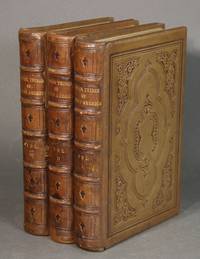
185453994Philadelphia: D. Rice & A. N. Hart 1854. Second octavo edition 3 volumes 120 brilliant hand-colored plates by J.T. Bowen mostly after Charles Bird King; a lovely set in publisher's full blindstamped brown morocco gilt-lettered spines a.e.g.; very neatly and professionally rebacked with the old spines laid down; the covers with minimal wear and the plates generally fresh and clean 2 plates and several pages in volume I with a tiny dampstain in the very top margin not affecting any text or illustration; a near fine sound copy. Originally published in three large folio volumes 1836-44. "These are the most colorful portraits of Indians ever executed . The original oil paintings of which these plates were copies were all destroyed in the 1865 Smithsonian fire" Howes. "The plates are accurate portraits of celebrated chiefs or of characteristic individuals of the race; and are colored with care to faithfully represent their features and costumes" Field. Field 992; Howes M129; Sabin 43411. D. Rice & A. N. Hart unknown
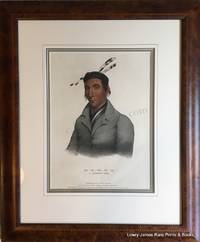
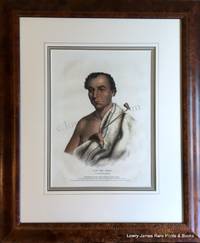
18427307Philadelphia:: J.T.Bowen 1842. First edition. Fine. Fine condition. Original lithograph drawn printed and coloured at J.T. Bowen's Lithographic Establishment No 94 Walnut Street Philadelphia. Folio 14 x 20 inches. Untrimmed with rich original color. Archivally custom framed in 2.25 inch Walnut Burl Veneer with marquetry inlay. Triple matted in Rag Board with gilt French line decoration. Glazed with Conservation Glass. Sized to 22 x 26.5 inches. As stated in McKenney & Hall's History of the Indian Tribes of North America: The Chippeway Chief Katawabeda was an orator of no small repute. Expert and ready in debate his speeches were marked by shrewdness ingenuity and subtlety of argument and by simple brevity and force of expression. As the oil on canvas portrait of Ka-Ta-Wa-Be-Da by Charles Bird King after James Otto Lewis was destroyed by fire in 1865 this original hand-colored lithograph by JT Bowen is the only surviving rendering of this essential chapter of Americana. During the first quarter of the nineteenth century as the Native American people traveled to Washington DC to discuss their plight; the loss of their lands and destruction of their people they appealed to Thomas McKenney the then Chief to the Bureau of Indian Affairs in whom they found a sincere advocate in the efforts to improve the welfare of the Native American people. After meeting to discuss the situation McKenney invited every one of his guests to sit for formal portraits and included all members; not only the Chiefs but also the Warriors Braves and Women. A pioneer in the study of North American ethnology and superintendent to the Bureau of Indian Affairs under John C. Calhoun Thomas Loraine McKenney Chestertown MD 1785-1859 assembled in his war department office a virtual archive of the American Indian; a large collection of books manuscripts artifacts and paintings that constituted the first museum in Washington DC. The core of the collection was a gallery of 150 portraits of prominent Indian men and women most of them painted by Washington artist Charles Bird King Newport RI 1785-1862 during official visits to Washington. In addition King copied and painted several portraits after James Otto Lewis 1799-1858. These portraits were later published as part of a mammoth lithography project that McKenney conceived of and launched with the aid of writer James Hall Philadelphia 1793-1868. Known as the History of the Indian Tribes of North America the publication features the portraits and biographies of 120 Indian men and women from McKenneys collection. The entire archive eventually ended up at the Smithsonian Institution where the portraits were destroyed by fire in 1865. ANB. 0300320 Custom Framed in Period Moulding. J.T.Bowen, unknown
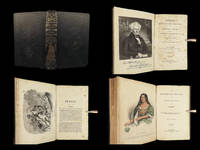
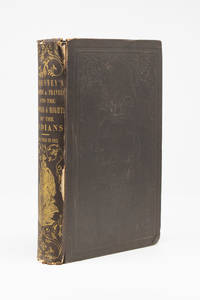
184624009<p><strong>1846 Chippewa INDIANS 1ed Thomas McKenney Memoirs Cherokee POCAHONTAS Portrait</strong></p><p>Thomas McKenney's "<em>Memoirs</em>" is one of the best mid-19th-century accounts of travels among Native American Indians! Published in 1846 "Memoirs Official and Personal" describes McKenney's adventures on the Wisconsin and Mississippi Rivers interactions with the Winnebagoes living among the Cherokee and Creek peoples and his attempts at improving the living conditions of Indians through political persuasion. Note that this first edition contains numerous full-page engravings including the highly coveted hand-colored illustration of Pocahontas!</p><p>Larned's perspective on this book is important:</p><p>"McKenney was appointed superintendent of the US trade with the Indian tribes…. He had great faith in the fundamental worth of the Indian and has much to say in regard to the 'abominable abuse of power' of the government with the Indians. In 1826 he made an extensive trip in order to negotiate a treaty with the Chippewa Indians."</p><p>Item number: #24009</p><p>Price: $750</p><p>McKENNEY Thomas L</p><p><strong><em>Memoirs official and personal : with sketches of travels among the northern and southern Indians</em></strong></p><p>New York: Paine and Burgess 1846. First edition.</p><p><u>Details</u>: </p><p><!-- if !supportLists-->· <!--endif-->Collation: Complete; 2 volumes in 1</p><p><!-- if !supportLists-->o <!--endif-->Vol. I – viii 17-340</p><p><!-- if !supportLists-->o <!--endif-->Vol. II – vi 9-136</p><p><!-- if !supportLists-->· <!--endif-->References: Graff 2628; Rader 2313; Howes M 130; Larned 660</p><p><!-- if !supportLists-->· <!--endif-->Language: English</p><p><!-- if !supportLists-->· <!--endif-->Binding: Hardcover; tight and secure</p><p><!-- if !supportLists-->o <!--endif-->Brown cloth</p><p><!-- if !supportLists-->· <!--endif-->Size: ~9.5in X 6.25in 24cm x 16cm</p><p><!-- if !supportLists-->· <!--endif-->Very rare and desirable </p><p>Our Guarantee:</p><p>Very Fast. Very Safe. Free Shipping Worldwide.</p><p>Customer satisfaction is our priority! Notify us with 7 days of receiving and we will offer a full refund without reservation!</p><p>24009</p><p>Photos available upon request. </p> Paine and Burgess hardcover
1846101423New York: Paine and Burgess 1846. First edition. 2 vols. in 1. 8vo. Frontispiece to each volume vol. II with hand-colored portrait of Pocahontas heightened with gum arabic facsimile letter 11 plates. viii 17-340; vi 9-136 pp. Errata slip at rear. Publisher's brown cloth spine titled and decorated in gilt; spine ends chipped tears to cloth along front joint tips worn through front hinge tender heavy foxing to first and last few gatherings. Ex-Newberry Library copy with a few pencil markings on verso of title and deaccession label on pastedown Travels among the Native Americans beginning in 1816 with McKenney's appointment as Superintendent of the United States Indian Trade by President Monroe and including his later post as first head of the Bureau of Indian Affairs. The second volume is titled On the Origin History Character and the Wrongs and Rights of the Indians. PROVENANCE: Edward Everett Ayer bookplate presenting this volume to the Newberry in 1911 and small library label on rear pastedown REFERENCE: Graff 2628; Howes M130 Paine and Burgess hardcover
1846733371846. McKENNEY Thomas L. Memoirs Official and Personal; with Sketches of Travels among the Northern and Southern Indians; Embracing a War Excursion and Descriptions of Scenes along the Western Borders. Two volumes in one as issued. New York: Paine & Burgess 1846. 1st ed. viii 17-340; vi 9-136 pp. frontis. plates one colored errata tipped in at the rear. Orig. blindstamped cloth gilt-pictorial spine. Light wear to the spine ends. Scattered foxing to the text though the plates remain quite clean. Contemporary owner name on the front free endpaper. A very bright and presentable copy in very good or better condition. HOWES M-130. Field 993. Graff 2628. Clark III 70. Rader 2313. he second title page reads "On the Origin History Character and the Wrongs and Rights of the Indians with a Plan for the Preservation and Happiness of the Remnants of that Persecuted Race." McKenney was the Superintendent of Indian Trade from 1816-1822 and after that office was abolished was appointed as Superintendent of Indian Affairs under the War Department 1824-1830. He was fired by President Jackson for considering the Indian "our intellectual equal." However he was also in favor of ridding the Indians west of the Mississippi River. This is unarguably one of the first high quality first-hand reports published about our early involvements with American Indians. unknown
18461003572 volumes in one large 8vo original blindstamped cloth expertly rebacked with original gilt decorated lettered spine laid on errata slip tipped in at rear illustrated with 14 plates and facsimile letter viii 17-340; vi 9-136 pp. Some staining to cloth dampstain to first 125 pages and final 30 pages. This work presents travels in the Midwest and south by the co-author of the great illustrated book on the North American Indians and also gives accounts of the political life in Washington at that time. McKenney’s stories on political life in Washington during the Monroe Adams and Jackson administrations paint a striking picture of corruption. Lots of good material on the Indians and travels on the Mississippi and the second part of this work presents a series of lectures on the Indians. Howes and Graff call for 13 plates but this copy has 14 including a hand colored portrait of Pocahontas. Paine and Burgess hardcover
18427306Philadelphia:: Daniel Rice & James G. Clark 1842. First edition. Fine. Fine condition. Original lithograph drawn printed and coloured at J.T. Bowen's Lithographic Establishment No 94 Walnut Street Philadelphia. Folio 14 x 20 inches. Untrimmed with rich original color. Archivally custom framed in 2.25 inch Walnut Burl Veneer with marquetry inlay. Triple matted in Rag Board with gilt French line decoration. Glazed with Conservation Glass. Sized to 22 x 26.5 inches. As the oil on canvas portrait of On-Ge-Wae. A Chippewa Chief by Charles Bird King after James Otto Lewis was destroyed by fire in 1865 this original hand-colored lithograph by JT Bowen is the only surviving rendering of this essential chapter of Americana. During the first quarter of the nineteenth century as the Native American people traveled to Washington DC to discuss their plight; the loss of their lands and destruction of their people they appealed to Thomas McKenney the then Chief to the Bureau of Indian Affairs in whom they found a sincere advocate in the efforts to improve the welfare of the Native American people. After meeting to discuss the situation McKenney invited every one of his guests to sit for formal portraits and included all members; not only the Chiefs but also the Warriors Braves and Women. A pioneer in the study of North American ethnology and superintendent to the Bureau of Indian Affairs under John C. Calhoun Thomas Loraine McKenney Chestertown MD 1785-1859 assembled in his War Department office a virtual archive of the American Indian; a large collection of books manuscripts artifacts and paintings that constituted the first museum in Washington DC. The core of the collection was a gallery of 150 portraits of prominent Indian men and women most of them painted by Washington artist Charles Bird King Newport RI 1785-1862 during official visits to Washington. In addition King copied and painted several portraits after James Otto Lewis 1799-1858. These portraits were later published as part of a mammoth lithography project that McKenney conceived of and launched with the aid of writer James Hall Philadelphia 1793-1868. Known as the History of the Indian Tribes of North America the publication features the portraits and biographies of 120 Indian men and women from McKenneys collection. The entire archive eventually ended up at the Smithsonian Institution where the portraits were destroyed by fire in 1865. ANB. 0300320 Custom Framed in Period Moulding. Daniel Rice & James G. Clark, unknown
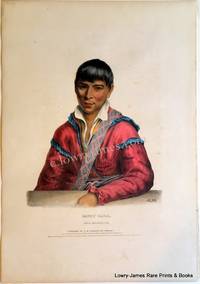
18427305Philadelphia:: F.W. Greenough 1842. First edition. Very Good. Very Good condition. Original lithograph drawn printed and coloured at J.T. Bowen's Lithographic Establishment No 94 Walnut Street Philadelphia. Folio 14 x 20 inches. Untrimmed with light foxing and offset yet with rich original color. Matted in Rag Board. As the oil on canvas portrait of Paddy-Carr by Charles Bird King was destroyed by fire in 1865 this original hand-colored lithograph by JT Bowen is the only surviving rendering of this essential chapter of Americana. During the first quarter of the nineteenth century as the Native American people traveled to Washington DC to discuss their plight; the loss of their lands and destruction of their people they appealed to Thomas McKenney the then Chief to the Bureau of Indian Affairs in whom they found a sincere advocate in the efforts to improve the welfare of the Native American people. After meeting to discuss the situation McKenney invited every one of his guests to sit for formal portraits and included all members; not only the Chiefs but also the Warriors Braves and Women. A pioneer in the study of North American ethnology and superintendent to the Bureau of Indian Affairs under John C. Calhoun Thomas Loraine McKenney Chestertown MD 1785-1859 assembled in his War Department office a virtual archive of the American Indian; a large collection of books manuscripts artifacts and paintings that constituted the first museum in Washington DC. The core of the collection was a gallery of 150 portraits of prominent Indian men and women most of them painted by Washington artist Charles Bird King Newport RI 1785-1862 during official visits to Washington. In addition King copied and painted several portraits after James Otto Lewis 1799-1858. These portraits were later published as part of a mammoth lithography project that McKenney conceived of and launched with the aid of writer James Hall Philadelphia 1793-1868. Known as the History of the Indian Tribes of North America the publication features the portraits and biographies of 120 Indian men and women from McKenneys collection. The entire archive eventually ended up at the Smithsonian Institution where the portraits were destroyed by fire in 1865. ANB. 0300320 Single sheet matted in rag board F.W. Greenough, unknown
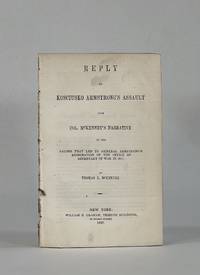
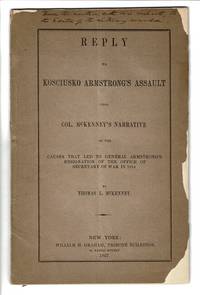
18478958New York: William H. Graham 1847. Unbound. near Very Good binding. Octavo. 28 4 pp. Removed from volume lacking wrappers. Title page with minor soiling and evidence of erasure of pencil notations; contents clean. McKenney defends his book Memoirs Official and Personal against the charge of having attacked Secretary of War John Armstrong for losing Washington to the British in the War of 1812. Sabin 43405. William H. Graham unknown
184756758New York: William H. Graham 1847. First edition 8vo pp. 28 2; original brown printed paper wrappers; covers chipped. Inscribed on cover "From the author with his respects to the editor of the Literary World." General Armstrong resigned as Secretary of War after his failure to respond to Britain's invasion of Washington DC. His son Kosciusko protested KcKenney's recollection of events by publishing a "Vindication of General Armstrong" In this pamphlet McKenney insists that his depiction of Armstrong was sympathetic and accurate. Sabin 43405. William H. Graham unknown
1847706311847. McKENNEY Thomas L. Reply to Kosciusko Armstrong's Assault upon Col. McKenney's Narrative of the Causes that Led to General Armstrong's Resignation of the Office of Secretary of War in 1814. New York: William H. Graham 1847. 1st ed. 28pp. Later cloth original printed wrappers bound in. Faint scattered foxing Library of Congress duplicate stamp on verso of title page else very good. In his memoirs McKenney had discussed the invasion of Washington DC by British troops during the War of 1812 a fiasco which had led to the forced resignation of the Secretary of War Gen. John Armstrong. The general's son took offense at McKenney's rather sympathetic portrayal of his father and published an angry pamphlet. In this rejoinder McKenney produces numerous detailed eyewitness accounts to substantiate his version. unknown
184726394New York: William H. Graham 1847. Paperback. 8vo. Stiff tan wrappers. 28pp. Good only. Wrappers dampstained and edge-chipped in areas; some dampstaining evident throughout; but overall tight and decent. First edition. Rather uncommon. Not in Howes. SABIN 43405. William H. Graham paperback
18487302Philadelphia:: J.T. Bowen 1848. First edition. Fine. Fine condition. Original lithograph; printed and colored by J.T. Bowen Philadelphia. Octavo 6.75 x 10 .5 inches. Matted in Rag Board. As the oil on canvas portrait of Se-Loc-Ta: A Creek Chief was destroyed by fire in 1865 the original hand-colored lithographs by JT Bowen are the only surviving rendering of this essential chapter of Americana. During the first quarter of the nineteenth century as the Native American people traveled to Washington DC to discuss their plight; the loss of their lands and destruction of their people they appealed to Thomas McKenney the then Chief to the Bureau of Indian Affairs in whom they found a sincere advocate in the efforts to improve the welfare of the Native American people. After meeting to discuss the situation McKenney invited every one of his guests to sit for formal portraits and included all members; not only the Chiefs but also the Warriors Braves and Women. A pioneer in the study of North American ethnology and superintendent to the Bureau of Indian Affairs under John C. Calhoun Thomas Loraine McKenney Chestertown MD 1785-1859 assembled in his War Department office a virtual archive of the American Indian; a large collection of books manuscripts artifacts and paintings that constituted the first museum in Washington DC. The core of the collection was a gallery of 150 portraits of prominent Indian men and women most of them painted by Washington artist Charles Bird King Newport RI 1785-1862 during official visits to Washington. In addition King copied and painted several portraits after James Otto Lewis 1799-1858. These portraits were later published as part of a mammoth lithography project that McKenney conceived of and launched with the aid of writer James Hall Philadelphia 1793-1868. Known as the History of the Indian Tribes of North America the publication features the portraits and biographies of 120 Indian men and women from McKenneys collection. The entire archive eventually ended up at the Smithsonian Institution where the portraits were destroyed by fire in 1865. ANB. 0300320 Single sheet matted in rag board J.T. Bowen, unknown
182726341Baltimore: Fielding Lucas. Near Fine with no dust jacket. 1827. First Edition :. Hardcover. octovo hardcover new binding with black labels on spine tight new endpapers clean unfoxed text else NFINE. Contains 29 illustrations two of music ; most are chippewas: Indians women and chiefs. As field agent McKenney had intimate knoledge of the Great Lakes Indians. A classic ; 8vo 8" - 9" tall; 494pp pages . Fielding Lucas hardcover
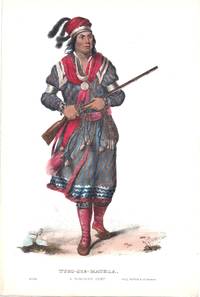
1865W2803Philadelphia: Rice Rutter & Co. 1865. Original hand-colored lithograph by J. T. Bowen after the painting by Charles Bird King. From the final octavo edition published 1865-1870. The image size is approximately 6" by 9 3/4" on a heavy sheet of paper measuring 11" by 7 3/8". The print is in near fine condition: clean and bright with vivid coloring. Toko-see-mathla was a prominent Seminole chief between the first and second Seminole Wars. He was called John Hicks by white settlers He moved his people to the area called Hicksville! that is now Madison County Florida after Andrew Jackson forced them out of the Tallahassee area. Thomas L. McKenney who from 1816 until 1830 headed what was to become the United States Bureau of Indian Affairs commissioned Charles Bird King to paint portraits of Native American delegates visiting Washington D.C. He also had King paint copies of other portraits that had been painted by James Otto Lewis. The result was a gallery of portraits of both great chiefs and lesser personages that was intended to serve as an important part of the historic record of the era. After leaving government service McKenney arranged to have the portraits copied by Harold Inman for the purpose of creating a series of hand-colored lithographs. In collaboration with James Hall McKenney produced the monumental History of the Indian Tribes of North America that included 120 hand-colored lithographs after the paintings of King and Lewis as well as an historical essay by Hall and biographical material on most of the Native Americans pictured. Portions of the folio edition were published by various publishers during the period 1837-1844 and were followed by several octavo editions. Although hailed as an artistic success and an important contribution to Native American ethnology the high production cost of the lithographs and relatively low sales during an economic recession combined to make the venture unprofitable. The less expensive octavo editions were a financially unsuccessful attempt to salvage the situation but still an artistic success. In 1865 a fire at the Smithsonian Institute destroyed most of the original paintings; so the only original pictorial records remaining are the hand-colored lithographs published for McKenney and Hall. They are considered to be one of the high points of 19th century Americana. Original. Single Sheet. Near Fine. Illus. by Charles Bird King. 8vo - over 7¾" - 9¾" tall. Fine Art Print. Rice, Rutter & Co.
18497300Philadelphia:: D. Rice and A.N. Hart 1849. First edition. Fine. Fine condition. Original lithograph; printed and colored by J.T. Bowen Philadelphia. Octavo 6.75 x 10 .5 inches. Matted in Rag Board. As the oil on canvas portrait of Wat-Che-Mon-Ne: An Ioway Chief known as The Orator was destroyed by fire in 1865 the original hand-colored lithographs by JT Bowen are the only surviving rendering of this essential chapter of Americana. During the first quarter of the nineteenth century as the Native American people traveled to Washington DC to discuss their plight; the loss of their lands and destruction of their people they appealed to Thomas McKenney the then Chief to the Bureau of Indian Affairs in whom they found a sincere advocate in the efforts to improve the welfare of the Native American people. After meeting to discuss the situation McKenney invited every one of his guests to sit for formal portraits and included all members; not only the Chiefs but also the Warriors Braves and Women. A pioneer in the study of North American ethnology and superintendent to the Bureau of Indian Affairs under John C. Calhoun Thomas Loraine McKenney Chestertown MD 1785-1859 assembled in his War Department office a virtual archive of the American Indian; a large collection of books manuscripts artifacts and paintings that constituted the first museum in Washington DC. The core of the collection was a gallery of 150 portraits of prominent Indian men and women most of them painted by Washington artist Charles Bird King Newport RI 1785-1862 during official visits to Washington. In addition King copied and painted several portraits after James Otto Lewis 1799-1858. These portraits were later published as part of a mammoth lithography project that McKenney conceived of and launched with the aid of writer James Hall Philadelphia 1793-1868. Known as the History of the Indian Tribes of North America the publication features the portraits and biographies of 120 Indian men and women from McKenneys collection. The entire archive eventually ended up at the Smithsonian Institution where the portraits were destroyed by fire in 1865. ANB. 0300320 Single sheet matted in rag board D. Rice and A.N. Hart, unknown
182047741Washington: Gales & Seaton 1820. 1820. First edition. First Edition. Disbound. 8pp. "Letter from the Superintendent Of Indian Trade to the Chairman of the Committee on Indian Affairs communicating A Report In Relation To Indian Trade." "December 13 1820. Printed by order of the Senate of the United States." An interesting and informative report providing a general overview of the Indian Trade including various issues related to revenue and expenses. Some light dusty soiling. Very Good. Gales & Seaton, 1820. unknown
1846mon0003811839Paine And Burgess 1846T. hardcover. Very Good. . rebound in sturdy navy buckram with gilt on the spine. pages are lightly tanned and foxed with all plates intact. Paine And Burgess hardcover
1846DE-A0NS-JIY6Paine and Burgess 1846. Hardcover. Very Good. Rebound in modern cloth. All pages are foxed. <br/> <br/> Paine and Burgess, hardcover
1846005928New York: Paine & Burgess 1846. Two Volumes bound in One viii 340 pages and vi 136 pages respectively First Edition distinguished by the collation of Volume I original blind-stamped cloth with decorative gilt titling to spine all edges gilt wear and exposure to spine head and tail tips lightly bumped and exposed Has a total of 15 plates which includes a frontispiece portrait of the author in Volume 1 and one colored frontispiece portrait of Pocahontas in Volume 2 a facsimile of a letter from Dolley Madison to the author and 12 engraved illustrations by F.O.C. Darley occasional scattered foxing. Spine loose. Inscribed by the Author. Cloth. Very Good/No Jacket Issued. 4to - over 9¾" - 12" tall. Paine & Burgess hardcover
19005090097Boston: Houghton Mifflin and Company 1900. First Edition. Hardcover. Good in No Dust Jacket dust jacket. First Edition. Exlibrary marks. Sound binding hinges a little stressed but holding. Clean tanned pages. Cloth over boards is shelf worn with label at lower spine. Study of losses in both the Union and the Confederate armies during the Civil War. Ex-Library; 9.5" tall; 150 pages. Houghton, Mifflin and Company hardcover
1900029213Boston: Houghton Mifflin and Co 1900. Octavo. 150 pages index and errata sheet tipped in. The author served in the Civil War as a Major of the 5th New Hampshire Volunteers and Colonel of the 18th New Hampshire Volunteers. As a member of the Military History Society of Massachusetts he diligently searched the death tolls of the entire period of the war. From Bull Run to Appomattox. Besides showing the reported losses at each battle by both the Union and Confederate forces he explains why historians see the inadequacy of the War Records though he does not mention how Congress quit buying significant records because they were tired of spending money on the war. His work has become one of the essential guides for historians in the following century. An essential work for the Civil War library. Bound in blue cloth spine lettering gilt minor rubbing to spine ends and corners. Near fine. Houghton Mifflin and Co unknown
18333457Philadelphia: E.C. Biddle 1833. Very good. Hand-colored lithograph by Lehman & Duval after Charles Bird King 445 x 338 mm. Head-and-shoulders portrait of female Oto wife of Chief Shaumonekusse long black braids with hair parted at center white and black beaded ear loops four necklaces silver bracelet ruffled blouse or dress top white and black fur or shawl loosely wrapped around her shoulders one delicate hand showing. Very mild uniform age-toning professionally washed. Original lithograph - NOT a reproduction! Hayne Hudjihini or Eagle of Delight ca. 1804-1822 accompanied her husband to Washington D.C. in 1821 and so delighted those she met that she was loaded down with presents and King painted several portraits of her. She was thought to be the most beautiful of all the Native American wives who visited Washington. Unfortunately she died of measles shortly after her return home. A portrait of her hangs in the White House Library.<br/><br/>When leaders of various tribes came to visit President Monroe McKenney Superintendent of Indian Affairs and a defender of Native American interests commissioned artist Charles Bird King to paint portraits of the delegates in their choice of dress. Most of King's original paintings subsequently burned in a fire at the Smithsonian. The lithographs in McKenney and Hall's publication are the only extant record of the likenesses of many of the prominent Native American leaders of the nineteenth century.<br/><br/>In our lithograph the two small silver portions on the nose of the sitter have combined with sulfur and oxydized to black. In other copies these portions are white. <br/><br/>See: Howes M129. Bennett American Nineteenth-Century Color Plate Books p. 79. Field 992. Lipperheide Mc4. E.C. Biddle unknown books
18433458Philadelphia: James G. Clark 1843. Very good. Hand-colored lithograph after Charles Bird King 496 x 355 mm "Drawn Printed & Coloured at the Lithographic & Print Colouring Estblishment 94 Walnut St." Full-length standing portrait of male Seminole chief carrying a rifle wearing striped fringed wrap skirt striped shirt red sashes around neck and waist red feathered headdress silver arm bands shin-high moccasins with buttons and medal around neck. Very mild uniform age-toning professionally washed some short tears in extreme outer margins closed 1" piece from upper left-hand corner torn away without loss. Preserved in a mylar sleeve. Original lithograph - NOT a reproduction! Tuko-See-Mathla also called John Hicks was an influential Native American leader elected head of his tribe in an election supposedly rigged by U.S. agents. He opposed U.S. slave raids into Florida separate schools for Indians and efforts to move Seminoles from their land. Despite his efforts however he eventually moved back to Alabama and was finally killed by tribesmen who opposed U.S. policies.<br/><br/>When leaders of various tribes came to visit President Monroe McKenney Superintendent of Indian Affairs and a defender of Native American interests commissioned artist Charles Bird King to paint portraits of the delegates in their choice of dress. Most of King's original paintings subsequently burned in a fire at the Smithsonian. The lithographs in McKenney and Hall's publication are the only extant record of the likenesses of many of the prominent Native American leaders of the nineteenth century.<br/><br/>See: Howes M129. Bennett American Nineteenth-Century Color Plate Books p. 79. Field 992. Lipperheide Mc4. James G. Clark unknown books
18373456Philadelphia: E.C. Biddle 1837. Very good. Hand-colored lithograph by Lehman & Duval after Charles Bird King 445 x 338 mm. Full-length standing portrait of male Sioux chief holding a rifle wearing brightly colored blankets feathered headdress necklace of grizzly bear claws and red leggings decorated with bird feathers. Very mild uniform age-toning professionally washed verso of upper left corner with Japanese tissue repair. Original lithograph - NOT a reproduction! Wa-Na-Ta ca. 1795-1848 was an influential Sioux Yanktona on the Minnesota River leader who fought against the Americans in the War of 1812 even leading a charge on Fort Sandusky whence his nickname. For his exceptional heroism he was received at the English court and promoted to Captain. After the war however he sided with the U.S. In 1825 he signed the Treaties of Fort Pierre and Prairie du Chien which established peace and territorial boundaries between the Sioux Chippewas Sac and Foxes and Ioways. He was murdered by his people who were upset with his leadership. Major Stephen H. Long met Wa-Na-Ta in 1835 and commented: "We had never seen a nobler face or a more impressive character."<br/><br/>When leaders of various tribes came to visit President Monroe in 1821 McKenney Superintendent of Indian Affairs and a defender of Native American interests commissioned artist Charles Bird King to paint portraits of the delegates in their choice of dress. Most of King's original paintings subsequently burned in a fire at the Smithsonian. The lithographs in McKenney and Hall's publication are the only extant record of the likenesses of many of the prominent Native American leaders of the nineteenth century. <br/><br/>See: Howes M129. Bennett American Nineteenth-Century Color Plate Books p. 79. Field 992. Lipperheide Mc4. E.C. Biddle unknown books