Masson, Thomas LBiblio.com
2 120 résultats
116264267X.Gpaperback. Good. Access codes and supplements are not guaranteed with used items. May be an ex-library book. paperback
2007DADAX054801972XKessinger Publishing 2007-07-25. hardcover. New. 6.00x0.75x9.00. Buy with confidence. Excellent Customer Service & Return policy. Kessinger Publishing hardcover
175316Paris/London: Paul Geuthner/Humphrey Milford 1917. Softcover. Good loose copy ready to be bound to your standards. Loose copy with xvi 316 pp color frontispiece with a tissue paper tracing many bw illustrations. "This volume with exception of the index and tables has been in print since June 1914"--Page x. The frontispiece Hâritî is accompanied by a tracing which supplies the obliterated portions of the painting. "A detailed description of each plate will be found either in the body of the work or on the page de garde opposite the plate."--Page xvi. Includes bibliographical references and index. Paul Geuthner/Humphrey Milford paperback books
1995Q-0830816070Intervarsity Pr 1995-05-01. Paperback. New. In shrink wrap. Looks like an interesting title! Intervarsity Pr paperback
0253310792.Ghardcover. Good. Access codes and supplements are not guaranteed with used items. May be an ex-library book. hardcover
0984377956.Gpaperback. Good. Access codes and supplements are not guaranteed with used items. May be an ex-library book. paperback
1505226147.Gpaperback. Good. Access codes and supplements are not guaranteed with used items. May be an ex-library book. paperback
42295397like new. unknown
1664229388.Ghardcover. Good. Access codes and supplements are not guaranteed with used items. May be an ex-library book. hardcover
1664207953.Ghardcover. Good. Access codes and supplements are not guaranteed with used items. May be an ex-library book. hardcover
197850345Boulder CO: Westview Press 1978. Reprint edition. Hardcover. Very good. 246p octavo. A reprint A Westview Replica Edition Exlibrary copy with all the usual markings but a clean copy internally and a very good solid copy in blue cloth <br/><br/> Westview Press hardcover
19781855583115Routledge 1978. Hardcover. Good. Missing dust jacket; Pages can have notes/highlighting. Spine may show signs of wear. ~ ThriftBooks: Read More Spend Less.Dust jacket missing. SIGNED and inscribed by the author. Shelf and handling wear to cover and binding with general signs of previous use. Wear commensurate with age and use. Clean unmarked copy. Light scuffing and smudging to boards and spine strip. Secure packaging for safe delivery.Dust jacket quality is not guaranteed. Routledge hardcover
1980mon0000062987McGraw-Hill 1980-01-01. Hardcover. Like New. 1.0000 in x 9.5000 in x 5.3000 in. BINDING AND PAGES LIKE NEW-NO MARKS-OR HIGHLIGHTING- NO DUSTJACKET-HARDCOVER McGraw-Hill hardcover
19971221418PN. New. 1997. Reprint Edition. Soft Cover. Date is copyright date; this is a later reprint edition . PN paperback
1958145393Oxford at the Clarendon Press 1958. Hardcover. Name stamp to front free endpaper else fine clean & sound condition / sunned lightly chipped and torn dust jacket. 212pp. Oxford at the Clarendon Press hardcover
Z39208YLWRelié sous jaquette bon état .Contenu propre . 200 pages . 1987.The Hidden Himalayas. PHOTOS SUR DEMANDE
41319Anchor PHOTOS SUR DEMANDE
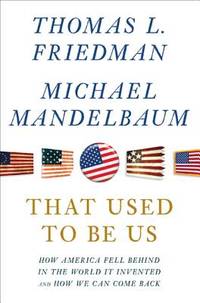
2011Q-0374288909Farrar Straus and Giroux 2011-09-05. Hardcover. New. New. In shrink wrap. Looks like an interesting title! Farrar, Straus and Giroux hardcover
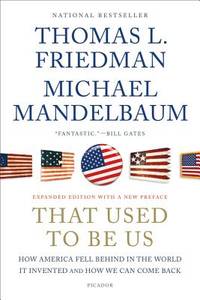
2012Q-1250013720Picador 2012-08-21. Paperback. New. New. In shrink wrap. Looks like an interesting title! Picador paperback
2011Q-1427213712Macmillan Audio 2011-09-05. Audio CD. New. New. In shrink wrap. Looks like an interesting title! Macmillan Audio unknown
1026031060.Ghardcover. Good. Access codes and supplements are not guaranteed with used items. May be an ex-library book. hardcover
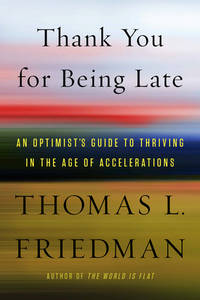
201681251New York N.Y.: Farrar Straus and Giroux 2016. First Edition Stated First Printing Stated. Hardcover. Good/Very good. Ralph Alswang author photograph. 10 486 pages. Illustrations. Some pencil notes to text observed. DJ is price clipped. Signed by the author on the half-title page. Includes Acknowledgments and Index. Also includes Part 1: Reflecting; Part 2: Accelerating; Part 3: Innovating; and Part 4: Anchoring. Also includes Acknowledgments and Index. Thomas Loren Friedman born July 20 1953 is an American political commentator and author. He is a three-time Pulitzer Prize winner who is a weekly columnist for The New York Times. He has written extensively on foreign affairs global trade the Middle East globalization and environmental issues. In this work Friedman begins by sharing a conversation with a fellow blogger who also happened to be working as a parking attendant. The unlikely pair ended up spending time together as Friedman helped the blogger refine his process. This led to his own deeper reflection on defining his conceptual framework that underpinned his writing. He took a year's sabbatical to research and produce this book encapsulating what he discovered. Reviews<br/>John Micklethwait CBE editor-in-chief of Bloomberg News who reviewed Thank you for Being Late for The New York Times wrote that this is Friedman's "most ambitious book - part personal odyssey part common-sense manifesto". Friedman is a "self-confessed 'explanatory journalist' - whose goal is to be a 'translator from English to English' and this book is "a master class in explaining." This book is a work of contemporary history that serves as a field manual for how to write and think about this era of accelerations. It is also an argument for "being late"--for pausing to appreciate this amazing historical epoch we are passing though and to reflect on its possibilities and dangers. To amplify this point Friedman revisits his Minnesota hometown in his moving concluding chapters; there he explores how communities can create a "topsoil of trust" to anchor their increasingly diverse and digital populations. With his trademark vitality wit and optimism Friedman shows that we can overcome the multiple stresses of an age of accelerations--if we slow down if we dare to be late and use the time to reimagine work politics and community. This is Friedman's most ambitious book--and an essential guide to the present and the future. Derived from a Kirkus review: The celebrated New York Times columnist diagnoses this unprecedented historical moment and suggests strategies for "resilience and propulsion" that will help us adapt. "Are things just getting too damned fast" Friedman cites 2007 as the year we reached a technological inflection point. Combined with increasingly fast-paced globalization and the subsequent speedy shocks to our planet's natural system we've entered an "age of accelerations" that promises to transform "almost every aspect of modern life." The Pulitzer winner puts his familiar methodology-extensive travel thorough reporting interviews with the high-placed movers and shakers conversations with the lowly moved and shaken-to especially good use here beginning with a wonderfully Friedman-esque encounter with a parking attendant during which he explains the philosophy and technique underlying his columns and books. The author closes with a return to his Minnesota hometown to reconnect with and explore some effective habits of democratic citizenship. In between he discusses topics as varied as how garbage cans got smart how the exponential growth in computational power has resulted in a "supernova" of creative energy how the computer Watson won Jeopardy and how without owning a single property Airbnb rents out more rooms than all the major hotel chains combined. To meet these and other dizzying accelerations Friedman advises developing a "dynamic stability" and he prescribes nothing less than a redesign of our workplaces politics geopolitics ethics and communities. Drawing lessons from Mother Nature about adaptability sustainability and interdependence he never underestimates the challenges ahead. However he's optimistic about our chances as he seeks out these strategies in action ranging from how AT&T trains its workers to how Tunisia survived the Arab Spring to how chickens can alleviate African poverty. Required reading for a generation that's "going to be asked to dance in a hurricane.". Farrar, Straus and Giroux hardcover
201685945New York: Farrar Straus and Giroux 2016. First Edition stated Second printing stated. Hardcover. Very good/Very good. 10 486 pages. Illustrations. Acknowledgments. Index. Inscribed by the author on the half-title page. Inscription reads To Izzy Happy Birthday. Thomas Friedman. Includes Part 1: Reflecting; Part 2: Accelerating; Part 3: Innovating; and Part 4: Anchoring. Also includes Acknowledgments and Index. Thomas Loren Friedman born July 20 1953 is an American political commentator and author. He is a three-time Pulitzer Prize winner who is a weekly columnist for The New York Times. He has written extensively on foreign affairs global trade the Middle East globalization and environmental issues. In this work Friedman begins by sharing a conversation with a fellow blogger who also happened to be working as a parking attendant. The unlikely pair ended up spending time together as Friedman helped the blogger refine his process. This led to his own deeper reflection on defining his conceptual framework that underpinned his writing. He took a year's sabbatical to research and produce this book encapsulating what he discovered. Reviews<br /> John Micklethwait CBE editor-in-chief of Bloomberg News who reviewed Thank you for Being Late for The New York Times wrote that this is Friedman's "most ambitious book — part personal odyssey part common-sense manifesto". Friedman is a "self-confessed 'explanatory journalist' — whose goal is to be a 'translator from English to English' and this book is "a master class in explaining." This book is a work of contemporary history that serves as a field manual for how to write and think about this era of accelerations. It is also an argument for "being late"--for pausing to appreciate this amazing historical epoch we are passing though and to reflect on its possibilities and dangers. To amplify this point Friedman revisits his Minnesota hometown in his moving concluding chapters; there he explores how communities can create a "topsoil of trust" to anchor their increasingly diverse and digital populations. With his trademark vitality wit and optimism Friedman shows that we can overcome the multiple stresses of an age of accelerations--if we slow down if we dare to be late and use the time to reimagine work politics and community. This is Friedman's most ambitious book--and an essential guide to the present and the future. Derived from a Kirkus review: The celebrated New York Times columnist diagnoses this unprecedented historical moment and suggests strategies for "resilience and propulsion" that will help us adapt. "Are things just getting too damned fast" Friedman cites 2007 as the year we reached a technological inflection point. Combined with increasingly fast-paced globalization and the subsequent speedy shocks to our planet's natural system we've entered an "age of accelerations" that promises to transform "almost every aspect of modern life." The Pulitzer winner puts his familiar methodology—extensive travel thorough reporting interviews with the high-placed movers and shakers conversations with the lowly moved and shaken—to especially good use here beginning with a wonderfully Friedman-esque encounter with a parking attendant during which he explains the philosophy and technique underlying his columns and books. The author closes with a return to his Minnesota hometown to reconnect with and explore some effective habits of democratic citizenship. In between he discusses topics as varied as how garbage cans got smart how the exponential growth in computational power has resulted in a "supernova" of creative energy how the computer Watson won Jeopardy and how without owning a single property Airbnb rents out more rooms than all the major hotel chains combined. To meet these and other dizzying accelerations Friedman advises developing a "dynamic stability" and he prescribes nothing less than a redesign of our workplaces politics geopolitics ethics and communities. Drawing lessons from Mother Nature about adaptability sustainability and interdependence he never underestimates the challenges ahead. However he's optimistic about our chances as he seeks out these strategies in action ranging from how AT&T trains its workers to how Tunisia survived the Arab Spring to how chickens can alleviate African poverty. Required reading for a generation that's "going to be asked to dance in a hurricane.". Farrar, Straus and Giroux hardcover
201688665New York: Farrar Straus and Giroux 2016. First Edition stated Third Printing stated. Hardcover. Good/Very good. Ralph Alswang Author photograph. 10 486 pages. The dust jacket has ome noticable scratches and minor dings. This copy has an author inscription on the half-title page that reads: "To Barbara & Steve 'Your wife asked a great question! Thomas Friedman". Acknowledgments and Index. Also includes Part 1: Reflecting; Part 2: Accelerating; Part 3: Innovating; and Part 4: Anchoring. Also includes Acknowledgments and Index. Thomas Loren Friedman born July 20 1953 is an American political commentator and author. He is a three-time Pulitzer Prize winner who is a weekly columnist for The New York Times. He has written extensively on foreign affairs global trade the Middle East globalization and environmental issues. In this work Friedman begins by sharing a conversation with a fellow commentator who also happened to be working as a parking attendant. The unlikely pair ended up spending time together as Friedman helped the commentator refine his process. This led to his own deeper reflection on defining his conceptual framework that underpinned his writing. He took a year's sabbatical to research and produce this book encapsulating what he discovered. John Micklethwait CBE editor-in-chief of Bloomberg News who reviewed Thank you for Being Late for The New York Times wrote that this is Friedman's "most ambitious book — part personal odyssey part common-sense manifesto". Friedman is a "self-confessed 'explanatory journalist' — whose goal is to be a 'translator from English to English' and this book is "a master class in explaining." A field guide to the twenty-first century written by one of its most celebrated observers. We all sense it-something big is going on. You feel it in your workplace. You feel it when you talk to your kids. You can't miss it when you read the newspapers or watch the news. Our lives are being transformed in so many realms all at once-and it is dizzying. In Thank You for Being Late a work unlike anything he has attempted before Thomas L. Friedman exposes the tectonic movements that are reshaping the world today and explains how to get the most out of them and cushion their worst impacts. You will never look at the world the same way again after you read this book: how you understand the news the work you do the education your kids need the investments your employer has to make and the moral and geopolitical choices our country has to navigate will all be refashioned by Friedman's original analysis. Friedman begins by taking us into his own way of looking at the world-how he writes a column. After a quick tutorial he proceeds to write what could only be called a giant column about the twenty-first century. His thesis: to understand the twenty-first century you need to understand that the planet's three largest forces--Moore's law technology the Market globalization and Mother Nature climate change and biodiversity loss-are accelerating all at once. These accelerations are transforming five key realms: the workplace politics geopolitics ethics and community. Why is this happening As Friedman shows the exponential increase in computing power defined by Moore's law has a lot to do with it. The year 2007 was a major inflection point: the release of the iPhone together with advances in silicon chips software storage sensors and networking created a new technology platform. Friedman calls this platform the supernova -for it is an extraordinary release of energy that is reshaping everything from how we hail a taxi to the fate of nations to our most intimate relationships. It is creating vast new opportunities for individuals and small groups to save the world-or to destroy it. Thank You for Being Late is a work of contemporary history that serves as a field manual for how to write and think about this era of accelerations. It's also an argument for being late -for pausing to appreciate this amazing historical epoch we're passing through and to reflect on its possibilities and dangers. To amplify this point Friedman revisits his Minnesota hometown in his moving concluding chapters; there he explores how communities can create a topsoil of trust to anchor their increasingly diverse and digital populations. With his trademark vitality wit and optimism Friedman shows that we can overcome the multiple stresses of an age of accelerations-if we slow down if we dare to be late and use the time to reimagine work politics and community. Thank You for Being Late is Friedman's most ambitious book-and an essential guide to the present and the future. Farrar, Straus and Giroux hardcover
201685726New York: Farrar Straus and Giroux 2016. First Edition Stated First Printing Stated. Hardcover. Very good/Very good. Ralph Alswang author photograph. 10 486 pages. Autographed sticker on front of DJ. Signed by the author on the half-title page. Illustrations. Acknowledgments. Index. Also includes Part 1: Reflecting; Part 2: Accelerating; Part 3: Innovating; and Part 4: Anchoring. Also includes Acknowledgments and Index. Thomas Loren Friedman born July 20 1953 is an American political commentator and author. He is a three-time Pulitzer Prize winner who is a weekly columnist for The New York Times. He has written extensively on foreign affairs global trade the Middle East globalization and environmental issues. In this work Friedman begins by sharing a conversation with a fellow blogger who also happened to be working as a parking attendant. The unlikely pair ended up spending time together as Friedman helped the blogger refine his process. This led to his own deeper reflection on defining his conceptual framework that underpinned his writing. He took a year's sabbatical to research and produce this book encapsulating what he discovered. Reviews<br /> John Micklethwait CBE editor-in-chief of Bloomberg News who reviewed Thank you for Being Late for The New York Times wrote that this is Friedman's "most ambitious book — part personal odyssey part common-sense manifesto". Friedman is a "self-confessed 'explanatory journalist' — whose goal is to be a 'translator from English to English' and this book is "a master class in explaining." This book is a work of contemporary history that serves as a field manual for how to write and think about this era of accelerations. It is also an argument for "being late"--for pausing to appreciate this amazing historical epoch we are passing though and to reflect on its possibilities and dangers. To amplify this point Friedman revisits his Minnesota hometown in his moving concluding chapters; there he explores how communities can create a "topsoil of trust" to anchor their increasingly diverse and digital populations. With his trademark vitality wit and optimism Friedman shows that we can overcome the multiple stresses of an age of accelerations--if we slow down if we dare to be late and use the time to reimagine work politics and community. This is Friedman's most ambitious book--and an essential guide to the present and the future. Derived from a Kirkus review: The celebrated New York Times columnist diagnoses this unprecedented historical moment and suggests strategies for "resilience and propulsion" that will help us adapt. "Are things just getting too damned fast" Friedman cites 2007 as the year we reached a technological inflection point. Combined with increasingly fast-paced globalization and the subsequent speedy shocks to our planet's natural system we've entered an "age of accelerations" that promises to transform "almost every aspect of modern life." The Pulitzer winner puts his familiar methodology—extensive travel thorough reporting interviews with the high-placed movers and shakers conversations with the lowly moved and shaken—to especially good use here beginning with a wonderfully Friedman-esque encounter with a parking attendant during which he explains the philosophy and technique underlying his columns and books. The author closes with a return to his Minnesota hometown to reconnect with and explore some effective habits of democratic citizenship. In between he discusses topics as varied as how garbage cans got smart how the exponential growth in computational power has resulted in a "supernova" of creative energy how the computer Watson won Jeopardy and how without owning a single property Airbnb rents out more rooms than all the major hotel chains combined. To meet these and other dizzying accelerations Friedman advises developing a "dynamic stability" and he prescribes nothing less than a redesign of our workplaces politics geopolitics ethics and communities. Drawing lessons from Mother Nature about adaptability sustainability and interdependence he never underestimates the challenges ahead. However he's optimistic about our chances as he seeks out these strategies in action ranging from how AT&T trains its workers to how Tunisia survived the Arab Spring to how chickens can alleviate African poverty. Required reading for a generation that's "going to be asked to dance in a hurricane.". Farrar, Straus and Giroux hardcover