[HOFFMANN (François Benoît)]Livre Rare Book

12 314 résultats
36953A Paris, Dondey-Dupré, 1811. In-8°, 243p. Reliure demi-basane d'époque.
1849764631849 Paris, Sagnier et Bray, 1849, fort volume in 8° relié demi-chagrin rouge, dos lisse orné, 600 pages ; des rousseurs ; quelques frottis.
19794Condé-sur-Noireau, Corlet, 1988, in 8° broché, 106 pages ; bibliographie ; portrait.
180246404747Paris, Huet, Charon, impr. Ballard, an X (1802) ; petit in-8, bradel percaline crème, pièce de titre en mar. noir, superlibris dor. sur le premier plat. (Cartonnage de la seconde moitié du XIXe s.) pp. III à XV, 42 pp.ÉDITION ORIGINALE rarissime de cette pièce qui fut interdite pour immoralité et valut à son auteur une foule d’injures et de critiques. F.-B. Hoffmann (Nancy 1760 - Paris 1828) était “l’un des meilleurs littérateurs et des critiques les plus spirituels de notre époque...” dit - Quérard IV, p. 115 - Barbier II, p. 306. La pièce originale d’Aristophane où Lysistrata et les femmes d’Athènes prennent le pouvoir et décrètent une grève du sexe pour mettre fin à la guerre avec Sparte, use du registre scabreux et grossier tout autant que cette adaptation d’Hoffmann. Elle a inspiré depuis de nombreuses oeuvres, au théâtre, au cinéma, à la télévision, dans la bande dessinée ou dans les arts plastiques. La grève du sexe a été employé par des militantes pacifistes dans plusieurs conflits modernes. Dans sa préface, l’auteur défend la pièce contre les attaques dont elle est l’objet, il tente de définir le néologisme d’immoralité que les critiques et la censure ont employé pour la qualifier. Suite à cette interdiction, une nouvelle adaptation sera donnée en 1817 par Scribe et Varner sous le titre Les comices d’Athènes ou les femmes orateurs, comédie-vaud.Exemplaire provenant de la bibliothèque de l’homme de loi Alfred Piat avec son monogramme A. I. T. P. surmontant la devise “Libro liber” frappé en or sur le plat du cartonnage - Meyer Noirel P1132-1133 décrit son ex-libris avec le même chiffre et la même devise. Relié sans le faux-titre.
62536Paris, Le Terrain Vague, 1966, in 8°, cartonnage rose muet de l'éditeur, jaquette de pepier fort rose, 188 pages.
1589Le Terrain Vague. 1966. In-8°, reliure cartonnage sous jaquette rose imprimée. 188 pages.
18432502230125xbvkZürich und Winterthur, Druck und Verlag des literarischen Comptoirs, 1843. 264 Seiten. - Dunkelgrüner Original-Leineneinband mit ornamental goldgeprägtem Rückentitel und ornam. blindgeprägten Buchdeckeln, Vorsätze aus gelbem Tonpapier; kl.-8vo.(ca. 14,5 x 10 cm).
18422502230124xbvkZürich und Winterthur, Druck und Verlag des literarischen Comptoirs, 1842. 264 Seiten. - Brauner Original-Leineneinband mit ornamental goldgeprägtem Rückentitel und ornam. blindgeprägten Buchdeckeln, Vorsätze aus gelbem Tonpapier; kl.-8vo.(ca. 14,5 x 10 cm).
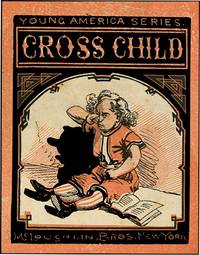
186035786New York: McLoughlin Brothers 1860. Fine. First edition of this McLoughlin Brothers STRUWWELPETER-esque title describing children of different temperaments. 4.5'' x 3.5''. Original pictorial wrappers saddle-stitched. Illustrated with four full-page two-color illustrations. 10 pages. A sharp copy. McLoughlin Brothers unknown
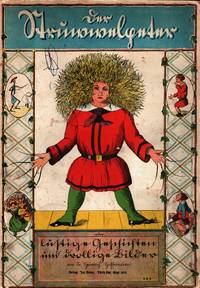
101703Fürth Jos. Hesse 1926. . Reizvolle Ausgabe mit ungewöhnlicher Einbandgestaltung ." Rühle 38 -/10. - Diese Ausgabe enthält acht der zehn Geschichten in veränderter Zusammenstellung und Reihenfolge: Struwwelpeter. Die Geschichte vom Suppen-Kaspar. Die Geschichte vom Daumenlutscher. Die Geschichte vom bösen Friederich. Die Geschichte vom Hanns Guck-in-die-Luft. Die Geschichte vom Zappel-Philipp. Die gar traurige Geschichte mit dem Feuerzeug. Die Geschichte von den schwarzen Buben. Nicht vorgesehen sind somit: Prolog; Die Geschichte vom wilden Jäger; Die Geschichte vom fliegenden Robert. - Deckeltitel in Sütterlin Innentext in Fraktur. - Diese ungewöhnlich großformatige Variante für uns bis auf das bei Rühle verzeichnete Berliner Exemplar nicht nachweisbar. - Bindung lose Kanten bestoßen; etwas fleckig zwei Krickelstellen von Kinderhand. Trotz der Gebrauchsspuren im Ganzen ordentliches Exemplar dieser sehr seltenen Ausgabenvariante Fürth, Jos. Hesse, [ 1926]. unknown
STLE0059Frankfurt und Leipzig d.i. Wien bei Weimar und Schladebach 1792. Kl.-8°. XXX2 232 S. Mit e. kl. Holzschnitt-Vignette. Späterer stummer Pappband m. marmor. Überzugspapier. Einbd. geringf. berieben im Text durchgeh. leicht gebräunt aber sauber u. kaum abgegriffen Nachsatz fachgerecht erneuert. Holzmann/Boh. 4 11458 u. vgl. Wurzbach 9 161ff.; Brandl 110; Durstmüller 1 255; Petrik Bibliographia Hungariae 2 141. Das anonym erschienene Werk wurde vermutlich von Johann Martian Weimar auch Weymar zu dieser Zeit Buchdrucker in Wien gedruckt. Sein verfasser L. A. Hoffmann 1760-1806 war eine der umstrittensten Personen der Ära Josephs II. vom eifrigen Autor zahlreicher Schriften im Sinne der josephinischen Reformen wurde er unter Leopold II. u. Franz II. zum glühenden Verfechter der Reaktion. Frankfurt und Leipzig [d.i. Wien?], bei Weimar und Schladebach 1792. unknown
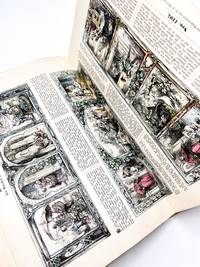
189831334München Munich: Braun & Schneider 1898. Near fine. Delightful and bizarre anthology of stories presented in broadsides in a comic-like format including a cameo by STRUWWELPETER. The MÜNCHENER BILDERBOGEN were "important documents in the development of comic strips and cartooning" Hansen and over their 50 year run influenced Europe's visual culture with their humor and caricature. Contributors to the series included Lothar Meggendorfer Wilhelm Busch and Adolf Oberlander. This issue number 50 features broadsides 1177-1200 including a delightful glimpse of the year 1900 featuring futuristic trains motorcars and a sky full of balloons by Arpad Schmidhamer who would go on to illustrate the iconic "Totentanz der Politik" comic. 13.25'' x 8.75''. Original hand-colored pictorial boards. Illustrated with hand-colored panels. 96 pages printed one side only. Binding with mild edgewear and a bit of soil. Interior clean and bright. Braun & Schneider unknown
1934-06Bln. Reimer 1827. 2 Theile in 1 Bd. XVI 451 S. OBrosch. Berieb. durchgeh. leicht stockfl. Bln., Reimer 1827. unknown
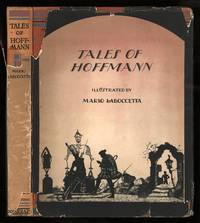
027388New York.: Dodd Mead & Company. First printing. Undated 1932. . Hard with Dust Jacket. Good in poor dust jacket. 4to. 10". Good in poor dust jacket. DJ missing quarter of rear panel and most of rear flap and with a little loss to spine and edges as pictured. Covers lightly sunned. A touch warped. Very mild foxing to endpapers. 206pp. 0 <br/> <br/> Dodd, Mead & Company. unknown
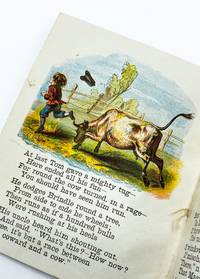
187631579New York: McLoughlin Brothers 1876. Very good plus. First edition of this STRUWWELPETER-esque story of a very naughty boy and the consequences of his actions. Part of McLoughlin's "Father's Series" "instructive little stories" each with "particularly apt and pleasing" color illustrations Publisher's Trade List. OCLC locates only 5 copies. 6'' x 5''. Original color pictorial wrapper saddle-stitched. Eight color illustrations. 8 pages. Small early owner's name to inner front and rear wrapper "Willie King." Light soil to wrappers with a couple expert tiny spine repairs. Occasional mild soil and light pencil marks to leaves. Colors bright. McLoughlin Brothers unknown
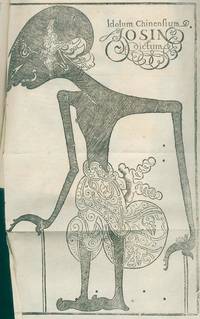
16803358Jenae Jena: Sumtibus Johannis Jacobi Bauhoferi Bauhöfer Johann Jacob 1680. Second edition first published in 1667. Four works bound in one volume. Contemporary vellum binding with title inked on the spine and a faint shelfmark vignette. Contemporary owner’s inscription on the first title page. Handwritten content on the final blank leaf of the last work. Rear free endpaper is missing. Tiny wormholes throughout with more noticeable effects toward the rear including the rear binding panel. Rear panel slightly stained. Despite the wormholes overall in fine condition. Illustrated with five large almost full-page and full-page woodcuts and five smaller woodcut illustrations and a large folding plate. Illustrated with five large almost full-page and full-page woodcuts and five smaller woodcut illustrations and a large folding plate. Second edition first published in 1667. Four works bound in one volume. Contemporary vellum binding with title inked on the spine and a faint shelfmark vignette. 8 196 p. and 1 folding plate. <p><br /> A scarce and early illustrated comparative study on global religions including American and Asian beliefs through a Lutheran lens—is bound alongside three foundational Lutheran texts.<br /> <p><p><br /> Umbra in Luce or Shadow in Light: Agreement and Disagreement of Profane Religions with Christian Truth originally presented in 1667 as an academic disputation at the University of Jena is a comparative theological study authored by Christian Hoffmann under the guidance of Johann Ernst Gerhard. This work examines Judaism Islam Samaritanism as well as Chinese Hindu and Mongolian beliefs uniquely incorporating references to indigenous American and Mexican religions. Hoffmann describes these American beliefs as “shadowed†reflections of divine truth presenting them through a distinctly Lutheran lens.<br /> <p><p><br /> The text with its Samaritan title Ṭelal be-nahar "shadow in light" features a diverse set of typefaces—Arabic Hebrew and Greek—and includes exotic woodcut inserts a folding plate and text illustrations of various coins. The larger illustrations depict figures such as a flaming bronze idol of Moloch associated with ancient child sacrifice along with artifacts from Gerhard’s collection including a Hindu Bhairava statuette and an Indonesian shadow puppet. Notably Hoffmann mistakenly labels this statuette as a "Chinese idol" underscoring the era’s limited understanding of Asian religions.<br /> <p><p><br /> While many images are borrowed from Athanasius Kircher’s Oedipus Ægyptiacus others directly depict Gerhard’s artifacts like the Bhairava statuette a fierce incarnation of Shiva obtained through the Dutch East India Company by Johann Schelhammer a Lutheran pastor in The Hague.<br /> <p><p><br /> These visual and textual elements combined with Hoffmann’s commentary on Mexican religious practices and a depiction of Huitzilopochtli—the Aztec god of war and the sun symbolizing protection and sacrifice—create a vivid portrayal of 17th-century efforts to interpret global religions within a Christian framework. Additionally an intriguing feature of Hoffmann’s text is its engagement with Asian linguistic elements including a passage in Tamil reflecting his interest in Eastern languages and cultures.<br /> <p><p><br /> Bound with Umbra in Luce are three additional theological works: In Canonicam & Catholicam Jacobi Epistolam Commentarius by Caspar Erasmus Brochmand Trifolium Verae Religionis by Wilhelm Leyser and Harmonia Evangelistarum organized by David Klug. These works were likely compiled together to offer a comprehensive suite of Lutheran scholarship that addresses both scriptural exegesis and comparative theology. While Umbra in Luce examines global religions through a comparative lens the others provide detailed doctrinal guidance for Lutheran clergy reflecting an integrated approach to defending and elucidating Lutheran theology against both external and internal religious perspectives.<br /> <p><p><br /> Literature: Ben-Tov A. 2021. Johann Ernst Gerhard 1621–1668: The life and work of a seventeenth-century orientalist. Brill.<br /> <p>. Sumtibus Johannis Jacobi Bauhoferi [Bauhöfer, Johann Jacob] unknown
170265219Basel, Johann Jacob Genath, (1702). 4°. Titel m. Holzschn.-Bordüre u. -Vignette. 32 S., Geheftet (ausgebunden; ohne Einband).
195816936(Frankfurt a. M., Trajanus-Presse, 1958). 4°. Mit 38 tlw. ganzs. Orig.-Holzschnitten von Felix Hoffmann. 199 (1) S., OHLdr. in OPp.-Schuber (von Willy Pingel).
181419729Ohne Ort, ohne Verlag, 1814. 8°. 48 S., Heftstreifen.
190165380(Wien, Druck von Adolf Holzhausen, 1. Januar 1901). Blattgröße 24,4 x 23 cm.
191161901Wien, Deutsch-Österreichischer Verlag, o. J. (1911). 8°. 176 S., Etw. späterer HLwd.-Bd. m. dem mont. illustr OUmschlag (v. Josef Hoffmann).
191261275Wien, Graphische Kunstanstalt Brüder Rosenbaum, (1912). 12°. Mit zahlr. meist ganzs. Abbildungen. 83 (1) S., Blau gemusteter Orig.-Seidenband, zusammen mit der doppelblattgr. Tanzkarte in illustr. Orig.-Seidenschuber m. reicher ornamentaler Vergoldung (von Josef Hoffmann).
191261267Wien, Graphische Kunstanstalt Brüder Rosenbaum, (1912). 12°. Mit zahlr. meist ganzs. Abbildungen. 83 (1) S., Farb. gemusteter Orig.-Seidenband, zusammen mit der doppelblattgr. Tanzkarte in illustr. Orig.-Seidenschuber m. reicher ornamentaler Vergoldung (von Josef Hoffmann).
178461403Ohne Ort [Wien], Gedruckt an der schlesischen Gränze [Hartl], 1784. Kl.-8°. 8 Bll., 168 S., Ldr. d. Zt. m. Rückenverg. u. goldgepr. Rückenschild.
18706346Stuttgart: Verlag von W. Nitzschke 1870. Lossow Heinrich. Third ed. Illustrated issue. Oblong 4to. 3 62 pp. 4 illustrations which are color-printed with secondary hand-coloring. Cloth-backed illustrated paper over boards rubbed on extremities; dampstained along edges mostly affecting the blank margins occasional foxing else very good. Illustrated by Heinrich Lossow and R. Geifsler. The lithographs are hand colored. Verlag von W. Nitzschke unknown