12 314 résultats
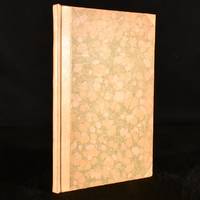
71876Aarau Eigenverlag um 1975. fester gelb/schwarz/rot marmorierter Kartondeckel grünes handbeschriftetes Rückenschild / Anz. Seiten: 30 / 135 x 19 cm / 30 lose Blätter davon ein signiertes in flexiblem graugrünem handbeschriftetem Einlagekarton / Zustand: sehr gut geringe Gebrauchsspuren; Ecken minimal bestossen Innendeckel minim fleckig Erotica - Originalgrafik (Aarau), Eigenverlag, um 1975 unknown
1785M2H99OL1K649Leipzig: Siegfried Leberecht Crusius 1785. Blue sprinkled paper over boards vol. 1 and limp grey paper wrappers stab-sewn through the wrappers vol. 2. Preserved in a professionaly handmade box made for this book. Folio. With 24 engraved plates in vol. 1 numbered 1-24 and 6 engraved plates in vol. 2 numbered 25-29 31: all published all signed by I. Nuszbiegel after originals by the author except plate 31 which is signed by Johann Stephan Capieux. 2 volumes. Both volumes of the first and only edition of Hoffmann's monograph on willows published in instalments from 1785 to 1791 including the series of 30 engraved plates numbered as 31 made to accompany them showing willows their branches leaves and flowers. He describes different kinds of willows their varieties habitat and sizes. All descriptions refer to the plates so that readers could use them together.Georg Franz Hofmann was a German botanist and physician. He first served as professor of botany in Erlangen then professor of botany and director of the botanical garden in Göttingen. Finally he went to Moscow where he continued his botanical studies taking charge of the Imperial Academy of Science's botanical garden and herbarium.Plate 30 is never mentioned in the text or bibliographies so it was apparently never published or was misnumbered 31.With manuscript owner's inscriptions on the title-page of instalment 1 and on the title-page of vol. 1. With the title-page to vol. 1 misbound between instalments 3 and 4. Binding of vol. 1 slightly worn corners bumped. Paper wrappers of vol. 2 slightly frayed at the corners. With a small professional restoration to the foot of the spine. With some minor stains in each volume but still in good condition. Both volumes rarely found together of a remarkable monograph on willows with all the plates.l Hunt II 678; Johnston 565; Nissen BBI 893; Pritzel 4127; Stafleu & Cowan II 2879. Siegfried Leberecht Crusius, hardcover
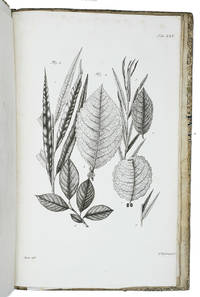
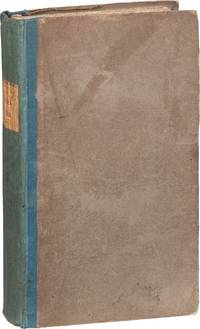
18241140Edinburgh & London: William Blackwood & T. Cadell 1824. First Edition. 2 vols. in one. First in English. Original blue cloth backed boards and printed paper spine label. Light wear bookplate small ink signature to the title page a little foxed but withal near fine amazing condition for any book this vintage especially this one. A rare book even when it’s rebound and this is the only copy I have ever seen of it in its original fragile binding in any condition anywhere best copy in the world so far. Coll: 12mo. viii 379; 4 339 pages. Following 30 years of gothic novels with logical not paranormal explanations at the end Matthew Lewis added the supernatural in his 1795 novel The Monk but it was Hoffmann in The Devil’s Elixirs “Die Elixiere des Teufels†Berlin 1815 who took supernatural horror out of the Gothic castle and on to the highway rearranging and expanding the potential plotlines and leaving a legacy vitally alive today for his descendants Bram Stoker H. P. Lovecraft and Stephen King. He elevates the sport to a new zenith as he analyzes the destructive psychological state the deeply divided nature of human imagination and the seductive ambiguities of art. The Capuchin monk Medardus is a charismatic criminal whose superficial holiness is a facade masking an inner wickedness. Driven by power fantasies Medardus drinks an arcane liquor 60 years before Stevenson’s Jekyll & and Hyde and becomes implicated in a mystery against his will. Traveling on the road to Rome and wrestling with the enigma of his own identity 65 years before Freud he is pursued by a demonic and murderous doppelganger multiple identity as a wraith of himself. The monk’s only potential salvation lies with the sex object Aurelie but to escape the curse which lies over him and his family he must evade sinister powers of the living and the dead. Does he do it Nope. William Blackwood & T. Cadell unknown
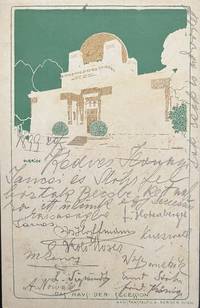
18993097Wien: Secession 1899. Fine condition. Postcard by Olbrich. Postcard by Olbrich. Very special and rare Wiener-Werkstaette item.<br /> <p><br /> Postcard sent to a Hungarian lady. Secession unknown
190761279[Wien, Wiener Werkstätte, 1907]. 4°. Mit einem Holzschnitt-Titel u. 11 Orig.-Farbholzschnitten auf Japanbütten (alles unter Passepartout). Lose in Orig.-Kassette m. Tunkpapierbezug, goldgepr. Deckelvignette u. Kantenvergoldung (Innendeckel m. dem goldgepr. Stempel der Wiener Werkstätte sowie den goldgepr. Monogrammen von Josef Hoffmann [Entwurf] u. des Buchbinders C. Beitel).
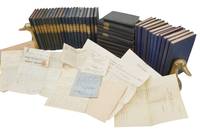
1938140946061London: No publisher 1938. Very Good. 41 volumes. Bound in varying blue cloth bindings most stamped in gilt. Includes handwritten diaries for 1896-1899 1901-1911 and 1913-1938. Very Good with light shelf wear a few volumes have staining to the covers else fine. Various ephemera laid-in including a note relating to his Czech passport numbered receipts from clients insurance cards pay scale rate cards applications for work letters of intent from prospective employees. <p>An incredibly meticulously logged diary archive into the life and work of noteworthy London architect Paul Hoffmann likely born in Vienna in 1869 passing away in 1938. He was notably involved in Queen's Gate mansion blocks the Philimore Estate and Earl's Court in early 1900. In tiny ink script he kept a diligent yearly diary of his work until just ten days before his death on August 19th 1938 detailing his professional relationships as an architect nearly every day for four decades except Sundays. Includes names of clients colleagues and accounts of his projects. <p>As for what he did in his spare time an intriguing 1902 article in the Anglo-American Press mentions that he was also a librettist and author of the opera "The Little Innocents" under the pen name Hugh Stranger. <p>Hoffmann designed and maintained Capel House in 1905-06 now Cable House in London at 56 New Broad Street. His journal entries describe his work at Capel House including the annual building costs over the years applications for work at the House architect's insurance and more. Not only does this archive describe the day-to-day tasks of a busy architect but also keeps log of the outbreak of WWI from a Londoner's perspective. <p>His diaries kept between 1914-1918 log important WWI dates. He declares that the "Banks are closed due to 'war scare' on July 31st1914. He logs that "Germany declares war on England" on August 5th 1914. An insurance slip by "The Government Scheme of Aircraft and Bombardment Insurance" laid-in his 1916 diary charged his account 1500 pounds on the 1st of February to insure Capel House from air raids. On June 13th 1917 he writes "Airplane bombs in city" -- later on the 7th of July he writes "2 airplane raids over London." He writes on Armistice Day November 11 1918 "Armistice between Germany & Allies unchanged." In the interim of air raids and bombings he still keeps a daily log of calls meetings and projects. One of his most noteworthy projects Roxburgh Mansions Kensington London constructed in 1899 were eventually destroyed in The Blitz of WWII. <p>A remarkable archive for enthusiasts of late 19th & early 20th century London architecture. [No publisher] unknown
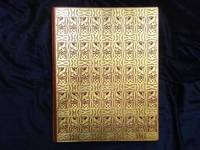
STAB0032Wien K.k. Hof- und Staatsdruckerei 1915. Wiener Werkstätte - 26 x 205 cm. 80 Seiten 1 Bl. Bordeauxroter Maroquinband mit reich gemusterter ganzflächiger Goldprägung an Deckeln und Rücken Kopfgoldschnitt und rot/weiße Kapitalbändchen Schmuckschuber. Mustergleich sind Vorsatzpapier sowie Bezugspapier des Schubers schwarz/weiß bedruckt. Ebenso sind die Bordürenumrahmungen unter Verwendung desselben Musters entworfen. Einband und Buchblock in makellosem neuwertigen Zustand der Schuber an den Kanten minimal berieben. Dieses von der k.k. Hof- und Staatsdruckerei in Wien im Jahre 1914 gedruckte Buch erschien in 500 numerierten Exemplaren von denen die Nummern 1 bis 50 auf echt Bütten von der Wiener Werkstätte in Leder gebunden die Nummern 51 bis 500 auf Bücherpapier in Leinenband hergestellt wurden. Außer diesen wurden zu Widmungszwecken noch 20 Exemplare mit den Nummern I bis XX angefertigt.Einbandzeichnung Vorsatz und Rahmen nach Zeichnungen von Josef Hoffmann in der k.k. Hof- und Staatsdruckerei hergestellt."" Unser Exemplar ist wie die 50 num. Exemplare in Maroquinleder gebunden farblich jedoch abweichend und unnumeriert. Werner J. Schweiger bezeichnet in seinem Standardwerk über die WW diese Arbeit als eine der wenigen wirklichen Verlagsarbeiten der Wiener Werkstätte. / Differenzbesteuert Wien, K.k. Hof- und Staatsdruckerei 1915. unknown
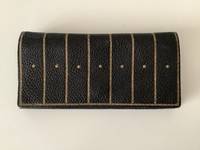
192215058AB1922. Vienna Wiener Werkstätte ca. 1922. 9 : 175 cm. Black goadskin with gold embossment three-line gold stamp Wiener Werkstätte. This wallet was produced by the Wiener Werkstätte after a design by architect and designer Josef Hoffmann 18701956 between 1910 and 1928. It was the express wish of the founders of this institution that its range of products should encompass as many areas of life as possible. This is the idea of the Gesamtkunstwerk. Consequently the Wiener Werkstätte premises in Neustiftgasse 3234 also accommodated a leather workshop. This rectangular object is made of black leather and features a geometric decorative pattern in precious gold embossing. Together with the fine leather these gold ornaments provide the object with its thoroughly elegant and exquisite character as the Wiener Werkstätte designers devoted to even the smallest object the same attention as to larger ones. - One of the famous wallets designed by Josef Hoffmann made for the Wiener Werkstätte. hardcover
586971936. 4°-Quer 36 Blatt 56 eingeklebte Orig.-Photographien unterschiedlicher Grösse von 23 x17 cm 21 x 27 cm bis 7 x 11 cm unter anderem ein zweifach gefalzte Weitwinkelaufnahme total 22 x 76 cm des Aufmarsches auf dem Reichsparteitagsgelände OLdr. Mappe aussen wasserrändig innen tadellos ausser der gefalteten Photographie diese etwas fleckig. Die meisten der Aufnahmen vom Hitlers Leibphotographen Heinrich Hoffmann 1885-1957. Hitler ist 13 mal abgebildet. Die Aufnahmen zeigen nicht nur den Parteitag und entsprechende Aufmärsche sondern auch Gäste aus befreundeten Ländern. Ausserdem die Besichtigung der neuen Autobahn und ein Ausflug nach Berchtesgaden. - Kappeler Franz 1898 -1988. Stud. in Zürich Genf und Bern 1925 Dr. iur. Volontär an Zürcher Gerichten. Ab 1926 Mitarbeiter des Eidg. Polit. Departements EPD heute EDA 1936 Legationssekr. und 1939 Legationsrat bis 1944 Mitarbeiter des Schweizer Ministers zuerst von Paul Dinichert 1878-1954der wegen seiner kritischen Haltung zum Regime 1938 vom nazifreundlichen Hans Frölicher 1887-1961abgelöst wurde.in Berlin. Kappeler war massgeblich an den dt.-schweiz. Verhandlungen beteiligt die 1938 dazu führten dass in den Pässen dt. Juden der J-Stempel eingeführt wurde. Nach seiner Rückkehr nach Bern trat er in die Abt. für Finanzangelegenheiten ein und wirkte in zahlreichen Wirtschaftskomm. und -delegationen mit. Nach seiner Berufung nach Beirut vertrat er die Schweiz ab 1950 im Libanon in Syrien Irak und Jordanien. 1956 wurde er Minister 1960 Botschafter in Pretoria bis zu seiner Pensionierung im Jahr 1963. In seinen Schriften äusserte K. eine entgegenkommende Haltung sowohl gegenüber dem Dritten Reich als auch gegenüber Südafrika und dessen Apartheidregime. 010 1936 unknown
1899108273Seven vols. Stuttgart: Julius Hoffmann 1899-1905. Seven vols. folio 120; 96; 96; 96; 96; 96; 96 ll. Fully illustrated leaves printed to recto only in green phthalo blue sepia peach burgundy and black. Quarter red cloth with color printed gray boards vol. 1 has inlaid illustration in green and red title printed in black to backstrips. Backstrips on all volumes have some minor fraying and boards are slightly rubbed at edges and bumped at corners; otherwise a very good bright and complete set. § First edition seven volumes complete. The most comprehensive illustrated encyclopedic lexicon of Art Nouveau design ever published. Each page packed with images including but not limited to ceramics glass jewelry wallpaper furniture book bindings book plates ornamental alphabets book art metalwork silver china lace and advertising art represented with photographic reproductions and sketches. All seven volumes are very scarce rarely found complete. Julius Hoffmann hardcover books
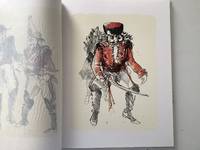
192024429Leipzig: W. Drugulin 1920. Vorzugsausgabe. Limited numbered edition. Hardcover. vg. 1/120. Elephant folio. VIII 1032pp. & 13 unnumbered illustration pages. Gold-stamped full green calf with gold lettering on cover and spine in original dust wrapper and sturdy paper-covered green clamshell box. Gold-lined raised bands. All deckled edges. Inside of front and back board stamped with double gold borders. Binding designed by R. Hadl handcrafted by A. Köllner. Elaborate deluxe edition of Hoffmann's novel "Signor Formica". E. T. A. Hoffmann 1776-1822 was a German author composer draftsman caricaturist jurist and music critic. He was one of the major authors of the Romantic movement. Signor Formica was first published in 1820 and a year later was included in the forth volume of Hoffmann's work "Serapionsbrüder." His few literary works are stories in which supernatural and sinister characters appear in people's lives revealing grotesque and often tragic sides in human nature. This deluxe edition is illustrated with original artwork by the Hungarian sculptor and etcher Richard Hadl. The illustrations consist of one original signed full-page pencil drawing as well as 12 full-page- and 7 in-text drawings in aquatinta-manier. Additional signature of illustrator on limitation page. "Dieses Buch wurde im Jahre neunzehnhundert und zwanzig in der Offizin W. Drugulin in Leipzig gedruckt. Die Auflage beträgt einhundert und zwanzig numerierte Exemplare auf van Gelder-Zonen-Bütten. Nach Beendigung des Druckes wurden die Platten vernichtet. Dieses Exemplar ist Nr. XXXIV und wurde gedruckt für Freiherrn Erich von Goldschmidt-Rothschild. Durchgesehen: signed Richard Hadl." Printed on handmade van Gelder-Zonen paper. Foreword by Hadl. Text in German. This particular copy was printed exclusively for Erich von Goldschmidt-Rothschild 1899-1987 of the famous Rothschild lineage. Goldschmidt-Rothschild was also well-known for his extensive rare book collection. Slip with information on binding laid-in as issued. Very slight rubbing on head and tail of spine. Minor creasing on spine of dust wrapper. Slight scuffing on clamshell box tiny tear on top section on spine of box. 10mm offsetting from interior leather-lining on outer edges of front and rear free endpaper. Dust wrapper and clamshell box protected by modern mylar. Exceptional copy in a stunning binding. Fine condition. Scarce with dust wrapper. W. Drugulin hardcover
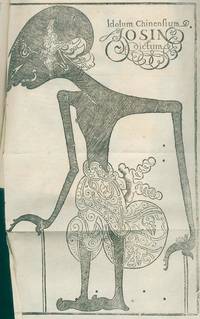
16803358Jenae Jena: Sumtibus Johannis Jacobi Bauhoferi Bauhöfer Johann Jacob 1680. Second edition first published in 1667. Four works bound in one volume. Contemporary vellum binding with title inked on the spine and a faint shelfmark vignette. Contemporary owner’s inscription on the first title page. Handwritten content on the final blank leaf of the last work. Rear free endpaper is missing. Tiny wormholes throughout with more noticeable effects toward the rear including the rear binding panel. Rear panel slightly stained. Despite the wormholes overall in fine condition. Illustrated with five large almost full-page and full-page woodcuts and five smaller woodcut illustrations and a large folding plate. Illustrated with five large almost full-page and full-page woodcuts and five smaller woodcut illustrations and a large folding plate. Second edition first published in 1667. Four works bound in one volume. Contemporary vellum binding with title inked on the spine and a faint shelfmark vignette. 8 196 p. and 1 folding plate. <p><br /> A scarce and early illustrated comparative study on global religions including American and Asian beliefs through a Lutheran lens—is bound alongside three foundational Lutheran texts.<br /> <p><p><br /> Umbra in Luce or Shadow in Light: Agreement and Disagreement of Profane Religions with Christian Truth originally presented in 1667 as an academic disputation at the University of Jena is a comparative theological study authored by Christian Hoffmann under the guidance of Johann Ernst Gerhard. This work examines Judaism Islam Samaritanism as well as Chinese Hindu and Mongolian beliefs uniquely incorporating references to indigenous American and Mexican religions. Hoffmann describes these American beliefs as “shadowed†reflections of divine truth presenting them through a distinctly Lutheran lens.<br /> <p><p><br /> The text with its Samaritan title Ṭelal be-nahar "shadow in light" features a diverse set of typefaces—Arabic Hebrew and Greek—and includes exotic woodcut inserts a folding plate and text illustrations of various coins. The larger illustrations depict figures such as a flaming bronze idol of Moloch associated with ancient child sacrifice along with artifacts from Gerhard’s collection including a Hindu Bhairava statuette and an Indonesian shadow puppet. Notably Hoffmann mistakenly labels this statuette as a "Chinese idol" underscoring the era’s limited understanding of Asian religions.<br /> <p><p><br /> While many images are borrowed from Athanasius Kircher’s Oedipus Ægyptiacus others directly depict Gerhard’s artifacts like the Bhairava statuette a fierce incarnation of Shiva obtained through the Dutch East India Company by Johann Schelhammer a Lutheran pastor in The Hague.<br /> <p><p><br /> These visual and textual elements combined with Hoffmann’s commentary on Mexican religious practices and a depiction of Huitzilopochtli—the Aztec god of war and the sun symbolizing protection and sacrifice—create a vivid portrayal of 17th-century efforts to interpret global religions within a Christian framework. Additionally an intriguing feature of Hoffmann’s text is its engagement with Asian linguistic elements including a passage in Tamil reflecting his interest in Eastern languages and cultures.<br /> <p><p><br /> Bound with Umbra in Luce are three additional theological works: In Canonicam & Catholicam Jacobi Epistolam Commentarius by Caspar Erasmus Brochmand Trifolium Verae Religionis by Wilhelm Leyser and Harmonia Evangelistarum organized by David Klug. These works were likely compiled together to offer a comprehensive suite of Lutheran scholarship that addresses both scriptural exegesis and comparative theology. While Umbra in Luce examines global religions through a comparative lens the others provide detailed doctrinal guidance for Lutheran clergy reflecting an integrated approach to defending and elucidating Lutheran theology against both external and internal religious perspectives.<br /> <p><p><br /> Literature: Ben-Tov A. 2021. Johann Ernst Gerhard 1621–1668: The life and work of a seventeenth-century orientalist. Brill.<br /> <p>. Sumtibus Johannis Jacobi Bauhoferi [Bauhöfer, Johann Jacob] unknown
191097511910. Letters. Collectible; Very Good. 1910 HANDWRITTEN LETTER FROM LEGENDARY AUSTRIAN ARCHITECT JOSEF HOFFMANN Vienna Secessionist and co-founder of the Wiener Werkstatte TO EDUARD JOSEF WIMMER-WISGRILL the first Artistic Director of the fashion department of the Wiener Werkstatte. Clean and bright and very well-preserved. Written on the stationary with lavish letterhead of The Hotel Hassler in Rome. In a strong clear hand in fountain pen and on a single sheet folded into quarters -- with very minor crease folds. A translation into English from the original German on another sheet of paper is includeds as well. 8" x 10 1/2". Also includes the original envelope handwritten by Josef Hoffmann. unknown
9751Signed letter. Collectible; Very Good. 1910 HANDWRITTEN LETTER FROM LEGENDARY AUSTRIAN ARCHITECT JOSEF HOFFMANN Vienna Secessionist and co-founder of the Wiener Werkstatte TO EDUARD JOSEF WIMMER-WISGRILL the first Artistic Director of the fashion department of the Wiener Werkstatte. Clean and bright and very well-preserved. Written on the stationary with lavish letterhead of The Hotel Hassler in Rome. In a strong clear hand in fountain pen and on a single sheet folded into quarters -- with very minor crease folds. A translation into English from the original German on another sheet of paper is includeds as well. 8" x 10 1/2". Also includes the original envelope handwritten by Josef Hoffmann. <br/><br/> Signed letter unknown books
albd0f2adb18c0f0399Hoffman K. Botanical Atlas of the De Candoli System. In 2 Volumes. In Russian (ask us if in doubt)/Gofman K. Botanicheskiy atlas po sisteme De-Kandolya. V 2-kh tomakh. Short description: In Russian (ask us if in doubt).80 large chromolytographed tables showing more than 459 plants in colors and 42 sheets of text with 735 polities. With modifications and additions for Russia edited by N.A. Monteverde Chief Botanist of Imperial St. Petersburg St. Petersburg St. Petersburg St. Petersburg 1898-1899. XXXIV 273 XVIc. Ill. Encyclopedic format We have thousands of titles and often several copies of each title may be available. Please feel free to contact us for a detailed description of the copies available. SKUalbd0f2adb18c0f0399
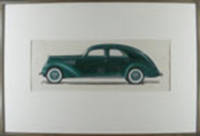
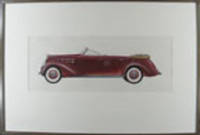
1937187971937. Mixed media on paper. Exquisite drawing of a 1930s concept car.<br/> <br/>The old established Willoughby firm of Utica New York had a reputation for conservative quality coachwork in 1930 when Viennese born Hoffmann was hired as draghtsman/designer. He quickly moved the company's design philosophy to the forefront of the streamline school translating traditional luxury car body types such as this touring car into the modern idiom. Willoughby designed bodies for all the major luxury car firms. We have attributed this drawing to Hoffman on the basis of a very similar drawing of the period that was acquired in 1985 from Hoffmann's widow clearly done by the same hand and exhibiting the same exquisite touch and sense of proportion. unknown books
193718773Utica 1937. Tempera on paper. Exquisite drawing of a quintessential 1930s roadster.<br/> <br/>The old established Willoughby firm coach body makers in Utica New York had a reputation for conservative quality coachwork in 1930 when Viennese born Otto Hoffmann was hired as draughtsman/designer. He quickly moved the company's design philosophy to the forefront of the streamline school translating traditional luxury car body types such as this touring car into the modern idiom. Willoughby designed bodies for many major luxury car manufacturers including Lincoln and Rolls Royce. Provenance: Acquired from Hoffmann's widow January 1985. unknown books
1937187971937. Mixed media on paper. Exquisite drawing of a 1930s concept car.<br/> <br/> The old established Willoughby firm of Utica New York had a reputation for conservative quality coachwork in 1930 when Viennese born Hoffmann was hired as draghtsman/designer. He quickly moved the company's design philosophy to the forefront of the streamline school translating traditional luxury car body types such as this touring car into the modern idiom. Willoughby designed bodies for all the major luxury car firms. We have attributed this drawing to Hoffman on the basis of a very similar drawing of the period that was acquired in 1985 from Hoffmann's widow clearly done by the same hand and exhibiting the same exquisite touch and sense of proportion. unknown
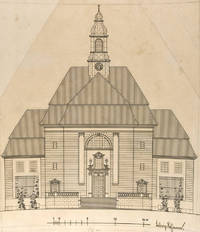
190931997Berlin: NP 1909. Softcover. g to vg. Plans & drawings in various sizes all printed on light card stock some plans mounted. Seven of the ten are numbered. 5 plans/drawings annotated by Hoffmann 2 drawings signed by him 5 signed by Stadtbauinspektor / Magistrats-Baurat Tietze. Printed by "Gisaldruck v. Bogdan Gisevius Berlin." not numbered: 1 Large 46 1/2" x 59" Lageplan ground plan of the hospital also showing surrounding streets. Plan titled "Neubau des IV. Städt. Krankenhauses - Lageplan." Rudolf Virchow handwritten in blue crayon below title. Parts of folds as well as sporadic tears repaired with tape. Parts of edges chipped some closed tears along folds no missing pieces. 2 Drawing 13 3/4 x 16" showing the facade of the hospital mounted on 17 1/4 x 25" card stock. Signed by Ludwig Hoffmann with some of his annotations. 3 Drawing 16" x 21 1/2" of the "Operationshaus" mounted on 23 1/2" x 28 1/2" card stock. Signed by Hoffmann with his annotations. Numbered plans: # 4 - # 7 with original signature of Stadtbauinspektor Tietze dated 6. Januar 1909. Also with printed signature of the on-site architect Bietz Signatures accompanied with text: a "Revidiert und festgestellt: Berlin den 6. Januar 1909. Der Stadtbauinspektor: original signature "Tietze" Magistrats-Baurat. b "Die Richtigkeit und Uebereinstimmung mit der Ausführung bescheinigt: Berlin den 1sten Dezember 1908. Der Bauleitende printed signature of "Bietz" Architekt. 4 Blatt 1: 22" x 30" revised plan showing the foundation Revisionszeichnung Fundamente of the Doppeloperationshaus surgery building. With many handwritten annotations by the architect. Small number stamp on lower left margin. 5 Blatt 2: 26" x 30" revised plan showing the basement Revisionszeichnung Kellergeschoss of the Doppeloperationshaus. With architects handwritten annotations. Five-inch closed tear on upper left corner. 6 Blatt 3: 18" x 25" plan of the basement of the Doppel-Operationshaus. Lists rooms Raumbezeichnung and furniture Mobiliarbezeichnung. Small number stamp on lower left margin. 7 Blatt 4: 30" x 26 3/4" revised drawing of the ground floor of the Doppel-Operationshaus. Two-inch closed tear on right upper edge. 8 Blatt 5: 27" x 31" drawing of the attic Dachgeschoß of the Doppel-Operationshaus. Top left corner with closed tear almost detached. Bottom left corner creased. 9 Blatt 7: 25" x 26 3/4" drawing showing the facade Vorder-Ansicht cross- and longitudinal sections Quer- und Längsschnitt as well as details of the main cornice Hauptgesims and roof turret Dachreiter. 1/2" closed tear on bottom right corner. 10 Not numbered 16 1/4" x 22" drawing mounted on 28 1/4" x 23" card stock showing the facade longitudinal section main cornice and roof turret. Few annotations by architect. Two-inch closed tear on bottom edge. Unique collection of architectural plans & drawings by Berlin architect and Stadtbaurat Ludwig Ernst Emil Hoffmann. The architect attended the Kunstakademie in Kassel and the Bauakademie in Berlin where his teachers included Richard Lucae and Johann Heinrich Strack. After becoming a licensed government architect in 1884 he won a competition for the revised design of the Reichsgerichtgebäude in Leipzig. Hoffmann and Peter Dybwad worked on the monumental neo-classicist building from 1887-1895. A year later Hoffmann was elected city architect of Berlin being responsible for all types of public buildings in the city. Notable examples include the Märkisches Museum various public baths such as the Volksbadeanstalt Baerwaldstraße Berlin-Kreuzberg Volksbadeanstalt Dennewitsstraße Schöneberg Volksbadeanstalt Oderberger Straße Berlin-Prenzlauer Berg several bridges & fountains the Altes Stadthaus the Rudolf-Virchow-Krankenhaus and many others. On the initiative of Rudolf Virchow the fourth major city hospital was built between 1898 and 1906. Virchow was a German doctor anthropologist pathologist and politician known for his advancement of public health. He is considered as one of the founders of social medicine. The Virchow Krankenhaus was the last hospital that was built in the so-called "Pavillonstil." At the time the construction of the building cost 19 million Reichsmark. 57 separate buildings with 2000 beds were built on an area of 2906255 square feet. The staff buildings housed approx. 1000 employees doctors nurses and other personnel. Impeccable landscaping trees large green patches flower beds and benches gave the hospital grounds a park-like feel. Unique piece of Berlin architectural history by one of the most important German architects of the late 19th and early 20th century. NP unknown
193718773Utica 1937. Tempera on paper. Exquisite drawing of a quintessential 1930s roadster.<br/> <br/> The old established Willoughby firm coach body makers in Utica New York had a reputation for conservative quality coachwork in 1930 when Viennese born Otto Hoffmann was hired as draughtsman/designer. He quickly moved the company's design philosophy to the forefront of the streamline school translating traditional luxury car body types such as this touring car into the modern idiom. Willoughby designed bodies for many major luxury car manufacturers including Lincoln and Rolls Royce. Provenance: Acquired from Hoffmann's widow January 1985. unknown
1920819B15Tolz : Marees-Gesellschaft 1920. First edition. Leather. Very Good Indeed. 11" by 7". Rudolf Grossmann. An important limited edition print on Japon paper of E. T. A Hoffmann's short story Ritter Gluck. Ernst Theodor Amadeus Hoffmann was a German Romantic author of fantasy and Gothic horror his stories highly influenced 19th-Cenutry literature and he is one of the major authors of the Romantic movement. This copy of Hoffmann's short story Ritter Gluck is richly illustrated by Rudolf Grossmann throughout. There were 65 numbered copies in Japon paper and 135 number pieces on handmade paper. This copy is number 65 of the 65 numbered copies on Japon. In half calf binding with marbled covered boards. Externally smart. There is some fading towards the extremities and a two darker marks to the rear board. Internally firmly bound with generally bright and clean pages with the odd spot. Very Good Indeed Marees-Gesellschaft hardcover
alb3068ee4444464968Hoffman E. Kholodkovsky N.A. Atlas of Butterflies in Europe and Partly Russian-Asian Properties. In Russian (ask us if in doubt)/Gofman E. Kholodkovskiy N.A. Atlas babochek Evropy i otchasti russko-aziatskikh vladeniy. Short description: In Russian (ask us if in doubt).Processed and supplemented in relation to Russian fauna by N.A. Kholodkovsky. With 72 chromolytographic tables and many figures in the text of St. Petersburg: Edition by A.F. Devrien 1897 2 XXXXII p. 1-332 333-356 1 p. We have thousands of titles and often several copies of each title may be available. Please feel free to contact us for a detailed description of the copies available. SKUalb3068ee4444464968
19139AB2007. Salzburg Neuhauser Kunstmühle 2007. 465 : 375 cm. 10 Original Farblithographien von Erika Landertinger. Illustrierter Original Halbleinenband. Eines von nur 12 nummerierten Exemplaren Druckvermekr von der Künstlerinn signiert. Von Thomas Franke auf Zerkall-Bütten gedruckt. unknown
200719139ABSalzburg, Neuhauser Kunstmühle, 2007. 46,5 : 37,5 cm. 10 Original Farblithographien von Erika Landertinger. Illustrierter Original Halbleinenband.
2015114098Steidl. New. 2015. Paperback. 3869309350 . FREE UPGRADE to Courier/Priority Shipping Upon Request - IN STOCK AND IMMEDIATELY AVAILABLE FOR SHIPMENT - IN STOCK AND IMMEDIATELY AVAILABLE FOR SHIPMENT - Flawless copy brand new pristine never opened - -- with a bonus offer-- . Steidl paperback