93 résultats
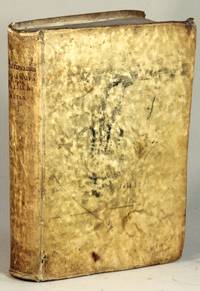
174553183Venetiis: Sebastianum Coleti 1745. 4to pp. 4 667 1; woodcut device on title page; text in double column; contemporary vellum soiled manuscript title on spine; good and sound. Hoffman 1660-1742 was a German physician and chemist. This is one of several volumes of his work published in Venice in 1745. This edition not found in OCLC. <br/><br/> Sebastianum Coleti hardcover books
170339786Halle: Renger 1703. 8vo. 16 213pp. 18th century half calf marbled boards. Very good copy. Second edition first published 1695. Renger unknown books
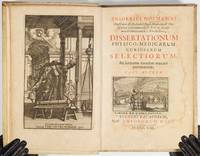
1754M13008Genevae:: Apud fratres de Tournes 1754. 1754. Two parts in one. Folio. 24 x 35 cm. viii 871 1 pp. Collation: 4 A6-4D6. Half title title printed in red & black engraved title vignette Latin text printed predominantly in two columns engraved initials engraved head and tail pieces small woodcut fig. p.52; occasional minor stains some folds ownership signature Hermann . . . trimmed on title top edge. Original half calf over boards all edges red; heavily worn with chipped portions spine is mostly missing front joint reinforced with Kozo. Binding "as is" good internally. Bookplate of John G. Curtis Library of Columbia University. Rare. Second edition. "Hoffmann based his treatment on the use of sedatives tonics alternatives and evacuants according to the condition responsible for causing the disease. Apart from this system he was one of the premier practitioners of his day and one of the first to give good descriptions of appendicitis chlorosis rubella and convulsive asthma with dropsy." – Heirs of Hippocrates referring to the entire Opera. More description available on request. REFERENCES: The Dictionary of Eighteenth Century German Philosophers 3 vols. edited by Manfred Kuehn and Heiner Klemme London/New York: Continuum 2010; DSB VI pp. 458-461; Blake NLM lists editions from Geneva in 1740 1748 and 1761; Wellcome Library III p.285 2 vols. in 1. See: Garrison & Morton 72 for the complete 9 volumes published 1740-53; Justin E. H. Smith The Problem of Animal Generation in Early Modern Philosophy 2006; Willius & Dry A History of the Heart and the Circulation pp. 77-78. Apud fratres de Tournes, 1754. hardcover books
1738M13787Venice:: Apud Sebastianum Coleti 1738. 1738. Sq. 8vo. viii 311 1 pp. 2 small ink ownership stamps on title unreadable. Nineteenth century marbled boards printed title label on spine; extremities showing. Title verso with ink ownership stamp of Th. Renz. Very good. The work contains two parts of ten papers each for a total of twenty papers. Each studies aspects of medicine from the nature of art and efficacy in healing method application of drugs the power and efficiency of medicines applied the ability of the body to understand the remedies of drinking water and the virtues of milk in medicine the power of milk to heal qualities of mineral waters in promoting health. Continuing in the second part: salts as a healer the uses of China bark as applied to fevers uses of ejecting of venom the causes of death by disease the good of medicine the errors that are common in medical practice. "Friedrich Hoffmann also 'Hofmann' was born on 19 February 1660 in Halle where he also died on 12 November 1742. Called 'the second Hippocrates' and the 'Aesculapius Hallensis' he was among the most widely read medical authors of the eighteenth century and is best known for his systematic discussion of the iatromechanical model of medicine — similar to what Hermann Boerhaave 1668-1738 was developing at Leiden — that views the human body as a hydraulic machine wholly governed by mechanical laws. "Hoffmann's father Friedrich Hoffmann the Elder was the respected municipal physician of Halle. The younger Hoffmann enrolled at nearby Jena in 1678 the university at Halle would not open for another fifteen years where he studied medicine for two years under the iatrochemist Georg Wolfgang Wedel 1645-1721 also attending Caspar Cramer's lectures on chemistry in Erfurt in 1680. He received his doctorate in medicine from Jena in 1681 January 31 with a dissertation on suicide de autochiria and began lecturing on chemistry a standard course taught in the medical faculty but soon left perhaps pushed out by senior faculty jealous of his teaching success. After practicing medicine in Minden for two years Hoffmann made an academic tour of Belgium Holland and England during which he met Boerhaave Thomas Sydenham and Robert Boyle returned to Minden in 1684 and assumed various medical offices eventually being appointed the regional physician for Halberstadt. He married an apothecary's daughter Anna Dorothea Herstell on 10 December 1689. "In 1693 he was called to the newly-founded university at Halle as an ally of the Priest August Hermann Francke 1663-1727 with the charge of organizing its medical school and to serve as its first professor of medicine. He also became the godfather to Christian Wolff's first-born son Friedrich. Hoffmann recruited his old college friend from Jena Georg Ernst Stahl 1660-1734 for the second chair of medicine and the two taught side by side for twenty years transforming Halle into the preeminent medical school among German-speaking universities. Along with Boerhaave at Leiden Hoffmann and Stahl were the principal forces behind the medical reforms of the early eighteenth century. "Hoffmann was a member of the German Academy of Natural Scientists Leopoldina 1696 the Berlin Academy of Sciences he was included in Leibniz's founding lists and was inducted on 1 April 1701 the Royal Society of London 1720 and the Russian Academy of Sciences in St. Petersburg 1735. "In all Hoffmann authored about 400 publications mostly brief dissertations and essays but also the six-volume systematics discussed above a twelve-volume collection of case studies Medicina consultatoria 1721-39 and a nine-volume work on how to live a long and healthy life Basic Guide 1715-28 wherein Hoffmann emphasized the restorative effects of proper diet exercise clean air and sleep. He also criticized the diversity and overuse of drugs and was successful in reducing the pharmacopoeia of his day to a few basic remedies. -- The Dictionary of Eighteenth Century German Philosophers 3 vols. edited by Manfred Kuehn and Heiner Klemme. CONTENTS: Part I: 1 De naturae & artis efficacia in medendo. 2 De recta et simplicissima natura medendi method. 3 De medicamentorum prudenti application in tempore. 4 De prudenti medicamentorum continuation. 5 De vera medicamentor in morbis virtute et efficacia rite dignoscenda. 6 De cognoscenda corporis humani natura ex effectu remediorum. 7 De medicina simpilicissima & optima motu inedia aquae potu. 8 De mirabili lactis asinini in medendo usu. 9 De saluberrima seri lactis virtute. 10 De connubio aquarum mineralium cum lacte longe saluberrimo. Part II: 1 De salium mediorum excellente in medendo virtute. 2 De sale medicinali Carolinarum. 3 De manna ejusque praestantissimo in medicina usu. 4 De recto corticis chinae usu in febribus intermittenibus. 5 De purgantibus fortioribus ex praxi medica merito ejiciendis. 6 De medicina emetica et purgante post iram veneno. 7 De imprudenti medicatione multorum morborum et mortis causa. 8 De remediorum benignorum abusu et noxa. 9 De vesicantium et fonticulorum circumspecto in medicina usu. 10 De erroribus vulgaribus circa usum topicorum in praxi. / "Although Enlightenment physicians debated the suitability of milk as a treatment for different individuals and situations Friedrich Hoffmann's Treatise of the Extraordinary Virtues and Effects of Asses Milk 1754 exemplifies the basic understanding of its health benefits in the eighteenth century. Hoffmann who served as the physician to the Prussian King Friedrich I was a friend of Boerhaave and a proponent of the neo-Hippocratic school. He argues that since humans were nourished by a milky substance in the womb and raised on breast milk and since all food upon entering the body was transformed into a milky substance called chyle milk was 'manifestly proved to be the principal of all the kinds of aliment; so it may be deservedly reckoned the chief of all remedies.' Although Hoffmann preferred ass's milk for its resemblance to human breast milk he also recommended the milk of cows sheep and goats for the relief of fevers chronic coughs colic and nervous disorders -- the same aliments that afflicted Pompadour. Why was milk so effective" Hoffman argued that is possessed powerful cleansing properties functioning as a nonviolent purgative that penetrated the body's channels allowing fresh air to enter and perspiration to exit. It also removed obstructions in the chest lungs and bowels and returned the body to its proper system of 'flows.' Hoffmann told readers of how a certain 'gentlewoman' in his care who had been sick for years with fevers aches and pains began a course of milk treatment and 'in three days only everything appeared wonderfully amended.'" -- Meredith Martin Dairy Queens: The Politics of Pastoral Architecture from Catherine de' Medici to Marie-Antoinette Harvard Historical Studies Harvard University Pres 2011 pp. 135-6. REFERENCES: Blake NLM 217; Wellcome II 285. Apud Sebastianum Coleti, 1738. hardcover books
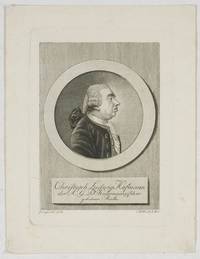
1788554041788. Frontispiz zu: Goeckingk L.F.G. v.: Journalvon und für Deutschland 1799 10 stück. Plattengröße: 170 x 125 mm. Blattgröße: 214 × 165 mm. - Johann de Giorgi del. 1783 Christoph Wilhelm Bock sc. Johann de Giorgi 1788 del. Zeichner vermutlich im deutschsprachigen Raum tätig; Christoph Wilhelm Bock ca. 1755-1830 deutscher Kupferstecher in Leipzig und Umgebung spezialisiert auf Porträt und Buchillustrationsstiche. Als selbständige gelehrtenbildnerische Porträtgraphik geschaffen vermutlich für den regional medizinhistorischen Kontext in Westfalen; diente der repräsentativen Darstellung Hoffmanns als hochfürstlicher Medizinalbeamter und Gelehrter. Profilbüste im Rundmedaillon vor dicht schraffiertem Fond mit betont nüchterner spätaufklärerischer Kostümierung; die sauber kalligraphierte Kartusche verbindet Bild und Amtsbezeichnung und verankert Hoffmann im administrativen Umfeld der fürstbischöflichen Medizinalverwaltung. Christoph Ludwig Hoffmann 3.12.1721 Rheda - 27.07.1807 Eltville am Rhein Kuhrmainzischer geheimer Rath war deutscher Arzt und Medizinalbeamter. Er promovierte 1746 zum Dr. med. und wirkte zunächst als Landphysikus und Leibarzt in Rheda und Detmold. 1756 wurde er Lehrer der Medizin und Philosophie sowie Bibliothekar am Akademischen Gymnasium Burgsteinfurt später Leibarzt und Medizinalbeamter in Münster. 1773 gründete er das Collegium medicum in Münster und wurde später Direktor des Medizinalkollegiums in Kassel; seine Schriften zur Medizinalgesetzgebung und Volksgesundheit fanden überregionale Beachtung. Lit.: Flaskamp Franz: Der kurfürstlich-kölnische Leibarzt Christoph Ludwig Hoffmann 1721-1807. Münster: Aschendorff 1937. Terhalle Hermann: Hoffmann Christoph Ludwig. In: Westfälische Lebensbilder 14. Münster: Aschendorff 1987: pp.129-146. Lippe Landesarchiv Hg.: Hoffmann Christoph Ludwig 1721-1807. In: Lippische Biographien online. Wolfenbüttel Herzog August Bibliothek Inventar-Nr. A 9832; Mortzfeld A 9832 Drugulin Ä. 2535; Diepenbroick 11927 Porträtsammlung Diepenbroick 5 833 unknown
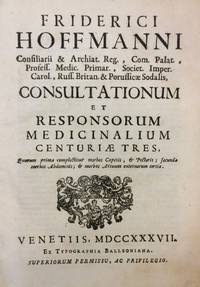
1737116142Venetiis: ex Typographia Balleoniana 1737. In-8 p. mm. 230x172 p. pergamena coeva pp. XVI752; testo su due colonne. Quorum prima complectitur morbos Capitis & Pectoris; secunda morbos Abdominis; & morbos Artuum externorum tertia. $Prima edizione veneziana"Cfr. Wellcome p. 284 - Blake p. 216 - Castiglioni p. 597-8: "Federico Hoffmann 1660-1742 prof. di medicina a Halle medico a Berlino alla corte di Federico I. Per le sue concezioni meccaniciste cercò di spiegare tutte le funzioni dell'organismo da un punto di vista matematico. Fu soprattutto un chimico e altresi' l'introduttore delle acque minerali nella terapia razionale".Pagine lievem. arrossature per la qualità della carta ma buon esemplare. ex Typographia Balleoniana, unknown
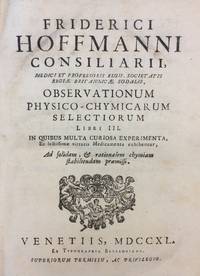
1740116144Venetiis : ex Typographia Balleoniana. 1740. In-8 p. mm. 229x170 2 opere dello stesso A. in 1 tomo p. pergamena coeva titolo manoscritto al dorso testo su due colonne. La prima In quibus multa curiosa experimenta et lectissimae virtutis Medicamenta exhibentur ad solidam & rationalem chymiam stabiliendam praemissi di pp. 16292 segue Frederici Hoffmanni Dissertationum physico-chemicarum trias' di pp. 52. Cfr. Blake p. 217 - Wellcome p. 284 per un'edizione di Napoli 1755.La seconda "Opuscula medica varii argumenti seu Dissertationes selectiores antea diversis temportibus editae nunc revisae et auctiores 1741 di pp. 8311. Vi figurano 20 Dissertazioni fra cuii De Cinnabari Antimonii ejusque eximiis viribus usu tam secretiori quam vulgari tam morbis hucusque cognitis quam incognitis e Fundamenta Medicinae ex principiis naturae Mechanicis in usum Philiatrorum succincte propopsita. Cfr. Wellcome p. 285 per un'edizione di Venezia di S. Coletus 1741 - Blake. p. 217 - Castiglioni p. 597-8: "Federico Hoffmann 1660-1742 prof. di medicina a Halle medico a Berlino alla corte di Federico I. Per le sue concezioni meccaniciste cercò di spiegare tutte le funzioni dell'organismo da un punto di vista matematico. Fu soprattutto un chimico e altresi' l'introduttore delle acque minerali nella terapia razionale".Con qualche fioritura ma buon esemplare. ex Typographia Balleoniana. unknown
173425711Frankfurt a. M. / Leipzig 1734. nebst einer Vorrede von Benjamin Neumann Herausgeber Name und Bleistiftnotizen auf Innendeckel. Guter Zustand Michael Blockberger Kl.-8°. Hpgt. Deutsche Literatur unknown
1705L14CGEGLDC1HLeipzig: Friedrich Lankisch 1705. Contemporary vellum manuscript title on spine. 8vo. With an engraved frontispiece title-page printed in red and black a folding letterpress table some woodcut initials and headpieces and occasional lines in Greek and Hebrew type. Rare first and only edition of a theological work by the German Protestant pedagogue and composer Gottfried Hoffmann 1658-1712. The work was intended for young people teaching them how to read and understand the Bible. It opens with a dedication to Lady Catharina Magdalena of Büntherin and a preface. The main text is divided into two parts. The first is an introduction to reading the Bible: how to read understand interpret live by and act on the Bible. The second contains forty Biblical "Kern-Sprüche" the most important Biblical passages each followed by an explanation and application of the text and a relevant prayer. With a faint library stamp on the title-page. Some spots and some dog-eared leaves. Binding slightly stained foot of spine slightly damaged. Otherwise in very good condition.l Hein Gottfried Hoffmann als Pädagog p. 94; VD18 11520353; WorldCat 4 copies; for the author see: Wels Gottfried Hoffmann 1658-1712 2012. Friedrich Lankisch, hardcover
170425657PABEL/MOEWIG VERLAGSUNION 17/04/1979. 1. softcover. König von Atlantis: 10 Im Halo der Schwarzen Galaxis Der Atlan / Sator Synk / Herr Bediennark / Viedenkork / Heiswell / Tobarstien / Jok-3 PABEL/MOEWIG VERLAGSUNION paperback
17348425GB1734. 2 Bände. Frankfurt a. Main F. Varrentrap 1734-35. Gest. Portr.-Front. 14 S. 2 Bl. 472 S. - 1 Bl. 844 S. 27 Bl. Lederbände der Zeit mit Rückenvergoldung berieben Gelenke brüchig Kapitale mit kleinen Fehlstellen. Umlaufend roter Sprenkelschnitt. Das Frontispiz oben beschnitten und mit minimalem Darstellungsverlust. Durchgehend geringfügig bis leicht fleckig. Sonst beide Bände in schöner Erhaltung. Eine von offenbar drei zeitgleich erschienenen lateinischen Ausgaben zwei weitere erschienen in Halle/Magdeburg und Amsterdam alle sehr selten. - Vgl. Blake 216 nicht die vorliegende Ausg. Ffm. - Tomos primus über Kopfkrankheiten tomus secundus über Herzkrankheiten tomus tertius über Krankheiten des Unterleibs und der äußeren Gliedmaßen. Mit zahlreichen Fallbeispielen klinischen Verläufen und Statistiken. Eine deutsche von Samuel Schaarschmidt übersetzte Ausgabe erschien 1735 unter dem Titel 'Sammlung auserlesener Casuum von denen vornehmsten Krankheiten in gehöriger Ordnung zusammen getragen und mit nöthigen Anmerckungen versehen.' - Über Friedrich Hoffmann 'einen der Heroen der deutschen Medizin des 18. Jahrhunderts' siehe Hirsch/H. III 256-259 ausführlich über Leben und Werk. unknown
1737271981737. Venedig Sebsatianum Coleti 1737 4° XVI 752 pp. Pergamenteinband der Zeit; gutes Exemplar. Collection of Case Histories and Consultationes by the well known physician. Friedrich Hoffmann 1660-1742 was one of the most distinguished physicians and chemists of his time court physician to the King of Prussia and primatus professor of medicine at the University of Halle. He was the first to perceive pathology as an aspect of physiology. Hoffmann's name still remains in "Hoffmann Drop". Der dritte und interessanteste Band von Hoffmann's Consultationen! unknown
173435082DB1734. 2 Bände in 1 Band. Frankfurt am Main Joh. Leonh. Buchner 1734-1735. 4°. 14 S. 2 n.n. Bl. 472 S.; Titel 844 S. 27 n.n. Bl. Index und Bibliographie. Mit einem gestochenen Porträt des Verfassers als Frontispiz in Band 1. Lederband der Zeit mit schwarzgeprägtem rotem Rückenschild. Vgl. Blake 216 und Wellcome 3 284 für Ausgaben Halle und Amsterdam im gleichen Jahr. - Eine von mehreren Ausgaben im gleichen Jahr. Der Titel wurde öfter mehrfach nachgedruckt wie viele Werke des äusserst produktiven Autors. - Friedrich Hoffmann 1660-1742 war zusammen mit Georg Ernst Stahl die Referenzgrösse der medizinischen Forschung in Deutschland. Hoffmann wurde nach Studien in Holland und England wo er mit Robert Boyle zusammenarbeitete Professor an der Universität in Halle. Dem Ruf als Leibarzt Friedrichs I. nach Berlin folgte er nur widerwillig. Er war Hauptvertreter der mechanistischen Auffassung in der Medizin und einer der besten Beobachter seiner Zeit. - Einband leicht berieben. Oberes Kapital am Rücken angerissen. Exlibris der "Medizinischen Kommunbibliothek des Kanton Aargau" auf dem Innendeckel. S. 485-530 des 2. Bandes mit Wurmspur im Innenfalz. - Grösstenteils fleckenlos. unknown
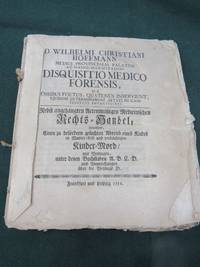
17511624Frankfurt and Leipzig 1751. 88 pp. An early example of the use of forensic medicine to establish if an abortion had killed a fetus or the woman had miscarried. unknown
1733367781733. Norimbergae : Apud Wolg. Maur. Endteri Haeredes Filium Mayeriam Huivsque Filium 1733 4° 2 44 pp. orig. Broschur. First publication of "Hoffmann's drops"! Friedrich Hoffmann 1660-1742 "describes the preparation of ether which he calls adidum vitroli vinosum as a better name than spiritum vini vitriolatum and gives a history of the substance. He regarded alcohol as mainly a compound of water and oil with some acid. Sulphuric acid removes the water and leaves the oil in the form of ether although the latter might contain some vitrolic particles ab omni partium vitriolicarum immixtione non sit penitus immune. A mixture of alcohol and ether was long used in medicine as liquor anodynus minerali Hoffmanni or 'Hoffmann's drops' . this is given as a dissertation of Carl Hoffmann." Partington II p.700 Erste Veröffentlich der Hoffmann's Tropfen! unknown
1729455351729. Hala Magdeburgicae 1729 4° 56 pp. Brosch; Titelblatt ergänzt ein Blatt in Faksimilie. unknown
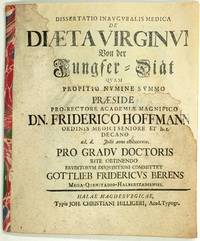
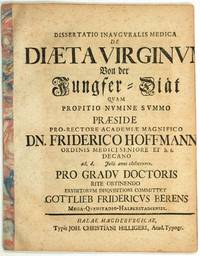
1729455341729. Hala Magdeburgicae 1729 4° 56 pp. Broschur. Selten - Erstdruck der ersten Frauen-Diätetik: "Dissertatio inauguralis medica de diaeta virginum . praeside Fridcrico Hoffmanno . committet Gottlieb Fridericus Berens. Halae. Magdeburgicae: Hilliger 1729." "Während ältere landessprachliche Diätetiken geschlechtliche Unterschiede nicht herausgestellt sondern eher nach anderen Parametern wie dem jeweiligen Lebensalter oder dem Temperament Complexion unterschieden hatten betonte der noch vielen späteren Generationen durch seine "Hoffmannstropfen" geläufige Hallenser Medizinprofessor Friedrich Hoffmann 1660-1742 in seiner Dissertation 1729 erstmals die Notwendigkeit von Diätetiken für Frauen und zwar für Frauen der gehobenen Schichten mit ihren besonderen Schwächen. Wenige Jahrzehnte später machten sich viele Verfasser populärer Schriften diese Ansicht ganz zueigen und damit gleichzeitig dem 'schönen' und 'schwachen' Geschlecht der privilegierten Stände viele Vorschriften die sich teilweise wie ein Domestizierungsprogramm lesen lassen. Nicht nur der alten Mäßigkeit wurde das Wort geredet sondern vor allem Verzicht gepredigt. Als neuer zeittypischer Aspekt trat zu den 'sex res non naturales' als Siebtes nun die Sauberkeit hinzu. Also: Reinlichkeit von Körper und Kleidung aber auch der Wohnung. Was unter Reinlichkeit im einzelnen zu verstehen sei welche Körperteile wie oft gewaschen werden sollten darüber herrschte jedoch keine Einigkeit." Frank Stahnisch & Florian Steger Hrsg.: Medizin Geschichte und Geschlecht. Körperhistorische Rekonstruktion von Identitäten und Differenzen 2005 Sabine Sande: Die dreißig Schönheiten der Frau - Ärztliche Ratgeber der Frühen Neuzeit pp.58-59 "Süssigkeiten betrachtete man als besondere Verlockung für Frauen denen Naschhaftigkeit als geschlechtstypische Untugend nachgesagt wurde die sie mit Kindern gemeinsam hätten. Vor Essig und Kreide als gängigen innerlich wirkenden Schönheitsmitteln wurden die Leserinnen gewarnt." "In Bezug auf Wachen und Schlafen ergaben sich im Jahrhundert der Aufklärung keine neuen Aspekte für die Belehrung der weiblichen Leserschaft. Ärzte sprachen sich durchweg für frühes Schlafengehen und frühes Aufstehen aus. Sofern konkrete Uhrzeiten angegeben wurden bedeutete das eine Nachtruhe von ca. 21 Uhr bis fünf Uhr morgens. Dieser gegenüber dem heute Üblichen versetzte Wach-Schlaf-Rhythmus entsprach den Gepflogenheiten einer überwiegend agrarischen Gesellschaft. Für Frauen der gehobenen und höheren Schichten hatte die Vorgabe dieses Rhythmus zugleich eine erzieherische oder sozialdisziplinierende Funktion indem er Abendgesellschaften und Vergnügungen weitgehend ausschloss und bürgerliche Tugenden wie Arbeitsamkeit und Fleiss zu befördern suchte. Auffallend ist dass Frauen ausdrücklich eine eher kurze Nachtruhe nahegelegt wurde. Dem sogenannten «schwachen Geschlecht» sollte weniger durch Ruhe und Schlaf geholfen werden als durch mässige Reizung und Belastung vor allem durch Hausarbeit was zum Aspekt Bewegung und Ruhe überleitet." Sabine Sander Gesundheit statt Galanterie. Der Paradigmenwechsel in ärztlichen Schönheitsratgebern im Jahrhundert der Aufklärung. Gesnerus 60 2003 pp.25-61 unknown
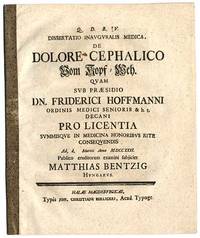
1731367771731. Halle Magdeburgiae Typis Ioannis Christiani Hillgeri 1731 4° 28 pp. Broschur. Friedrich Hoffmann 1660-1742 "einer der Heroen der deutschen Medicin" Pagel; Matthias Bentzig 1697-1749 unknown
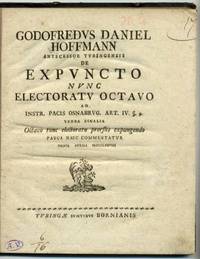
177811223Tübingen: Born in Kommission Osiander 1778. hardcover. Gut. Titelei 60 Seiten. Schmucklose Halbleinwand aus der ersten Hälfte des 20. Jahrhunderts. 21 x 175 cm. etwas bestossen Gelenke gelockert Titelei mit diversen Marginalien von alter Hand sonst innen sauber und nur wenig gebräunt. Seltene Darstellung zu einem Passus des Friedensvertrages zu Osnabrück 1648 besser bekannt als "Westfälischer Friede". Es ging im angegebenen Artikel 4 um die Regelung der die Pfalz betreffenden Angelegenheiten. Paragraph 9 dieses Artikels regelt die Kurwürde für den Fall daß die sog. "Wilhelminische männliche Linie" Maximilian und seine Erben ausstirbt dann erlischt die 8. Kurwürde auf die der Titel der Schrift Bezug nimmt die sog. "rudolfinische männliche Linie" aber weiterbesteht. - Vgl. Kaysers Bücherlexikon III p. 165 dort laufend Georg Daniel Hoffmann genannt und als Verlag Osiander angegeben. Wegen Urlaub kann Ihre Bestellung / Anfrage erst nach dem 21.06.2026 bearbeitet werden. - Because of holidays your order / question can be handled only after 06/21/2026. Born in Kommission [Osiander?] hardcover
17236440IB1723. Königsberg/Leipzig J. P. Haas 1723. 96 S. Geheftet. Außenliegende Seiten mit leichten Randläsuren. Einzelne Seiten geringfügig fleckig. Sonst in sehr schöner Erhaltung. Blake 216; SGC I:VI 283; Wellcome III 283. - Behandelt juristische Probleme im Zusammenhang mit der Niederkunft. Mit zahlreichen interessanten deutsch-sprachigen Textpassagen. unknown
1705266061705. Altdorf 1705 4° 28ns. orig. Broschur. unknown
179926268AB1799. Neue vermehrte und verbesserte Auflage. 2 Bde. Erlangen J. J. Palm 1799 und 1803. 12°. 2 Frontispize gestochen von D. Chodowiecki 24 kolorierte Kupfertafeln 22 Bl. 273 S. 8 Bl. - 22 Bl. 308 S. 24 S. Hübsche Pappbände der Zeit mit Rückenschildern dezenter Rückenvergoldung und vergoldeten Deckelfileten. Vereinzelt minimal braunfleckig sonst innen sehr sauber und sehr gut erhalten. Pritzel 4132; Nissen BBI 892; Stafleu 516; vgl. Plesch 352. - G. F. Hoffmann 1761-1826 lehrte bis 1804 Botanik an der Universität Göttingen danach wirkte er bis zu seinem Tode in Moskau. - Die schönen filigranen Tafeln stach Johann Nussbiegel 1750-1829 aus Nürnberg. unknown
1796319396Rieger Augsburg 1796. Hardcover kartoniert Zustand: Keine Beschädigungen keine Eintragungen. Rücken Ecken Kanten gut. Aus einer Klosterbibliothek mit Kennungen Stempel Rückenschild. Durchgehend braunfleckig. Rieger, Augsburg, hardcover
1719583001719. Disp. chir. 1/ 7. - Hrsg. v. Albrecht v. Haller. - Amstelodami Sumptibus Jacobi a Wetstein 1755 4° pp.107-119 Rückenbroschur. Zweiter Abdruck! Daniel Hoffmann 1695 in Stuttgart - 1752 in Tübingen war Professor der Medizin in Tübingen. "Die Berufung Hoffmanns als Professor für Medizin in Tübingen begann mit seiner vertretungsweisen Tätigkeit nach dem plötzlichen Tod von Burchard David Mauchart 11. April 1751 aufgrund eines schweren asthmatischen Anfalls. Danach hielten Daniel Hoffmann und ein Extraordinarius der Medizin Christian Ludwig Mögling den Physiologie- und Pathologieunterricht während es keine Pathologievorlesungen gab. Am 16. Mai 1718 wurde er mit dem Beinamen Niceratus zum Mitglied Matrikel-Nr. 334 der Leopoldina gewählt." wiki unknown
1708271971708. Leiden Th. Haah 1708 Kl.8° 4 312 pp. Titel in Rot und schwarz mit gest. Titelvignette ganzseitiges Kupferstich-Frontispiz schöner Pergamenteinband der Zeit; Titelblatt fleckig ansonsten leicht gebräunt. Erste Auflage! Friedrich Hoffmann 1660-1742 ein Schüler Robert Boyles und Begründer der mechanisch-dynamischen Schule in der Medizin war der erste Lehrstuhlinhaber an der Universität Halle wo er 48 Jahre Chemie Physik Anatomie und Medizin lehrte. Der vorliegende Band enthält einige seiner wichtigsten pharmazeutischen und medizinischen Arbeiten. INDEX / Dissertationum hoc opusculo contentarum. 1.: DE PEREGRINATIONIBUS INSTITUENDIS SANITATIS CAUSA. 2.: DE INEDIA MAGNORUM MORBORUM REMEDIO. 3.: DE VINI RHENANI PRAESTANTIA. 4.: DE METHODO EXAMINANDI AQUAS SALUBRES. 5.: DE CAROLINARUM CAUSA CALORIS VIRTUTE ET USU. 6.: DE TEMPERAMENTO FUNDAMENTO MORUM MORBORUM IN GENTIBUS. Hoffmann of Halle was the most important Iatromechanists and one of the most distinguished physicians of the 18th century. "As a writer on medicine Hoffmann was of extraordinary versatility." - Garrison unknown