(Hölty, Ludwig:)Antiquariat.de

76 résultats
177189443CBGöttingen, 1771. 2 Blatt, 1 Doppelblatt; handgeschöpftes Papier mit Stegschatten. Wasserzeichen "C & I Honig" (hängender Bienenkorb, darunter der zweikonturige Name der niederländischen Papiermacher Cornelis & Jacob Honig, Zaandijk). 18,1 x 11,5 cm.
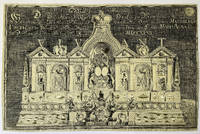
17475492<p><em>Proof Copy of Illuminations on the Occasion of the Wedding of Maximilan Joseph III of Bavaria to Princess Maria Anna of Saxony</em></p><p>WIELAND Matthias. Wahre Abbildung der Beleichtung des Land-Haußes zu München. Welches bey höchster Vermählung S: Regierend Churfürstl: Durtl: sic in Bayrn Maximilian Ioseph mit der Pollnisch- und Chur-Sachßisichen sic Princesin Frauen Maria Anna Churfrtl: Durtl: vorgestöhlet worden den 17.t July annô MDCCXLVII. Munich engraved by Matthias Wieland signed in the plate 1747.£1500</p><p>Broadside 330 x 500mm copper engraving inscribed lower right M: Wieland scul. Mon. Munich 1747; trimmed to or beyond the plate mark on the right touching the framing lines. Two penetrating ink stains on the verso small abrasion in the lower border but overall very clean and crisp printed on strong paper.</p><p>Illuminated festive broadside engraving for the wedding of Prince-Elector Maximilian Joseph III to Maria Anna of Saxony showing the nightly illuminations on the occasion. This is a proof copy: the central medallions for small portraits of the couple are still empty at the foot of the print there is a scale for the precise insertion of the presumably separate portrait plates.</p><p>Maximilian III Joseph 1727 - 1777 also known by his epithet "the much beloved" was a Prince-elector of the Holy Roman Empire and Duke of Bavaria from 1745 to 1777. His marriage to his first cousin Maria Anna Sophia of Saxony in 1747 remained childless. He was the last of the Bavarian branch of the House of Wittelsbach and his early death in 1777 caused problems in the succession of the Wittelbach and eventually resulted in the War of Bavarian Succession.</p><p>At a slightly later date there was fireworks display at the Nymphenburg palace which Wieland depicted on an oversized more than 1000mm copperplate engraving. Ornamentstichsammlung Berlin no. 2912; digitised. He describes himself there as the fireworker Tormentarius. Both sheets are recorded in Maillinger Bilder-Chronik I nos. 976/977 in Pfister Kunstsammlung no. 2650 the present one in its final state.</p><p>The recording of the celebration of the wedding forms part of official art in the Renaissance and the Baroque with a clear political purpose. It made the contemporary viewer see and understand pageantry as an instrument and manifestation of power.</p><p>Provenance: Small crowned monogram stamp of the Franz Joseph Graf von Enzenberg Collection on the reverse Lugt 845 auctioned in March 1879 by Wawra in Vienna. The broadside is not listed separately in the catalogue and was presumably part of the bundles listed at the end.</p><p>Maillinger Bilder-Chronik I nos. 976/977; Pfister Kunstsammlung Monacensia Bavarica no. 2650 only the present one in its final state; British Museum 18591210.1103 for the large fireworks broadside.</p> Wieland
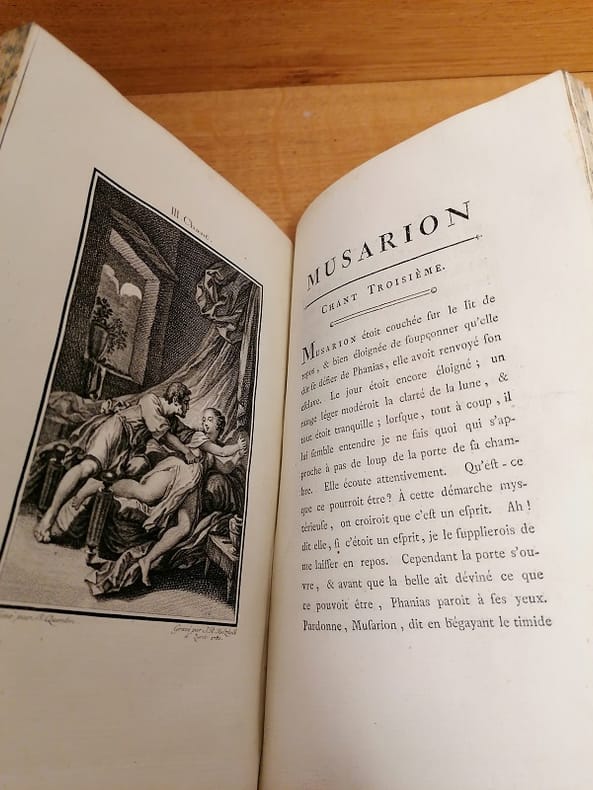
17686602Leipzig: Weidmanns Erben und Reich 1768. Hardcover. Very Good. 8vo 200 x 121mm. 96pp. Engraved vignette to title depicting arguing characters. Scarce first edition. Original marbled paper board backed with morocco strip lettered in gilt to second compartment; light occasional foxing light edgewear. The German poet and author Christoph Martin Wieland sometimes called the German Voltaire was a typical stylist of the German rococo period. Wieland wrote the Musarion oder die Philosophie der Grazien Musarion or the Philosophy of the Graces in 1768 to open his series of ìlight and gracefulî romances in verse which appealed so irresistibly to his contemporaries and acted as an antidote to the sentimental excesses of the subsequent Sturm und Drang movement. His Musarion can be considered a continuation of his earlier novel Agathon 1766-1767 but the conflict between sensuous delight and purity of character is here softened by a spirit of renunciation. The overarching themes supported the balanced appreciation of the roles of both philosophy and love in a ìgracefulî life. <br/><br/> Leipzig: Weidmanns Erben und Reich hardcover books
17686602Leipzig: Weidmanns Erben und Reich 1768. Hardcover. Very Good. 8vo 200 x 121mm. 96pp. Engraved vignette to title depicting arguing characters. Scarce first edition. Original marbled paper board backed with morocco strip lettered in gilt to second compartment; light occasional foxing light edgewear. The German poet and author Christoph Martin Wieland sometimes called the German Voltaire was a typical stylist of the German rococo period. Wieland wrote the Musarion oder die Philosophie der Grazien Musarion or the Philosophy of the Graces in 1768 to open his series of ìlight and gracefulî romances in verse which appealed so irresistibly to his contemporaries and acted as an antidote to the sentimental excesses of the subsequent Sturm und Drang movement. His Musarion can be considered a continuation of his earlier novel Agathon 1766-1767 but the conflict between sensuous delight and purity of character is here softened by a spirit of renunciation. The overarching themes supported the balanced appreciation of the roles of both philosophy and love in a ìgracefulî life. <br/><br/> Leipzig: Weidmanns Erben und Reich hardcover
178291004Dessau, auf Kosten der Verlags-Kasse 1782. 1782. 8 Bll., 304, 261 S. Lederband der Zeit mit Rückenvergoldung.
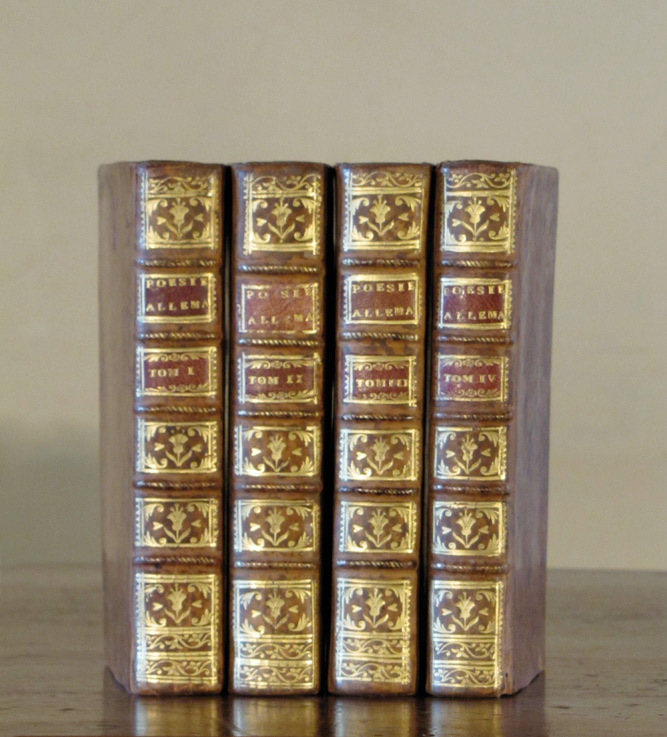
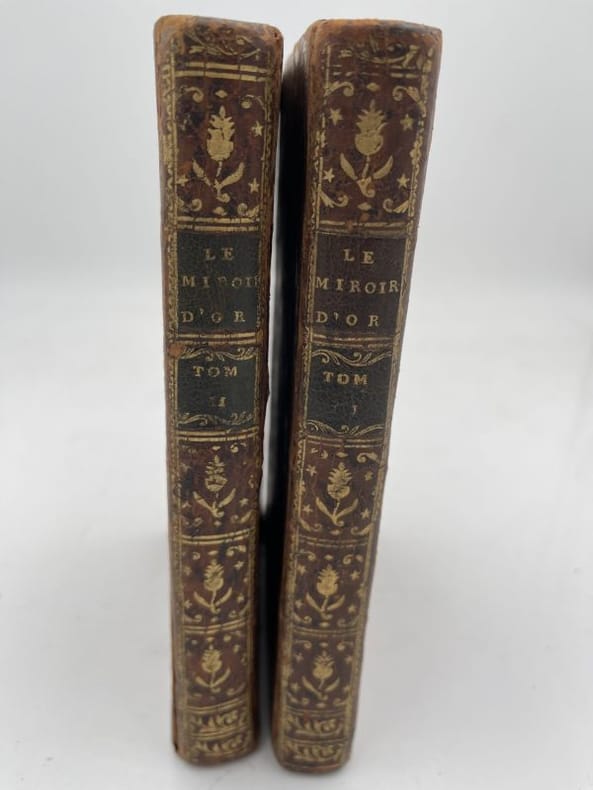
176613066Paris, Humblot (Imprimerie de Quillaux), 1766 ; 4 tomes, in-12 ; plein veau fauve marbré, dos à nerfs décoré et doré, pièces de titre et de tomaison grenat, filet sur les coupes, tranches rouges cirées (reliure de l'époque) ; XLIV, 408, IX, (3) ; XVI, 455 ; (4), II, 400 ; (4), 399 pp., frontispice allégorique de Ch. Eisen gravé par De Longueil et 4 vignettes de titre par Watelet.
1766601714 vol. in-12 reliure de l'époque plein veau marbré, dos lisses ornés, toutes tranches marbrées,Chez Humblot, Paris, 1766, frontispice, xliv-408-ix pp. et 1 f. non chiffré ; xvi-455 pp. ; 2 ff., 400-ii pp. ; 2 ff., 399 pp.
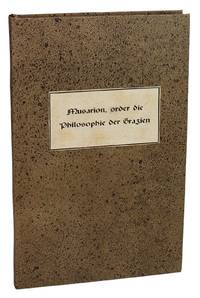
176834221Leipzig: Bey Weidmanns Erben und Reich 1768. 8vo. 96 pp. <br><br>As a writer Wieland 17331813 evolved and changed course multiple times. The Adventures of Don Sylvio is his => first novel all previous endeavors having been poetry and it dates from his post-pietistic stage during which his works show the influence of English and other writers. Clearly Cervantes is paramount here but other influences that scholars have found shaping the characters of the romance are Fielding's Tom Jones Richardson's Joseph Andrews and even Shakespeare's Merchant of Venice.<br>Â Â Â Â Wieland's poetry of the late 1760s and early 1770s offering light and graceful romances had great appeal among the public. In Musarion here in the anonymously published first edition he explores the nature of love and advocates a rational unity of the sensual and spiritual.<br>Â Â Â Â => An interesting work by this German Enlightenment writer. Recent boards covered with German-style brown paper speckled with black. Title-page with its => memorable engraved vignette cut down and mounted and browned from this with next three leaves browned also at edges; last leaf torn into text and repaired ham-handedly on verso covering small portions of six letters and the tailpiece. Otherwise light age-toning and a small amount of foxing. A work not widely held. Bey Weidmanns Erben und Reich hardcover books
1785001032Leipzig: Weidmanschen Buchhandlung 1785. Full Calf. Very Good. 24mo - over 5 - 5¾" tall. 1785 - 1790. All volumes are tight and calf with some light wear attractive. Pages are considerable age toned and some foxing but otherwise clean and never disconcerting. A very good copy of old and rare collection of German master poet's works. Weidmanschen Buchhandlung unknown
1785001032Leipzig: Weidmanschen Buchhandlung 1785. Full Calf. Very Good. 24mo - over 5 - 5¾" tall. 1785 - 1790. All volumes are tight and calf with some light wear attractive. Pages are considerable age toned and some foxing but otherwise clean and never disconcerting. A very good copy of old and rare collection of German master poet's works. <br/><br/> Weidmanschen Buchhandlung unknown books
1771661761 vol. in-12 reliure de l'époque demi-veau brun, dos lisse orné, triple filet doré d'encadrement en plats, toutes tranches marbrées, Chez François Varentrapp, Francfort, Chez De Hansy, et Bastien, Paris, Chez Delivani, à Châlons sur Saône, 1771, 2 ff., 145-V-99 pp.
1768047789<p>Leipzig: Weidmann's Erben und Reich 1768. The scarce 1st edition of Wieland's verse romance The Philosophy of the Graces. A narrative poem that advocates rational unity between the sensual and the spiritual. A classic of Enlightenment literature by Wieland 1733-1813 a key figure in Weimar Classicism along with Goethe Herder and Schiller. 96 pp. German text in fraktur. 12mo hardcover. Rebound in modern paper boards in an appropriate period style. New endpapers. Engraved title page vignette of two wrestlers. Binding is Near Fine. Good internally. Slight trimming at the lower margin of the title. Large old paper repair to tears in the last leaf. In all a sturdy and attractive copy.</p> Weidmann's Erben und Reich hardcover
1737910094CGNürnberg:, Homann Erben, 1737. Altkolorierter Kupferstich, 55 x 81 cm, Blattgröße 58,5 x 84,5 cm.
177815281Reutlingen 1778. Satyre auf Chrisoph Martin Wieland der seinerseits auch exotische Romane schrieb Einbd. Weinig berieben.Ex Libris. N.a.V.Gering stockfl. EA 8°. Pbd. d. Zt. Deutsche Literatur unknown
179456867Leipzig, Göschen: 1794-98. 8vo. Bound in 32 uniform hcalf. Spines gilt. Title lables with gilt lettering. Internally clean.
179456867Leipzig Göschen: 1794-98. 8vo. Bound in 32 uniform hcalf. Spines gilt. Title lables with gilt lettering. Internally clean. unknown
177425971Biel 1774. Combabus Verklagte Amor Aspasia Gedanken bey einem schlafenden Endymion Alceste Rücken mit Verlust EA W/G58 Heilmann Kl.-8°. Pbd. Deutsche Literatur unknown
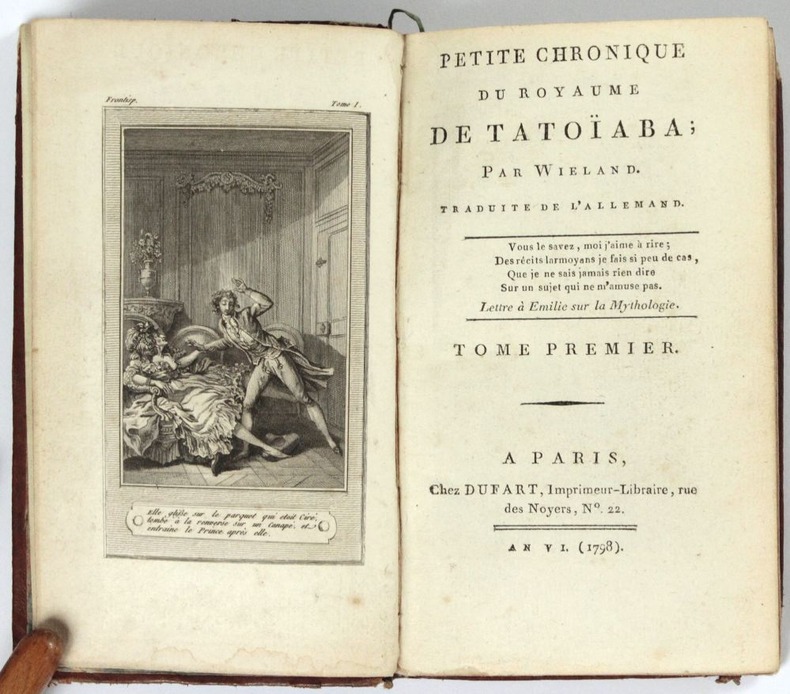
17983919Paris Chez Dufart 1798 in-12 pleine reliure Paris, Chez Dufart, An VI (1798). 16,5 x 10,5 cm (R), 2 tomes reliés en un volume in-12, 212 - 210 pp., frontispice gravé en tête de chaque tome, reliure de l'époque de pleine basane brune, dos lisse.
17771264136Karlsruhe, Chr. G. Schmieder, 1777. Titel, 10, 386 S. (Sammlung der besten deutschen Schriftsteller u. Dichter 56). Schlichter Ppbd d. Zeit m. goldgeprägtem Rsch. (etwas beschabt u. bestoßen, stellenw. etwas braunfleckig; ohne den Reihentitel).
1773191565François Varrentrapp A Franckfort chez François Varrentrapp, 1773. Histoire véritable traduite de l'allemand paru anonymement. 4 parties reliées en 2 volumes In-12 pleine basane brune, dos lisse très orné, pièces de titre et de tomaison, tranches marbrées, gardes de papier marbré. Gravure en frontispice de chaque partie. xl +108 + 152 + xiv + 150 + 152 pages. L'ouvrage commence par l'épitre du traducteur chinois à l'Empereur Tai-Psu. Edition originale de la traduction française du texte paru en allemand un an plus tôt. Légers frottements aux reliures, petite épidermure, coins un peu émoussés, quelques rousseurs ou brunissures, trace d'humidité pâle angulaire en page de titre de la première partie ainsi que sur le frontispice. Ensemble des défauts signalés sans grande gravité. Bon exemplaire, peu courant, de ce roman philosophique sous forme de conte oriental.
176494656ABZürich, Orell, Geßner und Comp., 1763-1764. 2 Bde. (in 1 Bd.). (280) u. 340 (von 348) Seiten (inklusive: 2 gestochener Titelblätter m. gestoch. Titelillustr.) Neuer Hlwd. - Unbeschnitten. Bd. 1 anfangs mit kl. Fleckenrand i. w. Seitenrand, sonst gut erhalten.
179036744Weimar 1790. 9. - 12. Stück September - Dezember 1790 1.Jahrg.d."neuen" Merkur Einbdn.gering ber. Ecken best.Zustand insgesamt gut Selbstbestimmtes Leben Kl.-8°. Pbd. d. Zt. Deutsche Literatur unknown
1780115335Basle J. Jacques Thurneysen 1780 1 vol. relié in-8, pleine basane marbrée fauve, dos lisse orné de fleurons et motifs dorés, pièce de titre de basane noire, tranches mouchetées (reliure un peu postérieure), (2) + 93 pp. Edition originale de la traduction en français, avec un frontispice, 3 figures hors-texte et 3 culs-de-lampe de Saint-Quentin gravés par Holzhalb. Belle impression sur vergé fort, avec des caractères de G. Haas. Ex-libris gravé à la devise "De tout un peu". Dos et coins frottés, sinon exemplaire solide, intérieur très frais et sans rousseurs.
1780115335Basle J. Jacques Thurneysen 1780 1 vol. relié in-8, pleine basane marbrée fauve, dos lisse orné de fleurons et motifs dorés, pièce de titre de basane noire, tranches mouchetées (reliure un peu postérieure), (2) + 93 pp. Edition originale de la traduction en français, avec un frontispice, 3 figures hors-texte et 3 culs-de-lampe de Saint-Quentin gravés par Holzhalb. Belle impression sur vergé fort, avec des caractères de G. Haas. Ex-libris gravé à la devise "De tout un peu". Dos et coins frottés, sinon exemplaire solide, intérieur très frais et sans rousseurs.
178219266Dessau: auf Kosten der Verlags-Kasse und zu finden in der Buchhandlung der Gelehrten 1782. First edition. Hardcover. fair. 2 volumes in 1. 8vo. 304pp. 261pp. Paper covered boards. Famous work on the satirical work "Horazen's Briefe" translated from the Latin by renowned German poet and novelist C.M. Wieland see below. Serious age wear water marks and repair to boards with spine missing. Binding still firm. Browning and sporadic foxing with some underlining in red to very few pages not affecting text. Owners' writing to inside of both boards. In German in Gothic letters. binding in poor book in good- condition. On the author:<br /> Christoph Martin Wieland 1733-1813 was a German poet and novelist. He spend his boyhood in Biberach until he was sent to the school of Kloster monastery Bergen in 1747. When he left the school in 1749 he widely read the Latin classics and leading contemporary French writers; amongst German poets his favourites were Brockes and Klopstock. During the summer of 1750 he fell in love with Sophie Gutermann a cousin of his and this love affair inspired him to plan his first ambitious works Lobgesang auf die Liebe 1751 followed by Die Natur der Dinge 1752 a didactic poem in six books of Alexandrine verse. In 1750 he went to the University of Tübingen as a student of law but his time was mainly taken up with literary studies. The poems he wrote at the university are pietistic in tone and dominated by the influence of Klopstock. They attracted the attention of the Swiss literary reformer J.J. Bodmer who invited Wieland to visit him in Zürich in the summer of 1752. Wieland remained in Switzerland until 1760 where he <br /> spent the last year at Bern as a private tutor.Wieland as Gotthold Lessing said "forsook the ethereal spheres to wander again among the sons of men." quoted from the Encyclopedia Britannica Wieland met again his early love Sophie Gutermann who had become the wife of Hofrat La Roche then manager of Count Stadion's estates. The former poet of an austere pietism now became the advocate of a light-hearted philosophy from which frivolity and sensuality were not excluded. In Don Sylvia von Rosalva 1764 a romance in imitation of Don Quixote he held up to ridicule his earlier faiths and in the Comische Erzählungen 1765 he gave his extravagant imagination only too free a rein. More important is the novel Geschichte des Agathon 1766-1767 in which under the guise of a Greek fiction Wieland described his own spiritual and intellectual growth. This work which Lessing recommended as "a novel of classic taste" quoted from the Encyclopedia Britannica marks an epoch in the development of the modern psychological novel. Of equal importance was Wieland's translation of twenty-two of Shakespeare's plays into prose 8 vols. 1762-1766; it was the first attempt to present the English poet to the German people in something approaching entirety.Wieland married in 1765 and between 1769 and 1772 was professor of philosophy at Erfurt. With the exception of some years Weimar remained Wieland's home until his death. Here in 1773 he founded Der teutsche Merkur which under his editorship 1773-1789 became the most influential literary review in Germany. Without creating a school in the strict sense of the term Wieland had a strong influence on the German literature of his time. The verse-romance and the novel--more especially in Austria--benefited by his example and even the Romanticism of the 19th century borrowed from him in its excursions into the literatures of southern Europe. The qualities which distinguish his work his fluent style and light touch his careless frivolity in contrast to poetic depth show him to have been in literary temperament more akin to Ariosto and Voltaire than to the more spiritual and serious leaders of German poetry; but these very qualities in Wieland's poetry introduced a balancing element into German classical literature and added materially to its fullness and completeness. This is not to say however that Wieland shouldn't be counted among the great German poetic geniuses. Kant himself refers to Wieland in the same sentence as Homer citing him as an example of Kant's idea of artistic genius. Critique of Judgment 5:309 quoted in Encyclopedia Britannica. auf Kosten der Verlags-Kasse und zu finden in der Buchhandlung der Gelehrten hardcover