Saint-Exupery, Antoine deBiblio.com
633 résultats
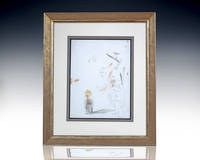
1942146264New York 1942. Rare original watercolor study of the beloved protagonist of Antoine de Saint-Exupery's The Little Prince a timeless masterpiece that has transcended generations and remains the most widely read work of fiction in history having sold over 150 million copies over the course of the past 80 years. One page pencil and watercolor on American ‘Fidelity Onion Skin’ paper the sketch contains three pencil studies of the Little Prince: three portraits and two full figure drawings the most complete of which is finished in water colors and depicts the Little Prince standing alone in a long grey cloak with his iconic curly flaxen yellow hair. With light brushstrokes covering the right portion of the page testing the colors of the prince's face hair and cloak. Saint-Exupéry likely based the prince's looks on his own appearance as a youth. As a child friends and family often referred to him as le Roi-Soleil the Sun King for his golden curly hair. Land Morrow Lindbergh the young golden-haired son of fellow aviator Charles Lindbergh and his wife Anne Morrow Lindbergh whom Saint-Exupéry met during an overnight stay at their Long Island home in 1939 may have also served as a source of inspiration. Saint-Exupéry was known to go through numerous drafts of his work often staying up into the early hours of the morning with a carafe of black coffee making revisions. The original 140-page autograph manuscript of The Little Prince along with various drafts and trial drawings were acquired from the author's close friend Silvia Hamilton in 1968 by curator Herbert Cahoon of the Pierpont Morgan Library now The Morgan Library & Museum in Manhattan. It is the only known surviving handwritten draft of the complete work. The present watercolor sketch has not appeared on the market in 35 years previously sold by Sotheby’s in 1989. In fine condition. Triple matted and framed. The page measures 10.75 inches by 8.25 inches. The entire piece measures 18 inches by 15 inches. Original drawings and watercolors of The Little Prince are rare. One of the best-selling books of all time with over 150 million copies sold Antoine de Saint-Exupéry's The Little Prince has been translated into over 500 languages and dialects making it the second most translated work ever published trailing only the Bible. The plot of the novella drew heavily on Saint-Exupéry's own experience of crashing his aircraft in the Sahara in 1935. An exploration of loneliness friendship love and loss the multi-layered fable styled as a children's story with underlying elements of existential philosophy is still often used as a beginner's book for French-language students. The book was first published in English and French in the United States by Reynal & Hitchcock in April 1943 and was published posthumously in France following the liberation of France in the Second World War. "The Little Prince has something of Hans Christian Andersen in it something of Lewis Carroll and even it may perhaps be said a bit of John Bunyan. Saint-Exupery's lyrical treasure has entered children’s literature in the manner of quite a few other such hard-to-define works in the preceding centuries" Pierpont Morgan Library. A year after the book’s publication in 1943 Saint-Exupery disappeared over the Mediterranean while flying a reconnaissance mission for his French air squadron. unknown
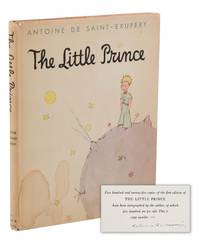
1943140949422New York: Reynal & Hitchcock 1943. First Edition. Near Fine/Very Good. First edition limited issue. Number 326 of 525 copies signed by Antoine de Saint-Exupery on the limitation page tipped in at front. 94 pp. Bound in publisher's salmon cloth stamped in maroon. Near Fine with light wear to extremities very slight intermittent dampstaining to lower edges of boards and textblock with concurrent ripple to textblock. Light offsetting from jacket to endpapers evidence of bookplate removal to front free endpaper small stain to back pastedown. In a Very Good price-clipped dust jacket with matching limitation number inked to foot of spine Fourth Avenue address listed on front flap; staining to front panel and light wear toning and soiling.<br /> <br /> <p>The French aviator Antoine de Saint-Exupery left his homeland after it surrendered to Germany in 1940. He arrived in New York with the intention of persuading Americans to join in the fight and supported himself with writing for the next two years. When Eugene and Elizabeth Reynal noticed the skill of his little sketches they proposed a children's book for his next project. Saint-Exupery's whimsical tale for children suffused with the anguish of an adult became a global classic and one of the bestselling books of all time.<br /> <br /> <p>Signed copies are scarce since the author left to join the Free French Air Force in Algeria in April 1943 the month The Little Prince was published. He disappeared on a reconnaissance mission in July 1944. Saint-Exupery's body was never recovered but in 1998 a French fisherman found a silver identity bracelet that bore the names of the dead man his publishers and his wife Consuelo - the rose that appears in this sad story. Reynal & Hitchcock unknown
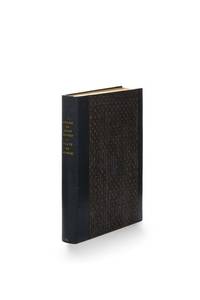
30812New York Éditions de la Maison française 1942. 1 vol. 185 x 230 mm de 253 p. Demi-maroquin bleu nuit à bandes titre doré tête dorée couverture et dos conservés étui bordé reliure signé d'A.lain Lobstein. . Édition originale. Un des 25 premiers exemplaires sur Strathmore après un exemplaire unique réservé à l’auteur. Celui-ci est nominatif pour Madame la Comtesse de Montgomery avec un envoi signé : « avec toute ma profonde amitié Antoine Saint-Exupéry ». . « Je combattrai quiconque prétendra asservir à un individu - comme à une masse d'individus - la liberté de l'homme. » Avant de reprendre ce combat où il laissera sa vie démobilisé après la « drôle de guerre » Saint-Exupéry se réfugie aux États-Unis et c'est à New York qu'il écrit ces lignes. Cette édition parue en février 1942 est également la première intégrale puisqu'y figurent p. 34 les sept mots d'une phrase où l'auteur traite collectivement « d'imbéciles » son ordonnance un ponte de l'état-major et Hitler « qui a déclenché cette guerre démente » et dont la censure en France exigera la suppression dans l'édition Gallimard de décembre 1942. Le texte paraît en pré-originale en anglais en janvier 1942 dans la revue Atlantic Monthly puis en volume le mois suivant : l'oeuvre sera en tête des best-sellers pendant six mois : « ce livre est un grand et beau livre peut-être le vrai livre de la guerre de 1939 » écrit Pierre Mac Orlan dans le journal Les Temps nouveaux le 8 janvier 1943. Précieux exemplaire de tête offert à la Comtesse de Montgomery : née à Paris en 1899 Madeleine de Montgomery passe son enfance au château de Fervaques acquis en 1831 par son arrière-grand-père le marquis de Portes. Elle tient à partir de 1930 dans son somptueux appartement du 77 avenue de Malakoff un salon très prisé. Jeune élégante et influente sa beauté et sa personnalité font de ses réceptions l'un des lieux des plus populaires de Paris et le monde littéraire s'y presse : éditeurs patrons de presse et écrivains. Kessel Cocteau Malraux et Colette en sont des habitués comme Saint-Exupéry qui s'y rend à plusieurs reprises d'autant que la jeune femme est passionnée d'aviation et possède son propre aéronef un Morane-Saulnier avec lequel elle est représentée sur une photographie publiée à la une du Figaro en mai 1935. Maîtresse du patron de presse Jean Prouvost elle deviendra directrice du journal Marie-Claire que son amant lance en 1937. Pendant la guerre elle agit comme une véritable héroïne de la Résistance se réfugiant en Normandie où elle fonde un Centre maternel et infantile dans son manoir pour accueillir de nombreux enfants de mobilisés ; elle deviendra ensuite directrice des sections féminines et sanitaires de la Mission française auprès de la Croix-Rouge aux États-Unis en 1943. C'est probablement pendant ce séjour à New York qu'elle peut rencontrer à nouveau Saint-Exupéry : des retrouvailles suffisamment importantes pour qu'il lui réserve un exemplaire nominatif de son livre. Elle reprendra son salon après-guerre et sera plusieurs fois citée dans le journal de Pierre Lazareff qui la voit en « Diane chasseresse aux attaches fines et nerveuses avec ses cheveux cendrés ses yeux d'aigue-marine et ses longues mains fines qui accentuaient chacune de ses phrases comme autant de point d'exclamation elle inspirait par sa seule présence d'interminables tournois d'idées et d'éloquence ». C'est également pendant cette mission à New York qu'elle rencontre celui qui allait en 1946 devenir son époux : le général Antoine Béthouart Compagnon de la Libération et figure de proue du commandement militaire français libre pendant la Seconde Guerre mondiale. Celui-là même qui promu général de division et désigné chef de la Mission militaire à Washington rencontre Saint-Exupéry au début de l'année 1943 : il va y négocier avec le gouvernement américain les livraisons de matériel permettant de rééquiper l'armée française. Mais surtout c'est lui qui signera le 1er avril 1943 le tant attendu ordre de mission que trépigne d'obtenir un Saint-Exupéry désespéré de ne pas servir son pays. Ses amis tentent de le faire changer d'avis mais le 4 mai 1943 après un départ précipité et alors que Le Petit Prince est en cours de publication il débarque à Alger où l'attend Georges Pélissier ; Béthouart le rejoindra quelques mois plus tard en novembre 1943 lorsqu'il est nommé chef d'état-major de la Défense nationale à Alger et promu général de corps d'armée. Il accompagnera à ce titre le général de Gaulle dans ses différents voyages à Rome Londres et débarquera avec lui à Courseulles en Normandie le 14 juin 1944. On connaît par ailleurs les exemplaires offerts à Consuelo à Léon Werth à Bernard Lamotte à Jane Lawton à Curtice Hitchcock à Elisabeth Reynal à Jacques Maritain à Isaac Molho à Anne Morrow et Charles Lindbergh Jean Renoir à Natalie Paley à Nadia Boulanger et à Lewis Galantière. Très belle provenance sur ce papier de tête du grand texte de Saint-Exupéry sur le second conflit mondial. Des bibliothèques Michel Demont ex-libris et Jean-Claude Mocellin Alde « Un siècle de littérature » 19 mai 2022 n° 50. New York, Éditions de la Maison française, [1942]. 1 vol. (185 x 230 mm) de 253 p. Demi-maroquin bleu nuit à bandes, titre do unknown
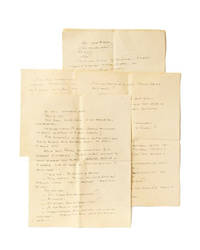
1937882821937. Fine. s.d. 1937-1938 20.50 x 26.50 cm 1 p. manuscrite 1 p. titre tapuscrite 19 ff. tapuscrits 1 ff. bl. 6 pl. 15 ff. tapuscrits 1 pl. Typescript with one autograph page by Saint-Exupéry in pencil Method for Guiding Aeroplanes the title is in English followed by Letters-Patent of Invention. A New Method for the Landing of Aeroplanes without Visibility with instruments and apparatus for its realization also in English 8 October 1937 Rust stains from staple holes and light dampstaining. Original typescript of Saint-Exupéry patent titled ""Method for Guiding Aeroplanes"" addressing in particular the problem of piloting and guiding aircraft without visibility: a problem which as he explains is virtually solved. His demonstrations are illustrated with geometric diagrams 6 plates. The explanatory section is followed by 4 applications and a concluding chapter. This text is followed by his patent of invention proposing a ""New Method for the Landing of Aeroplanes without Visibility"" filed on 8 October 1937 under number 420779. This section comprises 15 pages and 1 plate of diagrams. The first manuscript page is in Antoine de Saint-Exupéry's own hand who has noted in pencil his name and addresses: ""67 Broad Street / Antoine de Saint-Exupéry / 15 place Vauban Paris / Barbizon Plaza New-York"" and in blue pencil: ""conserver"" to be kept. The mention of the Barbizon Plaza dates the manuscript leaf from the first weeks of his arrival in New York: between 11 January 1938 when he disembarked from the ocean liner Île-de-France with his mechanic André Prévot and 14 February 1938 when he took off aboard his Simoun F-ANXR in an attempt to complete the New York-Tierra del Fuego record flight which ended in his catastrophic Guatemala crash. unknown
193948285Paris: Gallimard 1939. Fine. Gallimard Paris 1939 13.50 x 19.50 cm relié sous étui First edition one of 23 numbered copies on Hollande paper tirage de tête after one copy on Whatman and 9 on China paper. Light brown Oasis goatskin by Morina Mongin covers and spine with dreamlike decoration of humanized mountains after a drawing by Peter Sis printed in brown colored film and heightened in ochre sky-blue suede pastedowns brown suede endpapers the first endpaper with a lunette of modified sky-blue leather printed in colored film covers and spine preserved. Half light brown Oasis goatskin slipcase wood-effect paper boards lined with brown suede; a spectacular set. A fine copy with all margins in a handsome binding reaching back to the pilot's spirit for whom every mountain every valley every house is a landscape which could be friend or foe. Gallimard hardcover
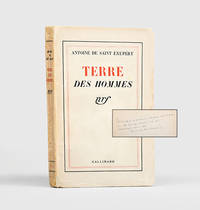
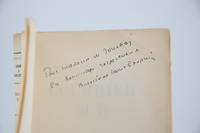
1939192541Paris: Gallimard 1939. Inscribed to a decorated veteran of the French air service First edition inscribed by the author on the half-title "Pour le baron et la baronne Amaury de la Grange En très amical souvenir et en respectueux hommage Antoine de Saint-Exupéry". His fellow leading aviator Baron de la Grange president of the Aéro-Club de France accompanied the author aboard the SS Île de France in January 1938. As they sailed together Saint-Exupéry's Caudron Simoun aircraft was stowed away in the ship's hold in preparation for his planned record-breaking flight from New York to Tierra del Fuego the southernmost point of South America. Doubting his chances the author confided to a friend who urged him to cancel the flight and return to Europe "Je vais avoir un accident grave mais je m'en sortirai". He took off on 14 February 1938 and stopped at Guatemala City airport the next day to refuel but too much fuel was provided. The overburdened aircraft crashed shortly after leaving the runway leaving Saint-Exupéry in a coma for five days. During his recovery he worked with his American publishers to bring out the English translation of Terre des Hommes which appeared as Wind Sand and Stars 1939. De la Grange 1888-1953 was a flight lieutenant in the First World War who received a Croix de Guerre and an American Distinguished Service Medal. During the Second World War he became a senator vice-president of the air commission and as a personal friend of President Roosevelt head of a convoy to America. He was also president of the Fédération Aéronautique Internationale. In 1962 L'Institut Aéronautique Amaury de la Grange was named in his honour. Baroness Emily de la Grange née Sloane 1890-1981 of New York received a Légion d'honneur for services to Franco-American student exchange. Terre des Hommes received the Grand prix du roman de l'Académie française and in America the National Book Award. Written in the shadow of the coming war the philosophical aviation memoir continues the course plotted out in Courier-Sud and Vol de Nuit to record his experience surviving three days without water in the Sahara after a crash inspiring Le Petit Prince. This is one of 163 copies issued in wrappers. A further 675 copies were in cloth. Octavo. Original wrappers lettered in red and black. Housed in custom white card chemise and slipcase. Spine ends and joints repaired spine lightly toned a few light splash marks to wrappers trivial loss to corners front wrapper verso reinforced at fore edge. A very good copy. hardcover
1930822781930. Fine. s. d. 21.40 x 27.20 cm 9 pages sur 8 feuillets ""In the end 5 hours of work for example to produce - per man - all that is necessary to man."" Complete unpublished autograph manuscript in French by Antoine de Saint-Exupéry. 9 pages on 8 leaves in black ink. Traces of horizontal and vertical folds. A small piece of paper missing in the center of two leaves. Exceptional unpublished manuscript by Saint-Exupéry to be compared with his political and economic reflections in Carnets 1989 p. 43. Personally affected by the 1929 crisis Saint-Exupéry the self-taught writer writes passionately about the economy and puts forward reform strategies. The manuscript features a lot of mathematical formulas and equations along with remarks To make the ideas clear about what is happening today p. 1 on the national economic system and the labor market. These unpublished pages testify to Saint-Exupéry's great intellectual curiosity his insatiable need for innovation in all fields of knowledge: mechanics technology politics economics. Saint-Exupéry writes on capitalist reform as he was an outspoken critic of the system which he later personified in The Little Prince businessman character. He develops theories where the State becomes the only employer banker and overall production manager: If the State pays all the salaries including those of the administrations and considers itself as owner of all the products nothing to be changed within the capitalist system in the sense that it can pay to the administrations special bonuses returning in their salaries and according to the quality as well as the quantity. He pays an amount X. He sells having taxed his stocks so that they express Y. His reflection is directly related to the stock market crash that bankrupted the Aéropostale the pioneering airline company where Saint-Exupéry had displayed his talents as an aviator-writer. One also remembers the splendid lines from Terre des Hommes on the value of work: The greatness of a profession is perhaps above all to unite men: there is only one true luxury and that is human relations. Concerned about a better distribution of wealth he develops throughout the pages several labor market and pension system theories halfway between Keynes and Marx. The writer was well aware of the value of labor having himself spent long hours on his aircrafts' mechanics. He details his views on the duration of a working day In the end 5 hours of work for example to produce per man all that is necessary to man. With little work and it is possible to supply men with everything that is and can with the increase of luxury become necessary to them and makes calculations on savings pensions purchasing power. His novels and personal writings contain numerous references to labor and hopes for a more equal human community: Saint-Exupéry was also a man of his time passionate about modernity especially technical innovation who constantly tried to reflect on all the problems that arose from it. Hence the countless notebooks notes and scattered sheets of paper that he constantly filled in and carried in his pockets and trunks with which he might one day have written a book. Jean-Claude Perrier Rare manuscript from a true Humanist a talented artist aviator novelist political and economic thinker. Saint-Exupéry tries to build a harmonious social order and lay the theoretical groundwork for an ideal society. unknown
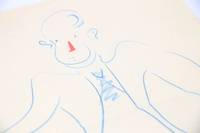
195388838Paris: Librairie PlonCollection Jacques Haumont 1953. Fine. A deluxe edition copy enhanced with an exceptional original drawing presented to Léon Werth. Librairie Plon Collection Jacques Haumont Paris 1953 13 x 20 cm; dessin : 203x262cm broché Deluxe issue enhanced by a remarkable original drawing presented to Léon Werth. First edition under this title with illustrations by Saint-Exupéry one of 20 numbered copies on Madagascar paper a deluxe issue. Published just days after the original edition without illustrations issued by Gallimard Lettres de jeunesse 1923–1931. The work features 10 colour illustrations by Antoine de Saint-Exupéry as well as a cover vignette after a drawing by the author. This copy is further enhanced by an exceptional blue and red pencil drawing by Saint-Exupéry on watermarked paper inscribed in pencil on the verso: “Given to Léon Werth dedicatee of The Little Prince.” A horizontal fold and a minor rust mark at the lower section neither impairing the artwork. Léon Werth although never one to prize bibliophilic editions of his beloved friend’s works evidently held this deluxe copy in great esteem much like those personally presented to him by the author. These books had endured with him exile and anti-Semitic persecution:  “Je n’ai qu’un souci c’est d’emporter Terre des hommes. Non pas parce que cet exemplaire est de luxe de haut luxe. Je n’ai qu’un maigre respect pour les belles éditions. Mais parce que Saint-Exupéry me l’a donné parce que le beau papier les pages non rognées ne sont pas richesse et vanité mais amitié.” 33 jours Paris Ed. Viviane Hamy 1992 p. 48 “My sole concern is to carry Terre des hommes. Not for its deluxe status nor for its luxury. I have little regard for fine editions. But because Saint-Exupéry gave it to me and because the fine paper and uncut pages represent not wealth or vanity but friendship.” 33 jours Paris Éd. Viviane Hamy 1992 p. 48 This beautiful tradition of “pages of friendship” seems to be perpetuated here by Werth who likely received a deluxe copy presented by the publisher in honour of his late friend. This beautiful tradition of “pages of friendship” seems to be perpetuated here by Werth who likely received a deluxe copy presented by the publisher in honour of his late friend. he figure of this sketch is stylistically close to the “drawings for Rinette” in blue and red pencil illustrating that very work. It features the characteristic zoomorphic silhouette defined by bold strokes highlighted with a touch of bright red and adorned with a tie—a recurring motif in Saint-Exupéry’s fantasy characters often depicted with coat collars bow ties and ties that evolved into the famous scarf of The Little Prince.  From sketches of fellow conscripts during his military service in Casablanca to the watercolours of The Little Prince drawing was a constant and pervasive pastime in Saint-Exupéry’s life. Whether on letters to friends margins of manuscripts frontispieces of gifted books telegrams bills tablecloths or flyers—anything that could host his imagination—he drew sketched caricatured and invented living and imaginary creatures friends and acquaintances. Except for those marginal drawings and gifts to close friends most of his pre-Ameroca exile works were destroyed by the artist himself.  This deluxe copy of this significant youthful correspondence is accompanied by a rare colourful and striking original drawing by Saint-Exupéry given to the dedicatee of The Little Prince.  Librairie PlonCollection Jacques Haumont hardcover
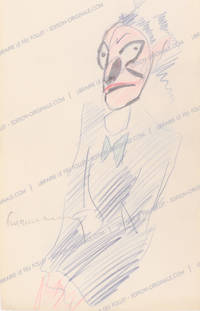
194286828s. l. 1942. Fine. s. l. s. d. 13.40 x 20.90 cm une feuille Original drawing with graphite blue and pink colored pencils signed by Antoine de Saint-Exupéry on a sheet of watermarked paper “Navarre”. HorÂizontal fold pencil annotation in the upper left margin very small loss of paper in the lower right margin. A remarkable caricature signed by Saint-Exupéry akin to a cartoon character. The writer-aviator-artist very rarely signed his graphic works.  « Je ne sais pas ce qui m'a pris je dessine toute la journée et de ce fait les heures me paraissent moins brèves. J'ai découvert ce pourquoi j'étais fait : le crayon Conté mine de charbon. »  ‘I don't know what came over me; I draw all day and the hours seem less fleeting as a result. I've discovered my true calling: the charcoal Conté pencil.' From sketches of barrack mates made in Casablanca during his military service to the watercolours in The Little Prince Saint-Exupéry's life also included an important side-activity: drawing. On letters to his friends in the margins of his manuscripts in books he gave away telegrams invoices tablecloths leaflets - everything he could get his hands on that could serve as a canvas for his imagination - Saint-Exupéry drew sketched caricatured illustrated invented and doodled living and imaginary people friends and girlfriends. He would often casually discard these ephemeral works extensions of his moods and daydreams.  Among these sketches of inspired by circumstance which seem to foreshadow in one way or another his immortal masterpiece very few are fully claimed by the artist-dilettante as his own. Although all of Saint-ExupéryÂ’s graphic work is highly sought-after today fullpage drawings signed by the author of The Little Prince are extremely rare and bear witness to his passion for Man in all his expressions.  Among his drawings which exhibit an astonishing variety of styles this mustachioed head stands out as one of the most accomplished examples of what his sister Simone called his “dreadful caricatures” — she herself along with many of the writer's friends was a frequent victim of his graphÂic parodies. The drawing showcases Saint-Exupéry's fondness for shades of blue and pink which often enliven his colored drawings. Far from being sketched in the margins the drawing is distinguished by its intentionality: the writer took the trouble to sign it which is a rare occurrence. The colored highÂlights and contrasting graphite give it a delightful cartoonish look with its eyes bulging out. Precisely dating Saint-Exupéry's drawings remains challenging. As The Little Prince began to take shape he started from his time in New York to systematically preserve his sketches. Before his American exile most of his earlier drawings—apart from those made in the margins of letters and manuscripts or given as gifts to friends—were discarded by the author.  Precious graphic creation by the faÂther of The Little Prince an importÂant example of his drawings' extraorÂdinary vibrancy and keen sense of contrast.  hardcover
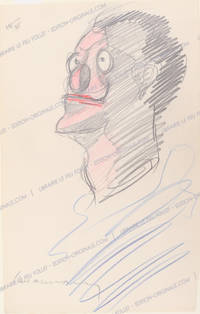
194286799s. l. 1942. Fine. s. l. s. d. 22 x 28 cm une feuille Original signed drawing in pencil and pink crayon by Antoine de Saint-Exupéry on Navarre watermarked paper. Horizontal fold annotation in pencil in upper left-hand corner minute tears in lower margin. Precious drawing signed by Saint-Exupéry the writer-artist very rarely signed his graphic works of a caricature character sharing some of the writer's own features. ""I don't know what came over me he says I draw all day so the hours don't seem so short. I discovered what I was made for: the Conté pencil. From the sketches of barrack mates that Saint-Exupéry then a young conscript made in Casablanca during his military service to the watercolors of 'The Little Prince' the writer's life was marked by the marginal but omnipresent activity of drawing. On letters to friends in the margins of manuscripts in donated books on incoming telegrams invoices tablecloths leaflets - on everything he could get his hands on to support his imagination - Saint-Exupéry drew sketched caricatured illustrated invented doodled living or imaginary beings friends and girlfriends. Then absent-mindedly he threw away these ephemeral works an extension of his moods and reverie of the moment. Among these sketches of inspired by circumstance which seem to foreshadow in one way or another his immortal masterpiece very few are fully claimed by the artist-dilettante as his own. Although all of Saint-Exupérys graphic work is highly sought-after today full-page drawings signed by the author of The Little Prince are extremely rare and bear witness to his passion for Man in all his expressions. Among all these incredibly varied drawings of Saint-Exupéry a recurring character emerges a humorous self-portrait he transforms into an infinite number of silhouettes and characters. Sometimes as it is the case here he transforms himself into a ferocious caricature or into the childlike benevolent figure of the Little Prince. Executed broadly and quickly this drawing shares a great deal with a comical full-length self-portrait also in the same shades with furious striated lines Bibliothèque R. Et B.L. auction sale October 7 2014 lot 196. Several of its attributes can be compared to the writer's own face: the shadow of hair on either side of a round skull or the famous V-shaped arched eyebrows that would later become characteristic of the Little Prince's face. It is difficult to date the writer's drawings precisely. Saint-Exupéry only began to keep his sketches more systematically in New York when The Little Prince was coming of age. Apart from doodles made in the margins of letters and manuscripts or given to friends he destroyed most of his drawings prior to his American exile. This precious portrait fortunately escaped Saint-Exupéry's merciless liquidation. The comical silhouette exudes a familiar air of self-mockery often hovering over the drawings of a writer-aviator who never quite believed in his talent as a draughtsman. hardcover
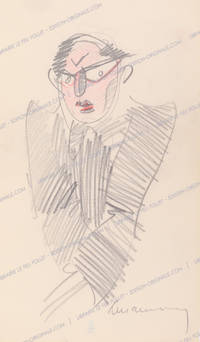
194286829s. l. 1942. Fine. 'I don't know what came over me; I draw all day and the hours seem less fleeting as a result. I've discovered my true calling: the charcoal Conté pencil.' s. l. s. d. 13.40 x 20.90 cm une feuille Original drawing in graphite and blue and pink colored pencils signed by Antoine de Saint-Exupéry on a sheet of watermarked paper ""Navarre"". Horizontal fold. One of Saint-Exupéry's quirky characters in a suit and bow tie spawn from the baroque and overflowing imagination of the Little Prince's author. The writer-aviator-artist very rarely signed his graphic works. From sketches of barrack mates made in Casablanca during his military service to the watercolours of The Little Prince Saint-Exupéry's life also included an important side-activity: drawing. On letters to his friends in the margins of his manuscripts in books he gave away telegrams invoices tablecloths leaflets - everything he could get his hands on that could serve as a canvas for his imagination - Saint-Exupéry drew sketched caricatured illustrated invented and doodled living and imaginary people friends and girlfriends. He would often casually discard these ephemeral works extensions of his moods and daydreams. Among these sketches of inspired by circumstance which seem to foreshadow in one way or another his immortal masterpiece very few are fully claimed by the artist-dilettante as his own. Although all of Saint-Exupérys graphic work is highly sought-after today fullpage drawings signed by the author of The Little Prince are extremely rare and bear witness to his passion for Man in all his expressions. This mysterious eccentric character is one of Saint-Exupéry's creatures whom Delphine Lacroix calls ""sacred monsters with undefined roles"" Antoine de Saint-Exupéry. Dessins aquarelles pastels et crayons. Surrounded by a halo of blue hair his large frightening and almost Cubist-like eyes seem to stem from a single original line. He added figurative elements and then a bow tie - a common feature of Saint-Exupéry's fantastic characters of strange proportions often wearing bow ties or cravats. Precisely dating Saint-Exupéry's drawings remains challenging. As The Little Prince began to take shape he started from his time in New York to systematically preserve his sketches. Before his American exile most of his earlier drawings were discarded by the author apart from those made in the margins of letters and manuscripts or given as gifts to friends. Saint-Exupéry's precious signed and colorful graphic work which fortunately escaped the fate of many of his drawings. hardcover
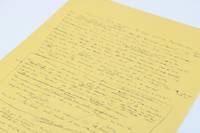
1938839081938. Fine. ""We fed on the magic of the sands others perhaps will dig their oil wells there"" 1938 21 x 27 cm 1 page sur un feuillet Original autograph manuscript by Antoine de Saint-Exupéry one page in black ink on a yellow paper sheet numerous corrections and rewritings. Exceptional working manuscript of a passage from the original French version of Wind Sand and Stars Terre des Hommes from chapter VI ""Dans le désert"" a magnificent ode to the barren wilderness of deserts doomed to disappear due to the inevitable development of the industrial age. This section from the original French novel was removed for the English version translated by Galantière and remains unpublished in English. Moreover the final two paragraphs of the manuscript are unpublished in the original French version. Saint-Exupéry recalls magnificent memories of liberating adversity and cherished ""dissidence"" he experienced in the heart of Mauritanian and Libyan deserts. This heavily corrected state of the text is the true genesis of Saint-Exupéry's Pulitzer Prize winning masterpiece: he reworked and rearranged here his memories published as articles reportages in Paris-Soir magazine in 1938. Some sentences ""What does it matter what you find at the pole if you walk in a state of enchantment"" remaining in the published version are variants of one of his reportages present in the manuscript among redacted and unpublished sentences obscured by pen strokes. This manuscript indicates an early writing stage not mentioned in the Notes et variantes of the comprehensive Pléiade edition. The passage is originally from his fifth article for Paris-Soir entitled ""La magie du désert c'est ça"" ""This is the magic of the desert "" from November 14 1938 published with some of the changes made in this manuscript and other later corrections at the end of the sixth chapter of Terre des Hommes. The central theme of the text dissidence is mentioned in the very first sentence of the manuscript and would later become the title of the passage indicated on the typed proofs. This leitmotiv is steeped in nostalgia with vivid descriptions of fleeting moments of freedom during the writer's escapades in the desert: ""The horizons crossed out : places towards which we ran one after the other faded away 'died out one after the other' in the published text like those insects once trapped by lukewarm hands 'which lose their color once trapped in lukewarm hands ' idem. But there was no illusion 'he who pursued them was not the victim of illusion' idem. We were not mistaken when we walked like this from miracle to miracle 'we were after these discoveries' idem. Nor was the Sultan of the Thousand and One Nights who ran one morning 'pursued a matter so subtle' idem sentence deleted that his beautiful captives one by one died at dawn in his arms having lost scarcely touched the gold of their wings"" It conveys an acute awareness of the end of an era marked by the bankruptcy of Aéropostale and his grave plane accident in Guatemala. Saint-Exupéry takes refuge in the memory of the rebel-filled deserts of Mauritania whose charm wore off with the passing of time: ""But there is no more dissidence. Cap Juby Cisneros Puerto Cansado Dora Smarra there is no longer any word struck out mystery."" It is followed by descriptions of the lands he and his fellow aviators flew over: ""For the pure shell powder sand and the forbidden palm groves gave us their most precious gift: they offered only an hour of fervor and we were the ones who dwelled in it"" The story is told in plural honoring the memory of Guillaumet and Mermoz his friends and famous aviators who fell from the sky. The manuscript also contains a prophetic remark on the deserts soon to be exploited for their resources: ""We fed on the magic of the sands others perhaps will dig their oil wells there and benefit from their deleted: this goods."" We can already see the businessman character in The Little Pr unknown
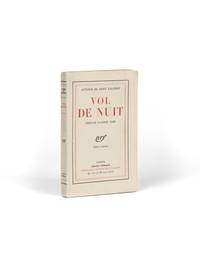
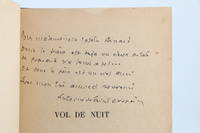
30017Paris Gallimard 30 mai 1931. 1 vol. 120 x 185 mm de 181 p. 1 et 1 f. Broché. . Édition originale. Préface d'André Gide. Un des 647 exemplaires sur pur fil n° 100. Envoi signé : « Pour mon oncle Emmanuel de Fonscolombe et ma tante Yvonne. Avec toute la respectueuse affection de leur neveu Antoine ». . Dès septembre Vol de nuit est sélectionné dans la liste finale du Goncourt en concurrence avec Philippe Hériat pour L'Innocent et Jacques Chardonne pour Claire. Las ! Victime de son succès le roman remporte le 4 décembre le Femina un prix créé en 1904 par vingt-deux femmes en contestation du Goncourt. Les membres de la prestigieuse Académie sans doute mécontents donnent leurs voix à Jean Fayard pour Mal d'amour un roman lourd de clichés sur les femmes. Un retour aux envoyeuses sans doute mais tout à leur honneur : Saint-Exupéry avoue avoir « été aussi surpris que touché de voir mon livre aussi bien couronné par des femmes » car elles lui « semblaient presque étrangères » à son roman : « L'homme qui s'habille la nuit pour prendre dans le ciel à l'avant d'un avion postal son tour de garde semble se détacher déjà de sa maison . et considérer comme un jeu un loisir l'exercice du bonheur. Le plaisir d'un vol de nuit est si violent que déjà à la fenêtre en suivant son vol on prend une âme de chasseur et j'ai vu bien des camarades des hommes sains et rudes ne plus souffrir aucune comparaison entre l'amour et le métier comme si enfin ils allaient s'occuper de choses solides graves réelles et quitter leur femme sans regret apparent et même un peu dédaigneusement avec un orgueil naïf de leur part. . Je voudrais vous parler du bonheur. Je voudrais vous faire comprendre combien ce rôle est grand. Et j'imagine que c'est un peu le vôtre puisque nous recevons en récompense de vous des vertus humaines des patiences de garde malade des dévouements de soeurs aînées. Enfin les vertus humaines qui rechargent le coeur et prennent dans la maison le fragile visage du bonheur. » Le Femina suscita des jalousies et des inimitiés qui s'exprimèrent avec violence dans la presse pourtant si favorable au moment de la publication du livre six mois plus tôt. On reproche à l'auteur son mysticisme et un style précieux et compassé ; mis à part l'amitié de quelques héros de l'air Mermoz est un des premiers à le féliciter pour son prix Saint-Exupéry est contesté avec la même irritation dans les milieux de l'aviation : se rappelant ses étourderies et erreurs de pilotages ses camarades pilotes s'offusquent de constater que l'auteur est devenu le plus réputé aviateur de France non pas pour des exploits professionnels mais porté par une gloire littéraire qui lui confère un aura immérité à leur sentiment. Le public n'aura cure de ces piques vénéneuses. Vol de nuit se vend à plus de 150 000 exemplaires et Jacques Guerlain en hommage sort un parfum du même nom. Aux États-Unis le livre - immédiatement traduit Night Flight - est un best-seller et est retenu dans la sélection du Book of the Month Club. Enfin Vol de nuit est l'un des premiers romans à être réédité en format de poche en 1953 dans la collection Le Livre de poche où il porte le n° 3 après Koenigsmark et Les Clés du royaume. Précieux et émouvant exemplaire offert loin des tumultes à ses oncle et tante Emmanuel et Yvonne de Fonscolombe. Son oncle baron de la Môle et propriétaire du château du même nom deviendra maire de ce petit village situé à une trentaine de kilomètres de Saint-Tropez entre Bormes-les-Mimosas et Cogolin. C'est dans ces terres que la mère de Saint-Exupéry a grandi tous comme ses ancêtres et où elle vivra la moitié de l'année à partir de 1904 après que le père de Saint-Exupéry Jean y décède le 14 mars 1904 : « Après la disparition de Jean l'existence de la famille se partage entre l'hiver le château de La Mole . qui appartient à la grand-mère de Fonscolombe et l'été la propriété de la grand-tante la comtesse de Tricaud à Saint-Maurice de Rémens . dans l'Ain. Les déplacements entre le Var et l'Ain feront partie intégrante de l'univers magique de Saint-Exupéry . jusqu'à l'âge de 9 ans ». Bernard Marck Saint-Exupéry le grand prince. C'est au château des Fonscolombre que l'écrivain perpétue l'apprentissage familial de la musique : son arrière-grand-père Emmanuel premier de Fonscolombe avait été maître de chapelle à Aix-en-Provence et compositeur ; son grand-père Charles initia ses enfants au solfège et au chant et sa mère perpétuera cette tradition en faisant venir une fois par semaine au château Anne-Marie Poncet la fille du directeur de l'opéra de Lyon pour qu'elle enseigne la musique aux enfants : ses soeurs étudient le piano et le chant Antoine choisira le violon. Arrivé à Paris pour préparer le concours de l'École navale il n'abandonnera pas la musique lui et sa cousine Yvonne de Lestrange jouant ensemble dans les années 1920 plusieurs pièces de Chopin. Rare et importante provenance familiale. Paris, Gallimard, (30 mai) 1931. 1 vol. (120 x 185 mm) de 181 p., [1] et 1 f. Broché. unknown
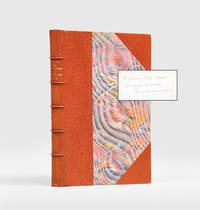
1929188445Paris: Librairie Gallimard Éditions de Nouvelle Revue Française 1929. His debut presented to his editor First edition presentation copy inscribed on the half-title. "A Monsieur Roger Allard en sincère hommage Antoine de Saint-Exupéry". The first edition of the author's first novel comprised 806 copies of which this is copy "j" from a limitation of 17 hors commerce copies on Lafuma pure yarn paper. At the time of publication Allard was an editor for Éditions de Nouvelle Revue Française. When Le Petit Prince was first published in France in 1945 he oversaw the editorial supervision. Octavo 185 x 117 mm. Contemporary orange crushed half morocco spine lettered in gilt Spanish moiré pattern marbled sides Nonpareil pattern marbled endpapers top edge gilt fore and bottom edges uncut original wrappers bound at front and rear. Touch of foxing on binder's blanks else fine. unknown
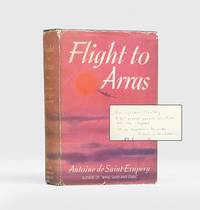
1942180685New York: Reynal & Hitchcock 1942. A rare presentation copy First edition in English presentation copy inscribed by the author on the half-title "For Mrs Clayburg to whom I want to prove that I indeed write English very well. And as a respectful tribute. Antoine de Saint-Exupéry". The book was subsequently presented by Clayburg with her inscription beneath "To Adair my favourite pilot - a souvenir of another great flyer and human being. Alma Clayburgh Grew" with the "h" in her name underlined. The recipient was the well-known New York opera singer. In addition to her patronage of the arts - she was friends with George Gershwin Rudolf Firkusny and many other musicians - Clayburgh sang for the servicemen of the First World War and arranged musicals to entertain them during the Second World War. She met Saint-Exupéry while he was exiled in New York and subsequently gave this book to her daughter Alma Eveline Clayburgh-Grew. Octavo. With 12 plates by Bernard Lamotte. Original blue cloth spine and front cover lettered in gilt pictorial endpapers top edge blue others untrimmed a few pages unopened. With dust jacket. Neat ownership inscription on front free endpaper. Spine and extremities toned lower outer corner of front cover just worn faint mark to rear cover; jacket price-clipped folds of sunned spine panel discreetly repaired extremities a little chipped and creased: a very good copy in good jacket. hardcover
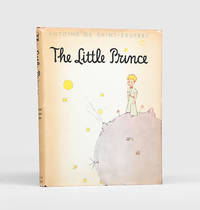
1943192833New York: Reynal & Hitchcock 1943. The most beautiful things in the world cannot be seen or touched they are felt with the heart First edition in English in the first state jacket. Published in New York in April 1943 in English and French versions this perennial classic of children's literature has inspired translations and public art monuments across the globe. In France it was voted the best book of the 20th century. The first state jacket gives the publisher's address on the front flap as Fourth Avenue later changed to Madison Avenue. Quarto. Illustrated in colour throughout by author. Original light brown cloth spine and front cover lettered in dark red vignette illustration to front cover in dark red. With dust jacket. "Robison" ownership inscription in red on front free endpaper. Light bumps to edges gentle crease to earlier leaves; price-clipped jacket a little toned minor marks to front panel a few nicks and small chips: a very good copy in like jacket. hardcover
192978105Paris: Nrf 1929. Fine. Nrf Paris 1929 12 x 19 cm broché First edition one of 697 numbered copies on pur fil paper. Precious autograph inscription signed by the author to Geneviève Stewens wife of Christian Sarton du Jonchay. Son of Charles Sarton du Jonchay then garrisoned in Algeria Christian Sarton du Jonchay enlisted at fourteen in the Algerian Auxiliary Spahis Regiment commanded by his father. After numerous adventures he was awarded the Croix de Guerre and became at only fifteen the youngest quartermaster sergeant in France. After serving in various cavalry regiments and chasseur battalions he was wounded in July 1918 and ended the war with seven citations as lieutenant and knight of the Legion of Honor. At the end of the First World War he chose to continue his military career and volunteered in 1921 to serve during the Syrian Campaign again earning several distinctions. A serious shoulder wound that left him partially disabled forced him to turn to aviation first as an observer then obtaining his pilot's license on August 17 1927. After an assignment to the 2nd Aviation Regiment in Strasbourg he joined the New Aircraft Group precursor to the CEMA aerial equipment testing center as commander of the Light Aircraft Section. However after failing at the War College he retired in 1933. Du Jonchay then joined Caudron-Renault the aviation subsidiary of the major automobile company. He became with his American wife Gene - dedicatee of this copy - a figure in the fashionable society revolving around aviation. Fine copy. Nrf unknown
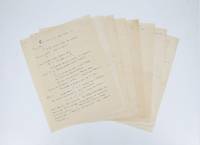
28220S.l.n.d. circa 1940. 12 pages en 13 f. 210 x 270 mm à l'encre noire chiffrés à la mine de plomb et d'une autre main ; plis de papier d'envoi postal. . Scénario de film inédit parmi sept projets connus dont seulement trois sont autographes. . En habitué des salles obscures Saint-Exupéry fut comme tous les jeunes gens de sa génération un amoureux du cinéma. Ses velléités de scénariste se manifestent entre 1931 et 1936 période pendant laquelle il écrit sept projets et participe à l'adaptation pour le cinéma de certains de ses livres. On peut rapprocher ce scénario d'un passage de sa Lettre à un otage : le recueil débute précisément par l'évocation de sa traversée vers les États-Unis depuis le Portugal en décembre 1940 où il décrit les joueurs de roulette et de baccara pour la plupart des réfugiés en partance. Lauren Bacall et Humprey Bogart auraient pu être convoqués ! Huit heures à vivre raconte une histoire aux antipodes de l'univers romanesque du Petit Prince : un monde sombre et peuplé de truands d'escrocs et de prostituées qui débute dans les bas-fonds de la ville de Rio pour se poursuivre dans les soutes d'un paquebot frappé par une épidémie de peste. Le bateau atteindra finalement Lisbonne avec à son bord 1 500 émigrés dont beaucoup de malades. Cinq terroristes à bord du navire vont profiter du désarroi et de la panique du capitaine pour commettre les pire méfaits. Ce scénario s'inspire de celui d'Igor un script confié à Pierre Billon à l'été 1940 à Nice juste avant le départ de l'écrivain pour les États-Unis : « Ceci est pour vous. C'est un sujet de film. Si je reviens nous y travaillerons ensemble sinon vous le réaliserez tout seul. » Il ajouta en souriant : « Ne l'égarez pas. C'est l'unique exemplaire. et je l'ai tapé moi-même ! » Présenté à l'exposition Antoine de Saint-Exupéry aux Archives nationales de novembre 1984 n° 450 ce dactylogramme est composé de vingt feuillets avec quelques corrections manuscrites. Christian Janicot dans sa préface à l'Anthologie du cinéma invisible souligne combien l'univers d'Igor est éloigné du registre habituel de Saint-Exupéry ainsi que le résume Pierre Billon : « L'essentiel de cette histoire n'est pas la révolution. C'est avant tout le drame qui se passe à bord d'un vieux paquebot à vapeur qui partant d'Amérique du Sud regagne un pays d'Europe. Au cours de la traversée deux hommes sacrifient leur vie pour qu'un troisième arrive et puisse accomplir sa mission qui est de diriger le soulèvement qui délivrera son pays d'un régime d'oppression. » Pour Igor il n'existe aucun manuscrit. Huit heures à vivre qui en constitue une version remaniée et plus littéraire à vraisemblablement été composé aux Etats-Unis dans le deuxième semestre de l'année 1940. À bord du paquebot une exploratrice amoureuse suicidaire malade de la peste son amant malade également des terroristes auteurs d'un attentat dont un certain Felicio arrêté par la police du pays et qui refuse de livrer ses complices en fuites qui se fondent dans la foule des autres voyageurs. L'exploratrice craint elle de perdre son amant et lui apprend qu'elle a la peste ; elle se suicide. S'ensuit un long passage sur la question du suicide comme devoir : « - N'est-ce pas docteur le suicide est une lâcheté. Un suicide par une femme c'est même violent. Est-il responsable de cette mort Non bien sûr ! Il n'est responsable de rien. Le suicide ne se comprend. que. que par exemple s'il sauve des compagnons. Alors oui. Que s'il défend une cause. Alors il est même non seulement excusable mais je dirais même un devoir.» Tiendra-t-elle les dernières heures de la traversée pour survivre Saint-Exupéry en donnera une réécriture sous la forme d'un manuscrit non titré reprenant l'intrigue mais cette fois-ci depuis l'Afrique ; il avait été présenté en 2011 chez Artcurial 9 mai 2011 section Saint-Exupéry n° 269. L'écrivain produira par ailleurs un dernier scénario - un film sur la Résistance - en 1941. En 1935 il avait donné écrit le scénario d'Anne-Marie l'histoire d'une jeune femme ingénieur qui rêve d'apprendre à voler et gravite dans un groupe de camarades pilotes tous amoureux d'elle. Raymond Bernard réalise le film la même année Annabella incarnant le rôle titre archétype de la femme moderne et séduisante aviatrice et aventureuse. C'est le seul scénario original qui sera porté à l'écran. Vol de nuit sorti un an plus tôt mais auquel Saint-Exupery n'a participé en rien a été un grand succès qui le persuade d'adapter Courrier Sud auquel il songeait depuis 1931. Son scénario est prêt en 1936 pour lequel une toute jeune débutante Françoise Giroud l'assiste ; il est communiqué au réalisateur Pierre Billon. Deux producteurs sont trouvés : André Aron et son associé l'aviateur Édouard Corniglion-Molinier ami et compagnon d'aventures de Malraux. Le tournage a lieu à la fin de l'année 1936 à Mogador aujourd'hui Essaouira au Maroc. Le film sort sur les écrans en 1937. Pour Anne-Marie et l'adaptation de Courrier Sud on ne connaît que des tapuscrits corrigés et aucun manuscrits ni même brouillons autographes. Citons également le projet inachevé d'un film inspiré par le raid manqué Paris-Saigon du 31 décembre 1935 qui se termina après un atterrissage forcé en plein désert par un sauvetage grâce à une tribu de nomades. Le projet avait été rédigé sous forme d'un dactylogramme de quinze feuillets présentés à l'exposition Antoine de Saint-Exupéry aux Archives nationales en novembre 1984 n° 448 ainsi que Sonia un synopsis sur un dactylogramme de neuf pages offert à Raymond Bernard le réalisateur d'Anne-Marie. Ce synopsis contient un élément qui servira transformé pour Huit heures à vivre : y figure le personnage d'une danseuse espagnole pestiférée laquelle contamine le navire et entame la traversée de l'Atlantique. Vente Antoine de Saint-Exupéry Artcurial 2012 n° 146 ; Histoire postale héros de l'aviation Artcurial 2018 n° 96 ; Paule Bounin L'oeuvre cinématographique de Saint-Exupéry. Études littéraires 2001 p. 113-124 ; Christian Janicot Anthologie du cinéma invisible 1995. S.l.n.d. [circa 1940]. 12 pages en 13 f. (210 x 270 mm) à l'encre noire, chiffrés à la mine de plomb et d'une autre main ; pl unknown
193184777Paris: Nrf 1931. Fine. Nrf Paris 1931 12 x 19 cm relié First edition false statement of edition. Autograph inscription signed by Antoine de Saint-Exupéry on the half-title page: ""à Mademoiselle Josette Arnaud dont le frère est déjà un vieux pilote de quarante six heures de vol. Et dont le père est un vieil ami"" ""to Miss Josette Arnaud whose brother is already an experienced pilot with forty-six hours of flight time. And whose father is an old friend"" Half blue morocco binding spine with five raised bands gilt date at foot paper boards grey paper endpapers and pastedowns top edge gilt on deckled edges binding signed P. Goy and C. Vilaine. It was undoubtedly in 1926 that young Antoine freshly hired by the Latécoère company future Aéropostale met Josette Arnaud's father while he was making his first flights between Toulouse and Dakar. The two friends would meet again thirteen years later when having become one of the most famous French writers Saint-Exupéry returned to his adopted city to contribute to the war effort. In September 1939 having returned from the United States where he was promoting his latest book Terre des Hommes Antoine de Saint-Exupéry was indeed mobilized with the rank of captain. He was assigned to the air base of Francazal in a bomber pilot training unit. It was on this occasion that he trained Josette's brother while in the evening he amazed the youngest with his famous card tricks as the young girl testified under another dedication on Courrier Sud. Unable to be content with a figurehead role Saint-Exupéry would not stay long in Toulouse and would obtain his transfer to an aerial reconnaissance squadron which would inspire his Pilote de guerre. But at the dawn of one of the most terrible tragedies of the 20th century it is a story of courage and fraternity and the account of a great human and humanistic adventure that the future author of The Little Prince decided to offer to this young girl testifying to their complicity and his great respect for children and their capacity for wonder. Nrf hardcover
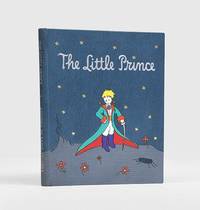
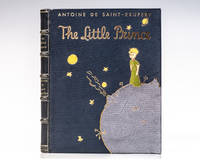
1943154296New York: Reynal & Hitchcock 1943. The most beautiful things in the world cannot be seen or touched they are felt with the heart First edition in English. Published in New York in April 1943 in English and French versions this perennial classic of children's literature has inspired translations and public art monuments across the globe. In France it was voted the best book of the 20th century. Quarto 215 x 175 mm. With colour illustrations by the author. Finely bound by the Chelsea Bindery in dark blue morocco spine and front board lettered in silver holographic foil wraparound onlay of The Little Prince standing on the moon twin rule to turn-ins gilt burgundy endpapers gilt edges. A fine copy. unknown
194228577Paris: Gallimard 1942. First edition. Original wrappers fine unopened. One of 58 numbered copies on vélin second paper after 21 on Mûrier d'Annam. Gallimard had been given approval to print 2100 copies of Saint Exupéry's account of his reconnaissance flights during the Battle of France in 1940. When it appeared in November 1942 "the scandal broke. The collaborationist press went wild.Vichy did not wait for the press campaign to develop: at the first 'denunciations' by anonymous Frenchmen protesting the antinational character of the work Gallimard was asked to recall all the copies that had been distributed" Assouline Gaston Gallimard p. 270. The recall was particularly effective and very few copies of the Gallimard edition survived. It was replaced by an edition of 500 printed in New York and then by a series of clandestine mimeographed printings. Gallimard unknown
1943151028New York: Reynal and Hitchcock 1943. First edition of Antoine de Saint-Exupery’s masterpiece which precedes the first edition in French. Translated from the French by Katherine Woods. Small quarto bound in full modern full pictorial brown morocco with inlay tooling to the front panel by the Harcourt Bindery all edges gilt marbled endpapers illustrated by the author. In fine condition. A stunning example. The Little Prince has something of Hans Christian Andersen in it something of Lewis Carroll and even it may perhaps be said a bit of John Bunyan. It is often lyrical sometimes profound However it is classified The Little Prince has entered childrens literature in the manner of quite a few other such hard-to-define works in the preceding centuries" Pierpont Morgan Library. It is one of the most-translated books in the world and was voted the best book of the 20th century in France. Translated into 300 languages and dialects as well as Braille selling nearly two million copies annually with sales totaling over 140 million copies worldwide it has become one of the best-selling books ever published. It is the basis for the 2015 English-language French 3D animated fantasy adventure family drama film directed by Mark Osborne. The film stars the voices of Jeff Bridges Rachel McAdams Paul Rudd Bud Cort Marion Cotillard Benicio del Toro James Franco Ricky Gervais Paul Giamatti Riley Osborne Albert Brooks and Mackenzie Foy. Reynal and Hitchcock unknown
30895Paris Gallimard 30 avril 1929. 1 vol. 165 x 215 mm de 227 p. et 2 f. Demi-maroquin havane à coins dos à nerfs filets dorés sur les plats titre doré date en pied tête dorée couvertures et dos conservés étui bordé reliure signée de P.-L. Martin. . Édition originale. Un des 109 exemplaires réimposés sur vergé celui-ci nominatif pour P. Deflandre n° LXXXV. . C'est en 1925 que Saint-Exupéry rencontre dans le salon parisien de sa cousine Yvonne de Lestrange la fine fleur des Éditions Gallimard : Gaston Gallimard André Gide et Jean Schlumberger. Ces rencontres vont jouer un rôle fondamental dans l'entrée en littérature de Saint-Exupéry. Avant de tenter l'aventure de l'Aéropostale en Amérique du Sud Saint-Exupéry fut envoyé à l'école de navigation aérienne de Brest pour un cours de perfectionnement. À cette adresse lui parvinrent les premières épreuves de son livre dont il lut des passages à son cousin Honoré Estiennes d'Orves son futur lecteur attitré. Il n'y apporta que d'infimes corrections et le bon à tirer fut signé aux premiers jours d'avril 1929. C'est une version très étoffée de la nouvelle L'Aviateur publiée dans la revue le Navire d'argent en 1926. Publié grâce à André Gide qui préfacera deux ans plus tard Vol de nuit Courrier Sud est préfacé par André Beucler qui soutenait le premier l'idée que « Saint-Exupéry n'est pas un écrivain » idée reprise et développée par André Malraux : Saint-Exupéry n'est pas un écrivain en chambre et « il ne veut rien écrire que sa vie ne garantisse ou qu'il n'ait eu l'occasion de vérifier à ses dépens. C'est en quoi l'univers proprement littéraire lui demeure suspect pour autant qu'il trompe le lecteur en le transportant dans un monde facile et fallacieux. Saint-Exupéry reste l'un de ces hommes contraints à l'exactitude pour qui l'imagination peut bien s'ajouter à la réalité mais non pas en tenir lieu . ». Très bel exemplaire : il provient de la bibliothèque de Marcel de Merre ex-libris et vente Paris Sotheby's 2007 n° 436. Paris, Gallimard, (30 avril) 1929. 1 vol. (165 x 215 mm) de 227 p. et [2] f. Demi-maroquin havane à coins, dos à nerfs, filets unknown
1931HAY3813930 mai 1931 - mention fictive d'édition originale réservée au Service de Presse imprimé S.P. en pied de la couverture et de la page de titres. Paris Gallimard - Éditions de la Nouvelle Revue française. broché. Couverture très légèrement défraîchie avec faibles traces sur les plats et fin pli en coin supérieur du quatrième ; dos légèrement ridé sinon sous cellophane et intérieur frais ; bel et très rare exemplaire. in-12. avec envoi autographe de 4 lignes en page de faux-titre. unknown
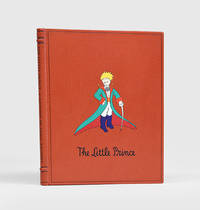
1943180050New York: Reynal & Hitchcock 1943. Handsomely bound with a stunning onlay First edition. The original manuscript was in the author's native French but it was both written and published in America the English and French editions appearing in April 1943 perhaps simultaneously. It is the author's most successful work and has sold an estimated 140 million copies worldwide. Quarto 217 x 175 mm. Illustrated throughout by author. Finely bound by the Chelsea Bindery in terracotta morocco spine lettered in black two raised bands covers ruled in black pictorial onlay of the Little Prince on front cover turn-ins twin ruled in black dark green endpapers gilt edges. A fine copy. hardcover