Dryden, JohnBiblio.com
2 893 résultats
1021299758.Gpaperback. Good. Access codes and supplements are not guaranteed with used items. May be an ex-library book. paperback
1019540508.Ghardcover. Good. Access codes and supplements are not guaranteed with used items. May be an ex-library book. hardcover
1834143331New York: Harper & Brothers. Very Good. 1834 cover & tp. FIRST EDITION. THUS. Hardcover. 4X6". VERY GOOD CONDITION HARDCOVERS.SPINE STRIP HAS BEEN REPLACED WITH LITE TAN LEATHER.SOME OLD EDGE STAINS TO TAN CLOTH COVERSELSE BOOK IS CLEAN WITH FOXING. SOLID ; TITLE ETC TO FRONT COVER.WITH back COVER SHOWING LONG LISTS OF "VALUABLE WORKS IN 12 & 8MO.; 6 SPEARS COVER ART; 327PG pages . Harper & Brothers hardcover
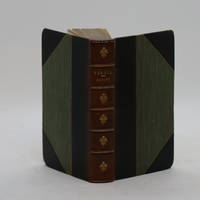
1841FB985 /6B<p>Green calf binding with green cloth boards. Spine faded to brown has gilt banding and title with emblems.</p><p><strong>A treasured early Victorian copy</strong> <strong>Publius Vergilius Maro</strong> traditional dates 15 October 70 – 21 September 19 BC usually called <strong>Virgil</strong> or <strong>Vergil</strong> in English was an ancient Roman poet of the Augustan period. He composed three of the most famous poems in Latin literature: the <em>Eclogues</em> or <em>Bucolics</em> the <em>Georgics</em> and the epic <em>Aeneid</em>. A number of minor poems collected in the <em>Appendix Vergiliana</em> were attributed to him in ancient times but modern scholars consider his authorship of these poems as dubious. Virgil's work has had wide and deep influence on Western literature most notably Dante's <em>Divine Comedy</em> in which Virgil appears as the author's guide through Hell and Purgatory. Virgil has been traditionally ranked as one of Rome's greatest poets. His <em>Aeneid</em> is also considered a national epic of ancient Rome a title held since composition. <strong>John Dryden</strong> 9 August 1631 – 1 May 1700 was an English poet literary critic translator and playwright who was appointed England's first Poet Laureate in 1668. On 1 December 1663 Dryden married Lady Elizabeth Howard died 1714. The marriage was at St. Swithins London and the consent of the parents is noted on the licence though Lady Elizabeth was then about twenty-five. She was the object of some scandals well or ill founded; it was said that Dryden had been bullied into the marriage by her playwright brothers. A small estate in Wiltshire was settled upon them by her father. The lady's intellect and temper were apparently not good; her husband was treated as an inferior by those of her social status. Both Dryden and his wife were warmly attached to their children. They had three sons: Charles 1666–1704 John 1668–1701 and Erasmus Henry 1669–1710. Lady Elizabeth Dryden survived her husband but went insane soon after his death. Though some have historically claimed to be from the lineage of John Dryden his three children had no children themselves. Dryden is seen as dominating the literary life of Restoration England to such a point that the period came to be known in literary circles as the Age of Dryden. Romanticist writer Sir Walter Scott called him "Glorious John". What Dryden achieved in his poetry was neither the emotional excitement of the early nineteenth-century romantics nor the intellectual complexities of the metaphysicals. His subject matter was often factual and he aimed at expressing his thoughts in the most precise and concentrated manner. Although he uses formal structures such as heroic couplets he tried to recreate the natural rhythm of speech and he knew that different subjects need different kinds of verse. In his preface to <em>Religio Laici</em> he says that "the expressions of a poem designed purely for instruction ought to be plain and natural yet majestic. The florid elevated and figurative way is for the passions; for these are begotten in the soul by showing the objects out of their true proportion. A man is to be cheated into passion but to be reasoned into truth." <strong>Translation style</strong> While Dryden had many admirers he also had his share of critics Mark Van Doren among them. Van Doren complained that in translating Virgil's <em>Aeneid</em> Dryden had added "a fund of phrases with which he could expand any passage that seemed to him curt." Dryden did not feel such expansion was a fault arguing that as Latin is a naturally concise language it cannot be duly represented by a comparable number of words in English. "He.recognized that Virgil 'had the advantage of a language wherein much may be comprehended in a little space' 5:329–30. The 'way to please the best Judges.is not to Translate a Poet literally; and Virgil least of any other' 5:329." For example take lines 789–795 of Book 2 when Aeneas sees and receives a message from the ghost of his wife Creusa. <em>iamque vale et nati serva communis amorem.'</em> <em>haec ubi dicta dedit lacrimantem et multa volentem</em> <em>dicere deseruit tenuisque recessit in auras.</em> <em>ter conatus ibi collo dare bracchia circum;</em> <em>ter frustra comprensa manus effugit imago</em> <em>par levibus ventis volucrique simillima somno.</em> <em>sic demum socios consumpta nocte reviso</em> Dryden translates it like this: I trust our common issue to your care.' She said and gliding pass'd unseen in air. I strove to speak: but horror tied my tongue; And thrice about her neck my arms I flung And thrice deceiv'd on vain embraces hung. Light as an empty dream at break of day Or as a blast of wind she rush'd away. Thus having pass'd the night in fruitless pain I to my longing friends return again Dryden's translation is based on presumed authorial intent and smooth English. In line 790 the literal translation of <em>haec ubi dicta dedit</em> is "when she gave these words." But "she said" gets the point across uses half the words and makes for better English. A few lines later with <em>ter conatus ibi collo dare bracchia circum; ter frustra comprensa manus effugit imago</em> he alters the literal translation "Thrice trying to give arms around her neck; thrice the image grasped in vain fled the hands" in order to fit it into the metre and the emotion of the scene. In his own words The way I have taken is not so streight as Metaphrase nor so loose as Paraphrase: Some things too I have omitted and sometimes added of my own. Yet the omissions I hope are but of Circumstances and such as wou'd have no grace in English; and the Addition I also hope are easily deduc'd from Virgil's Sense. They will seem at least I have the Vanity to think so not struck into him but growing out of him. 5:529 In a similar vein Dryden writes in his Preface to the translation anthology <em>Sylvae</em>: Where I have taken away some of the original authors' Expressions and cut them shorter it may possibly be on this consideration that what was beautiful in the Greek or Latin would not appear so shining in the English; and where I have enlarg'd them I desire the false Criticks would not always think that those thoughts are wholly mine but that either they are secretly in the Poet or may be fairly deduc'd from him; or at least if both those considerations should fail that my own is of a piece with his and that if he were living and an Englishman they are such as he wou'd probably have written.</p> Thomas Allman. hardcover
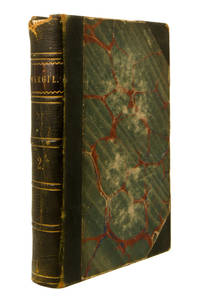
1830RW23020Henry Colburn and Richard Bentley 1830. Hardback. Very good condition. Leather spine and corner with gold lettering. Marbled covers. Covers slightly shelf-worn. Tear at top of spine. . Volume 2 of the Aeneid. Translated by John Dryden Henry Colburn and Richard Bentley hardcover
17251264623Sold by William and John Innys 1725. thin 8vo.; VG; paperback green spine wrapped with green paper; housed in plastic sleeve; covers worn; minor bumping to corners of text; 'Virgil's husbandry written in ink on reverse of frontispiece; contains the following: Title page and frontispiece; The Preface xv; Notes unpaginated 15pp; Virgil's Husbandry frontispiece 50pp.; GP consignment; shelved case 4. 1264623. Shelved Dupont Bookstore. Sold by William and John Innys unknown books
319 p. Top edge gilt. Deckled edges. Unopened. Paper slightly browned. 200mm. From Morley's Universal Library, uniformly bound with others in the series. Gilt lettered faux vellum spine over blue gray linen boards. Spine very slightly darkened. Second edition. Henry Morley (1822-1894) was a popular lecturer and prolific writer who did more to promote education and love of literature than any other person in the Victorian era. LOC W48/BAG 5
0804901775.Gpaperback. Good. Access codes and supplements are not guaranteed with used items. May be an ex-library book. paperback
1993374752The Easton Press 1993. FIRST THUS. Hardcover. Like New/No Jacket. First Edition Thus. Published by Easton Press 1993. Octavo. Hardcover. Red leather with gilt page ends. Book is like new; clean and crisp. No writing no bookplates. A very fine leatherbound copy of Virgil's masterpiece. 100% positive feedback. 30 day money back guarantee. NEXT DAY SHIPPING! Excellent customer service. All books packed carefully and ship with free delivery confirmation/tracking. All books come with free bookmarks. Ships from Sag Harbor New York. The Easton Press hardcover
B9781107451063Paperback / softback. New. Originally published in 1911 and part of the English Literature for Schools series this book contains three books from the 1697 edition of John Dryden's translation of Virgil's Aeneid. Hamilton Thompson supplies an introduction on the history of the Aeneid and Dryden's translation of it as well as critical notes on variations in the translation's text. paperback
6105059625Cambridge University Press CUP pp. 162 . Papeback. Used. Cambridge University Press CUP unknown
1963111325New York: P. F. Collier 1963. Edition De Luxe. Hardcover. Near Fine in decorative boards. Scuffing to lower edges of panels. ; Harvard Classics Shelf of Fiction; 8vo 8" - 9" tall. P. F. Collier hardcover
2014Cambridge-9781107451063Cambridge University Press 2014. PAPERBACK. New. Cambridge University Press paperback
2014Cambridge-9781107451063Cambridge University Press 2014. PAPERBACK. New. Cambridge University Press paperback
1995104667Folio Society 1995. hardcover. like new with like new slipcase. no dust jacket as issued. thick large 8vo. 417pp. plates by Francis Cleyn. maps on endpapers. dark green cloth covers with gilt decorated black cloth spine. top edge green. tiny blemish on one side of slipcase. Family run used bookstore open to the public since 1988. Close to 40 years of book selling experience. Folio Society hardcover
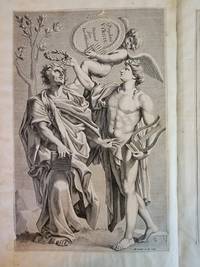
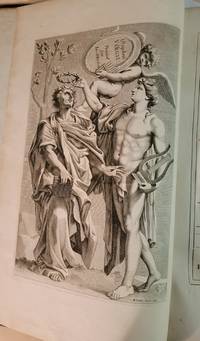
1697Biblio185<p><strong><em>Virgil Publius. b. BC 70 The Works of Virgil: Containing his Pastorals Georgics and Æneis. Translated into English verse; by Mr. Dryden. London: Printed for Jacob Tonson 1697. Large Folio 423 x 265. First edition. 640pp</em></strong></p><p>One hundred and two full paged engraved illustrations. This is a large paper copy excepting for the first few pages exceptionally white and crisp. Lacks introduction to Lord Clifford and large plate of Virgil at the Senate. Most of the Life of Virgil which contains the image of Virgil in the Senate is lacking. Title page remounted Tear B1 somewhat affecting text and browned pages that correspond to other copies. Priced accordingly for this rare Subscribed Royal Folio First Edition. Rebound in a modern binding of mottled calf and tastefully restored.</p><p>John Dryden:</p><p>. "Virgil is the only complete representative of the deepest sentiment and the highest mood of his countrymen and of his time. In his pastoral and didactic poems he gives a living voice to the whole charm of Italy in the Aeneid to the whole glory of Rome. He was in the maturity of his powers at the most critical epoch of the national life one of the most critical epochs in the history of the world. Keeping aloof from the trivial daily life of his contemporaries he was moved more profoundly than any of them by the deeper currents of emotion in the sphere of government religion morals and human feeling which were then changing the world; and in uttering the enthusiasm of the hour and all the new sensibilities that were stirring in his own heart and imagination he had in the words of Sainte-Beuve 'divined at a decisive hour of the world what the future would love.' He was also by universal acknowledgement the greatest literary artist whom Rome produced. Š Virgil's fame as a poet rests on the three acknowledged works of his early and mature manhood-the pastoral poems or Eclogues the Georgics and the Aeneid-all written in that hexameter verse which Tennyson has called 'The stateliest measure ever molded by the lips of man.'" EB vol. 28 page 112-113 Wing V-616</p><p>The works of Virgil is the first addition with 102 excluding the plate of Virgil in the Senate stunning illustrated plates each dedicated to a subscriber and produced by the finest European engravers – Michael van der Gucht Wenceslaus Hollar and Pierre Lombart.</p><p>Dryden and Tonson the printer had a long and profitable relationship. Dryden indeed was one of the first authors to draw a 'significant advance' for his works from Tonson which caused many bitter arguments but in the end Tonson and Dryden were a powerful team publishing many works previously only found in Greek and Latin editions. Dryden besides being a popular playwright in his time made these works popular amongst the rising middle class who without classical training in Greek or Latin were omitted from reading the works of Virgil and others that Dryden seemed to crank out in record time for Tonson's presses. A rare and evocative poem.</p> Jacob Tonson
1697Biblio186<p><b><i>Virgil Publius. b. BC 70 The Works of Virgil: Containing his Pastorals Georgics and Æneis. Translated into English verse; by Mr. Dryden. London: Printed for Jacob Tonson 1697. Large Folio 423 x 265. First edition. 640pp</i></b> One hundred and three full paged engraved illustrations. This is a large paper copy excepting for the first few pages exceptionally white and crisp. Complete with full introduction to Lord Clifford and large plate of Virgil at the Senate. Contains the Life of Virgil and an extensive dedication section to Montrose later. Some browning to the pages somewhat affecting the text and images but this phenomena correspond to other copies. A rare work that includes the subscriber list for this Royal Folio First Edition. Tastefully restored retaining original leather except at spine. A complete edition.</p> Jacob Tonson hardcover
1982GB001E39HVUI4N00Grolier Enteprises Corp. 1982. Hardcover. Very Good. May have limited writing in cover pages. Pages are unmarked. ~ ThriftBooks: Read More Spend Less.Dust jacket quality is not guaranteed. Grolier Enteprises Corp. hardcover
1982GB001E39HVUI2N00Grolier Enteprises Corp. 1982. Hardcover. Like New. Pages are clean and are not marred by notes or folds of any kind. ~ ThriftBooks: Read More Spend Less.Dust jacket quality is not guaranteed. Grolier Enteprises Corp. hardcover
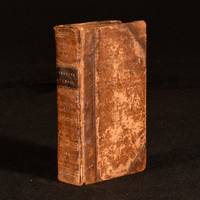
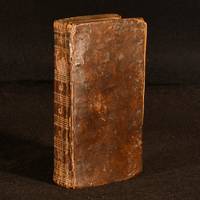
1808979Z3London: W. Suttaby 1808. Leather. Good. 5" by 3". None stated. A charming miniature all in one volume containing Dryden's translation of the poetical works of Virgil bound in half calf. A 'complete in one volume' miniature edition.Illustrated with a monochrome frontispiece and an engraved title page. John Dryden's translation of the poetical works of Virgil Publius Vergilius Maro containing a biographical account of his life his 'Pastorals' 'Georgics' and 'Aenid'. This translation was Dryden's defining work as a translator. Virgil is regarded as one of Rome's greatest poets. His 'Aeneid' is considered to be a national epic of Ancient Rome. It is modelled after Homer's 'Iliad' and 'Odyssey'. Bound in contemporary half calf. Bound in contemporary half calf. Externally front joint starting with rubbing to the extremities joints and boards. Front free endpaper starting. Internally firmly bound with tidemarks to the title page and frontispiece with minimal age toning and light spotting to the extremities. Good W. Suttaby hardcover
18081006Y6London: W. Suttaby 1808. Leather. Good. 5" by 3". Not Stated . A Suttaby pocket edition of Virgil's poetical works translated by John Dryden. 'Complete in one volume' pocket-sized edition of John Dryden's translation of Virgil.In a full contemporary calf with gilt to the spine. Contemporary endpapers. Engraved frontispiece and title page. Collated complete. Dryden's defining work as a translator containing a biographical account of Virgil followed by his 'Pastorals' 'Georgics' and 'Aenid'. A charming copy of this work which became the standard English translation of Virgil for generations.Virgil is regarded as one of Rome's greatest poets. His 'Aeneid' is considered to be a national epic of Ancient Rome and is modelled after Homer's 'Iliad' and 'Odyssey'. In a full contemporary calf with gilt to the spine. Externally generally smart with rubbing to the extremities and a mark to the spine. A couple scratches to the boards. Internally firmly bound. Pages are marginally toned with occasional spots. Minor tide mark to the lower first few leaves. Faded contemporary ownership inscription to front paste down. Good W. Suttaby hardcover
2018x-1138477362Routledge 2018. Paperback. New. 1st edition. 202 pages. 8.25x5.50x0.50 inches. Routledge paperback
2018x-1138477338Routledge 2018. Hardcover. New. 216 pages. 9.00x5.75x0.75 inches. Routledge hardcover
30563789-nnew. unknown
30563788-nnew. unknown