SPENSER, EdmundBiblio.com
1 803 résultats
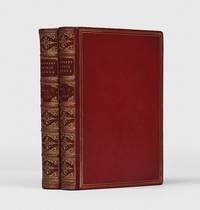
1596165717London: Printed for William Ponsonbie 1596. For there is nothing lost that may be found if sought First complete edition comprising the first edition of the second part and the second edition of the first part. Written in praise of Elizabeth I and dedicated to her Spenser's allegorical masterpiece follows the adventures of six medieval knights drawing on Arthurian legend Italian romance classical epic and Chaucer. John Dryden notes that "Spencer more than once insinuates that the Soul of Chaucer was transfus'd into his Body; and that he was begotten by him Two hundred years after his Decease" Dryden f. A1. In its mingling of genres the poem represented a new departure in English poetry for which Spenser invented a new stanza "a hybrid form adopted from the Scots poetry of James I 'rhyme royal' and Italian 'ottava rima'" ODNB. Spenser began composing the work in the 1570s sharing "parcels" of it among friends. Though no rough drafts autograph copies or foul papers for the poem have survived the poet alludes to a manuscript copy as early as 1580 when in a letter to Gabriel Harvey he asks for one to be returned to him: "I wil in hande forthwith with my Faery Queene whyche I praye you hartily send me with al expedition: and your frendly Letters and long expected Iudgement wythal" Three Proper and wittie familiar Letters. The poem or some part of it was almost certainly circulating in manuscript in London in 1588 when Abraham Fraunce quotes a stanza in his Arcadian Rhetorick correctly citing its book and canto "Spencer in his Faerie queene.2.book.cant.4". The first part was finally printed in 1590 - possibly intended to coincide with the publication of Philip Sidney's Arcadia - and the second part followed with a new edition of the first in 1596. Spenser likely composed some of the second part around 1593 as the conversion of Henry IV of France to Catholicism that year provides the historical basis for the Burbon episode in Book V. The poem now six books was entered into the Stationers' Register on 20 January 1596 suggesting publication had been planned to fall during Elizabeth I's Grand Climacteric - her 63rd year thought by astrologers to be critical - which had begun on 7 September 1595. In 1599 with only six of his twelve planned books completed Spenser died - his two fragmentary Cantos of Mutabilitie thought to be intended for Book VII are the only additional material published with the first folio edition of 1609. Provenance: from the library of Henry White 1822-1900 of Queen's Gate London with his armorial bookplate on the front pastedowns and sold in his 1902 Sotheby's sale lot 2028. The book was bound likely for White himself by Roger de Coverly 1831-1914 the London binder under whom T. J. Cobden-Sanderson trained. An old description mounted on the front pastedown of the first volume likely from a turn-of-the-century exhibition notes that the books were "lent by H. White Esq.". 2 vols small quarto 195 x 145 mm. Woodcut device of printer Richard Field to title pages full-page woodcut to M5 verso. Bound by Roger de Coverly in late 19th-century red crushed morocco spines with five raised bands lettered in gilt direct to second and third compartments remaining compartments richly gilt triple gilt fillet border to covers edges and turn-ins gilt marbled endpapers gilt edges. Spines slightly darkened upper margins closely trimmed touching a couple of headings outer leaves of vol. I faintly soiled a few spots to vol. II else clean and fresh within. An excellent copy handsomely bound. Pforzheimer 970; ESTC S117748. John Dryden "Preface" in Fables Ancient and Modern 1700; Edmund Spenser Three Proper and wittie familiar Letters 1580. hardcover
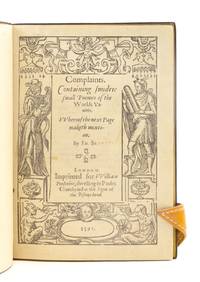
15913119London:: Imprinted by Thomas Orwin for VVilliam Ponsonbie dwelling in Paules Churchyard at the signe of the Bishops head 1591. FIRST EDITION. . Quarto: . 18.5 x 14 cm. 184 p. Collation: A-Z4 lacking final blank Z4 Bound in fine early 20th c. green morocco with gilt turn-ins and the words “Complaints – Edmund Spenser – 1591†tooled in gold on the front board. The same neatly tooled on the spine. A nice copy never washed or pressed with wide outer margins. The edge of the title is a little frayed far from the woodcut there are light damp-stains in signatures D and S and a very faint one in the final signature. A few other trivial stains. It is highly unusual to find Spenser quartos in such condition the majority of the surviving copies having been washed and trimmed. Fortunately the binder of this copy resisted that temptation. The general title has a fine woodcut border with figures of David and Moses. There are separate title pages using the same woodcut border for “The Teares of the Muses†“Prosopopoia. Or Mother Hubberds Tale†and “Mviopotmos. Or The Fate of the Butterflieâ€. There are also a few attractive woodcut head-pieces and initials. The contents are as follows: 1. The Ruines of Time. 2. The Teares of the Muses. 3. Virgils Gnat. 4. Prosopopoia or Mother Hubberds Tale. 5. The Ruines of Rome: by Bellay. 6. Muiopotmos or The Tale of the Butterflie. 7. Visions of the Worlds vanitie. 8. Bellayes visions. 9. Petrarches visions. “Of the nine poems in the volume four are sonnet sequences while the others are in rhyme royal ottava rima sixaines or couplets. Each appears with a separate title page: five are dedicated to prominent courtiers or patrons and four are printed with no dedication. The first ‘The Ruines of Time’ is a lament on the destruction of the Roman city of Verulamium followed by an elegy on the deaths of Robert Dudley the earl of Leicester and Sir Philip Sidney. It is followed by ‘The Teares of the Muses’ a series of nine laments that deplore the corruption of learning and poetry. ‘Virgil’s Gnat’ the tale of a shepherd’s rescue by a humble gnat is an elaborate mock-heroic complaint translated from the pseudo-Virgilian ‘Culex.’ Next ‘Prosopoia or Mother Hubberds Tale’ takes the form of an allegorical beast-fable; its satire generally assumed to have been directed against Lord Burleigh was probably the reason that ‘Complaints’ was recalled shortly after its publication and that the poem was subsequently omitted from the 1611 folio of Spenser’s works see the following item. The volume continues with ‘The Ruines of Rome’ a translation of Joachim Du Bellay’s lament on the corruption of the modern city and ‘Muiopotmos’ a mock-heroic fable of the entrapment of a butterfly by a spider. The three sonnet sequences two of which are translations conclude the volume: ‘Visions of the Worlds Vanitite’ ‘The Visions of Bellay’ and ‘The Visions of Petrarch.’ For a thorough analysis see Katharine A. Craik Spenser's "Complaints" and the New Poet in Huntington Library Quarterly Vol. 64 No. 1/2 2001 pp. 63-79. Johnson A Critical Bibliography of the Works of Edmund Spenser printed before 1700 No. 14; STC 2nd ed. 23078; Pforzheimer 968 Imprinted by Thomas Orwin for VVilliam Ponsonbie, dwelling in Paules Churchyard at the signe of the Bishops head, unknown books
1591ST18266London: Imprinted for William Ponsonbie dwelling in Paules Churchyard at the signe of the Bishops head 1591. FIRST EDITION. 182 x 130 mm. 7 1/4 x 5 1/4". 91 leaves lacking blank Z4. <br/> Late 19th century green crushed morocco by Riviere & Son stamp-signed on front turn-in covers with decorative gilt lozenge centerpiece raised bands gilt lettering gilt-ruled turn-ins. Housed in a modern brown buckram chemise and attractive morocco-backed slipcase. Main title page with woodcut border McKerrow & Ferguson 117 section titles for three of the poems with woodcut frame woodcut initials head- and tailpieces. Front pastedown with engraved armorial bookplate of Charles Lilburn and ex-libris of Kenneth Rapoport see below. Langland to Wither 235; Hayward 23; Johnson 14; Pforzheimer 968; STC 23078; ESTC S111266. The Rosenbach Company catalogue 45 #690 this copy. Spine sunned to olive brown faint fading and soiling to covers just a hint of rubbing to corners and spine ends contents lightly washed and pressed in keeping with bibliophilic fashion at the time of binding occasional small spot or other trivial imperfection but an excellent copy clean and fresh internally in a perfectly pleasant binding.<br/> <br/> This is an appealing copy with star-studded provenance of one of the less frequently encountered first editions of Edmund Spenser ca. 1552-99 the first modern English poet to achieve major stature during his lifetime. It comprises a collection of six poems and three translations assembled by publisher William Ponsonby in order to capitalize on the recently experienced success of "The Faerie Queene." In the preface Ponsonby describes these poems as "complaints and meditations of the worlds vanitie very grave and profitable." The included works some dating back to Spenser's college days are: "The Ruines of Time" "The Teares of the Muses" "Virgils Gnat" "Proposia Or Mother Hubberds Tale" "Ruines of Rome" "Muiopotmos or the Fate of the Butterflie" "Visions of the Worlds Vanitie" "Bellayes Visions" and "Petrarches Visions." Six of these are original poems all previously unpublished and three are translations one unpublished and two revised. Unfortunately "Proposia" was a political satire on the attempts to arrange a marriage between Elizabeth I and the Duc d'Alençon that resulted in the entire volume being banned. That poem was omitted from early editions of the collected minor poems. Day says Spenser demonstrated "with his fluency in many meters and stanzaic forms . . . that English was at least the equal to any other language as a vehicle of great poetry." Although his poetry particularly "The Faerie Queene" looks backward--as the culmination of the allegorical verse tradition of the Pearl Poet Langland and Chaucer--Spenser has influenced with "his fertile imagination and especially his sensuous imagery and melodic language" nearly every important English poet who followed him. Our volume has distinguished provenance four times over. The first known owner here Charles Lilburn Esq. 1842-91 was an antiquary businessman Justice of the Peace and Fellow of the Society of Antiquaries of Newcastle-upon-Tyne. George Neasham in "North-Country Sketches" 1893 calls Lilburn "bibliomaniacal" but also "one of nature’s gentlemen." In 1888 the "Proceedings of the Society of Antiquaries of Newcastle-upon-Tyne" claimed that Lilburn’s library "would have charmed the heart of Dibdin himself." The present copy then apparently became the subsequent property of Sir Israel Gollancz 1863-1930 distinguished Shakespearian scholar and editor of early English literature at least he is named as a previous owner when this copy was sold by Swann Galleries in May of 2022 at the Rapoport sale. The book appeared later in the inventory of the rare book firm of A. S. W. Rosenbach 1876-1952 of Philadelphia where it was listed in the 1941 catalogue as item #690 priced at $300. Finally it became part of the library of Ken Rapoport who amassed an outstanding collection over 50 years with special emphasis on works of drama and poetry by English and Spanish authors among them Shakespeare Spenser and Cervantes. "Complaints" is scarce is virtually never found except in a modern binding and is usually seen in unappealing internal condition. Imprinted for William Ponsonbie, dwelling in Paules Churchyard at the signe of the Bishops head unknown
15953367London:: printed by Thomas Creede for VVilliam Ponsonbie 1595. FIRST EDITION. The colophon reads: "London Printed by T.C. for William Ponsonbie. 1595.". Quarto:. 18 x 13 cm. 80 p. Signatures: A-K4 An attractive copy in early 20th c. calf. Very nice internally the last leaf with 16th c. verses in Latin and English on the verso of the final leaf. With a woodcut printer's device McKerrow 299 and decorative border to the title page and numerous head- and tailpieces throughout. A lovely copy of the first edition. This copy has the second state of sheet C with the reading "worthily" on C1r line 24. With a dedicatory epistle to "The Right worthy and noble Knight Sir Walter Raleigh" dated "from my house of Kilcolman the 27. Of December. 1591." In addition to "Colin Clout" this volume also includes Spenser's "Astrophel: A pastorall Elegie upon the death of the most Noble and valorous Knight Sir Phillip Sidney" dedicated to Sidney's widow who had by then become the Countess of Essex; An untitled poem beginning "Ay me to whom shall I complaine…" often referred to as "The dolefull lay of Corinda"; "The mourning Muse of Thestylis" by Ludowick Bryskett; "A pastorall Aeglogue upon the death of Sir Phillip Sidney Knight" signed L.B. Ludowick Bryskett; "An Elegie or friends passion for his Astrophill" by Matthew Roydon; "An Epitaph upon the right honourable sir Phillip Sidney Knight: Lord governor of Flushing" by Walter Raleigh; "Another of the Same" almost certainly by Sir Edward Dyer.Spenser's "Colin Clout's Come Home Again' a pastoral poem in the tradition of Petrarch was inspired by the poet's visit to England from 1590 to 1591 a journey undertaken at the urging of Walter Raleigh. Spenser wrote the poem dedicated to Raleigh upon his return to Kilcolman castle in Ireland –the 'Home' referred to in the poem's title. Spenser's adoption of an Anglo-Irish identity was publicly expressed in the title poem where the 'home' that Colin refers to rather bitterly in the poem is Ireland not England. At the same time the elegies on Sidney as the English nation's poet imply Spenser's claim to be his successor. The poem has been called Spenser's most biographical and indeed it includes not only the visit from Raleigh to Spenser's home in Ireland in 1589 but also an account of Spenser's sea voyage and his time in England during which he presented the first three books of his 'Faerie Queen' to Queen Elizabeth.The poem fits neatly into a tradition of advice literature that exempts the monarch from the general failings of his or her courtiers and includes strong criticisms of the court as well as attacks on the vanity ignorance and greed of courtiers in general. It is possible that Colin Clout was intended as a criticism of Elizabeth's regime in the 1590s especially if we bear in mind Spenser's own lack of preferment in England and his posthumous criticisms of the queen in 'Two cantos of Mutabilitie' A. Hadfield Edmund Spenser's Irish Experience 1997 chap. 6 Ashley V 194; Pforzheimer 967; STC 23077 printed by Thomas Creede for VVilliam Ponsonbie, books
15953120London:: printed by Thomas Creede for VVilliam Ponsonbie 1595. FIRST EDITION. The colophon reads: "London Printed by T.C. for William Ponsonbie. 1595.". Quarto:. 18 x 13 cm. 80 p. Signatures: A-K4 A wonderful copy bound in fine early 20th c. burgundy morocco by Riviere & Sons. Very nice internally the last leaf carefully washed. With a woodcut printer's device McKerrow 299 and decorative border to the title page and numerous head- and tailpieces throughout. A lovely copy of the first edition. This copy has the second state of sheet C with the reading "worthily" on C1r line 24. With a dedicatory epistle to "The Right worthy and noble Knight Sir Walter Raleigh" dated "from my house of Kilcolman the 27. Of December. 1591." In addition to "Colin Clout" this volume also includes Spenser's "Astrophel: A pastorall Elegie upon the death of the most Noble and valorous Knight Sir Phillip Sidney" dedicated to Sidney's widow who had by then become the Countess of Essex; An untitled poem beginning "Ay me to whom shall I complaine…" often referred to as "The dolefull lay of Corinda"; "The mourning Muse of Thestylis" by Ludowick Bryskett; "A pastorall Aeglogue upon the death of Sir Phillip Sidney Knight" signed L.B. Ludowick Bryskett; "An Elegie or friends passion for his Astrophill" by Matthew Roydon; "An Epitaph upon the right honourable sir Phillip Sidney Knight: Lord governor of Flushing" by Walter Raleigh; "Another of the Same" almost certainly by Sir Edward Dyer.Spenser's "Colin Clout's Come Home Again' a pastoral poem in the tradition of Petrarch was inspired by the poet's visit to England from 1590 to 1591 a journey undertaken at the urging of Walter Raleigh. Spenser wrote the poem dedicated to Raleigh upon his return to Kilcolman castle in Ireland –the 'Home' referred to in the poem's title. Spenser's adoption of an Anglo-Irish identity was publicly expressed in the title poem where the 'home' that Colin refers to rather bitterly in the poem is Ireland not England. At the same time the elegies on Sidney as the English nation's poet imply Spenser's claim to be his successor. The poem has been called Spenser's most biographical and indeed it includes not only the visit from Raleigh to Spenser's home in Ireland in 1589 but also an account of Spenser's sea voyage and his time in England during which he presented the first three books of his 'Faerie Queen' to Queen Elizabeth.The poem fits neatly into a tradition of advice literature that exempts the monarch from the general failings of his or her courtiers and includes strong criticisms of the court as well as attacks on the vanity ignorance and greed of courtiers in general. It is possible that Colin Clout was intended as a criticism of Elizabeth's regime in the 1590s especially if we bear in mind Spenser's own lack of preferment in England and his posthumous criticisms of the queen in 'Two cantos of Mutabilitie' A. Hadfield Edmund Spenser's Irish Experience 1997 chap. 6 Ashley V 194; Pforzheimer 967; STC 23077 printed by Thomas Creede for VVilliam Ponsonbie, books
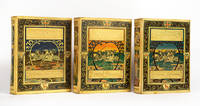
18972945London: J.M. Dent 1897. Chivers bindings. Fine. STUNNING CHIVERS VELLUCENT BINDINGS. One of 100 large-paper copies illustrated by Louis Fairfax Muckley. The three thick quarto volumes are elegantly printed on handmade paper and illustrated throughout with images and designs by the British artist and illustrator Louis Fairfax Muckley. The illustrations are magnificent and feature the plates in two states red and black.<br /> <br /> The bindings by Chivers however are the star of the show and perfectly complement the text. For the front boards Muckley has created an intricate design featuring a knight and lady on galloping horses surrounded by decorative borders and gilt titling. Each spine depicts a lady emerging from a colorful background while each rear board has a stylized dragon seemingly jumping out from the binding. While the outlines of the designs are the same on each volume they are each painted with different colors creating a unique look and mood for each.<br /> <br /> On Cedric Chivers’s “vellucent†bindings:<br /> <br /> Chivers created a masterful binding technique in the late 19th century he called “vellucent†– a portmanteau combining “vellum†and “translucentâ€. The process was arduous but the results were stunning with artwork seeming to glow under a layer of thin protective vellum.<br /> <br /> His process began with a decorative design—in the case of these volumes artwork by Louis Fairfax Murray – created on paper or thin parchment. The artwork was then placed underneath a sheet of vellum that was extremely thin and specially treated to be translucent allowing the colors to almost shine like a stained glass window. The final step was particularly tricky – since vellum is not particularly flexible it required expert craftsmanship to lay it smoothly over the book's boards and spine without wrinkles or bubbles. The result is a binding that doubles as a work of fine art.<br /> <br /> The bindings are stamped “Bound by Cedric Chivers†in gilt on the rear dentelles and decoratively written on the rear endpaper of volume 1 likely by Chivers is the note: “THIS BOOK IS BOUND BY / CEDRIC CHIVERS BATH / 2 COPIES ONLY WITH THIS DESIGN / THIS IS NO 1â€. Anecdotally however we are aware of three copies that have been bound with this design although without the written limitation.<br /> <br /> Provenance: There is a note in pencil in the first volume that these are from the Robert Hoe collection but we have not been able to confirm this.<br /> <br /> London: J.M. Dent 1897. Thick octavos 258 x 197 mm vellucent bindings by Chivers. Text nearly pristine. A touch of bowing to bindings.<br /> <br /> AN OUTSTANDING EXAMPLE OF CHIVERS BINDINGS IN UNUSUALLY FINE CONDITION. J.M. Dent unknown
119175London J.M. Dent 1897. . Limited edition of 100 copies printed on handmade paper each one signed by the illustrator underneath the printed colophon at the rear; ' This book is bound and decorated and colour by Cedric Chivers designed by' followed by ink manuscript asterisk since not a large enough space for signature hence below; 3 vols 4to 265 x 210 mm; halftitles titles printed in red and black with woodcut borders 26 woodcut illustrations several doublepage decorative headpieces initials and tailpieces by FairfaxMuckley a few text leaves still uncut age-toning to text blocks more evident to edges some tissue-guards a bit foxed with resultant offsetting generally the odd random mark or spotting but mostly to the blank margins except for a stain to lower edge of illustrated leaves facing pp 576 & 682 in vol. III otherwise very good; original full vellucant vellum by Cedric Chivers of Bath printed colophon to each vol. the upper cover with a hand-painted scene of an Arthurian Knight and a lady possibly the Red Cross Knight and his lady Una both on horse-back galloping within a heart-shaper frond gilt title-panel all within and armourial boarder the spines painted with an Authurian lady holding a lamp aloft. the rear boards painted with a large roundel of a stylised dragon each vol. in a variant colourway top edge gilt others trimmed as published age-toned with minor soiling mostly to rear boards otherwise very good-plus a stunning set.<br /> One of 100 copies on handmade paper of this English epic poem first published in 1590 signed by the illustrator. <br /><br />Following a lecture by Cyril Davenport of the British Museum on the 18th century painted vellum bindings of Edwards of Halifax Cedric Chivers created his own 'Vellucent' bindings using established artists such as Jessie M. King Alice Shepherd and H. Granville Fell. In its prime the company experimented and specialised in highly skilled and beautiful bindings; this example being one of them.<br /><br />Chivers was born in Bath to a bookbinding family. After working for his father and various other binders he opened his own business in 1878 in the premises formerly occupied by Robert Rivière in Union Street Bath. He subsequently moved to a double fronted shop at 39 Gay Street and then as the business expanded to a large house at Portway in Combe Park where the company operated until 1990.<br /> London, J.M. Dent, 1897. hardcover
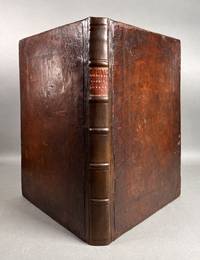
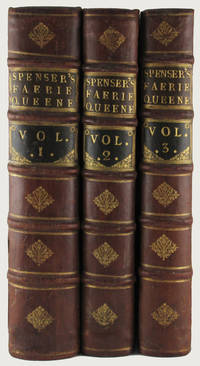
05070London: Printed for J. Brindley 1751. First Birch Edition with Thirty-Two Magnificent Double-Page Copper Plates by William Kent<br/>In a Stunning Mid Eighteenth Century Red Morocco Binding in Perfect Condition<br/><br/>"The Aim of Publishing The Faerie Queene was to <br/>Fashion a Gentleman or Noble Person in Virtuous and Gentle Discipline"<br/><br/><br/>SPENSER Edmund. The Faerie Queene. With an exact Collation of the Two Original Editions Published by Himself at London in Quarto; the Former containing the first Three Books printed in 1590 and the Latter the Six Books in 1596. To which are now added A new Life of the Author and also A Glossary. Adorn'd with thirty-two Copper-Plates from the Original Drawings of the late W. Kent Esq; Archtect and principal Painter to his Majesty. London: Printed for J. Brindley and S. Wright 1751. <br/><br/>Edmund Spenser's rich allegorical poem of fierce lady knights monsters duels and Classical gods and goddesses handsomely illustrated by William Kent.<br/><br/>First Birch edition. Three quarto volumes 10 11/16 x 8 5/16 inches; 276 x 212 mm. iv blank 4 lxiii 1 blank ii i-xxxvii i blank 1-212 217-453 3 blank; ii blank 2 1-450 2 blank; ii blank 2 1-440 2 blank pp. Thirty-two fine double-page copper-plates all mounted on stubs by William Kent. Numerous engraved vignette tail-pieces. There are 20 plates in the first volume 7 in the second and 5 in the third volume. Some light scattered foxing throughout - the most noticeable being on gatherings M & N pp. 80-96 and plate number 4 between pp. 30/31 in volume 1. Otherwise a spectacular and immaculate set.<br/><br/>Contemporary English full red goatskin the covers gilt tooled with a dog-tooth roll border enclosing an elaborate panel of six different thistle and flower tools. Spines with five raised bands elaborately bordered and decorated in gilt in compartments. Two dark green morocco labels decoratively bordered and lettered in gilt. Elaborate gilt board edges marbled endpapers all edges gilt. The binding which is near immaculate has been attributed as "possibly by John Brindley 1705-1758. The book was also published by John Brindley.<br/><br/>John BRINDLEY before 1705-1758. Primarily a bookseller also a publisher. Reproduction of his trade card in Heal Collection Heal17.17 advertises "John Brindley Bookseller and Stationer at the King's Arms in New Bond Street. Bookbinder to Her Majesty and His Royal Highness the Prince of Wales: Sells books in all languages variety of novels plays &c. Also all sorts of stationary wares stampt paper bonds cards shop & pocket books &c. Wholesale and retail. Likewise neatly binds books in all sorts of binding. Money for any library or parcel of books." British Museum.<br/><br/>"Most of our knowledge of John Brindley comes from The Oldest London Bookshop by George Smith and Frank Benger published in 1928. Brindley began as a bookbinder and although in 1728 he established the bookselling business in New Bond Street which was to gain further renown under the successive managements of Robson Boone and Ellis bookbinding remained one of the firm's activities until after his death. He held the appointment of bookbinder to Queen Caroline and to Frederick Prince of Wales and a number of presentation bindings to them on books published by Brindley are in King George III's library at the British Library. Comparison of these with other presentation bindings at Windsor with Brindley books from the library of Mr. George Smith sold at Sotheby's on 22nd July 1959 and with sets of the duodecimo classics published by Brindley between 1744 and 1754 enables us to identify many of the tools used in his shop and some of this specialities. The most striking of these was a partiality to edge decoration and to gaily marbled and gilt edges on sets of the classics. Brindley also bound for the Harleian Library. There is only one reference to him in Humfrey Wanley's Diary when he applied - apparently unsuccessfully - on 3 February 1719/20 to Wanley for some work saying that 'his Lordship lately gave him a Book to Bind'. But after Wanley's death he was apparently more successful and four bills of his survive for books supplied and books bound during the years 1733-8 among the Portland papers on deposit in the British Library". Nixon. Five Centuries of English Bookbinding. London 1978.<br/><br/>This is the first edition since 1609 to publish The Faerie Queene as a separate work. <br/>It is a new collation of the first two editions with a new biographical sketch written by the editor Thomas Birch. Birch 1705-1766 was a compiler of histories a biographer and formidable antiquarian. A member of the Society of Antiquaries and fellow of the Royal Society he is known primarily for The Works of the Honourable Robert Boyle 1744 Memoirs of the Reign of Queen Elizabeth 1754 Lives and Characters of Illustrious Persons 1747-52 and The History of the Royal Society of London 1756-7. <br/><br/>"Thomas Birch describes his intention as "the collecting of all the Facts relating to him Spenser dispers'd in different Books and the examining digesting and supplying them by his own Works not hitherto sufficiently made use of for that Purpose" Life vol 1 p. ii. He arranges the available material into a more shapely narrative than most emphasizing Spenser's struggles for recognition and patronage more than his literary accomplishments. Birch believes that the concluding six books of the Faerie Queene were written and then lost" English Poetry 1579-1830: Spencer and the Tradition.<br/><br/>"The Edition of the Fairy Queen now offer'd to the Public it is hop'd will be found to be a just Representation of the genuine Text not hitherto given in any single Edition but form'd from an exact Collation of the two original ones of the Author compar'd in the three last Books with the first Folio printed at London in 1609 which has furnish'd Corrections of some Mistakes in the 4to of 1596. Nothing therefore now remains for the Honour of our Poet and the Satisfaction of the Public but that the Learned and Ingenious unite their Labours towards such a Commentary upon his admirable Poem as Mr. JORTIN has oblig'd the World with a Specimen of his Remarks printed in 1734" from Birch's Life of Spenser herein.<br/><br/>The superb double-page illustrations are by William Kent 1685-1748 an eminent English architect landscape architect painter and furniture designer of the early 18th century. He is important as an illustrator of the poem because he was the first designer to respond imaginatively to the possibilities of Spenser's landscape and as a result had a major influence on later eighteenth-century taste. Spenser's reputation as an English gothic poet owes much to Kent's influence but Kent was a sophisticated enough artist and reader of the poem to respond also to the Italianate elements in Spenser's work which strongly corresponded with his own interests. Kent introduced the Palladian style of architecture into England with the villa at Chiswick House and also originated the 'natural' style of gardening known as the English landscape garden at Chiswick Stowe House in Buckinghamshire and Rousham House in Oxfordshire. He complemented his houses and gardens with stately furniture for major buildings including Hampton Court Palace Chiswick House Devonshire House and Rousham. His book designs show the results of his extensive travels decorative sense and the influence of picturesque landscape design which reached its height in the mid-eighteenth century.<br/><br/>The Faerie Queene is an English epic poem by Edmund Spenser. Books I-III were first published in 1590 then republished in 1596 together with books IV-VI. The Faerie Queene is notable for its form: it is one of the longest poems in the English language; it is also the work in which Spenser invented the verse form known as the Spenserian stanza.On a literal level the poem follows several knights as a means to examine different virtues and though the text is primarily an allegorical work it can be read on several levels of allegory including as praise or later criticism of Queen Elizabeth I. In Spenser's "Letter of the Authors" he states that the entire epic poem is "cloudily enwrapped in Allegorical devices" and that the aim of publishing The Faerie Queene was to "fashion a gentleman or noble person in virtuous and gentle discipline".<br/><br/>Edmund Spenser 1552-1599 presented the first three books of The Faerie Queene to Elizabeth I in 1589 probably sponsored by Sir Walter Raleigh. The poem was a clear effort to gain court favour and as a reward Elizabeth granted Spenser a pension for life amounting to £50 a year though there is no further evidence that Elizabeth I ever read any of the poem. This royal patronage elevated the poem to a level of success that made it Spenser's defining work. <br/><br/>Book I is centered on the virtue of holiness as embodied in the Redcrosse Knight; Book II is centered on the virtue of Temperance as embodied in Sir Guyon who is tempted by the fleeing Archimago into nearly attacking the Redcrosse Knight; Book III is centered on the virtue of Chastity as embodied in Britomart a lady knight. Book IV is largely a continuation of events begun in Book III; Book V is centered on the virtue of Justice as embodied in Sir Artegall; and Book VI is centered on the virtue of Courtesy as embodied in Sir Calidore. In addition to the six virtues Holiness Temperance Chastity Friendship Justice and Courtesy the Letter to Raleigh suggests that Arthur represents the virtue of Magnificence which "according to Aristotle and the rest" is "the perfection of all the rest and containeth in it them all"; and that the Faerie Queene herself represents Glory hence her name Gloriana. The unfinished seventh book the Cantos of Mutability appears to have represented the virtue of "constancy."<br/><br/>Graesse p. 465; Lowndes V 2477; Allibone 2203; ESTC T35152; Alston 3:93. London: Printed for J. Brindley, 1751 unknown books
18961016<p>Small 4to. Printed in Golden type 12 full-page woodcut illustrations by Arthur J. Gaskin and woodcut initials. Original holland-backed boards title printed on upper cover. Spine boards and corners free of wear and bumps no bookplates fine.</p> Kelmscott Press
161166412The First Collected Edition of SpenserÃs Works and First Folio Edition SPENSER Edmund. The Faerie Queen: The Shepherds Calendar: Together with the Other Works of EnglandÃs Arch-PoÃŽt Edm. Spenser: Collected into one Volume and carefully corrected. London: Printed for H.L. for Mathew Lownes 1611. First collected edition of SpenserÃs works and first folio edition second issue with the title to The Second Part of the Faerie Queene beginning with signature R dated 1613 and the colophon dated ì16012î sic. With the Prosopopoia. Or Mother Hubberds Tale consisting of a single gathering A of eight leaves and dated 1612 on the title not found in the first issue. Lacks the last blank Hh6 at the end of the second part of The Faerie Queen; but has the blank Q8 at the end of Letter to Raleighonly found in first issue and blank F4 at the end of The Shepherds Calendar. Folio. 11 inches x 7 1/2 inches. i-vi 363 xvi; x 56 16 xxvi iv xxvi vi xvi x xii iv. General title within woodcut border McKerrow & Ferguson 212 twelve woodcut illustrations and ornamental borders decorative woodcut head- and tail-pieces and initials. The woodcuts in The Shepherds Calender were used in all the earlier separate editions. Beautifully bound by Riviere in full cherry red straight grain morocco ruled in gilt on covers gilt-stamped on spine with five raised bands. Gilt turn-ins. All edges gilt. Small restoration to outer margin of title-page not affecting text and small closed cut to page 162 some toning mostly in outer margins. Overall a very good and solid copy in an appropriate binding. "The first modern English poet to achieve major stature Spenser demonstrated with his fluency in many meters and stanzaic forms that English waÂs at least the equal to any other language as a vehicle of great poetry. While his poetry particularly The Faerie Queene looks backward as the culmination of the allegorical verse tradition of the Pearl Poet Langland and Chaucer he has influenced with his fertile imagination and especially his sensuous imagery and melodic language nearly every important English poet who followed him." Grolier Langland to Wither 239. Johnson 19. Pforzheimer 973. STC 23084. HBS 66412. $7500 Printed for H.L. for Mathew Lownes hardcover books
1611105854Folio 10 x 7 ins. London: Printed by H. L. for Mathew Lownes 1611. Folio 10 x 7 ins. paginating thus: Faerie Queen i-xvi 363 3 inc. final blank; Shepheards Calendar x 56 2 blank; Prosopopoia 16; Colin Clout 26; Prothalamion 4; Amoretti 16; Epithalamion 6; Foure Hymnes 16; Daphnaida 10; Complaints 12; The Teares of the Muses 12; Virgils Gnat 20; The Ruines of Rome 6; Muiopotmos 10; Visions of the Worlds Vanitie 6; The Visions of Petrarch 2 pp. General title within woodcut border McKerrow & Ferguson 212 twelve woodcut illustrations and ornamental borders decorative woodcut head- and tail-pieces and initials. The woodcuts in The Shepheards Calender were used in all the earlier separate editions. A bright clean copy handsomely bound in early 20th century crushed red morocco paneled in gilt and blind inner dentelles all edges gilt; skillfully rebacked a few scuffs to the boards. Bookplates of Edward N. Crane and of John L Clawson 1865-1933 of Buffalo NY whose collection of Elizabethan literature was considered the greatest of its time. § First collected edition of Spenser’s works and first folio edition second 1615 issue with the title to The Second Part of the Faerie Queene beginning with signature R dated 1613 and the colophon dated “16012†sic. With the Prosopopoia. Or Mother Hubberds Tale consisting of a single gathering A of eight leaves and dated 1612 on the title not found in the first issue. "The first modern English poet to achieve major stature Spenser demonstrated with his fluency in many meters and stanzaic forms that English was at least the equal to any other language as a vehicle of great poetry. While his poetry particularly The Faerie Queene looks backward as the culmination of the allegorical verse tradition of the Pearl Poet Langland and Chaucer he has influenced with his fertile imagination and especially his sensuous imagery and melodic language nearly every important English poet who followed him." Grolier Langland to Wither 239. Johnson 19. Pforzheimer 973. ESTC S123122. Printed by H. L. for Mathew Lownes hardcover books
16098845<p>First folio edition. Full ruled calf rebacked in supple morocco with new endpapers. First stanza of each canto printed inside four-component woodcut. Numerous woodcut headpieces tailpieces and initial letters.</p><p>Loss to title page corner not affecting text or image. Archival tape repair at title page gutter and last page. Undecipherable scribbling to title page as well as to pages 1 2 252 & 253 with ink stain to the latter see image. Some worming at upper margins; minimal impact to text at 12 pages between A-D see image. Includes pagination error at page 8 numbered 10. Inked name of Ralph Markland British publisher known for the 1643 publication of the portrait of Prince Rupert and " Garrett fitz Gerald his booke / 1666" to page 1. A handsome copy.</p> Printed by H.L. for Mathew Lownes hardcover
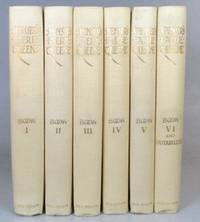
189752214London: George Allen 1897. Six volumes one of 1000 sets 4to. Numerous full page illustrations as well as head and tail pieces original wrappers bound in light browning to endpapers only attractive contemporary inscription to a front blank in volume I. Original gilt and red decorated cream buckram t.e.g. the volumes still with their plain d.w.'s with holes in the spines to enable the titles to be read these with some wear and loss and with half of the wrapper to volume II absent but as a result the set is in excellent condition and is still held in the original green cloth box this with some staining and wear to the fold-down front. A remarkable survival. London: George Allen unknown
16118706Printed by Humphrey. Lownes. for Mathew Lownes Anno. Dom. 1611 i.e. 1615 . 1611 Folio. 4 363 3 p. Recent speckled calf binding. The spine with raised bands and a contrasting label. The general title within a woodcut border laid down with portion of loss in the gutter Faerie Queene with woodcut cartouches to head of each canto Shepheards Calender with woodcut illustrations divisional titles woodcut initials and head- and tail-pieces with blanks 2H6 & F4 Sig.par Letter to Raleigh & commendatory sonnets bound at end and lacking final blank par9 Faerie Queen : M6 small loss to inner-margin O6 with few ink marks mostly to margins Z6 portion of loss affecting 2 stanzas with text supplied in later ink manuscript affecting also cartouche to verso par6 small loss to head affecting woodcut head-piece Faerie Queen has occasional marginal annotations slightly trimmed. There is some light damp staining to final few Sig. and ink splashes to final few leaves. The title page to The Second Part of Faerie Queen is date 1612 with the colophon dated 16012. It includes Mother Hubberd's Tale for the first time with the title dated 1613. Lownes was permitted to print this as Cecil had died in 1612. Inscribed by two members of the Frere family 1789 and later. Printed by H[umphrey]. L[ownes]. for Mathew Lownes, hardcover
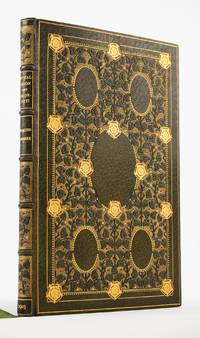
1903ST20957London: John & E. Bumpus 1903. 211 x 140 mm. 8 1/2 x 5 1/2". 86 pp. <br/> LOVELY GREEN MOROCCO GILT AND INLAID FOR J. & E. BUMPUS stamped in gilt on rear turn-in LIKELY BY RIVIERE & SON upper cover with gilt fillet frame central panel with densely blind-stamped leafy vines on a gilt pointillé background accented with onlaid red morocco dots large oval at center and four smaller ovals all framed by gilt beads the central oval adorned with four gilt and onlaid red and white morocco Tudor roses 10 more such roses at corners and along the sides of outer frame lower cover with gilt fillet frame raised bands spine compartments with blind-stamped leafy sprig on pointillé ground with onlaid black ivory and red morocco dots gilt lettering turn-ins with gilt border gilt trio of leaves at corners all edges gilt. With engraved frontispiece portrait title page vignette two headpieces and two tailpieces. Upper cover and spine evenly faded to olive green likely from being displayed just a hint of bowing to boards but A VERY FINE COPY the text entirely clean fresh and bright and the binding unworn.<br/> <br/> This lovely printing of Spenserian poetry comes in an unusual and skillfully executed binding likely by Riviere & Son which was producing some of its very best work at the time of publication. The poems here were inspired by Spenser's courtship of and 1594 marriage to his second wife Elizabeth Boyle. Day calls "Amoretti" "a unique sonnet sequence in Renaissance England" and he is unreserved in his praise for "Epithalamion" calling it "the most beautiful nuptial poem in English and perhaps in any language." Spenser 1552 - 99 was the first modern English poet to achieve major stature and Day points out that those "influenced by Spenser are virtually a roster of the great English poets since his time" among them Milton Wordsworth Keats Rossetti and Tennyson. Bumpus bindings were done for the bookselling firm of John and Edward Bumpus founded in 1780. The firm long enjoyed a reputation as purveyors of fine and beautiful bindings without ever operating a bindery. Instead they outsourced the work to the best binders of the day including Riviere and Morrell the former being a likely choice here. The combination of swirling blind-stamped vines a densely stippled background and onlaid blossoms demonstrates creativity in design proficiency in a range of finishing techniques and meticulous execution. The five blank ovals on the upper cover bring to mind the layout of Cosway bindings a specialty of the Riviere firm in which those ovals would be filled with miniature paintings on ivory under glass. Cosway bindings could sometimes be ornate to the point of being overwhelming so the blank ovals here are a welcome moment of restraint amid the animation of the cover design. Apparently an earlier owner enjoyed displaying this binding--as who would not--and the leather has mellowed to an olive green--which may actually be a more pleasing foundation for the decoration than the original brighter green. Certainly the book saw no other use as the contents are as fresh as the day the volume left the printer. John & E. Bumpus unknown
1611006138London: Mathew Lownes 1611. 3rd Printing. Hardcover. Very Good. 4to - over 9¾ - 12" tall. One of the great long poems in the English language. The First Collected Edition. VG dated 1611 but 1615 third re-issue of the first 1609 edition. In modern Riviere brown full morocco to style some blind tooling gilt arabesque centerpieces worn along edges. Spine raised bands gilt tooling & titles worn along edges. Internally Faerie Queen 1611 4 185 1 The Second Part 1612 2 189-363 1 16012. 2 The Shepheards Calender 1611 10 56. 2 Mother Hubberds Tale 1613 4 5-16. Colin Clouts ND 26. Prothalamion 1611 4. Amoretti 1611 16. Epithalamion 1611 6. Foure Hymnes 1611 16. Daphnaida 1611 10. Complaints 1611 11 1. The Teares 1611 11 1. Virgils Gnat ND 9 1. Ruines of Rome ND 6. The Fate of The Butterfly 1611 9 1. Visions ND 8. A letter ND 4 1589. A Vision ND 10. Each part with a large woodcut header & tail cuts to each canto header & calendar month. A.E.G. Welsh armorial bookplate to fpd new 'old' endpapers crease to ffep couple of tiny edge nicks. A lovely copy. ESTC S123122. STC 23084. Pforzheimer 973. Signatures: 2ff A2-Q4 1ff R2-Hh5 1ff blank 1ff A2-F3 1ff blank 1ff A2-A8 1ff A2-M2 q-q7. 4 363 pp 1. 2 10 56 2. 4 5-16. 26. 4. 16. 6 16. 10. 12. 28. 32. A third "reissue" of the 1609 edition though both parts are now actually in later settings. Part 1 still has the 1611 cancel title page and conjugate dedication of the first reissue STC 23083.3. The text of part 1 has now been reset the 1615 date conjectured by STC; B3r stanza 1 begins "Young Knight". Part 2 still has separate title page dated 1612 or 1613 stop-press variants and R3r catchword reads "And". Pagination and register are continuous. The poem was to have been a religious-moral-political allegory in 12 books each consisting of the adventures of a knight representing a particular moral virtue. And was presented to Queen Elizabeth 1 in 1589 probably sponsored by Walter Raleigh. Foundational edition for the study of Spenserian poetry combining his major allegorical and pastoral works. Essential for literary historians scholars of Elizabethan literature. ND <br/> <br/> Mathew Lownes hardcover
18971243241897. First Edition. CRANE Walter illustrator SPENSER Edmund. Spenser's Faerie Queene. London: George Allen Chiswick Press 1897. Six volumes. Quarto contemporary three-quarter vellum gilt brown morocco spine labels marbled endpapers top edges gilt uncut; original wrappers bound in at rear of each volume. $5200.Limited first book-form edition of Walter Crane's ""most ambitious project of book illustration"" Lacy 103 one of 1000 large-paper copies with 88 splendid full-page pen-and-ink line-cuts two double-page 135 illustrative head- and tailpieces by Crane and six facsimile title pages from earlier editions. Handsomely bound by J. Adams of Manchester.""The noblest allegorical poem in our languageindeed the noblest allegorical poem in the world"" James Montgomery. Originally published in the late 16th century the first three books in 1590 and the next three in 1596 with the ""Mutabilitie Cantos"" added in 1609 Spenser's ambitious Arthurian allegory was the first epic that ""both incorporated countless mythological and folkloric traditions and exemplified the careful design and poetic quality of written literature"" Clute & Grant 890. Finely printed on handmade paper the Chiswick Press edition with notes and commentary by Thomas Wise was originally issued in 19 parts 1894-96 and stands at the pinnacle of famous illustrator Walter Crane's career. All front wrappers and rear wrappers bound in. Massé 47. A splendid set of this delightful illustrated edition in fine condition. hardcover
175133225London: for J. Brindley in New Bond-Street and S. Wright Clerk of his Majesty's Works. 1751. 3 volumes. Very Scarce First Printing of the Edition. A copy with pleasing provenance coming from the library and with the bookplate of John Templer who was educated at Westminster School and Trinity College Cambridge graduating in 1836. He was admitted to the Inner Temple in 1837. Templer became a close friend of James Brooke through his elder brother James Lethbridge Templer 1811–1845 of the East India Company Merchant Navy. Templer acted as Brooke's legal counsel. In 1853 Templer was called to the bar and from 1854 he was one of the Masters of the Court of Exchequer Illustrated with 32 very finely engraved full-page copper plates and engraved head and tailpieces and initials throughout. Large thick quartos in very fine contemporary polished calf the spines with raised bands gilt ruled two compartments with fine contrasting maroon and black morocco lettering labels gilt the remaining compartments with central gilt tooling original endleaves. 2 lxiii xxxvii 453 2; 2 450; 2 440 pp An unusually fine handsome and beautifully bound set. The bindings are in excellent condition and these are crisp clean copies especially so. Very rarely are such fine copies encountered in the marketplace. TRULY FINE COPIES OF THIS BEAUTIFUL PRINTING OF SPENSER'S FAIRIE QUEENE ONE OF THE GREATEST WORKS IN THE ENGLISH LANGUAGE.<br> Edmund Spenser stands with William Shakespeare and John Milton in the history of English poetry and litereature. He is recognized as one of the premier craftsmen of modern English verse from its infancy and one of the greatest poets in the language. Spenser was known to his contemporaries as "the prince of poets†and was said by them to be "as great in English as Virgil in Latinâ€. He was greatly preferred over Shakespeare by Queen Elizabeth and many others of the day. He left behind his masterful essays in every genre of poetry from pastoral and elegy to epithalamion and epic. A century later John Milton would call Spenser "a better teacher than Aquinas†and was greatly influenced by him. Since then generations of readers have admired his subtle use of language his imagination his immense classical and religious learning and "his unerring ability to synthesize and ultimately to delightâ€.<br> THE FAERIE QUEEN is Spenser’s best known work and arguably his best. It is especially notable for its form: it was the first work written in what is now called Spenserian stanza and is also one of the longest poems in the English language. An allegorical work written in praise of Queen Elizabeth I it is largely symbolic the poem follows several knights in an examination of several virtues. It found not surprisingly great political favour with Elizabeth I and was such a public success that it quickly became Spenser's defining work. The last six books of the twelve Spenser intended were never written though two cantos noted as the Seventh and Eighth Bookes appear here. for J. Brindley, in New Bond-Street and S. Wright, Clerk of his Majesty's Works.... hardcover
1895175910London: George Allen 1895. hardcover. fine. Crane Walter. Bold illustrations by Walter Crane. Originally issued in 19 parts Seven title pages eighty-eight full page woodcut illustrations one double page 132 head and tailpieces and numerous woodcut initials. Now exquisitely rebound in 3/4 crimson crushed morocco 6 volumes small 4to marbled endpapers. London: George Allen 1895-97. A fine set.<br/><br/> Limited first book-form edition of Walter Crane's "most ambitious project of book illustration" Lacy 103 one of 1000 large-paper copies.<br/><br/> George Allen unknown books
1894006745London: George Allen 1897 parts 1894-1897. First edition. Three Quarters Crushed Morocco. Marbled pastedown. . Near Fine. One of 1000 unnumbered sets printed. 4to. 27.5 by 22 cm. 19 parts bound in 6 volumes. Pictorial pink wrappers bound in. Plates headpieces and tailpieces by Crane. Gilt rose and leaf pattern in four spine compartments lettering in two. <br /> George Allen books
1617047088London: Humphrey. Lownes. for Mathew Lownes 1617. Early Edition. Hardcover Full Leather. Good Condition. Contemporary calf rebacked and recornered marbled endpapers added hinges reinforced with cloth tape but binding quite sound overall. Lacking the general title and Faerie Queen part two title but with separate title pages for most of the individual parts and an old manuscript Faerie Queen title tipped in at the beginning. Light tide mark occasionally in bottom right corner heavier in last dozen or so pages. Scattered minor browning small marginal repair to C3 right edge of Foure Hymnes Title replaced - generally very good or better internally. Faerie Queen colophon dated 16012. ESTC S122304 with points B3r stanza 1 begins "Young Knight"; R3r catchword "And". Lacking blank at end of Faeirie Queen; a confusing book to collate but collates as follows: 363pp 10 56pp blank 4 5-16 14 blank 26 22 14 10 14 12 10 6 10 8pp.<br/><br/>Faeries Queen The Shepheards Calender Mother Hubberds Tale A Letter of the Authors etc no separate title or pagination Colin Clouts Come Home Againe Prothalamion Foure Hymnes Dapnaida Complaints Containing Sundry Small Poemes of the Worlds Vanitie The Teares of the Muses Virgils Gnat no separate title but half title with dedication The Ruines of Rome no separate title The Fate of the Butterfly Visions of the Worlds Vanitie etc no separate title. A few of the last poems Visions Petrarch Virgil are translations from du Bellay.<br/><br/>Old inscription describing provenance on front endpaper. <br/> Size: Folio. Quantity Available: 1. Shipped Weight: Under 1 kilo. Category: Literature & Literary; Poetry. Inventory No: 047088. H[umphrey]. L[ownes]. for Mathew Lownes hardcover
1617047088London: Humphrey. Lownes. for Mathew Lownes 1617. Early Edition. Hardcover Full Leather. Good Condition. Contemporary calf rebacked and recornered marbled endpapers added hinges reinforced with cloth tape but binding quite sound overall. Lacking the general title and Faerie Queen part two title but with separate title pages for most of the individual parts and an old manuscript Faerie Queen title tipped in at the beginning. Light tide mark occasionally in bottom right corner heavier in last dozen or so pages. Scattered minor browning small marginal repair to C3 right edge of Foure Hymnes Title replaced - generally very good or better internally. Faerie Queen colophon dated 16012. ESTC S122304 with points B3r stanza 1 begins "Young Knight"; R3r catchword "And". Lacking blank at end of Faeirie Queen; a confusing book to collate but collates as follows: 363pp 10 56pp blank 4 5-16 14 blank 26 22 14 10 14 12 10 6 10 8pp.<br/><br/>Faeries Queen The Shepheards Calender Mother Hubberds Tale A Letter of the Authors etc no separate title or pagination Colin Clouts Come Home Againe Prothalamion Foure Hymnes Dapnaida Complaints Containing Sundry Small Poemes of the Worlds Vanitie The Teares of the Muses Virgils Gnat no separate title but half title with dedication The Ruines of Rome no separate title The Fate of the Butterfly Visions of the Worlds Vanitie etc no separate title. A few of the last poems Visions Petrarch Virgil are translations from du Bellay.<br/><br/>Old inscription describing provenance on front endpaper. <br/> Size: Folio. Quantity Available: 1. Shipped Weight: Under 1 kilo. Category: Literature & Literary; Poetry. Inventory No: 047088. H[umphrey]. L[ownes]. for Mathew Lownes hardcover books
1897006745London: George Allen 1897. First edition. Three Quarters Crushed Morocco. Marbled pastedown. Near Fine. One of 1000 unnumbered sets printed. 4to. 27.5 by 22 cm. 19 parts bound in 6 volumes. Pictorial pink wrappers bound in. Plates headpieces and tailpieces by Crane. Gilt rose and leaf pattern in four spine compartments lettering in two. George Allen unknown
1897206378London: George Allen 1897. Rear cover of the final volume detached hinges tender; some surface scratches; spines faded a shade. A very handsome set. Six volumes. 4tos; lxxxvii 1-248 18 viii 251-527 13 viii 529-805 13 viii 807-1044 12 viii 1045-1274 16 viii 1277-1546 24; full polished tree calf gilt with exquisitely tooled spines with red and tan leather labels marbled endpapers; t.e.g. One of 1000 unnumbered copies on handmade paper printed by Charles Whittingham & Co. at the Chiswick Press this copy has been beautifully bound in the Riviere style by H.S. Nichols. One of the high-water marks of Art & Crafts book design this was Walter Crane's last major commission and one of his most fully executed and highly prized publications featuring 88 full-page illustrations along with head and tailpieces devices and initials throughout. The set was issued in parts between 1894 and 1897 and the original title pages and publisher's devices are bound in at the rear of each volume of this set. n.b. this is a heavy multi-volume set and will require additional shipping charges. George Allen unknown
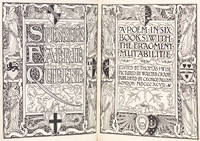
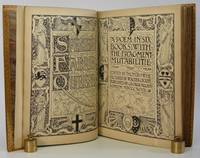
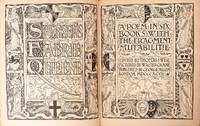
06429London: Published by George Allen 1897. The Most Important Work Illustrated by Walter Crane<br /> One of 1000 Copies Printed on Handmade Paper<br /> <br /> CRANE Walter illustrator. SPENSER Edmund. Spenser's Faerie Queene. A Poem in Six Books with the Fragment Mutabilitie. Edited by Thomas J. Wise. Pictured by Walter Crane. London: Published by George Allen 1897.<br /> <br /> First edition illustrated by Walter Crane. One of 1000 copies printed on handmade paper out of a total edition of 1028 copies. Originally issued in nineteen parts with wrappers also designed by Crane. Six quarto volumes 10 11/16 x 8 5/8 inches; 272 x 220 mm. Double-page general title in Volume I seven title-pages Volume I dated 1894 Volumes II-III dated 1895 and Volumes IV-XI dated 1896 and eighty-eight full-page woodcut illustrations including one double-page. With 132 head- and tail-pieces numerous decorative initials and printer's and publisher's colophons. Printed by the Chiswick Press.<br /> <br /> Bound by Zaehnsdorf stamp-signed in gilt on the front turn-in in full dark green crushed morocco. Covers decoratively tooled in gilt to match the original cover design spines decoratively tooled and lettered in gilt in compartments gilt board edges and turn-ins green watered silk doublures and liners top edge gilt others uncut. Zaehnsdorf exhibition stamp in gilt on rear doublure. Original pink printed wrappers bound in. Spines uniformly faded otherwise a fine set.<br /> <br /> "The most important work in the whole long list of books illustrated by Walter Crane. If Crane's claim to greatness were based entirely on this work he would still retain his position in the front rank of nineteenth-century artists. The wealth of ideas and forms real and fantastic which are embodied in the actual illustrations and even more in the marvellous decorative border designs is almost incredible! Besides the numberless presentments of the human figure in all its manly vigour and womanly grace the whole range of nature's forms of animal and plant life of fabulous mythological inventions of allegorical personifications are worked into decorative designs of exquisite beauty. It would be petty nay foolish to try to find fault with certain very obvious shortcomings as regards anatomical drawing in a work which does not only stand unique as pure decoration but speaks of an amount of knowledge and a wealth of imagination that command unrestricted admiration and respect" Konody p. 71.<br /> <br /> Ashley V p. 196. Engen Crane p. 102. Massé pp. 47-48. London: Published by George Allen, 1897 unknown