SPENSER, EdmundBiblio.com
1 644 résultats
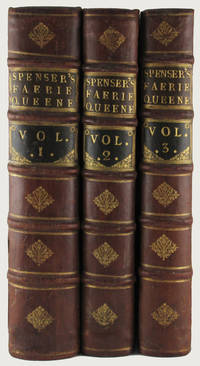
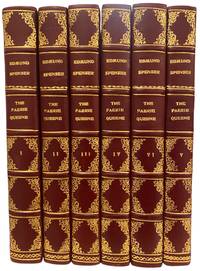
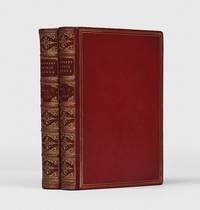
1596165717London: Printed for William Ponsonbie 1596. For there is nothing lost that may be found if sought First complete edition comprising the first edition of the second part and the second edition of the first part. Written in praise of Elizabeth I and dedicated to her Spenser's allegorical masterpiece follows the adventures of six medieval knights drawing on Arthurian legend Italian romance classical epic and Chaucer. John Dryden notes that "Spencer more than once insinuates that the Soul of Chaucer was transfus'd into his Body; and that he was begotten by him Two hundred years after his Decease" Dryden f. A1. In its mingling of genres the poem represented a new departure in English poetry for which Spenser invented a new stanza "a hybrid form adopted from the Scots poetry of James I 'rhyme royal' and Italian 'ottava rima'" ODNB. Spenser began composing the work in the 1570s sharing "parcels" of it among friends. Though no rough drafts autograph copies or foul papers for the poem have survived the poet alludes to a manuscript copy as early as 1580 when in a letter to Gabriel Harvey he asks for one to be returned to him: "I wil in hande forthwith with my Faery Queene whyche I praye you hartily send me with al expedition: and your frendly Letters and long expected Iudgement wythal" Three Proper and wittie familiar Letters. The poem or some part of it was almost certainly circulating in manuscript in London in 1588 when Abraham Fraunce quotes a stanza in his Arcadian Rhetorick correctly citing its book and canto "Spencer in his Faerie queene.2.book.cant.4". The first part was finally printed in 1590 - possibly intended to coincide with the publication of Philip Sidney's Arcadia - and the second part followed with a new edition of the first in 1596. Spenser likely composed some of the second part around 1593 as the conversion of Henry IV of France to Catholicism that year provides the historical basis for the Burbon episode in Book V. The poem now six books was entered into the Stationers' Register on 20 January 1596 suggesting publication had been planned to fall during Elizabeth I's Grand Climacteric - her 63rd year thought by astrologers to be critical - which had begun on 7 September 1595. In 1599 with only six of his twelve planned books completed Spenser died - his two fragmentary Cantos of Mutabilitie thought to be intended for Book VII are the only additional material published with the first folio edition of 1609. Provenance: from the library of Henry White 1822-1900 of Queen's Gate London with his armorial bookplate on the front pastedowns and sold in his 1902 Sotheby's sale lot 2028. The book was bound likely for White himself by Roger de Coverly 1831-1914 the London binder under whom T. J. Cobden-Sanderson trained. An old description mounted on the front pastedown of the first volume likely from a turn-of-the-century exhibition notes that the books were "lent by H. White Esq.". 2 vols small quarto 195 x 145 mm. Woodcut device of printer Richard Field to title pages full-page woodcut to M5 verso. Bound by Roger de Coverly in late 19th-century red crushed morocco spines with five raised bands lettered in gilt direct to second and third compartments remaining compartments richly gilt triple gilt fillet border to covers edges and turn-ins gilt marbled endpapers gilt edges. Spines slightly darkened upper margins closely trimmed touching a couple of headings outer leaves of vol. I faintly soiled a few spots to vol. II else clean and fresh within. An excellent copy handsomely bound. Pforzheimer 970; ESTC S117748. John Dryden "Preface" in Fables Ancient and Modern 1700; Edmund Spenser Three Proper and wittie familiar Letters 1580. hardcover
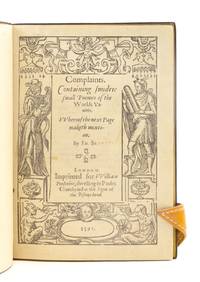
1591ST18266London: Imprinted for William Ponsonbie dwelling in Paules Churchyard at the signe of the Bishops head 1591. FIRST EDITION. 182 x 130 mm. 7 1/4 x 5 1/4". 91 leaves lacking blank Z4. <br/> Late 19th century green crushed morocco by Riviere & Son stamp-signed on front turn-in covers with decorative gilt lozenge centerpiece raised bands gilt lettering gilt-ruled turn-ins. Housed in a modern brown buckram chemise and attractive morocco-backed slipcase. Main title page with woodcut border McKerrow & Ferguson 117 section titles for three of the poems with woodcut frame woodcut initials head- and tailpieces. Front pastedown with engraved armorial bookplate of Charles Lilburn and ex-libris of Kenneth Rapoport see below. Langland to Wither 235; Hayward 23; Johnson 14; Pforzheimer 968; STC 23078; ESTC S111266. The Rosenbach Company catalogue 45 #690 this copy. Spine sunned to olive brown faint fading and soiling to covers just a hint of rubbing to corners and spine ends contents lightly washed and pressed in keeping with bibliophilic fashion at the time of binding occasional small spot or other trivial imperfection but an excellent copy clean and fresh internally in a perfectly pleasant binding.<br/> <br/> This is an appealing copy with star-studded provenance of one of the less frequently encountered first editions of Edmund Spenser ca. 1552-99 the first modern English poet to achieve major stature during his lifetime. It comprises a collection of six poems and three translations assembled by publisher William Ponsonby in order to capitalize on the recently experienced success of "The Faerie Queene." In the preface Ponsonby describes these poems as "complaints and meditations of the worlds vanitie very grave and profitable." The included works some dating back to Spenser's college days are: "The Ruines of Time" "The Teares of the Muses" "Virgils Gnat" "Proposia Or Mother Hubberds Tale" "Ruines of Rome" "Muiopotmos or the Fate of the Butterflie" "Visions of the Worlds Vanitie" "Bellayes Visions" and "Petrarches Visions." Six of these are original poems all previously unpublished and three are translations one unpublished and two revised. Unfortunately "Proposia" was a political satire on the attempts to arrange a marriage between Elizabeth I and the Duc d'Alençon that resulted in the entire volume being banned. That poem was omitted from early editions of the collected minor poems. Day says Spenser demonstrated "with his fluency in many meters and stanzaic forms . . . that English was at least the equal to any other language as a vehicle of great poetry." Although his poetry particularly "The Faerie Queene" looks backward--as the culmination of the allegorical verse tradition of the Pearl Poet Langland and Chaucer--Spenser has influenced with "his fertile imagination and especially his sensuous imagery and melodic language" nearly every important English poet who followed him. Our volume has distinguished provenance four times over. The first known owner here Charles Lilburn Esq. 1842-91 was an antiquary businessman Justice of the Peace and Fellow of the Society of Antiquaries of Newcastle-upon-Tyne. George Neasham in "North-Country Sketches" 1893 calls Lilburn "bibliomaniacal" but also "one of nature’s gentlemen." In 1888 the "Proceedings of the Society of Antiquaries of Newcastle-upon-Tyne" claimed that Lilburn’s library "would have charmed the heart of Dibdin himself." The present copy then apparently became the subsequent property of Sir Israel Gollancz 1863-1930 distinguished Shakespearian scholar and editor of early English literature at least he is named as a previous owner when this copy was sold by Swann Galleries in May of 2022 at the Rapoport sale. The book appeared later in the inventory of the rare book firm of A. S. W. Rosenbach 1876-1952 of Philadelphia where it was listed in the 1941 catalogue as item #690 priced at $300. Finally it became part of the library of Ken Rapoport who amassed an outstanding collection over 50 years with special emphasis on works of drama and poetry by English and Spanish authors among them Shakespeare Spenser and Cervantes. "Complaints" is scarce is virtually never found except in a modern binding and is usually seen in unappealing internal condition. Imprinted for William Ponsonbie, dwelling in Paules Churchyard at the signe of the Bishops head unknown
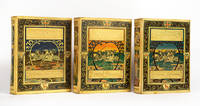
18972945London: J.M. Dent 1897. Chivers bindings. Fine. STUNNING CHIVERS VELLUCENT BINDINGS. One of 100 large-paper copies illustrated by Louis Fairfax Muckley. The three thick quarto volumes are elegantly printed on handmade paper and illustrated throughout with images and designs by the British artist and illustrator Louis Fairfax Muckley. The illustrations are magnificent and feature the plates in two states red and black.<br /> <br /> The bindings by Chivers however are the star of the show and perfectly complement the text. For the front boards Muckley has created an intricate design featuring a knight and lady on galloping horses surrounded by decorative borders and gilt titling. Each spine depicts a lady emerging from a colorful background while each rear board has a stylized dragon seemingly jumping out from the binding. While the outlines of the designs are the same on each volume they are each painted with different colors creating a unique look and mood for each.<br /> <br /> On Cedric Chivers’s “vellucent†bindings:<br /> <br /> Chivers created a masterful binding technique in the late 19th century he called “vellucent†– a portmanteau combining “vellum†and “translucentâ€. The process was arduous but the results were stunning with artwork seeming to glow under a layer of thin protective vellum.<br /> <br /> His process began with a decorative design—in the case of these volumes artwork by Louis Fairfax Murray – created on paper or thin parchment. The artwork was then placed underneath a sheet of vellum that was extremely thin and specially treated to be translucent allowing the colors to almost shine like a stained glass window. The final step was particularly tricky – since vellum is not particularly flexible it required expert craftsmanship to lay it smoothly over the book's boards and spine without wrinkles or bubbles. The result is a binding that doubles as a work of fine art.<br /> <br /> The bindings are stamped “Bound by Cedric Chivers†in gilt on the rear dentelles and decoratively written on the rear endpaper of volume 1 likely by Chivers is the note: “THIS BOOK IS BOUND BY / CEDRIC CHIVERS BATH / 2 COPIES ONLY WITH THIS DESIGN / THIS IS NO 1â€. Anecdotally however we are aware of three copies that have been bound with this design although without the written limitation.<br /> <br /> Provenance: There is a note in pencil in the first volume that these are from the Robert Hoe collection but we have not been able to confirm this.<br /> <br /> London: J.M. Dent 1897. Thick octavos 258 x 197 mm vellucent bindings by Chivers. Text nearly pristine. A touch of bowing to bindings.<br /> <br /> AN OUTSTANDING EXAMPLE OF CHIVERS BINDINGS IN UNUSUALLY FINE CONDITION. J.M. Dent unknown
119175London J.M. Dent 1897. . Limited edition of 100 copies printed on handmade paper each one signed by the illustrator underneath the printed colophon at the rear; ' This book is bound and decorated and colour by Cedric Chivers designed by' followed by ink manuscript asterisk since not a large enough space for signature hence below; 3 vols 4to 265 x 210 mm; halftitles titles printed in red and black with woodcut borders 26 woodcut illustrations several doublepage decorative headpieces initials and tailpieces by FairfaxMuckley a few text leaves still uncut age-toning to text blocks more evident to edges some tissue-guards a bit foxed with resultant offsetting generally the odd random mark or spotting but mostly to the blank margins except for a stain to lower edge of illustrated leaves facing pp 576 & 682 in vol. III otherwise very good; original full vellucant vellum by Cedric Chivers of Bath printed colophon to each vol. the upper cover with a hand-painted scene of an Arthurian Knight and a lady possibly the Red Cross Knight and his lady Una both on horse-back galloping within a heart-shaper frond gilt title-panel all within and armourial boarder the spines painted with an Authurian lady holding a lamp aloft. the rear boards painted with a large roundel of a stylised dragon each vol. in a variant colourway top edge gilt others trimmed as published age-toned with minor soiling mostly to rear boards otherwise very good-plus a stunning set.<br /> One of 100 copies on handmade paper of this English epic poem first published in 1590 signed by the illustrator. <br /><br />Following a lecture by Cyril Davenport of the British Museum on the 18th century painted vellum bindings of Edwards of Halifax Cedric Chivers created his own 'Vellucent' bindings using established artists such as Jessie M. King Alice Shepherd and H. Granville Fell. In its prime the company experimented and specialised in highly skilled and beautiful bindings; this example being one of them.<br /><br />Chivers was born in Bath to a bookbinding family. After working for his father and various other binders he opened his own business in 1878 in the premises formerly occupied by Robert Rivière in Union Street Bath. He subsequently moved to a double fronted shop at 39 Gay Street and then as the business expanded to a large house at Portway in Combe Park where the company operated until 1990.<br /> London, J.M. Dent, 1897. hardcover
18961016<p>Small 4to. Printed in Golden type 12 full-page woodcut illustrations by Arthur J. Gaskin and woodcut initials. Original holland-backed boards title printed on upper cover. Spine boards and corners free of wear and bumps no bookplates fine.</p> Kelmscott Press
16098845<p>First folio edition. Full ruled calf rebacked in supple morocco with new endpapers. First stanza of each canto printed inside four-component woodcut. Numerous woodcut headpieces tailpieces and initial letters.</p><p>Loss to title page corner not affecting text or image. Archival tape repair at title page gutter and last page. Undecipherable scribbling to title page as well as to pages 1 2 252 & 253 with ink stain to the latter see image. Some worming at upper margins; minimal impact to text at 12 pages between A-D see image. Includes pagination error at page 8 numbered 10. Inked name of Ralph Markland British publisher known for the 1643 publication of the portrait of Prince Rupert and " Garrett fitz Gerald his booke / 1666" to page 1. A handsome copy.</p> Printed by H.L. for Mathew Lownes hardcover
189752214London: George Allen 1897. Six volumes one of 1000 sets 4to. Numerous full page illustrations as well as head and tail pieces original wrappers bound in light browning to endpapers only attractive contemporary inscription to a front blank in volume I. Original gilt and red decorated cream buckram t.e.g. the volumes still with their plain d.w.'s with holes in the spines to enable the titles to be read these with some wear and loss and with half of the wrapper to volume II absent but as a result the set is in excellent condition and is still held in the original green cloth box this with some staining and wear to the fold-down front. A remarkable survival. London: George Allen unknown
16118706Printed by Humphrey. Lownes. for Mathew Lownes Anno. Dom. 1611 i.e. 1615 . 1611 Folio. 4 363 3 p. Recent speckled calf binding. The spine with raised bands and a contrasting label. The general title within a woodcut border laid down with portion of loss in the gutter Faerie Queene with woodcut cartouches to head of each canto Shepheards Calender with woodcut illustrations divisional titles woodcut initials and head- and tail-pieces with blanks 2H6 & F4 Sig.par Letter to Raleigh & commendatory sonnets bound at end and lacking final blank par9 Faerie Queen : M6 small loss to inner-margin O6 with few ink marks mostly to margins Z6 portion of loss affecting 2 stanzas with text supplied in later ink manuscript affecting also cartouche to verso par6 small loss to head affecting woodcut head-piece Faerie Queen has occasional marginal annotations slightly trimmed. There is some light damp staining to final few Sig. and ink splashes to final few leaves. The title page to The Second Part of Faerie Queen is date 1612 with the colophon dated 16012. It includes Mother Hubberd's Tale for the first time with the title dated 1613. Lownes was permitted to print this as Cecil had died in 1612. Inscribed by two members of the Frere family 1789 and later. Printed by H[umphrey]. L[ownes]. for Mathew Lownes, hardcover
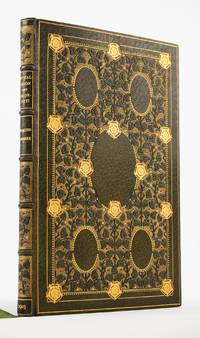
1903ST20957London: John & E. Bumpus 1903. 211 x 140 mm. 8 1/2 x 5 1/2". 86 pp. <br/> LOVELY GREEN MOROCCO GILT AND INLAID FOR J. & E. BUMPUS stamped in gilt on rear turn-in LIKELY BY RIVIERE & SON upper cover with gilt fillet frame central panel with densely blind-stamped leafy vines on a gilt pointillé background accented with onlaid red morocco dots large oval at center and four smaller ovals all framed by gilt beads the central oval adorned with four gilt and onlaid red and white morocco Tudor roses 10 more such roses at corners and along the sides of outer frame lower cover with gilt fillet frame raised bands spine compartments with blind-stamped leafy sprig on pointillé ground with onlaid black ivory and red morocco dots gilt lettering turn-ins with gilt border gilt trio of leaves at corners all edges gilt. With engraved frontispiece portrait title page vignette two headpieces and two tailpieces. Upper cover and spine evenly faded to olive green likely from being displayed just a hint of bowing to boards but A VERY FINE COPY the text entirely clean fresh and bright and the binding unworn.<br/> <br/> This lovely printing of Spenserian poetry comes in an unusual and skillfully executed binding likely by Riviere & Son which was producing some of its very best work at the time of publication. The poems here were inspired by Spenser's courtship of and 1594 marriage to his second wife Elizabeth Boyle. Day calls "Amoretti" "a unique sonnet sequence in Renaissance England" and he is unreserved in his praise for "Epithalamion" calling it "the most beautiful nuptial poem in English and perhaps in any language." Spenser 1552 - 99 was the first modern English poet to achieve major stature and Day points out that those "influenced by Spenser are virtually a roster of the great English poets since his time" among them Milton Wordsworth Keats Rossetti and Tennyson. Bumpus bindings were done for the bookselling firm of John and Edward Bumpus founded in 1780. The firm long enjoyed a reputation as purveyors of fine and beautiful bindings without ever operating a bindery. Instead they outsourced the work to the best binders of the day including Riviere and Morrell the former being a likely choice here. The combination of swirling blind-stamped vines a densely stippled background and onlaid blossoms demonstrates creativity in design proficiency in a range of finishing techniques and meticulous execution. The five blank ovals on the upper cover bring to mind the layout of Cosway bindings a specialty of the Riviere firm in which those ovals would be filled with miniature paintings on ivory under glass. Cosway bindings could sometimes be ornate to the point of being overwhelming so the blank ovals here are a welcome moment of restraint amid the animation of the cover design. Apparently an earlier owner enjoyed displaying this binding--as who would not--and the leather has mellowed to an olive green--which may actually be a more pleasing foundation for the decoration than the original brighter green. Certainly the book saw no other use as the contents are as fresh as the day the volume left the printer. John & E. Bumpus unknown
1611006138London: Mathew Lownes 1611. 3rd Printing. Hardcover. Very Good. 4to - over 9¾ - 12" tall. One of the great long poems in the English language. The First Collected Edition. VG dated 1611 but 1615 third re-issue of the first 1609 edition. In modern Riviere brown full morocco to style some blind tooling gilt arabesque centerpieces worn along edges. Spine raised bands gilt tooling & titles worn along edges. Internally Faerie Queen 1611 4 185 1 The Second Part 1612 2 189-363 1 16012. 2 The Shepheards Calender 1611 10 56. 2 Mother Hubberds Tale 1613 4 5-16. Colin Clouts ND 26. Prothalamion 1611 4. Amoretti 1611 16. Epithalamion 1611 6. Foure Hymnes 1611 16. Daphnaida 1611 10. Complaints 1611 11 1. The Teares 1611 11 1. Virgils Gnat ND 9 1. Ruines of Rome ND 6. The Fate of The Butterfly 1611 9 1. Visions ND 8. A letter ND 4 1589. A Vision ND 10. Each part with a large woodcut header & tail cuts to each canto header & calendar month. A.E.G. Welsh armorial bookplate to fpd new 'old' endpapers crease to ffep couple of tiny edge nicks. A lovely copy. ESTC S123122. STC 23084. Pforzheimer 973. Signatures: 2ff A2-Q4 1ff R2-Hh5 1ff blank 1ff A2-F3 1ff blank 1ff A2-A8 1ff A2-M2 q-q7. 4 363 pp 1. 2 10 56 2. 4 5-16. 26. 4. 16. 6 16. 10. 12. 28. 32. A third "reissue" of the 1609 edition though both parts are now actually in later settings. Part 1 still has the 1611 cancel title page and conjugate dedication of the first reissue STC 23083.3. The text of part 1 has now been reset the 1615 date conjectured by STC; B3r stanza 1 begins "Young Knight". Part 2 still has separate title page dated 1612 or 1613 stop-press variants and R3r catchword reads "And". Pagination and register are continuous. The poem was to have been a religious-moral-political allegory in 12 books each consisting of the adventures of a knight representing a particular moral virtue. And was presented to Queen Elizabeth 1 in 1589 probably sponsored by Walter Raleigh. Foundational edition for the study of Spenserian poetry combining his major allegorical and pastoral works. Essential for literary historians scholars of Elizabethan literature. ND <br/> <br/> Mathew Lownes hardcover
18971243241897. First Edition. CRANE Walter illustrator SPENSER Edmund. Spenser's Faerie Queene. London: George Allen Chiswick Press 1897. Six volumes. Quarto contemporary three-quarter vellum gilt brown morocco spine labels marbled endpapers top edges gilt uncut; original wrappers bound in at rear of each volume. $5200.Limited first book-form edition of Walter Crane's ""most ambitious project of book illustration"" Lacy 103 one of 1000 large-paper copies with 88 splendid full-page pen-and-ink line-cuts two double-page 135 illustrative head- and tailpieces by Crane and six facsimile title pages from earlier editions. Handsomely bound by J. Adams of Manchester.""The noblest allegorical poem in our languageindeed the noblest allegorical poem in the world"" James Montgomery. Originally published in the late 16th century the first three books in 1590 and the next three in 1596 with the ""Mutabilitie Cantos"" added in 1609 Spenser's ambitious Arthurian allegory was the first epic that ""both incorporated countless mythological and folkloric traditions and exemplified the careful design and poetic quality of written literature"" Clute & Grant 890. Finely printed on handmade paper the Chiswick Press edition with notes and commentary by Thomas Wise was originally issued in 19 parts 1894-96 and stands at the pinnacle of famous illustrator Walter Crane's career. All front wrappers and rear wrappers bound in. Massé 47. A splendid set of this delightful illustrated edition in fine condition. hardcover
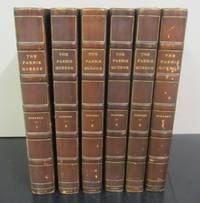
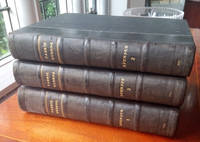
175133225London: for J. Brindley in New Bond-Street and S. Wright Clerk of his Majesty's Works. 1751. 3 volumes. Very Scarce First Printing of the Edition. A copy with pleasing provenance coming from the library and with the bookplate of John Templer who was educated at Westminster School and Trinity College Cambridge graduating in 1836. He was admitted to the Inner Temple in 1837. Templer became a close friend of James Brooke through his elder brother James Lethbridge Templer 1811–1845 of the East India Company Merchant Navy. Templer acted as Brooke's legal counsel. In 1853 Templer was called to the bar and from 1854 he was one of the Masters of the Court of Exchequer Illustrated with 32 very finely engraved full-page copper plates and engraved head and tailpieces and initials throughout. Large thick quartos in very fine contemporary polished calf the spines with raised bands gilt ruled two compartments with fine contrasting maroon and black morocco lettering labels gilt the remaining compartments with central gilt tooling original endleaves. 2 lxiii xxxvii 453 2; 2 450; 2 440 pp An unusually fine handsome and beautifully bound set. The bindings are in excellent condition and these are crisp clean copies especially so. Very rarely are such fine copies encountered in the marketplace. TRULY FINE COPIES OF THIS BEAUTIFUL PRINTING OF SPENSER'S FAIRIE QUEENE ONE OF THE GREATEST WORKS IN THE ENGLISH LANGUAGE.<br> Edmund Spenser stands with William Shakespeare and John Milton in the history of English poetry and litereature. He is recognized as one of the premier craftsmen of modern English verse from its infancy and one of the greatest poets in the language. Spenser was known to his contemporaries as "the prince of poets†and was said by them to be "as great in English as Virgil in Latinâ€. He was greatly preferred over Shakespeare by Queen Elizabeth and many others of the day. He left behind his masterful essays in every genre of poetry from pastoral and elegy to epithalamion and epic. A century later John Milton would call Spenser "a better teacher than Aquinas†and was greatly influenced by him. Since then generations of readers have admired his subtle use of language his imagination his immense classical and religious learning and "his unerring ability to synthesize and ultimately to delightâ€.<br> THE FAERIE QUEEN is Spenser’s best known work and arguably his best. It is especially notable for its form: it was the first work written in what is now called Spenserian stanza and is also one of the longest poems in the English language. An allegorical work written in praise of Queen Elizabeth I it is largely symbolic the poem follows several knights in an examination of several virtues. It found not surprisingly great political favour with Elizabeth I and was such a public success that it quickly became Spenser's defining work. The last six books of the twelve Spenser intended were never written though two cantos noted as the Seventh and Eighth Bookes appear here. for J. Brindley, in New Bond-Street and S. Wright, Clerk of his Majesty's Works.... hardcover
1617047088London: Humphrey. Lownes. for Mathew Lownes 1617. Early Edition. Hardcover Full Leather. Good Condition. Contemporary calf rebacked and recornered marbled endpapers added hinges reinforced with cloth tape but binding quite sound overall. Lacking the general title and Faerie Queen part two title but with separate title pages for most of the individual parts and an old manuscript Faerie Queen title tipped in at the beginning. Light tide mark occasionally in bottom right corner heavier in last dozen or so pages. Scattered minor browning small marginal repair to C3 right edge of Foure Hymnes Title replaced - generally very good or better internally. Faerie Queen colophon dated 16012. ESTC S122304 with points B3r stanza 1 begins "Young Knight"; R3r catchword "And". Lacking blank at end of Faeirie Queen; a confusing book to collate but collates as follows: 363pp 10 56pp blank 4 5-16 14 blank 26 22 14 10 14 12 10 6 10 8pp.<br/><br/>Faeries Queen The Shepheards Calender Mother Hubberds Tale A Letter of the Authors etc no separate title or pagination Colin Clouts Come Home Againe Prothalamion Foure Hymnes Dapnaida Complaints Containing Sundry Small Poemes of the Worlds Vanitie The Teares of the Muses Virgils Gnat no separate title but half title with dedication The Ruines of Rome no separate title The Fate of the Butterfly Visions of the Worlds Vanitie etc no separate title. A few of the last poems Visions Petrarch Virgil are translations from du Bellay.<br/><br/>Old inscription describing provenance on front endpaper. <br/> Size: Folio. Quantity Available: 1. Shipped Weight: Under 1 kilo. Category: Literature & Literary; Poetry. Inventory No: 047088. H[umphrey]. L[ownes]. for Mathew Lownes hardcover
1897006745London: George Allen 1897. First edition. Three Quarters Crushed Morocco. Marbled pastedown. Near Fine. One of 1000 unnumbered sets printed. 4to. 27.5 by 22 cm. 19 parts bound in 6 volumes. Pictorial pink wrappers bound in. Plates headpieces and tailpieces by Crane. Gilt rose and leaf pattern in four spine compartments lettering in two. George Allen unknown
1897206378London: George Allen 1897. Rear cover of the final volume detached hinges tender; some surface scratches; spines faded a shade. A very handsome set. Six volumes. 4tos; lxxxvii 1-248 18 viii 251-527 13 viii 529-805 13 viii 807-1044 12 viii 1045-1274 16 viii 1277-1546 24; full polished tree calf gilt with exquisitely tooled spines with red and tan leather labels marbled endpapers; t.e.g. One of 1000 unnumbered copies on handmade paper printed by Charles Whittingham & Co. at the Chiswick Press this copy has been beautifully bound in the Riviere style by H.S. Nichols. One of the high-water marks of Art & Crafts book design this was Walter Crane's last major commission and one of his most fully executed and highly prized publications featuring 88 full-page illustrations along with head and tailpieces devices and initials throughout. The set was issued in parts between 1894 and 1897 and the original title pages and publisher's devices are bound in at the rear of each volume of this set. n.b. this is a heavy multi-volume set and will require additional shipping charges. George Allen unknown
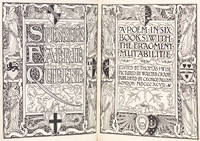
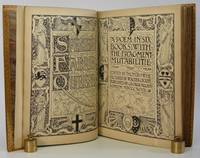
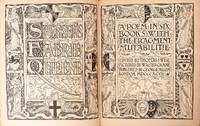
06429London: Published by George Allen 1897. The Most Important Work Illustrated by Walter Crane<br /> One of 1000 Copies Printed on Handmade Paper<br /> <br /> CRANE Walter illustrator. SPENSER Edmund. Spenser's Faerie Queene. A Poem in Six Books with the Fragment Mutabilitie. Edited by Thomas J. Wise. Pictured by Walter Crane. London: Published by George Allen 1897.<br /> <br /> First edition illustrated by Walter Crane. One of 1000 copies printed on handmade paper out of a total edition of 1028 copies. Originally issued in nineteen parts with wrappers also designed by Crane. Six quarto volumes 10 11/16 x 8 5/8 inches; 272 x 220 mm. Double-page general title in Volume I seven title-pages Volume I dated 1894 Volumes II-III dated 1895 and Volumes IV-XI dated 1896 and eighty-eight full-page woodcut illustrations including one double-page. With 132 head- and tail-pieces numerous decorative initials and printer's and publisher's colophons. Printed by the Chiswick Press.<br /> <br /> Bound by Zaehnsdorf stamp-signed in gilt on the front turn-in in full dark green crushed morocco. Covers decoratively tooled in gilt to match the original cover design spines decoratively tooled and lettered in gilt in compartments gilt board edges and turn-ins green watered silk doublures and liners top edge gilt others uncut. Zaehnsdorf exhibition stamp in gilt on rear doublure. Original pink printed wrappers bound in. Spines uniformly faded otherwise a fine set.<br /> <br /> "The most important work in the whole long list of books illustrated by Walter Crane. If Crane's claim to greatness were based entirely on this work he would still retain his position in the front rank of nineteenth-century artists. The wealth of ideas and forms real and fantastic which are embodied in the actual illustrations and even more in the marvellous decorative border designs is almost incredible! Besides the numberless presentments of the human figure in all its manly vigour and womanly grace the whole range of nature's forms of animal and plant life of fabulous mythological inventions of allegorical personifications are worked into decorative designs of exquisite beauty. It would be petty nay foolish to try to find fault with certain very obvious shortcomings as regards anatomical drawing in a work which does not only stand unique as pure decoration but speaks of an amount of knowledge and a wealth of imagination that command unrestricted admiration and respect" Konody p. 71.<br /> <br /> Ashley V p. 196. Engen Crane p. 102. Massé pp. 47-48. London: Published by George Allen, 1897 unknown
186247595London: Smith Elder and Co 1862. First Edition. Full leather. Fine. 400p 420p octavo. With errata and both half titles 12 tinted lithographs 4 color lithographs and 3 folding maps. Beautifully bound in full green morocco top edge gilt spines sunned to brown bound by P. Fister Co. Inscribed by the author in volume 1 on the half title page to Mrs Menzies from her sincere friend the Author" Rare signed. <br/><br/> Smith Elder and Co hardcover
18974803London: George Allen 1897. Six volumes. Limited first book-form edition. Edited by Thomas J. Wise and with the fabulous arts and crafts illustrations of Walter Crane. One of 1000 unnumbered copies on handmade paper printed by Charles Whittingham & Co. at the Chiswick Press. The original soft covers of the parts have been retained and bound in to the rear. Recently repaired / re-spined in red leather with the original red leather boards. Some of the boards have some darkening / staining but overall in very attractive condition. Internally the books are sound but slightly darkened to the edges. A decent copy. lxxxvii 1-248 i covers. viii 251-528 covers. viii 529-806 covers. viii 807-1044 covers. viii 1045-1276 covers. viii 1277-1546 8 covers. . Très bel exemplaire de la première édition. Six volumes. Édité par Thomas J. Wise et avec les fabuleuses illustrations art nouveau de Walter Crane. Un des 1000 exemplaires non numérotés sur papier fait main imprimés par Charles Whittingham & Co. à la presse de Chiswick. Les couvertures souples originales des parties ont été conservées et reliées à l'arrière. Récemment réparé / ré-épinglé en cuir rouge avec les planches d'origine en cuir rouge. Certaines planches présentent quelques taches mais dans l'ensemble elles sont en très bon état. A l'intérieur les livres sont sains mais les bords sont légèrement assombris. Un bon exemplaire. lxxxvii 1-248 i couvertures viii 251-528 couvertures viii 529-806 couvertures viii 807-1044 couvertures viii 1045-1276 couvertures viii 1277-1546 8 couvertures. George Allen paperback
189771892London: George Allen 1897. Limited edition. 3/4 Leather. Very Good. 6 volume set. 28.5 x 22 cm. Quarto. lxxxvii 1546 pp Bound into 3/4 brown leather over green marble boards and endpapers. 5 raised bands to spines. Illustrated with oveer 200 woodcut illustrations as well as head and tail pieces and decorated initials by Walter Crane. Limited to 1000 copies printed on handmade paper. TEG. Sun toning to spines. A bit of rubbing to edges. Previous owner's bookplate Deatherage on front fixed endpaper of each volume. Some scuffing to the spines. Crane's best work. George Allen unknown
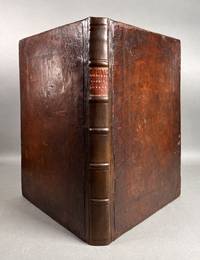
1751001<p><strong>SPENSER Edmund <em>The Faerie Queene</em></strong>. With an exact Collation of the Two Original Editions Published by Himself Spenser at London in Quarto; the Former containing the first Three Books printed in 1590 and the Latter the Six Books in 1596. To which are now added A new Life of the Author and also a Glossary. Adorn'd with thirty-two Copper-Plates from the Original Drawings of the late W. KENT Esq. London: Printed for J. Brindely. . . <strong>1751</strong>. 3 volumes. 4to pp. ii lxiii lxiv blank xxxvii xxxviii blank xxxix - xl Contents xli errata xlii blank 453 454 blank; ii 440 20 full-page engraved plates in volume 1 7 full-page engraved plates in volume 2 5 full-page engraved plates in volume 3 dully rebound probably 19th century in quarter calf publisher's cloth; tear in pp. 125-126 in volume 3 but otherwise a good clean set with good impressions of the plates.</p><p>The life is by Thomas Birch prolific writer member of the Society of Antiquaries and Fellow of the Royal Society. <em>The Faerie Queene </em>is an epic poem one of the longest in the English language. It is primarily an allegorical poem and was originally presented by Spenser to Queen Elizabeth I in 1589 in an attempt to gain Royal patronage. It has become a hugely influential work in which Spenser invented the verse form known as the Spenserian stanza.</p><p>Free Tracked Post for All UK Customers<br />Overseas Customers please contact for postage prices</p> J. Brindely. . . hardcover
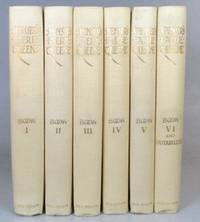
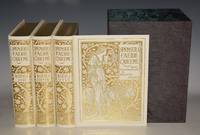
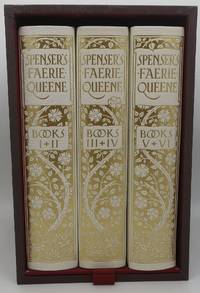
88434London The Folio Society 2011 Limited Numbered Edition 114/1000. The gorgeous facsimiles are bound in 3 volumes : Each volume is bound in stunning white Nigerian goat skin blocked with a gilt design on cover and spine that is seductively sensuous to the touch. The volumes are housed on a sliding tray in a maroon toile vendome silk covered wooden case 31.8x23.6x20.6cm. that is lined with maroon cloth. All three volumes are identically bound and gilt embossed except for the book number on the spine. Presented in a wooden slipcase covered in Tsarina Crush with a sliding tray in the base for ease of use In very good near fine condition. Near fine slipcase. Pages all clean and tight. An excellent limited edition copy. Books I & II 528 pages books III & IV 516 pages books V & VI 507 pages. It is printed on thick watermarked laid paper with gilt top page edges and white ribbon markers. Profusely illustrated with 88 large illustrations and 135 illustrative head and tailpieces by Walter Crane. 1712 pages in total he sixteenth century was the golden age of English poetry. Edmund Spenser burned to create an English equivalent to Virgil’s Aeneid. Instead of lauding the Caesars he would glorify Elizabeth the Virgin Queen. Where Virgil connected Rome to the heroic past of Troy Spenser would forge a link between Tudor England and the mythological age of King Arthur. The result was The Faerie Queene a rich allegory which elevated Protestant virtues through the medium of a romantic chivalric epic. Today the power of Spenser’s story and the beauty of his verse still live in ‘famous memory’. London, The Folio Society, 2011 Limited Numbered Edition 114/1000. hardcover
1901165727London: Essex House Press 1901. The epitome of an Essex House Press production First Essex House Press edition number 62 of 150 copies only each printed on vellum and hand-coloured. First published in 1595 Spenser wrote this ode for his bride on their wedding day. It is printed here as the fifth work in the Essex House Press Great Poems Series. The Essex House Press was founded by Charles Robert Ashbee and Laurence Hodson following the closure of William Morris's Kelmscott Press in 1897 and "came from the heart of the arts and crafts movement" Franklin p. 64. Ashbee bought the Kelmscott Press's Albion printing presses after William Morris's death and employed one of the Kelmscott compositors Thomas Binning. In 1902 "a bindery was established in the Guild under the direction of Annie Power who had been a student of Douglas Cockerell" Crawford p. 400. For this work Florence Kingsford Cockerell 1871-1949 one of the leading book illuminators of the English arts and crafts movement provided the illuminated letters. Kingsford Cockerell studied calligraphy under Edward Johnston and predominantly worked for the Ashendene Press. Octavo. Printed in Caslon type. Hand-coloured frontispiece woodcut by Reginald Savage illuminated letters in gilt red blue and green by Florence Kingsford Cockerell with tissue guards. Original vellum spine lettered in gilt rose and "Soul is Form" blind-stamped to front cover. Pastedowns lifting slightly from boards: a near-fine copy. Ashbee A Bibliography of The Essex House Press p. 15; Franklin p. 243; Ransom Essex House Press 23. Alan Crawford C.R. Ashbee: Architect Designer & Romantic Socialist 2005; John Mansfield Thomson Farewell Colonialism: The New Zealand International Exhibition Christchurch 1906-07 1998. hardcover
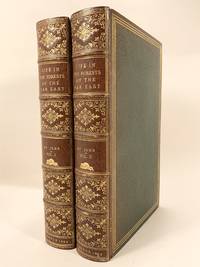
1862FINfeSAI69London: Smith Elder And Co. 1862. 1862. 2 Volumes. 8vo. pp. 1 p.l. vii-xix 1list of illus. 1 leaferrata 400; 1 p.l. v-xviii 1 leafplate list 420. lacking half-titles. 2 folding lithographed maps 4 hand-coloured lithographs of plants & 12 tinted lithographs. contemporary half calf spine & corners worn but solid neat gilt library stamp at foot of spines some foxing to plates & neighbouring leaves. First Edition. St. John who as a young man was fascinated with Borneo and the adventures of Sir James Brooke rajah of Sarawak and took up the study of the Malay language was introduced to Brooke on his visit to England in 1847 and accompanied him as private secretary when Brooke was appointed British commissioner and governor of Labuan. Thenceforth St. John and Brooke were closely associated. St. John was with Brooke during his final operations in 1849 against Malay pirates and he accompanied Brooke to Brunei the Sulu archipelago and to Siam in 1850. Although St. John deemed some of his chief's dealings with the natives high-handed and ill-advised he in a letter to Gladstone defended Brooke against attack in the House of Commons. While the official inquiry into Brooke's conduct which the home government appointed was in progress at Singapore St. John acted temporarily as commissioner for Brooke 1851-5 and visited the north-western coast of Borneo and the north-eastern shore ascending the principal rivers. Appointed in 1856 British consul-general at Brunei St. John explored the country round the capital and penetrated farther into the interior than any previous traveller. He published his full and accurate journals supplemented by other visitors' testimonies in these well-written and beautifully illustrated volumes entitled Life in the Forests of the Far East 1862. DNB Included are chapters on the Sea and Land Dayaks and their social life the Samarahan River and the Caves of Sirih St. John's ascents of the Mountain of Kina Balu explorations in the interior to the south and south-east of the capital expedition up the Limbang River visits to the Sulu Islands Borneo proper Sarawak the Chinese in Borneo the Chinese insurrection and Roman catholic and protestant missions. The plates include tinted lithographs showing scenery and natives and four hand-coloured lithographs of notable flora. cfCasey Wood p. 548 2nd Edn. F. Hardcover. London: Smith, Elder And Co., 1862. Hardcover
003849EGLondon: THE FOLIO SOCIETY 2011. Limited Edition. HARDCOVER. Fine. A FINE THREE VOLUME SET IN A FINE WOOD BOX COVERED IN SILK. LIMITED EDITION NUMBER 651/1000 Copies. Bound in full Nigerian goatskin based on Walter Crane's original edition. Tope edge gold gilt. Set is essentially as new. No flaws. No signatures no bookplates. A very large and heavy volume weighing over twenty pounds. Extra shipping required. No oversea orders. THE FOLIO SOCIETY unknown
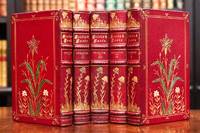
19001041London: British Literary Society 1900. Extra Illustrated Edition of the Aldine Poets Limited to Ten Numbered and Registered Copies of Which This Is No. 4. Publishers Fine Leather Bindings. Near Fine. A complete five volume set in near fine condition beautifully bound in publishers full leather inlaid Morocco bindings with bright gilt floral patterns to covers and spine. Leather inlaid doublures silk end pages bright gilt page edges pages are bright and clean without marks and no foxing. illustrated with color plates. Limited edition #4 of 10. No publication date stated - circa 1900. A stunning example in excellent condition. Near Fine. British Literary Society unknown