Spenser, EdmundBiblio.com

1 803 résultats
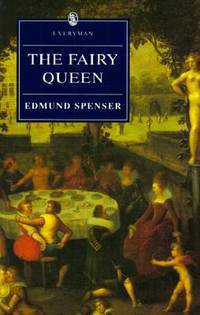
Q-0460873911Everyman Paperbacks. Paperback. New. New. In shrink wrap. Looks like an interesting title! Everyman Paperbacks paperback
1982SONG086131185XBrand: Stosius Inc/Advent Books Division 1982-11-01. paperback. Used: Good. 6.25x0.75x8.50. Buy with confidence. Excellent Customer Service & Return policy. Brand: Stosius Inc/Advent Books Division paperback
SONG0198118244OXFORD UNIVERSITY PRESS 1922-02-22. hardcover. Used: Good. 0.00x0.00x0.00. Buy with confidence. Excellent Customer Service & Return policy. OXFORD UNIVERSITY PRESS hardcover
197782607Dutton Adult 1977-03-25. Hardcover. Very Good. Very Good in Good dust jacket; Contents are tight; small amount of ink notes; Hard Cover; J M Dent & Sons Ltd; 1976; 0 Dutton Adult hardcover
1898011002New York: Maynard Merrill & Co. 1898. Stapled. Fair. With Prefatory and Explanatory Notes. Maynard's English Classic Series No. 27. Wear to wraps light stains signed by owner on front. Red stain on rear wraps bleeding through to rear inside cover. Sticker shock on first page. Several pencil notations else text very good. <br/> <br/> Maynard, Merrill, & Co. unknown
DADAX0198118244OXFORD UNIVERSITY PRESS 1922-02-22. hardcover. New. 0.00x0.00x0.00. Buy with confidence. Excellent Customer Service & Return policy. OXFORD UNIVERSITY PRESS hardcover
1356287786.Ghardcover. Good. Access codes and supplements are not guaranteed with used items. May be an ex-library book. hardcover
161166412The First Collected Edition of SpenserÃs Works and First Folio Edition SPENSER Edmund. The Faerie Queen: The Shepherds Calendar: Together with the Other Works of EnglandÃs Arch-PoÃŽt Edm. Spenser: Collected into one Volume and carefully corrected. London: Printed for H.L. for Mathew Lownes 1611. First collected edition of SpenserÃs works and first folio edition second issue with the title to The Second Part of the Faerie Queene beginning with signature R dated 1613 and the colophon dated ì16012î sic. With the Prosopopoia. Or Mother Hubberds Tale consisting of a single gathering A of eight leaves and dated 1612 on the title not found in the first issue. Lacks the last blank Hh6 at the end of the second part of The Faerie Queen; but has the blank Q8 at the end of Letter to Raleighonly found in first issue and blank F4 at the end of The Shepherds Calendar. Folio. 11 inches x 7 1/2 inches. i-vi 363 xvi; x 56 16 xxvi iv xxvi vi xvi x xii iv. General title within woodcut border McKerrow & Ferguson 212 twelve woodcut illustrations and ornamental borders decorative woodcut head- and tail-pieces and initials. The woodcuts in The Shepherds Calender were used in all the earlier separate editions. Beautifully bound by Riviere in full cherry red straight grain morocco ruled in gilt on covers gilt-stamped on spine with five raised bands. Gilt turn-ins. All edges gilt. Small restoration to outer margin of title-page not affecting text and small closed cut to page 162 some toning mostly in outer margins. Overall a very good and solid copy in an appropriate binding. "The first modern English poet to achieve major stature Spenser demonstrated with his fluency in many meters and stanzaic forms that English waÂs at least the equal to any other language as a vehicle of great poetry. While his poetry particularly The Faerie Queene looks backward as the culmination of the allegorical verse tradition of the Pearl Poet Langland and Chaucer he has influenced with his fertile imagination and especially his sensuous imagery and melodic language nearly every important English poet who followed him." Grolier Langland to Wither 239. Johnson 19. Pforzheimer 973. STC 23084. HBS 66412. $7500 Printed for H.L. for Mathew Lownes hardcover books
1895175910London: George Allen 1895. hardcover. fine. Crane Walter. Bold illustrations by Walter Crane. Originally issued in 19 parts Seven title pages eighty-eight full page woodcut illustrations one double page 132 head and tailpieces and numerous woodcut initials. Now exquisitely rebound in 3/4 crimson crushed morocco 6 volumes small 4to marbled endpapers. London: George Allen 1895-97. A fine set.<br/><br/> Limited first book-form edition of Walter Crane's "most ambitious project of book illustration" Lacy 103 one of 1000 large-paper copies.<br/><br/> George Allen unknown books
05070London: Printed for J. Brindley 1751. First Birch Edition with Thirty-Two Magnificent Double-Page Copper Plates by William Kent<br/>In a Stunning Mid Eighteenth Century Red Morocco Binding in Perfect Condition<br/><br/>"The Aim of Publishing The Faerie Queene was to <br/>Fashion a Gentleman or Noble Person in Virtuous and Gentle Discipline"<br/><br/><br/>SPENSER Edmund. The Faerie Queene. With an exact Collation of the Two Original Editions Published by Himself at London in Quarto; the Former containing the first Three Books printed in 1590 and the Latter the Six Books in 1596. To which are now added A new Life of the Author and also A Glossary. Adorn'd with thirty-two Copper-Plates from the Original Drawings of the late W. Kent Esq; Archtect and principal Painter to his Majesty. London: Printed for J. Brindley and S. Wright 1751. <br/><br/>Edmund Spenser's rich allegorical poem of fierce lady knights monsters duels and Classical gods and goddesses handsomely illustrated by William Kent.<br/><br/>First Birch edition. Three quarto volumes 10 11/16 x 8 5/16 inches; 276 x 212 mm. iv blank 4 lxiii 1 blank ii i-xxxvii i blank 1-212 217-453 3 blank; ii blank 2 1-450 2 blank; ii blank 2 1-440 2 blank pp. Thirty-two fine double-page copper-plates all mounted on stubs by William Kent. Numerous engraved vignette tail-pieces. There are 20 plates in the first volume 7 in the second and 5 in the third volume. Some light scattered foxing throughout - the most noticeable being on gatherings M & N pp. 80-96 and plate number 4 between pp. 30/31 in volume 1. Otherwise a spectacular and immaculate set.<br/><br/>Contemporary English full red goatskin the covers gilt tooled with a dog-tooth roll border enclosing an elaborate panel of six different thistle and flower tools. Spines with five raised bands elaborately bordered and decorated in gilt in compartments. Two dark green morocco labels decoratively bordered and lettered in gilt. Elaborate gilt board edges marbled endpapers all edges gilt. The binding which is near immaculate has been attributed as "possibly by John Brindley 1705-1758. The book was also published by John Brindley.<br/><br/>John BRINDLEY before 1705-1758. Primarily a bookseller also a publisher. Reproduction of his trade card in Heal Collection Heal17.17 advertises "John Brindley Bookseller and Stationer at the King's Arms in New Bond Street. Bookbinder to Her Majesty and His Royal Highness the Prince of Wales: Sells books in all languages variety of novels plays &c. Also all sorts of stationary wares stampt paper bonds cards shop & pocket books &c. Wholesale and retail. Likewise neatly binds books in all sorts of binding. Money for any library or parcel of books." British Museum.<br/><br/>"Most of our knowledge of John Brindley comes from The Oldest London Bookshop by George Smith and Frank Benger published in 1928. Brindley began as a bookbinder and although in 1728 he established the bookselling business in New Bond Street which was to gain further renown under the successive managements of Robson Boone and Ellis bookbinding remained one of the firm's activities until after his death. He held the appointment of bookbinder to Queen Caroline and to Frederick Prince of Wales and a number of presentation bindings to them on books published by Brindley are in King George III's library at the British Library. Comparison of these with other presentation bindings at Windsor with Brindley books from the library of Mr. George Smith sold at Sotheby's on 22nd July 1959 and with sets of the duodecimo classics published by Brindley between 1744 and 1754 enables us to identify many of the tools used in his shop and some of this specialities. The most striking of these was a partiality to edge decoration and to gaily marbled and gilt edges on sets of the classics. Brindley also bound for the Harleian Library. There is only one reference to him in Humfrey Wanley's Diary when he applied - apparently unsuccessfully - on 3 February 1719/20 to Wanley for some work saying that 'his Lordship lately gave him a Book to Bind'. But after Wanley's death he was apparently more successful and four bills of his survive for books supplied and books bound during the years 1733-8 among the Portland papers on deposit in the British Library". Nixon. Five Centuries of English Bookbinding. London 1978.<br/><br/>This is the first edition since 1609 to publish The Faerie Queene as a separate work. <br/>It is a new collation of the first two editions with a new biographical sketch written by the editor Thomas Birch. Birch 1705-1766 was a compiler of histories a biographer and formidable antiquarian. A member of the Society of Antiquaries and fellow of the Royal Society he is known primarily for The Works of the Honourable Robert Boyle 1744 Memoirs of the Reign of Queen Elizabeth 1754 Lives and Characters of Illustrious Persons 1747-52 and The History of the Royal Society of London 1756-7. <br/><br/>"Thomas Birch describes his intention as "the collecting of all the Facts relating to him Spenser dispers'd in different Books and the examining digesting and supplying them by his own Works not hitherto sufficiently made use of for that Purpose" Life vol 1 p. ii. He arranges the available material into a more shapely narrative than most emphasizing Spenser's struggles for recognition and patronage more than his literary accomplishments. Birch believes that the concluding six books of the Faerie Queene were written and then lost" English Poetry 1579-1830: Spencer and the Tradition.<br/><br/>"The Edition of the Fairy Queen now offer'd to the Public it is hop'd will be found to be a just Representation of the genuine Text not hitherto given in any single Edition but form'd from an exact Collation of the two original ones of the Author compar'd in the three last Books with the first Folio printed at London in 1609 which has furnish'd Corrections of some Mistakes in the 4to of 1596. Nothing therefore now remains for the Honour of our Poet and the Satisfaction of the Public but that the Learned and Ingenious unite their Labours towards such a Commentary upon his admirable Poem as Mr. JORTIN has oblig'd the World with a Specimen of his Remarks printed in 1734" from Birch's Life of Spenser herein.<br/><br/>The superb double-page illustrations are by William Kent 1685-1748 an eminent English architect landscape architect painter and furniture designer of the early 18th century. He is important as an illustrator of the poem because he was the first designer to respond imaginatively to the possibilities of Spenser's landscape and as a result had a major influence on later eighteenth-century taste. Spenser's reputation as an English gothic poet owes much to Kent's influence but Kent was a sophisticated enough artist and reader of the poem to respond also to the Italianate elements in Spenser's work which strongly corresponded with his own interests. Kent introduced the Palladian style of architecture into England with the villa at Chiswick House and also originated the 'natural' style of gardening known as the English landscape garden at Chiswick Stowe House in Buckinghamshire and Rousham House in Oxfordshire. He complemented his houses and gardens with stately furniture for major buildings including Hampton Court Palace Chiswick House Devonshire House and Rousham. His book designs show the results of his extensive travels decorative sense and the influence of picturesque landscape design which reached its height in the mid-eighteenth century.<br/><br/>The Faerie Queene is an English epic poem by Edmund Spenser. Books I-III were first published in 1590 then republished in 1596 together with books IV-VI. The Faerie Queene is notable for its form: it is one of the longest poems in the English language; it is also the work in which Spenser invented the verse form known as the Spenserian stanza.On a literal level the poem follows several knights as a means to examine different virtues and though the text is primarily an allegorical work it can be read on several levels of allegory including as praise or later criticism of Queen Elizabeth I. In Spenser's "Letter of the Authors" he states that the entire epic poem is "cloudily enwrapped in Allegorical devices" and that the aim of publishing The Faerie Queene was to "fashion a gentleman or noble person in virtuous and gentle discipline".<br/><br/>Edmund Spenser 1552-1599 presented the first three books of The Faerie Queene to Elizabeth I in 1589 probably sponsored by Sir Walter Raleigh. The poem was a clear effort to gain court favour and as a reward Elizabeth granted Spenser a pension for life amounting to £50 a year though there is no further evidence that Elizabeth I ever read any of the poem. This royal patronage elevated the poem to a level of success that made it Spenser's defining work. <br/><br/>Book I is centered on the virtue of holiness as embodied in the Redcrosse Knight; Book II is centered on the virtue of Temperance as embodied in Sir Guyon who is tempted by the fleeing Archimago into nearly attacking the Redcrosse Knight; Book III is centered on the virtue of Chastity as embodied in Britomart a lady knight. Book IV is largely a continuation of events begun in Book III; Book V is centered on the virtue of Justice as embodied in Sir Artegall; and Book VI is centered on the virtue of Courtesy as embodied in Sir Calidore. In addition to the six virtues Holiness Temperance Chastity Friendship Justice and Courtesy the Letter to Raleigh suggests that Arthur represents the virtue of Magnificence which "according to Aristotle and the rest" is "the perfection of all the rest and containeth in it them all"; and that the Faerie Queene herself represents Glory hence her name Gloriana. The unfinished seventh book the Cantos of Mutability appears to have represented the virtue of "constancy."<br/><br/>Graesse p. 465; Lowndes V 2477; Allibone 2203; ESTC T35152; Alston 3:93. London: Printed for J. Brindley, 1751 unknown books
B9781020514739Hardback. New. hardcover
1340731231.Ghardcover. Good. Access codes and supplements are not guaranteed with used items. May be an ex-library book. hardcover
1905191961Oxford: Oxford University Press 1905. Hardcover. Near Fine. New. Near fine name v. sl. Wear/ no dustwrapper. Edited by G. W. Kitchen. Glossary by A. L. Mayhew. Please Note: This book has been transferred to Between the Covers from another database and might not be described to our usual standards. Please inquire for more detailed condition information. Oxford University Press hardcover books
1905Embry 179177Oxford 1905. Inked name spine a little dull near fine. Green cloth no dust jacket. New Edition with Glossary By the Rev. A.L. Mayhew Oxford, 1905. hardcover books
D12O-00831Everymans Library. Used - Good. Good condition. A copy that has been read but remains intact. May contain markings such as bookplates stamps limited notes and highlighting or a few light stains. Everymans Library unknown
1999Q-1885767390Canon Press 1999-01-01. Paperback. New. In shrink wrap. Looks like an interesting title! Canon Press paperback
1330122461.Gpaperback. Good. Access codes and supplements are not guaranteed with used items. May be an ex-library book. paperback
1341174883.Ghardcover. Good. Access codes and supplements are not guaranteed with used items. May be an ex-library book. hardcover
0874748852New. New. Satisfaction Guaranteed or your money back. unknown
1987Q-0874748852Smithsonian 1987-03-17. Paperback. New. New. In shrink wrap. Looks like an interesting title! Smithsonian paperback
19671249203New York and London: Colombia University Press, 1967. 188 S.
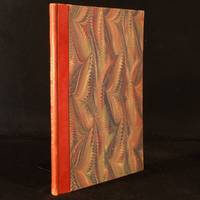
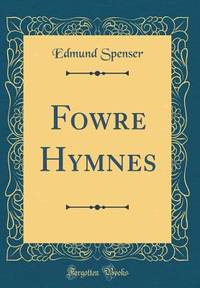
19121011J6London: London County Council Central School of Arts and Crafts 1912-13. First edition. Leather. Very Good Indeed. 11.5 by 8.5. None. A pleasing first edition of this private press edition of Spenser"s Fwour Hymnes printed in an elegant early twentieth-century arts and crafts style. The first edition of this L. C. C. Central School of Arts and Crafts publication of Four Hymns by Edmund Spenser first published in 1596. The title page indicates 1912 as the publication date whilst the colophon states 1913. The colophon gives the following information: 'Sheet A printed by W. F. Northend sheets b c d e f g by the Day Technical School of Book Production. Initial L drawn and cut by W. F. Northend. Initials A and W by A. G. Pruden under Noel Rooke. Printing teacher J. H. Mason 1913'. Bound in quarter Morocco with marbled paper covered boards. Smartly printed on laid paper with wide margins and red initial letters with red and black lettered title page. With the original dedication by Spenser to The Ladie Margaret Countess of Cumberland and The Ladie Marie Countess of Warwicke reset and printed to the rear. Includes the following hymns: "An Hymne in Honour of Love" "An Hymne in Honour of Beautie" "An Hymne of Heavenly Love" and "An Hymne of Heavenly Beautie". Bound in quarter Morocco with marbled paper covered boards. Externally very smart. With only minor rubbing to extremities of paper and head and spine of Morocco. Minor chips to Morocco at rear joint. Internally firmly bound. Pages bright and clean with odd handling mark. A lovely copy. Very Good Indeed London County Council Central School of Arts and Crafts hardcover
0267290209.Ghardcover. Good. Access codes and supplements are not guaranteed with used items. May be an ex-library book. hardcover
0428326722.Ghardcover. Good. Access codes and supplements are not guaranteed with used items. May be an ex-library book. hardcover
1332941036.Gpaperback. Good. Access codes and supplements are not guaranteed with used items. May be an ex-library book. paperback