BOCCACE, Giovanni Boccaccio, dit.Livre Rare Book
16 928 résultats
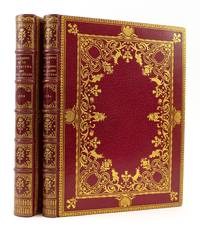
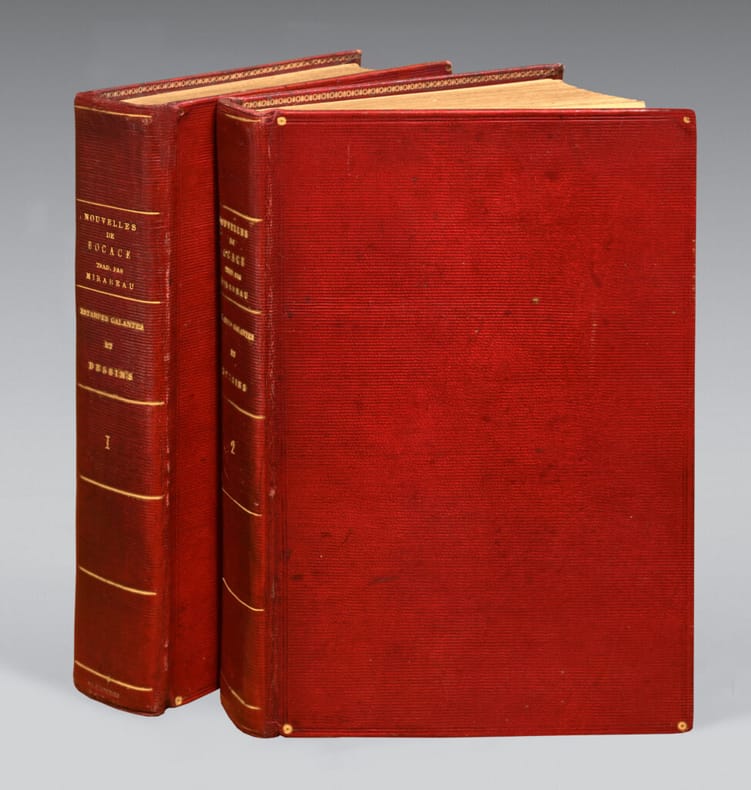
LCS-18521Exemplaire unique de l’édition originale érotique de Mirabeau imprimé en 1802 orné de 8 dessins érotiques, 10 estampes érotiques en couleurs du XVIIIe siècle et 21 gravures érotiques, reliée en maroquin de l’époque. À Paris, chez L. Duprat, Letellier et Cie, 1802. 4 tomes en 2 volumes in-8 de: I-II : (8) pp. , xx, 304, (4) (dont les 2 dernières blanches); (4) pp. (dont la dernière blanche), 273, (3) (dont la dernière blanche), en tout 1 portrait, 1 frontispice, 1 frontispice en couleurs, 3 dessins, 15 planches en noir et blanc et 7 planches en couleurs / III-IV : (4) pp. (dont la dernière blanche), 243, (3) (dont la dernière blanche); (4) (dont la dernière blanche), 293, (3) (dont la dernière blanche), en tout 4 dessins en noir et 1 dessin à l’encre rouge, 13 planches en noir, 2 planches en couleurs. Maroquin rouge à grain long, double filet estampé à froid encadrant les plats avec anneaux d'angles, dos lisses filetés, filet ondé doré sur les coupes, roulette intérieure dorée, tranches dorées, quelques rousseurs. Reliure de l’époque de Lefebvre. 202 x 123 mm.
LCS-186421
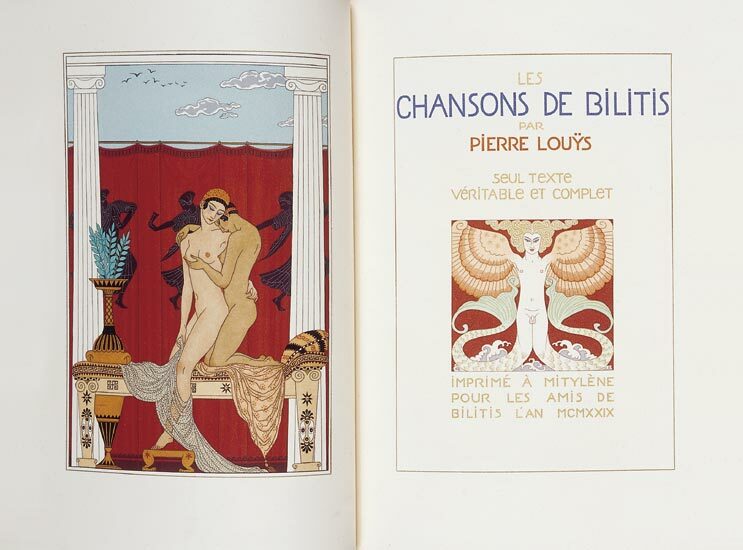
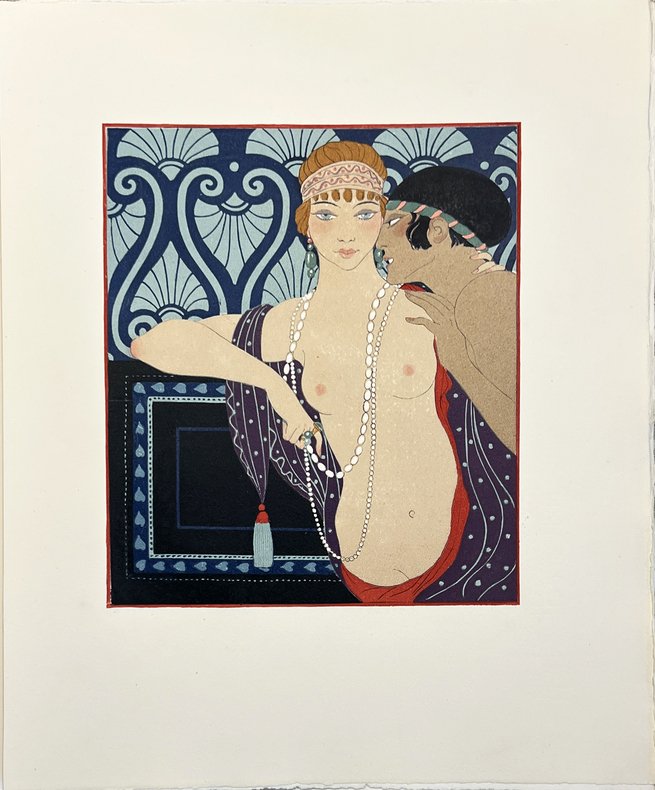
19291850Imprimé à Mitylène pour les amis de Bilitis [Paris: P. Bouchet], 1929. Volume petit in-4 (24,5 x 19,5 mm) relié en plein maroquin mosaïqué, doublé et décoré, étui. - 62 COMPOSITIONS GRAVÉES SUR BOIS EN COULEURS DE GEORGE BARBIER dont un frontispice et 6 à pleine page, 24 sujets à mi-page et de nombreuses lettrines et culs-de-lampe. - PREMIÈRE ÉDITION INTÉGRALE de ces 22 chansons, publiée pour le compte de Louis Barthou, Jacques André et Georges Miguet. Réalisé en 1929, période où le talent de l'artiste était alors à son apogée, ce livre est l'une des productions les plus importantes des années trente. - LE LIVRE LE PLUS RARE DE GEORGE BARBIER TIRÉ SEULEMENT À 25 EXEMPLAIRES. Un des 20 sur papier vélin filigrané au titre de l'ouvrage, celui-ci, non numéroté mais d'une prestigieuse provenance, est augmenté d' UNE SUITE COMPLÈTE DU TRAIT EN BRUN/ROUGE SUR JAPON. La suite tirée à 5 ou 6 ex. comprend également l' illustration des couvertures et une planche inédite. La reliure à décor d'attributs érotiques a été commanditée à Charles Septier par le bibliophile Beauvillain. Avec son ex-libris gravé : "Et BEAUVILLAIN ? / toujours il vous aime". SUPERBE EXEMPLAIRE RELIÉ EN PLEIN MAROQUIN DOUBLÉ MOSAÏQUÉ DE L'ÉPOQUE. - Références : Carteret Illustrés IV, 251 ; Dutel II, 1183 ; Pia Enfer 201-203. - Notes : Les Chansons de Bilitis sont l’œuvre la plus célèbre de Pierre Louÿs (1870-1925) qui s'est ici amusé à monter une petite mystification, faisant croire qu'il s'agissait d'un véritable document historique retrouvé, les œuvres d'une contemporaine de Sappho, dont il ne nous reste que quelques bribes de poèmes… Il n'a pas même négligé de citer de vrais ouvrages savants issus de l'industrieuse université allemande, d'inventer des découvertes archéologiques, et de multiplier les évidences pour donner du corps à son invention. Elle a eu le bonheur d'attraper quelques érudits enthousiastes, professeurs d'université offrant leurs services pour améliorer la traduction ! Bilitis est même devenu un nom commun, comme Sapho. "Je voulais entendre Le rire de Sappho Et la voix de Sa lyre Ce qui me parvint fut Le marmonnement moustachu Des grammairiens Des ptérodactyles grecs Et des dodos victoriens". Il s'agit en fait d'un pastiche, mélangeant bribes saphiques, épigrammes de l'Anthologie Grecque, et de tout ce que peuvent offrir Alciphron (Lettres de pêcheurs, de paysans, de parasites et d'hétaïres), La Pastorale de Daphnis et Chloé de Longus, Lucien et tous les romans grecs... Au final, on a plus d'une centaine de poèmes suggestifs et ingénieux, fruit de la malicieuse imagination et de l'art imitatif de l'auteur. Ce n'est pas mal du tout, mais quand même: c'était bien trop beau pour être vrai ! L'introduction : Vie de Bilitis, est excellente, et remplit parfaitement son office… "Bilitis naquit au commencement du sixième siècle avant notre ère, dans un village de montagnes situé sur les bords du Mélas, vers l’orient de la Pamphylie. Ce pays est grave et triste, assombri par des forêts profondes, dominé par la masse énorme du Taurus ; des sources pétrifiantes sortent de la roche ; de grands lacs salés séjournent sur les hauteurs, et les vallées sont pleines de silence. Elle était fille d’un Grec et d’une Phénicienne. Elle semble n’avoir pas connu son père, car il n’est mêlé nulle part aux souvenirs de son enfance. Peut-être même était-il mort avant qu’elle ne vînt au monde. Autrement on s’expliquerait mal comment elle porte un nom phénicien que sa mère seule lui put donner. Sur cette terre presque déserte, elle vivait d’une vie tranquille avec sa mère et ses sœurs. D’autres jeunes filles, qui furent ses amies, habitaient non loin de là. Sur les pentes boisées du Taurus, des bergers paissaient leurs troupeaux. Le matin, dès le chant du coq, elle se levait, allait à l’étable, menait boire les animaux et s’occupait de traire leur lait. Dans la journée, s’il pleuvait, elle restait au gynécée et filait sa quenouille de laine. Si le temps était beau, elle courait dans les champs et faisait avec ses compagnes mille jeux dont elle nous parle. Bilitis avait à l’égard des Nymphes une piété très ardente. Les sacrifices qu’elle offrait, presque toujours étaient pour leur fontaine. Souvent même elle leur parlait, mais il semble bien qu’elle ne les a jamais vues, tant elle rapporte avec vénération les souvenirs d’un vieillard qui autrefois les avait surprises. La fin de son existence pastorale fut attristée par un amour sur lequel nous savons peu de chose bien qu’elle en parle longuement. Elle cessa de le chanter dès qu’il devint malheureux. Devenue mère d’un enfant qu’elle abandonna, Bilitis quitta la Pamphylie, d’une façon assez mystérieuse, et ne revit jamais le lieu de sa naissance. Nous la retrouvons ensuite à Mytilène où elle était venue par la route de mer en longeant les belles côtes d’Asie. Elle avait à peine seize ans, selon les conjectures de M. Heim qui établit avec vraisemblance quelques dates dans la vie de Bilitis, d’après un vers qui fait allusion à la mort de Pittakos. Lesbos était alors le centre du monde…" - ENGLISH DESCRIPTION : Pierre Loüys- George Barbier : LES CHANSONS DE BILITIS. Seul texte véritable et complet. Imprimé à Mitylène pour les amis de Bilitis, 1929. Small 4to. (246 x 192 mm). pp. (iv), 56, (i), (i). Wood-engraved colour frontispiece, printed title in various colours with colour wood-engraved vignette and Louÿs test in three sections ('Bucoliques en Pamphylie', 'Elegies à Lesbos' and 'Epigrammes dans lIle de Chypre') illustrated with 60 wood-engraved illustrations by Pierre Bouchet after George Barbier, 54 in colour, seven full-page, 24 decorating the text, the remainder culs-de-lampes or vignettes, final leaf with justification and achevé d'imprimer; three-line initials in colour against gilt background throughout as well as numerous head- and tail-pieces and initial letters, verse numbering in gilt in Roman numerals, text in capitals ruled throughout and two additional wood-engravings for the wrappers; this copy with the additional suite printed in outline in bistre on Japon including the cover illustrations and a "planche refusée" in black. Our copy is not numbered but comes from a important collector and provenance with ex-libris. Full contemporary emerald crushed morocco by Charles Septier with his signature gilt, front and rear boards ruled in gilt to surround a decorative border of inlaid jade morocco with gilt Greek key pat-tern around curvilinear jade morocco surround with gilt roll tool for a central vignette with argent disc supported by lamp tools, banded spine in five compartments with gilt titles and elaborate decorative tooling, doublures of tan morocco with gilt surrounding an inner border of red and black inlaid morocco, central inlaid circular medallions illustrating vignettes from the book in colour morocco, gilt floral, foliate, phallic and vulvic tools at corners, patterned silk guards, marbled endpapers, board edges ruled in gilt, original wrappers with gilt illustration and backstrips preserved, a.e.g., matching morocco-edged wool-lined marbled board slipcase. The binding was commissioned by Beauvillain as he had commissioned other bindings from Septier and that his ex libris is bound in as a full sheet rather than pasted on one of the pages. Provenance: leaf with engraved ex-libris of Robert Beauvillain by Jouas bound in with the text: "Et BEAUVILLAIN ? / toujours il vous aime". - BARBIER'S RAREST BOOK, Les Chansons de Bilitis, bound by Septier and with the very rare additional suite. From the edition limited to 25 copies on vélin d'Arches only, this copy also with the very rare suite printed in outline in bistre on Japon of which very few copies were printed. Also with an extra unpublished full page print in bistre bound in the suite. The rarest and most recherché and erotic work by George Barbier. The magnificent binding by Septier features phallic and vulvic tools to the doublures and a central circular vignette to each: that for the front doublure is after the illustration for the second poem Je me suis dévêtue pour monter a un arbre ... ); that for the rear is after the twenty-third (D'abord je n'ai pas répon-du ... ). First published in Paris in 1894, this purports to be translations of poems by a woman named Bilitis, a contemporary and ac-quaintance of Sappho. This caused a sensation, not only because finding an intact cache of poems from a completely unknown Greek poet circa 600 B.C. would be a miracle, but because of its open and sensitive exploration of lesbian eroticism. Actually Bilitis never existed. The poems were a clever forgery by Pierre Louÿs -- the "translator"; to lend weight, he had even included a bibliogra-phy with bogus supporting works. Louÿs actually did have a good command of the classics, and he salted Bilitis with a number of quotations from real poets, including Sappho, to make it even more convincing. (J. B. Hare). They [Barbier's Les Chansons de Bilitis and Aphrodite] are celebrations of the ancient gods and their freedom from taboo. Bar-bier's illustrations reveal this world in full flower ... When reality and imagination fused, not only was it possible to travel freely wherever you liked, it was also possible to encounter ancient gods and fairies. Art Deco mixed old and new in previous unseen ways ... In his glass, Barbier mixed an uncanny cocktail of neoclassic and modern. (Hiroshi Unno) [Carteret Illustrés IV, 251; Dutel 1183; not in Unno].
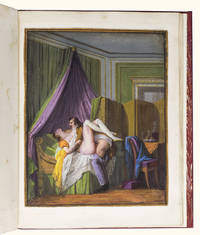
1815G4JCUY01U79OFrance 1815. 20th-century red goatskin morocco sewn on 5 cords with the title "Gouaches érotiques" in gold in the 2nd of 6 spine compartments double-combed marbled endpapers pasted over the original marbled pastdown; spot pattern curled. 4to 26 x 21.5 cm. A matching set of 12 erotic drawings image area about 20 x 16 cm in coloured gouaches each showing a man and woman engaged in manual vaginal or oral sex in a richly furnished interior with furniture lamps clocks vases drapery mirrors books clothing architectural ornamentation etc. Each is drawn on thick paperboard and mounted on the album leaves. A matching set of 12 skilfully executed erotic gouache drawings in numerous colours each showing a naked or more often partly undressed young man and woman engaged in manual vaginal or oral sex. Each is set in an interior in at least most cases domestic most of them richly furnished. Though the drawings depict several different men and women some of them seem to appear in more than one drawing. One drawing appears to show a home library another includes a case full of books and two others have an open book lying on the floor. Another has the woman sitting on the man's lap before a writing desk with a quill pen in her hand. These may be intended to suggest that the man is the young lady's tutor and they got distracted from their lessons. The clothing suggests couples from fairly high social standing. The clothing architectural decoration furniture clocks lamps vases etc. much of it in Empire Style suggest a date around 1815 perhaps in France.The drawings are in good condition and the binding fine. unknown
197571876(Aarau), Eigenverlag, um 1975. fester, gelb/schwarz/rot marmorierter Kartondeckel, grünes, handbeschriftetes Rückenschild / Anz. Seiten: 30 / 13,5 x 19 cm / 30 lose Blätter (davon ein signiertes) in flexiblem, graugrünem, handbeschriftetem Einlagekarton / Zustand: sehr gut, geringe Gebrauchsspuren; Ecken minimal bestossen, Innendeckel minim fleckig
101382London but Paris 1757-61. . 5 vols in 6; 8vo 20 x 13cm 5 engraved titles 110 engraved plates 97 head and tail pieces by Gravelot and Boucher among others engraved by Aliamet Bacquoy Lemire and others plus a frontispiece and 20 extra planches libres unsigned but attributed to Gravelot. Contemporary red morocco spines with raised bands gilt in compartments morocco labels lettered in gilt; some labels in contrasting colour.<br /> A lovely copy of this beautifully illustrated work finely bound in red morocco and including the charming 'figures libres' here bound in a supplementary volume. Cohen among others praised this great achievement of Gravelot Boucher Cochin and Eisen the best illustrators of the French 18th century. The edition not only shows 115 plates and frontispieces but also includes decorative engraved head- and tail-pieces in the best tradition of book illustration of its time. The Italian text was translated into French by A. Le Macon.<br /> Cohen de Ricci 160; Ray 39-41. London [but Paris], 1757-61. hardcover
LCS-18421Publié en 1785, sans l’assentiment de l’auteur, «Le Diable au corps» a été condamné à la destruction par un arrêt de la cour d’assises de la Seine, en date du 9 août 1842 et par un jugement prononcé par la 6ème chambre du tribunal correctionnel de la Seine le 12 mai 1865. Londres, 1785. In-12, maroquin rouge, double filet doré, dos orné, dentelle intérieure, tranches dorées. Reliure de la fin du XIXè siècle. 131 x 80 mm.
LCS-18595L’illustration de la présente édition, superbe, se compose d’un frontispice en double-état et de 23 figures gravées par Elluin d’après Borel non signées. Londres, s.d. [Paris, Cazin, 1782]. 4 parties en 2 volumes in-16 de: I/ (2) ff., 1 frontispice grave en double-état, 159 pp., (2) ff., pp. 160 à 352, 13 planches hors-texte; II/ (2) ff., 204 pp., (2) ff., pp. 205 à 396, 10 planches hors-texte. Chagrin bordeaux, encadrements de triple filets dorés sur les plats avec fleurons d’angles, dos à nerfs ornés, filet or sur les coupes, roulette dorée intérieure, tranches dorées. Reliure du XIXe siècle. 124 x 80 mm.
394218 parties reliées en 8 volumes in-12 (127 x 79 mm), demi-veau marbré à petits coins, dos lisses ornés de compartiments cloisonnés et fleuronnés, palette en pied, pièce de titre de maroquin rouge et de tomaison de maroquin vert (reliure de lépoque), 15 planches gravées hors-texte. A Paris, Girouard [et veuve Girouard], 1793-1795.
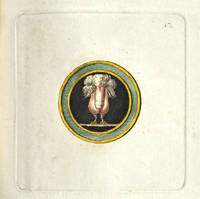
86710Lugd. Batavorum but Naples ca. 1771. . 2 vols small 4to 20.7 x 15.4 cm. Fully engraved: hand-coloured title numbered 1 pp. 10 preface in red with black borders plates numbered 2-30 hand-coloured each with a leaf or two of text in red within red border; hand-coloured title and 35 hand-coloured plates with text leaves as before - in all 66 hand-coloured plates including two titles. Contemporary marbled calf spines with raised bands gilt in compartments brown morocco labels lettered in gilt marbled endpapers red edges; a bit rubbed hinges a bit weak.<br /> Fine hand-coloured copy of this fully engraved work printed on papier verge de Hollande extra-fort - one of these 'rarissimes exemplaires dont les figures chefs-d'oeuvre de gravure ont ete peintes dans un coloris d'une beaute surprenante' Pia.<br /><br />Hancarville catalogued Sir William Hamilton's collection of ancient vases in Naples in 1764 from which it is likely he took some inspiration for these images showing a collection of classical erotica supposedly taken from actual medallions. In 1777 he travelled to London where he arranged the second edition of this work with the text also in English.<br /><br />Our copy matches Pia's description; the number of plates may vary.<br /> Cohen 476; Pia Enfer 1487-1488. Lugd. Batavorum [but Naples, ca. 1771]. hardcover
19331713Se trouve pour les amateurs à Paris à l'enseigne du nombril de Vénus (1933). Un Album in-folio oblong (310 x 415 mm), en feuilles, chemise toilé à quadruple rabat. Très rare album commandé à Charles Martin par Marcel Valotaire, Jean Beauclair et Georges Cretté, composé d'un titre illustré et de 12 planches très libres, en couleurs et en noir, gravées à l’eau-forte au repérage par Charles Martin. Chaque planche est présentée dans une chemise légendée. Feuillet de justification en fin d'ouvrage. Celui-ci exemplaire J comprenant : La planche de titre en état définitif couleur, état en noir et état avant la lettre ; les 12 COMPOSITIONS LIBRES EN 4 ÉTATS DONT : couleur, noir, eau-forte pure, à part l'état en noir avec très importantes remarques, réservé aux seuls exemplaires lettrés. Cet exemplaire est accompagné de : 13 DESSINS ORIGINAUX DONT : 6 AUX CRAYON DONT UN REHAUSSÉ DE COULEUR, 7 DESSINS DÉFINITIFS À L'ENCRE DE CHINE (À LA PLUME) DONT UN ENTIÈREMENT AQUARELLÉ, tous au format 310 x 415 mm et un dépliant recto-verso, et 4 rarissimes "kodatraces" gravés ayant servis au reports sur cuivre des originaux de Charles Martin.
4 volumes in-12 (164 x 98 mm), demi-maroquin rouge à petits coins, dos lisses ornés de compartiments fleuronnés et cloisonnés, tranches mouchetées rouges (rel. moderne dans le goût de l'époque), 248 p.; 242 p.; 231 p. et 257 p., (1) n.ch. d'errata. Véritable édition originale, premier tirage, dit tirage "A", conforme en tous points à l'inventaire minutieux des critères établissant son antériorité par Max Brun. Tiré à 2000 exemplaires, ce premier tirage parut au début d'avril 1782 pour être épuisé dès le 7 mai 1782. Le roman remporta immédiatement un succès prodigieux et seize différentes éditions parurent en cette même année 1782. (Max Brun, 'Bibliographie des éditions des Liaisons dangereuses portant le millésime de 1782', in "Le Livre et l'Estampe", n° 33, 1963, p. 8-10 et 40-41. 'En français dans le texte', n°174). Bel exemplaire, parfaitement relié en demi-maroquin rouge dans le goût de l'époque, sans rousseurs, grand de marges.
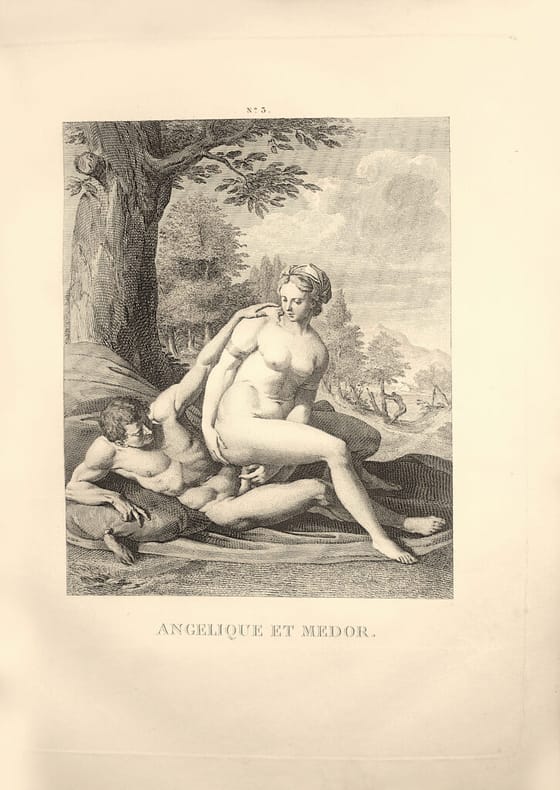
LCS-18404Première et célèbre édition de l’Arétin d’Augustin Carrache, «le plus artistique des Livres érotiques…» (H. Cohen, col. 88). A la Nouvelle Cythère [Paris, Didot, 1798]. Grand in-4 de 1 feuillet pour le faux-titre (relié à l’époque sans le titre), 10 pp. de préface, (1) f. de table et d’errata, 80 pp. et 20 gravures numérotées à pleine page hors textes protégées par des serpentes, veau fauve marbré, roulette dorée autour des plats, dos lisse orné, pièce de titre en maroquin rouge, roulette intérieure, tranches dorées. Reliure de l’époque. 301 x 225 mm.
1780ST17950Caprées i.e. Nancy: Chez Sabellus 1780 1784. FIRST EDITIONS FIRST PRINTINGS 11 lines on title page and long "s" in text with these Illustrations. 256 x 190 mm. 10 x 7 1/2". Two volumes. <br/> BEAUTIFUL 19TH CENTURY RED MOROCCO GILT IN THE ROCOCO STYLE BY CUZIN stamp-signed in gilt on front turn-ins covers with a gilt-ruled border featuring rocaille motifs at the sides and a floral spray at each corner elaborate inner frame of strapwork interwoven with scrolling acanthus drawer-handle tools flower garlands and several special tools including satyrs mountain goats insects and large vases of flowers raised bands compartments with gilt lettering or a central floral sprig surrounded by a frame of leaves and flowers turn-ins with intricate gilt lace roll-tooling all edges gilt. WITH A TOTAL OF 102 EROTIC PLATES by Denon each volume with a frontispiece and 50 plates plus an engraved title in volume II. Front pastedowns with ex-libris of Léon Gambetta. Cohen-de Ricci 474-75. ◆Light offsetting from illustrations paper in both volumes perhaps lightly pressed but not washed FIRST VOLUME with the faint stain from a ribbon marker now gone one plate slightly toned and with two very small repairs to margin otherwise IN FINE CONDITION; paper in volume II slightly toned and with occasional small spots and light stains but still excellent. None of this significant because THE GLORIOUS BINDINGS LUSTROUS AND UNWORN.<br/> <br/> Despite their scholarly titles which promise scenes from the private lives of the 12 Caesars and secrets from an ancient Roman cult these are among the most famous erotic books of the 18th century. In the first volume the 12 Roman emperors from Julius Caesar to Domitian are depicted engaged in a panoply of intimate acts beginning with Julius Caesar's liaison with King Nicomedes IV of Bithynia which led his enemies to dub him "Queen of Bithynia." We see what Caesar's heir Augustus was willing to do in order to succeed his great-uncle and his later sexual excesses as emperor including incest. Antony and Cleopatra are relatively demure compared to the orgies of Caligula Nero and Claudius' wife Messalina. The "Secret Cult of Roman Women" examined in the companion work is devoted to the fertility god Priapus and his phallic symbols with guest appearances by assorted satyrs nymphs and Bacchantes. The images are white-on-black to resemble sculptured wall medallions and claim to be based on ancient carvings; however Cohen-de Ricci informs us that while the text is evidence of d'Hancarville's erudition the illustrations are entirely the result of his libertine imagination. Art historian Pierre-François Hugues Baron d'Hancarville 1719-1805 established himself in the world of antiquarians when he helped William Hamilton acquire the impressive Porcinari collection of Etruscan Greek and Roman antiquities that would subsequently be purchased by the British Museum. He then supervised the production of four sumptuous volumes of engravings documenting the collection. He seems to have undertaken the present work for his own amusement. A later issue of the second title facetiously attributed publication to the Imprimerie de Vatican the Church had of course put it on the Index of Prohibited Books. According to Cohen-de Ricci this is the first and most desirable printing identifiable by 11 rather than 10 lines of text on the title page of the first work and by the use of the f-like "long s" in both volumes. The especially splendid bindings by Francisque Cuzin 1836-90 nod to the Rococo bindings of the 18th century and to the risqué subject matter with satyrs cavorting about the elegant frame. Cuzin opened his Paris workshop in 1855 and soon made his name among bibliophiles of that city with his exquisite bindings establishing what was called the "Cuzin style." Devauchelle says that this style was copied by Cuzin's colleagues but was never equalled. Cuzin was not a gilder but employed some of the best in the trade to execute his graceful designs among them Marius Michel père Wampflug Maillard and Cuzin's eventual successor Émile Mercier. Our copy was once in the library of the distinguished French statesman Léon Gambetta 1838-82 one of the founders of the Third Republic who served as president of the Chamber of Deputies. Chez Sabellus unknown
19223930Collection Pierre Corrard, Paris 1922. Un volume in-4 en feuilles sous coffret décoré imitant la peau de serpent dorée, incrustée au premier plat, la médaille de Bilitis réalisée pour l'occasion par le sculpteur art-déco, Albert POMMIER. Première édition illustrée par GEORGE BARBIER et gravée sur bois par F.L. SCHMIED. 44 superbes illustrations couleurs dont la couverture, 13 en hors-texte et 8 à pleine page, 21 dans le texte ainsi que de nombreux ornements. L'un des 125 ex. numérotés sur Arches, seul tirage, signé par G.Barbier. Il est joint à cet exemplaire trois maquettes originales d'essai de la couverture avec ajouts et découpes par Barbier. - ENGLISH DESCRIPTION: P. Loüys. LES CHANSONS DE BILITIS. Taduit du grec. Illustrations de G. Barbier gravées sur bois par F.L. Schmied (1922) .Collection Pierre Corrard, Paris 1922. A quarto volume (33 x 26 cm) issued in loose sheets within a shellcase featuring a gold snakeskin-effect finish; the front cover is inset with the "Bilitis" medallion created for the occasion by Art Deco sculptor Albert Pommier. First edition, illustrated by George Barbier and featuring wood engravings by F.L. Schmied.- 44 superb illustrations, including the cover, 13 plates and 8 full-page images, 21 in-texte, as well as numerous decorative elements. One of 125 copies numbered on Arches paper, signed by G. Barbier. Included with this copy are three original cover mock-ups featuring additions and cut-outs by Barbier. A perfectly preserved copy housed in a highly elegant custom-made presentation box. Additional photographs available upon request.
96105001China n.d. c. 1790. An erotic hand painted color scroll 12 individual scenes each painting ca. 21.5 x 15 cm. overall width is 18 cm. in very clean pristine condition external phoenix cloth inside dark blue silk mounting jade ends. This work is an excerpt from the Chinese erotic novel the Chin P'ing Mei written during the Ming dynasty. It depicts the sexual exploits of the hero Hsi-men and is China's most famous classic novel of erotica. This lovely hand scroll illustrates twelve erotic scenes with Hsi-men and his willowy female consorts. Sapphicsm a common theme but this example shows the hero engaged in a host of sexual pleasures. He adores the vulva and her tiny "Lotus-hooks" or bound feet. In one superb view he is embraced by three lovely paramours as he attempts to gratify each with his tender touch. In another sensual scene while his "jade stick" pierces and ravishes an old favorite a younger concubine is voyeuring at them with desire as we see her pink-flushed face as she masturbates with relish. Several other marvelous paintings show various positions employed for mutual benefit. Each scene is done in the Ming dynasty style with lovely furniture and furnishings graphically illustrated including scholar's desk items scrolls brushes vases flowers & other period objects. Executed in fine color brush work mounted with silk borders paper mounted some 3 meters plus long embellished with pale jade end pieces. BIBLIOGRAPHY: R. H. Van Gulik: SEXUAL LIFE IN ANCIENT CHINA for more and copious details on this subject and theme. R.H. Van Gulik: EROTIC COLOUR PRINTS OF THE MING PERIOD. DREAMS OF SPRING: Erotic Art in China. This useful illustrated reference shows many similar erotic examples from pages 158-161. Erotic Chinese scrolls of this quality and period are SCARCE. BEURDELEY Michel: CHINESE EROTIC ART. . unknown
18003174241800. 38 mounted lithographs including 2 duplicate plates 1 with handcoloring. Oblong 4to. Early 19th century French purple morocco stamped to neo-Gothic panel design in blind and gilt initials "C D" on upper cover a.e.g. Skillfully rebacked preserving original spine. 38 mounted lithographs including 2 duplicate plates 1 with handcoloring. Oblong 4to. A collection of French erotic lithographs in an ornate romantic binding. Includes a series of 17 lithographs "Le départ de la garnison" "L'Antichambre en goguette" "Ah! Le bon bouillon que j'aurai" etc. Provenance: bookplate of Gérard Nordmann lhis sale Christe's Paris 27 April 2006 lot 218 unknown
16016[Bruxelles], [Editions de la revue Variété], 1929. Un volume in-4 broché de [28] pages, couverture grège.
LCS-18558Superbe exemplaire conservé dans ses reliures uniformes de l’époque en maroquin rouge à grain long finement décoré. Londres, 1812 [Bruxelles]. 4 vol. in-16, avec 24 figures d'après Borel. I/ (2) ff., 1 frontispice, 100 pp., 7 figures hors texte. II/ (2) ff., 130 pp., (1) f., 6 figures hors texte. III/ (2) ff., 112 pp., 6 figures. IV/ (2) ff., 108 pp., 4 figures. Plein maroquin rouge à grain long, roulette florale dorée encadrant les plats, dos lisses ornés de motifs dorés et de filets dorés formant faux-nerfs, filets dorés aux pointillés sur les coupes, roulette dorée intérieure, tranches dorées. Reliure de l’époque. 128 x 74 mm.
19354174BUm 1935. Folio. 16 Aquarelle (Motivgröße von ca. 13 x 15 bis 35 x 22 cm) auf Velin unterschiedlicher Größe, je unter blassgrünem Passepartout (47,5 x 34 cm) montiert. In eigens dafür angefertigter HLeinenmappe (um 1950?), Außendeckel mit geprägtem Papier im Krokodilmuster, Vorderdeckel mit Titelschildchen ("Anonym. 16 erotische Aquarelle"), 3 Schließbändchen. Innendeckel mit Buntpapier bezogen.
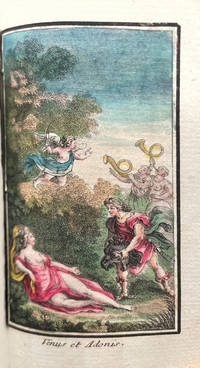
JUINBB24<p>Paris Jubert 1787.</p><p>24mo of 1 frontispiece and 12 engraved vignettes by Dorgez that is 13 etchings.</p><p>Red morocco triple gilt fillet around the covers flat spine decorates with gilt fleurons grenne morocco lettering piece gilt edges. <i>Contemporary binding.</i></p><p><b>The illustration includes </b>: <i>1.</i> <i>Vénus and Mars ; 2. Jupiter and Calisto ; 3. </i><i>Pluton and Proserpine ; 4. Venus and Comus ; 5. Le Triomphe de la Beauté ; 6. Bacchus and Ariane ; 7. L'Aurore and Céphale ; 8. L'Amour and Psyché ; 9. Diane and Endimion ; 10. Neptune and Amymone ; 11. </i><i>Vénus and Adonis ; 12. Junon and Ixion.</i></p><p><b>All the illustrations have been finely colored at the time.</b></p><p><b>A precious copy preserved in its elegant red morocco contemporary binding.</b></p><p><u>Références</u> : Inventaire du fonds français graveurs du XVIIIe siècle / Bibliothèque nationale Département des estampes. Tome VII Deny Mlle Jeanne-Du Duy-Delage / par Marcel Roux. ; avec la collab. d'Edmond Pognon. - Bibliothèque nationale Paris 1951 article DORGEZ n. 14 = IFF18 DORGEZ 14</p><p>Almanachs illustrés du XVIIIe siècle /Vte de Savigny de Moncorps 2eme éd. 1909 n. 75 = Savigny de Moncorps 75</p><p>Les almanachs français : bibliographie-iconographie des almanachs. à Paris : 1600-1895 / John Grand-Carteret 1896 n. 839 = Grand-Carteret 839.</p><p><u><br /></u></p><p><u><br /></u></p><p><u>FRENCH</u></p><p>Paris Jubert 1787.</p><p>In-24 de 1titre-frontispice et 12 vignettes gravées par Dorgez soit 13 eau-fortes.</p><p>Maroquin rouge triple filet or autour des plats dos lisse orné de fleurons dorés pièce de titre de maroquin vert tranches dorées. <i>Reliure de l'époque</i>.</p><p>L'illustration comprend : <i>1.</i> <i>Vénus et Mars ; 2. Jupiter et Calisto ; 3. Pluton et Proserpine ; 4. Venus et Comus ; 5. Le Triomphe de la Beauté ; 6. Bacchus et Ariane ; 7. L'Aurore et Céphale ; 8. L'Amour et Psyché ; 9. Diane et Endimion ; 10. Neptune et Amymone ; 11. Vénus et Adonis ; 12. Junon et Ixion.</i></p><p><b>L'ensemble des illustrations a été finement mis en couleurs à l'époque.</b></p><p><b>Précieux exemplaire conservé dans son élégante reliure en maroquin rouge de l'époque.</b></p><p><u>Références</u> : Inventaire du fonds français graveurs du XVIIIe siècle / Bibliothèque nationale Département des estampes. Tome VII Deny Mlle Jeanne-Du Duy-Delage / par Marcel Roux. ; avec la collab. d'Edmond Pognon. - Bibliothèque nationale Paris 1951 article DORGEZ n. 14 = IFF18 DORGEZ 14</p><p>Almanachs illustrés du XVIIIe siècle /Vte de Savigny de Moncorps 2eme éd. 1909 n. 75 = Savigny de Moncorps 75</p><p>Les almanachs français : bibliographie-iconographie des almanachs. à Paris : 1600-1895 / John Grand-Carteret 1896 n. 839 = Grand-Carteret 839.</p> hardcover
A COMPLETE DELUXE SET, IN FINE CONDITION. This is a charming suite of six color lithographs (Cole 61-66), many playfully erotic, each justified and signed in pencil by Hirsch. From a total edition of 145 suites, all printed on fine BFK Rives paper, this is ONE OF FIVE HORS-COMMERCE SETS WITH AN ADDITIONAL SET OF THE LITHOGRAPHS PRINTED IN BLACK, ALSO JUSTIFIED AND SIGNED IN PENCIL BY HIRSCH. Additionally signed by Hirsch on the limitation page. This is furthermore an outstanding association copy, WITH A SIGNED PRESENTATION INSCRIPTION FROM HIRSCH TO "LILYAN AND SYLVAN". Sylvan Cole (1918-2005) was the most important dealer in American prints of his (or any) generation, and as the director of Associated American Artists published thousands of prints, including this suite. He also compiled several catalogues raisonnes, including the one of Hirsch's prints. "Lilyan" was Cole's second wife. Since each of the prints is signed, virtually all copies of this suite have been broken up. This copy is complete because it remained in Cole's private collection from the time Hirsch presented it to him until Cole died. Large folio. FINE AND BRIGHT WITH NO DEFECTS. In the original (very slightly worn) cloth folding case. A unique, important, and impressive item. IMPORTANT NOTE: During March, 2006, hundreds of prints represented as being from "the Sylvan Cole collection" were sold at public auction. In fact, ALL of these items were from his leftover gallery inventory, not his private collection. As far as I know, the few items I offer from Sylvan's collection are the ONLY items anywhere on the market which are actually from his private collection (which he kept in his apartment, not his gallery). I acquired them all directly from Sylvan (my uncle), mainly in spring, 2005.
Illustrated with 43 original etchings (16 full-page and hors-texte) by Aristide Maillol, many of which are quite erotic. From a total edition of 230 copies, this is ONE OF 35 ON JAPAN PAPER. Only the copies on Japan are signed with Maillol's monogram, as this copy is. (Note: the individual etchings are not signed in this or in any other known copy. I once saw a copy with poorly forged penciled monograms on each of the hors-texte etchings, though.) This copy furthermore contains another etching by Maillol, "Feuille d'etudes" (Guerin 379), never published and extremely rare (this particular etching is illustrated in a full-page plate in Vollard's autobiography). Although Maillol illustrated several books with lithographs and woodcuts, this is the only one he did with etchings and, in fact, it contains almost the entirety of his work in this medium. One of Vollard's last great books: the great publisher died before the book was completed. According to Strachan, one of Vollard's "finest masterpieces." (p. 36) Small quarto, loose in original wraps as issued. Fine. References: Skira 217 (illustrated), Erving 17 (illus.), Guerin 332-374, Johnson 190 (illus.), Rauch 143, Wheeler p. 106 (illus.), Vollard p. 68 (illus.), Jentsch 33 (illus.), Strachan 337, Carteret IV, p. 347: "La seule et belle illustration de l'artiste gravee a l'eau-forte; elle est tres recherchee et cotee, surtout sur japon." One of the great erotic illustrated books of the 20th century.
387975 volumes in-8 (200 x 125 mm), maroquin vieux rouge de l'époque, dos à 5 nerfs richement ornés de compartiments fleuronnés et cloisonnés, palettes et roulettes dorées, pièces de titre et de tomaison de maroquin fauve, large guirlande de palmettes et feuillages dorés en encadrement des plats, coupes et coiffes filetées, roulette intérieure, tranches dorées, viii, 320 p. ; 292 p. ; 203 p. ; 280 p. et 269 p., 5 frontispices, 110 figures hors texte ainsi que, pour la "suite libre": un titre frontispice et 20 figures. Londres [Paris], 1757-1761.
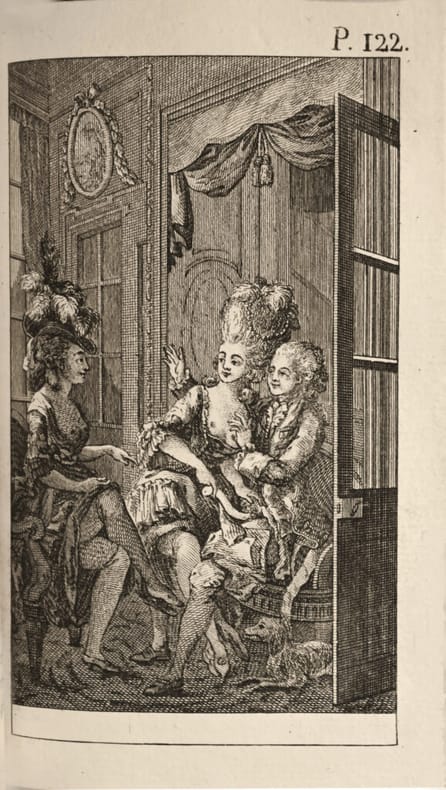
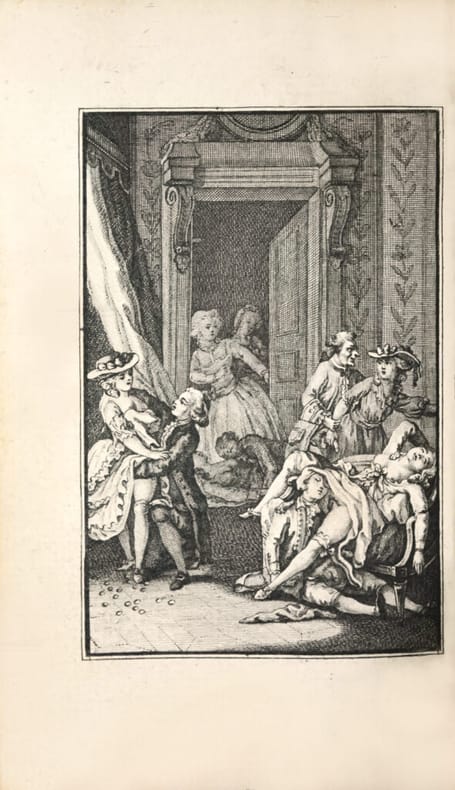
<p>18 cm, in 8°, rilegatura coeva in tutta pelle, fregi floreali e titolo su tassello al dorso. (4), 102, (4 c.b.); (1) 56. Due parti in un volume, con 16 tavole fuori testo incise su rame, incluso l'antiporta calcografico. Testatine e fregi tipografici, con 9 delle tavole più vole ripiegate. Macchia di inchiostro a pag 14-15 con strappetto e piccola perdita di testo, restauro professionale al verso delle tavole ripiegate. Si tratta della prima edizione con la data dichiarata al frontespizio e si differenzia dalle altre ed. per la variazione del titolo. Le tavole, numerate da 2 a 16 riprendono fedelmente i soggetti dell'edizione dell'Aja "La Haye" (1748). Opera erotico-pornografica di critica sociale assai celebre, resta incerta attribuzione i probabili autori sono uno tra Jean-Baptiste de Boyer D'Argens o Francois-Xavier de Montigny, ma la maggior parte delle attribuzione tende a Boyer D'Argens. Rarissima edizione, non censita in alcun repertorio o catalogo consultato, manca alla BNF.</p>