1 215 résultats
185018991Dijon Frantin, Imprimeur De L'académie 1850 In-8 235 ( 4 planches) + 112 + 4 + 184 + 15 et 1 planche dépliante, couvertures conservées
5052Amsterdam, chez Neaulme, 1744 – in-12, t.4: 418 pp, t.5: 352 pp, t.6: 382 pp, t.7: 346 pp – rel. basane raciné, tr. colorées
156428293(Genova), Excudebat Henricus Stephanus, illustris viri Huldrichi Fuggeri typographus, 1564. Folio. Later red full calf, rebacked, soft boards. Inner hinges reinforced. T-p. w. repaired loss to lower right corner, not affecting text. Upper part of first about 100 leaves w. decreasing waterstaining w. very minor affect to text. Cont. owner's name to t-p. (""Ex libris Rabillone""). T-p. in red and black, woodcut printer's device to t-p., woodcut initials and vignettes, first part w. beautiful Greek script. Overall good condition. (16), 297, (2), 216, (8) pp.
1920314255Frankfurt am Main: Kleukens Presse 1920. Number 34 of 250 copies. Unpaginated 12 ff. First and last leaves are blanks. 1 vols. 4to. Full brown morocco stamped in blind spine titled in gilt patterned paper endsheets t.e.g. Number 34 of 250 copies. Unpaginated 12 ff. First and last leaves are blanks. 1 vols. 4to. Pericles' Funeral oration from the second book of Thucydides History of the Peleponnesian War. The German text is by Rudolf G. Binding.<br /> This is the fifth book of the Kleukens Presse; most copies were issued in boards the present copy is in a full brown morocco binding with elaborate decorative strapwork borders in blind. Rodenberg I104; Schauer II67 Kleukens Presse unknown
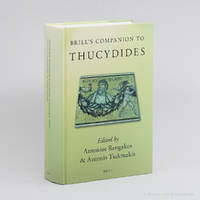
2006457Leiden: Brill 2006. First Edition. Hardcover. Fine. Royal 8vo. 6.75 x 9.625 in. 947 pp. Text in English. Glossy green illustrated boards. This volume comprises various & sundry articles by thirty leading international scholars in Thucydidean studies. Brill hardcover
2023x-9387867803Maven Books 2023. Hardcover. New. 306 pages. 6.69x0.75x9.61 inches. Maven Books hardcover
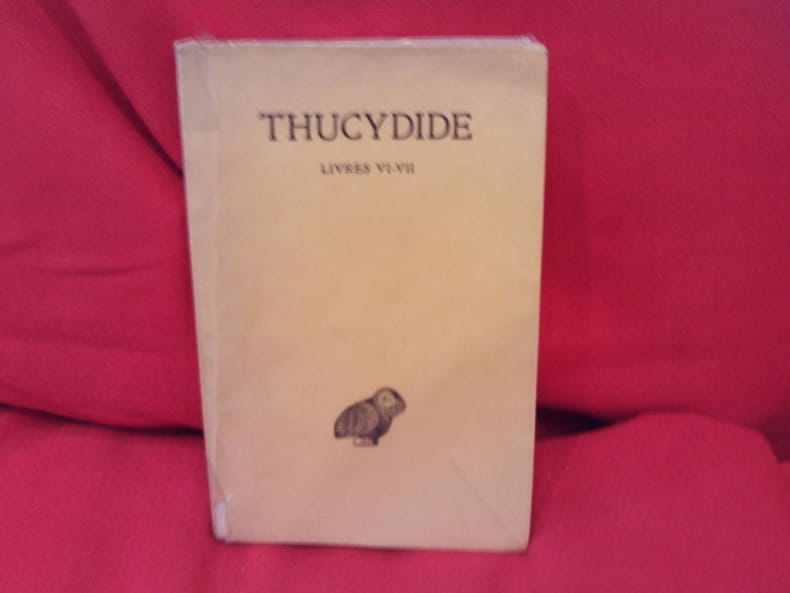
1963_202303839Paris, Société d'Edition «les Belles Lettres», 1963 ; in-8 (133 x 202 mm), XXXVI-332 pp. + 2 cartes hors-texte, broché. Collection des Universités de France «Guillaume Budé », N° 125. Edition bilingue: grec ancien, français. Texte établi et traduit par Louis BODIN et Jacqueline de ROMILLY, professeur à l'Université de Lille. 2e tirage revu et corrigé.
1948D14607London: The Dropmore Press 1948. Hardcover. Very Good. Translated by E.H. Blakeney. 12 24 4 pp. With an illustrated frontispiece. 4to. bound in publisher's half vellum and red cloth with nice example of the pictorial dust-wrapper and uncommon thus. Vellum discolored at the top of spine else an excellent copy. #130 of 300 copies printed. <br/><br/> The Dropmore Press hardcover
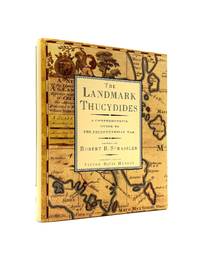
19961699New York: The Free Press 1996. First Edition First Printing Full Number Line. Publisher's Marigold Boards Burgundy Detailing. Very Good/Very Good. A Very Good or Better Book in a Very Good or Better Dust Jacket Unclipped Unpriced. Bumping/rubbing sunning and dust soiling to extremities. Text block with scattered instances of light dust soiling. Text is unmarked. Binding is square and mostly tight but pulled at crown. Dust jacket moderately bumped to extremities sunned to spine panel. A 3 inch vertical hairline scratch to front panel. Hardcover. Large Octavo. xxxiv 2 3-711pp. The First of Robert B. Strassler's Landmark Ancient Histories. A Work of Tremendous Scholarship with Outstanding Maps and Appendices. The Free Press unknown
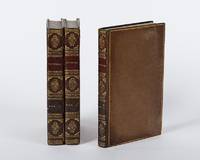
181132394AB1811. Bilingual Edition Greek-Latin. Three Volumes complete set. Oxford J.Parker 1811. Octavo. Pagination: Volume I:XXIV 440 pages / Volume II: 418 pages / Volume III: 266 pages plus 60 unnumbered pages of Index Rerum and Index Verborum. Hardcover / Original full leather with gilt lettering and ornament on spine and boards. Occasional annotations and textmarkings. Bindings rubbed and a little dusty but very firm and overall in very good condition with only minor signs of wear.Hinges all attached with only the front boards of Volume I and II slightly starting. Besides a few dogears a nd minor signs of only occasional foxing in very good condition. From the library of Daniel Conner Connerville / Manch House with his Exlibris / Bookplate to pastedown. This is a rare version of this text ! Thucydides c. 460 c. 400 BC was an Athenian historian and general. His History of the Peloponnesian War recounts the fifth-century BC war between Sparta and Athens until the year 411 BC. Thucydides has been dubbed the father of "scientific history" by those who accept his claims to have applied strict standards of impartiality and evidence-gathering and analysis of cause and effect without reference to intervention by the gods as outlined in his introduction to his work. Thucydides has been called the father of the school of political realism which views the political behaviour of individuals and the subsequent outcomes of relations between states as ultimately mediated by and constructed upon fear and self-interest. His text is still studied at universities and military colleges worldwide. The Melian dialogue is regarded as a seminal text of international relations theory while his version of Pericles's Funeral Oration is widely studied by political theorists historians and students of the classics. More generally Thucydides developed an understanding of human nature to explain behaviour in such crises as plagues massacres and wars. Thucydides believed that the Peloponnesian War represented an event of unmatched importance. As such he began to write the History at the onset of the war in 431 BC. He declared his intention was to write an account which would serve as "a possession for all time". The History breaks off near the end of the twenty-first year of the war 411 BC in the wake of the Athenian defeat at Syracuse and so does not elaborate on the final seven years of the conflict. The History of the Peloponnesian War continued to be modified well beyond the end of the war in 404 BC as exemplified by a reference at Book I.1.13 to the conclusion of the war. After his death Thucydides's History was subdivided into eight books: its modern title is the History of the Peloponnesian War. This subdivision was most likely made by librarians and archivists themselves being historians and scholars most likely working in the Library of Alexandria. Thucydides is generally regarded as one of the first true historians. Like his predecessor Herodotus known as "the father of history" Thucydides places a high value on eyewitness testimony and writes about events in which he probably took part. He also assiduously consulted written documents and interviewed participants about the events that he recorded. Unlike Herodotus whose stories often teach that a hubris invites the wrath of the deities Thucydides does not acknowledge divine intervention in human affairs. Thucydides exerted wide historiographical influence on subsequent Hellenistic and Roman historians although the exact description of his style in relation to many successive historians remains unclear. Readers in antiquity often placed the continuation of the stylistic legacy of the History in the writings of Thucydides's putative intellectual successor Xenophon. Such readings often described Xenophon's treatises as attempts to "finish" Thucydides's History. Many of these interpretations however have garnered significant scepticism among modern scholars such as Dillery who spurn the view of interpreting Xenophon qua Thucydides arguing that the latter's "modern" history defined as constructed based on literary and historical themes is antithetical to the former's account in the Hellenica which diverges from the Hellenic historiographical tradition in its absence of a preface or introduction to the text and the associated lack of an "overarching concept" unifying the history. A noteworthy difference between Thucydides's method of writing history and that of modern historians is Thucydides's inclusion of lengthy formal speeches that as he states were literary reconstructions rather than quotations of what was saidor perhaps what he believed ought to have been said. Arguably had he not done this the gist of what was said would not otherwise be known at allwhereas today there is a plethora of documentationwritten records archives and recording technology for historians to consult. Therefore Thucydides's method served to rescue his mostly oral sources from oblivion. We do not know how these historical figures spoke. Thucydides's recreation uses a heroic stylistic register. A celebrated example is Pericles' funeral oration which heaps honour on the dead and includes a defence of democracy: " The whole earth is the sepulchre of famous men; they are honoured not only by columns and inscriptions in their own land but in foreign nations on memorials graven not on stone but in the hearts and minds of men." Stylistically the placement of this passage also serves to heighten the contrast with the description of the plague in Athens immediately following it which graphically emphasises the horror of human mortality thereby conveying a powerful sense of verisimilitude: "Though many lay unburied birds and beasts would not touch them or died after tasting them . The bodies of dying men lay one upon another and half-dead creatures reeled about the streets and gathered round all the fountains in their longing for water. The sacred places also in which they had quartered themselves were full of corpses of persons who had died there just as they were; for as the disaster passed all bounds men not knowing what was to become of them became equally contemptuous of the property of and the dues to the deities. All the burial rites before in use were entirely upset and they buried the bodies as best they could. Many from want of the proper appliances through so many of their friends having died already had recourse to the most shameless sepultures: sometimes getting the start of those who had raised a pile they threw their own dead body upon the stranger's pyre and ignited it; sometimes they tossed the corpse which they were carrying on the top of another that was burning and so went off." Thucydides omits discussion of the arts literature or the social milieu in which the events in his book take place and in which he grew up. He saw himself as recording an event not a period and went to considerable lengths to exclude what he deemed frivolous or extraneous. Wikipedia hardcover
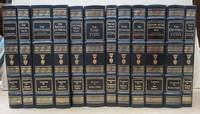
90809Norwalk Connecticut: Easton Press 2000. Full Leather. Fine. Complete 12 volume set uniformly bound in full black leather with gilt design lettering and AEG. Moire endpapers silk ribbon. 24 x 16.5 cm. "A note about" laid-in for each volume. Color frontispiece in each. A few small scratches to gilt edges of "Peloponnesian War" & Aristotle's Ethics larger scratch to top gilt edge of "The Odyssey<br /> <br /> <br /> Great condition overall of this set of classic Greek philosophy plays and history. Large set substantial extra charges will be required for international orders. List of titles:<br /> <br /> Aeschylus: The Oresteia 335pp. Translated by Robert Fagles.<br /> <br /> Aesop: The Complete Fables 262pp. Translated by Olivia and Robert Temple. <br /> <br /> Aristophanes: Four Comedies 393pp. Translated by Dudley Fitts. <br /> <br /> Aristotle: The Nicomachean Ethics 383pp. <br /> Translated by J. A. K. Thomson.<br /> <br /> Euripides: The Bacchae and Medea 451pp. Translated by Philip Vellacott. <br /> <br /> Herodotus: The Histories 622pp. Translated by Aubrey de Selincourt. <br /> <br /> Homer: The Iliad 683pp. Translated by Robert Fagles. <br /> <br /> Homer: The Odyssey 541pp. Translated by Robert Fagles.<br /> <br /> Menander: Plays and Fragments 265pp. Translated by Norma Miller.<br /> <br /> Plato: The Last Days of Socrates Translated by Hugh Tredennick and Harold Tarrant 237pp.<br /> <br /> Sophocles: The Three Theban Plays Antigone Oedipus the King Oedipus at Colonus 430pp. Translated by Robert Fagles. <br /> <br /> Thucydides: History of the Peloponnesian War 648pp. translated by Rex Warner. Easton Press unknown
1889606CBBartenstein, Gebrüder Kraemer (= Programm Nummer 2), 1889. gr.8°, 21 S., original Heft mit Papierrückenstreifen, Erstausgabe schöner alter Stempel der Lehrerbibliothek eines alteingesessenen Frankfurter Gymnasium auf Titelseite, sonst sehr schöne kaum altersspurige Broschur (Li1, Ordner28)
Book is in excellent condition with some shelf wear to lower edge of covers only. Binding is solid and square, covers have sharp corners, exterior shows no other blemishes, text/interior is clean and free of marking of any kind except for a small scribble on one page. Previous owner's name and sticker in front section of the book. 289 pages.
193048579Chelsea.: The Ashendene Press. 1930. Original publisher's full white pigskin by W. H. Smith & Son Ltd. with their signature gilt to rear turn-in banded spine with gilt title in six compartments. Folio. 408 x 282 mm. Printed title and 'Book I' to 'Book X' of Thucydides' text in English in red and black in Ptolemy type chapter summaries in Blado marginal chapter summaries and opening lines by Graily Hewitt in red the red initials from the alphabet designed by Eric Gill for the Ashendene Utopia final leaf with colophon and woodcut Ashendene device verso. The Ashendene Thucydides the final folio from the press.From the edition limited to 280 copies with this one of 260 on Batchelor 'knight in armour' Ashendene paper; 20 copies on vellum were also issued.The Greek text was translated by Benjamin Jowett Regius Professor of Greek at Oxford. The book is printed in Ptolemy with Blado marginal chapter summaries - the first time St John Hornby had used a different type for side-notes.This copy includes the original purchaser's invoice a single leaf 216 x 150 mm headed 'THE ASHENDENE PRESS / SHELLEY HOUSE CHELSEA' and made out to Mr. Jacques Steinitz / Warren Ohio'. Signed by St. John Hornby with two pence stamp and dated May 27th 1931 the cost is detailed as 15 Guineas.Ashendene XXXVII. The Ashendene Press. unknown
1414204973.Gpaperback. Good. Access codes and supplements are not guaranteed with used items. May be an ex-library book. paperback
1863RO20136295HACHETTE. 1863. In-12. Broché. Etat passable, Livré sans Couverture, Dos abîmé, Intérieur acceptable. 594 pages. Manque du 2e plat. Manque de la fin de la table des matières. Manque du dos initial. 1e plat abimé et taché.. . . . Classification Dewey : 880-Littératures helléniques. Littérature grecque
1019410590.Ghardcover. Good. Access codes and supplements are not guaranteed with used items. May be an ex-library book. hardcover
46405560like new. unknown
6288579like new. unknown
Light shelfwear. Very light edgewear to corners. Faint soiling to spines. ; 2 volume set complete (Vol 1: 471 pp Vol 2: 522 pp). Zweiter unveränderter fotomechanischer Nachdruck der Ausgabe Genf 1843 & 1847. Greek to Latin lexicon. ; Olms Paperbacks Band 34; 471 pages
Former owner's bookplate on inner cover. Upper corner bumped. ; Volume 1 only. Zweiter unveränderter fotomechanischer Nachdruck der Ausgabe Genf 1843. Greek to Latin lexicon. ; Olms Paperbacks Band 34; Vol. 1; 471 pages
Z1-C-077-00137Heinemann. Used - Very Good. Ships from UK in 48 hours or less usually same day. Your purchase helps support Sri Lankan Children's Charity 'The Rainbow Centre'. Book has been well cared for. 100% money back guarantee. We are a world class secondhand bookstore based in Hertfordshire United Kingdom and specialize in high quality textbooks across an enormous variety of subjects. We aim to provide a vast range of textbooks rare and collectible books at a great price. Our donations to The Rainbow Centre have helped provide an education and a safe haven to hundreds of children who live in appalling conditions. We provide a 100% money back guarantee and are dedicated to providing our customers with the highest standards of service in the bookselling industry. Heinemann unknown
Mm 155x240 Brossura editoriale di pp. 460, traduzione dall'italiano di Sophie Fermigierin ottimo stato. SPEDIZIONE IN 24 ORE DALLA CONFERMA DELL'ORDINE.
1990800529Berlin: Rotbuch Verlag, 1990. 151 S.: Kt. Originalhardcover mit Schutzumschlag.
6827669Harvard University Press pp. 400 4 Maps . Hardback. New. Harvard University Press hardcover