ThucydidesBiblio.com
922 résultats
1143389409.Gpaperback. Good. Access codes and supplements are not guaranteed with used items. May be an ex-library book. paperback
1142045927.Gpaperback. Good. Access codes and supplements are not guaranteed with used items. May be an ex-library book. paperback
1144842328.Gpaperback. Good. Access codes and supplements are not guaranteed with used items. May be an ex-library book. paperback
1142652742.Gpaperback. Good. Access codes and supplements are not guaranteed with used items. May be an ex-library book. paperback
1160096252.Gpaperback. Good. Access codes and supplements are not guaranteed with used items. May be an ex-library book. paperback
114808469X.Gpaperback. Good. Access codes and supplements are not guaranteed with used items. May be an ex-library book. paperback
1147937443.Gpaperback. Good. Access codes and supplements are not guaranteed with used items. May be an ex-library book. paperback
1168107458.Gpaperback. Good. Access codes and supplements are not guaranteed with used items. May be an ex-library book. paperback
1530446996.Gpaperback. Good. Access codes and supplements are not guaranteed with used items. May be an ex-library book. paperback
2012772692.Gpaperback. Good. Access codes and supplements are not guaranteed with used items. May be an ex-library book. paperback
1160852537.Gpaperback. Good. Access codes and supplements are not guaranteed with used items. May be an ex-library book. paperback
1146705204.Gpaperback. Good. Access codes and supplements are not guaranteed with used items. May be an ex-library book. paperback
1167640330.Gpaperback. Good. Access codes and supplements are not guaranteed with used items. May be an ex-library book. paperback
17314069<p>A handsome copy in the original full vellum. Folding maps of ancient Greece & Sicily. ; Folio 27 x 41.5 cm; 343472848123 pages. All shipments through USPS insured Priority Mail.</p> R. & J. Wetstein & Gul. Smith hardcover
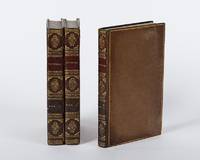
1831287921Oxonii; Londini; Cantabrigiae: Excudebat S. Collingwood Academiae Typographus Impensis J. Parker; Whittaker Treacher et Arnott; C. J. G. et F. Rivington; J. et J. J. Deighton 1831. Full Leather. Good binding. 19th century edition of Thucidides’s work on the Peloponnesian War. Library plates on the front endpaper; library stamps on the front flyleaf and rear endpaper. Annotations throughout in the same hand underlining difficult vocabulary and providing translations in the margins. Hinges reinforced with green cloth. Fully rebacked in leather with the remnants of the original spine laid down. Full green morocco with gilt lettering borders and decorations. All edges gilt. Good binding. Excudebat S. Collingwood, Academiae Typographus, Impensis J. Parker; Whittaker, Treacher, et Arnott; C. J. G. et F. Rivington; J unknown
28794Athens: Papademas. Brand new. Leatherbound 18 cm 429 pp. Papademas hardcover
197728796Athens: Papademas 1977. Brand new. Leatherbound 18 cm 380 pp. Papademas hardcover
198928795Athens: Papademas 1989. Brand new. Leatherbound 22 cm 239 pp. Papademas hardcover
1903biblio40347Leipzig: Teubner 1903. 361 pages. AsNew Hardcover without dj. Sienna cloth Black lettering and stamping. Ads on the Endpapers. Teubner hardcover
1821019011Oxonii: J. Parker & R. Bliss. The first 3 of 4 volumes. The three volumes here contain Lib. I-VIII in Greek plus the Index. The missing volume contains the Latin translation. Full leather. Vol. 1: Rebacked with original spine laid down no spine or title plates previous owners' names in ink and pencil occasional brief notations in pencil Good. Vol. II: Front cover and front blank nearly detached back cover detached leather in top and bottom compartments of spine missing internals nice Fair. Book III: Front cover and front blank and rear cover and rear blank detached chip at head of spine and leather from compartment at bottom of spine gone internals other than the detached blanks nice Fair. A nice working copy that could be made Very Good with rebinding. In Greek and Latin. . Fair. Hard Bound. First Edition Thus. 1821. J. Parker & R. Bliss unknown
181132394AB1811. Bilingual Edition Greek-Latin. Three Volumes complete set. Oxford J.Parker 1811. Octavo. Pagination: Volume I:XXIV 440 pages / Volume II: 418 pages / Volume III: 266 pages plus 60 unnumbered pages of Index Rerum and Index Verborum. Hardcover / Original full leather with gilt lettering and ornament on spine and boards. Occasional annotations and textmarkings. Bindings rubbed and a little dusty but very firm and overall in very good condition with only minor signs of wear.Hinges all attached with only the front boards of Volume I and II slightly starting. Besides a few dogears a nd minor signs of only occasional foxing in very good condition. From the library of Daniel Conner Connerville / Manch House with his Exlibris / Bookplate to pastedown. This is a rare version of this text ! Thucydides c. 460 c. 400 BC was an Athenian historian and general. His History of the Peloponnesian War recounts the fifth-century BC war between Sparta and Athens until the year 411 BC. Thucydides has been dubbed the father of "scientific history" by those who accept his claims to have applied strict standards of impartiality and evidence-gathering and analysis of cause and effect without reference to intervention by the gods as outlined in his introduction to his work. Thucydides has been called the father of the school of political realism which views the political behaviour of individuals and the subsequent outcomes of relations between states as ultimately mediated by and constructed upon fear and self-interest. His text is still studied at universities and military colleges worldwide. The Melian dialogue is regarded as a seminal text of international relations theory while his version of Pericles's Funeral Oration is widely studied by political theorists historians and students of the classics. More generally Thucydides developed an understanding of human nature to explain behaviour in such crises as plagues massacres and wars. Thucydides believed that the Peloponnesian War represented an event of unmatched importance. As such he began to write the History at the onset of the war in 431 BC. He declared his intention was to write an account which would serve as "a possession for all time". The History breaks off near the end of the twenty-first year of the war 411 BC in the wake of the Athenian defeat at Syracuse and so does not elaborate on the final seven years of the conflict. The History of the Peloponnesian War continued to be modified well beyond the end of the war in 404 BC as exemplified by a reference at Book I.1.13 to the conclusion of the war. After his death Thucydides's History was subdivided into eight books: its modern title is the History of the Peloponnesian War. This subdivision was most likely made by librarians and archivists themselves being historians and scholars most likely working in the Library of Alexandria. Thucydides is generally regarded as one of the first true historians. Like his predecessor Herodotus known as "the father of history" Thucydides places a high value on eyewitness testimony and writes about events in which he probably took part. He also assiduously consulted written documents and interviewed participants about the events that he recorded. Unlike Herodotus whose stories often teach that a hubris invites the wrath of the deities Thucydides does not acknowledge divine intervention in human affairs. Thucydides exerted wide historiographical influence on subsequent Hellenistic and Roman historians although the exact description of his style in relation to many successive historians remains unclear. Readers in antiquity often placed the continuation of the stylistic legacy of the History in the writings of Thucydides's putative intellectual successor Xenophon. Such readings often described Xenophon's treatises as attempts to "finish" Thucydides's History. Many of these interpretations however have garnered significant scepticism among modern scholars such as Dillery who spurn the view of interpreting Xenophon qua Thucydides arguing that the latter's "modern" history defined as constructed based on literary and historical themes is antithetical to the former's account in the Hellenica which diverges from the Hellenic historiographical tradition in its absence of a preface or introduction to the text and the associated lack of an "overarching concept" unifying the history. A noteworthy difference between Thucydides's method of writing history and that of modern historians is Thucydides's inclusion of lengthy formal speeches that as he states were literary reconstructions rather than quotations of what was saidor perhaps what he believed ought to have been said. Arguably had he not done this the gist of what was said would not otherwise be known at allwhereas today there is a plethora of documentationwritten records archives and recording technology for historians to consult. Therefore Thucydides's method served to rescue his mostly oral sources from oblivion. We do not know how these historical figures spoke. Thucydides's recreation uses a heroic stylistic register. A celebrated example is Pericles' funeral oration which heaps honour on the dead and includes a defence of democracy: " The whole earth is the sepulchre of famous men; they are honoured not only by columns and inscriptions in their own land but in foreign nations on memorials graven not on stone but in the hearts and minds of men." Stylistically the placement of this passage also serves to heighten the contrast with the description of the plague in Athens immediately following it which graphically emphasises the horror of human mortality thereby conveying a powerful sense of verisimilitude: "Though many lay unburied birds and beasts would not touch them or died after tasting them . The bodies of dying men lay one upon another and half-dead creatures reeled about the streets and gathered round all the fountains in their longing for water. The sacred places also in which they had quartered themselves were full of corpses of persons who had died there just as they were; for as the disaster passed all bounds men not knowing what was to become of them became equally contemptuous of the property of and the dues to the deities. All the burial rites before in use were entirely upset and they buried the bodies as best they could. Many from want of the proper appliances through so many of their friends having died already had recourse to the most shameless sepultures: sometimes getting the start of those who had raised a pile they threw their own dead body upon the stranger's pyre and ignited it; sometimes they tossed the corpse which they were carrying on the top of another that was burning and so went off." Thucydides omits discussion of the arts literature or the social milieu in which the events in his book take place and in which he grew up. He saw himself as recording an event not a period and went to considerable lengths to exclude what he deemed frivolous or extraneous. Wikipedia hardcover
193048579Chelsea.: The Ashendene Press. 1930. Original publisher's full white pigskin by W. H. Smith & Son Ltd. with their signature gilt to rear turn-in banded spine with gilt title in six compartments. Folio. 408 x 282 mm. Printed title and 'Book I' to 'Book X' of Thucydides' text in English in red and black in Ptolemy type chapter summaries in Blado marginal chapter summaries and opening lines by Graily Hewitt in red the red initials from the alphabet designed by Eric Gill for the Ashendene Utopia final leaf with colophon and woodcut Ashendene device verso. The Ashendene Thucydides the final folio from the press.From the edition limited to 280 copies with this one of 260 on Batchelor 'knight in armour' Ashendene paper; 20 copies on vellum were also issued.The Greek text was translated by Benjamin Jowett Regius Professor of Greek at Oxford. The book is printed in Ptolemy with Blado marginal chapter summaries - the first time St John Hornby had used a different type for side-notes.This copy includes the original purchaser's invoice a single leaf 216 x 150 mm headed 'THE ASHENDENE PRESS / SHELLEY HOUSE CHELSEA' and made out to Mr. Jacques Steinitz / Warren Ohio'. Signed by St. John Hornby with two pence stamp and dated May 27th 1931 the cost is detailed as 15 Guineas.Ashendene XXXVII. The Ashendene Press. unknown
Z1-C-077-00137Heinemann. Used - Very Good. Ships from UK in 48 hours or less usually same day. Your purchase helps support Sri Lankan Children's Charity 'The Rainbow Centre'. Book has been well cared for. 100% money back guarantee. We are a world class secondhand bookstore based in Hertfordshire United Kingdom and specialize in high quality textbooks across an enormous variety of subjects. We aim to provide a vast range of textbooks rare and collectible books at a great price. Our donations to The Rainbow Centre have helped provide an education and a safe haven to hundreds of children who live in appalling conditions. We provide a 100% money back guarantee and are dedicated to providing our customers with the highest standards of service in the bookselling industry. Heinemann unknown
1973046674Toronto: Hakkert 1973. xi 210pp index bibliography appendix footnotes. Or blue cloth in jacket. Price clipped tiny chip to top front of jacket. Thucydides was an unusually accurate recorder of the events leading to the downfall of the Athenian Empire. Here the author shows what he was doing in writing his History and how he elucidated the meaning of history and man's capacity to intervene in a seemingly inevitable process. First Edition. Hard Cover. Very Good/Very Good. 8vo. Hakkert Hardcover
1020319615.Ghardcover. Good. Access codes and supplements are not guaranteed with used items. May be an ex-library book. hardcover