9 résultats
16016467IB1601. Frankfurt Jonas Rhodius 1601. 8 Bl. 806 S. 17 Bl. Späterer Pergamentband mit grünen Stoffschließen Frontdeckel geringfügig gewölbt. Innengelenke mit geringfügigem Wurmfraß. Titel mit Namenszug von alter Hand. In äußerst schöner Erhaltung. unknown
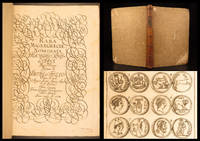
168350221<p>Printed in 1683 Rariora Magnæ Græciæ Numismata by Prospero Parisio edited by Johann Georg Volckamer records coinage from southern Italy including Calabria Sicily and the Kingdom of Naples. The text includes thirteen engraved plates illustrating coins from various cities along with lists of saints associated with these regions reflecting early methods of linking material culture with historical chronology. A facsimile map is also present. Good; leather binding tight and secure with rubbing to boards and corners pages generally clean with occasional light staining to corners text remains legible. Octavo 8vo single volume. Collation: 4 5–56 pp. Illustrations: 13 engraved plates and one facsimile map. Edition: 1683 2nd edition. #50221. PHOTOS AVAILABLE UPON REQUEST.</p> Johann Georg Volckamer (Editor) hardcover
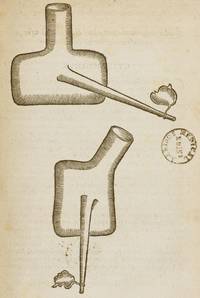
164548771Paris: Nicolaum Redelichuysen 1645. First edition. Hardcover. Good condition. Octavo. 11 150 25 39 1 leaves. Rebound in modern brown cloth with gilt lettering on spine. Red edges. First title page printed in red and black with publisher's device. Historiated and decorative headpieces tailpieces and initials. Both titles second editions Alpini's title first published in 1591 Bondt's in 1642. Alpini was a physician and botanist Bondt a Dutch physician and pioneer of tropical medicine. Alpini's work is illustrated with four in-text and two full page woodcuts.<br /> <br /> Alpini traveled in Egypt and became the fourth prefect of the Botanical Garden in Padua. "One of the earliest European studies of nonwestern medicine. Alpini's work dealt primarily with contemporary i.e. Turkish practices observed during a three-year sojourn in Egypt. These included moxibustion - the production of counter-irritation by placing burning or heated material on the skin - which Alpini introduced into European medicine. Alpini also mentioned coffee for the first time in this work" Norman. With extensive index at rear. <br /> <br /> De Bondt was a pioneer of tropical medicine. His work on East Indian medicine included here is based on experiences during four years he spent in Djakarta. It was the first important treatise on diseases in East India and includes the first modern description of Cholera and other tropical diseases. First published posthumously in 1642. Index at rear. <br /> <br /> Text in Latin. Binding with light wear along edges and rubbed spine lightly sunned. Ex-Libris of German-born British professor of chemistry Franz Sondheimer on inside front cover. The first four leaves frayed with small chips at lower foredge no loss of text a few small inked entries and a small stamp of the Royal Medical Society Edinburgh on front cover. Title page with paper reinforcement on back. First in-text woodcut with stamp in center second woodcut with stamp grazing image third and fourth with stamp outside imagery. The two full page woodcuts with stamps grazing the border of image. Some light sporadic foxing of block and last page with chipping along edges some loss of the printed word Index and foxing and browning along edges. Small dealer sticker on inside back cover. Nicolaum Redelichuysen hardcover
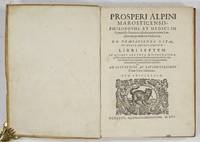
1601699231601. Venetiis : Apud haeredes Melchioris Sessae 1601 4° 8 163 1 17 leafs contemporary vellum inked titles on spine; small chip to fore-edge of upper cover fine copy. Rare First Edition! With "H.F. Norman M.D." bookplate on front paste-down. A classical work on prognosis. Prosper Alpini 1553-1617 was well acquainted with the works of both Hippocrates and Galen and could have easily written full length studies of each physician. However he chose instead to write this classic treatise on prognosis based on Hippocrates' writings. A comprehensive study of prognostics Alpini placed special emphasis on the patient's mental well being and its relationship to health and included the usual physical and diagnostic signs. In addition to its appearance at Venice the book was also published the same year at Frankfurt by Jonas Rhodius. Garrison-Morton 2194; Osler 1801 1735 ed.; Waller 371 1733 ed. hardcover
1616716111616. Crimes of Heresy-And Their Punishment Farinacci Prospero 1554-1618. Tractatus de Haeresi. In Quo per Quaestiones Regulas Ampliationes & Limitationes. Quid a Iure Civili & Canonico. Quid a Sacris Conciliis Summorumque Pontificum Constitutionibus Statutum. Quid Verius & Magis Communiter in hac Materia Receptum Sit. Et Quid Demum in Practica Servetur Solito Authoris Ordine Explicatur. Cum Argumentis Summariis Et Indice Locupletissimo. Rome: Ex Typographia Andreae Phei 1616. xx 686 2 240 pp. Folio 13-1/2" x 9-1/2". Contemporary vellum with early rebacking raised bands and early hand-lettered title and shelf number to spine. Light rubbing to boards heavier rubbing to extremities with a few small chips to edges and considerable wear to corners boards slightly bowed joints starting at ends rear pastedown detached and edgeworn some edgewear to leaves at beginning and end of text block. Title page printed in red and black within copperplate architectural border. Moderate toning somewhat heavier in places occasional faint dampstaining light foxing and minor worming in places faint vertical crease through title page. $2500. First edition as an independent work. This work on questions of heresy in civil and canon law appears to have drawn great interest since editions appeared the same year in Antwerp Frankfurt and Douai. It also helped as Schulte notes that the author's "reputation as a criminalist was enormous." Farinacci begins by defining the act of heresy. He then proceeds to examine where it can be found and how it should be investigated. As indicated by several examples of schismatics Farinacci was motivated in part by the Counter-Reformation. He also addresses heretical books pp. 81-99 practitioners of magic witches on those who invoke and consorting with demons pp. 99-155 and the apostasy of clerics. There is much on the power of the inquisition and the role the inquisitor in the investigation of charges of heresy the use of excommunication and methods for investigating guilt which has a detailed section on the use of torture pp. 287-297. Schulte Die Geschichte der Quellen und Literatur des Canonischen Rechts III:1 462. unknown books
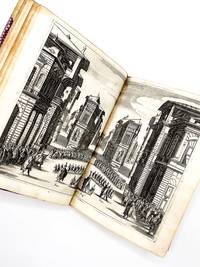
162050700Firenze Florence: Pietro Cecconcelli 1620. Second state. Very good. First edition of this landmark neoclassical tragedy - the first documented performance using moveable scenes - with exquisite double-page etchings of the stage by an influential innovator of the form. First performed in Florence in 1619 IL SOLIMANO was a turning point in modern European theater. Bonarelli not only rejected the chorus format of the long-established ancient Greek model but made use of extravagant set design to tell his political-historical drama. <br /> <br /> Bonarelli based the tragedy loosely on Suleiman the Magnificent the famed Turkish sultan of the 16th century under whose rule the Ottoman Empire experienced a Golden Age of the arts. The story of a tyrant who puts to death his eldest son IL SOLIMANO culminates in the awe-inspiring destruction of the city by fire. Otto Benesch calls the moveable scenes created for the performance "the first in the history of theatre" 17 and notes that despite the ostensibly Turkish setting these sets depict early modern Florence. A mixture of neoclassicism and orientalism IL SOLIMANO captured the imagination of Europe going through multiple editions over the century and inspiring further plays and operas. <br /> <br /> This first edition remains highly sought for its Callot plates that not only depict the innovative set but show many of the subtleties of style and technique that Callot pioneered under the patronage of the Medicis. His well-known mastery of stoppings out for example is evident in the final plate of the city in flames where tendrils of smoke and individual bursts of fire cross the scene in a variety of depth light and shade. <br /> <br /> An important work in both the history of theater and of the graphic arts. Quarto 8.75'' x 6.45''. Later half parchment with marbled boards gilt-ruled spine red goatskin spine label. Complete with six plates by Callot engraved title page and 5 double-page etchings. Engraved title with Callot's name in bottom left. 10 162 2 pages. Repairs in gutters of a number of leaves including reinforcements or new stubs to engraved spreads. Light scattered foxing spot of browning to title page gutter. Engravings crisp. Pietro Cecconcelli unknown
16206296Small 4to. Florence: Pietro Cecconcelli 1620. Small 4to xiv 162 ii pp. With an etched title-page and five double-page etched plates by Jacques Callot. Strictly contemporary limp vellum backstrip titled in manuscript some wear and soiling to binding and an inoffensive waterstain in the lower margin from a2-D2 but an entirely unsophisticated copy with superb strikes of the plates. § First edition of this important tragedy produced in 1619 and published many times in the 17th century. The illustrations are regarded as some of Callot’s finest work. “French etcher engraver and draughtsman. He was one of the most accomplished printmakers in the Western tradition and one of the major exponents of the Mannerist style in the early 17th century. His often fantastic compositions combine grotesque and elegant elements in a compelling and personal manner.†Grove Dictionary of Art. Callot based his illustrations on the work of his colleague Parigi architect and chief designer of courtly festivities under the Grand Duke Cosimo Medici II who died two years later causing Callot to return to his native Nancy. Gamba 1810. Cicognara 1086. Lieure 363-368. The book is quite scarce especially in unsophisticated condition and with such fine impressions of the plates. The Schaeffer copy for example 1994 lot 38 had the plates on stubs was cut down slightly and rebound in recent red morocco. Of the six copies at auction since 1975 only one was in contemporary vellum 1978. Pietro Cecconcelli hardcover books
1687123752Daniel Horthemels 1687 1687. leather_bound. Good. 9x7x2. Daniel Horthemels 1687 9" x 13" leather bound front board detached. Tiny bit of pencil to text. Light foxing. Illustrated. Text is in Latin. Please email for photos. Daniel Horthemels, 1687 hardcover
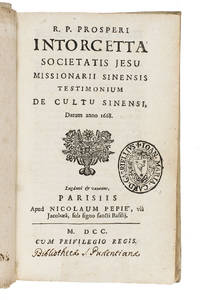
1700ABC_47581Paris 1700. 8vo. Nicolas Pepié Contemporary vellum with the manuscript title on the spine blue sprinkled edges. With a small woodcut ornamental vignette on the title page and some head- and tail-pieces built up from typographical ornaments 2 318 10 pp. This particular account on Chinese cults known as the De cultu sinensis was authored in 1668 and published posthumously. It was written by Prosper Intorcetta 1625-1696 who embarked on a journey to China in 1656 alongside Father Martini and a group of fifteen other priests who were engaged in missionary work in the province of Jiangxi. Intorcetta who assumed the Chinese name of In-to-tsé and the nickname of Koi-ssé was imprisoned in Canton in 1664. After his initial release he managed to travel to Rome in 1671 to witness the fate of his fellow missionaries before being arrested again in 1690. Alongside his work on the translation and study of Confucius' classics for which he proposed a complete translation the present work played a crucial role in the establishment of the subject of sinology in Europe as it dates back to the early years of missionary presence in China. Furthermore it contributed to enhancing understanding of the Chinese language. The De cultu sinensis was a response to the concerns raised by Domenico Navarette a Spanish Dominican archbishop and missionary who served in Mexico the Philippines and later in China. Navarette strongly opposed certain Chinese rituals and Intorcetta's book addresses this contentious issue.With the large oval black owner's stamp of Cardinal Jean-Marie Gabriel on the title-page and page 5 a manuscript owner's inscription in brown ink "Bibliotheca J. Pudentiana" on the title page and with a small manuscript annotation "J. Pud." on the front board. With some offsetting from the manuscript owner's incription in the first free flyleaf and a small paper repair to the bottom margin of the title-page without affecting the text. Slightly browned throughout otherwise in very good condition.l Cordier Sinica 884; Sommervogel IV 642 no.6; WorldCat 18792180 12 copies. hardcover