BALZAC (Honor de).Biblio.com
6 418 résultats
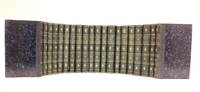
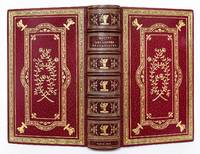
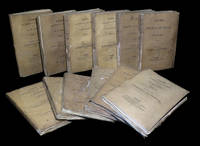
1834249431834. Paris Madame Charles BÂŽchet puis Werdet 1834 ˆ 1837. 12 vol. au format in-8 218 x 151 mm de 2 ff. n.fol. 401 pp. et 1 f. ; 361 pp. et 3 ff. n.fol. ; 2 ff. n.fol. 386 pp. et 1 f. n.fol. ; 398 pp. et 1 f. n.fol. ; 384 pp. 1 f. n.fol. et 1 f. bl. ; 2 ff. n.fol. 387 pp. 1 f. n.fol. et 1 f. bl. ; 2 ff. n.fol. et 359 pp. ; 2 ff. n.fol. 357 pp. 1 f. n.fol. et 4 ff. de catalogue ÂŽditeur in fine ; 339 pp. ; 2 ff. n.fol. 366 pp. et 1 f. n.fol. ; 349 pp. et 1 f; n.fol. ; 390 pp. et 1 f. n.fol. brochÂŽs. Edition originale ; complÂte des 12 volumes la constituant. Ensemble - ˆ grandes marges - comportant l'insigne particularitÂŽ que chacun des exemplaires le composant a ici ÂŽtÂŽ imprimÂŽ sur papier de couleur rose. Les exemplaires sur papier de couleur se rencontrent presque toujours sÂŽparÂŽment. Il est donc extrÂmement rare de trouver pareil ensemble complet de ses douze volumes ; tous imprimÂŽs sur papier rose. ''Collection rare et de plus en plus recherchÂŽe'' signalait dÂŽjˆ Clouzot. Clouzot encore : ÔÕDÕune partie de ces douze volumes ont ÂŽtÂŽ tirÂŽs quelques exemplaires sur papier rose ou jonquille que lÕon rencontre sÂŽparÂŽment et qui sont fort recherchÂŽsÕÕ. ''Cette sÂŽrie de 12 volumes des Etudes de moeurs est fort rare aujourd'hui ; elle se rencontre parfois ˆ l'ÂŽtat brochÂŽ elle est rarissime en belle reliure du temps. C'est l'ÂŽdition originale d'EugÂŽnie Grandet qui en fait la valeur. Quelques exemplaire ont ÂŽtÂŽ imprimÂŽs sur papier jonquille ; ils sont d'une grande raretÂŽ''. in Carteret. ''Cette ÂŽdition considÂŽrÂŽe comme le premier essai de La ComÂŽdie humaine est fort rare aujourd'hui surtout en reliure d'ÂŽpoque''. in Escoffier. Premier essai de ce qui deviendra plus tard La ComÂŽdie Humaine ; ici composÂŽ de 3 sÂŽries de 4 volumes ScÂnes de la vie privÂŽe ScÂnes de la vie de province et ScÂnes de la vie parisienne. L'ensemble recÂle plusieurs romans en ÂŽdition originale : EugÂŽnie Grandet premier grand succÂs public de l'auteur La Fleur des Pois qui deviendra Le Contrat de mariage La Recherche de l'absolu les deux derniers chapitres de La Femme de trente ans La Femme abandonnÂŽe La GrenadiÂre L'Illustre Gaudissart La Grande BretÂche ou les Trois Vengeances La Vieille fille la premiÂre partie des Illusions perdues l'Histoire des Treize I. Ferragus chef des DÂŽvorants et II. Ne touchez pas la hache qui deviendra La Duchesse de Langeais La Fille aux Yeux d'Or La Comtesse ˆ deux maris qui deviendra Le Colonel Chabert aprÂs sa parution en feuilleton dans la revue l'Artiste en 1832. Clouzot Le Guide du bibliophile pp. 11 et 12 - Vicaire I Manuel de l'amateur de livres du XIXÂme 196 ˆ 199 - Carteret I Le TrÂŽsor du bibliophile romantique et moderne pp. 68 et suivantes ne mentionnant pas l'existence d'exemplaires imprimÂŽs sur papier rose - Rahir La BibliothÂque de l'amateur p. 306 ne faisant pas cas d'exemplaires imprimÂŽs sur papier de couleur - Escoffier Le Mouvement romantique 1231. Plats prÂŽsentant un ÂŽclat lÂŽgÂrement altÂŽrÂŽ ainsi que parfois quelques t‰ches. Manques aux dos ; entra”nant de fait une faiblesse du brochage. TrÂs rares et discrÂtes rousseurs dans le texte. Cerne claire affectant les fonds de cahiers des derniers feuillets dÕun des volumes. Nonobstant ensemble en belle condition. b42961 unknown
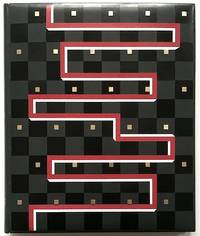
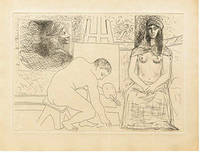
19312428Paris: Ambroise Vollard 1931. First edition. No. 217 of 240 copies on Rives paper of a total edition of 305. 13 original etchings by Pablo Picasso and 67 wood engravings after drawings by the artist engraved by George Aubert. Bound in gray calf by Renée Haas and collaborators Renaud Vernier and Claude Ribal. Front and back covers with a black and gray inlaid checkerboard pattern with alternating gold squares mounted each cover with inlaid red line vertically zigzagging with white mirrored line throughout lettered in gilt on the spine; all edges gilt; red suede doublures gray suede endleaves; morocco-tipped slipcase with suede-lined chemise spine mirroring volume spine text. Original wrappers bound in. An excellent copy. <br /> <br /> The binding dated 2008 is the work of three hands: the designer Renée Haas and Renaud Vernier and Claude Ribal executors of the binding. According to the Pierre Bergé catalogue description of the binding on Matisse's Jazz executed by the same trio in 1983 "Renée Haas reserved her talents only for a few lucky collectors hence the rarity of her bindings on the market today."<br /> <br /> In 1926 Ambroise Vollard commissioned illustrations from Picasso for The Unknown Masterpiece a formidable Balzacian reflection on pictorial creation in which his "text declares his aesthetic faith in artists and their search for inspiration despite their struggles to reach their goals." Johnson Artists' Books in the Modern Era. And as Strachan notes "who better than Picasso could understand and convey the restlessness of an artist battling with the inexpressible" "The diversity yet harmony of Picasso's genius is represented here by the inclusion of both abstract and classical styles in a single volume. The wood-engravings reproduce Cubist figures still-lifes and the sparkling 'constellation drawings' of 1926 while the etchings are classical in character combining pure line with cross-hatching." Garvey The Artist and the Book One of the most important livres d'artistes of the twentieth century; as Chapon notes "un des ouvrages qui fait le plus honneur à Vollard reste Le Chef-d'oeuvre Inconnu."<br /> <br /> Goeppert-Cramer Picasso no. 20; Hyza et. al. Picasso et le livre d'artiste pp. 56-57 ; Garvey The Artist and the Book 1860-1960 no. 225; Garvey & Wick The Arts of the French Book 1900-1965 no. 18; Johnson Artists' Books in the Modern Era no. 54; Mellby Splendid Pages p. 209; Coron De Goya à Max Ernst pp. 255-262; From Manet to Hockney 92; Skira Anthologie du Livre Illustré par les Peintures et Sculpteurs 293; Strachan The Artist and the Book in France pp. 60-62 339; Chapon Le Peintre et le Livre pp. 57 74-78 281. Carteret Le trésor du bibliophile: livres illustrés modernes 1875 à 1945 vol. 4 p. 51. Ambroise Vollard unknown
51-1019Paris: Ambroise Vollard 1931. 13 original etchings unbound as issued in a sleeve inside the bound book. One of 65 deluxe copies no. 10 on Imperial Japan paper signed by Picasso and Vollard. Only the deluxe copies on Japan paper were signed on the colophon by the artist and publisher. This copy without the second suite on Rives. Housed in a custom clamshell case encased throughout in three leathers by the celebrated binder Alexandr Mosalov. References : Cramer Pablo Picasso les livres illustrés n° 20 ;Bloch: 82-94; Livre no 19. Un des précieux exemplaires sur Japon sans la suite.In-4 228 x 250 mm. En feuilles sous chemise rempliée illustrée. Quelques défauts à la couverture dos et bords inférieurs du premier plat légèrement passés accident à la coiffe supérieure quelques taches coin inférieur du premier feuillet blanc coupé bords des planches de la suite très légèrement maculées sans atteinte aux gravures.13 eaux fortes originales hors texte dont la table des gravures et 67 dessins gravés sur bois de Pablo Picasso. Paris: Ambroise Vollard, 1931. hardcover
184259614Paris: Charpentier 1842. Fine. Charpentier Paris 1842 12 x 19 cm relié First definitive editions partly original.Bound in red half-shagreen with corners spine with four raised bands decorated with blind-stamped panels and fillets the entwined monogram of Jules Hetzel at the foot uncut copy contemporary binding.A few occasional spots of foxing.Inscribed by the author to Jules Hetzel as a token of the authors friendship. In the 1840s Balzac contributed to a collective volume illustrated with Grandvilles vignettes Scènes de la vie privée et publique des animaux issued in parts by a new publisher Pierre-Jules Hetzel 18141886 who was to become a friend and play a crucial role in the consortium of publishers of La Comédie humaine. Balzac also assisted Hetzel in drafting texts signed P.-J. Stahl the publishers pseudonym. Roger Pierrot Honoré de Balzac Paris Fayard 1994 An outstanding copy inscribed by Balzac in a charming contemporary binding. Charpentier hardcover
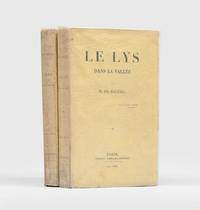
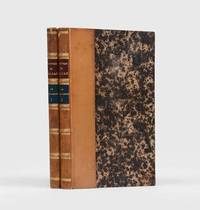
1836179013Paris: Werdet 1836. Uncommon in the original wrappers First edition. This story of unrequited love partly mirroring Balzac's own relationship with Laure de Berny became the object of a highly publicized literary-legal controversy which boosted its commercial success. Balzac wrote the novel over the course of several years inspired by Sainte-Beuve's earlier romance Volupté. The first part was published in the Revue de Paris on 22 November 1835. The journal's editor François Buloz owned the rights to Balzac's novels which were to be published in that journal only. In December Balzac found out that his uncorrected proofs had been sold by Buloz to the owners of the Revue étrangère of St Petersburg without his consent and that the Russian journal had published them in October. Balzac sued Buloz and refused to send him the second part of the novel. "Given whom and what was involved the legal controversy found its way into the press. Buloz used his power influence and publications to attack Balzac viciously. Alexandre Dumas and other writers - fearful of the publisher's power - lined up with Buloz; Victor Hugo and George Sand with Balzac. In the end the court ruled for Balzac" Kornstein p. 91. The complete novel was published in these two volumes by Werdet on 1 June 1836. An account of the trial by Balzac features as a second introduction in the first volume and was not reprinted in the following editions. Le Lys dans la vallée is the last of four romances in Balzac's Scènes de la vie de campagne the sixth narrative cycle in La Comédie humaine. It "appears as the point of convergence of confluence of the previous works. Several themes outlined or already developed in the future Comédie humaine and the Contes are taken up illustrated highlighted" trans. from Donnard p. 897. 2 vols octavo. Original yellow wrappers printed in black edges untrimmed. In later glassine wrappers and housed in custom marbled paper slipcases and chemises with red morocco-grain roan backstrips. With the gilt leather bookplate of French collector and bibliophile Pierre Duché whose renowned library was sold in 1972. Spines with splits and wear at ends small repairs to vol. I spine front joints partially split but holding wrappers slightly toned and marked a few small chips and nicks contents foxed. A very good copy of this fragile publication. Vicaire I 202-3. Daniel Kornstein Unlikely Muse: Legal Thinking and Artistic Imagination 2010. Jean-Hervé Donnard ed. La Comédie humaine vol. IX 1978. hardcover
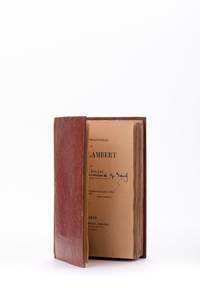
27381Paris Charles Gosselin 1833. 1 vol. 161 x 111 mm de 264 p. dont le faux-titre et le titre ; cartonnage de papier rouge à la Bradel dos lisse titre doré Wagner & Spachmann chemise en demi-maroquin saumon avec étui assorti G. Mercier 1931. . Première édition séparée en grande partie originale. Un des 12 rarissimes exemplaires imprimés sur papier fort de couleur saumon. Précieux exemplaire offert à George Sand ; il porte sur le titre sous le nom de l'auteur de la main de la romancière : « Ex. donné par lui-même à G. Sand ». . Louis Lambert est une oeuvre savoureuse de Balzac qui plante le personnage d'un intellectuel romantique blessé que la folie emportera. Une première publication en 1832 dans Les Nouveaux Contes philosophiques le laisse insatisfait : il écrit le 25 novembre à son amie Zulma Carraud : « Hélas Louis Lambert est incomplet. Je me suis encore trop pressé. Il y manque des développements et bien des choses que je suis en train de faire et dans la prochaine édition il sera bien changé bien corrigé. » Corr. II 178. Balzac remanie alors considérablement son texte en y ajoutant notamment le Traité de la volonté. Cette version définitive paraît deux mois plus tard en janvier 1833 seulement imprimée à 750 exemplaires dont une grande partie aux dires de Balzac dans la préface à l'édition collective du Livre mystique sera détruite déplorant encore en 1835 le mauvais travail réalisé pour cette « défectueuse édition qui pour mon malheur court le monde dans un état désolant d'imperfection » Corr. II 932. « Le résultat final témoigne de l'activité de penseur de Louis génie foudroyé mais garde un caractère un peu composite du fait même de cette élaboration par paliers. Balzac resta pourtant très attaché à cette oeuvre ‘chérie tant caressée' LHB I 573 longuement pensée et portée prédilection dont témoigne le luxe exceptionnel des reliures qui conservent les documents de sa genèse » Isabelle Tournier Louis Lambert Maison de Balzac notice en ligne : en témoigne l'exemplaire conservé à la Maison de Balzac établi par Balzac lui-même pour Madame de Berny relié en « maroquin rouge à grain long dos et plats ornés de compartiments dorés et à froid mosaïque de maroquin bleu et vert portant au centre du plat supérieur : ‘Et nunc et semper' avec d'abondantes corrections et 25 feuillets intercalés d'additions notamment sur Vendôme et sur le Traité de la Volonté ». En témoigne également un tirage tout particulier que Balzac fit réaliser sur ses fonds propres : douze exemplaires sur papier fort de couleur saumon que le romancier confie à l'atelier de reliure Wagner & Spachmann. La facture originale conservée dans le fonds Lovenjoul de l'Institut de France nous renseigne : établie à son nom en date du 20 février 1833 ils sont tous identiques « payés 1 franc pièce ; des cartonnages modestes qui sont cependant en parfaite harmonie avec l'ouvrage. Sobres recouverts de papier rouge brique ils présentent au dos le seul titre L. LAMBERT en lettres dorées entre deux filets dorés. Les gardes sont de papier blanc ; le volume est non rogné. Balzac destinait manifestement ces exemplaires à des amis proches » Balzac imprimeur et défenseur du livre 1995 p. 136. De ces douze exemplaires trois autres seulement sont localisés : - exemplaire de Victor Ratier ancien directeur de La Silhouette avec envoi autographe signé Exposition Balzac Pierre Berès nº 255 collection particulière ; - exemplaire d'Eugène Sue avec envoi autographe signé « au cher capitaine de la Salamandre » Bibliothèque Jacques Guérin 20 mars 1985 nº 4 coll. particulière ; - exemplaire sans envoi peut-être celui cité par Vicaire en provenance d'une vente Rouquette ; Librairie Métamorphoses 2016 n° 26 coll. particulière avec un dos refait. Cet exemplaire de George Sand Catalogue de la bibliothèque de Mme George Sand et de M. Maurice Sand Paris 1890 nº 47 ; Exposition Balzac Pierre Berès nº 254 ; collection Pierre Bergé puis vente V 2020 n° 965 est sans conteste le plus précieux pour l'heure. Il a également été tiré deux exemplaires sur papier de Chine l'un offert à Mme Hanska l'autre à Zulma Carraud mais ils sont tous deux dépourvus d'envoi ou d'ex-dono. Il en fait part à Zulma Carraud le 25 janvier 1833 : « vous allez recevoir bientôt chez M. Sazerac un petit paquet qui contiendra mon offrande. Pour vous il existe un exemplaire sur papier de Chine et qu'en ce moment les plus grands artistes en reliure s'occupent de rendre digne de vous. Je vous en prie ne le prêtez jamais. Vous savez quand vous faites de la tapisserie chaque point est une pensée. Eh bien chaque ligne du nouvel ouvrage a été pour moi un abîme. Il y aura là des secrets entre nous deux. Gardez le bien ; je vous en mettrai un exemplaire vulgaire que vous prêterez si tant est que vous puissiez le prêter à beaucoup de monde. Maintenant l'oeuvre est bien plus complète plus étoffée mieux écrite ; puissé-je en faire un jour un monument de gloire ! ». Un délice contenu dans un écrin en palissandre marqueté à son chiffre passé en vente en 2010 Pierre Bergé et associés Laucournet exp. 29 juin n° 150. Provenance : George Sand ; Pierre Bérès ; Pierre Bergé. Carteret I 62 ; Clouzot 20 ; Louvenjoul 190 ; exemp. cité par Vicaire I 194. Paris, Charles Gosselin, 1833. 1 vol. (161 x 111 mm) de 264 p. dont le faux-titre et le titre ; cartonnage de papier rouge à la unknown
184286807Paris 1842. Fine. Balzac's Soon to be Lost Illusion Paris 12 mars 1842 13.50 x 26 cm 4 pages sur un feuillet Autograph letter signed by Honoré de Balzac to Sophie Koslowska. 4 pages in black ink on a bifolium. Usual folds. Very small lacks of paper along the horizontal fold of the first leaf. Published in his Correspondance 1819-1850 II. Paris Calmann-Lévy 1875 pp. 31-33. A long feverish letter by Balzac a few days before the premiere of Les Ressources de Quinola at the Odéon theater. The writer writes to his close friend Sophie Kozlowska daughter of Prince Kozlowski about the chaotic final preparations and urges her to fill the theater with all of Paris's Russian high society. Balzac wrote this important letter just as he was about to take one of the biggest gambles of his career. The writer wanted to convene a real audience for the premiere of Les Ressources de Quinola and have the play performed in front of a full house of paying spectators instead of using the famous claqueurs clappers traditionally seated in the parterre to encourage audience reactions which is described at length in Lost Illusions. His failed attempt was so publicized by all the newspapers that this performance proved the very necessity of claqueurs: The author preferred peril. Such is the reason for this first performance in which so many people were displeased to have been elevated to the dignity of independent judges Editor's notes in Balzac's OEuvres complètes A. Houssiaux 1855. La Mina wrote me that you were ill and it struck me as a blow as if someone had told Napoleon that his aide-de-camp had died: disregarding Kozlowska's fragile health Balzac set about filling the twelve hundred seats of the Théâtre-Français with all the high-ranking and wealthy spectators Paris had to offer. He relied on the relations of his carissima Sofia to pay for the priciest seats an inclination that earned him accusations of speculation. He indeed takes particular care going over prices in the letter: We'll play next Wednesday barring any misfortune. The first seatings with four places are one hundred francs a box and everyone wants to be there. But the fashionable place where the Aguados the Rothschilds the Doudeauvilles the Castries etc. are is the loge des premières fermées because one feels at home. . Lamartine has asked me for a box: I'll put him between the Russians. Princess Troubetskoï is not the same one whose husband I know. See to it that you write to the prince And don't forget your Makanof . So: balconies twenty-five francs; stalls twenty francs; premières découvertes twenty-five francs a seat; secondes découvertes twenty francs; secondes fermées twenty-five francs; baignoires twenty francs a seat. . Ah! if you only knew what wealth of beautiful women! There will be no clappers in the parterre which is priced at five francs . Write a note to Princess Constantine Razumovska. I don't dare do it myself. For you and for your mother you will go to the premières découvertes; I will place you well. These hurried lines reveal Balzac's great expectations. He deeply believed in the merits of his comedy play about a man of industrial genius in 16th century Spain although the play's reception certainly suffered from Balzac's poor choices during its premiere. The writer expected to solve his financial difficulties and travel with his beloved Madame Hanska following the play's success. Having finished writing the final acts in a hurry he describes the terrible days leading up to the premiere: I'm overwhelmed on edge! I have the actors rehearse in the morning the entire cast during the day and the actresses in the evening. There are twenty thousand francs worth of costumes in the play. The sets are brand new. I'm told that the work is a masterpiece and that makes me shudder! It will always be frighteningly solemn. Some lines even border on the paranoid abundantly underlined with unknown
182963413Paris: Urbain Canel 1829. Fine. Urbain Canel Paris 1829 10 x 17.50 cm 4 volumes reliés Very rare and highly sought-after first edition of Balzac's first novel signed by his name. Published a small number of copies this first novel whose original title is inspired by the last of the Mohicans James Cooper reappeared reworked in 1834 under a new title: The Chouans . This first important work of Balzac also marks the beginning of the comedy Humaine which she constitura since 1845 a scene of the military life . Bindings in half red Russian leather smooth backs adorned with gilt and black threads gold friezes in heads and tails marbled paper plates Contemporary binding. A restored bit and a flap sheet of the first volume changed some small foxing. Exceptional exemplary set in a charming Contemporary binding. Urbain Canel hardcover
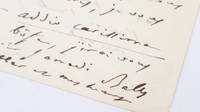
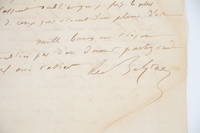
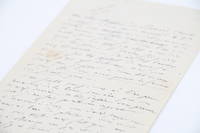
183077791Tours 1830. Fine. Tours 23 juin 1830 13.20 x 19.90 cm une feuille Unpublished autograph letter: As soon as I had arrived in Tours I was thrown on the coasts of Brittany by the best conditioned desire that had ever seized a man to shut off the atmosphere of Paris and its ideas by going to run on the beautiful rocks that border the sea in Brittany Tours 23 June 1830 13.2 x 19.9cm one leaf Unpublished handwritten letter signed by Honoré de Balzac one and a half pages written in black ink on a leaf of white paper. Transversal folds and ink a little faded at the bottom of the first page without making it difficult to read. The man from Tours poetically recounts his wanderings on the Breton coast during a trip he took in the company of Madame de Berny. Together they sailed up the Loire in a boat all the way to Le Croisic: As soon as I had arrived in Tours I was thrown on the coasts of Brittany by the best conditioned desire that had ever seized a man to shut off the atmosphere of Paris and its ideas by going to run on the beautiful rocks that border the sea in Brittany and there once arrived I stayed a fortnight the most delicious in the world running on the bays on the kelp collecting the pucelages that are in large numbers on the sea sand in reverse of the rue Vivienne. The pucelages here are shellfish so named because of their vulvoid shape allowing Balzac an allusion to the prostitution very popular at the time that occupied the Galerie Vivienne. This amusing letter is addressed to one of the editors of La Silhouette magazine as evidenced in particular by the sign off at the end of the letter mentioning the founder of the periodical: A thousand good friendships do not forget to give a large part to our friend Victor Ratier. Balzac also mentions several articles: I am writing to give you a sign of life proof of interest and of friendship but I write to you briefly because I have twenty letters to answer and I promise you a letter for.1st July which will contain the end of the charlatan issue 2 la bella dona and finally the articles that will have passed through my head and with which you will be furnished so as to not ask anything of me for a month or two and so that around August you will be my publisher. We have not found any trace of said letter in the writer's correspondence no more besides than the continuation of the Charlatan the first part of which was published in the second issue of La Silhouette. No article under the title of Bella Dona appears in the following issues either although Balzac emphasizes in his letter the desire to provide other texts given that the charms of the Loire must not make him forget that he is the poorest of those who live on a quill pen. A beautiful and spicy unpublished letter. unknown
183386496s. l. Neuchâtel 1833. Fine. Eve's first kiss: 'The gods grant no favours untainted.' s. l. Neuchâtel 29 septembre 1833 13.40 x 21.10 cm une page sur un double feuillet Autograph letter signed by Honoré de Balzac addressed to his friend the writer Charles de Bernard. One page written in black ink on a bifolium. On the verso of the second leaf appears the address of the recipient Charles de Bernard du Grail written in Balzacs hand along with postal stamps and the seal bearing the arms of the Balzac dEntraigues family which the author had appropriated. A few minor holes not affecting the text; fold marks as usual from mailing. Published in his correspondence Paris Calmann Lévy 1876 CXIV pp. 252253. Balzac wrote this letter four days after his very first meeting and first kiss with Madame Hanska in Neuchâtel following many months of epistolary correspondence. « Jai été très heureux ici. Je suis très content de ce que jai vu le pays est délicieux ; mais vous savez que Jupiter a deux tonneaux et que les dieux nont point de faveurs qui soient pures. » ""I have been very happy here. I am most pleased with what I have seen; the country is delightful. But you know that Jupiter has two jars and the gods grant no favours that are untainted."" Two years after receiving the first letter from the Stranger Éveline Rzewuska a lovestruck Balzac left Paris to join her in Switzerland. His brief stop in Besançon ostensibly a convenient detour served as a polite pretext for his departure from the capitalwhere he took the opportunity to visit his correspondent Charles de Bernard. « Il me semble que je vous ai bien peu remercié de la bonne journée que vous mavez donnée ; mais jespère vous prouver que je ne suis point un ingrat. À mercredi donc ; vous devez penser que jaurai bien du plaisir à vous revoir vous qui avez fait que mon voyage à Besançon na pas été inutile et que jy ai trouvé du plaisir ». I fear I thanked you all too little for the delightful day you gave me; but I hope to prove that I am not ungrateful. Until Wednesday then you must know how much I look forward to seeing you again you who ensured that my journey to Besançon was not in vain and even brought me joy. After a day in Besançon and a chaotic journey by mail coach Balzac finally met his beloved though regrettably in the company of her husband Count Hanski. Seizing upon the Counts absence the writer stole a long-awaited kiss with Madame Hanska on an ancient stone bench upon the hill of Crêt. In the rapture of their first encounter he could not help but invoke La Fontaines ominous fable in his letter: « mais vous savez que Jupiter a deux tonneaux et que les dieux nont point de faveurs qui soient pures ». but you know that Jupiter has two jars and the gods offer no favours untainted. His love affair with Madame Hanska would prove far from serene as Gonzague Saint Bris aptly summed it up: eighteen years of love sixteen of waiting two of happiness and six months of marriage. Neuchâtel would remain a powerful emblem of their union recurring in some sixty of their letters. Neuchâtel is like the white lily he wrote to her pure with a penetrating fragrance youth freshness brilliance hope happiness glimpsed. De Bernard who had previously arranged his journey to Switzerland was once again tasked with organising Balzacs return: « Jaurai le plaisir de vous revoir mercredi 2 octobre. Voulez-vous avoir lobligeance de me retenir une place à la malle pour Paris ». I shall have the pleasure of seeing you again on Wednesday 2 October. Would you be so kind as to reserve me a place in the mail coach to Paris The journey separating him once again from his beloved proved wretched: The mail coach was fully booked for six days so my friend from Besançon Charles de Bernard was unable to secure me a place. I was thus obliged to travel on the roof of a diligence in the company of five Swiss from the canton of Vaud unknown
184273008Paris: FurneDubochetHetzel & Paulinpuis Alexandre Houssiaux 1842. Fine. Furne Dubochet Hetzel & Paulin puis Alexandre Houssiaux Paris 1842-1855 14.50 x 22 cm 20 volumes reliés Honoré de BALZAC & Honoré DAUMIER & Charles Constant Albert Nicolas d'Arnoux de Limoges Saint-Saëns dit BERTALL & Paul GAVARNI & Tony JOHANNOT & Célestin NANTEUIL uvres complètes de H. de Balzac Complete Works Furne Dubochet Hetzel Paulin puis Alexandre Houssiaux Paris 1842-1855 14.5 x 22 cm 20 volumes in contemporary half shagreen First collective edition sold as the Works comprising as well as numerous texts published for the first time a new version of the Human Comedy reviewed and revised by Balzac. This is also the first illustrated edition. Contemporary half blue shagreen over marbled paper boards spines slightly sunned in five compartments with thin raised bands decorated with gilt dots and compartments with triple blind-ruled frames gilt fleurons to centre marbled endpapers and pastedowns. A little foxing in some volumes a very small stain to page 119 of volume 4 another to page 321 of volume 8 a tear to half-title of volume 9 a small damp stain to corner of pages 449 and following of volume 10 stain to pp. 173-74 of volume 14 stains to pages 303 to 307 of vol. 16. The full set of 152 hors-texte plates by the best artists of the age including Bertall Daumier Gavarni Johannot Nanteuil as well as illustrations to text. Four rejected plates have been added bringing the number of plates in this copy to 156. There are so many reasons for emphasising the interest of this edition one of the most important in French literature. Having had a turbulent existence and confused and having been several times republished in a great number of copies it is very rare in its first form and in this first version even rarer in a contemporary uniform binding than with a modern binding and the wrappers preserved cf Clouzot. A very good and rare copy in a contemporary uniform binding ca 1855 with all the plates called for by Clouzot and four additional ones. FurneDubochetHetzel & Paulinpuis Alexandre Houssiaux hardcover
58836Paris: Bureaux de la Société générale de librairie 1855. FIRST EDITION THUS. PRINTED ON PAPIER VÉLIN SATINÉ. 8vo. 20 x 12.5 cm. pp.xxxi16141. Contemporary full crushed red morocco signed by David sides richly tooled in gilt with inlaid green morocco border and flowers four gilt cherubs to corners reflecting "la victime de l'amour" vignette to covers and title-page spine with raised bands and gilt-decorated compartments green morocco doublures stamped with gilt cherubic motifs decorative silk endpapers and additional marbled endpapers all edges gilt some pages uncut with the original wrappers dated 1856 bound in. 425 illustrations by Gustave Doré engraved on wood by Lavieille Rouget Pisan Brévière and Piaud. An extremely fine copy printed on immaculate papier vélin satiné and with particularly fine impressions throughout. First illustrated edition of the Contes drolatiques with 425 illustrations by Gustave Dore praised by Ray "Doré's early masterpiece" Carteret "le chef-d'œuvre d'illustrations de Gustave Doré" and Beraldi who though it the most likely to endure of all Doré's books - "S'il n'en reste qu'un seul ce sera celui-là !" Béraldi. Although the title refers to this edition as the "cinquiesme édition" it is actually the fourth edition of Les contes drolatiques which was first published between 1832-1837. It is well recorded that Balzac's widow granted permission for the illustrated edition only on the condition: "that no artist but Doré should be allowed to illustrate her husband's works" Anthony North-Peat Gossip from Paris 1864-69 p. 324. According to Carteret there were probably 25 copies printed on chine of which he lists 7 copies to have appeared in commerce. It is likely that copies printed on vélin are equally rare with Carteret again citing just 7 copies. Carteret III pp. 48-53; Bulletin de la Librairie Morgand et Fatout II 6445; Berny Livres anciens romantiques et modernes III 92; Rahir VI 1875; Ray 244. Paris: Bureaux de la Société générale de librairie, 1855. hardcover
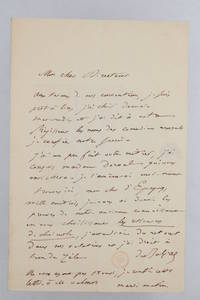
184183639s. l. Passy Paris 1841. Fine. s. l. Passy Paris « mardi matin » 28 décembre 1841 13.50 x 21.60 cm une page sur un double feuillet enveloppe jointe Autograph letter signed by Honoré de Balzac to Jean-Baptiste Violet d'Epagny director of the Odéon theater. One page in black ink on a double sheet. Enclosed and pasted on the second page is the envelope of this letter written in Balzac's hand.""My dear director under the terms of our agreements I am ready to read I have chosen tomorrow Wednesday and I have told your stage manager the names of the actors to whom I entrust our play. I've done a bit of your job I've conquered Madame Dorval who will make you rich I'll bring her myself. Find here my dear d'Épagny a thousand regards I have given you proof of our old acquaintance by choosing you for Les Ressources de Quinola I shall expect a return in our relations and I am entitled to a great deal of zeal."" Les Ressources de Quinola is both in the spirit Les Fourberies de Scapin and Les Noces de Figaro. From the 1840s until his death Balzac's ambition was to achieve a reputation comparable to his illustrious predecessors Molière and Beaumarchais. Although this proved to be a hope as vain as it was determined Balzac never doubted failure after failure that his success was imminent. On July 15 1841 d'Épagny was appointed director of the Odéon . as any theater director would have done in his place he spent summer vacations organizing his winter programme. He asked Balzac for a play and Balzac complied choosing Les Ressources de Quinola. . We all know what a fuss was made about Balzac's play and how childishly naive the author was in filling the room with the highest Parisian society and foreign elite in order to make snobs want to join such a brilliant assembly. . Madame Dorval more astute than the author refused the role intended for her as soon as Balzac read . She did well for one never saw a more complete failure"" L'Amateur d'autographes mai 1911 Interesting letter revealing the beginnings of the creation of Les Ressources de Quinola and the author's habit of reading his play for the actors who then voted to accept or reject it. Provenance: Arthur Meyer collection then ""AGR"" stamp on letter and envelope. unknown
183659886Paris: Werdet 1836. Fine. Werdet Paris 1836 12 x 19.50 cm 2 volumes reliés Rare and highly sought-after first edition . of which only a portion of the copies contains a preface cf. Clouzot. The important account of the lawsuit concerning The Lily of the Valley that precedes the novel was not retained in subsequent editions and is often lacking in a number of the copies published by Werdet. Copy complete with both the preface and the account of the lawsuit that opposed Balzac to the publisher François Buloz. Contemporary half green sheepskin bindings smooth spines decorated with gilt romantic typographical motifs gilt fillets at heads and tails marbled paper boards paste paper endpapers and pastedowns marbled edges contemporary romantic bindings. Some minor foxing bookseller's descriptive label pasted at head of front pastedown of the first volume. Exceptional copy in an elegant contemporary binding. Werdet hardcover
1835177783Paris: Librairie de Werdet 1835. A vast monument of Western prose fiction" Kanes First edition in book form first issue without the subsequently added preface this copy with the scarce original yellow wrappers bound in. Balzac's masterpiece and keystone of the Comedie Humaine not only provided his first systematic use of recurring characters but also a model which "determined the form and content of the European novel for the next century" Kanes p. 10. Le Père Goriot was published in four instalments in the Revue de Paris between 14 December 1834 and 11 February 1835. A sophisticated and pessimistic study of bourgeois society after the French revolution it was an immediate success and caused an upheaval in the press. It was reviewed by all major Parisian magazines both positively and negatively: the Journal de Femmes praised Balzac's analysis of female psychology while others questioned the morality of the story and accused him of plagiarising the theme of King Lear. Balzac responded to some of these comments in a preface which was separately printed and inserted in the second issue published on 8 March. A second edition appeared in May. Balzac proudly stated: "Le Père Goriot is a raging success; my fiercest enemies have had to bend the knee. I have triumphed over everything over friends as well as the envious" quoted in Kanes p. 12. The story was quickly adapted for stage appearing at the Théâtre des Variétés and Théâtre du Vaudeville in April 1835. As a testament to the novel's influence Zola remarked 35 years later that "how not to be Balzac" was one of his major problems. The well-known line that Varturin tells Eugene "In that case I will make you an offer that no one would decline" was famously reworked by Puzo in The Godfather. 2 vols octavo 210 x 128 mm. Bound with half-titles and table of contents at end as issued. Late 19th-century quarter calf red and blue spine labels compartments ruled in gilt marbled sides and endpapers top edges gilt fore and bottom edges untrimmed green silk bookmarkers original yellow front wrappers and vol. I rear wrapper bound in and with paper restoration at edges. Spines lightly toned mild rubbing sporadic foxing. A good set. Vicaire I 199-200. Martin Kanes Père Goriot: Anatomy of a Troubled World 1993. unknown
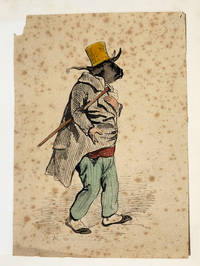
18421697391842. GRANDVILLE J.J. Scènes de la vie privée et publique des animaux. Two volumes. 8 386 6; 4 390 6 pp. with 201 engraved plates and 120 vignettes illustrating the text. Large 8vo 261 x 180 mm. uniformly bound in contemporary black half morocco. Paris: Hetzel et Paulin: 1842-1844. A splendid copy of a Grandville masterpiece accompanied by two original watercolours by Grandville and a long autograph letter from the publisher Hetzel. A fantastic example of anthropomorphic illustration and an important precursor of surrealism. These illustrations represent some of Grandville's most memorable creations. Many of the plates are of single figures but there are also satirical scenes of everyday life monsters animals looking at politicians caged at the zoo etc. The texts contained herein were written by such notable authors as Balzac Charles Nodier George Sand Louis Viardot and even J. Hetzel the publisher under the pseudonym of P.J. Stahl. Hetzel was the motivating force behind this work which he undertook in order to "give words to Grandville's marvellous animals and to join our pen with his pencil thereby coming to his assistance in criticizing the aberrations of our epoch and by preference among these aberrations those which are of every period and every country." Gordon N. Ray writes: "Through Grandville's animals Hetzel and his colleagues offered a witty and telling commentary on contemporary politics and personalities." Some slight edge wear one of the drawings with spotting else fine. PROVENANCE: Jacques Crepineau with his bookplate. Ray 194. Carteret III 552-59. Rebeyrat Catalogue bibliographique et bibliophilique in: J.J. Grandville 1985 pp. 289-90. unknown
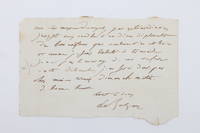
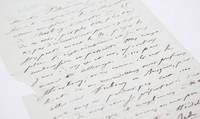
1839803451839. Fine. s. d. ca 1839 13 x 8 cm une feuille Signed handwritten letter to Louis Desnoyers ca 1839 13 x 8 cm one leaf Handwritten letter signed by Honoré de Balzac addressed to Louis Desnoyers written on a white piece of paper in black ink. My dear Mr Desnoyers extraordinarily today I attend a diplomatic dinner of good-natured folk who want to laugh and drink and as I am in a stupor at work I have not had the courage to refuse this debauchery; I will therefore not be at home. Come early Sunday morning. / Yours / de Balzac. Louis Desnoyers plays an important role in the foundation of the Société des gens de lettres which aims to protect literary and artistic property and to create a solidarity fund. Balzac supported the creation of this Society of which Desnoyers was vice-president. Amusing letter testimony of Balzac's love of good food. unknown
184686647Bâle Basel 1846. Fine. ""If the painting collection advertised in the newspapers on rue du Vieux Marché is still for sale"" Bâle Basel 18 mai 1846 13.6 x 21.8 cm 2 pages sur un feuillet Autograph letter signed by Honoré de Balzac to Gustave Silbermann dated 18 May 1846 with the blind stamp of the Hôtel des Trois Rois in Basel. A delicate document with fold marks that have caused some tears with some minute lacks of paper affecting a few letters including the last two letters of the author's signature. A fine epistolary testament to Balzac's unrestrained passion for art collecting in this likely unpublished letter addressed to his friend the Strasbourg bookseller and printer Gustave Silbermann. Balzac was planning a stay in Strasbourg during which he became engaged to Madame Hanska. Exhausted by the frantic pace of writing La Comédie Humaine Balzac set out to leave Paris for an extended tour of Europe. ""On 25 March 1846 Balzac joined Mme Hanska in Rome where he had never been before and was dazzled by the city. In Rome then in Civitavecchia Genoa and all along the way back to Basel via Lake Maggiore the Simplon and Geneva they bought paintings works of art furniture"" Balzac continuing ""with determination the creation of his interior décor"" M. Maximovitch Honoré de Balzac et Mme Hanska French Embassy in Ukraine. A year later he would publish Le Cousin Ponsarguably the finest literary expression of this passion in which the art collection is steeped into every page and the protagonist suffers from what Balzac himself called ""bricabracomania."" Writing from Basel Balzac still hoped to make further acquisitions in Strasbourg where he refers here to a ""painting collection advertised in the newspapers on rue du Vieux Marché."" It was for Madame Hanska that Balzac intensified his activities during this period ""driven by a genuine frenzy for acquisition. It was the time when he was preparing the home he had purchased on rue Fortunée now rue Balzac for his future wife. Even before moving in from 15 April 1847 onwards he was antiquing everywhere placing orders and enthusiastically pursuing real or imagined bargains."" Nicole Mozet Balzac collectionneur. This stay in Strasbourg would prove pivotal in their relationship as Balzac would later confide to his sister that they had made their engagement official there years before their long overdue marriage: ""we were engaged from 1846 in Strasbourg"" letter of 15 March 1850. In the same letter Balzac also asks Silbermann to arrange his transportationthis loyal friend even supported Balzac in his relationship with his future wife: ""Should Countess Hanska pass through Strasbourg during a journey it is this devoted friend Silbermann who is entrusted with delivering her a letter from her lover ensuring the comfort of her stay tending to her needs and even taking care of her travel provisions."" Yves Cambefort. An unpublished moment in the life of Balzac the tableaumaniac as he travels to Strasbourg to seal his union with his great love. ""I am counting on your kindness to reserve a seat for me in the mail coach to Strasbourg from the 25th of this monthnot earlier; later is no problem so long as Ive departed before the 31st. Pay for the seat if necessary and I will reimburse you when I pass through Write me a note in Heidelberg at the Hôtel de la Cour de Bade to let me know on which day the seat will be booked If the painting collection advertised in the newspapers on rue du Vieux Marché is still for sale "" unknown
18551696331855. DORÉ Gustave. Les Contes Drolatiques. By Honore de Balzac. 8vo. 205 x 130 mm bound in nineteeenth century full crushed brown morocco in a slipcase. Paris: Garnier Freres 1873. A superb copy of this Doré masterpiece with fine impressions of the engraving printed on Chine and with "huitieme edition" on the title-page. Gordon Ray called Doré'ss illustrations for the Contes Drolatiques "Doré's early masterpiece." The first illustrated edition was issued with 425 original designs by Gustave Doré comprising 103 full-page engravings and 322 vignettes of varying sizes. It is well recorded that Balzac's widow granted permission for the illustrated edition only on the condition: "that no artist but Doré should be allowed to illustrate her husband's works" Anthony North-Peat Gossip from Paris 1864-69 p. 324. "Si de tous les ouvrages illustrés par Gustave Doré il ne devait en rester qu'un ce serait celui-là: l'illustration est à la hauteur du texte et ce n'est pas peu dire puisque Balzac considérait les "Contes drolatiques" comme son chef-d'oeuvre" Brivois Bibliographie des ouvrages illustrés du XIXe siècle 1883 p. 32. "Ce livre est considéré comme le chef-d'oeuvre d'illustration de Gustaf Doré il est apprécié pour son format agréable et la qualité de son illustration variée et abondante: 425 compositions vignettes et grands bois compris dans la pagination." Carteret III p. 50. Ray Art of the French Illustrated Book 244. See: Rahir 304. Beraldi VI 34 "Un des chef-d'oeuvres de Doré: cette illustration est étonnante d'invention de joyeuse humeur vraiment gauloise et rabelaisienne et pétillante d'esprit." Leblanc 39. Provenance: The library of William Ivins inscribed to him by his father. unknown
04605Paris: H. Delloye & Victor Lecou Éditeurs 1838. An Incredible Early Twentieth Century 'Portrait' Binding by René Kieffer<br /> Specially Bound for Gérard de Berny in Memory of his Father Gabriel de Berny<br /> First Illustrated Edition with an additional set of Proof Illustrations on 'Large Thick Paper'<br /> <br /> BALZAC Honoré de. KIEFFER René binder. La Peau de Chagrin. Études Sociales. Paris: H. Delloye & Victor Lecou Éditeurs 1838. <br /> <br /> First Illustrated Edition First Printing of the Vignette Illustrations. <br /> <br /> Specially bound by René Kieffer for Gérard de Berny in memory of his Parents.<br /> <br /> 'Thick Paper' copy with an additional 'proof' set of the illustrations.<br /> <br /> Large octavo 11 1/16 x 7 1/2 inches; 281 x 191 mm. iv 402 1 Table des Matières 1 blank. One hundred and one decorative engraved vignettes in the text by Baron Janet-Lange Gavarni French and Marckl plus one on the title engraved on steel by Brunellière Nargeot Langlois etc. Additional engraved portrait on India paper of "Pauline" after Janet-Lange engraved by Félicie Fournier née Monsaldy as appearing on pp. 149. Some foxing throughout mainly marginal otherwise fine.<br /> <br /> An incredible early twentieth-century 'Portrait' binding by René Kieffer stamp-signed in gilt on front turn-in and with his printed label on verso of front endpaper. Full brown morocco covers triple-bordered in gilt enclosing a highly elaborate symmetrical gilt diamond design with gilt stars. The front cover inlaid with a large oval nineteenth century 'medallion' portrait in oil of Honoré de Balzac and four smaller circular nineteenth century 'medallion' oil paintings titled "Enfance" childhood "Etude" study "Amour" love and "Plaisir" pleasure. The rear cover similarly inlaid with a large oval nineteenth century 'medallion' portrait in oil of Madame Louise Antoinette Laure de Berny Balzac's first love "La Dilecta" and four smaller circular nineteenth century 'medallion' oil paintings titled "Ambition" Misère misery "Desespoir" despair and "Suicide". Spine with five raised bands similarly decorated and lettered in gilt in compartments. Double-ruled gilt board-edges and multi-gilt ruled turn-ins surrounding an orange morocco liner elaborately decorated in gilt in a symmetrical design olive green watered silk endleaves blue-gray marbled endpapers all edges gilt. Original brown morocco over blue marbled boards chemise housed in the original brown morocco edged blue marbled boards slipcase. Spine of chemise sunned slipcase a little worn at extremities. The binding itself is near fine with just a few fragments missing from the edges of the 'medallions'. Original printed tan wrappers and spine bound in. Small square engraved bookplate of renowned collector Gérard de Berny on front endpaper. <br /> <br /> A stunning example reflecting the love affair between Honoré de Balzac and Gérard de Berny's mother Laure de Berny. The nineteenth century 'Medallion' oil paintings are most certainly from the collection of Gabriel de Berny.<br /> <br /> Roger Louis Gérard de Berny 1880-1957 was a French politician of the French Third Republic. He was born in Amiens France. He was elected senator for the Somme in January 1936 and was one of those who voted to give full power to Marshal Pétain on 10 July 1940. de Berny did not return to government after the Second World War. He died in his Hôtel on Rue Victor Hugo in Amiens now the Hôtel de Berny Museum. The Musée d'art local et d'histoire régionale or Musée de l'Hôtel de Berny is a local history museum for the region of Picardy. The Hôtel de Berny Museum includes 18th century tapestries and wood carvings such as those from the La Fayette salon in the château de La Grange-Bléneau and those by the Huet brothers Nicolas François and Jean-Baptiste the Younger the three sons of Jean-Baptiste Huet and Adrien Choquet a painter from Abbeville from the Salon du Zodiaque in the Long château as well as Art nouveau and Art déco ceramics by Montières French Revolution-era faïence paintings by Louis Jean François Lagrenée and Isabey a 1612 harpsichord pastels by Choderlos de Laclos and 16th-20th century ironwork and clocks. It also contains objects relating to figures from local and national history such as Gresset Choderlos de Laclos Jules Verne Édouard Branly and Maréchal Leclerc.<br /> <br /> Gérard de Berny's father Charles Philippe Gabriel de Berny 1825-1884 was married to Laure de Berny née Louise Antoinette Laure Hinner 1777-1836. "In 1793 aged only fifteen Laure married Gabriel de Berny but their union was unhappy. He was 20 years old quite reserved and cold whereas his young wife was very sensitive warm-hearted and caring. Despite their differences they still managed to have nine children although five died in infancy and only two survived their mother. In 1815 the family bought a house in Villeparisis in northern France where they spent the summers. It was here that Laure first met Honore De Balzac. Laure was 42 at the time and already a grandmother but this didn't stop the young Balzac he was only 22 from falling in love with her. At first she resisted him but Balzac wouldn't give up. He courted her for months and in the end she gave in. The two become lovers. Of course nothing could remain secret for long in a small town. When Balzac's parents learned of it they tried to break off their scandalous relationship but to no avail. Laure wasn't just Balzac's lover. She was his confidante his muse and his benefactress. She gave him the love security and confidence he hadn't received from his parents as a child she supported his literary career she inspired the characters of Madame de Mortsauf in The Lily In The Valley and Pauline in Louis Lambert and helped him out financially when he needed it. She assisted him in his business ventures which always failed and helped him pay his debts. "La Dilecta" as Balzac called her also told him many stories about the ancient regime and of how some of her aristocratic friends and acquaintances managed to escape death during the Revolution while others weren't so lucky. His royalist principles would be strongly confirmed by Laure's influence and it's from her he also acquired his aristocratic longings. Thanks to her help he also managed to meet several influential people and would sometimes make an appearance in high society. Balzac would also talk to her about his relationship with other women such as Madame de Hanska who he would end up marrying a few months before his death. Laure De Berny died on 27th July 1836 at La Bouleaunière her country house at Grez-sur-Loing. Balzac was in Italy at the time but when he returned he visited her grave." historyandotherthoughts.blogspot.com.<br /> <br /> René Kieffer 1875-1964 worked for ten years at the famed Chambolle-Duru bindery in Paris specializing in gilding before establishing his own workshop in 1903. He debuted at the 1903 Salon des Artistes Françcais and evolving toward to more modern approach became a disciple of the great Marius-Michel. At the time of this binding's creation he had begun to incorporate a transitional mix of flowers vines and colorful onlays in rather formal compositions their Art Nouveau motifs retained within symmetrical borders that revealed his classical roots. By the end of World War I he had emerged as one of Paris's leading binders his work sought after by collectors his fine workmanship matched by a wide range of progressive designs. <br /> <br /> Before La Peau de Chagrin first published in 1831 was completed Balzac created excitement about it by publishing a series of articles and story fragments in several Parisian journals. Although he was five months late in delivering the manuscript he succeeded in generating sufficient interest that the novel sold out instantly upon its publication. A second edition which included a series of twelve other "philosophical tales" was released one month later. Although the novel uses fantastic elements its main focus is a realistic portrayal of the excesses of nineteenth century Parisian bourgeois materialism. Balzac's renowned attention to detail is used to describe a gambling house an antique shop a royal banquet and other locales. He also includes details from his own life as a struggling writer placing the main character in a home similar to the one he occupied at the start of his literary career. The central theme of La Peau de Chagrin is the conflict between desire and longevity. The magic skin represents the owner's life-force which is depleted through every expression of will especially when it is employed for the acquisition of power. Ignoring a caution from the shopkeeper who offers him the skin the protagonist greedily surrounds himself with wealth only to find himself miserable and decrepit at the story's end. La Peau de Chagrin firmly established Balzac as a writer of significance in France. His social circle widened significantly and he was sought eagerly by publishers for future projects. The book served as the catalyst for a series of letters he exchanged with a Polish baroness named Ewelina Ha ska who later became his wife. It also inspired Giselher Klebe's opera Die tödlichen Wünsche.<br /> <br /> Carteret Volume III p. 41. Paris: H. Delloye [&] Victor Lecou, Éditeurs, 1838 unknown
18999031102Philadelphia: George Barrie's Sons 1899. Hardcover. Very good. Beautifully bound in half red leather with red cloth boards and spines stamped in gilt and five raised bands. Each volume contains a striking frontispiece etching. Fine except for minimal wear to corners and heads and heels of some volumes. All text blocks in fine condition. 5 1/2 x 8 inches. <br/><br/> George Barrie's Sons hardcover
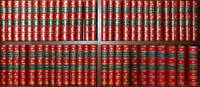
1895256800Philadelphia: Barrie 1895. hardcover. near fine. Over 350 fine full page etchings by various artists each with tissue guards. 52 of 53 volumes 8vo 3/4 blue morocco decoratively gilt spines t.e.g. Philadelphia: George Barrie 1896- 1900. One of 1000 numbered copies. A near fine set lacking the 7th volume of 9 from the Philosophic and Analytic Studies grouping.<br/> <br/> Barrie unknown
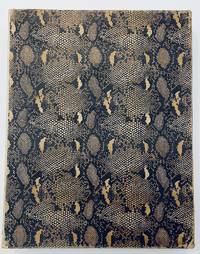
19497577Paris: Maxime Cottet-Dumoulin 1949. Limited Edition. Hardcover. Near Fine in Very Good Slipcase. Limited Edition. Hardcover. Illustrated by Paul Jouve with 13 colored etchings 3 of which are double-page and a separate suite of the etchings in black and white. Text printed within red borders each page with Egyptian-themed headpiece heightened in brownish gold. A few tissueguards creased pale sporadic foxing else bright and unmarred. Slipcase shows minor shelf/edge wear else tight and clean. Case and boards in paper faux-snakeskin loose signatures tissueguards. fo. Illus. color and b/w plates. Numbered limited edition this being 98 of 123 110 10 3. Signed by Jouve and the publisher at the colophon. Maxime Cottet-Dumoulin hardcover
1899022602Boston: Hardy Pratt and Co 1899. Limited Edition. Octavo. Limited to only 40 sets. The present set is #2. A few volumes unopened. In 40 volumes illustrated with photogravures hand-colored by Jeannniot Adrien Moreau and several others who were specially chosen by the firm Goupil & Co. The set has a total of 283 hand-colored plates 7 per volume except volume 40 which has 10. with tissue guards present. Translated by Katharine Prescott Wormeley who most likely knows more about Balzac and his works than anyone in this country. He was her life's study. In the preface which was written by Balzac in 1856 was placed in volume I to give Balzac's own interpretation of his books. Balzac was an early pioneer of literary realism. He used incidents from his life and the people around him in works like Eugénie Grandet and Louis Lambert. His writings influenced several other writers including Henry James who wrote about him as did William Saroyan Marcel Proust adored him. He had been compared with Charles Dickens. An exceptionally fine set bound in 3/4 green morocco over marbled paper covered boards with matching endpapers raised bands lettered and decorated in gilt top edges gilt all others uncut. No names or bookplates spines are evenly faded but still quite beautiful. A monumental work. Hardy, Pratt and Co unknown
1897676441897. Complete in 53 octavo volumes. Limited to 1000 copies of which this is number 164. Original half red morocco over red cloth gilt stamped spines with two blue-gray morocco labels gilt-stamped. TEG. Edges bumped. Very good.<br> <br> George. Royce.<br> <br> HBS 67644.<br> <br> $5000. unknown