[ANON]Biblio.com
6 956 résultats
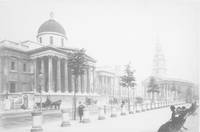
60058c.1889. . Albumen print. Good tonal range and in good condition. Russian title in ink underneath on mount. Photographer's number and title in negative; Dimensions: 200 x 245mm. 8 x 10 inches.<br /> <br /> [c.1889]. unknown
60808c.1860s. . Albumen print. In overall good condition. Mounted on card.<br /> <br /> [c.1860s]. unknown
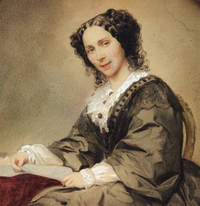
3724701<p>Np. c. 1850s–1860s. Watercolor 8¾ × 7¼ inches on oval board. In modern frame glazed. Small stain at upper right not affecting the portrait; light wear and staining to the mount; overall very good.</p> <p>Mid-19th-century watercolor portrait of a woman seated at a writing table holding a letter likely executed after a studio photograph based on the plain backdrop and formal pose. The sitter wears a dark crinoline dress with lace collar and cuffs her hair styled in ringlets typical of the 1850s–early 1860s. The face and hands are carefully modeled with broader more economical handling in the skirt and background. The writing implements and letter point to literacy and domestic correspondence.</p> unknown
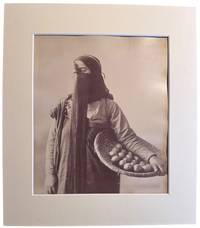
18955332Egypt: S.P. C1895. A beautiful albumen photograph of a Fellah woman with long veil carrying a basket of fruit. This was a studio portrait circa 1895. Anonymous but conforms exactly to the Rijksmuseum Amsterdam photograph reference RP-F-1997-28-35. This includes the text to the base of the photograph - which IS present on our copy but has been hidden by the passe partout / mount. Photograph visible is 26.5cm x 23cm. Mount is 37.5cm x 32cm. All apparent flaws / scratches to the photograph are also present on the Rijksmuseum copy. In excellent condition. . Une magnifique photographie sur papier albuminé représentant une femme fellah vêtue d'un long voile portant un panier de fruits. Il s'agit d'un portrait réalisé en studio vers 1895. Anonyme mais correspondant exactement à la référence photographique RP-F-1997-28-35 du Rijksmuseum d'Amsterdam. Cela inclut le texte au bas de la photographie qui est présent sur notre exemplaire mais qui a été masqué par le passe-partout/montage. La photographie visible mesure 265 cm x 23 cm. Le montage mesure 375 cm x 32 cm. Tous les défauts/rayures apparents sur la photographie sont également présents sur la copie du Rijksmuseum. En excellent état. S.P. unknown
18955332Egypt S.P. C1895 Une magnifique photographie sur papier albuminé représentant une femme fellah, vêtue d'un long voile, portant un panier de fruits. Il s'agit d'un portrait réalisé en studio vers 1895. Anonyme, mais correspondant exactement à la référence photographique RP-F-1997-28-35 du Rijksmuseum d'Amsterdam. Cela inclut le texte au bas de la photographie, qui est présent sur notre exemplaire, mais qui a été masqué par le passe-partout/montage. La photographie visible mesure 26,5 cm x 23 cm. Le montage mesure 37,5 cm x 32 cm. Tous les défauts/rayures apparents sur la photographie sont également présents sur la copie du Rijksmuseum. En excellent état.
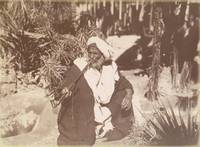
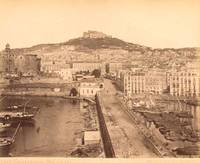
61019c.1880. . Albumen print. Good image with slight bleaching around frame; Dimensions: 195 x 260mm. 7.5 x 10 inches.<br /> <br /> [c.1880]. unknown
18745567Orléans: Imprimerie Ernest Colas 1874. First edition. This book commemorated the life and death of Doctor Malewicz and raised a public subscription to pay for a memorial to him. The work includes two sepia photographs tipped in by "Charles" of Orléans. Although untitled the frontis is presumably of the good doctor and the other of the memorial to him. The work is in good clean condition. A few foxing spots to the covers. A list of subscribers is to the rear. The author whilst writing affectionately about the doctor doesn't flinch in his criticisms of the new republic of 1848 and the coup that followed shortly after. Pale green paper covers with a private library shelf label to the front cover. 18cm x 11.5cm. Conforms to WorldCat / OCLC: 460553860 which notes only the BnF holds a copy. No copies for sale at time of cataloguing. Dr Malewicz was born in Wolkowysk Poland in 1808. Having fought in the Polish wars in Lithuania he became a refugee in France in 1834. He began to practice as a doctor and continued to do so until his death forty years later. label for the bibliothèque du fonds Bergevin to the top of the front cover. Taking its name from the two leading figures of the Bergevin family Louis-Athanase Bergevin 1753-1832 and his son Louis-Catherine 1798-1876 were magistrates from Blois and major landowners in Saint-Gervais-la-Forêt. The collection was dispersed at auction in Véndome in 2022. . Première édition. Cet ouvrage commémore la vie et la mort du docteur Malewicz et lance une souscription publique afin de financer un mémorial en son honneur. Il comprend deux photographies sépia collées réalisées par « Charles » d'Orléans. Bien qu'elles ne soient pas intitulées la première représente vraisemblablement le bon docteur et la seconde le mémorial qui lui est dédié. L'ouvrage est en bon état propre. Quelques taches de rousseur sur la couverture. Une liste des souscripteurs figure à la fin. L'auteur tout en écrivant avec affection sur le docteur n'hésite pas à critiquer la nouvelle république de 1848 et le coup d'État qui a suivi peu après. Couverture en papier vert pâle avec une étiquette de bibliothèque privée sur la couverture avant. 18 cm x 115 cm. Conforme à WorldCat / OCLC : 460553860 qui indique que seule la BnF en possède un exemplaire. Aucun exemplaire à vendre au moment du catalogage. Le Dr Malewicz est né à Wolkowysk en Pologne en 1808. Après avoir combattu dans les guerres polonaises en Lituanie il s'est réfugié en France en 1834. Il a commencé à exercer la médecine et a continué à le faire jusqu'à sa mort quarante ans plus tard. Étiquette de la bibliothèque du fonds Bergevin en haut de la couverture. La collection tire son nom des deux figures de proue de la famille Bergevin Louis-Athanase Bergevin 1753-1832 et son fils Louis-Catherine 1798-1876 magistrats à Blois et grands propriétaires terriens à Saint-Gervais-la-Forêt. La collection a été dispersée aux enchères à Vendôme en 2022. Imprimerie Ernest Colas unknown
18415714Orléans J-B. Niel 1841 Première édition telle quelle. Cette nécrologie est un extrait de « L'Orléanais ». Anonyme (L'auteur signe sous le pseudonyme « M »). Couverture souple bleue d'origine, portant une petite étiquette de bibliothèque privée sur le bord supérieur. Couverture en très bon état, avec une légère décoloration au niveau du dos. Reliure cousue. Intérieur propre et soigné, bien qu'un peu jauni sur l'ensemble. Petit tampon du XIXe siècle provenant de Blois sur la dernière page blanche. Un document intéressant sur l'histoire locale. Michel Augustin Thérèse de La Place de Montévray (1761-1841) occupa le poste de président de chambre à la Cour impériale d'Orléans (président d'une chambre de la cour d'appel d'Orléans). Il fut le premier président de la cour royale d'Orléans et démissionna de ce poste en 1830. 8 pages. Un ouvrage rare aucun exemplaire en vente au moment du catalogage. Conforme à WorldCat / OCLC : 466769598, qui ne mentionne qu'un seul exemplaire conservé à la BnF.
18745567Orléans Imprimerie Ernest Colas 1874 Première édition. Cet ouvrage commémore la vie et la mort du docteur Malewicz, et lance une souscription publique afin de financer un mémorial en son honneur. Il comprend deux photographies sépia collées, réalisées par « Charles » d'Orléans. Bien qu'elles ne soient pas intitulées, la première représente vraisemblablement le bon docteur, et la seconde le mémorial qui lui est dédié. L'ouvrage est en bon état, propre. Quelques taches de rousseur sur la couverture. Une liste des souscripteurs figure à la fin. L'auteur, tout en écrivant avec affection sur le docteur, n'hésite pas à critiquer la nouvelle république de 1848 et le coup d'État qui a suivi peu après. Couverture en papier vert pâle avec une étiquette de bibliothèque privée sur la couverture avant.* 18 cm x 11,5 cm. Conforme à WorldCat / OCLC : 460553860, qui indique que seule la BnF en possède un exemplaire. Aucun exemplaire à vendre au moment du catalogage. Le Dr Malewicz est né à Wolkowysk, en Pologne, en 1808. Après avoir combattu dans les guerres polonaises en Lituanie, il s'est réfugié en France en 1834. Il a commencé à exercer la médecine et a continué à le faire jusqu'à sa mort, quarante ans plus tard. * Étiquette de la bibliothèque du fonds Bergevin en haut de la couverture. La collection tire son nom des deux figures de proue de la famille Bergevin, Louis-Athanase Bergevin (1753-1832) et son fils Louis-Catherine (1798-1876), magistrats à Blois et grands propriétaires terriens à Saint-Gervais-la-Forêt. La collection a été dispersée aux enchères à Vendôme en 2022.
19233110Joigny Vulliez 1923 En demi cuir avec plats marbrés. Couvertures originales brochées reliées à l'intérieur. Fondation et histoire de l'église et du monastère. Nombreuses planches n/b à pleine page. 74 pages, plus le contenu. En bon état, avec juste un petit frottement aux extrémités, et une légère décoloration au soleil sur le cuir au dos. 175 x 115 mm
19343438Kassel Bruno Hausmann 1934
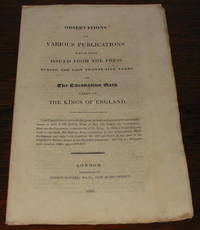
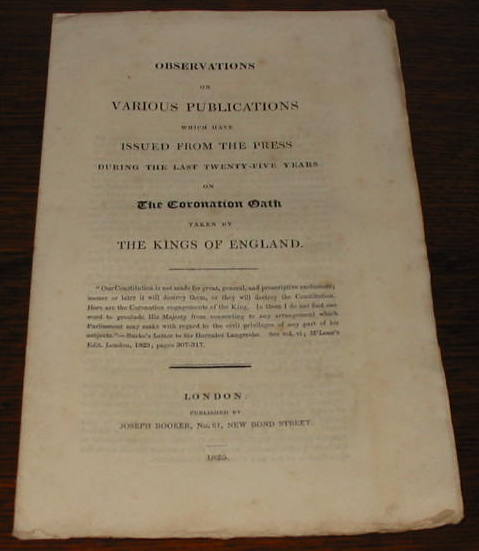
18251042London: Joseph Booker No. 61 New Bond Street 1825. First Edition. First edition. A very nice copy of this ephemeral item. A single sheet printed and folded into eight pages - uncut. There is a little foxing to the sheet and a fractional darkening to the page edges. Clear and clean type. An anonymous essay looking at the "Roman Catholic Question" following the Union of Great Britain with Ireland. 8 pp. Single sheet folded and uncut. unknown
18251042London: Joseph Booker, No. 61, New Bond Street 1825
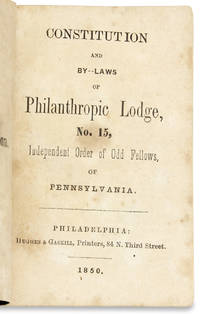
3726619<p>Philadelphia: Hughes & Gaskeill Printers 1850. 67 2 1 blankpp. 3¾ x 2½ inches. Unlettered black wraps. Foxing tanning; else very good.</p> <p>Ephemeral and unrecorded mid-19th century mark publication of the By-Laws and Constitution of a benevolent Pennsylvania fraternal organization.</p> <p>A most interesting section within is between pages 54–67 which detail the members’ names their method to obtain their daily bread and I.O.O.F. admit dates. The occupations are of the mechanic-variety: printers laborers chair makers varnishers tobbaconist mariner saddle tree maker; the list of occupations is lengthy and diverse. </p> <p>Printed in small type. The name of Harry Norman is stamped inside the front cover an early stamping; not modern but we do not find his name listed within as a member.</p> <p>Unlisted in OCLC.</p> unknown
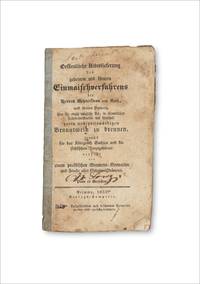
3734355<p>Grimma Saxony Germany: Verlags-Comptoir 1835. vi 1 1 blank 38 2pp. 6¾ x 4 inches. Self-wrappers with period paper-covered spine. Contemporary ownership inscriptions “C.W. Longs’†and “Karl P. indistinct surnameâ€. Small losses no text loss in final leaf’s margins; two leaves loosened some others starting; scattered foxing; good.</p> <p>Apparently unrecorded this is the first and only edition of a rare 1835 work on mashing and distilling brandy. </p> <p>The text reveals the secret methods of distillers Schneefuss and Gall detailing processes such as malt preparation use of fermentation agents mashing techniques distillation and the removal of fusel oils. The anonymous author an experienced distillery manager and “Enemy of All Secrecy†“Feinde aller Geheimnißkrämerei†promises readers valuable trade secrets. </p> <p>Published in Grimma at a price of 16 groschen the work is aimed at distillers in the Kingdom of Saxony and the surrounding duchies. The publisher warns against the return of cut or soiled copies and the final two pages advertise additional works including a treatise on Jamaica rum by Christian Neubert and an illustrated work Der Selbstlehrende Tanzmeister The Self-Taught Dance Master by F.G. Häcker.</p> <p>Unrecorded in OCLC KVK and Deutsch National Bibliothek.</p> <p>Full-title page in German: Oeffentliche Ueberlieferung des geheimen und theuren Einmaischverfahrens der Herren Schneefuss und Gall nebst schlichter Belehrung über die einzig mögliche Art in sämmtlichen Zollvereinstaaten mit Vortheil guten und preiswürdigen Branntwein zu brennen. Zunächst für das Königreich Sachsen und die sächsischen Herzogthümer verfaßt von einem praktischen Brennerei-Verwalter und Feinde aller Geheimnißkrämerei. Preis 16 Groschen. Grimma 1835. Verlags-Comptoir. Aufgeschittene und beschmuzte Exemplare werden nicht zurückgenommen. Approximate English translation: Public disclosure of the secret and expensive mashing process of Messrs. Schneefuss and Gall together with simple instructions on the only possible way to distill good and price-worthy brandy with advantage in all the Customs Union States. Written primarily for the Kingdom of Saxony and the Saxon duchies by a practical distillery manager and enemy of all secrecy. Price 16 groschen. Grimma 1835. Publisher’s office. Cut and dirty copies will not be taken back.</p> <p>For a similarly rare work published for the firm of Herren Gall und Schneefuss see Die Einmaischungsgeheimnisse der Herren Gall und Schneefuss enthüllt und beleuchtet von einem praktischen Brenner: nebst dessen eigner Einmaisch-Methode welche einen dreimal größern Gewinn als das Schneefuß‘sche Verfahren gewährt Breslau 1834 held in the collection of Munich’s Deutsches Museum.</p> unknown
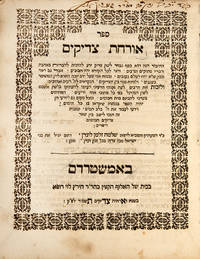
113783Amsterdam Hirtz Levi Rofe 1735. . Small 4to 20.3 x 15.4 cm test in Hebrew and Yiddish; contemporary vellum binding with a few small tears & holes of old ties with previous owner's name written in Hebrew on the front cover in old brown ink and to title; joints cracked but holding; browning to some of the pages small marginal tears to few of the pages small holes & stains to endpapers; 2 108 ll.<br /> Mid-15th century book on Jewish Ethics by an unknown author written in Germany with the first printed edition being published in Prague in 1581. Australian Rabbi and historian Moritz Güdemann 1835-1918 had the hypothesis that the author of the book might have been Rabbi Lipmann Mühlhausen - a controversial Ashkenazi Talmudist Kabbalist and philosopher who died in the first decades of the 15th century known for his book 'Sefer Nitzachon'. The book is based on the writings of Maimonides Solomon ibn Gabirol and Jonah ben Abraham Gerondi.<br /> Vinograd Amsretdam 1437. Amsterdam, Hirtz Levi Rofe, 1735. hardcover
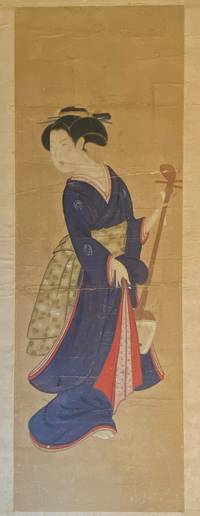
17755002Japan: NP 1775. A lovely large water colour showing a woman in traditional geisha clothing holding a Shamisen. Painted onto thin mustard coloured paper this has been laid onto a cream backing sheet also thin paper which has in turn been laid onto a larger sheet of thin paper. The three sheets together giving much more strength than a single thin sheet. The painting itself has been expertly produced but is unsigned. We have priced this as an un-attributable artist. The painting has some small cracks with creasing and a tiny amount of paint loss to it but still a lovely authentic piece of Edo art very similar in style to the portraiture of Katsushika Hokusai even to the background colour of the sheet. It is of a very similar period between 1775 and 1800. The style of the painting including the detailed depiction of clothing patterns and the graceful posture of the figure is characteristic of bijin-ga paintings of beautiful women which were popular in Japanese art during this time. The use of vibrant colors such as deep blue and red and intricate patterns suggests that this piece may have been created by an artist influenced by ukiyo-e a genre of woodblock prints and paintings that flourished during the Edo period. Artists like Kitagawa Utamaro or Suzuki Harunobu were renowned for similar depictions of women in elegant attire.It was possibly intended as a scroll painting. The painted sheet measures 70cm x 24cm. The largest backing sheet and hence work overall measures 81.5cm x 39cm. The shamisen 三味線 also known as sangen 三絃 or samisen all meaning "three strings" is a three-stringed traditional Japanese musical instrument derived from the Chinese instrument sanxian. Geisha's were often skilled Shamisen players and used them to entertain their customers. . Une belle grande aquarelle représentant une femme en tenue traditionnelle de geisha tenant un shamisen Peinte sur un papier fin de couleur moutarde celui-ci a été posé sur une feuille de support crème également en papier fin elle-même posée sur une feuille plus grande de papier fin. Les trois feuilles réunies donnent beaucoup plus de solidité qu'une seule feuille mince. La peinture elle-même a été réalisée par des experts mais elle n'est pas signée. Nous avons fixé le prix comme étant celui d'un artiste non attribuable. La peinture présente quelques petites fissures des plis et une minuscule perte de peinture mais il s'agit toujours d'une belle et authentique œuvre d'art Edo dont le style est très similaire à celui des portraits de Katsushika Hokusai jusqu'à la couleur de fond de la feuille. Elle date d'une période très similaire entre 1775 et 1800. Le style de la peinture y compris la représentation détaillée des motifs des vêtements et la posture gracieuse du personnage est caractéristique des bijin-ga peintures de belles femmes qui étaient populaires dans l'art japonais à cette époque. L'utilisation de couleurs vives comme le bleu profond et le rouge et de motifs complexes suggère que cette pièce a pu être créée par un artiste influencé par l'ukiyo-e un genre d'estampes et de peintures sur bois qui a fleuri pendant la période Edo. Des artistes comme Kitagawa Utamaro ou Suzuki Harunobu étaient réputés pour leurs représentations similaires de femmes en tenue élégante. La feuille peinte mesure 70 cm x 24 cm. La plus grande feuille de support et donc l'ensemble de l'œuvre mesure 815 cm x 39 cm. Le shamisen 三味線 également connu sous le nom de sangen 三絃 ou samisen tous signifiant "trois cordes" est un instrument de musique traditionnel japonais à trois cordes dérivé de l'instrument chinois sanxian. Les geishas étaient souvent d'habiles joueuses de samisen qu'elles utilisaient pour divertir leurs clients. NP hardcover
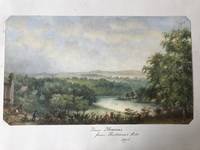
187629631876. Lovely original watercolour painting of the view across the River Swale in North Yorkshire from Richmond Castle Hill - with a couple in the foreground. The painting is signed but we cannot agree and the signature. At some point a previous owner was told it was a painting of the river at Richmond Castle and assumed it was Richmond in Surrey when in fact Richmond Castle is in Richmond in Yorkshire and looks over the River Swale not the Thames! Tipped on to white card corners cut to resemble being in an album. Watercolour measures: 205 x 350 mm 8 x 13¾ inches. Whole on backing: 400 x 495 mm unknown
17755002Japan NP 1775 Une belle grande aquarelle représentant une femme en tenue traditionnelle de geisha, tenant un shamisen * Peinte sur un papier fin de couleur moutarde, celui-ci a été posé sur une feuille de support crème (également en papier fin), elle-même posée sur une feuille plus grande de papier fin. Les trois feuilles réunies donnent beaucoup plus de solidité qu'une seule feuille mince. La peinture elle-même a été réalisée par des experts, mais elle n'est pas signée. (Nous avons fixé le prix comme étant celui d'un artiste non attribuable). La peinture présente quelques petites fissures, des plis et une minuscule perte de peinture, mais il s'agit toujours d'une belle et authentique uvre d'art Edo, dont le style est très similaire à celui des portraits de Katsushika Hokusai (jusqu'à la couleur de fond de la feuille). Elle date d'une période très similaire (entre 1775 et 1800). Le style de la peinture, y compris la représentation détaillée des motifs des vêtements et la posture gracieuse du personnage, est caractéristique des bijin-ga (peintures de belles femmes), qui étaient populaires dans l'art japonais à cette époque. L'utilisation de couleurs vives, comme le bleu profond et le rouge, et de motifs complexes suggère que cette pièce a pu être créée par un artiste influencé par l'ukiyo-e, un genre d'estampes et de peintures sur bois qui a fleuri pendant la période Edo. Des artistes comme Kitagawa Utamaro ou Suzuki Harunobu étaient réputés pour leurs représentations similaires de femmes en tenue élégante. La feuille peinte mesure 70 cm x 24 cm. La plus grande feuille de support (et donc l'ensemble de l'uvre) mesure 81,5 cm x 39 cm. *Le shamisen (???), également connu sous le nom de sangen (??) ou samisen (tous signifiant "trois cordes"), est un instrument de musique traditionnel japonais à trois cordes dérivé de l'instrument chinois sanxian. Les geishas étaient souvent d'habiles joueuses de samisen, qu'elles utilisaient pour divertir leurs clients.
1843222806Providence RI Geo. P. Daniels 1843. 1843. 12mo. Illustrated with drawings. 24 pages; stitched. Publisher’s advertisements on back cover. Original pictorial tan wrappers. Very good light soiling. No signatures or bookplates. Soft cover. Providence, RI, Geo. P. Daniels, 1843. paperback
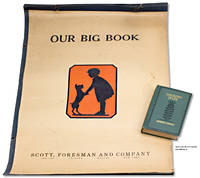
3731978<p>Chicago Atlanta Dallas and New York: Scott Foresman and Company ca. 1920s–1930s. 2 39 1 pp. Bound by two large rings along top. One sheet with small crayoned area all cloth reinforcement strips very rubbed; scattered stains and toning; overall very good.</p> <p>Rare. Our Big Book is catalogued by Princeton as a Dick and Jane precursor; a series of wall charts issued ca. 1920. The stories are displayed in strong colors across twenty-one large sheets each 30 x 22 inches. They feature the soon-to-be ubiquitous Dick and Jane Baby Spot and Little Mew later Puff.</p> <p>The Dick and Jane primers had a landmark impact upon the millions of children that were taught to read by using the look-and-say method. In the classroom setting Our Big Book would have educated that very first wave of American children to “See Spot run†and to learn a host of other catchphrases —phrases now engrained burned into the subconscious minds of literate Americans everywhere.</p> <p>Outside of Princeton’s copy we find only one other example in the Osborne Collection. They date the text to the 1930s. Not to be confused with much later common and smaller Dick and Jane charts/posters.</p> unknown
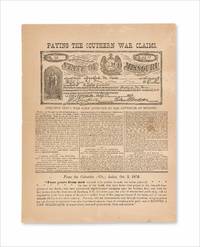
3734344<p>America. np.1876. 12¼ by 9½ inches. Tanning; minor staining and margin wear; very good.</p> <p>This rare anonymous broadside from 1876 attacks Governor Samuel J. Tilden the Democratic Party’s presidential candidate by citing excerpts from Southern newspapers in Alabama Georgia and Virginia.</p> <p>Popular argument at the time stated if the Democrats should come into power that they would spend two billion dollars in Southern war claims which would ruin the credit of the United States abroad. </p> <p>Northern voters would likely be outraged by the broadside’s illustration which shows a Missouri governor’s scrip for thirty-five dollars payable to one Woodford M. Paris for losses attributed to “the cotton tax damages to land and property during the war the emancipation of slaves†among other claims.</p> <p>The 1876 presidential election was highly contentious. Although Tilden won the popular vote he ultimately lost to Rutherford B. Hayes in the electoral college. The Hayes-Tilden Compromise led to the removal of federal troops from the South diminishing the hopes of African Americans in their struggle for civil rights and equality. The Reconstruction Era came to a close.</p> unknown
1846957511846. David Bogue London. 1846. Bound in half tan calf raised bands to spine marbled boards. All page edges marbled marbled end-papers. Frontis. xii 275 pages. Exterior sl. rubbed esp. extremities upper hinge split for 2 cm from head but sound; spine lacks title-piece. Inscriptions to front end-papers. hardcover
18205661Paris: Librairie d'eÌducation de Pierre Blanchard 1820. Second edtion. Educational work encouraging children of the time to be curious about how things they use every day are made. Illustrated with six pages of copper engravings including frontispiece. The engravings apart from frontis are presented as four engravings per page and show artisans at work - printer at a press winegrower labourer etc. Contemporary full leather binding. Spine with faded gilt and a red label with gilt title. Mildly rubbed boards. Marbled endpapers. Very clean and fresh inside. 238 pages with a four page catalogue of other works from Librairie de Pierre Blanchard bound before the title page. 170 x 100 mm 6¾ x 4 inches. . Deuxième édition. Ouvrage pédagogique visant à éveiller la curiosité des enfants de l'époque quant à la fabrication des objets qu'ils utilisent au quotidien. Illustré de six pages de gravures sur cuivre frontispice compris. Les gravures à l'exception du frontispice sont présentées à raison de quatre par page et représentent des artisans au travail : imprimeur à la presse vigneron ouvrier etc. Reliure d'époque en cuir pleine peau. Dos avec dorures estompées et étiquette rouge avec titre doré. Couverture légèrement frottée. Pages de garde marbrées. Intérieur très propre et frais. 238 pages avec un catalogue de quatre pages d'autres ouvrages de la Librairie de Pierre Blanchard relié avant la page de titre. 170 x 100 mm Librairie d'eÌducation de Pierre Blanchard hardcover