6 956 résultats
18183666London Printed for the proprietor; and sold by Wetton and Jarvis 1818
1900155306London: Gall and Inglis c.1900. 1st edition. Nice copy. octavo. hardback in decorated cloth 255pp. frontis. Fascinating novel / social history. Tender front hinge & prize label of Ormond ladies School Ballarat dated 1903 o/w a nice copy in bright red decorated boards with illustrations on front board & at spine & with bright gilt titles. PHOTO available Gall and Inglis hardcover
96190Sherwood Gilbert and Piper London. 1835. Sherwood Gilbert and Piper London. 1835. Bound in full tan calf with contrasting black label to spine gilt. Spine a little rubbed with sl. wear to head; two small blemishes to upper board. Overall a very nice copy. unknown
18132004Manchester: J. Gleave 1813. First Thus. The binding is sound but rubbed particularly to the edges. A small split to the base of the spine - still holding well. front end paper is secured with archival tape. Two inscriptions 1851 & 1945 to the end paper. The Frontispiece has a small hole in the middle but still attractive. The pages are clean but a little darkened. Slight shaking to the rear binding. Contemporary full leather binding with blind stamped decoration to the spine and boards. Frontispiece. Lovely engraving of "The Royal Psalmist" facing the psalms. Unpaginated. An attractive copy of an early Manchester printing. Joseph Gleave 1773-1828 was born in Tabley Cheshire. He was a bookseller and printer particularly interested in promoting Sunday Schools. The business was taken over in 1828 by his youngest son also called Joseph. An early Manchester imprint Manchester was a small town until Arkwright opened the Cotton Mill in 1780. From around 1800 Manchester grew at an astonishing rate becoming a city in 1835. hardcover
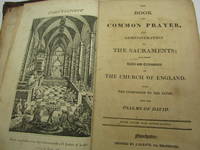
183963910pages not numbered though appears to be 200 plus gilt edges to pages original hand drawn paintings inside both covers with a handwritten inscription at reverse reading 'the two little paintings are by Leslie R.A. when he was a little boy mr seymour 1890' Published by Oxford University Press hardcover
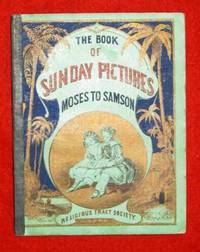
1850708London: The Religious Tract Society n.d. c. 1850. Cardboard Covers. Near Fine. J.M. Kronheim & Co. 5 1/2 x 7 1/8. 64 pages with two full page colored plates with imprint of J.M. Kronheim & Co. and numerous smaller engravings. Ownership inscription to ffep. Otherwise pages clean. Bound in publisher's original illustrated wrappers with green cloth backing. Light wear. Scarce. A very nice example of a scarce early Victorian Children's book from the first years of the Sunday School Movement. The Religious Tract Society unknown
18132004Manchester: J. Gleave 1813 Joseph Gleave, 1773-1828, was born in Tabley, Cheshire. He was a bookseller and printer, particularly interested in promoting Sunday Schools. The business was taken over in 1828 by his youngest son, also called Joseph. An early Manchester imprint, Manchester was a small town until Arkwright opened the Cotton Mill in 1780. From around 1800, Manchester grew at an astonishing rate, becoming a city in 1835.
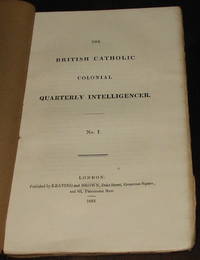
18331319London: Keating and Brown 1833. First Edition. Brown paper wrappers printed in black to the front cover. Sewn. Largely uncut. The brown wrappers are clean but there is chipping to the spine and a tear to perhaps a third of the length of the spine. Internally very clean and tidy throughout with just a touch of darkening to the closed page edge. The first of the 4 issues 1833-1837. Includes papers on the work in Ceylon relief of the Catholics lists of the Catholic churches St Lucia Demerara abolition of slavery and the proposals for forming the "British Catholic Society for the Promotion of the Knowledge of Christianity". Included is a long letter from Lord Clifford which discusses that he will be attending Rome with his Father in Law Cardinal Weld. 80pp. unknown
18331319London: Keating and Brown 1833
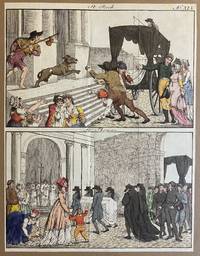
18024713Paris: N/P 1802. An attractive hand coloured lithograph undated but 1802. Two panels on one sheet laid onto a brown card backing sheet. The hand colouring is of a high quality and the sheet is in good clean condition. Although the artist is unknown "Les Musées de la Ville de Paris" state that this is from an album called simply "Caricature" and that it was sheet XIX The two panels show the burial of the actress and dancer Marie-Adrienne Chameroy. She had died of consumption in 1802 six months after the resumption of worship being permitted at the age of 23. When her large entourage and coffin arrived at St Roch church the doors were barred shown here with a man and dog barring the way in the first panel. The nature of the crowd attending is displayed in the buxom nature of the women in the funeral train. Allegedly the refusal to bury her was based on the morality of her life and a long standing tradition of barring actresses from church. The act caused much upset even to the level of Napoleon himself. The procession then made its way to the church of the "Filles Saint Thomas" where mass was duly said. The panels are 22cm x 17cm. and the sheet is 31cm x 215cm. First edition. Paris Musées inventory G.27615. British Museum 18560712.663 second panel only. . Une jolie lithographie coloriée à la main non datée mais datant de 1802. Deux panneaux sur une feuille posés sur une feuille de support en carton brun. Le coloriage à la main est d'une grande qualité et la feuille est en bon état. Bien que l'artiste soit inconnu "Les Musées de la Ville de Paris" indiquent que cette feuille provient d'un album intitulé simplement "Caricature" et qu'il s'agit de la feuille XIX. Les deux panneaux montrent l'enterrement de l'actrice et danseuse Marie-Adrienne Chameroy. Elle était morte de consomption en 1802 six mois après la reprise du culte à l'âge de 23 ans. Lorsque son entourage et son cercueil sont arrivés à l'église Saint-Roch les portes ont été barrées comme le montre le premier panneau avec un homme et un chien qui barrent le passage. La nature de la foule présente est illustrée par les femmes plantureuses du train funéraire. Le refus de l'enterrer aurait été motivé par la moralité de sa vie et par une longue tradition qui voulait que les actrices ne soient pas admises à l'église. Cet acte a suscité beaucoup d'émoi jusqu'à Napoléon lui-même. Le cortège s'est ensuite rendu à l'église des "Filles Saint Thomas" où une messe a été dite en bonne et due forme. Les panneaux mesurent 22 cm x 17 cm et la feuille 31 cm x 215 cm. Première édition. Paris Musées inventaire G.27615. British Museum 18560712.663 deuxième panneau seulement. N/P unknown
18024713Paris N/P 1802 Une jolie lithographie coloriée à la main, non datée mais datant de 1802. Deux panneaux sur une feuille, posés sur une feuille de support en carton brun. Le coloriage à la main est d'une grande qualité et la feuille est en bon état. Bien que l'artiste soit inconnu, "Les Musées de la Ville de Paris" indiquent que cette feuille provient d'un album intitulé simplement "Caricature" et qu'il s'agit de la feuille XIX. Les deux panneaux montrent l'enterrement de l'actrice et danseuse Marie-Adrienne Chameroy. Elle était morte de consomption en 1802 (six mois après la reprise du culte) à l'âge de 23 ans. Lorsque son entourage et son cercueil sont arrivés à l'église Saint-Roch, les portes ont été barrées, comme le montre le premier panneau avec un homme et un chien qui barrent le passage. La nature de la foule présente est illustrée par les femmes plantureuses du train funéraire. Le refus de l'enterrer aurait été motivé par la moralité de sa vie et par une longue tradition qui voulait que les actrices ne soient pas admises à l'église. Cet acte a suscité beaucoup d'émoi, jusqu'à Napoléon lui-même. Le cortège s'est ensuite rendu à l'église des "Filles Saint Thomas" où une messe a été dite en bonne et due forme. Les panneaux mesurent 22 cm x 17 cm et la feuille 31 cm x 21,5 cm. Première édition. Paris Musées inventaire G.27615. British Museum 1856,0712.663 (deuxième panneau seulement).
18984110Liverpool: Brown & Rawcliffe 1898
18331311Philadelphia: Key & Biddle 1833. First edition. Hardcover. Very Good. 7 1/2 x 11 3/8 inches. 2 vols. Vol. 1 has 572 pages. Vol. 2 has 568 pages and separate title page dated 1834. A few marks to endpapers but pages otherwise free of marking. Scattered foxing and toning. Bound in contemporary 3/4 brown calf with marbled boards. Covers worn. Part of backstrip of Vol. 1 and backstrip of Vol. 2 lacking. Hinges a little weak but still holding and text block tight. A good reading copy of this early printing of an eclectic collection of Christian apologetic historical and scientific works with a generally Protestant and evangelical focus. Also notable for history of Moravian missions through 1817. Key & Biddle hardcover
176548742Glasgow: printed by Robert & Andrew Foulis 1765. First Foulis edition 8vo pp. 597 21 table; modern quarter polished tan calf over marbled boards spine in 6 compartments with gilt rules and elaborate decorations stamped in blind maroon morocco label; trimmed toned at edges occasional spots overall a very good attractive copy. Gaskell 440. printed by Robert & Andrew Foulis unknown
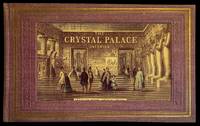
4742London: T. Nelson and Sons 1867. First edition. Complete with 12 high quality colour lithographs and text. One of the "Nelsons' Pictorial Guide-Books for Tourists" series. Lilac covered blind and gilt stamped hardback with a colour lithograph pasted to the centre of the front cover. This is one of the 12 lithographs. Pale blue end papers. Blind stamped booksellers embossed with "W.H. Smith & Co" to the front end paper. The work is complete with 11 lithographs inside and 32 pages of accompanying text. There were other publications by Nelson at the same time. One was a portfolio with loose plates and 16 pages of text. Another with 24 plates combines the Interior and Exterior illustrations. Condition is excellent. A little fading to the front cover and spine but clean and with minimal handling. Internally clean and tidy throughout. 11cm x 17cm. 32 pages. Conforms to FirstSearch / WorldCat OCLC: 1152920294. See Also Gascoigne Bamber. How to identify prints. New York : Thames and Hudson 1986.; 30. . Première édition. Complète avec 12 lithographies en couleur de haute qualité et le texte. Fait partie de la série "Nelsons' Pictorial Guide-Books for Tourists". Reliure cartonnée à couverture lilas estampillée à l'aveugle et dorée avec une lithographie en couleur collée au centre de la couverture. Il s'agit de l'une des 12 lithographies. Papiers de garde bleu pâle. La première page de garde porte le cachet du libraire "W.H. Smith & Co". L'ouvrage est complet avec 11 lithographies à l'intérieur et 32 pages de texte d'accompagnement. Nelson a publié d'autres ouvrages à la même époque. L'une d'entre elles était un portfolio avec des planches détachées et 16 pages de texte. Une autre avec 24 planches combinant les illustrations intérieures et extérieures. L'état de l'ouvrage est excellent. La couverture et le dos sont un peu décolorés mais l'ouvrage est propre et n'a subi qu'un minimum de manipulations. L'intérieur est propre et bien rangé. 11cm x 17cm. 32 pages. Conforme à FirstSearch / WorldCat OCLC : 1152920294. Voir aussi Gascoigne Bamber. Comment identifier les estampes. New York : Thames and Hudson 1986 ; 30. T. Nelson and Sons hardcover
18674742London T. Nelson and Sons 1867 Première édition. Complète avec 12 lithographies en couleur de haute qualité et le texte. Fait partie de la série "Nelsons' Pictorial Guide-Books for Tourists". Reliure cartonnée à couverture lilas, estampillée à l'aveugle et dorée, avec une lithographie en couleur collée au centre de la couverture. (Il s'agit de l'une des 12 lithographies). Papiers de garde bleu pâle. La première page de garde porte le cachet du libraire "W.H. Smith & Co". L'ouvrage est complet avec 11 lithographies à l'intérieur et 32 pages de texte d'accompagnement. Nelson a publié d'autres ouvrages à la même époque. L'une d'entre elles était un portfolio avec des planches détachées et 16 pages de texte. Une autre avec 24 planches combinant les illustrations intérieures et extérieures. L'état de l'ouvrage est excellent. La couverture et le dos sont un peu décolorés, mais l'ouvrage est propre et n'a subi qu'un minimum de manipulations. L'intérieur est propre et bien rangé. 11cm x 17cm. 32 pages. Conforme à FirstSearch / WorldCat OCLC : 1152920294. Voir aussi Gascoigne, Bamber. Comment identifier les estampes. New York : Thames and Hudson, 1986 ; 30.
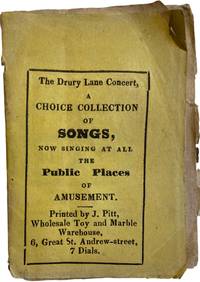
18005138London: J. Pitt C. 1800. C 1800. First edition. A small chapbook. Yellow paper covers containing 12 songs and three woodcuts. In good condition. It is a rough and ready disposable item. The yellow title has been printed off centre and the pages jut out a little. Slight edgewear to the pages but overall in good clean condition. Some pages uncut. 16 pages. This collection compiles popular songs performed at the Theatre Royal Drury Lane and other public venues during a period when music and song were integral to both theatrical and social life in London. Drury Lane under the management of figures like David Garrick 1747–1776 was a major centre for theatrical music including comic opera interludes and songs woven into plays and performances. J. Pitts John Pitts was a prominent London street ballad printer active from approximately 1765 to 1844. He operated in the Seven Dials district a well-known center for popular and cheap print production in the late 18th and early 19th centuries. Pitts specialized in printing broadsides—single sheets featuring ballads songs and topical verses—intended for mass public consumption. 10cm x 7cm. We cannot find a WorldCat / OCLC entry for this title. . C 1800. Première édition. Un petit livre de chapitres. Couvertures en papier jaune contenant 12 chansons et trois gravures sur bois. En bon état. Il s'agit d'un objet jetable brut et prêt à l'emploi. Le titre jaune a été imprimé de manière décentrée et les pages dépassent un peu. Légères traces d'usure sur les pages mais dans l'ensemble en bon état. Certaines pages ne sont pas coupées. 16 pages. Ce recueil compile des chansons populaires interprétées au Theatre Royal Drury Lane et dans d'autres lieux publics à une époque où la musique et la chanson faisaient partie intégrante de la vie théâtrale et sociale à Londres. Drury Lane sous la direction de personnalités comme David Garrick 1747-1776 était un centre majeur pour la musique théâtrale y compris l'opéra comique les interludes et les chansons intégrées dans les pièces et les représentations. J. Pitts John Pitts était un important imprimeur de ballades de rue londonien actif entre 1765 et 1844 environ. Il travaillait dans le quartier de Seven Dials un centre réputé pour sa production d'imprimés populaires et bon marché à la fin du XVIIIe siècle et au début du XIXe siècle. Pitts s'est spécialisé dans l'impression de broadsides - feuilles individuelles contenant des ballades des chansons et des vers d'actualité - destinés à la consommation publique de masse. 10 cm x 7 cm. Nous n'avons pas trouvé de notice WorldCat / OCLC pour ce titre. J. Pitt unknown
18005138London J. Pitt C. 1800 C 1800. Première édition. Un petit livre de chapitres. Couvertures en papier jaune, contenant 12 chansons et trois gravures sur bois. En bon état. Il s'agit d'un objet jetable, brut et prêt à l'emploi. Le titre jaune a été imprimé de manière décentrée et les pages dépassent un peu. Légères traces d'usure sur les pages, mais dans l'ensemble en bon état. Certaines pages ne sont pas coupées. 16 pages. Ce recueil compile des chansons populaires interprétées au Theatre Royal, Drury Lane et dans d'autres lieux publics à une époque où la musique et la chanson faisaient partie intégrante de la vie théâtrale et sociale à Londres. Drury Lane, sous la direction de personnalités comme David Garrick (1747-1776), était un centre majeur pour la musique théâtrale, y compris l'opéra comique, les interludes et les chansons intégrées dans les pièces et les représentations. J. Pitts (John Pitts) était un important imprimeur de ballades de rue londonien, actif entre 1765 et 1844 environ. Il travaillait dans le quartier de Seven Dials, un centre réputé pour sa production d'imprimés populaires et bon marché à la fin du XVIIIe siècle et au début du XIXe siècle. Pitts s'est spécialisé dans l'impression de broadsides - feuilles individuelles contenant des ballades, des chansons et des vers d'actualité - destinés à la consommation publique de masse. 10 cm x 7 cm. Nous n'avons pas trouvé de notice WorldCat / OCLC pour ce titre.
19425651Fairylite 1942. Charming vintage nostalgia. First edition. Slim illustrated children's cut-out book. Actually no need for cutting as all the figures are pre-cut and will just press out. All illustrations intact. Also one page that can be painted / coloured by the child as part of the enjoyment. Very clean and in an almost 'as new' condition. Lovely wartime era publication for making a 'stand up' farm with colour illustration throughout. Circa 1942. 12 unnumbered pages. 270 by 260mm 10¾ by 10¼ inches. Conforms to: OCLC Number / Unique Identifier: 556381193 heloo may I speak with Elaine please Fairylite unknown
19425651Fairylite 1942 heloo, may I speak with Elaine please
18501991New York: Printed by John P. Prall No. 9 Spruce-Street 1850. First edition. 164 1 pp. 1 vols. 12mo. Original blind-stamped brown ribbed cloth. Small chip at head of spine otherwise fine. First edition. 164 1 pp. 1 vols. 12mo. A curious little volume of verse interleaved with blank pages. On the verso preceding the first page the author has written: "The blanks are for sketch or music by who've taste and time and read with only moderate haste." Harris Collection p. 90; NUC 2 copies: DLC & MB OCLC: 11914135. ONLY TWO COPIES IN NUC. Harris Collection p. 90; NUC 2 copies: DLC & MB OCLC: 11914135 <br/><br/> Printed by John P. Prall, No. 9 Spruce-Street hardcover
18534187New York: Elton & Co. / John McLoughlin 1853. Small booklet part of the Pleasure Books for Children range. Undated but circa 1853. Story variously attributed to Oliver Goldsmith Giles Jones Griffith Jones and John Newbery. Illustrated with six hand coloured drawings by John Absolon. 24 unnumbered pages. OCLC Number / Unique Identifier: 702484527. Elton & Co. was formed around 1850 by Robert Henry Elton and John McLoughlin Jr. By 1855 imprints read: John McLoughlin successor to Elton & Co. The sewn binding is in excellent shape and the paper covers are only slightly handled / darkened. A previous owner's name is written across the top of the front cover and verso of same. Back cover publisher's advertisement reads: Pleasure books for children. Twelve kinds. 175 x 130 mm 7 x 5 inches. . Elton & Co. / John McLoughlin unknown
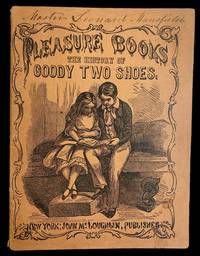
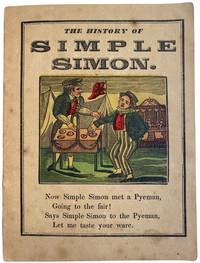
18605152New York: John McLoughlin 1860. First edition. An attractive children's chapbook with hand coloured wood engravings. Pink soft covers with old tape reinforcement to the spine. Otherwise reasonably clean if a little darkened. Inside are eight pages each with a half page hand coloured illustration and half page of verse. Clean but a little darkened. Adverts for the publisher to the rear cover. Would be an excellent copy if not for the tape. 15cm x 11cm. Conforms to WorldCat / OCLC: 33100846 with the curious exception that all the records record it as "the story" rather than "history." John McLoughlin was a Scottish-born coach maker who became a prominent figure in the New York publishing industry during the 19th century. He began in 1819 after moving to New York and initially worked for the Sterling Iron Company where he developed an interest in printing. By 1828 he had established his own printing business on Tryon Row in Manhattan focusing on publishing semi-religious tracts for children under the title McLoughlin's Books for Children. In 1840 McLoughlin partnered with wood engraver Robert H. Elton to form Elton & Co. which specialised in toy books comic almanacs and valentines. His son John McLoughlin Jr. eventually took over in 1850 when both senior partners retired. The firm of McLoughlin Brothers is listed at 24 Beekman St. in the New York directories for 1858 to 1862 McLoughlin Bros. was located at 30 Beekman St. New York between 1863 and April 1870. Under John Jr.'s leadership the company became known as McLoughlin Brothers and pioneered the use of colour printing technologies including chromolithography for children's books. This innovation made their publications visually striking and widely popular. The McLoughlin Brothers expanded their offerings to include games puzzles paper dolls and other children's products. By 1870 they had opened the largest colour printing factory in the United States. Their works often featured adaptations of British stories by illustrators such as Randolph Caldecott and Kate Greenaway. The company thrived until it was sold to Milton Bradley in 1920. Despite this transition the McLoughlin imprint continued to produce children's books into the early 20th century. John McLoughlin paperback
18534187New York Elton & Co. / John McLoughlin 1853
18605152New York John McLoughlin 1860 John McLoughlin was a Scottish-born coach maker who became a prominent figure in the New York publishing industry during the 19th century. He began in 1819 after moving to New York and initially worked for the Sterling Iron Company, where he developed an interest in printing. By 1828, he had established his own printing business on Tryon Row in Manhattan, focusing on publishing semi-religious tracts for children under the title McLoughlin's Books for Children. In 1840, McLoughlin partnered with wood engraver Robert H. Elton to form Elton & Co., which specialised in toy books, comic almanacs, and valentines. His son, John McLoughlin Jr., eventually took over in 1850 when both senior partners retired. The firm of McLoughlin Brothers is listed at 24 Beekman St. in the New York directories for 1858 to 1862, McLoughlin Bros. was located at 30 Beekman St., New York, between 1863 and April, 1870. Under John Jr.'s leadership, the company became known as McLoughlin Brothers and pioneered the use of colour printing technologies, including chromolithography, for children's books. This innovation made their publications visually striking and widely popular. The McLoughlin Brothers expanded their offerings to include games, puzzles, paper dolls, and other children's products. By 1870, they had opened the largest colour printing factory in the United States. Their works often featured adaptations of British stories by illustrators such as Randolph Caldecott and Kate Greenaway. The company thrived until it was sold to Milton Bradley in 1920. Despite this transition, the McLoughlin imprint continued to produce children's books into the early 20th century.