388 résultats
1589934320031<p>English description below</p><p>Dritter Band der seltenen ersten deutschen Gesamtausgabe von Paracelsus Schriften maßgeblich für alle späteren Ausgaben. Herausgegeben von Johann Huser mit Unterstützung des Kurfürsten und Kölner Erzbischofs Ernst Prinz von Bayern.</p><p>Mit 2 ganzseitigen Porträt-Holzschnitten wdh. die Paracelsus 1540 nach einem Kupferstich von Augustin Hirschvogel zeigen 1 Wappenholzschnitt Das Paracelsus-Wappen und als Wappenspruch die Grabinschrift PAX VIVIS REQVIES AETERNA SEPVLTIS und 1 Holzschnitt-Druckermarke am Ende. Basel Conrad Waldkirch 1589. Schweinslederband d. Zt. 24 x 17 cm 5 Bl.; 420 S. 55 Bll. Register. Ecken etwas beschabt durchgehend gebräunt vgl. die Fotos. Insgesamt gutes Exemplar der geschätzten ersten Huser'schen Ausgabe.</p><p>Ein Digitalisat aus der Sammlung der Bayerischen Staatsbibliothek finde sich hier: www.digitale-sammlungen.de/de/view/bsb00022504</p><p><br /><br />Third volume of the rare first German complete edition of Paracelsus' writings whose text became authoritative for all later editions. It came about with the support of the Elector and Archbishop of Cologne Ernst Prince of Bavaria and was edited by Johann Huser.<br />With 2 full-page portrait woodcuts ditto showing Paracelsus 1540 after an engraving by Augustin Hirschvogel 1 armorial woodcut the Paracelsus coat of arms and as heraldic motto the epitaph PAX VIVIS REQVIES AETERNA SEPVLTIS and 1 woodcut printer's mark at the end. Basel Conrad Waldkirch 1589. Contemporary pigskin binding 24 x 17 cm 5 fol.; 420 pp. 55 ll. Index. Corners a bit scuffed browning throughout please see the images. Overall good copy of Huser's esteemed first edition.<br />A digital copy from the collection of Bayerische Staatsbibliothek can be found here: www.digitale-sammlungen.de/de/view/bsb00022504<br /><br /><br /><br /></p> Conrad Waldkirch hardcover
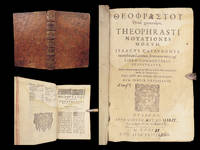
1585D11004Frankfurt am Main: Apud heredes Andreae Wecheli heirs of Andreas Wechel MDLXXXV 1585. Hardcover. Very Good. 4to 210 x 149mm. 16 blank leaves at front and back 4 318 2 pages including final leaf with Wechel printers device. Title also with Wechels woodcut printers device a pegasus soaring over a caduceus pair of cornucopia and shaking hands AW monogram twice. Edited by Friedrich Sylburg. Dedicated to French scholar Joseph Justus Scaliger 1540-1609. Latin dedication notes and index. Greek text 18th-century calf marbled endpapers and red edges rebacked; light edgewear light marginal foxing title lightly browned. Likely remaining for several generations at the library of Balliol College Taylor Institution Oxford number B.181 deaccessioned sometime in the early 20th century two bookplates on front pastedown. Collection of Francis Howard Forbes 1881-1957 professor of Greek language and literature at Amherst College his round pictorial bookplate of Attic-style scribes on front pastedown. This particular copy was cared for by Oxford institutions for a good part of its history then crossed into a New England personal library of a classical scholar sometime in the early 20th century. <br/><br/>This is the self-contained volume from the 1584-1587 collected edition of the works of Aristotle in Greek and the Metaphysica of Theophrastus. Friedrich Sylburg 1536-1596 was a German classical scholar who made important contributions to several popular Greek texts of the later sixteenth century like Estiennes Greek Thesaurus. In 1583 Sylburg resigned from an educational post he held at Lich and moved to Frankfurt to work as leading active editor for the enterprising Wechel publishers. The humanist printers flourished in three distinct cities; Paris Frankfurt and Hanau. Andreas Wechel settled the firm in Frankfurt and distinguished it mainly by publishing neo-Latin literature classical philology and works by Ramus and his followers. The relationship between Sylburg and the Wechel printers was a seamless match; this 1585 edition of Aristotle was praised for its great critical power and finesse. It is widely regarded as the authoritative edition of its kind. Sound example of a sixteenth century published work on Aristotelian principles born from the inventive relationship between scholar and press.Fabricius-Harles III 444; Hoffmann I 275 and 289. Apud heredes Andreae Wecheli (heirs of Andreas Wechel) hardcover
1993BN108839Anger-Verlag 1993. 1993. Hardcover. Sämtliche Werke 4 Bde. <br/><br/>Sämtliche Werke 4 Bde. Anger-Verlag hardcover
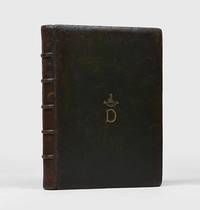
1824166494London: Josiah Taylor 1824. First Taylor edition of Theophrastus' timeless gallery of personality traits translated into English and beautifully illustrated with caricatures. The English translation is followed by the Greek text and notes. Taylor 1787-1865 was a philosophical and historical writer artist and inventor. Born into a family of engravers he initially followed this trade before turning to literature. This edition was welcomed with enthusiastic reviews the Literary Chronicle highlighting that "The sketches are bold and spirited full of character; there is scarcely an extraneous or unnecessary line in their whole engraving". This copy was bound for Sotheran's in London for Joseph Cockfield Dimsdale 1849-1912 with his gilt monogram stamp on the front cover. Dimsdale was a British banker and Conservative politician who served as Lord Mayor of London from 1901 to 1902. Quarto 270 x 193 mm. With 50 mounted wood-engraved illustrations. Late 19th-century green morocco over bevelled boards spine with raised bands gilt lettering in compartments monogram stamp "D" surmounted by a griffin's head and motto "quod Deus vult fiet" of Joseph Cockfield Dimsdale 1849-1912 on front cover marbled endpapers edges gilt. Spine and extremities faded to brown a few spots of wear at extremities front joint partly cracked short splits at rear joint ends and inner hinges but firm a little peripheral skinning to endpapers from adhesion margins of rear blanks toned occasional spot of foxing to contents otherwise clean. A very good wide-margined copy. hardcover
1967040653United States: University Books Inc 1967. Limited & Numbered . Hardcover. Very Good/NO Dustwrapper. 4to - over 9¾" - 12" tall. Two Volumes in Slipcase. Now for the first time faithfully translated into English. Edited with a biographical preface elucidatory notes Hermetic vocabulary and index by Arthur Edward Waite. Vol I: Hermetic Chemistry. Vol II: Hermetic Medicine and Hermetic Philosophy. Complete Reprint of the 1894 Edition. Unusual Ex-Libris Plate of B.J.H. King author. Limited & Numbered Edition No 655 of 1000 sets. University Books Inc. New York USA 1967. I: xxiv 394pp; II: viii 396pp hb slipcase No Dust-wrapper slightly worn & bumped 1/4 gilt grey/black cloth red cloth maroon slip case vg <br/> <br/> University Books Inc hardcover
17431545Glasguae Glasgow: In Aedibus Academicis Excudebat Robertus Foulis Academiae Typographus. 1743. First Edition. Leather Bound. pp. 2 105. 12mo. measuring 20 cm tall. Unassuming modest brown leather over boards; four raised bands to spine five compartments. Printed in Greek type with the Latin translation on the facing page. Extremities rubbed some scuffing some chipping to the spine ends. Internally very clean and unmarked with tight sound binding. The leather binding has recently been professionally replenished and treated with a natural leather preserver. Scarce in commerce. Correponds to OCLC #61707412. Glasgow born Robert Foulis 1707-1776 was a Scottish printer whose work had considerable influence on the printers and publishers of his time. Initially apprenticing as a master barber he was encouraged to take up the trade of printing and bookselling at the suggestion of his friend Francis Hutcheson of the University of Glasgow. Beginning in 1741 Foulis engaged in the selling of books in Glasgow and it was very shortly thereafter in 1742 that he set up his own press. He was appointed printer to the University of Glasgow in 1743 and in the same year produced the first Greek book printed in Glasgow the Peri herm neias in both Greek and Latin of the pseudo-Demetrius Phalereus. "Five years later he went into partnership with his brother Andrew and by 1775 had produced more than 500 separate editions including an edition of Homer 4 vol. folio 175658 Callimachus small quarto 1755 Thomas Grays Poems quarto 1768 Herodotus Thucydides and Xenophon with Latin translations and one of the first Scottish editions of Shakespeare. The Foulises best works were distinguished by their excellent layout legibility and accuracy." EB April 2019. Some of the credit for their achievement is attributable to the renowned type-maker and punch-cutter Alexander Wilson from whom they purchased their types. Robert Foulis died on 2 June 1776 in Edinburgh. <br/><br/> In Aedibus Academicis Excudebat Robertus Foulis Academiae Typographus. hardcover
84188London Printed for the Author 1774. VIII 342 46 s. Fint priv. håndb. skinnbd. med ryggdekor i gull. Grønt skinn tittelfelt. . unknown
161729016<p>Issued in Lyon in 1617 this edition of Characters by Theophrastus was translated and edited by Isaac Casaubon. The work includes 28 character types presented in Greek and Latin with Casaubon's annotations. First printed in 1592 this edition adds five character sketches not present in earlier forms. Casaubon's involvement established a lasting reputation in classical studies. The text explores fixed moral profiles as literary forms rather than continuous narratives. Known for its compact presentation the sextodecimo format facilitated access by early scholars. The publisher the widow of Antoine de Harsy issued many classical works and this volume appears in major bibliographies. Bound in full leather the book shows surface wear; the binding remains tight. The title page has been restored. Collation: 16 367 13. Format: Sextodecimo 16mo single volume. #29016 PHOTOS AVAILABLE UPON REQUEST.</p> viduam Ant. De Harsy hardcover
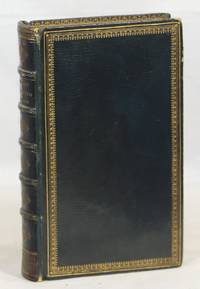
1799000013139Ienae = Jena: Friederici Frommanni 1799. Later edition. Hardcover. Near Fine. 8vo. 3 vi-xxx 2 1-262 pp. Contemporary straight-grain green morocco boards with gilt decorations and borders gilt decorations to the turn-ins spine in six compartments with gilt decorations and gilt lettering on the spine. Marbled endpapers and pastedowns. Bound with a silk pink ribbon bookmark bound without the half-title. Text in Greek and Latin. Greek and Latin text and notes edited and corrected by Johannes Gottlieb Schneider. Dibdin 504. Moss 695-696. Oxford Classical Dictionary 1504-1505. Theophrastus was student of Aristotle's and an accomplished philosopher and logician. His Characters one of the surviving works from his prolific canon constitutes a list of brief outlines of negative personality types exhibited by people. Moss refers to Schneider's edition as the best one Dibdin says "the collector should not be without it." The book contains an account of the surviving manuscripts which provide modern readers with the remaining works of Theophrastus and incorporates elements of Amadutius' editing into his own. This is the first Schneider edition of Theophrastus' Characters. A touch of rubbing to the corners two ink inscriptions. Friederici Frommanni hardcover
1653ABC_50270Leiden 1653. 24mo. Joannes Maire Contemporary vellum sewn on 2 supports laced through the joints with the manuscript author on the spine. With a vignette on the title page built up from typographical ornaments the work is partly printed in Greek type. 359 1 pp. Miniature edition of the "Moral Characters" a major work of ancient philosophy by Theophrastus ca. 371-287 BCE. The work is published with the Greek and Latin texts on opposite pages to which are added the extensive notes and comments of over 200 pages by Johannes Augustus Werdenhagen 1581-1652 for use of students. The present second Dutch edition is quite rare with only three copies recorded in institutions.Theophrastus was born on the island of Lesbos and was a student of Aristotle. He wrote numerous treatises across all areas of philosophy but the present work is his most well-known and has been imitated many times especially in the 17th century. The work which was already widely read in classical antiquity contains thirty descriptions of moral types which are both humorous and morally instructive. As the first recorded attempt of systematic character writing it paints a vivid picture of various human behaviours and offers insight into universal human weaknesses. Theophrastus' simple and direct style makes the work accessible while offering a profound reflection on the qualities and flaws of human nature.With the armorial bookplate of Edward Shipperdson mounted on the front pastedown and the manuscript initials "RK" on the first free flyleaf. The vellum is somewhat soiled and stained with a tear and small loss at the foot. The leaves are somewhat browned. Otherwise in good condition.l The children's world of learning 208; STCN 113911513 3 copies; USTC 1809102 3 copies; Welsh A bibl. of miniature books 6679; not in Dibdin. hardcover
5268038-nnew. unknown
5268038like new. unknown
194427667AB1944. 8 Bde. St. Gallen Vlg. Zollikofer 1944-1949. 8° Halblederbände mit Rückenschild. Rücken mit Farbabweichungen verbleicht. Mit handschriftlicher Widmung des Herausgebers J. Strebel an Hans Sulzer unknown
1779TK0066Frankfurt & Leipzig:: 1779 1779. 8vo. IV 246 20 pp. Engraved frontispiece title-vignette showing a bunch of grapes woodcut head & tailpieces index; title & final leaf each reinforced at hinge with white tape frontispiece is mounted on the adjoining newer free endsheet; waterstains. Later quarter vellum boards vellum tips; some staining to upper cover upper joint cracked. Good. Paracelsus' Natural Magic Magazine: containing as an extract from his writings all sorts of things for pleasure and benefit but especially economic arts and proven cures for humans and animals published for the general benefit. / This is an alchemical recipe book of concoctions for a myriad of needs some agricultural for using specific plants for medicinal cures treatments etc. each based on the writings of Paracelsus. A random sampling: p. 46 On the problem of caterpillars and how to prevent them from eating away your fruit trees. p. 36. How to catch large and small mice. p. How to fatten geese to give them large livers to make foie gras. p. 132. To remove stains from clothes. p. 150. How to give wine a sweet taste. p. 194 How to cultivate/make wine in the autumn. p. 210. Against the red aphid and fire. p. 162 The Queen's lemonade. p.---. How to make paper. p. 80. How to make beer pp. 176 more. A lot of attention is given to colors farben. / "Das Buch ist eine Sammlung von allerlei Zauberkunsten Recepten fur Menschen u. Thiere gegen Ungeziefer Hausmitteln u. s. w. auch sympathetischen Mitteln". - Spatere Ausgabe erstmals 1771 erschienen. – Erste u. letzte Bll. im Zuge der Neubindung im Falz verstarkt in den Randern gebraunt feuchtfleckig Titel starker u. zudem angestaubt insgesamt wohlerhalten. PROVENANCE: Koller auction 18 March 2015 lot 275. REFERENCES: Graesse Bibl. magica 49; Sudhoff 465. 1779 hardcover
17436108Glasguae Glasgow: In Aedibus Academicis. Excudebat Robertus Foulis Academiae Typographus 1743. 8vo. pp. ii 53 i 52. Greek text followed by Isaac Casaubons Latin translation. Contemporary calf rebacked corners renewed. Foulis was elected University Printer on March 31st 1743 and this is the first book where he styles himself Academiae Typographus. Peter Needhams excellent edition was first published in 1712. 1744 dated ownership signature E Libris Bagnall on the free endpaper with two 20th century inscriptions beneath: R.J. Mockridge St Johns Oxford in 1908; gift to D Hughes from the Rev R. Mockridge then at Harwicke Rectory August 1958. Booksellers ticket R. Saywell to pastedown. Theophrastuss moral character sketches are listed in English in a 19th century hand on the lower pastedown. Gaskell Foulis: 40; ESTC N475398. Book In Aedibus Academicis. Excudebat Robertus Foulis Academiae Typographus unknown
17543721907Paris.: JEan Thomas Herissant. 1754. Hardcover. Cubierta deslucida. Good. 16 cm. 287 p. Encuadernación en tapa dura artesanal en plena piel con tejuelo y nervios decorados. Idioma francés . Cubierta deslucida. Literatura.82 82 JEan Thomas Herissant. hardcover
175415495Oxford: Printed; and to be had of R. Clements and J. Fletcher…et al. 1754 First edition. Contemporary calf rubbed rebacked with old spine laid down. Octavo. Main text in Greek and Latin on facing pages. Extensive notes and observations in English. Covers rubbed corners worn. Armorial bookplate of William Frere 1775-1836 master of Downing College and later vice-chancellor of Cambridge University. Later pencil notations by a later student one dated 1932. A little light foxing. A good copy. The translator/compiler is Richard Newton 1676-1753 was educated at Christ Church College Oxford becoming a doctor of divinity in 1710. In 1710 he became principal of Hart Hall in Oxford where he tried to implement educational reforms. Running into opposition he oversaw its transformation into Hertford Colege. "Its statutes were the work of Newton and embodied his ideas on education… He would oversee tutors and students with equal strictness. Regular and rigorous academic exercises were to guarantee scholastic standards. Great power reposed in the principal who doubled as bursar. The principal in a manner more appropriate to a hall than to a college selected fellows. Future principals following Newton's own example were to be chosen exclusively from alumni of Westminster and Christ Church. Newton was keen too that an economical regime should attract undergraduates from less affluent backgrounds and compete for members against other colleges within the university. As principal he watched vigilantly over the domestic economy of the house. He calculated that the annual expenses of an undergraduate could be cut to about £31. He also waged an unavailing battle against the distractions that seduced the young from their studies. His frugal regimen at Hertford of 'small-beer and apple dumplings' was easily mocked"Oxford DNB. An able translator he produced this as part of his academic work and it was published posthumously. Printed; and to be had of R. Clements and J. Fletcher…[et al.], unknown
154217Leiden Lugduni Batavorum Ex officina Elseviriana 1640. 12mo. 1115 index1033 blank p. Modern boards. 13.5 cm Ref: STCN ppn 061216267; Willems 504; Rahir 499; Berghman 1285; Hoffmann 537/38 Details: Elsevier's woodcut printer's mark on the title depicting an old man standing in the shade of a vine-entwined elmtree symbolising the symbiotic relationship between scholar and publisher. The motto is: 'Non solus'. After the index at the end we find: 'Adolphi Vorstii Epistola de obitu V.Cl. Ioannis Meursii ad filium ejus Joannem iuvenem praestantissimum' followed by a short 'epitaphium' for Meursius by his friend A. Buchellius and an elegiac couplet of Nicolaus Heinsius Condition: Title page soiled and a small piece removed from the tip of its right lower corner. Small stamp on the title. 3rd leaf slightly soiled Note: The Greek scholar Theophrastus ca. 370-287 B.C. was a pupil collaborator and successor of Aristotle. He was a scientific researcher rather than a speculative philosophers. Only a small part of Theophrastus' output has been preserved or as Meursius observes at the beginning of this 'liber singularis' of 1640: 'paucis conservatis pleraque interciderunt' 'few works have been saved most have perished'. p. 5 The importance of classification runs through all his extant works including even the brochure known as the Characters' Charaktêres. This collection of 30 descriptive sketches of types of people exhibiting deviations from proper norms of behaviour is nowadays his most famous and most imitated work. § This title of 1640 is the only edition of the last work of the Dutch classicist and historian Johannes Meursius Johannes van Meurs 1579-1639. It consists of 2 parts the first of which p. 1/82 is on the lost works of Theophrastus. Meursius list here 234 works with sources and testimonia. The second part p. 83/111 contains notes and emendations by Meursius on a number of Theophrastus' extant works 'Ioannis Meursii Lectiones Theophrasteae in quibus eorum librorum qui supersunt loca aliquot emendantur'. § Meursius was professor of History and Greek in the university of Leiden from 1610 till 1620. He studied under the genius J.J. Scaliger and is best known for the 'editiones principes' of a number of Byzantine authors that he produced. Meursius' indefatigable labours concerned also the history of ancient Greece and especially Eleusis and the antiquities of Athens and Attica. Meursius laid with his works the foundations of much later learning Provenance: The stamp on the title is a crown with 7 pearls of a Dutch/German/Austrian baron Beneath the crown 2 intertwined initials 'C.C'. or 'C.D' Collation: A-E12 F6 leaf F5 verso and F6 blank Photographs on request hardcover
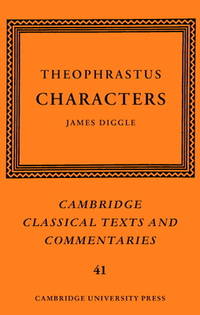
2004x-0521839807Cambridge Univ Pr 2004. Hardcover. New. revised edition. 612 pages. 8.75x5.75x1.50 inches. Cambridge Univ Pr hardcover
73769Oxonii Oxford Clarendon 1811. 8vo 21.7 x 13.8 cm. viii 92 pp.; mezzotint portrait one engraved plate. 19th-century ruled half linen over marbled boards. Printed label on the spine. = John Stackhouse 1742-1819 was a British botanist principally interested in Spermatophytes and algae. He published for instance the Nereis Britannicae or a Botanical Description of British Marine Plants. The present work was aimed at clarifying the plant genera and species used by Theophrastus containing a lexicon and providing the Linnaean names. The plate depicts two Pinus species. Tiny cryptic bookplate of Henry or Henri Duhamel 1853-1917 a French bibliophile mountaineer author and skiing pioneer. "He introduced the practice of skiing to his circle of friends at Grenoble leading to the creation of the first ski club in France. . Duhamel's library was dispersed at two sales in Lyon in 1921 and 1922. In honor of Duhamel a street in Grenoble bears his name as does the gap separating the Croix de Belledonne from the central peak of the Belledonne range and one of the side peaks in the Massif des Écrins the Pyramide Duhamel" Wikipedia. Rare. An excellent clean copy. Cat. BMNH p. 1997; Pritzel 8890; Stafleu and Cowan 12730. Not in Nissen BBI. hardcover
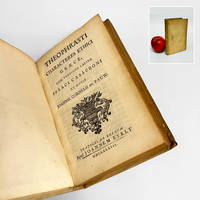
54731Trajecti ad Rhenum Utrecht: apud Joannem Evelt 1737. 8vo. pp. xl 221 iii. Text in Greek with parallel Latin translation final page is 'Corrige in Notis' and colophon. Woodcut ornament to title-page woodcut initials. Small horizontal tear to fore-edge margin 4 just touching text G2 with tiny hole and small loss to bottom corner not affecting text. Contemporary vellum title faintly inked to spine. Spine a little darkened with a few smudges and stains endpapers bit toned very good overall. Translated by Isaac Casaubon 1559-1614 with commentary by Jan Cornelis de Pauw d.1749. Schweiger I 320. Trajecti ad Rhenum [Utrecht]: apud Joannem Evelt, 1737. hardcover
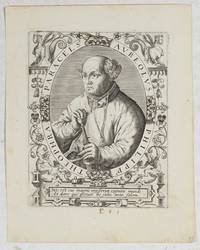
1642664811642. Monogrammist BR J.Th. de Bry Kupferstich aus J.J. Boissard Icones virorum illustrium Frankfurt 1642 Kupferstich 142 x 115 auf 190 x 142 mm; mit kleinem Fleck am Rand feines Blatt. Unter dem Oval in Latein: Hier ist der dem das Geheimnis der großen Welt bekannt war und der sich mit der Kunst des Verstandes den Verstand geben konnte. Die Granatäpfel in den Händen der Faune symbolisieren die verbindung des Bösen mit dem Guten. Philippus Aureolus Theophrastus Rombastus Paracelsus ab Hohenbeim "auch "Helvetius Eremita" genannt war 1491 in einem Hause nahe an der über die Sihl führenden Teufelsbrücke eine Stunde weit von dem berühmten Wallfahrtsorte Maria Einsiedeln Canton Schwyz geboren. Sein Vater der Arzt Wilhelm ab Hohenheim stammte aus der alten und berühmten schwäbischen Adelsfamilie der Bombaste die sich von dem adeligen Schloss Hohenheim dem nachmaligen Esslinger Hof bei dem Dorfe Pfänningen bei Stuttgart "Bombaste von Hohenheim" nannten. 1502 siedelte er mit seinem Vater nach Villach in Kärnten über wo letzterer 1534 starb. Er bezog 1506 die Universität zu Basel gab sich hier besonders chemischen Studien hin lebte längere Zeit bei dem als Alchemist bekannten TRITHEMIUS machte dann grössere Reisen durch Europa hielt sich an verschiedenen Universitäten Studien halber auf und genoss bereits um 1527 wegen seiner Kenntnisse einen solchen Ruf dass er auf des bekannten Kirchenvaters seines Landsmannes Oekolampadius Empfehlung als Nachfolger von COPUS 1527 zum Stadtarzt von Basel ernannt wurde. In dieser Eigenschaft trat er in ebenso abenteuerlicher wie verletzender Weise auf indem er als Zeichen seiner Verachtung der arabischen Medicin alle Werke des AVICENNA auf öffentlichem Markt verbrannte. Noch mehr brachte er seine Collegen gegen sich auf als er es wagte sich der deutschen Sprache zu bedienen. Es kam schliesslich zu völligem Zerwürfniss als er auf das schmutzige geschäftliehe Treiben der im Bunde mit den Apothekern stehenden Aerzte aufmerksam und demselben ein Ende machte. Zuletzt zerfiel er auch noch mit den Behörden; er liess aus Aerger darüber dieselben in Pamphleten angreifen musste aber in Folge dessen heimlich aus Basel entweichen und führte nun ein abenteuerliches Wanderleben das ihn durch den Elsass die Schweiz Deutschland und bis an die entferntesten Punkte Europas selbst bis nach Asien hinein verschlug wobei er von einer grossen Zahl von Schülern begleitet war meistens Vagabunden die nur Stein der Weisen kennen lernen wollten und PARACELSUS für den Besitzer desselben hielten. Allmälig verbreitete sich sein Name und sein Ruhm über ganz Europa. Er wurde 1640 nach Salzburg berufen lebte aber hier nur noch 1 Jahr und starb daselbst 24 Sept. 1541. - PARACELSUS ist jedenfalls für die mystische Richtung der Medicin im 16. Jahrhundert die einflussreichste Persönlichkeit gewesen. Es ist über ihn sehr viel gedacht und geschrieben worden. Von der einen Seite ist er als Reformator Vater der Heilkunde Begründer der neuen Richtung in der Medicin gepriesen und in den Himmel erhoben von der anderen als ein Mystiker Schwärmer Betrüger Trunkenbold Gaukler bezeichnet worden. Dieser Widerspruch löst sich wenn man auf die Quellen zurückgeht aus denen er sich ergeben hat. Nachgewiesenermassen ist der bei Weitem grösste Theil aller Schriften die unter seinem Namen erschienen sind untergeschoben und von den übrigen ist es höchst fraglich wieviel davon ihm angehört und wieviel von seinen Freunden und Feinden hineingearbeitet worden ist. Seine Freunde glaubten seine Lehre gar nicht dunkel genug darstellen zu können und seine Feinde die ihn zu verunglimpfen bestrebt waren scheuten sich nicht in seine Schriften einen Wust von Unsinn hineinzutragen. Selbst die von seinen Gegnern gegen ihn erhobenen Angriffe sind darin als sein eigenes Werk aufgeführt. - Als Quelle des Wissens bezeichnete PARACELSUS die Erfahrung aber nicht die auf dem Wege einer rationellen inductiven Forschung gewonnene Kenntniss sondern das aus der neueren Philosophie geschöpfte aprioristische Wissen; vorzugsweise ist es die Analogie aus der er die Erkenntniss ableitet. Sein System basirt wesentlich auf den Theo- und Kosmosophien der Neuplatoniker in die er eben nur das neuere philosophische Element hineingebracht hat. Die ganze Welt wird von ihm streng pantheistisch aufgefasst. Er unterscheidet 3 Sphären: eine himmlische mit den reinen Intelligenzen und körperfreien Seelen eine astralische Welt mit den seelenlosen Elementargeistern und eine körperliche Welt d. i. die irdische Natur die au beiden genannten Sphären Theil nimmt. In dem Menschen sind nun alle 3 Sphären miteinander verbunden. Er ist der Mikrokosmus in dem Makrokosmus. Alles Geschaffene wird auf ein Magisterium magnum zurückgeführt u.s.w. Die Basis der ganzen körperlichen Welt bilden die 4 Aristotelischen Elemente; diese finden sieh körperlich gedacht in 3 Stoffen wieder die PARACELSUS von seinem chemischen Standpunkte aus sich durch ihre chemischen Eigenschaften von einander unterscheiden lässt. Diese 3 Stoffe sind: l Salz d. i. der Begriff des Festen aller der chemischen Stoffe die durch das Feuer unzerstörbar sind; 2 Quecksilber d. i. der Begriff des Flüssigen das durch Feuer unverändert verflüssigt wird ; 3 Schwefel d. i. der Begriff des Luftigen das durch das Feuer nicht bloss zerstörbar sondern auch gleichzeitig veränderlich ist. Diese 3 Begriffe werden rein symbolisch von PARACELSUS gebraucht für alle Stoffe die sich ebenso in Bezug auf ihr Verhalten dem Feuer gegenüber qualificiren lassen. Das eigentliche Wesen liegt aber nicht in dem Stoffe sondern in dem Geiste in dem ihm eingepflanzten göttlichen Keime in den Kräften die sich aus ihm entfalten; diese werden als Quinta essentia häufig auch als Archaeus als das eigentlich Belebende von ihm bezeichnet. Der Mensch besteht nun indem er an jenen 3 Sphären sich betheiligt aus sieht- und fühlbarem Körper sodann aus einer körperlichen Seele Archaeus der eben die an dem Organismus hervortretenden lebendigen Eigenschaften vermittelt und endlich aus der unsterblichen Seele. In seiner Pathologie unterscheidet er 4 Gruppen von Krankheitsursachen sog. "Entia": 1 Ens deale die göttliche Schickung; 2 Ens astrale Einfluss der Gestirne der sich namentlich als Quelle der pestilenzialischen epidemischen Krankheiten kundgiebt: 3 Ens spirituale archaeus das geistige Element im Menschen das er sich übrigens körperlich vorstellt; endlich 4 das Ens naturale die den ganzen Menschen umgebende körperliche Welt a als Ens alimentorum et veneni und b als Ens seminis die Ursache der angeborenen und hereditären Krankheiten. Jede Krankheit kann nun von einem dieser Entia ihren Ursprung nehmen indem diese eine chemische Einwirkung auf den Organismus hervorbringen auf chemischem Wege Trennungen und neue Verbindungen bilden. Salz Schwefel und Mercur erfahren mannichfache Veränderungen. Die Art wie PARACELSUS nun die einzelnen Krankheitsformen auf die verschiedenen Veränderungen zurückführt ist weiter nichts als ein subtiles Spiel mit Analogieen. - Den Mittelpunkt seiner Lehre bildet die Therapie. Der erkrankte Organismus wird gesund einerseits durch die ihm immanente Kraft die er als Archaeus darstellt die xxxx der griechischen Aerzte und ausserdem durch directe ärztliche Eingriffe und zwar nicht in dem Sinne der alten Medicin Contraria contrariis sondern es muss nach PARACELSUS dieser Gegensatz zwischen Krankheit und Heilmittel in den Ideen liegen. Er sagt z. B. Wassersucht ist im Mikrokosmus Das was Ueberschwemmung im Makrokosmus ist; so wie man nun Ueberschwemmung beseitigt durch Ableitung von Wasser so glaubt er auch durch reichliche Entleerung die übermässige Feuchtigkeit zu entfernen. Die Kolik z. B. vergleicht er mit dem Winde und verlangt Wärme und Trockenheit bei der Behandlung derselben. Atrophieen und Phthisen vergleicht er mit der Austrocknung und empfiehlt die entsprechenden Mittel die der Idee nach direct entgegengesetzt sind u.s.w. Eine zweite Methode der Behandlung ist die durch Arcana d. h. durch Substanzen die durch die in ihnen innewohnende magische Kraft die in dem Organismus wuchernde Abnormität zerstören also die Krankheiten in ihren Wurzeln angreifen. Man muss nach PARACELSUS dahin kommen die Krankheiten nicht nach den anatomisch ergriffenen Theilen sondern nach dem entsprechenden Heilmittel zu benennen. Er unterscheidet also z. B. Morbus terebinthinus helleborinus etc. in der allerneuesten Zeit hat diese Lehre in RADEMACHER wieder ihren Apostel gefunden. PARACELSUS giebt nun auch Vorschriften über die Art die Heilmittel für die einzelnen Krankheiten zu entdecken. Er lehrt dass die Natur selbst auf sie hinweise durch die eigenthümliche Gestaltung Farbe etc. der Pflanzen namentlich aber durch die Aehnlichkeit die diese Stoffe mit gewissen Organen des Körpers haben die auch als Organheilmittel als solche anzusehen seien. Hieraus entwickelte sich die Lehre von den sog. "Signaturen" welche die Pflanzenstoffe tragen und aus denen ein Schluss auf ihre Wirkung als Heilmittel gezogen wurde. Bei denen die solche Signaturen nicht tragen entscheidet lediglich das Experiment. Um nun die Wirkung dieser Arcana festzustellen wurde es nothwendig die Heilmittel genau zu studiren. Auf seine Veranlassung sind denn auch zahlreiche metallische Heilmittel zuerst für den innerlichen Gebrauch in die Therapie eingeführt worden so: Eisenoxyd Mercur Antimon Blei Kupfer Arsen Schwefelpräparate u.s.w. die bis dahin so wenig angewandt worden waren dass als PARACELSUS's Lehre grössere Verbreitung fand von Seiten verschiedener Facultäten dagegen opponirt und sogar die Regierungen veranlasst wurden ein Verbot gegen den innerlichen Gebrauch der metallischen Mittel zu erlassen. Die Paracelsische Lehre führte ausserdem zu einer Darstellung der in der Pflanze vorhandenen Kräfte da nicht die ganze Pflanze heile sondern nur einzelne Stoffe derselben. So entstanden die Tincturen Spirituosen Extracte etc. - PARACELSUS hat seine Schriften deren Zahl sich auf 364 belaufen soll meistens deutsch geschrieben resp. dictirt und im Manuscript verkauft. Viele derselben sind von seinen Anhängern ins Lateinische übersetzt und zum Druck befördert worden. Sie sind mehrfach gesammelt von J. HUSER 10 voll. Basel 1589-91; Frankfurt 1603 3 voll. fol.; Strassb. 1605; von F. PETISCUS : "Opera omnia medico-chemico-chirurgica" 3 voll. fol. Genf 1658; 11 voll. Basel 1575; 12 voll. Frankf. 1603. Als die wichtigsten der echt befundenen nennen wir: "De gradibus et compositionibun receptorum" geschr. 1526 - "Die kleine Chirurgie. Von französischen Blatern Lähme Beulen etc." 1528 bildet den 4. Theil der "Grossen Wundparznei" - "Sieben Bücher von allen offenen Schäden so aus der Natur geboren werden" 1528 3 Thle. der "Grossen Wundarznei"' - "Vom Holtz Guajaco" 1529 - " Von den Imposturen der Aerzte" 1530 - "Opus paramirum ad medicam industriam" 1531 - die beiden ersten Bücher der Grossen Wundarznei '" 1536 u. 37 - "Paragranum" 1538. Die Sprache die PARACELSUS führt ist sehr derb mit oft plumpen Ausdrücken und wo es gilt feindliche Angriffe zu widerlegen sehr auffallend und den guten Geschmack - nach der Sitte der damaligen Zeit - völlig bei Seite setzend. Er hatte eine ganz tüchtige wissenschaftliche Bildung wie sich das auch in seiner Verehrung des HIPPOKRATES kuudgiebt doch war er allerdings im höchsten Grade der mystischen Richtung seiner Zeit verfallen dabei aber vom eigentlichen Aberglauben von allen den Thorheiten der Astrologen und Alchemisten weit entfernt die er selbst sogar lächerlich machte indem er sagte dass jeder Mensch die Dämonen etc. in seinem eigenen Busen trage. Im Publicum fand seine Lehre ausserordentlich vielen Anklang: dagegen hat er eigentliche Schüler nicht gehabt. Er spricht es selbst sehr oft aus dass wenn man Alle zusammenzählt die seine Schüler heissen wollten Hunderte herauskämen aber darunter wären nur 2-3 die ihn verstanden hätten die übrigen seien Lumpen die nur von ihm die angeblichen geheimen Künste hätten lernen wollen." Pagel Hirsch IV pp.482-485 siehe - Biogr. med. VI p. 361; Dict. bist. III p.665 M. B. Lessing PARACELSUS sein Leben und Denken. Berlin 1839 Moll in Württemb. ärztl. Correspondenzbl. 1851 33 Allgem. Deutsch. Biogr. XII p.675 Kat. Diepenbroik 1976; Wellcome 2218/13 unknown
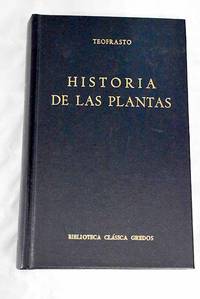
19883234829Madrid.: Gredos. 1988. Hardcover. Good. 20 cm. 531 p. Encuadernación en tapa dura de editorial. Introducción traducción y notas José MarÃa DÃaz-Regañón López. Biblioteca clásica Gredos. volumen coleccion 112. BibliografÃa. Ãndice. Botánica. Obras prelinneanas . ISBN: 8424912713 Botánica 58035.3"-03" Gredos. hardcover
8117Amsterdam: F. Changuion 1754. . 2 volumes 12mo 18cm. Vol. 1: pp. viii487; vol. 2: pp. ii580 titles printed in red & black with small woodcut vignette. Contemp. quarter calf marbled boards backstrips with red lettering labels and some gilt line decoration fore- and lower edges uncut. Small clear waterstain to first few leaves of vol. II very good otherwise. Amsterdam: F. Changuion, 1754. hardcover
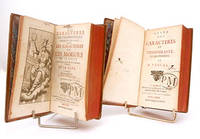
51-5079Paris : Estienne Michallet 1699 & 1700. 12mo. 2 separate works one with 2 vols. in one. 9.5 x 16.3cm. Uniformly bound in contemporary calf with gilt spines slightly worn. Les caractères de Théophraste with 3 engraved plates.OCLC Numbers :1151614707 and 2482343 Paris : Estienne Michallet, 1699 & 1700 unknown