2 887 résultats
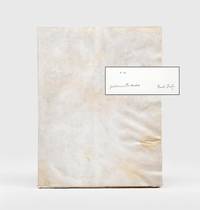
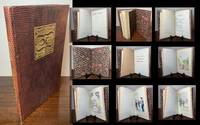
193046465Paris.: Librairie Gallimard. 1930. Full black crushed morocco by Henningsen with his signature gilt title gilt to spine board edges ruled in gilt red suede doublures and endpapers original wrappers with lithograph and backstrip preserved red cloth wool-lined slipcase. 4to. 330 x 258 mm. Half-title printed title with original lithograph vignette leaf with achevé d'imprimer leaf with Apollinaire's dedication 'A la mémoire du plus ancien de mes camarades' to René Dalize and Apollinaire's verse divided into 6 sections with title for each 'Ondes' 'Etendards' 'Case d'Armons' 'Lueur des Tirs' 'Obus Couleur de Lune' and 'La Tête Etoilée' 2 leaves with 'Table' leaf with details of the first edition of Case d'Armons and leaf with justification illustrated with 68 original monochrome lithographs by Giorgio de Chirico including the wrapper and the title-page each coloured by the artist by hand in watercolour. Printed text in red and black throughout with headline and marginal notes in red and occasional vignettes and musical notation in blue. Sheet size: 324 x 246 mm. PROVENANCE: From the collection of Dr. Herbert Gross with a letter of certification tipped-in to an initial blank leaf from Edouard Loewy Libraire-Expert dated 'le 2 Février 67' to Dr. Gross: 'Cher Maître . je puis vous confirmer que l'exemplaire hors-commerce no. XV this copy sur Chine de 'Calligrammes' illustré par Giorgio de Chirico a été rehaussé d'aquarelle à la main par l'artiste lui-même . '. Unique hand-coloured copy with the lithograph for the front wrapper and each of the lithographs in the book hand-coloured by de Chirico in delicate shades of watercolour.From the edition limited to 131 copies signed by the artist with this one of 25 hors commerce copies on Chine marked 'exemplaire chine' and numbered in Roman numerals.Ciranna cites another copy hand-coloured by the artist: 'Nella vendita di libri illustrati moderni realizzata il 6 Giugno 1968 all'Hotel Drouot di Parigi figurò l'esemplare n. IV di CALLIGRAMMES su carta madreperlacea del Giappone con tutte le litografe nel testo acquarellate . '. Giorgio de Chirico Catalogo dell'opera grafica 1921 - 1969 pg. 38.'Chirico drew the composition directly onto the stone and said of his work for CALLIGRAMMES that he was inspired by memories of the poet whose writings he had read avidly.' From Manet to Hockney - Modern Artists' Illustrated Books.'This edition of Calligrammes with its spacious pages and deliberately eccentric typographic design seeks to express in visual terms the rhythm of the verse.' The Artist & the Book: 1860 - 1960.'Apollinaire had intoned of suns moons and stars. And de Chirico thought of Italy of his cities and his ruins and he saw the suns and the moons return over the earth after being extinguished in the sky like peaceful enigmas and rekindling in houses or beneath porticos or stoking fires and new lives . It is a metaphor for death and life for the regeneration of art and of ideas which like the phoenix are continually reborn from their ashes. A spent sun always ignites another sun to which it is linked by a mysterious thread.' Paolo Balducci - Georgio de Chirico Betraying the Muse de Chirico and the Surrealists June 8th - July 8th 1994.Ciranna 17 - 82; Manet to Hockney 84; Castleman 180; Logan 105; Artist & the Book 57. Librairie Gallimard. hardcover
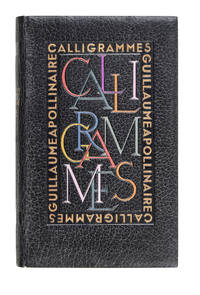
1918#26<p>Guillaume Apollianire</p><p>Calligrammes. Poèmes de la paix et de la guerre 1913–1916. Ondes – Étendards – Case d'Armons – Lueurs des tirs – Obus couleur de Lune – La Tête étoilée.<br />With a portrait of the author by Pablo Picasso wood-engraved by R. Jaudon.<br /><br />Paris Mercure de France 1918.<br /><br />Binding signed by Paul Bonet. Full black morocco. On each cover a rectangular frame 1 to 2.5 cm wide is blind-tooled and bears the title and author's name inlaid in beige morocco; at the center of the upper cover Calligrammes in large interlaced letters inlaid in red green blue mauve pink beige and orange; at the center of the lower cover Apollinaire inlaid in the same manner. Smooth spine with two blind-stamped bands gilt title top edge gilt beige paper doublures and endleaves. Original beige wrappers printed in black and red and spine preserved. Half black morocco chemise and slipcase. Carnets no. 529 and plates 171 and 183.<br /><br />First edition. One of 33 copies on vat-made wove paper no. 35 the only deluxe issue after 4 copies on Japan paper and 3 copies on China paper not for sale. With the second portrait of the author by Picasso etched by R. Jaudon.<br /><br /><strong>A magnificent copy superbly bound by Paul Bonet who wrote of it: "One of my finest bindings of Calligrammes."</strong><br /><br />Paul Bonet executed this binding between July and November 1941. He produced 15 bindings on the first edition of Calligrammes. The first dates from 1931; this is the fifth. It was exhibited at the Salon des Artistes Décorateurs in 1942 and at the Librairie Jean Loize in 1949.<br /><br />In his Carnets Bonet noted of this binding: "One of my finest bindings of Calligrammes." A demanding artist often critical of his own work he could justifiably take pride in this achievement.<br /><br />This binding achieves a perfect balance between restraint and freedom. The risk with this title—where the poet Guillaume Apollinaire himself plays with typography arranging the words of his poems in inventive visual forms—is to fall into imitation or excess.<br /><br />With remarkable subtlety Bonet plays on color and on the arrangement of the letters of the title and the author's name which intertwine and overlap at the center of the covers while remaining strictly framed within a blind-tooled rectangular panel where the title and author are repeated.<br /><br />The color chosen for this typography is the same beige as that of the original wrappers echoed in the doublures and endleaves whose very texture recalls the cover.<br /><br />This superb and highly intelligent binding by Paul Bonet once again demonstrates not only his immense talent but also his deep understanding of the spirit of the works he adorned.</p> Mercure de France
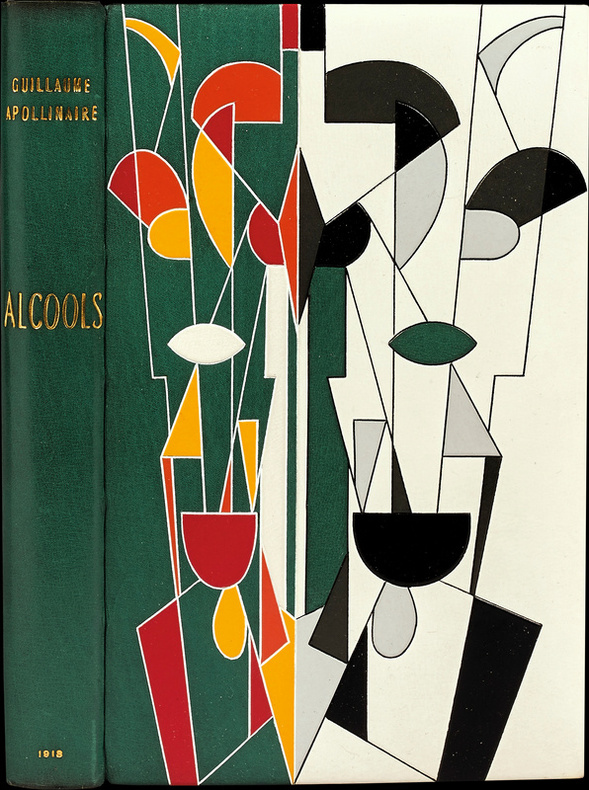
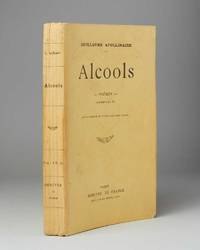
LCS-17983Édition originale du premier recueil de poèmes d’Apollinaire. Paris, Mercure de France, 1913. In-12 de 1 f. bl., faux-titre, titre, texte des pp. 7 à 200, 2 ff. de table, achevé d’imprimer, 1 f. blanc. Dans une riche reliure signée de Paul Bonet datée de 1962, couverture bi-partie, un tiers en box vert, deux tiers en box blanc, séparés verticalement. Un élégant décor vertical en box cache la séparation des peaux : ce décor abstrait est mosaïqué par de petites pièces où alternent le noir, le gris, le rouge, l’orange et le jaune. De chaque côté de ce motif sont mosaïquées de façon symétrique des petites formes géométriques variées : tons chauds (rouge, orange, jaune et blanc) sur le fond vert, et tons froids (noir, gris et vert) sur le fond blanc. Les deux plats sont ornés du même décor, de façon symétrique par rapport à l’axe du dos ; le box blanc est donc à droite sur le premier plat et à gauche sur le deuxième. Les doublures sont en daim blanc, les gardes en daim vert. Tranches dorées, couvertures spéciales de teinte brique conservées. Chemise de demi-maroquin vert à bandes et étui vert. Dimensions de la reliure : 184 x 115 mm.
1913LCS-17983<p><strong>Unique copy specially printed for the printer Arrault.</strong></p><p><strong>From <em>C. Eluard</em>'s library.</strong></p><p>12mo 184 x 115 mm of 1 bl. l. half-title title text from pp. 7 to 200 2 table ll. imprint 1 bl. l.</p><p>In a rich binding signed Paul Bonet dated 1962 two-part cover a third in green box-calf two thirds in white box-calf separated vertically. An elegant vertical decoration in box-calf hides the separation of the skins: this abstract decoration is patchworked with parts alternating black grey red orange and yellow. On each side of this motif varied geometric shapes are symmetrically patchworked small geometric shapes varied: warm tones red orange yellow and white on the green background and cold tones black grey and green on the white background. The two covers are decorated with the same decoration symmetrically with respect to the axis of the spine; the white box-calf is on the right on the first cover and on the left on the second. The doublures are in white suede the endpapers in green suede. Gilt edges special wrappers in brick color bound in. Green striped half-morocco folder and green case.</p><p>Original edition of the first collection of Apollinaire's poems.</p><p>The collection is composed of texts mostly scattered in various magazines and which offer the mixed reflection of the poetry of Apollinaire between 1898 and 1912.</p><p>During the proofreading the poet systematically suppressed any punctuation of his texts which was considered an important innovation and was strongly criticized; "<em>The very rhythm of the cutting of the verses is the true punctuation"</em>. Apollinaire explained in 1913. <em>Collection littéraire Lagarde et Michard</em> 20th century p.41 <em>Histoire de la Littérature Française</em> Hatier XXe siècle p.86.</p><p>Published after the break of Apollinaire's liaison with the painter Marie Laurencin this work assured the poet's glory and exerted a considerable influence on the poetry of the first half of the century.</p><p>"In Alcools Apollinaire's poetry reaches his highest and purest form so much one feels sincerity authenticity in the emotion even in pieces that may seem an artificially funny or pure caprice of fantasy". <em>Dictionnaire des uvres</em> I p. 75.</p><p>"The universe of " Alcools "is a universe of flight of distance of disappearance: it is the water that flows the noises that die the love that is undone the beings that pass the time which separates us from ourselves . Gravity tenderness irony verbal play compose the multiple face of poetry ".</p><p><em>"The universe of" Alcools " is a universe of flight of distance of disappearance: it is the water that flows the noises that die the love that is undone the beings that pass the time which separates us from ourselves . Gravity tenderness irony verbal play compose the multiple face of poetry ".</em></p><p>This copy is unique as it is preserved in its special original wrappers in brick color bearing printed at the bottom of the first cover underlined and framed in black the following notice: <em>"Collection particulière de l'imprimerie E. Arrault et Cie. Cet exemplaire ne peut être vendu."</em></p><p>It was indeed at <em>E. Arrault et Cie</em> in Tours that the edition was printed while the wrapper was not printed by this publishing house but at Poitiers at G. Roy's; it is the yellow wrapper that one knows bearing the mention: "<em>avec un portrait de l'auteur par Pablo Picasso</em>". This mention does not appear on the wrapper of this copy nor the portrait of course next to the title page.</p><p>Arrault's printing company thus made this wrapper for her own archives' copy which stands today as an exceptional bibliophilic curiosity.</p><p>The sumptuous binding of this unique copy was made by Paul Bonet in 1962. This renowned binder used his favorite technique patchworking to which he gave a new vitality by creating a subtle opposition between skins with extremely varied shades and shapes.</p><p>Paul Bonet explained in 1933.</p><p><em>"My bookbinding conception:</em></p><p><em>From the technical point of view: to use all the acquired techniques; constantly search for new constructions in the structure of the work; use all materials; not confine yourself to one process constantly search and innovate .</em></p><p><em>From the decorative point of view: as far as possible the decoration of a binding must be the decorative synthesis of the book; stay between abstract and concrete make the binding attempt to express the soul of the book . ".</em></p><p>Yves Devaux. <em>L'Univers de la bibliophilie</em> p. 406.</p><p>This binding effectively symbolizes in an abstract way the themes of water and fire of death and rebirth developed in <em>Alcools</em>. Paul Bonet expresses them here by the opposition of warm tones and cold tones by a subtle and abstract highly symbolic composition.</p><p>Unique copy preserved in its original wrappers specially designed for it in order to become the archives' copy of the Arrault printing company in 1913.</p><p>FRANCAIS</p><p><strong>Exemplaire unique spécialement imprimé pour l'imprimeur Arrault.</strong></p><p><strong>De la bibliothèque <em>C. Eluard</em>.</strong></p><p>In-12 de 1 f. bl. faux-titre titre texte des pp. 7 à 200 2 ff. de table achevé d'imprimer 1 f. blanc. Dans une riche reliure signée de <em>Paul Bonet</em> datée de 1962 couverture bi-partie un tiers en box vert deux tiers en box blanc séparés verticalement. Un élégant décor vertical en box cache la séparation des peaux : ce décor abstrait est mosaïqué par de petites pièces où alternent le noir le gris le rouge l'orange et le jaune. De chaque côté de ce motif sont mosaïquées de façon symétrique des petites formes géométriques variées : tons chauds rouge orange jaune et blanc sur le fond vert et tons froids noir gris et vert sur le fond blanc. Les deux plats sont ornés du même décor de façon symétrique par rapport à l'axe du dos ; le box blanc est donc à droite sur le premier plat et à gauche sur le deuxième. Les doublures sont en daim blanc les gardes en daim vert. Tranches dorées couvertures spéciales de teinte brique conservées. Chemise de demi-maroquin vert à bandes et étui vert.</p><p><br />Dimensions de la reliure : 184 x 115 mm.</p><p><br />Édition originale du premier recueil de poèmes d'Apollinaire.</p><p>Le recueil est composé de textes pour la plupart éparpillés dans diverses Revues et qui offrent le reflet mêlé de la poésie d'Apollinaire entre 1898 et 1912.</p><p><br />Au cours de la correction des épreuves le poète a systématiquement supprimé toute ponctuation de ses textes procédé qui fut considéré comme une innovation importante et qui fut vivement critiqué ;</p><p>" <em>Le rythme même de la coupe des vers voilà la véritable ponctuation</em>. " expliquait Apollinaire en 1913. <em>Collection littéraire Lagarde et Michard</em> XXe siècle p. 41 ; <em>Histoire de la Littérature Française</em> Hatier XXe siècle p. 86.</p><p>Parue après la rupture de la liaison d'Apollinaire avec le peintre Marie Laurencin cette uvre assura la gloire du poète et exerça une influence considérable sur la poésie de la première moitié du siècle.</p><p>" Dans Alcools la poésie d'Apollinaire atteint sa cime la plus haute et la plus pure tant on sent de sincérité d'authenticité dans l'émotion même dans les morceaux qui peuvent paraître d'une drôlerie artificielle ou relevant du pur caprice de la fantaisie ". <em>Dictionnaire des uvres</em> I p. 75.</p><p>" <em>L'univers d' " Alcools " est un univers de fuite d'éloignement de disparition : c'est l'eau qui coule les bruits qui meurent l'amour qui se défait les êtres qui passent le temps qui nous sépare de nous-mêmes. La gravité la tendresse l'ironie le jeu verbal composent le visage multiple de la poésie</em> ".</p><p>Cet exemplaire est unique car il est conservé dans ses couvertures spéciales d'origine de teinte brique portant imprimée au bas du premier plat soulignée et encadrée de noir la mention suivante : " <em>Collection particulière de l'imprimerie E. Arrault et Cie. Cet exemplaire ne peut être vendu</em> ".</p><p>C'est en effet chez <em>E. Arrault et Cie</em> à Tours que fut imprimé l'édition tandis que la couverture ne fut pas imprimée par cette maison mais à Poitiers chez G. Roy ; c'est la couverture jaune que l'on connait portant la mention : " <em>avec un portrait de l'auteur par Pablo Picasso</em> ". Cette mention ne figure par sur la couverture du présent exemplaire non plus que le portrait bien entendu en regard de la page de titre.</p><p><br />L'imprimerie Arrault fit donc tirer cette couverture pour son propre exemplaire d'archives qui se présente ainsi aujourd'hui comme une curiosité bibliophilique exceptionnelle.</p><p>La somptueuse reliure de cet exemplaire unique fut réalisée par Paul Bonet en 1962. Ce relieur renommé utilisa ici sa technique de prédilection le mosaïquage auquel il donna une vitalité nouvelle en créant une opposition subtile entre des peaux aux tons et aux formes extrêmement variés.</p><p>Paul Bonet expliquait d'ailleurs en 1933.</p><p>" <em>Ma conception de la reliure :</em></p><p><em>Au point de vue technique : me servir de tous les acquis ; rechercher constamment de nouvelles constructions dans la structure du corps d'ouvrage ; employer tous les matériaux ; ne pas se borner à un procédé chercher et innover sans cesse.</em></p><p><em>Au point de vue décoratif : dans la limite du possible le décor d'une reliure doit être la synthèse décorative du livre ; se tenir entre l'abstrait et le concret faire en sorte qu'une reliure tente d'exprimer l'âme du livre.</em> ".</p><p>Yves Devaux. <em>L'Univers de la bibliophilie</em> p. 406.</p><p><br />Cette reliure symbolise effectivement de façon abstraite les thématiques de l'eau et du feu celle de la mort et de la renaissance développées dans <em>Alcools</em>. Paul Bonet les exprime ici par l'opposition des tons chauds et des tons froids par une composition subtile et abstraite hautement symbolique.</p><p>Unique exemplaire conservé dans ses couvertures d'origine spécialement conçues pour lui afin de devenir l'exemplaire d'archives de l'imprimerie Arrault en 1913.</p> Mercure de France.
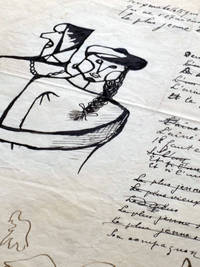
1909A1<p><strong>APOLLINAIRE Guillaume 1880-1918</strong></p><p>First draft manuscript for the poem "Le Voyageur" from the poem collection <em>Alcools</em> N.p.n.d c. 1909-1910 2 p. in-4to black ink multiple corrections. Fold marks very slight missing bit on top right corner without affecting the text some small tears on left hand margin.</p><p><strong>First draft unpublished manuscript with multiple corrections for "Le Voyageur"</strong><strong> one of the most beautiful and important poems of the <em>Alcools</em> collection. </strong></p><p><strong>Apollinaire has drawn amongst various sketches of animals </strong><strong>a superb cubist portrait representing two sailors.</strong></p><p><strong>The oldest and only manuscript of this poem still in private hands. </strong></p><p>This document contains two poems or draft poems. The poem on the verso is the declension of <u>twenty-seven verses</u> that develop the adventures of two sailors verses that constitute the heart of the famous poem "Le Voyageur" first published in the journal <em>Les Soirées de Paris </em>1912 then in <em>Alcools</em> 1913.</p><p>On the front side are six verses that seem distantly related to the poem "L'Arbre" from the <em>Calligrammes </em>collection 1918.</p><p><strong><u>An in-depth immersion in the poet's creative process</u></strong></p><p>Any lover of Apollinaire's poetry immediately identifies these verses:</p><p><em><strong>Deux matelots qui ne s'étaient jamais quittés</strong></em></p><p><em><strong> Deux matelots qui ne s'étaient jamais parlé</strong></em></p><p><em><strong> Le plus jeune en mourant tombe sur le côté</strong></em></p><p><em><strong> L'ainé portait au cou une chaîne de fer</strong></em></p><p><em><strong> Le plus jeune mettait ses cheveux blonds en tresse</strong></em></p><p>In its first draft this part of the poem seems to have nearly found its final form except that in the published version "tombe" fall is put in the past "tomba" fell.</p><p><em>Alcools </em>was composed at the junction between symbolism and the avant-garde as indicated by the mention "1898-1913" on the title page of the collection. We recognize in the poem "Le Voyageur" this eclecticism especially remarkable in the amalgamation of regular verses and free verses the respect of certain classical rules mixed with poetic licenses. Thus the dates fit perfectly with this period of transgression for some renewal for others of the poetic canon.</p><p>We can date this sequence of twenty-seven verses thanks to the drawings that surround it. The link between the main drawing and the verses is evident from the subject the ink and the insertion of the drawing into the text. The main drawing of Cubist style illustrates how Apollinaire drew in 1909-1910. The poet and Pablo Picasso leader of Cubism then met regularly. It is therefore possible to date these verses from the same period. It should also be noticed that the sketch representing a dromedary strongly resembles a sketch on the sidelines of the poem's proofs "Dromadaire" present in <em>Bestiaire</em> 1911 and dated 1910. This date is also confirmed by the two polichinelles identical to a polichinelle drawn in the margin of a manuscript of the poem "Vendémiaire" dated 1909 and today kept at the Bibliothèque nationale de France. Finally the Complete Works of the Pléiade collection mention a statement by Fernand Fleuret stating that Apollinaire and himself who had met in 1909 had fun improvising as a walking in the street when they left the Bibliothèque nationale and this poem was composed between rue de Richelieu and rue Notre-Dame de Lorette.</p><p>The five verses in question form the heart of the poem "Le Voyageur" in that they are taken up as a chorus. They naturally summon the theme of travel a theme that nourishes the entire text while renewing the topos of reverie of the quest for identity.</p><p>The adventures told in this poem are not without echoing Apollinaire's own life who transposes himself into a traveler whom he questions as if to understand himself. This is how the "Two sailors who had never left each other" form a central point a point of reference within the poem.</p><p>The drawing of the two sailors attached to the text reminds us of a photograph of the poet and his younger brother as children in Bologna. Apollinaire's confession is remembered in a letter addressed to Henri Marineau on July 19 1913 "<em>Each of my poems is a commemoration of an event in my life. And most often it is about sadness</em>" the parallel between photography and drawing emerges naturally: One of the sailors drawn carries a chain and the other a braid as in the verses. This is how Guillaume associates with Wilhelm travels with him lives with him. or simply inhabits him. The drawings and verses therefore complement each other perfectly.</p><p>The verses on the front side on the other hand are older than those on the back; they may date from the time when Apollinaire worked at 65 rue de la Victoire the address appears on the header at the Banque centrale de crédit mobilier et industriel between 1903 and 1904. This is evidenced by the spelling as well as the more classic style of the verses. Not appearing in any of the poet's published works they are unpublished. Nevertheless the themes of Norwegian ships and Finland can also be found in the poem "L'Arbre" in Calligrammes 1918 but this is the only distantly related between the two poems.</p><p>References: Apollinaire. <em>Œuvres poétiques</em> <em>complètes</em>. Bibliothèque de la Pléiade p. 1053 – <em>Les dessins de Guillaume Apo</em><em>llinaire</em> Claude Debon et Peter Read Buchet-Chastel 2008 pp. 88 et 96. – Sur les " deux matelots " " Quatre notes par Madeleine Boisson " Revue <em>Que Vlo-Ve</em> juillet-décembre 1985 n° 15-16 pp. 6-10.</p>
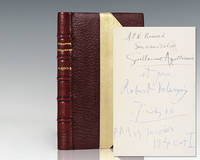
1913128083Paris: Mercure de France 1913. First edition of Apollinaire's first collection of poems signed by him and Pablo Picasso. Octavo bound in three quarter morocco with gilt titles and raised bands to the spine patterned endpapers frontispiece portrait of the poet by Pablo Picasso. Association copy inscribed by both Apollinaire and Pablo Picasso on front free endpaper "A A P.N. Roinard son admirateur Guillaume Apollinaire" and "et pour Robert Valançay Picasso Paris Janvier 1940 et I." Apollinaire has also made five corrections to the text in ink on pages 71 77 92 110 and 189. The recipient of Apollinaire's inscription Paul-Napoléon Roinard was a French libertarian painter and poet whom Apollinaire befriended in 1903 and considered "one of the most powerful precursors of the new poetry." Apollinaire dedicated his poem Le Brasier included in the present volume on p. 129 to Roinard. The recipient of Picasso's inscription Robert Valançay was a poet translator and literary critic who worked with and admired many of the artists and poets of the surrealist group. He published two major volumes of poetry but was most appreciated and sought after for his translations. He was considered the official translator of Max Ernst and Hans Arp. In near fine condition. Original wrappers bound in. A remarkable association copy linking four major figures of the literary and artistic avant-gardes of the 20th century. French poet playwright short story writer novelist and art critic Guillaume Apollinaire is considered one of the foremost poets of the early 20th century as well as one of the most impassioned defenders of Cubism and a forefather of Surrealism. At the turn of the 20th century he became one of the most popular members of the artistic community of Paris both in Montmartre and Montparnasse. His friends and collaborators in that period included Pablo Picasso Henri Rousseau Gertrude Stein Max Jacob André Salmon André Breton André Derain Faik Konitza Blaise Cendrars Giuseppe Ungaretti Pierre Reverdy Alexandra Exter Jean Cocteau Erik Satie Ossip Zadkine Marc Chagall Marcel Duchamp and Jean Metzinger. He is credited with coining the term "Cubism" in 1911 to describe the emerging art movement the term Orphism in 1912 and the term "Surrealism" in 1917 to describe the works of Erik Satie. Mercure de France hardcover
1911182771Paris: Deplanche 1911. One of the most important French illustrated books of the 20th century First edition one of 91 copies on Hollande paper from a total edition of 120 copies only signed by Apollinaire and Dufy as issued; the other 29 copies were on japon. This copy is additionally inscribed on the front free endpaper to a musician and music publisher "a monsieur Georges Vriamont cordialement Raoul Dufy". It is rare in the original binding. Apollinaire conceived the idea for the book after seeing wood engravings of animals made by Picasso in 1906. He turned to Dufy to create these striking full-page woodcuts his first published and most important illustrations. The more common second edition of 1918 reproduced the woodcuts in a smaller and less impressive format. There were a further two copies of this title printed hors commerce destined for dépôt légal with impressions of the cancelled blocks "rayées au couteau" scratched with a knife. Folio. Title page printed in red and black 30 woodcuts and 5 ornaments by Dufy in black. Original limp vellum wrappers edges untrimmed. Housed in a custom marbled blue chemise and slipcase. A few spots of foxing to endpapers offsetting from woodcuts; joints of chemise just starting: a near-fine copy. Castleman A Century of Artists' Books p. 119; The Artist & the Book 1860-1960 91. hardcover
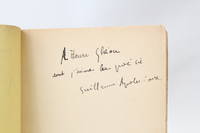
191371213Paris: Mercure de France 1913. Fine. “To Henri Ghéon whose poetry I love Guillaume Apollinaire” Mercure de France Paris 1913 11.50 x 18.50 cm broché First edition one of the first-issue copies press-numbered from a total limitation of just 23 deluxe copies on Holland paper. Illustrated with a frontispiece portrait of Guillaume Apollinaire by Pablo Picasso. Spine sunned with discreet restorations.Our copy is preserved in a red half morocco chemise spine with five raised bands date lettered at the foot paper-covered boards matching paper slipcase edged in red morocco the whole signed by Boichot. Rare signed autograph inscription by Guillaume Apollinaire: « à Henri Ghéon dont j'aime la poésie Guillaume Apollinaire ». Our copy further contains five manuscript corrections in ink by Apollinaire on pages 71 77 92 110 and 189. Also included is an autograph satirical quatrain by Apollinaire composed two years earlier offering a caustic critique of René Fauchois's mediocre play 'Rivoli' devoted to Napoleon. Apollinaire presented this copy to Henri Ghéon literary critic for La Nouvelle Revue Française. The poet took care to correct himself the typographical errors still present in this very first edition corrections likewise found in other presentation and review copies distributed by the author. Upon receiving his copy Ghéon devoted an article to Alcools «Alcools par Guillaume Apollinaire» Nouvelle Revue Française no. LVI 1 July 1913 describing the collection as a «démarche aventureuse». Presentation copies of this work inscribed by Apollinaire are rare and highly sought after. The small autograph satirical quatrain by Apollinaire composed two years earlier offers a caustic critique of René Fauchois's mediocre play 'Rivoli' devoted to Napoleon. Although it makes no claim to the poetic ambition of Alcools the poem nevertheless shares with that celebrated collection several features that illuminate the genesis of Apollinaire's masterpiece. Published under the pseudonym « Montade » in the Mercure de France of April 1911 with five commas the manuscript of the poem is written entirely without punctuation just like the avant-garde poems of Alcools. The very form of this brief poem reveals Apollinaire's curiosity and his constant search for the renewal of poetic expression as evidenced by the introductory note accompanying its publication in the Mercure: « Chantecler a été l'occasion pour les poètes français de reprendre un genre délaissé l'épigramme. . Le Rivoli de M. Fauchois a aussi inspiré des épigrammes. En voici deux qui sont bien tournés. L'une a été insérée dans l'Intransigeant :Après Beethoven Amen ! Après Rivoli au lit !La seconde parce qu'il y a plus de ruelles court les brasseries :Le grand Napoléon au jour de Rivoli Avait fait par ma foi une belle trouvaille Inutile vraiment puisque partout on lit Qu'à l'Odéon Fauchois a perdu la bataille » One also notes the poet's own assessment of his work and his desire for a poetry that wanders freely through the streets and cafés liberated from the constraints of print punctuation and formal rigidity much like the cascading calligraphy of these handwritten verses composed nine years before Calligrammes. Mercure de France hardcover
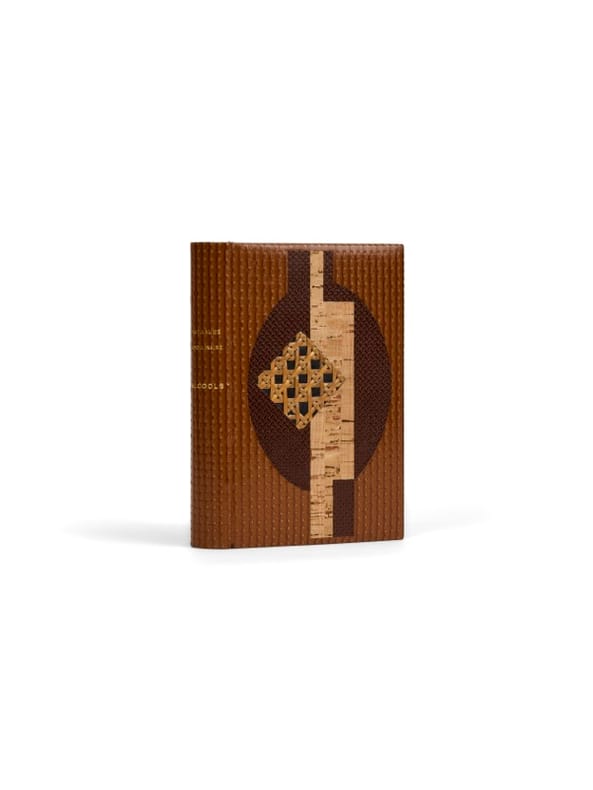
191332261Remarquable reliure cubiste de Leroux Paris, Mercure de France, (20 avril) 1913. 1 vol. (115 x 180 mm) de 204 p., [1] et 1 f. Veau havane tressé, premier plat orné d'un décor mosaïqué inspiré d'une composition cubiste composé d'une pièce de box marron tressé, d'une bande verticale de liège et d'une pièce carrée d'osier canelé, titre doré, tranches dorées sur témoins, contreplats bords à bords du même veau, gardes de box havane, couvertures et dos conservés, chemise et étui bordé (reliure signée de Georges Leroux, 1971). Edition originale. Exemplaire du premier mille (n° 578), après 23 exemplaires sur Hollande. Frontispice de Picasso : un portrait cubiste de l'auteur. Envoi signé : «A Madame Lemaistre, avec les hommages et le souvenir très cordial de Guillaume Apollinaire». L'exemplaire comprend sept corrections à l'encre de la main d'Apollinaire, aux pages 71,77, 86, 92, 110 et 189 (2 corrections) - là où l'on en trouve généralement cinq, quand elles sont là. En fin, sont reliées neuf gravures de Marcoussis dont huit sont signées de l'artiste : il s'agit des épreuves du portrait d'Apollinaire, , de 5 états de la planche 9 (Crépuscule), de 2 états de la planche 31 (A la santé) et de la justification de l'ouvrage de Marcoussis (exemplaire n° 2).
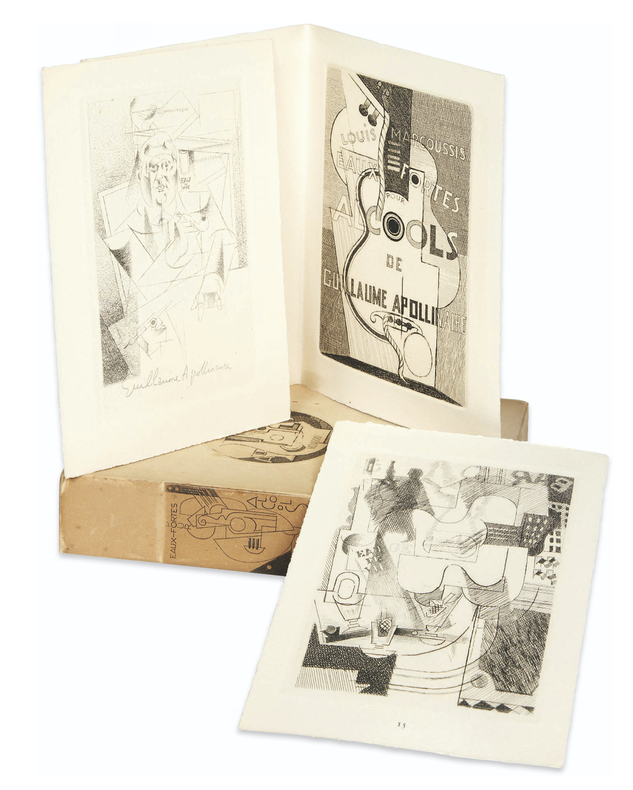
32261Paris Mercure de France 20 avril 1913. 1 vol. 115 x 180 mm de 204 p. 1 et 1 f. Veau havane tressé premier plat orné d'un décor mosaïqué inspiré d'une composition cubiste composé d'une pièce de box marron tressé d'une bande verticale de liège et d'une pièce carrée d'osier canelé titre doré tranches dorées sur témoins contreplats bords à bords du même veau gardes de box havane couvertures et dos conservés chemise et étui bordé reliure signée de Georges Leroux 1971. Edition originale. Exemplaire du premier mille n° 578 après 23 exemplaires sur Hollande. Frontispice de Picasso : un portrait cubiste de l'auteur. Envoi signé : « A Madame Lemaistre avec les hommages et le souvenir très cordial de Guillaume Apollinaire ». L'exemplaire comprend sept corrections à l'encre de la main d'Apollinaire aux pages 7177 86 92 110 et 189 2 corrections - là où l'on en trouve généralement cinq quand elles sont là. En fin sont reliées neuf gravures de Marcoussis dont huit sont signées de l'artiste : il s'agit des épreuves du portrait d'Apollinaire de 5 états de la planche 9 Crépuscule de 2 états de la planche 31 A la santé et de la justification de l'ouvrage de Marcoussis exemplaire n° 2. Recueil dionysiaque teinté de lyrisme rimbaldien cette oeuvre-manifeste s'attache au renouvellement de l'écriture poétique. À cet égard Alcools - primitivement intitulé « Eau-de-vie » - propose une exploration des divers registres poétiques : de l'élégie au vers libre Apollinaire tout en s'inscrivant dans la tradition du lyrisme traditionnel amours contrariées fuite du temps relectures de mythes anciens parvient à inscrire ce recueil dans la réalité du monde moderne où sa poésie dérouta lecteurs et critiques à sa parution par son absence de ponctuation qu'il justifia ainsi : « je ne l'ai supprimée que parce qu'elle m'a paru inutile et elle l'est en effet le rythme même et la coupe des vers voilà la véritable ponctuation et il n'en est point besoin d'une autre » lettre à Henri Martineau. Rapellons qu'en 1934 Louis Marcoussis donnera une série d'eaux-fortes pour Alcools dans un tirage unique à 98 exemplaires sur vélin d'Arches ; elle était destinée à orner une édition prévue à la Nouvelle Revue française mais qui ne fut jamais publiée. Bel exemplaire dans une admirable reliure cubiste de Georges Leroux. L'exemplaire est catalogué sous cette forme au catalogue n° 5 de la librairie « Les Mains libres » de Jean Petithory alors qu'il vient tout juste d'être établi par Leroux. L'exemplaire est ensuite passé en vente à Berne Kornfeld juin 1976 n° 249 adj. 16 000 FS. L'exemplaire est cité dans le tome 3 de la Correpondance générale E216 reliure décrite. S. Millet Marcoussis. L'oeuvre gravé 1991 110-149 ; J. Lafranchis Louis Marcoussis 1961 112-148. ; Apollinaire OEuvres poétiques Bibliothèque de la Pléiade 1965 p. 1190 n° 40 ; Correspondance générale Honoré Champion tome III p. 767. Paris, Mercure de France, (20 avril) 1913. 1 vol. (115 x 180 mm) de 204 p., [1] et 1 f. Veau havane tressé, premier plat orné unknown
191321245921913. Lyons: E. Arrault et Cie for Paris: Mercure de France. 1913. 8vo. Publisher's printed wrappers with beige caduceus and winged helmet device to upper cover; pp. 204 2 colophon blank; with half-title and lithographic frontispiece portrait by Pablo Picasso with tissue guard winged helmet device to title; small chip to lower cover slight creasing to spine a few minute chips to spine subtly repaired text block slightly coming away from spine at head of last few quires; sporadic light foxing some browning to last 2 ff.; else a very good copy partially uncut.Rare first edition of this pivotal collection of poems by Apollinaire instrumental in cementing his reputation with a striking Cubist frontispiece portrait of the author by his friend Picasso our copy in the original printed wrappers.Born Wilhelm Apollinaris Kostrowicki in Rome to a Polish-Lithuanian mother Guillaume Apollinaire 1880-1918 moved to Paris c. 1898-1900 where he became a pioneer in Cubist and Modernist circles befriending the likes of Picasso Matisse Rouveyre Braque Duchamp and Metzinger coining the term 'Surrealism' in 1917 seven years before the emergence of Breton's Manifesto.Apollinaire had published his first volume of poetry Le Bestiaire in 1911 but it is Alcools - the first work in which the poet chose to abandon punctuation entirely - that his reputation rests along with his typographically experimental Calligrammes of 1918. After Apollinaire had added the opening poem 'Zone' at the last minute and changed the name of the collection from Eau de Vie to Alcools in November 1912 printing was completed on 20 April 1913 in a limited edition of 567 numbered examples nos. 1-23 on Hollande paper although certain examples 'of service de presse or those offered by the author have numbers over six hundred' as here. The copy sent by the author to Emile Verhaeren for example was no. 898 Decaudin Le dossier d' 'Alcools' 1996 p. 42 trans.; Apollinaire also sent copies to Andre Gide and Blaise Cendrars amongst others.Of the fifty poems contained here a third are dedicated to individual friends of Apollinaire's including Picasso 'Les fiancailles' Max Jacob 'Palais'; Andre Billy to whom Apollinaire sent copy no. 822 of Alcools 'L'emigrant de Landor Road'; the painter Andre Derain 'Rosemonde'; the art critic Felix Feneon coiner of the term 'Neo-Impressionism' 'L'ermite'; and the Cubist painter and printmaker Marie Laurencin Apollinaire's lover c. 1907-12. Of particular note are 'Le Pont Mirabeau' pp. 18-19 and 'Zone' pp. 7-17 the latter shifting between the first and second person and tracing a sunrise-to-sunrise walk through Paris in which the poet-narrator touches on Christianity Paris's Jewish district and immigrants as well as courtesans disillusionment and lost loves. 'Zone' also seemingly includes an allusion to Apollinaire's arrest in 1911 when he was falsely accused of stealing the Mona Lisa p. 14. The resulting week he spent in prison would become his inspiration for 'A la Sante' pp. 178-83.OCLC finds nine copies in North America Getty Harvard Indiana MoMa Northwestern NYPL Universite de Montreal UT Austin and Yale and only one in the UK BL.Connolly The Modern Movement 22. unknown
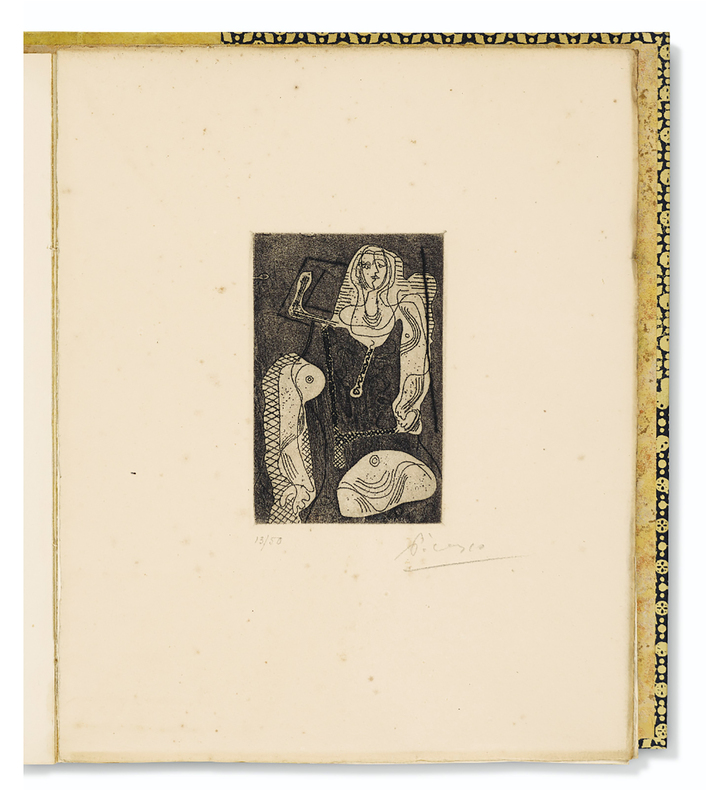
19262112Paris : Éditions « Cahiers d’Art », 1926 In-4 (283 x 228 mm), broché, non rogné, sous couverture rempliée de papier Japon. Encartée dans l’exemplaire: 1 EAU-FORTE ORIGINALE DE PABLO PICASSO TIRÉE SUR HOLLANDE, SIGNÉE AU CRAYON PAR L' ARTISTE ET JUSTIFIÉE 13/50. Note historique: Un des premiers livres sur Picasso, publié par la galerie "Cahiers d'Art" fondée cette même année. L'ouvrage est illustré de 4 reproductions de dessins dans le texte et de 42 planches, dont 2 en couleurs, reproduisant des œuvres de Picasso des années 1920-1926. La gravure accompagnant ce tirage de luxe, "Femme au fauteuil", fait partie d'une série réalisée en 1922-1923 dans laquelle les lignes superposées donnent à voir les figures à la fois de face et de profil. Le zinc est perdu. Un des 50 exemplaires sur Hollande van Gelder, les seuls avec les 6 sur Japon à comprendre la gravure originale, celui-ci le n°13 (quelques piqûres à la gravure et à la couverture). Chemise et étui d l'époque. ENGLISH DESCRIPTION: PABLO PICASSO (1881-1973) et CHRISTIAN ZERVOS (1889-1970) Picasso. Œuvres 1920-1926. Paris : Éditions « Cahiers d’Art », 1926 Deluxe copy, with the signed original etching. 4to (283 x 228 mm). Untrimmed, Japan wrappers. 1 etching on zinc by Pablo Picasso, on van Gelder Holland wove, signed in pencil by the artist and numbered 13/50. Several black and white reproductions of works by Picasso, 2 plates in color. One of 50 copies on van Gelder Holland wove, the only copies with the first 6 on imperial Japan to contain the etching, this copy numbered 13 (some spotting on the etching and the wrappers). Jacket and slipcase of the time. Référence: Goeppert-Cramer, Picasso, n°15 - Bloch, 56 - Baer-Geiser, 99/II.
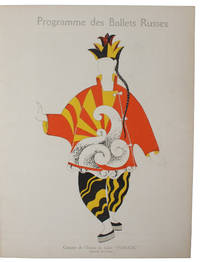
191760103Paris, Mai 1917. Folio. Original illustrated extra wrappers (with a picture by Picasso on the front and the décor for ""Baba Iaga"" on the back)"" original illustrated wrappers for ""Théatre du Chatelet"" (drawing by André Marty on front, and advertisements on back) in grey and red"" original illustrated coloured wrappers for ""Programme des Ballets Russes"" (front wrapper illustrated by Picasso with the Chinaman-costume from ""Parade""). A bit of soiling to the extra-wrappers and small professional restorations to upper front cover and top of spine (this barely noticeable) as well as to blank margin of back wrapper. Apart from that, an excellent and very well perserved copy with only slight browning to some leaves. Apart from the described wrappers and extra-wrappers, there are, in all, 24 leaves with -mostly photographic- illustrations (four of them with original hand-colouring on top) and 6 leaves of text.With the original errata-leaf laid in loose, stating also that the illustrations ""Femmes de bonne humeaur"" and ""Parade"" have been hand-painted by Carlos Socrate, after the designs of Bakst and Picasso, and that the front wrapper for ""Parade"" (the Chinaman) has been handpainted by Picasso himself.
191760103Paris Mai 1917. Folio. Original illustrated extra wrappers with a picture by Picasso on the front and the décor for "Baba Iaga" on the back; original illustrated wrappers for "Théatre du Chatelet" drawing by André Marty on front and advertisements on back in grey and red; original illustrated coloured wrappers for "Programme des Ballets Russes" front wrapper illustrated by Picasso with the Chinaman-costume from "Parade". A bit of soiling to the extra-wrappers and small professional restorations to upper front cover and top of spine this barely noticeable as well as to blank margin of back wrapper. Apart from that an excellent and very well perserved copy with only slight browning to some leaves. Apart from the described wrappers and extra-wrappers there are in all 24 leaves with -mostly photographic- illustrations four of them with original hand-colouring on top and 6 leaves of text.With the original errata-leaf laid in loose stating also that the illustrations "Femmes de bonne humeaur" and "Parade" have been hand-painted by Carlos Socrate after the designs of Bakst and Picasso and that the front wrapper for "Parade" the Chinaman has been handpainted by Picasso himself. <br/><br/><em>Scarce original printing of this seminal avantgarde-publication the May 1917 "Théatre du Chatelet"- publication that presents Diaghilev's "Ballets Russes" in Paris - here containing the entire separate publication mainly devoted to Jean Cocteau's groundbreaking ballet "Parade" - being one of the most important publications in the history of modern art. It is here in his presentation-article to "Parade" that Apollinaire coins the term "surrealism" and thus lays the foundation for the seminal cultural movement that Bréton came to lead. Furthermore the ballet "Parade" represents a historical collaboration between several of the leading artistic minds of the early twentieth century: Erik Satie Jean Cocteau Pablo Picasso Léonide Massine and Serge Diaghilev and is famous not only for its contents and its music but also for its magnificent costumes designed by Picasso the drawings of which are presented in the present publication for the first time - most famously the front cover for the "Parade"-programme which depicts the "Costume de Chinois du ballet "PARADE"/ Aquarelle de Picasso" an etching with original stunning pochoir-colouring hand-painted by Picasso himself!.It is the 1917 ballet "Parade" - the first of the modern ballets - originally presented for the first time in the present publication that marks Picasso's entry into the public and bourgeois institutions of ballet and theatre and presents Cubism on the stage for the first time. The present publication constitutes an outright revolution in the history of art theatre and ballet.Several variants of this spectacular publication exist but the one we have here is as original and complete as it comes containing the entire contents of the different variants. We not only have the extremely scarce and fragile dust-wrapper and the equally scarce illustrated coloured double-wrappers front: "Peinture de Picasso"; back: Décor de Larionow pour le ballet "BABA IAGA"" but also the entire 1917 "Théatre du Chatelet"-programme in original illustrated wrappers with the entire separate "parade"-issue -also entitled "Programme des Ballets Russes"- also in original illustrated wrappers with more than 20 leaves of photographic illustrations containing pictures of the actors and actresses also in their spectacular avant-garde-costumes Bakst's portrait of Leonide Massine Picasso's portrait of Stavinski Bakst's portrait of Picasso Picasso and Massine in the ruins of Pompei Picasso's drawings of a scene from "Parade" and of Massine as well as several mostly humorous advertisements. But more importantly we have apart from the above-mentioned famous Chinaman by Picasso in original pochoir-colouring the other famous etching by Picasso "Costume d'acrobate du ballet "Parade"/ Aquarelle de Picasso" also in original pochoir-colouring bright blue the seminal presentation-article by Apollinaire which coins the term "surrealism" see bottom of description for full translation of this groundbreaking preface the two "Les Femmes de Bonne Humeur"-figures by Bakst Constanza and Battista printed and heightened in gold pochoir the printed costume by Larionow "Les contes russes" which is with original bright red and blue pochoir-colouring and the "Le Mendiant"-costume by Bakst for "Parade" and of course the texts by Bakst on choreography and décor Georges-Michel Ballets Russes after the War as well as the texts for the various ballets listing the actors and their rôles as well as a resume of the plot. " "Tact in audacity consists in knowing how far we may go too far." Jean Cocteau poet writer and arts advocate made this statement in his 1918 manifesto The Cock and Harlequin. Cocteau in collaboration with Erik Satie and Pablo Picasso discovered "how far" to "go too far" in the circus-like ballet Parade-one of the most revolutionary works of the twentieth century. Parade incorporates elements of popular entertainment and uses extra-musical sounds such as the typewriter lottery wheel and pistol combining them with the art of ballet. Cocteau wrote the scenario for the one-act ballet and contracted the other artists. Satie wrote the score to the ballet first in a piano four-hands version and then in full orchestration while Picasso designed the curtain set and costumes. Later Léonide Massine a dancer with the Ballet Russes was brought in as the choreographer. Serge Diaghilev's Ballet Russes premiered the ballet Parade on May 18 1917. The program notes for the ballet were written by the poet Apollinaire. They became a manifesto of l'esprit nouveau or "the new spirit" which was taking hold in Paris during the early twentieth-century. Apollinaire described the ballet Parade as "surrealistic" and in doing so created a term which would develop into an important artistic school." Tracy A. Doyle Erik Satie's ballet PARADE p. 1.When the French poet and army officer Guillaume Apollinaire wrote the program notes For "Parade" he created the manifesto of the "l'esprit nouveau" - "the new spirit". Cocteau had called the ballet "realistic" but Apollinaire took it an important step further and described it as "surrealistic" thus coining a term that would soon develop into an important artistic movement. With Picasso Apollinaire had established the aesthetic principals of Cubism and was considered a leader in the European avant-garde. ENGLISH TRANSLATION OF APOLLINAIRE'S PROGRAMME NOTES TO "PARADE": "Definitions of Parade are blossoming everywhere like the lilac bushes of this tardy spring.It is a scenic poem transposed by the innovative musician Erik Satie into astonishingly expressive music so clear and simple that it seems to reflect the marvelously lucid spirit of France. The cubist painter Picasso and the most daring of today's choreographers Léonide Massine have here consummately achieved for the first time that alliance between painting and dance between the plastic and mimetic arts that is a herald of the more comprehensive art to come. There is nothing paradoxical about this. The Ancients in whose lives music played such an important role were totally unaware of harmony which constitutes the very basis of modern music. This new alliance - I say new because until now scenery and costumes were linked only by factitious bonds - has given rise in Parade to a kind of surrealism which I consider to be the point of departure for a whole series of Manifestations of the New Spirit that is making itself felt today and that will certainly appeal to our best minds. We may expect it to bring about profound changes in our arts and manners through universal joyfulness for it is only natural after all that they keep pace with scientific and industrial progress. Having broken with the choreographic tradition cherished by those who used to be known in Russia under the strange name 'balletomanes' Massine has been careful not to yield to the temptation of pantomime. He has produced something totally new-a marvelously appealing kind of dance so true so lyrical so human and so joyful that it would even be capable if it were worth the trouble of illuminating the terrible black sun of Dürer's Melancholy. Jean Cocteau has called this a realistic ballet. Picasso's cubist costumes and scenery bear witness to the realism of his art. This realism - or this cubism if you will - is the influence that has most stirred the arts over the past ten years. The costumes and scenery in Parade show clearly that its chief aim has been to draw the greatest possible amount of aesthetic emotion from objects. Attempts have often been made to return painting to its barest elements. In most of the Dutch painters in Chardin in the impressionists one finds hardly anything but painting. Picasso goes further than any of them. This is clearly evident in Parade a work in which one's initial astonishment is soon replaced by admiration. Here the aim is above all to express reality. However the motif is not reproduced but represented-more precisely it is not represented but rather suggested by means of an analytic synthesis that embraces all the visible elements of an object and if possible something else as well: an integral schematization that aims to reconcile contradictions by deliberately renouncing any attempt to render the immediate appearance of an object. Massine has Adapted himself astonishingly well to the discipline of Picasso's art. He has identified himself with it and his art has become enriched with delightful inventions such as the realistic steps of the horse in Parade Formed by two dancers one of whom does the steps of the forelegs and the other those of the hind legs. The fantastic constructions representing the gigantic and surprising features of The Managers far from presenting an obstacle to Massine's imagination have one might say served to give it a liberating impetus. All in all Parade will change the ideas of a great many spectators. They will be surprised that is certain; but in a most agreeable way and charmed as well; Parade will reveal to them all the gracefulness of the Modern movements a gracefulness they never suspected. A magnificent vaudeville Chinaman will make their imaginations soar; the American Girl cranking up her imaginary car will express the magic of their daily lives whose wordless rites are celebrated with exquisite and astonishing agility by the acrobatin blue and white tights." </em> unknown
EXE-236Avignon, 1917. Grand in-8°, dos et coins de maroquin noir, plats de toile grise; titre en italique doré sur le dos; tête dorée; non rogné; dos & couverture conservés; étui (P.L. Martin). Edition Originale. L'UN DES 10 EXEMPLAIRES SUR JAPON, après un exemplaire sur Chine. Enrichi D'UN ENVOI DE L'AUTEUR au Docteur Palazzoli. N.B. : Le docteur Palazzoli fut la personne que s’occupa de Guillaume Apollinaire à l’hôpital italien lors de sa trépanation. Reverdy et Apollinaire était alors très proche, nous pouvons donc voir cela comme un cadeau de remerciement de l'auteur au docteur.
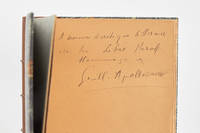
191878956Paris: Mercure de France 1918. Fine. Mercure de France Paris 1918 14.50 x 23 cm relié First edition a first impression copy numbered in the press. Binding in half brown morocco spine in five compartments gilt date at the foot geometric pattern paper boards and endpapers in the same paper top edge gilt wrappers and spine preserved in perfect condition binding signed by T. Boichot. Apollinaire's second major poetic work with bold graphic innovations and a portrait of Guillaume Apollinaire by Pablo Picasso as frontispiece. Some of the best war poems all languages combined are brought together in this collection alongside experimental works such as Les Fenêtres close to Cubism and La Jolie Rousse which were far ahead of their time Cyril Connolly Cent livres-clés de la littérature moderne n° 32. A beautiful copy on non-brittle paper which is unusual and a rare and surprising handwritten inscription signed by Guillaume Apollinaire: à monsieur le critique littéraire de La Libre Parole hommage de Guill. Apollinaire."" To the literary critic of La Libre Parole tribute by Guill. Apollinaire. Who could be the recipient of this inscription unnamed but addressed to a collaborator of the famous anti-Semitic newspaper founded by Édouard Drumont The ostensibly philo-Semitic position of Guillaume Apollinaire is well-known. In an 1899 letter he boasts to Toussaint Luca that he tried to provoke Henri Rochefort who was reading La Libre Parole by deploying L'Aurore in front of him but as the young Dreyfusard regrets without daring to engage the controversy. In 1902 he publicly marked his fraternity with the Jewish people with a new publication in La Revue blanche Le Passant de Prague"": I love Jews because all Jews suffer everywhere. Then in Alcools he will dedicate a poem to the Hebrew religion: ""La Synagogue"". But it is undoubtedly through his poem Le Juif latin published in L'Hérésiarque et Cie that Apollinaire poetically reveals the essence of his particular link with Judaism: that he shares the condition of eternal stranger the feeling of uprooting and the search for identity. It may therefore seem very surprising that this poet whose only trace of political commitment was in favor of Dreyfus dedicated his work to a La Libre Parole journalist even if he is a literary critic. And in fact La Libre Parole does not contain literary columns! A few months before the poet's death this laconic inscription thus proves to be a formidable and final scoff of poetic impertinence to political intolerance. Mercure de France hardcover
191878956Mercure de France | Paris 1918 | 14.50 x 23 cm | relié
1917642691917. Fine. circa 1917-1918 22.30 x 27.60 cm une feuille sous chemise et étui A remarkable autograph poem of youth by André Breton dedicated to Guillaume Apollinaire entitled «Décembre». 20 verses in ink on vergé d'Arches paper composed in December 1915. This manuscript was copied between March 1917 and the beginning of 1918. This poem is presented in a chemise and case with paper boards decorated with abstract motifs the spine of the chemise in green morocco pastedowns and endpapers of beige suede a sheet of flexible plexiglass protecting the poem case lined with green morocco piece of green paper with caption «poème autographe» to bottom of upper cover of case the whole by Thomas Boichot. Key poem of the author's pre-Dadaist period it formed part of the set of 7 manuscript poems by Breton known as coll. X. in the uvres complètes d'André Breton volume I in La Bibliothèque de la Pléiade Gallimard 1988 p. 1071. Thiese poems of his juvenilia are carefully copied out in black ink on watermarked vergé paper. The small collection was addressed to his circle of friends and writers most notably including Valéry Apollinaire Théodore Fraenkel and his brother in arms André Paris. They were later published in his first collection Mont de piété which appeared in June 1919 published by Au Sans Pareil established not long before by his friend René Hilsum. The precise dating of this set of autograph poems is made possible by the composition of the final poem in the set «André Derain» written on 24 March 1917 which provides a definitive terminus post quem. An earlier version of the poem «Age» dedicated to Léon-Paul Fargue appears in our collection under its original name «Poème». Dated by the author 19 February 1916 the day of his 20th birthday and composed 10 days previously according to his letters it was not retitled and reworked until its publication in July 1918 in Les Trois Roses. Judging by the similarities to things published before this last poem the seven autograph poems were probably written during 1917 or at the beginning of 1918 while Breton was doing his residency in Val-de-Grâce and where significantly he made the acquaintance of Louis Aragon. The poems that make up Mont de piété represent a rare and valuable insight into his youthful influences at the dawn of his joining the Dada movement and his discovery of automatic writing. Quite short and sometimes sibylline one detects Symbolist highlights borrowed from Mallarmé whom he rediscovered at poetry mornings in the théâtre Antoine and the Vieux-Colombier accompanied by his schoolfriend Théodore Fraenkel. During the first month of the War Breton also dedicated himself to Rimbaud plunging into Les Illuminations the only work he carried with him in the confusion and haste that followed the outbreak of war. From his readings of Rimbaud were born the poems «Décembre» «Age» and «André Derain» while he borrowed Apollinaire's muse Marie Laurencin to whom he dedicated «L'an suave». The author's poetic inheritance was particularly marked by Paul Valéry with whom he corresponded from 1914. Valéry played a considerable role in the writing of the poems of Mont de piété with the advice he gave the young poet. Admiring his disciple's audacity who addressed each of these poems to him he characterized the poem «Façon» 1916 thus: «The theme language scope meter everything is new in the style the manner of the future» Letter of June 1916 uvres complètes d'André Breton vol. I in La Bibliothèque de la Pléiade Gallimard 1988 p. 1072. These essential buds of Breton's youth were written between his seventeenth and twenty-third year. Taken by surprise in Lorient by the declaration of war he became a military nurse serving in several hospitals and on the front during the Meuse offensive. In Nantes he met Jacques Vaché who inspired him to undertake a project of collective writing as well as encouraging him to have illustrated the future col hardcover
194733821Paris 1947. 1st Edition. Hardcover. 1st Edition. Hardcover. First Edition ALCOOLS Apollinaire Guillaume. Signed by Robert West on the Illustration page in full as well on each of the 20 watercolour artworks. Size: 6 3/4" x 10"<br /> No markings. Red snake skin gilt stamped title on the front as well as the incredibly dynamic front and back gold block stamping. Patterned red black and brown decorative endpapers with the bindery label of René Kieffer Reliures. <br /> <br /> A fine example of this handsome collection of hand-lettered poems by Guillaume Apollinaire first published in 1913 which is considered one of the most important works of early 20th-century French literature in black red and green stamping accompanied by the 20 stunning watercolours of Robert West.<br /> <br /> A very important work especially so due to the extreme rarity of this edition. <br /> <br /> Some of the poems that are included: Clotilde Marizibill La Blanche Neige L'Adieu La Tzigane Saltimbanques Claire de Lune Chantre and more.<br /> Full list and photos upon request. hardcover
1934YQV-21In-8 (190 × 127 mm) de [6]-34-[4] feuillets ; en feuilles, sous étui-chemise de l’éditeur recouvert de papier crème et illustré de deux eaux-fortes.
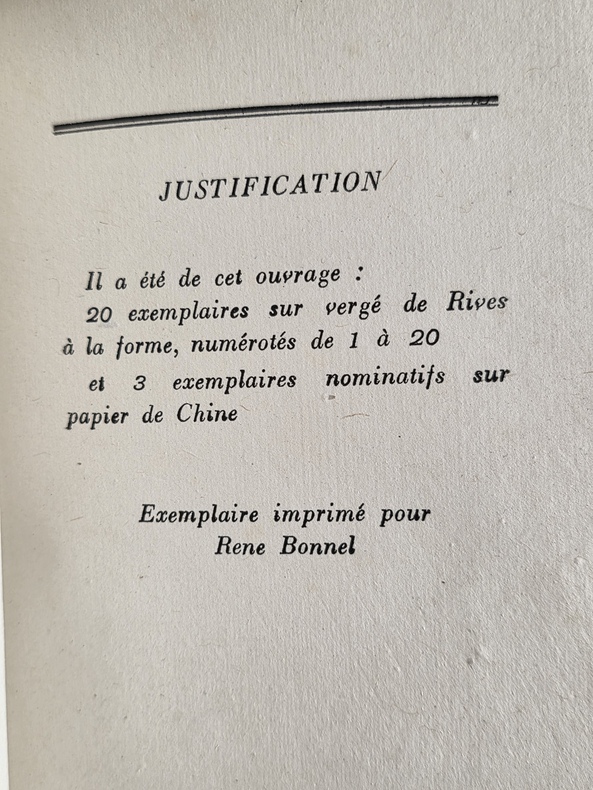
LRB_075Guillaume APOLLINAIRE (1880-1918) [attribué à ; mais en réalité Pascal PIA (1903-1979)]. LE VERGER DES AMOURS. Orné de six pointes sèches [de Foujita]. Monaco, 1924 [en réalité 1927]. Demi-maroquin bordeaux à coins [G. Huser]. 19,3 × 13,5 cm. Très rares rousseurs pâles. L’un des 3 exemplaires nominatifs sur papier de Chine, celui-ci au nom de René Bonnel, l’éditeur de l’ouvrage, contenant une suite en sanguine des pointes sèches de Foujita. Selon Pia, il s’agit de l’édition originale, publiée en 1927 par René Bonnel à 120 exemplaires sur Rives numérotés de 1 à 120 et 3 exemplaires nominatifs sur Chine. Il était particulièrement bien placé pour le savoir — l’un des exemplaires sur Chine est du reste à son nom. (Vente Nordmann, première partie, lot 316, reliure de Paul Bonet, 10200 € frais inclus). Nous ignorons la raison pour laquelle Pia ne fait aucune mention des exemplaires sur Japon que l’on rencontre parfois et que Dutel mentionne comme faisant partie d’une autre édition qu’il qualifie également d’originale (Supplément, 2586 bis). Devant ce mystère bibliographique, nous inclinons à penser, sinon que la présence d’un exemplaire de chacune de ces deux éditions s’impose dans toute bibliothèque, du moins qu’il est vraisemblable que l’édition comportant les trois exemplaires nominatifs sur Chine (l’un au nom du réel auteur du texte, Pascal Pia, le nôtre au nom de l’éditeur du volume, et le troisième probablement au nom de l’illustrateur, Foujita) soit « la bonne ». (Et, quoi qu’il en soit, les trois exemplaires sur Chine sont plus rares que les dix Japon…) Pia, Enfer, 1497 ; Dutel, 2587.
194544876Paris Editions Stock 1945 In-4 mont sur onglets, maroquin lavallire orn sur le premier plat d'une reproduction de la pointe sche figurant sur la couverture, imprime en noir sur une grande pice de vlin sertie d'un listel de box beige, dos sans nerfs; doublures et gardes de velours jaune d'or, tte dore, non rogn, couverture illustre. Chemise, tui (Alix).13 pointes sches de Mario Prassinos, dont une sur la couverture, un portrait-frontispice de l'auteur et 11 hors-texte. Tirage limit 370 exemplaires numrots. Un des 15 premiers (n1) sur vlin pur chiffon de Rives, accompagn d'un grand dessin original lgend au crayon La Rose de Hildesheim, dat et sign par l'artiste (correspondant l'illustration de la page 167).
1918962421918 4 pages in-8 à l'encre, chacune contrecollée sur une feuille de format in-4. Manuscrit de travail, avec corrections et ratures, de cette chronique parue dans la rubrique "La Vie anecdotique" du Mercure de France (16 mars 1918). La pénurie de tabac qui sévit en France, conséquence de la crise de 1917, sert de prétexte à ce récit délibérément provocant d’inspiration sado-masochiste."Dans une ville d’Italie quelques années avant la guerre, un de ces Allemands enrichis et sadiques qui traduisaient leurs imaginations grossières et compliquées en décors d’une banalité splendide me fit demander d’aller voir ses livres, sa collection de fétiches d’Océanie et d’Afrique et ses tableaux de Gauguin. Cet homme, dont le nom importe peu, cherchait à rivaliser en raffinement avec ce qu’il avait entendu dire de certains Anglais et en goût avec ce qu’il savait des Français. Parmi ses tableaux, il y avait quelques faux. Les fétiches avaient été choisis sans discernement. Quant à ses livres, je n’eus pas le temps de les regarder. On me fit passer dans un fumoir, où le parvenu allemand était enfoncé dans un fauteuil de cuir et fumait des cigarettes égyptiennes tandis qu’auprès de lui, nue, une fillette idéalement fine, attendait qu’après avoir tiré trois ou quatre bouffées, avant de la jeter, il éteignît sa cigarette sur les reins de la petite fille, dont la peau frémissait, et une brûlure tachait la blancheur du corps charmant que le vieil Allemand cynique torturait d’un air indifférent". Cette chronique a été reprise dans le recueil "Anecdotiques" paru chez Stock en 1926.
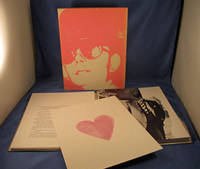
196822827New York: Tanglewood Press 1968. LIMITED DELUXE EDITION of 250 hand-numbered copies SIGNED by both the translator and artist and with Dine’s eight original glossy Pochoir plates signed by the artist and hand-numbered and laid in. Printed on Euroset offset paper. Illustrated throughout with black and white photographs and photo-collages plus the eight original numbered colour pochoir plates by Jime Dine with all tissue guards intact. 4to loose in printed chemise as issued within the publisher’s wrap of stiff paper covered in glassine and printed in black. In the original cloth covered slipcase with photographic image printed in hot pink. 128 pp. plus the eight additional plates. A very fine copy internally as new the glassine wrapper also fine and just a tad mellowed at the spine the slipcase very fresh and clean with very minor mellowing to the pink at the rear panel. SCARCE LIMITED EDITION OF ONLY 250 COPIES. This English edition of Apollinaire’s “Le PoÄte Assassiné†is one of the great works of the “Pop Art†movement created around one of the foundational works of surrealist literature. This edition is signed by both Ron Padgett and Jim Dine and includes eight original pochoir plates which are also hand-numbered and signed by the artist. <br> Padgett studied 20th-century French literature in Paris during 1965 and 1966. In 1962 Dine's work was included along with Roy Lichtenstein Andy Warhol Robert Dowd Phillip Hefferton Joe Goode Edward Ruscha and Wayne Thiebaud in the historically important and groundbreaking “New Painting of Common Objects†curated by Walter Hopps at the Norton Simon Museum. This exhibition is considered historically as one of the first "Pop Art" exhibitions in America. At a time of major social unrest and socio-political change the painters included began a great new movement shocking America and the art world in general and changing modern art for all time.<br> Tanglewood Press hardcover