Andre BRETON - (Guillaume APOLLINAIRE)Biblio.com
772 résultats
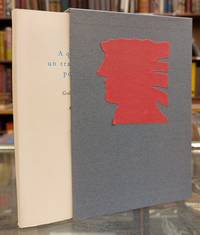
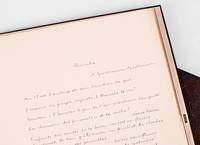
1917642691917. Fine. circa 1917-1918 22.30 x 27.60 cm une feuille sous chemise et étui A remarkable autograph poem of youth by André Breton dedicated to Guillaume Apollinaire entitled «Décembre». 20 verses in ink on vergé d'Arches paper composed in December 1915. This manuscript was copied between March 1917 and the beginning of 1918. This poem is presented in a chemise and case with paper boards decorated with abstract motifs the spine of the chemise in green morocco pastedowns and endpapers of beige suede a sheet of flexible plexiglass protecting the poem case lined with green morocco piece of green paper with caption «poème autographe» to bottom of upper cover of case the whole by Thomas Boichot. Key poem of the author's pre-Dadaist period it formed part of the set of 7 manuscript poems by Breton known as coll. X. in the uvres complètes d'André Breton volume I in La Bibliothèque de la Pléiade Gallimard 1988 p. 1071. Thiese poems of his juvenilia are carefully copied out in black ink on watermarked vergé paper. The small collection was addressed to his circle of friends and writers most notably including Valéry Apollinaire Théodore Fraenkel and his brother in arms André Paris. They were later published in his first collection Mont de piété which appeared in June 1919 published by Au Sans Pareil established not long before by his friend René Hilsum. The precise dating of this set of autograph poems is made possible by the composition of the final poem in the set «André Derain» written on 24 March 1917 which provides a definitive terminus post quem. An earlier version of the poem «Age» dedicated to Léon-Paul Fargue appears in our collection under its original name «Poème». Dated by the author 19 February 1916 the day of his 20th birthday and composed 10 days previously according to his letters it was not retitled and reworked until its publication in July 1918 in Les Trois Roses. Judging by the similarities to things published before this last poem the seven autograph poems were probably written during 1917 or at the beginning of 1918 while Breton was doing his residency in Val-de-Grâce and where significantly he made the acquaintance of Louis Aragon. The poems that make up Mont de piété represent a rare and valuable insight into his youthful influences at the dawn of his joining the Dada movement and his discovery of automatic writing. Quite short and sometimes sibylline one detects Symbolist highlights borrowed from Mallarmé whom he rediscovered at poetry mornings in the théâtre Antoine and the Vieux-Colombier accompanied by his schoolfriend Théodore Fraenkel. During the first month of the War Breton also dedicated himself to Rimbaud plunging into Les Illuminations the only work he carried with him in the confusion and haste that followed the outbreak of war. From his readings of Rimbaud were born the poems «Décembre» «Age» and «André Derain» while he borrowed Apollinaire's muse Marie Laurencin to whom he dedicated «L'an suave». The author's poetic inheritance was particularly marked by Paul Valéry with whom he corresponded from 1914. Valéry played a considerable role in the writing of the poems of Mont de piété with the advice he gave the young poet. Admiring his disciple's audacity who addressed each of these poems to him he characterized the poem «Façon» 1916 thus: «The theme language scope meter everything is new in the style the manner of the future» Letter of June 1916 uvres complètes d'André Breton vol. I in La Bibliothèque de la Pléiade Gallimard 1988 p. 1072. These essential buds of Breton's youth were written between his seventeenth and twenty-third year. Taken by surprise in Lorient by the declaration of war he became a military nurse serving in several hospitals and on the front during the Meuse offensive. In Nantes he met Jacques Vaché who inspired him to undertake a project of collective writing as well as encouraging him to have illustrated the future col hardcover
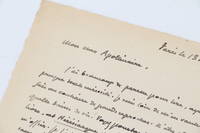
191083024Paris 1910. Fine. Paris 13 novembre 1910 14.50 x 19 cm une feuille Autograph letter from Paul Léautaud addressed to Guillaume Apollinaire. One page written in black ink with some crossed-out words. unknown
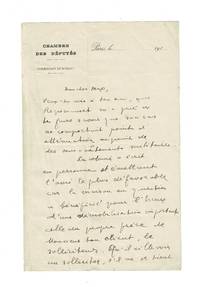
191875931Paris 1918. Fine. Paris s. d. ca 1918 13.30 x 21 cm 2 pages sur un feuillet Unpublished autograph letter signed by Guillaume Apollinaire addressed to Max Jacob. Two pages written in black ink on a sheet with the letterhead of the Chamber of Deputies. Folds inherent to mailing. Unpublished letter concerning the deputy Charles Régismanset then Director at the Ministry of Colonies: ""Veux-tu dire à ton ami que Régismanset m'a prié de te faire savoir que son cas ne comportait point d'atténuation au point de vue des sous-vêtements militaires."" ""La colonie a écrit en personne et émettant l'avis le plus défavorable car la maison en question a bénéficié pour l'heure d'une démobilisation importante."" ""These 'colonies' are hardly distant. He is seconded to Rue Oudinot to the office of Minister Henri Simon who was pleased to be able to assist a poet he had long admired. His duties are rather vague. Assigned to the Press Service he oversees the Bulletin d'Informations coloniales et étrangères occasionally contributing discreetly a task that leaves him sufficient freedom for his own work. His direct superior Charles Régismanset himself a writer calls upon him whenever a 'bushman' passing through might provide information on Bambara customs or Guinean witch doctors."" Pierre-Marcel Adéma Guillaume Apollinaire ""Viens tout de même me voir dirait le père Janvier qui doit pour le moins parler aussi bien que le père de Victor Hugo surtout viens avant janvier et toujours plus haut Excelsior viens j'ai quelque chose d'éditorial à te dire."" unknown
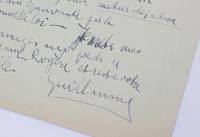
191383938s. l. Paris 1913. Fine. ""I will come to see you to speak to you about naturalization I am appalled by the new law"" s. l. Paris s. d. ca. juin 1913 15.70 x 24.50 cm une page sur un feuillet Unpublished autograph letter signed by Guillaume Apollinaire addressed to Jean Royère one page written in black ink on a sheet. Transverse folds inherent to posting. Very fine letter of thanks from poet to poet. ""I thank you for the admirable article you devoted to me. You have felt my soul like no one else."" Jean Royère had indeed written a laudatory article upon the publication of Alcools in the June 20 1913 issue of La Phalange: ""Here gathered in an 18mo of barely two hundred pages is almost the entire poetic work of Apollinaire. Fifteen years of poetry rest in this small volume. I therefore do not open it without almost a preconceived admiration. In poetry abundance means sterility and one only writes three volumes in a year through inability to devote one's life to a book. Apollinaire evidently will leave only one book of verse like Baudelaire and Mallarmé like Rimbaud: this is a considerable chance of immortality for the true poet is one who has this too rare gift of condensation."" "". I will come to see you in the coming days to thank you first and also to speak to you about naturalization I am appalled by the new law."" The poet here alludes to the Three Year Law dubbed the Barthou Law increasing the duration of military service from two to three years in view of preparing the French army for a possible war with Germany. If Apollinaire's biography prefers to focus on the publication of his works in this year 1913 the letters his mother addresses to her son show that the latter moves heaven and earth to avoid military service and be naturalized as quickly as possible: ""For your papers an Italian colonel attached to the ministry of war who was witness for your act of recognition had written to me once to give me the steps to follow so that you would be exempted from military service in Italy and for your French naturalization. I am going to write to him moreover to ask him to see to the Town Hall."" letter from Angelika Kostrowicka of July 12 1913. War would come soon and on August 3 1914 the day after mobilization the stateless poet would file a request for voluntary enlistment accompanied by a naturalization request. The latter would only be granted to him in 1916. An interesting letter written at the dawn of the Great War bearing witness to Guillaume Apollinaire's two passions: poetry and France. unknown
19742090202118101606Kadokawa Shoten Kadokawa Bunko 1974. Soft Cover. Fine. The book is in fine condition. Kadokawa Shoten Kadokawa Bunko paperback
19972081502112500588Paperback version first edition with cover Kawade Shobo Shinsha 1997. Soft Cover. Fine. Number of books: 1 Paperback version, first edition, with cover, Kawade Shobo Shinsha paperback
19742083002115901252Kadokawashoten 1974. Soft Cover. Fine. Number of pages: 238p Portrait size: 15cm Kadokawashoten paperback
19742083002115901230Kadokawashoten 1974. Soft Cover. Fine. Number of pages: 238p Portrait size: 15cm Kadokawashoten paperback
1982109540Fata Morgana 1982. Softcover. Near fine/No jacket. In French. #61/75cc signed by the artist Alecos Fassianos. Inside is a staple-bound booklet entitled "Apoppinaire et le Melodieux Ravisseur" by Willard Bohn the person who found this manuscript. Signed by Bohn. In a slipcase. Fata Morgana unknown
6208747260.Gpaperback. Good. Access codes and supplements are not guaranteed with used items. May be an ex-library book. paperback
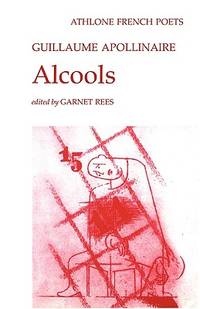
20141-3838145003Presses Académiques Francophones 2014. Paperback. New. 488 pages. French language. 8.66x5.91x1.10 inches. Presses Académiques Francophones paperback
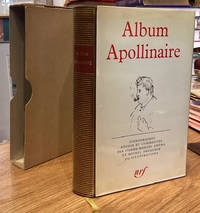
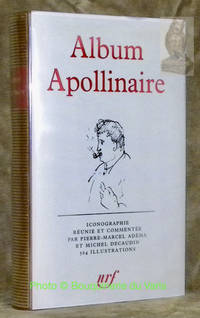
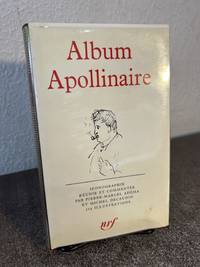
1971321820Paris: Bibliotheques de la Pleiade 1971. hardcover. fine. Profusely illustrated in black and white. 315 pages with text in French. 12mo gilt decorated flexible burgundy leather boards clear mylar wrappers with printed card inserts an plain cardboard slipcase. Paris: Gallimard/Bibliotheques de la Pleiade 1971. Fine.<br/> <br/> Bibliotheques de la Pleiade unknown
197175772Paris: Gallimard 1971. Small 8vo. French text. 315 pp. Publisher's full leather in acetate wrappers. In slipcase. Light discolouration to edges of acetate; slipcase splitting at top and bottom but holding well. Internally clean. Illustrated throughout. Binding 17.8 cm tall. . Very Good. Full Leather. 1971. Gallimard 1971 hardcover
197175808Paris : Gallimard Nrf BibliothÂque de la PlÂŽiade 1971. 175x105mm. 524 illustrations reliure d'ÂŽditeur. Jaquette rhodoide. Bel exemplaire. 380 Gallimard, Nrf BibliothÂque de la PlÂŽiade unknown
1971AVA5282Gallimard 1971. Hardcover. Good. 0x0x0. Hardcover in jacket. Pages clean and unmarked but foxing to page edges. Binding firm. Text in French. Lots of b/w photos. Photos available. We ship daily. Expedited shipping available! Gallimard hardcover
620992316X.Gpaperback. Good. Access codes and supplements are not guaranteed with used items. May be an ex-library book. paperback
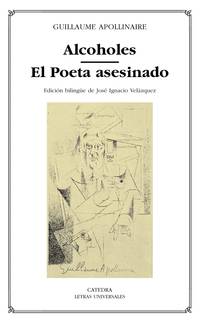
2001DADAX8437619157C 2001-06-21. edici. paperback. New. 4.33x1.18x7.09. Buy with confidence. Excellent Customer Service & Return policy. C paperback
2001SONG8437619157C 2001-06-21. edici. paperback. Used: Good. 4.33x1.18x7.09. Buy with confidence. Excellent Customer Service & Return policy. C paperback
PJH51428Gallimard 1927. VG in slightly marked publishers wrappers. From the Library of Charles Tomlinson with the 'Library of' James Dickey stamp in green ink on endpaper. Seemingly loaned by Dickey to Tomlinson. Gallimard 1927 unknown
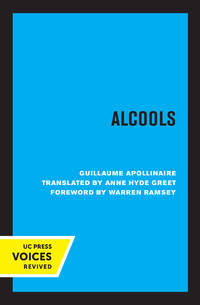
2022x-0520374819Univ of California Pr 2022. Hardcover. New. 320 pages. 8.00x5.25x0.90 inches. Univ of California Pr hardcover
2231733-nnew. unknown
44818034-nnew. unknown
44818034like new. unknown
2022x-0520349911University of California Press 2022. Paperback. New. 320 pages. 8.00x5.25x0.70 inches. University of California Press paperback
0520374819.Ghardcover. Good. Access codes and supplements are not guaranteed with used items. May be an ex-library book. hardcover