Louis ARAGONBiblio.com
6 849 résultats
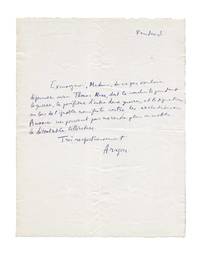
1950Aragon3<p><strong>ARAGON Louis 1897-1982</strong></p><p>Autograph letter signed "Aragon" to the "Red duchess" Elisabeth de Clermont-Tonnerre N.p.n.d 1950 1 p. in-4to</p><p><strong>Violent reproaches of Louis Aragon against Thomas Mann – The poet explains his hostility to the idea of meeting the German writer then on an official visit to Paris</strong></p><p><em>" <strong>Excusez-moi Madame de ne pas vouloir déjeuner avec Thomas Mann dont la conduite pendant la guerre le pacifisme d'entre deux guerres et la signature au bas de l'ignoble manifeste contre les exécutions en Russie ne peuvent pas me rendre plus aimable la détestable littérature. </strong></em> <em>Très respectueusement</em> <em>Aragon "</em></p><p><strong>Thomas Mann officially received in Paris in May 1950</strong></p><p>At the beginning of May 1950 Thomas Mann had begun a European lecture tour. On May 12 he arrived in Paris accompanied by his wife Katia. At the "Ritz" where his French publishing house has booked a suite they receive a very warm welcome. If during his stay in Paris which must have lasted a few days Thomas Mann could not see André Gide himself he spoke with Jean Schlumberger who had created with Gide La Nouvelle Revue Française. In the quick note he wrote for the bookseller Martin Flinker Mann mentions the "incredible beauty" of the capital of France and a French civilization at the "forefront of progress"… while confiding to his Journal his great fatigue and the aversion he felt for "the French linguistic sphere". He is indeed irritated by interviews that he considers malicious – such as that of Dominique Arban for Le Figaro who asks the author of Doctor Faustus if judging by his book it is possible to imagine a new Germany in which would have disappeared "the vertigo of obedience and blood". The interviewers' reminder of Paul Olberg's letter published in the Swiss newspaper Volksrecht also disturbs him to the highest degree. The Swedish journalist had indeed asked Thomas Mann how "he who had fought without concession Nazi Germany had been able to accept in 1949 the invitation of a regime that of the GDR which trampled underfoot with the same brutality freedom and humanity".</p><p><strong>Thomas Mann sensitive to communist propaganda</strong></p><p>At the end of the Second World War – after the election in 1945 of Harry Truman as President of the United States and until 1949 – Thomas Mann was sensitive like many intellectuals of the time to stalinist propaganda that presented the United States as an imperialist power ready to trigger a new conflict – and the USSR as concerned only with peace and the happiness of the peoples. Thus in March 1949 he supported the initiative of Harvard professor Harlow Shapley to convene in New York a world peace conference – directed against the Atlantic Pact finally signed on April 4 1949 – in which 24 delegates from communist countries participated in which Thomas Mann saw only "pure idealists". He telegraphed Dean Acheson the U.S. Secretary of State and father of the Marshall Plan to reconsider his ban on allowing other delegates from communist countries to enter American territory. Silent about the deportations and mass executions ordered by Stalin he does not miss an opportunity to protest against McCarthyism and "anti-communist hysteria" driven to this by his son Klaus and daughter Erika.</p><p>Thomas Mann still enthusiastically accepted the invitations – issued by the newly formed Federal Republic and the other part of Germany that would proclaim itself the "Democratic Republic" – to preside over the ceremonies given in July/August 1949 for the bicentenary of Goethe's birth first in Frankfurt West and Weimar East. Flattered by the honors that are rendered he wants to believe that it is only literature and does not want to see the instrumentalization to which he is the object of the communist leaders.</p><p><strong>Thomas Mann disappoints the Communists and abjures politics</strong></p><p>But soon after sensitive to criticism and becoming more far-sighted he refused to participate in the "World Congress of Supporters of Peace" which took place in Paris from 20 to 23 April 1949 under the patronage of Picasso with his famous "dove" and <strong>Aragon</strong>.</p><p><strong>Louis Aragon</strong>'s refusal to see Thomas Mann on the occasion of his official visit to Paris in May 1950 was thus explained by the hope aroused in the communist camp by some of his statements. The most prestigious German writer of the time an emeritus fighter of fascism since his American exile fundamentally hostile to the western part of Germany which he thought had not really got rid of Nazism represented a vector of propaganda of the highest order for the ideologues of communism. The spite felt by <strong>Louis Aragon</strong> and others following the defection of Thomas Mann is commensurate with their disappointment.</p><p>The many criticisms that Thomas Mann unleashed in the West helped to make him fully aware of the role that was intended to make him assume; this is how he declined the invitation to the 2nd Peace Congress organized in London from 13 to 19 November 1950. The English government banned Pierre Cot and Louis Aragon from entering British territory. The non-admitted delegates finally met in Warsaw. The organizers claim to have received a message of encouragement from Thomas Mann and even to have elected him to the office of the organization – which he firmly denies. In a scathing denial Thomas Mann says "he no longer wants to do anything with politics". All relations are permanently cut off.</p>
Huesca, 1994. 4to.; 231 pp., 4 hs. Ilustraciones. Enc. original.
056967Montpellier Société Archéologique de Montpellier 1988 in 8 (20,5x20,5) 1 volume broché, couverture illustrée en couleurs, 51 pages, avec de nombreuses illustrations pour la plupart en couleurs (photographies). Catalogue de 89 numéros décrits, et reproduits pour la plupart, édité à l'occasion de l'exposition: '' Vingt années de dons, acquisitions et restaurations 1968-1988, dans les collections de la Société archéologique de Montpellier '', présentée au Musée Languedocien en Novembre - Décembre 1988. Très bel exemplaire ( Photographies sur demande / We can send pictures of this book on simple request )
(Al fin:) Zaragoza, Navarro & Navarro, 1996, 21,5 x 15,5 cm., cartulina editorial, 5 hojas facsímiles. (Tirada de 330 ejemplares numerados no venales).
Zaragoza, Ateneo, 1990. 4to. mayor; 12 pp. sin numerar. Edición limitada de 330 ejemplares. Edición no venal. Cubieertas originales.
Zaragoza, Ateneo, 1994. Un pliego en 4to. de 6 hojas. Edición limitada y numerada de 330 ejemplares. Cubiertas originales.
Zaragoza, Ateneo, 1992. Un pliego en 4to; 5 hojas. Edición limitada y numerada de 330 ejemplares. Cubiertas originales.
Zaragoza, 2016. Folio; 151 p. (24 p. estudio y 120 p. de partituras). Cubiertas originales.
Barcelona, CSIC, 2000. Folio; 304 pp., 275 de ellas transcripciones. Cubiertas originales.
Barcelona, 2001. Folio; 249 pp., con transcripciones. Cubiertas originales.
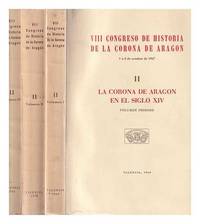
1969412913Valencia : Caja de Ahorros y Monte de Piedad de Valencia 1969. 1st edition. Softcover. Good copies in the original stiff-card wrappers; edges somewhat nicked slightly torn and dust-dulled as with age. Remains quite well-preserved overall. Physical Description; 3 volumes in 6. ; 24 cm. Contents; 1. Comisiones circulares discursos y crónica. 2. La Corona de Aragón en el siglo XIV 3 v. . 3. La Corona de Aragón en el siglo XVI 2 v. . Subjects; Aragon Espagne Histoire Congrès. Aragon Spain History Congresses. Conference papers and proceedings. History - Spain Aragon. Valencia : Caja de Ahorros y Monte de Piedad de Valencia paperback
Huesca, Instituto de Estudios Altoaragoneses, 1994. 4to. menor; CXLV pp., 454 pp., 2 hs. Cubiertas originales.
Zaragoza, 1998 ["Pluma Libre y Desigual". Coordinador General: Fernando Mombiela. Navidad 1998]. Folio; 30 pp. Cubiertas originales, ilustradas por Antonio Fernández Molina.
Carboneras de Guadazaón, "El Toro de Barro", 1968. 4to. menor; 60 pp., 1 h. Cubiertas originales.
Zaragoza, Institución Fernando el Católico, 1972. 4to. mayor; 668 pp., 1 h. Cubiertas originales.
24,5x17. 668p. Selec. Y prólog. L. Horno Liria. N. 529.
Madrid, Editorial Escelicer, 1967. 4to.; 190 pp. Cubiertas originales.
Zaragoza, Institución Fernando el Católico, 1945. 4to. alargado; 194 pp., 1 h. Cubiertas originales.
Zaragoza, Imprenta de Heraldo de Aragón, 1972. 4to. mayor; XV-424 pp., con 8 láminas fuera de texto con facsímiles de portadas de libros, más un Apéndice con 75 reproducciones de documentos y manuscritos. Cubiertas originales.
Barcelona, Editorial Laia, 1975. 4to.; 211 pp., 1 h. y veinte láminas aparte. Cubiertas originales.
8433927167.Gpaperback. Good. Access codes and supplements are not guaranteed with used items. May be an ex-library book. paperback
Madrid, Instituto de Estudios Madrileños, 1954. 4to.; 227 pp., 1h., y 32 láminas fotográficas. Cubiertas originales.
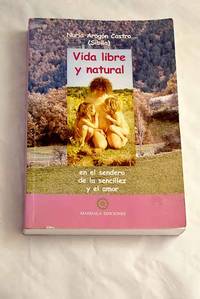
20023671817Madrid.: Mandala. 2002. Paperback. Good. 21 cm. 356 p. il. Encuadernación en tapa blanda de editorial ilustrada. Nuria Aragón Castro Sibila. Naturismo . ISBN: 8495052822 Higiene en general. Higiene y salud personal 613 Mandala. paperback
Zaragoza, Cátedra Zaragoza de la Universidad, 1959. 4to.; XXXVIII-236 pp., y dos mapas fuera de texto, uno de ellos plegado. Cubiertas originales.
Zaragoza, 2010. 4to.; XCIX pp., 416 pp., 1 h. Cubiertas originales.