5 583 résultats
52038GLM, Paris, 1954 et 1947.
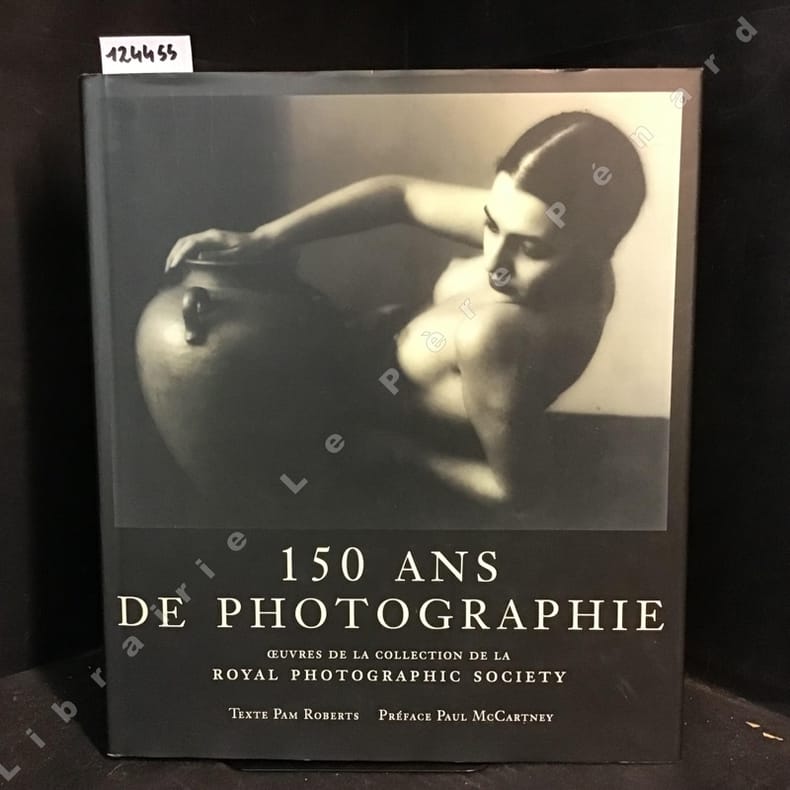
20001244552000 Editions Place des Victoires - 2000 - In-folio, cartonnage toilé avec titre au dos, sous jaquette illustrée - 336 pages - Nombreuses illustrations en N&B et en couleurs, in et hors-texte, dans l'ouvrage
zk18Book. Very Good. Hardcover. Album approx. 6.5"x5" - 9 leaves 18 tinted portraits. . Hardcover
19788999Kamigamo Honzan Kita Ward Kyoto City: Ishida Taiseisha Company LTD. 1978. Hardcover. Very Good in No Dust Jacket dust jacket. 4to 11" - 13" tall; 276 pages; Cloth-bound hardcover book. The book has minimal wear. The book is well-bound with clear text and no markings. It contains both black-and-white and color photographs with illustrations. It does not have a dust jacket. Inscription on front cover in Japanese. . Ishida Taiseisha Company, LTD hardcover
2017500098939BELIVEAU 2017 200 pages 15 2x22 8x1 4cm. 2017. Broché. 200 pages.
2014500126459Harlequin 2014 11 6x2 4x18cm. 2014. Broché.
2014500206764LGF 2014 384 pages 11x1 6x18cm. 2014. pocket_book. 384 pages.
Very Good Turkish, Ottoman (1500-1928) Original quarter leather bdg. Slight wear on spine. Otherwise a very good copy. Cr. 8vo. (20 x 15 cm). In Ottoman script (Old Turkish with Arabic letters). 143 p. Extremely rare first Turkish edition of the legend of Hatem of Tai tribe, or "the tale of Hatemtai, or qissa-e Hatem-Tai" which was very popular in the Indian subcontinent, as well as the earliest printed separate form from the Arabian nights [Alf laila wa laila] in the Middle East. In Turkish literature, this story was printed nine times separately from the Arabian nights (1840, 1856, 1867, 1871, 1874, 1879, 1885, 1891, 1925). This is the very first edition of this book. Hatim al-Tai (?âtim bin Abd Allâh bin Sa'ad a't-Tâ'iyy; Hatim of the Tayy tribe; deceased 578), was the ruling prince and poet of the Tayy tribe of Arabia. Stories about his extreme generosity have made him an icon among Arabs up until today, as evident in the proverbial phrase "more generous than Hatim". His son was Adi ibn Hatim, who was a companion of the Islamic prophet Muhammad. Al-Tai lived in Ha'il in present-day Saudi Arabia and was mentioned in some Hadiths by Muhammad. He died in 578 AD and was buried in Tuwarin, Ha'il. His tomb is described in the Arabian Nights. He lived in the sixth century CE and was also mentioned in the Arabian Nights stories. The celebrated Persian poet Saadi, in his work Gulistan (1259 CE) wrote: "Hatim Tai no longer exists but his exalted name will remain famous for virtue to eternity. Distribute the tithe of your wealth in alms; for when the husbandman lops off the exuberant branches from the vine, it produces an increase of grapes". He is also mentioned in Saadi's Bostan (1257). According to legends in various books and stories, he was a famous personality in the region of Ta'i (present-day Ha'il) and is also a well-known figure in the rest of the Middle East as well as the Indian subcontinent, featuring in many books, films, and TV series in Arabic, Persian, Urdu, Turkish, Hindi and various other languages. The books on the story usually consist of a short introduction describing his ancestry and character and tell the seven episodes based on seven riddles, asked by a beautiful and rich woman named Husn Banu, who will marry only the person who is able to obtain answers to all seven of them. A king, who falls in love with her but is unable to find answers, tells the generous Hatemtai, whom he meets by chance, all about it. Hatim undertakes the quest to find the answers and help the king marry her. Özege 3639.; TBTK 8155.; Only one copy in the Library of Congress according to OCLC 951465696.
Very Good Turkish, Ottoman (1500-1928) Original full leather bdg. in Islamic style with a flap. Demy 8vo. (22 15 cm). In Ottoman script (Old Turkish with Arabic letters). 285 p. Rebacked to spine, slight wear on binding. Overall a good copy. Early Turkish edition of the book of parrot (or the book of Humayun), which is a 14th-century series of 52 stories, originally written in Persian, translated by Sari Abdullah Efendi (1584-1660), who was an Ottoman mystic poet and scholar. The adventure stories narrated by a parrot, night after night, for 52 successive nights, are moralistic stories to persuade his female owner Khojasta not to commit any adulterous act with any lover, in the absence of her husband. She is always on the point of leaving the house to meet her lover until the loyal parrot detains her with a fascinating story. The authorship of the text of the Tutinama is credited to Ziya'al-Din Nakhshabi or just Nakhshabi, an ethnic Persian physician and a Sufi saint who had migrated to Badayun, Uttar Pradesh in India in the 14th century, and wrote in the Persian language. He had translated and/or edited a classical Sanskrit version of the stories similar to Tutinama into Persian, around 1335 AD. It is conjectured that this small book of short stories, moralistic in theme, influenced Akbar during his formative years. It is also inferred that since Akbar had a harem (of women siblings, wives, and women servants), the moralistic stories had a specific orientation towards the control of women. The main narrator of the 52 stories of Tutinama is a parrot, who tells stories to his owner, a woman called Khojasta, in order to prevent her from committing any illicit affair while her husband (a merchant by the name Maimunis) is away on business. The merchant had gone on his business trip leaving behind his wife in the company of a mynah and a parrot. The wife strangles the mynah for advising her not to indulge in illicit affairs. The parrot, realizing the gravity of the situation, adopts a more indirect approach of narrating fascinating stories over the next fifty-two nights. The stories are narrated every successive night as an entertaining episode to keep Khojasta's attention and distract her from going out. The Persian text used was redacted in the 14th century AD from an earlier anthology 'Seventy Tales of the Parrot'in Sanskrit compiled under the title Sukasaptati (a part of katha literature) dated to the 12th century AD. In India, parrots (in light of their purported conversational abilities) are popular as storytellers in works of fiction. (Source: Wikipedia). Özege 21353., OCLC 165609299.
Very Good Turkish, Ottoman (1500-1928) In 1/3 leather bdg. in Ottoman period. Six compartments at spine. Roy. 8vo. (24 17 cm). In Ottoman script. 2 books in 1: (139 p.; 288 p., b/w plates, 15 b/w planches). Ali Selahaddin was a famous Ottoman translator who is known with his translations from French literature into Ottoman Turkish in the period of Sultan Abdulhamid II, like Fernand Hue, Xavier de Montépin, Hector Malot, Hanri Depen, and Jules Verne. Mustafa Refik, (1867-1913), who is the translator of 'Deniz Feneri', was born in Istanbul. His mother is the daughter of Meveddet Hanim, the sister of Ahmet Mithat Efendi, (1844-1912). Mustafa Refik is an author who played an active role in the media and literature life between 1885-1912. Ahmet Mithat Efendi had important effects on Mustafa Refik throughout his writing life. As he knows French and English very well, he translated many works on science, geography, nature, health, and social as well as Western literature like British and French works of literature. Deniz Feneri is the first and only translation from Verne of him. Le phare du bout du Monde [i.e. The Lighthouse at the End of the World] is an adventure novel by French author Jules Verne. Verne wrote the first draft in 1901. It was first published posthumously in 1905. The plot of the novel involves piracy in the South Atlantic during the mid-19th century, with a theme of survival in extreme circumstances, and events centering on an isolated lighthouse. Verne was inspired by the real lighthouse at the Isla de Los Estados, Argentina, near Tierra del Fuego and Cape Horn. This book was translated into Ottoman Turkish in the same year when the original French title was published. A Floating City, or sometimes translated The Floating City is an adventure novel by French writer Jules Verne first published in 1871 in France. At the time of its publication, the novel enjoyed a similar level of popularity as Around the World in Eighty Days. The first UK and US editions of the novel appeared in 1874. This first Turkish / Ottoman edition is in 1891, after 20 years of its original publishing. Özege 18700 / 3772. First Edition(s).
19541208374(Lissabon), Portucalense Editora, 1954. Gr.-8vo. 182 S., 2 Bl. OKart.
0365538914.Gpaperback. Good. Access codes and supplements are not guaranteed with used items. May be an ex-library book. paperback
1390177823.Gpaperback. Good. Access codes and supplements are not guaranteed with used items. May be an ex-library book. paperback
195310691461953. Gr.-8vo. 21, 97 S. OLwd.
188 pages, ex public library with usual stamps, page edges browned, previous owner name on front endpaper. eng
0366617389.Gpaperback. Good. Access codes and supplements are not guaranteed with used items. May be an ex-library book. paperback
pp. xi, 112 +Plus 5 pages of B/W plates. 12mo. 230mm. Original publisher's green cloth binding lettered in gilt and decorated in light green, dark green, and cream. Attractive floral design on cover by George Wharton Edwards with his monogram. Spine lettered in gilt and decorated similarly. Cover is clean and color is bright. Spine slightly faded. Corners sharp. Manuscript ownership of 'Marion A. Nearer' on inside flyleaf. Contents clean. Hardbound. Very Good. George Wharton Edwards (1859-1950) was an American painter, illustrator, and author. NW60
pp. 750, cm 23x16, rilegatura editoriale in t.t., with word indexes to the fragmentary manuscripts by Clifton Hall.
pp. 563, cm 23x17, rilegatura editoriale int.t., with a reverse index to the graphic forms and index of rhymes and a ranking list of frequencies.
pp. xvii, 332. Cover design and Frontispiece from drawings by Charles Dana Gibson. Numerous illustrations by C. Allan Gilbert, Raymond M. Crosby, John Cecil Clay, E. W. Kemble, T. K. Hanna Jr., J. M. Flagg, F. W. Read, A. D. Blashfield, Budd, Ebert and others, etc. 8vo. Original full cloth backed gold decorated binding. Top edge gold. First Edition. XLib. Very worn. WOMEN 1
036512883X.Gpaperback. Good. Access codes and supplements are not guaranteed with used items. May be an ex-library book. paperback
pp. 485, cm 23x16, rilegatura editoriale in t.t., Nuovo.
0282030506.Gpaperback. Good. Access codes and supplements are not guaranteed with used items. May be an ex-library book. paperback
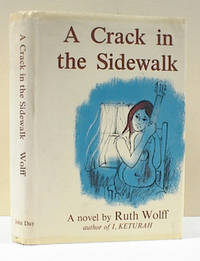
1965biblio11<p>SIGNED by author on front flyleaf also name of owner & 1966 written at top First Ed 1965. Hardcover VG - spine leans - blue marble paper covers with red cloth spine has title author pub and leaf sprigs in green/gold - pages clean - just the faintest toning. DJ good condition - edgewear and yellowed around - no creases - but chipping on top and bottom of spine. Beat GEN coming of age story in the music and art scenes.</p> John Day hardcover
0365598879.Gpaperback. Good. Access codes and supplements are not guaranteed with used items. May be an ex-library book. paperback