63 résultats
14136Paris novembre 1952 - juin 1953. 8 f. 430 x 280 mm recto impression en noir sur papier de couleurs. . Collection complète de la première série de cette revue dirigée par Jean Schuster imprimée sur divers papiers de couleur vert rouge crème blanc ocre violine et orangé. Textes de Breton Alleau Duprey Legrand Meret Oppenheim etc. . Avant qu'elle ne devienne une revue à part entière cette publication parut sous forme de feuillets recto revêtant plus l'aspect d'un journal. Elle était surtout destinée à jouer le rôle d'un « organe d'informations » au sein du groupe. Le titre dessiné rappelle le sens géométrique de médium : module d'architecture. Dirigé par Jean Schuster cette publication aura comme collaborateurs autour d'André Breton soit des surréalistes de fraîche date soit d'anciens compagnons de route comme Péret. Bel exemplaire de cette série extrêmement fragile et rarement complète. Paris, novembre 1952 - juin 1953. 8 f. (430 x 280 mm) recto, impression en noir sur papier de couleurs. unknown
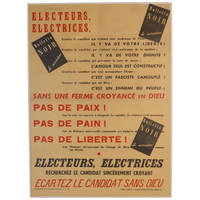
1952362568Paris: Pour l'Unite 1952. A French election poster from ca. 1951 with a connection to the Surrealists from three printed emblems reading "Bulletin NOIR Les Surealistes." Your cataloger's knowledge of French and French politics after the Second World War is not sufficient to offer an analysis of the poster. One suspects it mostly means the opposite of what it says or that it is a sort of word salad of election-style statements without meaning but draw your own conclusions:<br /> <br /> Pas de paix! Car la voie est ouverte à l'orgueil la cupidité la violence et le mensonge No peace! Because the way is open to pride greed violence and lies.<br /> <br /> Écartez le candidat qui préconise la lutte de classe. L'amour seul est constructif! Reject the candidate who advocates class struggle. Love alone is constructive!<br /> <br /> Published as a supplement to l'homme nouveau no. 97.<br /> <br /> 17-3/16 by 23-3/4 inches. Good only apparently removed from a wall with some loss to the margins repaired with infill paper. Linenbacked. Pour l'Unite unknown
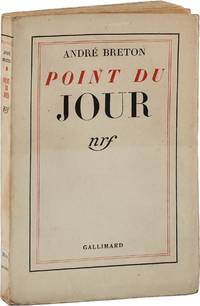
193488369Paris: Gallimard 1934. First French Edition. Octavo. 19cm. Publisher's cream colored card wraps titled in black and red to spine and front cover. Glassine dustjacket. 251pp.;1. Strong and tight a little soiling and marginal wear to the wraps and some staining and discoloration to the glassine jacket; internally clean ownership signatures of Monique Fong and Michel Tavriger to the front flyleaf dated 1949 and 1950 numerous collage additions to the text throughout. A very good copy with some fascinating artistic additions from the early surrealist movement.<br /> <br /> From the library of Nathaniel Tarn noted poet translator and anthropologist who during the period 1945-1950 was resident in Paris living and working under the name Michel Tavriger before adopting the name Nathaniel Tarn Tarn being the name of a French river. He was intimate with a large swath of Parisian artistic intelligentsia including Breton Octavio Paz photographer Serge Jacques and surrealist muse and intellectual powerhouse Monique Fong. In all probability he was most likely also a member of the surrealist ex-Vichy collaborationist "Cercle D'Etudes Metaphysiques" presided over by Raymond Abellio Bernard Noel Raymond De Becker and the like who numbered Cocteau and Jean Paulhan among their friends and contributors. Improvised collage is a factor of several branches of Fong's correspondence with friends like John Cage so it is most probably that the photographic collage elements inserted into the volume are the work of Fong. They are mostly black and white clippings from fashion or art magazines mostly occupied with nudes with several pages devoted simply to naked breasts they range in complexity from a simple uneven clipping to a rather more complex arrangement of vertically sliced elements arranged together covering a whole page to the rear of the volume. <br /> <br /> Fong stated in an interview before her death: "I'm a very rare person at this point. Not because I'm 95 but because I think there are only three people left in this world who have known both Breton and Octavio Paz. I was a member of the Surrealist group as was Nathaniel Tarn - under another name at the time - when we were 23 24 something like that. And all of our contemporaries died before the age of 70 which is really not old. There are very few survivors. If you knew Octavio Paz you did not necessarily live in France. People knew him in Mexico in India in the States. I'm pretty sure that the only people to know both Paz and Breton are at this point Jean-Clarence Lambert Nathaniel Tarn and me." https://caesuramag.org/posts/interview-with-monique-fong-surrealism. Gallimard unknown
1947179710New York: 1947. An original brochure for this classic surrealist film. It features items from each of the film's collaborators: Max Ernst Fernand Leger Man Ray Marcel Duchamp Alexander Calder and the director Hans Richter. Richter began the project in 1944 after receiving a $6000 grant from Peggy Guggenheim. In an interview with the New York Times Richter stated "I started the picture as an adventure. But I knew one thing that was important. That is in cinematography we have scratched only the surface of the art and that there are thousands of other possibilities in film. I felt that both modern art and the movies are an expression of our time and that it would be interesting to combine the two." Octavo. Photographic portraits and reproductions from the film in the text throughout. Original green wrappers printed in black after a design by Max Ernst. A fine copy. Ezra Goodman "Musical Fantasy Filmed in Manhattan Loft" New York Times 11 April 1948. unknown
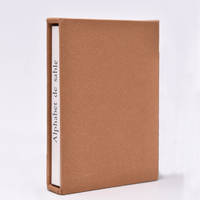
367757Paris France: Maeght Editeur 2000. First edition limited to 100 numbered copies '21/100' signed by Venus Khoury-Ghata and Matta total printing of 120 copies. A fine copy in publisher's slipcase box also fine. First edition limited to 100 numbered copies '21/100' signed by Venus Khoury-Ghata and Matta total printing of 120 copies. OCLC lists two holdings none in the United States Paris- Bibliotheque Kandinsky and Bibliotheque nationale de France. Nicely illustrated with an original color lithograph measuring twelve inches by four inches by Roberto Matta. Sebastian Antonia Matta Echaurrenm 1912-2002 abstract expressionist and surrealist artist was born in Santiago Chile. Vénus Khoury-Ghata French-Lebanese poet and novelist was born in 1937 in Bsharri Lebanon. She has lived in Paris since 1972 and has published several novels and collections of poems. and has won the following awards:1980- Prize Apollinaire for "Les ombres et leurs cris"; 1987- Prize Mallarmé for "Un Faux pas du soleil"; 1992- Grand Prix de la Société des gens de lettres for Fables pour un people d'argile; Prize Jules Supervielle for "Anthologie personnelle"; Prize Baie des anges for "Le moine l'ottoman et la femme du grand argentier"; 2011- Prize of Goncourt for Poetry for all her works; 2012- Poetry Prize Pierrette Micheloud for "Où vont les arbres." per Wikipedia. Maeght Editeur unknown
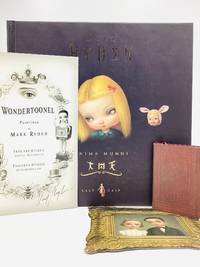
78411A collection artwork artist books and letters sent from artist Mark Ryden to fellow artist Patrick Eddington.<br /> <br /> Mark Ryden b.1963 is a painter and graduate of Art Center College of Design in Pasadena. He is considered to be part of the Lowbrow or pop surrealist art movement and was dubbed "the god-father of pop surrealism" by Interview magazine. In 2015 Artnet named Ryden and his wife painter Marion Peck the king and queen of Pop Surrealism.<br /> <br /> Patrick Eddington 1953–2016 was a beloved high school art teacher and artist who worked at Salt Lake City’s Highland High School. He earned his BFA and Masters in Education from the University of Utah. Eddington created numerous etchings prints and paintings some of which are now held in the Henry Miller Estate Collection and the Miriam Patchen Collection. Eddington was the co-owner and operator of the publishing company Green Cat Press which focused on publishing literary broadsides as well as art prints.<br /> <br /> Eddington carried on extensive correspondence throughout his life with a staggering number of writers and visual artists. His charming and persuasive letters convinced many to engage him in lengthy correspondences. Eddington was also a generous gift-giver and was eager to forge connections among the writers and artists that he knew and admired Utah’s Art Magazine website “A Passion for Arts and Letters. And Cats. Remembering Pat Eddington†April 5 2016. unknown
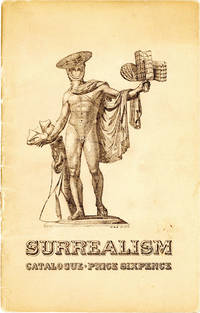
193653024London: New Burlington Galleries / Women's Printing Society Ltd 1936. First Edition. Slim octavo 24cm; pictorial wrappers saddle-stitched; 311pp. French gallerist and art dealer Pierre Loeb's copy with "Exemplaire de Pierre Loeb" in red ink on title page by E.L.T. Mesens along with his signature and those of the following individuals associated with the exhibition directly beneath: Shiela Legge André Breton Jacqueline B. Jacqueline Lamba Breton's wife Roland Penrose David Gascoyne Humphrey Jennings Hans Arp and George Reavey. Light external wear and dust-soil wrappers starting to pull away from staples with some scattered discoloration to rear wrapper; a few very light pencil marks in-text else contents quite fresh; Very Good. Housed in a custom clamshell case. Well-preserved catalog of the first Surrealist art exhibition in England organized by artist Roland Penrose and poet David Gascoyne and held at the New Burlington Galleries from June 11th - July 4th 1936. A ground-breaking event described alternately as chaotic indecent and inspiring the organizers assembled nearly 400 paintings and sculptures by 71 Surrealist artists including Hans Arp Jacqueline B. Hans Bellmer Constantin Brancusi Alexander Calder Salvador Dali Marcel Duchamp Alberto Giacometti René Magritte Joan Miró Paul Nash Pablo Picasso Man Ray Yves Tanguy and others. The three-week event was a true spectacle involving Dalí delivering a lecture and nearly passing out while wearing a full deep-sea diving suit Sheila Legge's performance as "The Phantom of Sex Appeal" in Trafalgar Square and poet Dylan Thomas circulating among the guests at the opening offering them cups of boiled string. In addition to listing all 392 works in the exhibit the catalog features a cover illustration by Max Ernst an English-language preface by André Breton translated by Gascoyne and an introduction by Herbert Read. A significant copy signed by several artists and presented to French gallerist Pierre Loeb one of the great champions of Surrealism. On its own a somewhat elusive catalog rarely seen with such a collection of signatures the auction record showing the last such copies for sale in 1976 George Hugnet's copy signed by nine and 1973 Suzanne Malherbe and Claude Cahun's copy signed by 11. 53024. New Burlington Galleries / Women's Printing Society, Ltd unknown
19509830Munich West Germany 1950. Four original ink drawings on paper various sizes roughly 14x10" up to 20x14". Two are dated "24 X 50" and perhaps from a series with roman numerals IV and V. Another is dated "20 XII 50" and the last simply dated 52. Some light foxing and a few faint stains and smudges corners occasionally bumped. Residue from old adhesive on back of one of the larger images the two smaller pieces matted. Generally very good. <br /> <br /> A cohesive group of four surrealist ink drawings by Rolf Engler active in West Germany in the early 1950s as both painter and experimental filmmaker associated with the Munich film industry. The drawings dated across the years 1950-1952 fall squarely within the period of Engler's work on the animated short Der Traum in Tusche A Dream in Ink 1952 an abstract animated film employing fluid ink imagery and experimental animation to explore the psychological devastation of war lingering guilt and unresolved trauma through dreamlike and nightmarish forms. The Harvard Film Archive described the work as "an animated fantasy film with nightmarish aspects including not overly allegorical references to the more recent past made by a genius of the FRG animation art." Der Traum in Tusche received a prestigious Bundesfilmpreis in 1953 and was later screened at the Locarno International Film Festival and other such events.<br /> <br /> Though we have not been able to view the film the present drawings exhibit the same visual language described: surreal figures distorted anatomy and shifting dreamlike forms rendered in bold ink line and fluid drawing techniques that formed the basis of Engler's experimental animated work. Two pieces bear Roman numeral notation suggesting a conceptual or sequential framework consistent with animation-adjacent production methods. We find it very likely these drawings were either used or heavily influential in Traum in Tusche or other projects of Engler's from this time period. <br /> <br /> <br /> We find documents and scripts by Engler held in the Landesrchive in Nordrhein-Westfalen though we have not been able to find examples of his artwork. A rare surviving group of works on paper from the formative years of postwar German experimental animation preserving the hand of an elusive but historically important mid-century artist and filmmaker. <br /> <br /> <br /> . unknown
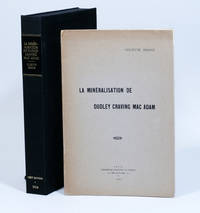
19242729Paris: Imprimerie Croutzet et Depost 1924. First edition. Original wrappers. Very Good. FIRST EDITION of Roche's surreal dadaist roman à clef exposing the misogynistic world of the French avant-garde. With annotations likely in Roche's hand. Like too many women artists of the early twentieth century French writer and artist Juliette Roche 1884 - 1980 has been long overshadowed by her male contemporaries. Roche came of age amidst leading artistic and literary salons of early 20th century Paris. She studied at Académie Ranson then considered the absolute best art school in Paris and was an early adopter of Cubism. However she is most closely associated with Dadaism. Despite Dada being a movement of absolute rebellion it harbored the normalized misogyny of the early twentieth century. Roche's most explicit critique of this discrepancy of rebellion vs repression can be found in La Minéralisation de Dudley Craving Mac Adam her groundbreaking novella.<br /> <br /> Part satire and part Dada nonsense the thinly veiled roman à clef is a prime example of the daring poetic style that Roche developed while living in New York during World War I. Having watched artistic vanguards come and go in Paris' salons and exhibitions Roche observed the New York City hijinks of Francis Picabia French 1879 - 1953 and Marcel Duchamp 1887 - 1968 with a level of detachment that alluded their American peers. She had close access to Picabia perhaps too close: in 1917 he and his wife Gabrielle Buffet-Picabia moved into an apartment directly beneath one Roche shared with her husband Albert Gleizes a French artist and philosopher who helped popularize Cubism on the Upper West Side. While Roche admired Picabia's iconoclasm she was disturbed by the misogyny she saw in works like his manometres where woman as 'la machine' was at best a manipulable object at worst the butt of a private joke. If taking Roche's ambivalence towards and her neighborly proximity to Picabia into consideration the novella could be inspired in part by an age-old story: pure contempt of one's neighbor.<br /> <br /> The novella is an indirect indictment of certain illicit behaviors Roche found annoying and dangerous. She synthesizes her fellow expatriates' personalities and physical traits to create the decadent Mac'Adam and the men he encounters on the day of his demise. Picabia becomes Mac'Adam. Swiss writer and boxer Arthur Craven 1887 - 1918 lends his name to the protagonist while becoming Lloyd Willow. Juliette Roche herself appears as Juliette Granite a play on words since roche means rock in French. Roche spins the narrative in poetic and surreal fragments at turns absurd and others told in a stream-of-consciousness style. La Minéralisation moves beyond conventional storytelling to allow readers into the minds of her characters through rich interior monologues revealing in each case her estimation of the particular model's idiosyncrasies. Roche seemed to find the antics of the all-male world of the Dadaists to be too limited and they're wickedly satirized among these pages.<br /> <br /> Written in ink on the first page is "Publié dans 'La Vie des Lettres' en 1921 / New York 1918" and there are a few words written on page 20 in the same hand. It appears to be Roche's handwriting from the few samples we've seen but we can't guarantee it.<br /> <br /> Paris: Imprimerie Croutzet et Depost 1924. Thin octavo 33pp terminal blank original printed wrappers stapled as issued; custom box. Small tear and split at top of spine; a near-fine extremely well-preserved copy.<br /> <br /> EXCEEDINGLY RARE: We can find records of no other copies that have been on the market.<br /> <br /> References:<br /> <br /> Burke Carolyn "Recollecting Dada: Juliette Roche." Women in Dada: Essays on Sex Gender and Identity edited by Naomi Sawelson-Gorse MIT Press 1998 557. Imprimerie Croutzet et Depost unknown
193648773London.: New Burlington Galleries. 1936. Original publisher's pink stapled wrappers with printed collage by Max Ernst to front cover later protective crystal wrappers. 8vo. 155 x 240 mm. Leaf with advertisements recto and verso leaf with title recto and committee and contributors verso leaf with advertisement recto and preface by André Breton translated by David Gascoyne verso and on following leaf leaf with advertisements recto and verso leaf with explanatory note and catalogue of exhibitors and their works in alphabetical order final leaf with printers' credit verso. Gaston Ferdière's presentation copy of the scarce catalogue for the ambitious and highly influential International Surrealist Exhibition held in London in 1936 signed by a number of the participants.Presented by Mesens in red ink: 'Exemplaire de Gaston Ferdière' and beneath the signatures of André Breton in green Hans Arp in pencil Roland Penrose in blue ink Claude Cahun in blue grey Sheila Legge Rupert Lee and David Gascoyne all in sepia Paul Eluard in black ink and Man Ray in pencil; the following leaf with advertisements and adjacent to the details of the committee list of contributors etc. features an inscription in black ink by Conroy Maddox: 'Refused to participate / Conroy Maddox'.Gaston Ferdière was a controversial figure a Surrealist-affiliated poet who published verse in the mid-1930s a doctor who administered to the Spanish Republicans in the Spanish Civil War and a psychiatrist lauded and criticised for the electroshock therapy he administered to Antonin Artaud in the 1940s before Artaud's suicide in March 1948. Ferdière was a friend of Breton Crevel Desnos and Péret later Hans Bellmer and Unica Zûrn who he also treated and was anathemised by Isou another patient and the Lettrists along with psychiatrists and psychiatry in totality. At the titme of the London Surrealist Exhibition Ferdière had published a small handful of verse collections: 'L'Herbier' 1926 'La Chanson Fruste' 1927 'Ma Sébile' 1931 and 'Paix sur la Terre - Poèmes pour les Théâtres Prolétariens d'Action Contre la Guerre' 1936. 'No one personifies the thorny entanglement between modernism and the science of the soul better than Dr. Gaston Ferdière the psychiatrist who administered no less than 58 electroshock treatments to the Surrealist playwright Antonin Artaud during the Second World War. Determined to reconcile poetry and medicine Ferdière had studied under 'Professor Claude' - target of Breton’s anti-psychiatric rants - at Sainte-Anne while at the same time passing as a 'star of Surrealism in the bistros' of Paris in the mid-1930s . By the time Artaud showed up on his doorstep at Rodez psychiatric hospital Ferdiére had long since abandoned his poetic aspirations. Yet his old interests were rekindled in long conversations with the Surrealist playwright whose talents he sought to revive by a combination of 'art therapy' - writing drawing translating Lewis Carroll’s 'Through the Looking Glass' - and shock treatments - six courses ranging from 4 to 13 sessions each between June 20th 1943 and January 24th 1945. Electroshock was still in its experimental phase - the machine had hardly rolled in the door at Rodez - and the convulsions were so severe that Artaud fractured a vertebra in his neck during one of the treatments.' Kevin Repp.The International Surrealist Exhibition was held at the New Burlington Galleries from 11 June - 4 July 1936 organised by committees from England France Belgium and Scandinavia. The scale and range of works from artists was highly impressive see a list of exhibiting artists below and London was acting alongside Paris and New York in focusing on the new movement. In the same year Alfred Barr opened a show at the Museum of Modern Art New York entitled 'Fantastic Art Dada and Surrealism' and Paris' 'Cahiers d'Art' journal then at the height of its influence had devoted a whole issue to the Surrealist object. The exhibition comprising of some 390 works painting sculpture drawing and objects was opened by André Breton to some two thousand people thereafter averaging a footfall of one thousand people per day. Lectures were delivered throughout the exhibition and included Salvador Dali's presentation from within a deep-sea diving suit which needless to say put a strain on his respiratory system and resulted in his being rescued by the young poet David Gascoyne with a spanner.It is also significant that one of the most legendary moments of the exhibition was the performance by Sheila Legge who stood in the middle of Trafalgar Square in a white wedding dress inspired by a Dali painting her head obscured by a floral arrangement prefiguring Feminist and Fluxus performances of some 20 years later.Exhibiting artists included Eileen Agar Jean Arp Eugène Atget Hans Bellmer Jacques-André Boiffard Bill Brandt Victor Brauner Fanny Brennan Emmy Bridgwater Luis Buñuel Claude Cahun Leonora Carrington Ithell Colquhoun Gala Dalí Salvador Dalí Jean Dallaire Paul Delvaux Óscar Domínguez Christian Dotremont Marcel Duchamp Marcel Duhamel Curt Echtermeyer Max Ernst Leonor Fini Gordon Onslow Ford Esteban Francés Alberto Giacometti Julio González Jane Graverol Jacques Hérold Valentine Hugo Frida Kahlo Wifredo Lam Jacqueline Lamba Dora Maar Conroy Maddox René Magritte Georges Malkine Marcel Mariën André Masson Roberto Matta Mikuláš Medek Oscar Mellor John Melville E. L. T. Mesens Lee MillerDesmond Morris Joan Miró Méret Oppenheim Wolfgang Paalen Benjamín Palencia Roland Penrose Man Ray Toni del Renzio Kay Sage Kurt Seligmann André Souris Martin Stejskal Jindřich Štyrský Maurice Tabard Yves Tanguy Dorothea TanningKarel Teige Kristians Tonny Toyen Albert Valentin Remedios Varo James F. Walker Unica Zürn Philipp Humm.Printed on very good laid paper by the 'Women's Printing Society' the contents are on the whole very good with some few scattered spots while the cover as can be expected shows some signs of age.see Kevin Repp's 'The Strange Case of Dr. Ferdière' Yale 2011; Ades 14.55. New Burlington Galleries. unknown
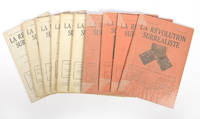
117780Paris Librairie Gallimard 1924-1929. . Periodical 12 issues in 11 vols.; 293 x 202 mm 11½ x 8 in; illustrated with halftone reproductions of photographs and artwork; wire-stitched photo-illustrated wrappers with black text nos. 1-5 are red and 6-12 are white occasional light handling light wear to spines occasional light marking and minor foxing oxidation to staples no.12 with more foxing and marking to lower side along spine a very good set in a custom chemise and slipcase; various paginations.<br /> A scarce complete set of the first and most famous surrealist journal whose first issue marks the official birth of the movement.<br /><br />Contributors include Louis Aragon André Breton René Char René Crevel Giorgio de Chirico Robert Desnos Paul Éluard Max Ernst Man Ray André Masson Joan Miró Francis Picabia Pablo Picasso and Yves Tanguy.<br /> Paris, Librairie Gallimard, 1924-1929. unknown
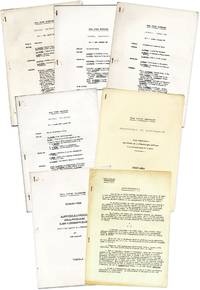
195386611France: Cercle D'Etude Metaphysiques 1953-1955. Archival Materials. A collection of privately printed/reproduced booklets and newsletters issued by the Cercle D'Etudes Metaphysiques between 1954-1955. 27 pieces in total. All components typewritten and mimeo'd on multicolored paper. Some light wear and toning in places to the staple bound pieces all very good or better.<br /> <br /> Comprising:<br /> <br /> 1. Dialectique De L'Initiation: Premiere Partie Fasicules I-VI; Deuxieme Partie Fasicules I-IV; Troisième Partie Fasicules I-III.<br /> 2. Circulaire Janvier 1955 single orange mimeo'd paper sheet printed recto only<br /> 3. Lettre Circulaire No. I-IV staple-bound reproduced on irregularly sized and colored paper sheets. 9pp. <br /> 4. Travaux des Membres; La Constitution de L'Objective Selon La Critique de Kant et Selon La Phenomenologie de Husserl.par Jean Largeault. 16pp. staple-bound. Dated 15 Mars 1955.<br /> 5. Cercle D'Etudes Metaphysiques "Journal Interieur" Nos. 1-8 with the final issue dated Juin-Septembre 1955 being a double issue. <br /> <br /> The very privately printed and distributed output of the short-lived and incendiary "Cercle D'Etudes Metaphysiques" formed in 1953 by the self-styled visionary Raymond Abiello actually a pseudonym of the eclectic and confounding Georges Soulès.<br /> <br /> Soulès was born in Toulouse in 1907 studied at the local Polytechnique and in his early 20's discovered and joined the post-1929 crash youth movement known as "X-Crise" a technocratically inclined group who believed that classical liberalism had failed as a means of socio-economic control and should be replaced with strict economic planning. Members included Soulès Louis Vallon Jules Moch and Alfred Sauvy.<br /> <br /> Their theories and reconstructivist drive have been directly linked to the creation of the collaborationist Vichy government in France during WW2. Sauvy in particular rose to post-war prominence as the Head of the Institute for Demographic Studies the INED and is remembered as the man who coined and popularized the term "Third World" in application to developing non-white nations. Abellio/Soules was among the numerous Vichy/Nazi sympathizers who went into exile in Switzerland to avoid imprisonment.<br /> <br /> Inspired by Gurdjieff the I-Ching Gnostic Mysticism Qabbalism Jungian theory Biblical Gematria early Surrealists and all points in between Abiello formed the Cercle D'Etudes Metaphysiques in 1953 with fellow travellers Jean Largeault and Bernard Noel both of whom feature heavily in the "Journal Interieur" contributing articles and manifestos on diverse subjects such as "Kafka and the Terrible Father" and "The Problem of Homosexuality" in tandem with the openly gay Raymond De Becker's "L'Homosexuel et la Magna Mater". <br /> <br /> Other contributors or collaborators included Jean Cocteau; Irene Tateossian; Raymond De Becker the Belgian journalist and writer who espoused the idea of "Intellectual Collaboration" during the war and edited the Nazi sanctioned newspaper "Le Soir"; Henry Lhong a rather incendiary figure in the Toulouse art scene of the 1950's who founded the aggressively disruptive L'Atelier Gallery and created the "Art Presente" shows in direct conflict with Toulouse's more traditionalist "Art Occitans" and "Artistes Méridionaux" events; Olivier de Carfort who made contributions to the avant-garde journal "Bizarre" alongside Jean Paulhan Eugene Ionesco Rene Magritte and others<br /> <br /> Abellio's C.E.M. seems to have been the industrious loom for a number of interconnecting threads; avant-garde artistic sensibilities crypto-fascist societal reform homosexuality and esoteric and occult researches for the furtherance not necessarily of mankind in general but certainly for those who were found strong and intellectual enough to handle the rigours of enlightenment. Jungian Psychoanalysis is woven in alongside Huserlian philosophy the symbolic incomprehensibility of surrealism knotted in with the arcane complexities of Eastern transcendentalism all laid across a ground preoccupied with one shared belief among all the other whirling beliefs; that art and intellectual thought if not western society in general was in the midst of what Cercle member Henri Lhong described as "La crise metaphysique du siecle" the idea that 20th century humanity had lost its way and must seek deep in the metaphysical and esoteric realm to find it again.<br /> <br /> A dense and as far as can be ascertained substantially complete collection of the main elements of the Cercle's internal publications; necessarily only printed for a small number of members and comprising a combination of newsletter manifesto and conceptual primer of their inner workings. No trace can be found in commerce a couple of references in the art world where the C.E.M. intersected with the mainstream avant-garde and no holdings in institutional libraries except for one 1954 issue of the Journal in the National Library of France. Cercle D'Etude Metaphysiques unknown
19362345Paris: Jeanne Bucher 1936. First edition. Original wrappers. Very Good. FIRST EDITION THE PRINTER JACQUES GROU-RADENEZ'S COPY WITH TWO LONG PERSONAL INSCRIPTIONS BY HUGNET. WITH COVER MY MARCEL DUCHAMP. ONE OF ONLY 294 COPIES IN THE EDITION; AN OUT-OF-SERIES COPY LABELED "EXEMPLAIRE NO. G.H.". "This is Georges Hugnet's first volume of 'poemes-decoupages.' The title echoes Andre Mallarme's Un Coup de Des N'Abolira Jamais le hazard 1895 and Hugnet's poems printed on the left-hand pages of the book mirror the unusual spacing and various typefaces and sizes of Un Coup de Des. Hugnet had joined the Surrealists by 1932 and the collages on the right-hand pages centered around nude images cut out of Paris Magazine rehearse typical Surrealist themes. The cover by Marcel Duchamp spells out the title in letters containing the names of a whole Surrealist pantheon including Sade Freud Rimbaud Paracelsus Swift Heraclitus Roussel Chaplin Jarry Uccello and Saint-Juste and also a Man Ray photograph of DuChamp's assisted readymade 'Why Not Sneeze Rrose Sélavy' consisting of 152 marble cubes the size of sugar cubes a thermometer and a cuttlebone inside a small cage" Roth 101 p.92.<br /> <br /> An extraordinary association copy signed and inscribed twice by Hugnet:<br /> <br /> On the half-title Hugnet has written a warm inscription dated 1936 the year of publication thanking Grou-Radenez for his work on the book. Beneath that in 1963 he added an additional inscription to the new owner of the book the surrealist photographer Leo Dohmen praising Grou-Radenez who had been arrested and murdered by the Nazi's for hiding Jewish children and aiding the French Resistance. <br /> <br /> Paris: Editions Jeanne Bucher 1936. Original photographically embossed wrappers hand-sewn as issued; housed in beautiful custom box. Illustrated throughout with black-and-white photo collages several hand-colored. Only mild wear to wrappers; remnants of paper at spine ends we have not been able to confirm that there was originally a paper spine under the external sewing; all other copies we've seen have not had a paper spine. A beautiful copy. Jeanne Bucher unknown