BRETON (André) & SOUPAULT (Philippe)Livre Rare Book
7 887 résultats
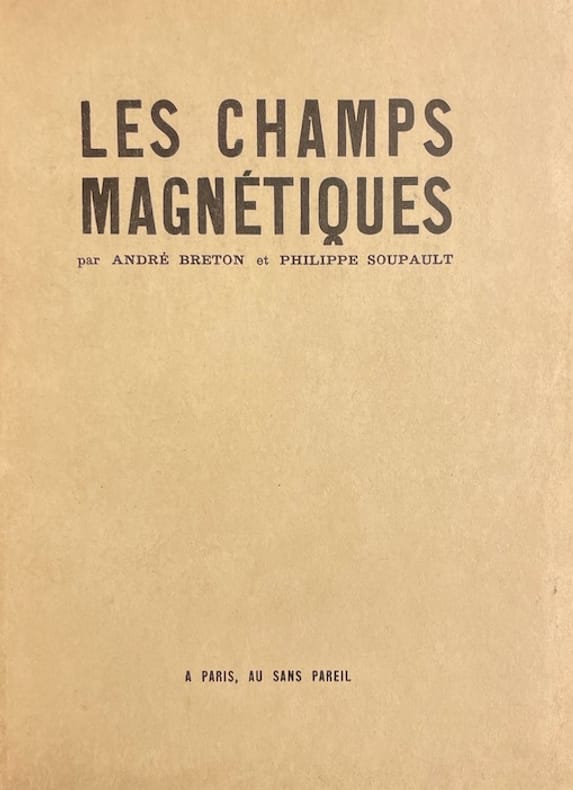
40971Paris, Au Sans Pareil, 1920 In-8°, 124 p. Reliure box rouge orangé avec décor mosaïqué sur les plats, dos lisse avec titre en long anthracite, couverture conservée, sous étui bordé [reliure signée Georges Leroux].
- 26 février 1955, 21,1x27cm et 14,5x11,2cm, 2 pages sur 2 feuillets, 4 pages sur 4 feuillets et une enveloppe. - Two complete, handwritten, signed manuscripts entitled "Magie quotidienne" First version with many crossing-outs and corrections, followed by the final version [with] envelope with handwritten notes 26 February 1955 | 21.1 x 27 cm and 14.5 x 11.2 cm, 2 pages on 2 leaves, 4 pages on 4 leaves and an envelope Complete handwritten, signed working manuscript entitled "Magie quotidienne", two pages written in fine handwriting in black ink on two leaves from the à l'étoile scellée gallery. Many crossing-outs and corrections. Complete signed final manuscript of the same article, four pages written in blue ink on four leaves. An envelope attached containing - in black ink - Breton's handwritten notes reused in his manuscript. Important and long manuscripts of this article which will be published in the first issue of La Tour Saint-Jacques in November 1955. "1955: with this text entitled "Magie quotidienne", Breton gives a distant echo to the beautiful phrase the "wonderful daily" which closed the first chapter of Le Paysan de Paris, in 1926. But far from Aragon passed to Stalinism, it is to the young Jean-Louis Bédouin that a text is dedicated, which may appear as one of the sketches of Breton's great project that year, a book dedicated to L'Art magique. For the time being, it is to the fascinating game of correspondence, formerly understood under the Hegelian category of objective chance, that these pages are devoted, which will appear, accompanied by a long letter from "G.D." (Georgina Dubreuil) in the first issue of La Tour Saint-Jacques, in November." (Breton Archives) This long manuscript, abundantly corrected and made up of six parts defined by dates - from 21 to 26 February 1955 -, takes the form of a diary recounting troubling coincidences encountered by the writer. [FRENCH VERSION FOLLOWS] 26 février 1955 | 21,1 x 27 cm et 14,5 x 11,2 cm | 2 pages sur 2 feuillets, 4 pages sur 4 feuillets & 1 enveloppe Manuscrit de travail autographe complet signé intitulé «?Magie quotidienne?», deux pages rédigées d'une écriture fine à l'encre noire sur deux feuillets de la galerie à l'Étoile Scellée. Nombreuses ratures et corrections. Manuscrit définitif autographe complet signé du même article, quatre pages rédigées à l'encre bleue sur quatre feuillets. On joint une enveloppe contenant des notes manuscrites de Breton à l'encre noire réutilisées dans son manuscrit. Importants et longs manuscrits de cet article qui paraîtra dans le premier numéro de La Tour Saint-Jacques en novembre 1955. «?1955?: avec ce texte intitulé «?Magie quotidienne?», Breton donne comme un écho lointain à cette belle formule du «?merveilleux quotidien?» qui fermait le premier chapitre du Paysan de Paris, en 1926. Mais, loin d'Aragon passé au stalinisme, c'est au jeune Jean-Louis Bédouin qu'est dédié un texte qui peut apparaître comme l'une des esquisses du grand projet de Breton cette année-là, un livre consacré à L'Art magique. Pour l'heure, c'est au jeu fascinant des correspondances, autrefois appréhendé sous la catégorie hégélienne du hasard objectif, que sont consacrées ces pages qui paraîtront, accompagnées d'une longue lettre de «?G. D.?» (Georgina Dubreuil) dans le premier numéro de La Tour Saint-Jacques, en novembre.?» (Archives Breton) Ce long manuscrit, abondamment corrigé et constitué de six parties délimitées par des dates - du 21 au 26 février 1955 - prend la forme d'un journal relatant des coïncidences troublantes vécues par l'écrivain.
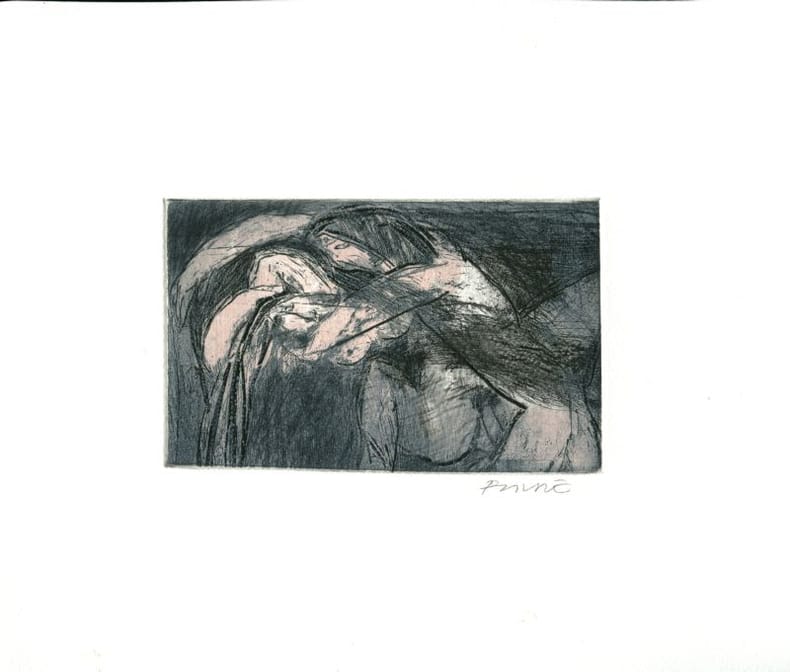
199855675S.l. Editions Liber Pater, s.d. [1998] 1 vol. Relié in-8 oblong, buffle noir, dos lisse titré en long à l'oeser rouge, premier plat orné d'un grand décor vulvaire mosaïqué de veau plissé noir avec deux réhauts de veau rouge carmin, doublures de papier noir, chemise et étui cartonnés avec pièce de titre de box rouge (Nobuko Kiyomiya). Elégante édition imprimée par Thierry Bouchard et illustrée de 4 eaux-fortes originales en couleurs signées par Claude Faivre. Tirage unique à 13 exemplaires numérotés sur vélin de Lana. Magnifique reliure d'inspiration érotique de Nobuko Kiyomiya dont le travail se signale par des décors abstraits qui laissent la part belle à l'imaginaire.
199855675S.l. Editions Liber Pater, s.d. [1998] 1 vol. Relié in-8 oblong, buffle noir, dos lisse titré en long à l'oeser rouge, premier plat orné d'un grand décor vulvaire mosaïqué de veau plissé noir avec deux réhauts de veau rouge carmin, doublures de papier noir, chemise et étui cartonnés avec pièce de titre de box rouge (Nobuko Kiyomiya). Elégante édition imprimée par Thierry Bouchard et illustrée de 4 eaux-fortes originales en couleurs signées par Claude Faivre. Tirage unique à 13 exemplaires numérotés sur vélin de Lana. Magnifique reliure d'inspiration érotique de Nobuko Kiyomiya dont le travail se signale par des décors abstraits qui laissent la part belle à l'imaginaire.
195036918Paris Le Soleil Noir 1950 1 vol. relié in-12, chèvre vert forêt, jeu typographique sur les plats avec les initiales J.P.D. mosaïquées en fins listels de box ocre ; au premier plat et inscrit dans le "D", le regard du poète est estampé à chaud à l'œser sur un empiècement de chagrin vert mousse, doublures bord à bord de box ocre avec main gauche mosaïquée dans la même peau, (et sur la première main cette citation frappée en lettres dorées "je perdis mon corps par dedans"), gardes de daim velours vert chlorophylle, couvertures et dos conservés, non rogné, étui de percaline vert sapin avec pièce de titre de box vert mousse et doublures en daim velours fougère (Morina Mongin), 87 pp., frontispice par Jacques Hérold. Édition originale du premier livre de l'auteur tiré seulement à 345 exemplaires, celui-ci numéroté sur vélin plumex avec ce très bel envoi : "A Daniel Angebault... De l'intérieur de la nuit à la tour du Haut jour - Et le jour s'est ouvert, avec une main de sang, sur une brèche de soleil. Amicalement. J. P. Duprey". Bon exemplaire dans une superbe reliure décorée de Morina Mongin.
195036918Paris Le Soleil Noir 1950 1 vol. relié in-12, chèvre vert forêt, jeu typographique sur les plats avec les initiales J.P.D. mosaïquées en fins listels de box ocre ; au premier plat et inscrit dans le "D", le regard du poète est estampé à chaud à l'œser sur un empiècement de chagrin vert mousse, doublures bord à bord de box ocre avec main gauche mosaïquée dans la même peau, (et sur la première main cette citation frappée en lettres dorées "je perdis mon corps par dedans"), gardes de daim velours vert chlorophylle, couvertures et dos conservés, non rogné, étui de percaline vert sapin avec pièce de titre de box vert mousse et doublures en daim velours fougère (Morina Mongin), 87 pp., frontispice par Jacques Hérold. Édition originale du premier livre de l'auteur tiré seulement à 345 exemplaires, celui-ci numéroté sur vélin plumex avec ce très bel envoi : "A Daniel Angebault... De l'intérieur de la nuit à la tour du Haut jour - Et le jour s'est ouvert, avec une main de sang, sur une brèche de soleil. Amicalement. J. P. Duprey". Bon exemplaire dans une superbe reliure décorée de Morina Mongin.
1934106142BBParis, Éditions Jeanne Bucher, 1934. 4°. Mit 182 photolithogr. hergestellte Collagen von M. Ernst. 5 farbige OKart. in Orig.-Pappschuber mit Rückenschild u. Deckelbild. 5 Bände. [5 Warenabbildungen]
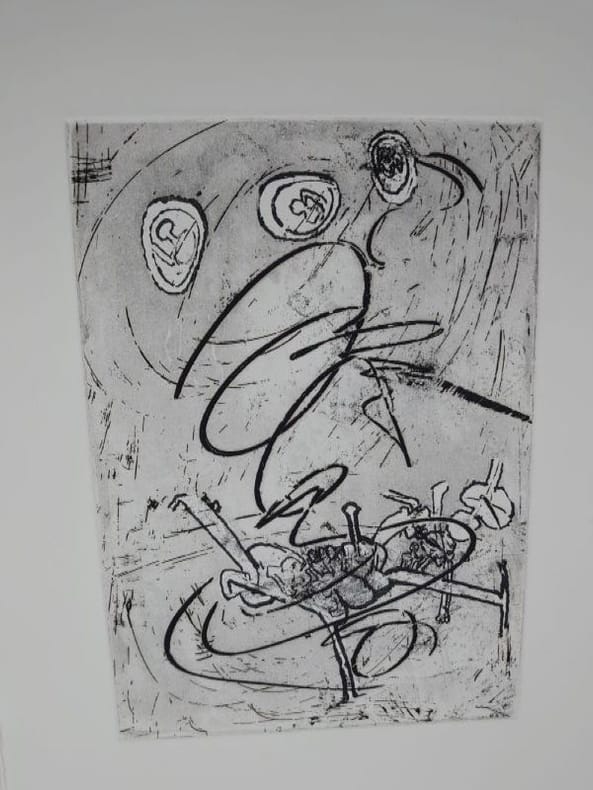
5363Paris, Éditions du Dragon, 1959. 33 x 26 cm, en ff. sous chemise et étui (accidenté) déditeur. Édition originale illustrée de 9 gravures en couleurs de Roberto Matta. Tirage à 99 exemplaires sur papier fait main par Cabrol. Ici, un des 8 ex. de tête (n°VI), après un exemplaire unique nominatif, contenant, outre les 9 gravures en couleurs, une suite en noir et 7 planches refusées en noir. Signatures de lauteur et de lillustrateur à la justification.Très bel exemplaire.
5363Paris, Éditions du Dragon, 1959. 33 x 26 cm, en ff. sous chemise et étui (accidenté) déditeur. Édition originale illustrée de 9 gravures en couleurs de Roberto Matta. Tirage à 99 exemplaires sur papier fait main par Cabrol. Ici, un des 8 ex. de tête (n°VI), après un exemplaire unique nominatif, contenant, outre les 9 gravures en couleurs, une suite en noir et 7 planches refusées en noir. Signatures de lauteur et de lillustrateur à la justification.Très bel exemplaire.
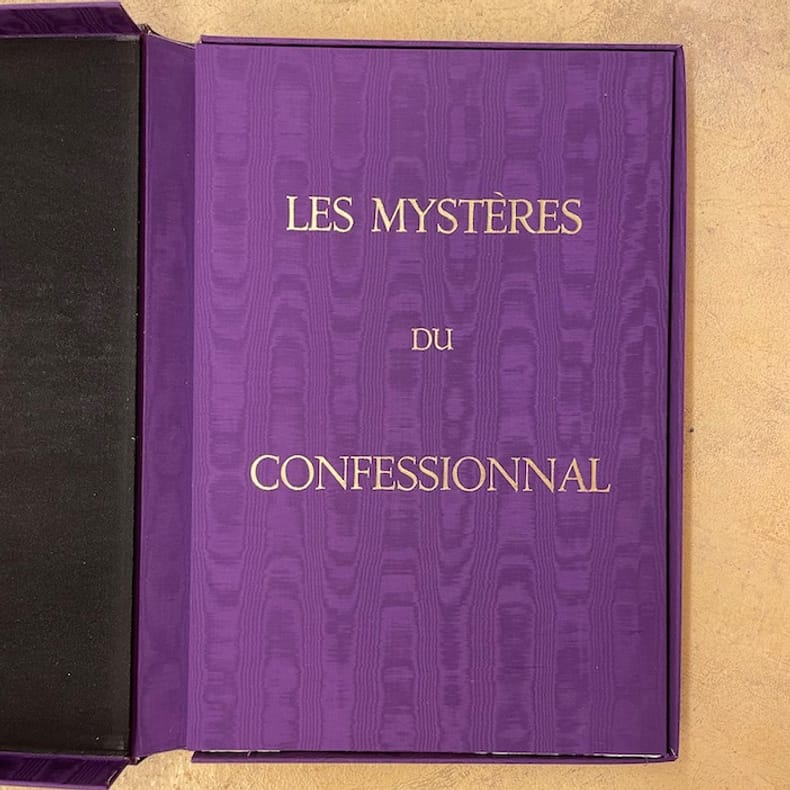
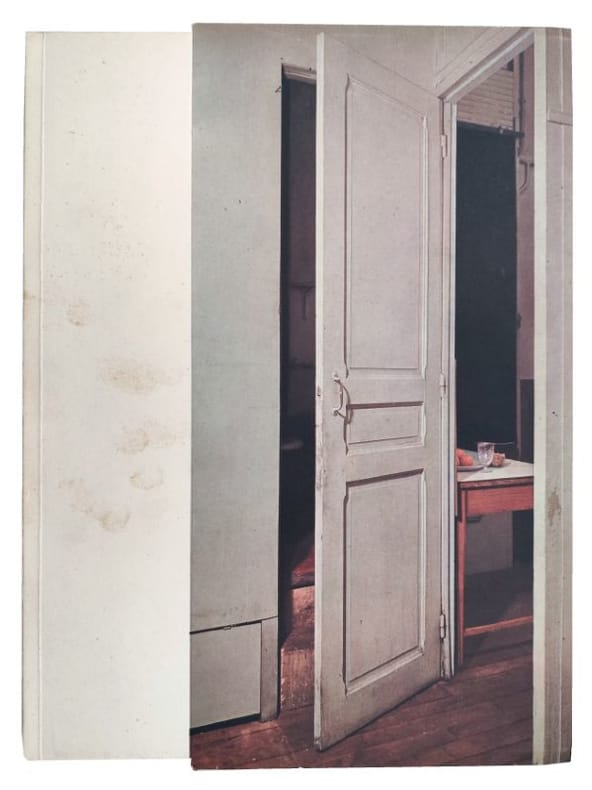
40857Paris et Nice, Editions Art & Valeur SA, 1973. In-folio, non paginé, en feuilles, sous cartable de soie violette et étui-boîte avec dos de maroquin.
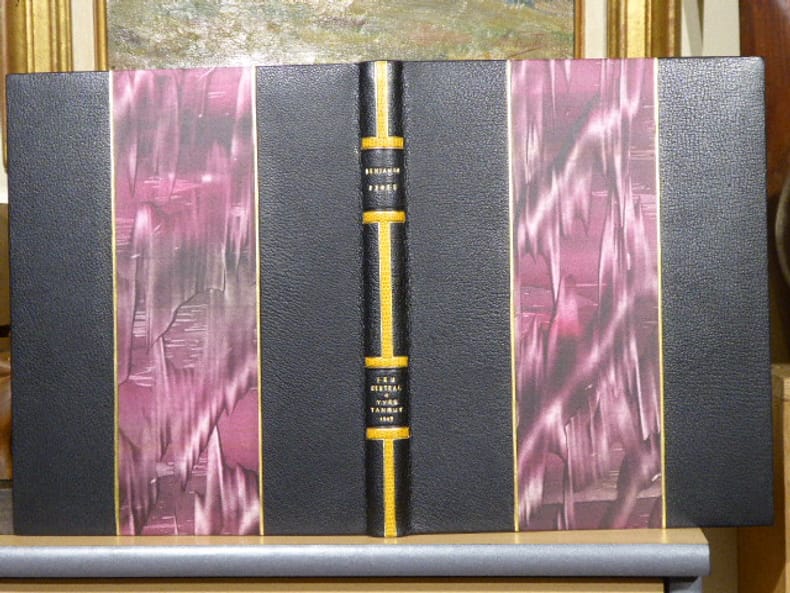
484005K Editeur - Collection Le Quadrangle Paris 1947 Petit in-4 carré ( 250 X 195 mm ) demi-chagrin ébène à bandes, dos lisse orné de listels mosaïqués tango en long et perpendiculaires, tête dorée, couvertures et dos conservés, non rogné, étui bordé orné d'une petite vignette abstraite en couleurs sur les plats ( Reliure signée de Yves RAMEAU ). La belle double couverture à découpe de Pierre FAUCHEUX d'après une maquette de TANGUY a été montée en début d'ouvrage. 4 illustrations originales d'Yves TANGUY reproduites en phototypie et une EAU-FORTE ORIGINALE. Edition en partie originale limitée à 1030 exemplaires numérotés, celui-ci un des 30 exemplaires DU TIRAGE DE TETE sur pur fil Johannot numéroté en chiffres romains ( N°V ) avec la gravure originale de TANGUY présente dans les seuls exemplaires de tête. 1 feuillet déchiré sans manque, bel exemplaire dans une belle reliure originale.Edition en partie originale reprenant les recueils suivants Immortelle maladie, Dormir, dormir dans les pierres, Je sublime, augmentée de deux recueils inédits Un point cest tout et A tâtons.
Vollständige Folge dieser nach André Breton reichsten, ausbalanciertesten und lebendigsten surrealistischen Zeitschrift, die auf "La Révolution Surréaliste", das erste Organ der Bewegung folgte. Mit Texten von Aragon, Arp, Breton, Char, Crevel, Dali, Duchamp, Eluard, Max Ernst, Sade u. Tzara. Komplett von größer Seltenheit. Tadelloses Exemplar in Orig.-Broschur.
19557423126 février 1955 | 21.10 x 27 cm | 2 pages sur 2 feuillets, 4 pages sur 4 feuillets et une enveloppe
Edizione originale nella tiratura di testa. CON DEDICA Esemplare XXXIII/L nella tiratura di testa dei soli 50 a grandi margini «sur Vélin d’Arches», ben completo della litografia originale a colori di Léger, siglata a inchiostro blu; firme autografe del poeta e dell’artista al colophon. In condizioni quasi perfette, conservato in cofanetto di pregio in mezza pelle. Unica collaborazione tra il già dadaista poeta franco-rumeno e il pittore francese campione del cubismo. Monod, Manuel, n. 10798 ; Saphire, Léger: The Complete Graphic Work, p. 210
1727Max Pisti, Antwerpen, 1991.En feuilles sous un emboîtage toilé rouge réalisé par Boekbinderij Jansen (51,5 x 71,5 cm). Emboîtage légèrement sali sinon ouvrage en très bon état.Reproduction d'un texte (du 19.2.1991) de Mariën et 5 photographies 21 cm x 28 cm, collées sur Steinbach 51 cm x 39 cm. Titrées (Chambre d'ennemi I à V), signées Mariën et justifiées 20 / 25 en dessous. (vues de sa chambre de travail).Édition originale un des 25 exemplaires numéroté et signé par Marien.
1727Max Pisti, Antwerpen, 1991.En feuilles sous un emboîtage toilé rouge réalisé par Boekbinderij Jansen (51,5 x 71,5 cm). Emboîtage légèrement sali sinon ouvrage en très bon état.Reproduction d'un texte (du 19.2.1991) de Mariën et 5 photographies 21 cm x 28 cm, collées sur Steinbach 51 cm x 39 cm. Titrées (Chambre d'ennemi I à V), signées Mariën et justifiées 20 / 25 en dessous. (vues de sa chambre de travail).Édition originale un des 25 exemplaires numéroté et signé par Marien.
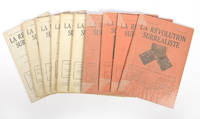
117780Paris Librairie Gallimard 1924-1929. . Periodical 12 issues in 11 vols.; 293 x 202 mm 11½ x 8 in; illustrated with halftone reproductions of photographs and artwork; wire-stitched photo-illustrated wrappers with black text nos. 1-5 are red and 6-12 are white occasional light handling light wear to spines occasional light marking and minor foxing oxidation to staples no.12 with more foxing and marking to lower side along spine a very good set in a custom chemise and slipcase; various paginations.<br /> A scarce complete set of the first and most famous surrealist journal whose first issue marks the official birth of the movement.<br /><br />Contributors include Louis Aragon André Breton René Char René Crevel Giorgio de Chirico Robert Desnos Paul Éluard Max Ernst Man Ray André Masson Joan Miró Francis Picabia Pablo Picasso and Yves Tanguy.<br /> Paris, Librairie Gallimard, 1924-1929. unknown
Edizione originale, emissione in francese. Esemplare integro e pulito in più che buone condizioni di conservazione (piccola lieve gora all’angolo interno alto, appena visibile sulla copertina superiore e su un paio di pagine interne; poche fioriture al taglio alto di alcune carte [1/2, 5/6, 13/14, 19/20, 27/28, 31/32], che sono anche un po’ brunite; minima lacerazione senza perdite al piede interno dell’ultima carta). Ultima uscita zurighese della rivista «Dada», fondata e diretta da Tristan Tzara a partire dal 1917 (nn. 1-2, seguiti dal n. 3 nel 1918). Sarà continuata a Parigi per altre due uscite fino al marzo 1920, per poi chiudere definitivamente. Straordinario numero doppio, ricchissimo di contenuti impaginati assai creativamente — su falsariga futurista — su carte di vario colore e con ampio uso di tipografia sperimentale e parolibera, non a caso chiamato «Anthologie Dada» in copertina. Come il precedente numero della rivista, anche «Dada» 4/5 fu pubblicato in una versione tedesca e in una francese, che differiscono per sole nove pagine. L’emissione francese non presenta alcuni dei testi in tedesco, ma ha in più tre xilografie di Arp non presenti nell’emissione tedesca, per un totale di sette incisioni (sei a mezza pagina e una testatina) stampate su carta colorata. Completano il notevolissimo apparato iconografico di questo numero tre litografie a piena pagina da disegni di Francis Picabia (tra i quali il «Réveil matin» al frontespizio), due litografie astrattiste a piena pagina di Viking Eggeling, una xilografia a mezza pagina di Hans Richter e due xilografie a mezza pagina di Raul Hausmann (per tacere delle tavole patinate applicate che riproducono opere di Augusto Giacometti, A. van Rees, Hans Richter, Vassilij Kandinskij, Arp e Paul Klee). Sul versante dei contenuti, alcune poesie e un «Autre petit manifeste» di Picabia sono seguiti da Tristan Tzara (Note 14 sur la poésie; Proclamation sans prétention DADA 1919; Aa 24 IX; Bilan), Jean Cocteau (3 pièces facile pour petites mains), Pierre Reverdy (Globe; 199 Cs), Philippe Soupault (Servitudes), Louis Aragon (Statue; Le délire du fantassin – dedicata a De Chirico), André Breton (Pour Lafcadio), Raymond Rediguet (A plusieures voix), Pierre Albert-Birot (Catastrophe; Extrait de «Poèmes à la chair»), Georges Ribemont Dessaignes (Le coq fou; Trombone à coulisse), Gabrielle Buffet (Gambit de la reine), J. Perez Jorba (Elle a deux têtes). Dada Zürich 1916-1920 (Berlin 2016), n. 25; Ilk, Janco graphische Werk, n. 37; Arntz, Graphischen Arbeiten von Hans Arp, pp. 40-44
19471758Collection le Quadrangle. K éditeur., Paris, 1947. 1 volume in-8 (247 x 195 mm) broché. 100 pp. + fnch sous couverture jaune façon parchemin imprimée du titre en rouge et chemise de papier gris, décorée au pochoir, avec découpe laissant apparaitre le titre sur le premier plat (Pierre Faucheux d'après un dessin d'Yves Tanguy), rhodoïd. ÉDITION ORIGINALE illustrée de 4 gouaches reproduites en phototypie en hors-texte. 1/30 ex. de tête sur vélin pur fil de Johannot, les seuls accompagnés d' UNE EAU-FORTE ORIGINALE D'YVES TANGUY, celle-ci justifiée XXV. La gravure est tirée en noir sur un feuillet volant (papier : 238 x 188 mm, cuivre : 175 x 135 mm). De même, l'exemplaire est numéroté XXV au colophon et paraphé à l'encre par l'éditeur. "Feu Central" regroupe les textes surréalistes "Immortelle Maladie" (1924), "Dormir, Dormir dans les Pierres" (1927), "Je Sublime" (1935), "Un Point C'est Tout" (1946) et "À Tatons", ce dernier publié ici pour la première fois. ENGLISH DESCRIPTION : Collection le Quadrangle. K éditeur., Paris, 1947. 4to. (247 x 195 mm). 100 pp. + fnch. First edition and first printing illustrated with 4 hors-texte phototypie plates reproducing gouaches by Tanguy, inserted loose (as issued) is Tanguy's original etching (leaf : 238 x 188 mm, plate : 175 x 135 mm). Original publisher's printed wrappers as issued : a grey jacket with illustration after Tanguy in white with excised section to front cover and beneath a yellow patterned wrapper with printed text in red. A mint copy of the 30 from the édition de tête on pur fil Johannot numbered XXV in Roman numerals and with Tanguy's original etching also numbered XXV by ink. Only these one have the etching. The original wrappers for the book were designed especially for the first 230 'exemplaires de luxe' of the book, were executed after the maquette by Pierre Faucheux after Tanguy's original drawing.
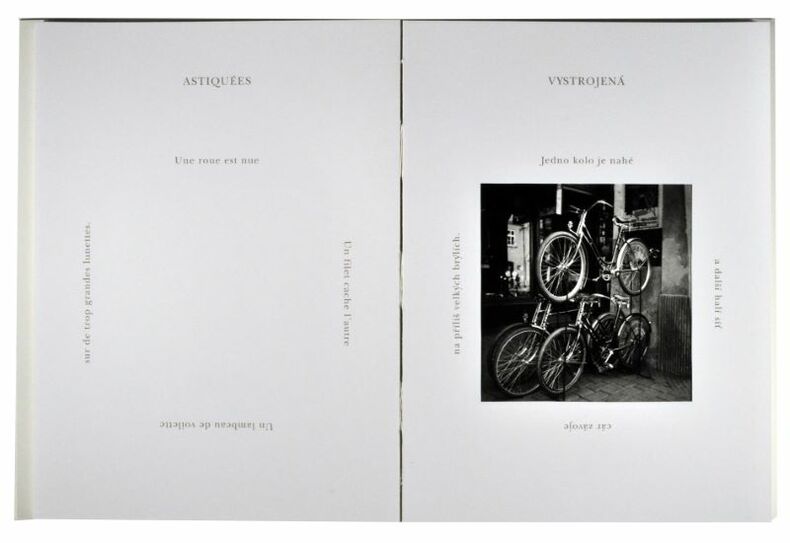
1999100064Prague Edice Strelec 1999 290x212cm Photographies de Jindrich Styrsky. Poèmes de Radovan Ivsic 68 pages avec 13 tirages photographiques originaux. Broché, couverture typographique, boîte en Plexiglas fumé.
195813023Editions Ussel ( Jehan Mayoux ) 1958. Deux volumes in-8 brochés de 60 et 46 pages au format 24,5 x 16 cm. Couvertures rempliées avec titres imprimés en rouge et noir. Dos carré muets. Plats et intérieur frais malgré d'infimes rousseurs éparses. Le livre de Benjamin Péret, non mis dans le commerce, est tirée à 273 exemplaires numérotés sur papier d’Auvergne à la main du Moulin Richard de Bas ( n° 102 ). Il contient 5 compositions de Marie Cerminova dite Toyen, dont une pointe sèche originale en frontispice, coloriée à la main, numérotée et signée par l’artiste. Le livre de Jehan Mayoux, destiné à accompagner l'exemplaire correspondant de l'histoire naturelle de Benjamin Péret, non mis dans le commerce, est tirée lui aussi à 273 exemplaires numérotés sur papier d’Auvergne à la main du Moulin Richard de Bas ( n° 102 ) et contient une eau-forte numérotée et signée par Charles Le Bars, située en frontispice, ainsi qu'une dédicace autographe signée, de Jehan Mayoux . Ces ouvrages étaient destinés aux souscripteurs. Rarissime ensemble de ces deux éditions originales, en superbe état général.
EXE-762Paris, Librairie Gallimard, 1924-1929. In-4° brochés, étui. Édition Originale COLLECTION COMPLÈTE des 12 numéros en 11 parutions. Revue fondamentale du mouvement Surréaliste, elle voit le jour à la suite du fameux Manifeste de Surréalisme, et s’arretera à la suite du Second Manifeste du Surréalisme. Dirigée simultanément ou conjointement par Benjamin Péret, Pierre Naville, et André Breton, cette revue regroupe de nombreuses recherches et questionnements des Surréalistes. Par ailleurs , elle se veut le lieu de publicité des auteurs du mouvement, artistes et poètes. Abondamment illustrée d'œuvres surréalistes, on retrouve des peintures de Chirico, des photographies cultes de Man Ray, ou encore des œuvres de Jean Arp.
105555New York, Cordier & Ekstrom, Inc., 1964, 290x212mm, 80 pages, broché sous couverture gaufrée illustrée avec découpe.Introduction et notes textuelles de l'artiste et critique pop britannique Richard Hamilton.
193648773London.: New Burlington Galleries. 1936. Original publisher's pink stapled wrappers with printed collage by Max Ernst to front cover later protective crystal wrappers. 8vo. 155 x 240 mm. Leaf with advertisements recto and verso leaf with title recto and committee and contributors verso leaf with advertisement recto and preface by André Breton translated by David Gascoyne verso and on following leaf leaf with advertisements recto and verso leaf with explanatory note and catalogue of exhibitors and their works in alphabetical order final leaf with printers' credit verso. Gaston Ferdière's presentation copy of the scarce catalogue for the ambitious and highly influential International Surrealist Exhibition held in London in 1936 signed by a number of the participants.Presented by Mesens in red ink: 'Exemplaire de Gaston Ferdière' and beneath the signatures of André Breton in green Hans Arp in pencil Roland Penrose in blue ink Claude Cahun in blue grey Sheila Legge Rupert Lee and David Gascoyne all in sepia Paul Eluard in black ink and Man Ray in pencil; the following leaf with advertisements and adjacent to the details of the committee list of contributors etc. features an inscription in black ink by Conroy Maddox: 'Refused to participate / Conroy Maddox'.Gaston Ferdière was a controversial figure a Surrealist-affiliated poet who published verse in the mid-1930s a doctor who administered to the Spanish Republicans in the Spanish Civil War and a psychiatrist lauded and criticised for the electroshock therapy he administered to Antonin Artaud in the 1940s before Artaud's suicide in March 1948. Ferdière was a friend of Breton Crevel Desnos and Péret later Hans Bellmer and Unica Zûrn who he also treated and was anathemised by Isou another patient and the Lettrists along with psychiatrists and psychiatry in totality. At the titme of the London Surrealist Exhibition Ferdière had published a small handful of verse collections: 'L'Herbier' 1926 'La Chanson Fruste' 1927 'Ma Sébile' 1931 and 'Paix sur la Terre - Poèmes pour les Théâtres Prolétariens d'Action Contre la Guerre' 1936. 'No one personifies the thorny entanglement between modernism and the science of the soul better than Dr. Gaston Ferdière the psychiatrist who administered no less than 58 electroshock treatments to the Surrealist playwright Antonin Artaud during the Second World War. Determined to reconcile poetry and medicine Ferdière had studied under 'Professor Claude' - target of Breton’s anti-psychiatric rants - at Sainte-Anne while at the same time passing as a 'star of Surrealism in the bistros' of Paris in the mid-1930s . By the time Artaud showed up on his doorstep at Rodez psychiatric hospital Ferdiére had long since abandoned his poetic aspirations. Yet his old interests were rekindled in long conversations with the Surrealist playwright whose talents he sought to revive by a combination of 'art therapy' - writing drawing translating Lewis Carroll’s 'Through the Looking Glass' - and shock treatments - six courses ranging from 4 to 13 sessions each between June 20th 1943 and January 24th 1945. Electroshock was still in its experimental phase - the machine had hardly rolled in the door at Rodez - and the convulsions were so severe that Artaud fractured a vertebra in his neck during one of the treatments.' Kevin Repp.The International Surrealist Exhibition was held at the New Burlington Galleries from 11 June - 4 July 1936 organised by committees from England France Belgium and Scandinavia. The scale and range of works from artists was highly impressive see a list of exhibiting artists below and London was acting alongside Paris and New York in focusing on the new movement. In the same year Alfred Barr opened a show at the Museum of Modern Art New York entitled 'Fantastic Art Dada and Surrealism' and Paris' 'Cahiers d'Art' journal then at the height of its influence had devoted a whole issue to the Surrealist object. The exhibition comprising of some 390 works painting sculpture drawing and objects was opened by André Breton to some two thousand people thereafter averaging a footfall of one thousand people per day. Lectures were delivered throughout the exhibition and included Salvador Dali's presentation from within a deep-sea diving suit which needless to say put a strain on his respiratory system and resulted in his being rescued by the young poet David Gascoyne with a spanner.It is also significant that one of the most legendary moments of the exhibition was the performance by Sheila Legge who stood in the middle of Trafalgar Square in a white wedding dress inspired by a Dali painting her head obscured by a floral arrangement prefiguring Feminist and Fluxus performances of some 20 years later.Exhibiting artists included Eileen Agar Jean Arp Eugène Atget Hans Bellmer Jacques-André Boiffard Bill Brandt Victor Brauner Fanny Brennan Emmy Bridgwater Luis Buñuel Claude Cahun Leonora Carrington Ithell Colquhoun Gala Dalí Salvador Dalí Jean Dallaire Paul Delvaux Óscar Domínguez Christian Dotremont Marcel Duchamp Marcel Duhamel Curt Echtermeyer Max Ernst Leonor Fini Gordon Onslow Ford Esteban Francés Alberto Giacometti Julio González Jane Graverol Jacques Hérold Valentine Hugo Frida Kahlo Wifredo Lam Jacqueline Lamba Dora Maar Conroy Maddox René Magritte Georges Malkine Marcel Mariën André Masson Roberto Matta Mikuláš Medek Oscar Mellor John Melville E. L. T. Mesens Lee MillerDesmond Morris Joan Miró Méret Oppenheim Wolfgang Paalen Benjamín Palencia Roland Penrose Man Ray Toni del Renzio Kay Sage Kurt Seligmann André Souris Martin Stejskal Jindřich Štyrský Maurice Tabard Yves Tanguy Dorothea TanningKarel Teige Kristians Tonny Toyen Albert Valentin Remedios Varo James F. Walker Unica Zürn Philipp Humm.Printed on very good laid paper by the 'Women's Printing Society' the contents are on the whole very good with some few scattered spots while the cover as can be expected shows some signs of age.see Kevin Repp's 'The Strange Case of Dr. Ferdière' Yale 2011; Ades 14.55. New Burlington Galleries. unknown
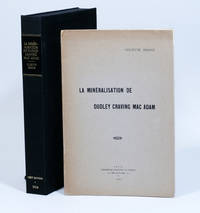
19242729Paris: Imprimerie Croutzet et Depost 1924. First edition. Original wrappers. Very Good. FIRST EDITION of Roche's surreal dadaist roman à clef exposing the misogynistic world of the French avant-garde. With annotations likely in Roche's hand. Like too many women artists of the early twentieth century French writer and artist Juliette Roche 1884 - 1980 has been long overshadowed by her male contemporaries. Roche came of age amidst leading artistic and literary salons of early 20th century Paris. She studied at Académie Ranson then considered the absolute best art school in Paris and was an early adopter of Cubism. However she is most closely associated with Dadaism. Despite Dada being a movement of absolute rebellion it harbored the normalized misogyny of the early twentieth century. Roche's most explicit critique of this discrepancy of rebellion vs repression can be found in La Minéralisation de Dudley Craving Mac Adam her groundbreaking novella.<br /> <br /> Part satire and part Dada nonsense the thinly veiled roman à clef is a prime example of the daring poetic style that Roche developed while living in New York during World War I. Having watched artistic vanguards come and go in Paris' salons and exhibitions Roche observed the New York City hijinks of Francis Picabia French 1879 - 1953 and Marcel Duchamp 1887 - 1968 with a level of detachment that alluded their American peers. She had close access to Picabia perhaps too close: in 1917 he and his wife Gabrielle Buffet-Picabia moved into an apartment directly beneath one Roche shared with her husband Albert Gleizes a French artist and philosopher who helped popularize Cubism on the Upper West Side. While Roche admired Picabia's iconoclasm she was disturbed by the misogyny she saw in works like his manometres where woman as 'la machine' was at best a manipulable object at worst the butt of a private joke. If taking Roche's ambivalence towards and her neighborly proximity to Picabia into consideration the novella could be inspired in part by an age-old story: pure contempt of one's neighbor.<br /> <br /> The novella is an indirect indictment of certain illicit behaviors Roche found annoying and dangerous. She synthesizes her fellow expatriates' personalities and physical traits to create the decadent Mac'Adam and the men he encounters on the day of his demise. Picabia becomes Mac'Adam. Swiss writer and boxer Arthur Craven 1887 - 1918 lends his name to the protagonist while becoming Lloyd Willow. Juliette Roche herself appears as Juliette Granite a play on words since roche means rock in French. Roche spins the narrative in poetic and surreal fragments at turns absurd and others told in a stream-of-consciousness style. La Minéralisation moves beyond conventional storytelling to allow readers into the minds of her characters through rich interior monologues revealing in each case her estimation of the particular model's idiosyncrasies. Roche seemed to find the antics of the all-male world of the Dadaists to be too limited and they're wickedly satirized among these pages.<br /> <br /> Written in ink on the first page is "Publié dans 'La Vie des Lettres' en 1921 / New York 1918" and there are a few words written on page 20 in the same hand. It appears to be Roche's handwriting from the few samples we've seen but we can't guarantee it.<br /> <br /> Paris: Imprimerie Croutzet et Depost 1924. Thin octavo 33pp terminal blank original printed wrappers stapled as issued; custom box. Small tear and split at top of spine; a near-fine extremely well-preserved copy.<br /> <br /> EXCEEDINGLY RARE: We can find records of no other copies that have been on the market.<br /> <br /> References:<br /> <br /> Burke Carolyn "Recollecting Dada: Juliette Roche." Women in Dada: Essays on Sex Gender and Identity edited by Naomi Sawelson-Gorse MIT Press 1998 557. Imprimerie Croutzet et Depost unknown