RémyLivre Rare Book

8 604 résultats
1972RO80217985Grange bateliere. 1972. In-8. Relié. Bon état, Couv. convenable, Dos satisfaisant, Intérieur frais. 286 pages augmentées de nombreuses planches en noir et blanc.. . . . Classification Dewey : 843.01-Nouvelles
19722083002116100311Seinenshokan 1972. Soft Cover. Fine. Volume: 1 Seinenshokan paperback
2111902158406170Seinenshokan N.A. Soft Cover. Fine. Number of pages: 190p Size: 19cm Seinenshokan paperback
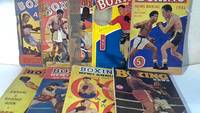
2c13530War Facts Press London 1951 bis 1975 jeweils ca. 130 S. broschiert Gebrausspuren/ zwei Bände mit Klebestreifen. - enthalten: 1951/ 1952/ 1955/ 1957/ 1958/ 1959/ 1961/ 1962/ 1975 unknown
2001RO30008365Le bord de l'eau. 2001. In-12. Broché. Bon état, Couv. convenable, Dos satisfaisant, Intérieur frais. 117 pages.. . . . Classification Dewey : 843.01-Nouvelles
Very Good Armenian Original fine red cloth bdg. with decorative gilt on board. Spine is repaired masterfully. Large roy. 8vo. (25 x 18 cm). In Armenian. [24], 429 p., 1 folded Armenian map of Turkey (map size: 24x33 cm), 29 unnumbered full-page b/w plates (one is folded). Armenian Golgotha is a memoir written by Grigoris Balakian about his eyewitness account of the Armenian Events. The memoir was released in two volumes. Volume 1, about his life prior to and during the Armenian Deportation, was released in 1922. Volume 2, about his life as a fugitive after the Deportation, was released in 1959. Originally published in Armenian, the memoir was later published in various languages including an English translation by Peter Balakian, Balakian's great-nephew, with Aris Sevag. Grigoris Balakian [or, Palakean, Palakian, Balakean], was a bishop of the Armenian Apostolic Church, in addition to being a survivor and memoirist of the Armenian Events in the Ottoman Empire. Grigoris Balakian was born in Tokat in the Ottoman Empire and graduated from the Sanasarian College in Erzurum. He had been studying architecture in Germany for two years and got a degree in civil engineering. He became a celibate priest ordained under the monastic name Grigoris Balakian. On 24 April 1915, he was among the group of 250 leading Armenian figures of Constantinople who were arrested and deported. One group was deported to Ayas. Balakian was deported to Çankiri, north-east of Ankara with the rest of the 190 other deportees from the capital. Only 16 of them would survive. He marched with 48 deportees from Çankiri in the direction of Deir Al-Zor in the Syrian desert. On the way, Balakian won the confidence of captain of constabulary Shukri Bey and learned about the Ottoman government's plan to exterminate the whole Armenian population. Balakian was able to flee toward Islahie. He joined a group of workers on the Bagdad-railway where Turkish deserters did forced labor alongside Armenian refugees. While Armenian workers between Marash and Bartche were being slain, Balakian fled to another construction site on the Bagdad railway. He was helped by German engineers and finally succeeded - disguised as Herr Bernstein - in escaping from Constantinople to Paris. At the 1921 trial in Berlin against Soghomon Tehlirian, the murderer of Talât Pasha, Balakian appeared as a witness for the defendant together with Johannes Lepsius. Soghomon Tehlirian was ultimately acquitted. Balakian became prelate of Manchester, London, and finally bishop of Marseille. Two churches were built under his guidance in Marseille and Nice (St. Mary, 1928) as well as a number of chapels and schools. He died in Marseille. Balakian is the granduncle of Anna Balakian, an expert on symbolism and surrealism who chaired New York University's Department of Comparative Literature, and the great-granduncle of Peter Balakian, an Armenian-American writer and winner of the 2016 Pulitzer Prize for Poetry. Balakian's memoirs in Armenian Golgotha are an important eyewitness account of the Armenian Events. He describes his experiences during the deportation. Balakian was one of the few surviving leaders of the Armenian community who gave an account of the deportation. Komitas (Gomitas) Vartapet belonged to the same group of detainees as Balakian. His information about the traumatization of the famous composer and founder of modern Armenian classical music is of eminent importance. OCLC: 1137218025. First Armenian Edition. Rare.
Very Good Armenian Original half bound leather bdg. Large demy8vo. (22 x 15,5 cm). In Armenian. 675 p. Prior to Soviet rule, the Dashnaksutiun had governed the First Republic of Armenia. The Socialist Soviet Republic of Armenia was founded in 1920. Diaspora Armenians were divided about this: supporters of the nationalist Dashnaksutiun did not support the Soviet state, while supporters of the Armenian General Benevolent Union (AGBU) were more positive about the newly founded Soviet state. From 1828 with the Treaty of Turkmenchay to the October Revolution in 1917, Eastern Armenia had been part of the Russian Empire and partly confined to the borders of the Erivan Governorate. After the October Revolution, Bolshevik leader Vladimir Lenin's government announced that minorities in the empire could pursue a course of self-determination. Following the collapse of the empire, in May 1918 Armenia, and its neighbors Azerbaijan and Georgia, declared their independence from Russian rule and each established their respective republics. After the near-annihilation of the Armenians during the Armenian Genocide and the subsequent Turkish-Armenian War, the historic Armenian area in the Ottoman Empire was overrun with despair and devastation. A number of Armenians joined the advancing 11th Soviet Red Army. Afterward, Turkey and the newly proclaimed Soviet republics in the Caucasus negotiated the Treaty of Kars, in which Turkey resigned from its claims to Batumi to Georgia in exchange for the Kars territory, corresponding to the modern-day Turkish provinces of Kars, Igdir, and Ardahan. The medieval Armenian capital of Ani, as well as the cultural icon of the Armenian people Mount Ararat, were located in the ceded area. Additionally, Joseph Stalin, then acting Commissar for Nationalities, granted the areas of Nakhchivan and Nagorno-Karabakh (both of which were promised to Armenia by the Bolsheviks in 1920) to Azerbaijan. From 12 March 1922 to 5 December 1936, Armenia was a part of the Transcaucasian SFSR (TSFSR) together with the Georgian SSR and the Azerbaijan SSR. The policies of the first Soviet Armenian government, the Revolutionary Committee (Revkom), headed by young, inexperienced, and militant communists such as Sarkis Kasyan and Avis Nurijanyan, were implemented in a highhanded manner and did not take into consideration the poor conditions of the republic and the general weariness of the people after years of conflict and civil strife. Such was the degree and scale of the requisitioning and terror imposed by the local Cheka that in February 1921 the Armenians, led by former leaders of the republic, rose up in revolt and briefly unseated the communists in Yerevan. The Red Army, which was campaigning in Georgia at the time, returned to suppress the revolt and drove its leaders out of Armenia. Convinced that these heavy-handed tactics were the source of the alienation of the native population to Soviet rule, in 1921 Moscow appointed an experienced administrator, Alexander Miasnikian, to carry out a more moderate policy and one better attuned to Armenian sensibilities. With the introduction of the New Economic Policy (NEP), Armenians began to enjoy a period of relative stability. Life under the Soviet rule proved to be a soothing balm in contrast to the turbulent final years of the Ottoman Empire. The Armenians received medicine, food, as well as other provisions from the central government and extensive literacy reforms were carried [.] Only one copy is located in OCLC: 782028953 (National Library of Israel - Jewish National Library).
18993184Paris Fayard frères 1899 in-8 demi-reliure Paris, Fayard frères, sd [ca 1899-1905]. 9 titres reliés en 2 volumes in-8, 23 x 14 cm (R), 166 (1), 144, 144, 166 (1) pp. - 166 (1), 72, 166 (1), 142 (1), 70 (1) pp., nombreuses gravures en noir dans le texte, demi-toile avec pièces de titre et monogramme P.P. en queue, couvertures non conservées.
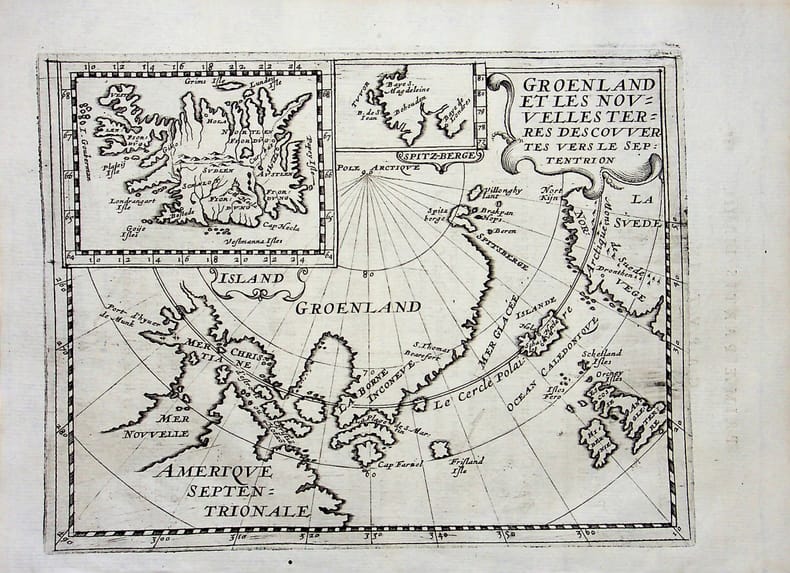
018779[Philippe Briet, Parallela geographiae veteris et novae] Groenland et les nouvelles terres découvertes vers le septentrion - Amériques, Islande. Gravure originale, 1649, environ 240*170mm. Gravure tirée de l'ouvrage du savant jésuite Philippe Briet (1601-1668) publié en 1648-1649. Texte au dos. [435]
8vo., First Edition; cloth, gilt back, a very good, clean copy in unclipped dustwrapper, the latter very lightly browned at extremities. Stape & Thomas, A8.
Barcelona, Luis Tasso, 1858, 20,5 x 13,5 cm., tela original con estampaciones, 326 págs. + 1 hoja + 5 láminas.
Barcelona, EDHASA, 1956, 18,5 x 12,5 cm., tela original con estampación, 437 págs. + 1 hoja.
1989ROD0038803La machine à lire. 1989. In-12. Broché. Bon état, Couv. légèrement passée, Dos satisfaisant, Intérieur frais. 70 pp.. . . . Classification Dewey : 843.01-Nouvelles
1989RO90125413La Machine à Lire, Bordeaux. 1989. In-12. Broché. Bon état, Couv. légèrement passée, Dos satisfaisant, Intérieur frais. 70 pages. Quelques rousseurs sur les plats.. . . . Classification Dewey : 843.01-Nouvelles
Black octavo; 125 p : 21 cm. In Portuguese. || Fiction. || Contents: Varandas da Eva -- Uma estrangeira da nossa rua -- Uma carta de Bancroft -- Um oriental na vastid„o -- Dois poetas da provÌncia -- O adeus do comandante -- Manaus, Bombaim, Palo Alto -- Dois tempos -- A casa ilhada -- B·rbara no inverno -- A ninfa do teatro Amazonas -- A natureza ri da cultura -- Encontros na penÌnsula -- DanÁarinos na ˙ltima noite.
193069495Various places 1930-1936. Generally very nice. Various sizes; about 8 x 6.". Lindbergh in Copenhagen; Lindbergh with Nazi Dr. Wurster; veteran French aviator welcoming Lindberg; with Anne in aircraft; and four pertaining to the kidnapping proceedings. unknown
42051Boston Boston History Company. 1899. (Boston) books
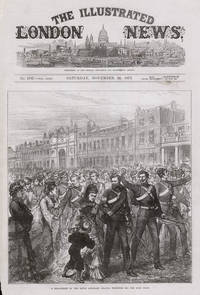
18737501873. Wood-engraving. 400mm by 280mm sheet. Wood-engraving from a front page of the 'The Illustrated London News' unrelated text on the reverse.<br /> A couple of marks. unknown
19812090502113715734Not Available 1981. Soft Cover. Fine. The book is in fine condition. Not Available paperback
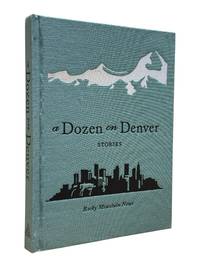
20094168Golden Colorado: Fulcrum Publishing 2009. 1st Edition. Hardcover. Near Fine/Near Fine. First printing of this anthology of stories celebrating Denver's 150th anniversary edited by the Rocky Mountain News and featuring Margaret Coel Connie Willis Robert Greer and others. Winner of the 2010 Colorado Book Award. This copy signed by Margaret Coel Nick Arvin Connie Willis Manuel Ramos Robert Greer and Laura Pritchett at their entries. Near fine with some light wear to front cover in near fine illustrated jacket which slips over the rear board. Beautiful production from Fulcrum Publishing. Fulcrum Publishing hardcover
91031601London 1878 I.L.N. A double page sheet hand colored very good 15.75 x 21.75 nicely done framable broadside.R A R E This is an excellent representation of the sudden chaos of a fire clearly in an area where foreigners live and shop. Most likely in Yokohama or Tokyo. Several foreigners are caught up in the scene while many Japanese scramble to save what they can others flee for their lives. The Japanese firemen are struggling to put the fire out while Japanese military try to control the crowd. Loaded with action. unknown
12 numbers, 8vo., First Edition, with numerous photographs, illustrations, plans and diagrams throughout; original pictorial wrappers, wire-stitched as issued, a near fine run. The run comprises: Nos. 155-166 (Winter 2010 to Autumn 2013 complete).
79 pages, translated from the Spanish by Gregory Rabassa and J.S, Bernstein. eng
A clean, unmarked book with a tight binding. Front endpaper has been removed. Small spot on back of inside cover and on title page. Wear to cover. 64 pages. "A pipe of Kif before breakfast gives a man the strength of a hundred camels in the courtyard." -- Nchaioui Proverb