1 254 résultats
19838908LA 1983. Unique. Near Fine. Unique. "Violent Femmes" was the debut album by Violent Femmes and one of the defining albums of the era. Recorded in July 1982 the album was released by Slash Records on vinyl in April 1983. Gordon Gano wrote most of the songs for the album while still in high school in Milwaukee Wisconsin. It was the band's most successful album going platinum eight years after its release. The album achieved what is believed to be a unique fee buy going gold four years after release without having made an appearance on Billboard's top 200 album chart. Rolling Stone ranked the album Number 22 on its list of the 100 Greatest Albums of All Time. They were discovered by James Honeyman-Scott of The Pretenders on August 23 1981 when the band was busking on a street corner in front of the Oriental Theatre the Milwaukee venue that The Pretenders would be playing later that night. Chrissie Hynde invited them to play a brief acoustic set after the opening act. <br /> The letter and lyrics sheet dated 2/23/83 and all in Gano's hand addresses a handful of major issues to be resolved before the album release a couple months later. Notably it includes the densely written sheet of all the song lyrics that was printed on the LP sleeve included with the debut album. The letter goes into detail regard reproduction of the sheet and addresses several other issues e.g. the quoting of a Muddy Water's song in Gone Daddy Gone. This is the original mss which launched over a million copies and helped shape a genre. Minor toning else bright and clean. 8.5x11" notebook paper; mss in black ink. Signed by the author. unknown
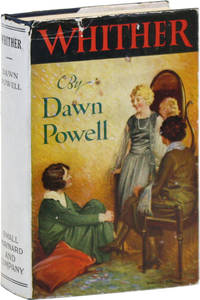
192546542Boston: Small Maynard & Company 1925. First Edition. Octavo 19.5cm; navy blue cloth with titles stamped in gilt on spine and front cover; dustjacket; iv23-3053pp. Spine ends very gently nudged hint of dustiness to upper edge of textblock else a fresh Fine copy. In the dustjacket designed by Harold James Cue priced $2.00 on front flap; light shelfwear touch of dust-soil to spine rear panel and flap edges with a few short tears and attendant creases upper edge of front panel and upper rear joint shallow loss to spine ends none affecting lettering and a dozen small soil spots to panels; still a bright substantially complete and Very Good example unrestored. Attractive copy of Powell's first novel an autobiographical work recounting the story of an idealistic Midwestern girl who moves to New York aspiring to be a playwright. She settles into a boarding house for women surrounded by a cast of characters who are perpetually out of money deeply concerned with their wardrobes and trying to find a man. She finds fulfilling work as a copy writer navigates her way throughout a string of suitors all the while soliciting advice from her housemates quits her job and briefly entertains the idea of taking up with a Greenwich Village bohemian and writing plays full-time; she abandons her dreams after accepting an eleventh hour proposal from a wealthy suitor embarks on a steamship to London with her man and sails off toward her new life with the words "Is the world really so gorgeous as this" <br/><br/>The earlier part of the novel at least somewhat mirrors Powell's own experiences. She led a somewhat unhappy childhood in Ohio where her stepmother took pleasure at burning her early attempts at poetry and fiction; after moving in with a supportive aunt and attending Lake Erie College she moved to Manhattan to pursue a career as a writer finding work as a publicist for several organizations before marrying her husband an advertising executive named Joseph Gousha and settling in Greenwich Village where she would live out the rest of her life. Her marriage allowed her to quit her job and focus on her writing full-time "using the Children's Reading Room of the New York Public Library on Fifth Avenue as the place to write. What became the classic elements of Dawn Powell's work were in evidence from the outset. Her first novel Whither.has the characteristic satiric tone mordant wit and unforgiving eye for the foibles of middle-class Americans whether they lived in the Middle West the setting for her early work or were newly arrived midwestern émigrés to the big city of New York desperately seeking sophistication" Carnes Mark C. "Dawn Powell." Invisible Giants: Fifty Americans Who Shaped the Nation but Missed the History Books p.232. Powell disavowed her literary debut leaving it out of lists of her publications throughout her lifetime and referring to She Walks In Beauty 1928 as her first novel. An uncommon debut published in small numbers and rare in dustjacket; we find no copies for sale in the auction record and OCLC notes a scant 11 holdings in U.S. institutions. SMITH P-576. Small, Maynard & Company unknown books
190601-G1906. Öl auf Leinwand, links unten signiert und datiert ?Eug. Bandell 1906?, verso auf dem Keilrahmen von der Künstlerin nochmals signiert und datiert sowie betitelt. 84,5:64 cm. Literatur: S. Sumera, Eugenie Bandell (1858-1918), Eine Frankfurter Malerin - das Spätwerk. Magisterarbeit, Univ. Frankfurt am Main, 1996, Nr. 99; Ausst. Katalog: Frankfurter Malerei seit der Jahrhundertwende. Galerie und Kunstantiquariat Joseph Fach, Frankfurt am Main, 1988, Nr. 6 mit Farbabb. auf dem Titel; Ausst. Katalog: Frauen an der Staffelei - Ein vernachlässigtes Kapitel der Frankfurter Kunstgeschichte. Frankfurter Sparkasse von 1822, Frankfurt am Main 1994.
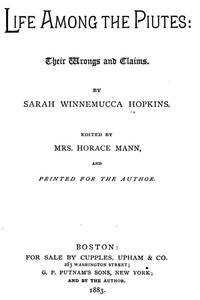
19963406V.p. 1996. A collection of 410 titles concerning Women in the West. Condition Statement: Overall most of the books in the collection are in "good" or "good" condition which typically describes a book that is sufficiently worn the binding soiled scuffed stained or spotted and may have loose joints hinges pages etc. To a lesser extent there are books in "fair" condition namely a well-worn book that has complete text pages including those with maps or plates but may lack endpapers half-title etc. The binding and/or jacket may also be worn. Women in the American West: Books and Ephemera from the Collection of Dorothy Sloan. SEE DETAILED FINDING AID on our website. <br/><br/>Dorothy Sloan b. 1943 is justly considered to be one of great scholar-booksellers of Western Americana Texana and Latin Americana. Dorothy Sloan Rare Books auction catalogues are recognized as models of their kind and feature an unusually broad array of printed books maps manuscripts and ephemera and are particularly strong in 19th-century materials. In many instances Sloan's bibliographic descriptions have become the description of record.<br/>She began her career at John Howell in San Francisco and thence to Jenkins Company in Austin. She issued her first rare book catalogue in 1984 and her first auction catalogue in 1994. Suffice it to say that as a woman she was literally a pioneer in such an endeavor. <br/><br/>Over the years she built a collection of Women in the West which is described in the 29-page Inventory below. Here is a collection of both women authors and women as the subject of historical and literary narrative. Most of the collection was kept in storage for the last twenty-eight years awaiting cataloguing and eventual sale. As we all know "Life" often interferes with our plans particularly as we grow older. <br/><br/>When Dorothy retired last year we acquired the collection of Women in the West. We are pleased to offer it en bloc for the price of $8200 which includes free shipping in the Continental United States. <br/><br/>Of the 410 titles in the collection nearly 25% are more than a century old. The earliest book in the collection is Sally Hastings' Poems on different subjects. To which is added a descriptive account of a family tour to the West. Lancaster 1808. The author describes her travels from Lancaster County to Washington PA. through the Alleghenies and gives an account of the Ohio River at Pittsburgh.<br/><br/>Only a handful of titles in the collection were published in the last 30 years the "newest" one dated 1996 namely: Anne Butler and Ona Siporin Uncommon common women. which contains culturally and ethnically diverse accounts of women who lived in the American West.<br/><br/>The physical size of the collection is considerable. Without any packing material it would encompass 15 large boxes. There are photographs gum cards engravings various inscribed books plays of the California Gold Rush memoirs and captivity narratives travelogues captivity narratives autobiographies Western novels pamphlets private press material a few 'zines journals catalogues and magazines. It is the culmination of decades of labor spanning all genres in the Western Americana tradition. The collection represents women's voices of a myriad of ethnicities including various Native American tribes African and African-American women Hispanic women prostitutes madams cowgirls ranchers pioneers and their struggles in the face of physical social and cultural adversity. <br/><br/>We are reluctant to mention "highlights" as it would suggest that "lowlights" do not merit attention from scholars and bibliophiles alike. We invite readers to peruse the Inventory of the collection capably prepared by Hunter Corb to allow readers to make that determination for themselves. <br/><br/>Included is the first edition of Miriam Colt's autobiography which describes her ill-fated expedition to Kansas Went to Kansas 1862 in which she traveled more than 1300 miles to establish a communal vegetarian colony. Colt provides vivid and frightening details of a family's ordeals on the frontier landscape including severe illness and encounters with lawless gangs. Defrauded of their investment in the Vegetarian Settlement Company the Colts left Kansas in the fall of 1856. Colt's husband and son died en route leaving only mother and daughter to return to New York. <br/><br/>Another work of interest is Sarah Hopkins's Life Among the Piutes an autobiography written at the encouragement of Ralph Waldo Emerson. This is considered to be the first book written and published in English by a Native American woman. It provides "extensive information about pre-White northern Paiute culture the types of foods marriage and other social practices as well as political leadership" Paher while simultaneously increasing awareness and sympathy for the plight of Native Americans. <br/><br/>Melinda Rankin's Twenty Years Among the Mexicans describes her missionary labor in south Texas and Mexico. Herein are depicted the experiences of the first Protestant woman missionary in Latin America. Although laws in Mexico at the time forbade the introduction of any form of Protestantism into the country Rankin traveled there in 1852 and established the first Protestant mission in Northern Mexico continuing her work there for a few decades before returning to the United States due to health problems. This narrative describes not just Rankin's missionary labors but also many dramatic events in Texas and Mexico including revolutionary turmoil the American Civil War and her capture by the notorious military leader rancher and outlaw Juan Cortina.<br/><br/>From early settlers of the West during and shortly after the American Revolution; to ranchers and pioneering women in the early days of the Republic of Texas and the fight for independence; to overland travels in covered wagons on the famed Oregon Trail at the outset of the American Civil War; to excursions into Mexico and Latin America at the end of the 19th and into the 20th centuries. Over two hundred years of women's experiences can be found within this collection and as such there is something for every student and subject matter.<br/><br/>SEE DETAILED FINDING AID ON OUR WEBSITE which enumerates each and every one of the 410 titles:<br/><br/>https://www.michaellaird.com/cat.phpid=307. unknown books
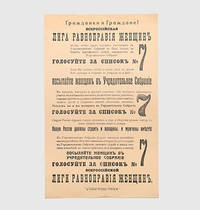
1917134554Petrograd: Tsentr. Tipograf 1917. A new Russia should be built by women and men together A remarkable survival of a flyer printed by the All-Russian League of Equal Rights for Women for their political campaign for the election to the Constituent Assembly in November 1917. The League participated in elections as its own party under the number 7. In English the flyer text reads: ''Female Citizens and male citizens! The League of Equality for Women wishing that the right of women to participate in the Constituent Assembly was not only on paper expose its candidates to the Constituent Assembly. Vote for the list number 7. If you want our children not to grow up without a home and the old people to not die on the street - send women to the Constituent Assembly. In America Australia and other countries where women take part in the drafting of laws the number of schools is multiplied prisons are empty debauchery and drunkenness noticeably diminish the protection of children and the elderly is fully secured by law. Let's send women to the Constituent Assembly too. The old Russia was built only by men and the grief and misfortunes of the motherland were always shared with them by mothers wives and daughters. A new Russia should be built by women and men together! The most important Russian laws will be written in the Constituent Assembly. From the laws that will be created in the Constituent Assembly the fate and life of many generations depends not only on men but also on women and so send women to the Constituent Assembly.''. The campaign for women's political rights in Russia termed the ''women's liberation movement'' became possible only with the beginning of the revolution in 1905 when the question of the democratization of the political system arose. The oldest women's association in Russia the All-Russian Women's Mutual Charity Society established in 1895 was actively involved and new organizations were created: the Union for the Equality of Women 1905 Women's Progressive Party 1905 and the All-Russian League of Equal Rights for Women 1907. The most influential organization was the first the Union which had 48 offices in various cities across Russia and actively conducted agitation among women workers and peasants. After its disintegration the League of Equal Rights for Women became its successor. Members of the League deliberately abandoned the broad political programme and focused their attention only on suffragist demands practising agitation tours through the provinces Orel Saratov Rostov-on-Don Kremenets Tomsk Kiev Simferopol and Narva. As a result branches of the League emerged in many cities including Moscow 1910 Kharkov 1912 Tomsk 1914 and Yekaterinburg 1914. This included the establishment of the following departments: a reading room for street children with a view to preventing child prostitution; a publishing committee that printed cheap pamphlets and books on women's issues; and an editorial commission that published the proceedings of the congress. Every day reports were given on the issues of women's equality in the League's premises. After the February Revolution delegates from the League repeatedly met with the leaders of the Soviet of Workers' and Soldiers' Deputies on the issue of women's suffrage. Despite initial promises of support they refused to immediately act on granting political rights to women. In response the League organized the famous mass march on 20 March 1917 which brought together about 40000 women. To that date it was the most numerous and memorable stand by the Russian women's movement and resulted in the adoption by the Provisional Government of a decree on universal suffrage which was passed on 20 July 1917. Single-sided flyer 365 x 220 mm. In near-fine condition. unknown
194155330Flushing NY & Beverly Hills CA: Sharlee Janet Munster Blow Raymond Blow 42-20 Kissena Blvd.; 9168 Beverly Blvd. 1941-1968. Two vols. Thick 4to. 163 mylar sleeves with 300 silver gelatin photographs sized from 2.5 x 3.5 in. up to 8 x 10 in. 35 of the photographs are signed or dedicated either to Sharlee or Ray many have photographer’s stamp on versos or embossed photographer’s stamps some have lengthy explanatory location and/or identifying annotations on versos several are sleeved in nightclub portfolio sleeves 10 colour transparency slides & 20 snapshot negatives in photo lab sleeves over 100 newspaper clippings magazine clippings articles printed certificates brochures theatre programs etc. Recent 3-ring binders with stamping on front covers. This amazing photo and ephemera archive offers an invaluable visual record of a young Flushing NY ice skater performing at Rockefeller Center with Sonja Henie’s ice shows off-Broadway cabaret and night club venue during World War II and post-War New York. Munster 1924-2016 was one of the thousands of young girls inspired to become professional ice skaters by Sonia Henie’s ice skating movies ice shows glittering costumes and production numbers. By 1941 Munster was appearing in “It Happens on Ice†which ran for 386 performances and included such ice skating performers as Dorothy Allan Jo Ann Dean Paul Castle Edwina Blades and Mary Jane Yeo. Photos in the archive show her early practice sessions as a teenager in Flushing Queens NY signed photos from Betty Atkinson Paul Castle and other stars who appeared in the production along with newspaper clippings and program. Within two years she was appearing in the Iridium Room Ice Shows which were twice nightly affairs and designed for before & after Broadway shows featuring a 20 foot square ice rink and often elaborate sets. She would perform in the “Newfangles†Ice Show at the Terrace Room alongside Carol Lynne Rudy Richards Dorothy Lewis Bob & Peggy White; “Ice Capers†at The Bowman Room in 1944 at the Biltmore Hotel; the “Circus Haze Ice Review†at the Hotel Roosevelt; and finally the long running “Hats Off to Ice†which ran for 889 performances from 1944 through 1946 and was Henie’s most popular show also represented in this collection by the souvenir Center Theatre Orchestra Seat Stub for the first performance in June 1944. The Iridium Room and other New York supper club ice shows featured live music during and after the war often featuring Freddie Miller Cab Calloway -- represented here in the archive with a signed photo showing Cab and his band dedicated to Sharlee The Harmonicats -- another signed photo all signed by the trio Gus Martel and others thriving through 1947. After a cabaret tax was imposed by the city on the supper clubs offering live entertainment hotels across New York eliminated the very popular ice skating shows. Of additional interest are the many production photos showing performance practices publicity shots while dressed in elaborate costumes the chorus lines of male and female ice skaters and the tremendous stage backdrops for such productions as Hats on Ice. Some of the photos show Sharlee Munster and her future husband Ray Blow in skates in costume along with many of their costars in these large productions. Sharlee had tremendous drive and in addition to her passion for skating and performing was inspired to become a pilot and at 18 years old began flying lessons 2-3 times a week weather permitting often working around her show and social schedule. There are photos of her at the Bendix airfield her standing beside a Piper J-3 Cub in which she had purchased a half-interest and successfully completed her first solo flight at Lime Ridge Airport in Poughquag NY August 11 1944 with Norman Sylvia as her flight instructor. She joined the Women Fliers Club and began studying and taking the tests for a commercial pilot’s rating intending to become a charter pilot after the War. Following the closing of most of the ice shows in New York Sharlee and her cousin Ray Munster became ski instructors fencing instructors and performed in ice shows at at the famed Concord Resort Hotel in the Borscht Belt part of the Catskills. In January 1948 she marries one of her fellow skaters Raymond Kenneth Blow 1924-1992 who had also appeared in many of Sonja Henie’s productions at Rockefeller Center as well as the Roxy Theatre and as a couple continued living in the family apartment on Kissena Blvd. through 1950 while Ray performed. By 1952 the young couple and their son Greg had moved to an apartment in Beverly Hills CA with photos showing the family frolicking and fishing at the California beaches visiting Palm Desert in 105 degree heat the opening of Disneyland and more. See: Laura Jacobs Sonja Henie’s Ice Age Vanity Fair Feb. 11 2014; Ryan Stevens Inside Edges in the Iridium Room Skate Guard The Ultimate Archive of Figure Skating’s Fascinating and Fabulous History July 2 2018. Sharlee Janet Munster Blow, Raymond Blow, 42-20 Kissena Blvd.; 9168 Beverly Blvd., unknown
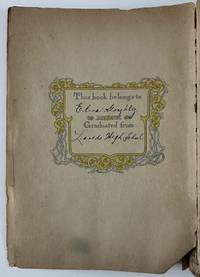
192012840Prairie View TX 1920. 92pp. of ink manuscript plus eighteen photographs and seven ephemeral items on an additional 11pp. Original scrapbook 12.25 x 8.5 inches. Ownership inscription on front pastedown reading "Estella V. Sells Prairie View College May 17 1920." A well-used personal scrapbook with binding loose with cover nearly detached covers worn with mild staining pages toned and occasionally chipped along margins fading to ink entries along edges of pages though nearly all content legible with care. Good condition. A wonderful scrapbook compiled by Estella Sells Johnson 1897-1900 a young African American woman studying at Prairie View State Normal & Industrial College now Prairie View A & M University documenting her time there in 1919 and 1920. Johnson was born in Jasper County Texas to Watkin and Matilda Sells. She was the 1918 valedictorian of her class at the segregated Jasper High School and enrolled at Prairie View that same year through the summer of 1920. In 1920 she married Reverend Napoleon Johnson shortly thereafter giving birth to her two children. She was finally able to complete her undergraduate degree in 1936 and earned a master's degree in education in 1950. Throughout all this she continued to work in the Jasper school system in a career that lasted forty-six years until retiring in 1966. The scrapbook is accompanied by a copy of her institutionally unrecorded family-published autobiography The Responsibilities of a Christian Life published 1990 as well as a photograph of her from later in life.<br /> <br /> The eighteen photographs in the scrapbook consist of portraits of peers around campus some captioned as well as a photograph of the Prairie View band and a candid photo of the Samuel Huston College HBCU football team. Ephemera includes an alumni banquet invitation a musical program for chapel services a program for a senior class pageant a commencement day program with laid-in college song lyrics an orchestra program a commencement sermon program and a calling card. Several of the programs appear to have been trimmed possibly from larger leaflets.<br /> <br /> The scrapbook also contains forty pages of inscriptions and autographs from classmates and faculty at the school some quite detailed and heartfelt. An additional fifty-two handwritten pages meanwhile provide densely written detailed descriptions of events at the school plus personal anecdotes inside jokes poems class songs and slogans quotations by classmates and faculty as well as entries describing Estella's own feelings regarding life at school. Many of the pages contain diary-style descriptions of events at the school including banquets dances recitals and a sports meet with Bishop College. One five-page entry narrates a visit by famed African American missionary Max Yergan to the campus under the auspices of the YMCA as well as lectures and a sermon given at the same conference by Channing Heggie Tobias. Her description reads in part: "Friday night Mr. Max Yeargan Missionary to India and Africa gave a series of stereopticon Views with lectures. These views treated of the conditions existing in those countries modes of living customs and great preponderance of illiteracy. Especially interesting was his account of of his experiences and adventures in traveling. Doctors and nurses are few for the large population and consequently a large number of inhabitants die for the want of medical attention. He expressed his hope that in response to the call of a needy people there would be those in America Texas and even Prairie View who would answer willing. Mr. Yeargan is planning to return to Africa in the early fall and solicits the support of all well-wishers. Over $300 was subscribed by friends to aid him in this work."<br /> <br /> Mr. Yeargan is a wide awake young Christian worker and is giving his life to this service for the betterment of humanity. His life is in truth worthy of emulation. At the platform meeting on Saturday Mr. Channing H. Tobias International Secretary New York was presented and gave a very masterly discussion on "The Church" telling of the purpose of the Church from its early establishment and its rightful place in the World's program. He emphasized the fact that the Church was the nucleus around which all life was centered and when men would come to a realization of this then it would be that conditions would assume a normal state and mean for the reestablishment of a Christian era.<br /> <br /> Another two page entry meanwhile gives an account of the 1919 observance of National Negro Health Week held at the college: "Dr. Osborn next introduced Dr. J.M. Franklin resident physician who discussed the knowledge of medicine among Negroes and what is being done to improve the faculties for handling disease among colored people as well as increasing advantage for Negroes to acquire training in the medical profession…and laid a deal of emphasis on the fact that the time is here when people will not even patronize a doctor because he happens to be black unless he can deliver the goods."<br /> <br /> A third entry covering two pages describes a visit to campus by sociologist Franklin H. Giddings. Other pages contain an essay titled "Ideals for Girls" inspirational poetry titled "Life" and "It Can Be Done" a lost and found "Advertisement" "lost a precious lad about 4 1/2 feet tall" a heartfelt entry on receiving a gift from a "home girl" quotations from faculty "Miss Bass 'This is the biggest mess I even seen its so bad'" and more. Other humorous entries include an anecdote about accidentally locking "Miss Williams" in a room a sketch titled "this scene open with a Negro in a court room who had filed complaint against his wife for rocking him to sleep" a dialogue between "Prof Butler" and "Dean Griggs" and a humorous anecdote by "Dean Reynolds" about seeing "one of my white friends coming down the same street in a big Nash Six sitting like he had conquered the whole world" and being told "Uncle aren’t you tired of walking.why don't you run for a while." Finally a comic song titled "The Twenty-Third Psalm of the Flunkers" reflects the anxieties of college life: "The twenty-third psalm of the flunkers. The teachers are my shepherds I shall not want. The leaders me resides the classics. I fear my studies far zeroes demerits and even a ticker for home may not comfort me."<br /> <br /> OCLC locates a single printed yearbook from Prairie View that was published in 1917 with 1926 as the next recorded year. The present volume combining elements of a diary scrapbook and yearbook thus fills a gap in the history of the institution while also providing detailed personal insights of a young African woman attending college in Texas during a period of intense Jim Crow segregation. unknown
1910List2960Southern California 1910. Ten photographs measuring 8 x 10 inches and smaller with most measuring 5 x 7 inches. Brown Brothers stamps and manuscript captions verso; some with editorial overpainting; some mounted on heavy cardstock. Marginal damage with some tears and corners missing; very good. Japanese immigration to the US began at a large scale following the midcentury loosening of Japan’s emigration laws and the US’s 1882 Chinese Exclusion Act. Most Japanese immigrants entered through the west coast especially San Francisco Portland and Seattle and settled in central and southern California.<br /> <br /> Offered here are ten photographs of Japanese immigrants and laborers in California likely taken between 1900 and 1910 as one is dated 1903. Their work is mainly agricultural though one photograph possibly depicts miners: four men holding sledgehammers stand on a mountainside. Two show newly-arriving immigrants; in one women are lined up to receive a vaccine. Interestingly three of the photographs include women subjects—prior to the 1907 Gentlemen’s Agreement the Japanese population in some California counties had gender ratios of over 100 men to one woman and some simply had no female Japanese residents at all.1 One photograph that shows a woman at work in a cranberry field is identified as having been taken in Moneta California and the caption states that the cranberry farm was “leased by Japsâ€. Moneta actually had the least skewed gender ratio of any Japanese-American settlement at the time in part because its Issei residents were relatively economically better off and as the caption suggests could afford to lease or buy farmland.1<br /> <br /> Of interest to historians of Japanese immigration to California and the Japanese-American labor force around the turn of the century.<br /> <br /> 1 Lane Ryo Hirabayashi & George Tanaka “The Issei Community in Moneta and the Gardena Valley 1900–1920†Southern California Quarterly 70 no 2 Summer 1988: 127–158. unknown
19391709301939. WOMEN. Soviet Women. 50 ff. illustrated with photographs throughout. 4to 250 x 190 mm. bound in publisher's embossed yellow cloth in publisher's cardboard slipcase. Moscow: State Art Publishers 1939. A photographic homage to the role of women in Soviet Russia. Unlike so many of the Soviet propaganda books where the reality is far removed from that depicted in the books this work demonstrates a reality which was that in the Soviet Union women had in fact reached a point where many if not all were availed of the same opportunities given to men. Perhaps because it was published on the eve of the War this happens to be a particularly scarce book. A fine copy. Karasik The Soviet Photobook 1920-1940 pp. 484-485. hardcover
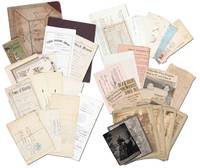
19425465Colorado; Massachusetts 1942. Hailing from an immigrant family that rose to prominence in the West Mary Tritch Rogers and her daughter Georgette Houston were often overlooked in their own time in favor of the family patriarchs. Mary's father George Tritch 1829-1899 was after all a German immigrant whose evolution from downtrodden pioneer to millionaire rail road and real estate magnate was documented in Sketches of Colorado 1911 and celebrated in numerous newspaper and society articles in his lifetime. Meanwhile Mary's husband Benjamin W. Rogers 1842-1917 was Colorado's first dentist and a community cornerstone. Yet the present collection reveals that Mary and Georgette after her were more than ballroom delights. Savvy investors and business women in their own quiet way they built and maintained their own empire even in the face of scandal marital separation and disinheritance. Without the documents preserved here we might never know their story.<br /> <br /> The territory and later state of Colorado had varying property laws for women across Mary's emergence to adulthood. It was a space where white male settlers drastically outnumbered their female counterparts; and when statehood in 1876 stripped women of suffrage there was little incentive for men to vote to reinstate it immediately. That said the increasing number of Married Women's Property Acts extending across the US did provide expanded protections for women to have control over their own wages their inheritance their land ownership and their investments. Mary Tritch Rogers used this to her benefit as portions of this collection show. Taking the allowances given her first by her father and later her husband she was able to grow her own little empire based in stock investments real estate purchases and interest earned from rents and loans to members of the community. This financial privilege allowed her to legally separate from her husband and her unhappy marriage in 1900 signing over $15925 -- or $576000 today -- for his promise to depart peacefully and disconnect from her. It also allowed her to survive disinheritance from her father -- something reported by newspapers following his death and potentially connected to the public scandal of her separation. Along with her daughter she relocated to Massachusetts for the remainder of her life. Though newspapers suggested this was for her "health" it's far more likely that the distance from her estranged husband and perhaps even Massachusetts' own property laws were a larger appeal.<br /> <br /> <br /> With her independent wealth Mary Tritch Rogers was also able to provide freedoms for her daughters that weren't available to her. Georgette would be widowed early on in her marriage and lived as a single mother to her children William and Dorothy. Account books from her household show however a comfortable life similar to her mother's. According to the 1910 and 1920 US Censuses she took up residence near Boston Massachusetts with her children and mother keeping at least one maid. Yet neither women list employments other than head of household. Notably neither show signs of remarrying either. By the time of Mary's death in 1935 her estate was valued at $269458 -- or $6.02 million today. A full accounting of her assets and debts owed for settlements and funeral expenses is included.<br /> <br /> The research rich assortment of ledgers checkbooks letters travel and stock documents legal materials and other personal ephemera give scholars an opportunity to examine not only the individual lives of these women but also how their financial savvy contributed to or harmed the white and Indigenous communities around them. To what extent did these women's lives in Colorado in Europe where Mary lived for a time or in Massachusetts expand or contract based on the localities' laws surrounding women's finances And to what extent did the women replicate or depart from some of the more fiscally aggressive and harmful practices of the men around them<br /> <br /> <br /> <br /> Collection contains:<br /> <br /> Mary Tritch Rogers' Loans and Banking Ledger 1894-1898<br /> Quarter roan over printed cloth with handwritten ownership title to front board. Measuring 235 x 185mm and containing 22 pages including pastedowns. With detailed information on Rogers' investments outgoing loans and payments owed or received during the later years of her marriage leading up to her formal separation. <br /> <br /> Georgette R. Houston Account Book 1908-1911<br /> Pictoral cloth with stitched edges. Measuring 185 x 60mm and containing 24 handwritten pages of financial information from her early years of marriage. Managing her household expenses and allowances.<br /> <br /> Georgette R. Houston Check Book 1941-1942<br /> Pebbled faux leather. Measuring 215 x 175mm and with all check stubs filled and all checks absent. Documenting her expenditures including household costs tuitions and charitable donations. <br /> <br /> Packet 1: Legal and Financial Documents <br /> 1895 Power of Attorney granted by Mary T Rogers to her father and husband while in Paris<br /> <br /> 1900 Formal Separation and settlements between Mary T Rogers and her husband 2 signed copies<br /> <br /> 1916 Attorney letter addressed to Mary T Rogers<br /> <br /> 1935 Mary T Rogers final estate and funeral expenses<br /> <br /> Packet 2: International Travel<br /> 1892 Family Visa for travel to Europe<br /> <br /> 1896 Single Visa for Mary T Rogers' travel to France<br /> <br /> 1899 Family Visa for travel to Europe<br /> <br /> 1904 Single Visa for Mary T Rogers' travel to Germany<br /> <br /> <br /> Packet 3: Assorted Family Documents<br /> <br /> 1 Sheet of Family Marriages & Births<br /> <br /> Unidentified dental record<br /> <br /> 1901 Stock Certificate<br /> <br /> 1911-12 Car Insurance Letter in Mary T Rogers' sole name<br /> <br /> <br /> Packet 4: Assorted Letters of the Houston Family<br /> Letters report cards clothing orders job references and other documents. <br /> <br /> <br /> Packet 5: Licenses & Ephemera<br /> Assorted hunting licenses and cricket ephemera<br /> <br /> Packet 6: Photos<br /> Assortment of 6 original family photographs including Mary Rogers in mourning<br /> <br /> Packet 7: Clippings<br /> Assortment of 6 society pages clippings regarding family marriages and deaths. unknown
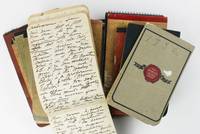
19366410Various locations 1936. Good plus. Fifteen notebooks each about 6.5 x 4 inches; totaling approximately 200000 words. Some notebooks without covers scattered soiling some biopredation or wear. Written in ink and pencil. Diary archive of Jessie Tibbits Cochrane Willets a Long Island native who traveled extensively and wasn't afraid to speak her mind and be her own person. Throughout her diaries she expresses frustration at being shunned by her family undervalued and subject to gossip but is fiercely determined to live life on her terms. She is often traveling solo driving her own car staying in rooming houses or hotels and feeling she has no home of her own. She regularly renews her pistol license. She goes to the theater in New York attends lectures and meetings of women workers the League of Women Voters and speeches by Margaret Sanger. She believes strongly that women have a right to their own bodies. She reads widely and mentions stories in the newspapers of the Lindbergh kidnapping and the mistreatment of Black people in the South. She remarks on books she is reading writes of the men she encounters and notes the opinions of others about her lifestyle and liaisons. Through these diaries the life of a singular woman of the early 20th century is revealed. Jessie 1869-1943 was born in Nassau County New York the oldest of three children and the only girl. The Tibbits were early residents of Long Island an old colonial family and Tibbits Place was one of the oldest establishments on the island. Her father was one of the founders and first President of the Port Washington National Bank and started a real estate business in 1901 and the family was quite comfortable and respectable. Jessie married William Cochrane in 1890 though they divorced at some point and by 1910 she had moved home and was considered a bit of a disgrace as a result. In 1929 she married Nathaniel Louis Willet 1851-1933 and was subsequently able to live out the rest of her days on a more comfortable footing. She died in Palm Beach Florida. The diaries in this collection include the years 1910 to 1912 1917 1918 1921 to 1923 1927 in three parts 1928 1930 to 1932 1934 to 1936 and 1941; they therefore cover almost the entirety of her adult life.<br /> <br /> The first diary here begins with "let the past be the past" and opens with details of a trip to Europe in 1910. Starting in Gibraltar she travels all over Italy and then on to France and England. Though often discussing the company of the other passengers it seems she made the trip alone. In Genoa she has "a bad dream of Bill trying to kill me again" and one speculates that fleeing her husband may be part of the impetus for a European jaunt. Arriving home in October she feels distinctly unwelcome at the family homestead and can't wait to leave again. By June of 1911 she had moved to a rooming house in San Diego. She has made the acquaintance of a Reverend and often waits for him to come by and see her noting that he would marry her if she had enough money to support him so he could leave the clergy. Another woman in town is also vying for his affections. At the same time she is seeing another man named Baxter and when things get tense she leaves for short excursions to Los Angeles or Santa Barbara. On her return one time to San Diego she decides to take her own apartment so she can entertain gentlemen callers without being spied upon. In February 1912 she receives a letter warning her that a Mr. Warren was planning on calling her to the stand in his divorce proceedings. It is unknown what came of these upheavals.<br /> <br /> Her next diary begins in January 1918 with a hope for the end of the war and a strong statement on the value of women in the world: "Woman is slowly awakening to the realization of her position -- God grant she may see true Mother of Man -- this world is only as great as her women -- I blame men and out of this new knowledge there will grow a new world." She is traveling once again and mentions yet another gentleman friend. By the end of January she was in Miami. She went to hear William Jennings Bryan speak and found him a strong "man of the people." Someone asks her why she is not married and she wonders "is this fault all mine" She also says she believes "there is no real advantage in virtue if it chills and diminishes passion." While on an excursion by boat on the Indian River she considers whether she should "take up Mr. Rich -- but I am tired of old men." By March she had started back north by train to St. Augustine Charleston Charlotte and on to Danville Virginia where she spent the night. "The streets are hilly the shops are good but anywhere the old men stand on street corners spit and look insults to the women -- I would like to castrate a few of the old fools." By 1921 she is unhappily back with her family. Of her mother she writes: "God help a woman that has so much hatred in her heart." She spends time in the city at the theatre and lectures including one by Margaret Sanger advocating birth control: "Mrs. Sanger said all nurses and clinics should have the power to control birth and give a woman the right to know her own body and have the right to it." Jessie continued to advocate for birth control and a woman's right to her own body for the remainder of her life as mentioned in these diaries. Altogether a lengthy and fascinating account of one woman's life at the turn of the century. unknown
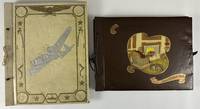
194512886Various locations mainly Texas Oklahoma and Arkansas 1945. Two albums. Album I: 24 leaves illustrated with twenty-four original photographs over two dozen postcards mostly photographic original letters and military documents and a large quantity of ephemeral items. Folio. Contemporary cream cloth decoratively stamped on front board in gilt and silver string tied. Album II: 11 leaves illustrated with ninety-eight photographs in mounting corners six loose photos and a couple of ephemeral items. Oblong folio. Contemporary brown cloth decoratively stamped on front board in gilt yellow and red string tied. Overall minor wear. Very good condition. A pair of annotated vernacular photograph album / scrapbooks compiled by Lt. Erma J. Frazier and her mother during her wartime service in the U.S. Army Nurse Corps. Frazier served in the Nurse Corps at various hospitals in the Trans-Mississippi West at Camp Swift in Bastrop Texas; Fort Sam Houston in San Antonio Texas; Okmulgee Oklahoma; and Camp Robinson Arkansas. Frazier hailed from East Brady Pennsylvania and worked as a Registered Nurse at the nearby Kittanning Hospital before she entered military service. She enlisted in early 1945 and served throughout the conclusion of the Second World War. The present albums record her service time in unusual detail with a mixture of original photographs picture postcards original military documents a few manuscript letters and various ephemeral items.<br /> <br /> The first album was compiled by Frazier's mother who inscribes the first page: "I dedicate this book to my daughter Erma Jean Eberhart Frazier who entered the Armed Services on March 17 1945 as a 2nd Lt. in the Nurse Army Corps a Camp Swift Texas." This album focuses mainly on Frazier's time at Camp Swift and Okmulgee Oklahoma. This album contains the lion's share of the ephemera including a patch the floral corsage she wore on the day she left for service military paperwork and forms and various newspaper clippings. The military paperwork includes enlistment documents including her "Application for Appointment" a manuscript postcard from the director of the Red Cross describing Frazier as a "professional qualified for military service" Army documents on qualifications for nurses and more. Other ephemera includes letters and cards received by her at Camp Swift a page of five pressed "Flowers from Texas" each preserved in a small plastic bag shipping tags from packages of clothing sent home by Frazier a couple of church programs a page of ten small postcards from her visit to Austin a menu from Brooke General & Convalescent Hospital at Fort Sam Houston some greeting cards and so forth. The photographs include portraits of Frazier from 1943 and 1944 while a nursing student; eight pictures of Frazier and other soldiers at Camp Swift; and eight shots of Frazier fellow soldiers and their barracks and administration buildings at Okmulgee Oklahoma.<br /> <br /> The second album was compiled by Frazier herself who provides a manuscript title on the inside front cover: "Memories of the Army Nurse Corps." There are also two photographs inscribed in the first person "Me on arrival at G.G.H." and "side entrance to my barracks G.G.H.". This album is almost entirely comprised of captioned photographs particularly valuable for identifying numerous fellow soldiers serving with Frazier. The images emanate from the last three locations at which Frazier served which she lists on the inside front cover: Brooke General Hospital at Fort Sam Houston Glennon General Hospital in Okmulgee and Regional Hospital at Camp Robinson Arkansas. Perhaps Frazier felt her mother's album largely focused on Camp Swift sufficiently memorialized here time there. The photographs are presented in chronological order and include portraits of dozens of men and women with whom Frazier served or patients served by Frazier often accompanied by informative and sometimes humorous manuscript captions on the album leaves or directly on the images. The photos also picture the hospitals themselves and include a handful of images taken during leisure time on base.<br /> <br /> A unusually informative pair of World War II-era albums and scrapbooks preserving the service of a highly-qualified Army nurse from Pennsylvania serving in the American West during the last year of the war. unknown
192639273Tashkent Uzbekistan: Women of the Central Asian Office of the Organizational Bureau of the Central Committee of the Communist Party of the Soviet Union 1926. Quarto 30.5cm.; publisher's white pictorial staplebound wrappers printed in red blue purple and black; 30pp.; text illus. throughout including photographs and a 2-pp. comic strip printed in red blue and black. Some minor wear and dust-soil to wrapper extremities else a Very Good or better bright and unopened copy. Quite an attractive Communist women's liberation journal published in Tashkent in the Uzbek Soviet Socialist Republic promoting women's education and generously illustrated with political cartoons and comics. Women of the Central Asian Office of the Organizational Bureau of the Central Committee of the Communist Party of the Soviet Uni unknown books
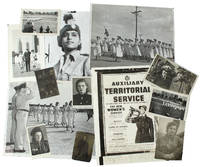
1940184471940. Women Military Archive of 17 silver gelatin photographs 1930s-1950s documents women's military service across multiple national contexts during the period surrounding the Second World War. As global mobilization required women to fill combat-support anti-aircraft and logistical roles these images record the transformation of gendered labor within armed forces. The archive supports research into wartime propaganda recruitment strategies colonial and postcolonial military participation and racial diversity within women's units.<br /> <br /> Archive of 17 photographs ranging from 2.25 x 3.25 inches to 8 x 10 inches. Includes press photographs real photo postcard and image of recruitment propaganda poster for the British Auxiliary Territorial Service reading "The New Women's Service. To relieve men of non-combatant duties during a national emergency." One larger portrait shows an Indian female soldier identified en verso as "Best cadet in National Cadet Corps of India." Another press photograph depicts an array of Air Force soldiers in parade rest including a woman of African American descent. Additional image shows male soldiers saluting a marching women's Air Force unit; original newsprint retained with one photograph.<br /> <br /> Produced during an era when over half a million women served in auxiliary and combat-support roles worldwide the archive reflects how military necessity reshaped public representations of female authority and competence. Light sunning to some photographs; surfaces clean and legible; annotations preserved. Overall very good condition. A cross-national photographic record of women's expanded military participation during mid-twentieth-century global conflict. unknown
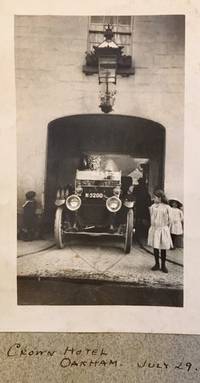
191153910n.p.: Kate Harris 1911. Oblong 4to. 12.75 x 10 in. 204 pp unpaginated. on gray paper stock w/ 416 original silver gelatin black & white photos tipped-in sized 2.75 x 3.5 up to 3.75 x 6 in. including as well over 100 panoramic photos sized mostly 2.8 x 7.5 in. all w/ extensive manuscript notes in neat printed hand following manuscript presentation preface preliminary and end leaves with chipping & fraying to fore-edges some creasing soiling minor tears affecting a few notes 9 photos removed at some point. Recent gray cloth gilt lettering to spine gray paper endpapers presented by Mrs. Harris to Joseph F. Pickett b. 1887 a professional New York driver and chauffeur who drove the group through Europe on Dec. 25 1911. This exceptional photo travelogue details the motoring adventures by Kate Harris her husband Arthur their friend Mrs. Wadsworth and chauffeur Joseph Pickett through Europe just three short years before the devastation of World War I. This album not only demonstrates the level of interest in the burgeoning automobile tourism fad of the Edwardian era but also offers an excellent snapshot of scenic areas throughout Europe. The Harris’s not only brought their luggage and chauffeur via ocean liner in July 1911 but also their 1910 Pierce-Arrow 48-SS Seven-Passenger Touring Sedan fitted with special luggage racks on the rear to haul the many trunks bags picnic & camping equipment as well as a special spare tire bracket on the side which held three spares at any one time often needed. Mrs. Harris appears to have been an enthusiastic amateur photographer and writes that when they drove through an Austro-Hungarian military road she had to lock up their Kodaks. Carefully documenting punctured tires pubs & hotels for lunches and stays and even the mileage covered the group begins their travels in England view the Roman Walls stop in Durham Cathedral Raby Castle onto York Cathedral stop over in Oakham and then down to Cambridge. They stop over in Lofts Hall travel the 51 miles to the London Ritz Hotel and the next day drive the 72.3 miles to Folkestone where the auto was loaded on the 5 PM Boat. They begin their drive in Boulogne with views of the docks the hotel and street scenes included sheep herders moving their flocks out of the way in Hucqueliers young girls hauling bundles of straw and then onto Sedan to visit Franco-Prussian battlefields including the Chateau of Bellevue where Napoleon III surrendered to William I during the Franco-Prussian War. They motor onto Luxembourg Trier view the Porta Nigra Roman gate drive along the Moselle River to the Rhine with stops in Mainz Wurzberg Rothenberg often taking photos of peasants harvesting in the fields children playing under the fountain or in the village streets and even giving locals the remains of their lunch which were gratefully accepted. The drive through the Austro-Hungarian Empire includes stopovers in Prague Iglau Moravia Jihlava including a wonderful image of a young couple with wall of contemporary exhibition and advertising posters plastered behind them; followed by a hair-raising drive up the Styrian Seeberg Pass pilgrims traveling down to Mariazell Leoben Eisnerz Mauterndorf and photos of Tyrolean hunters in local dress. They experience a number of punctured tires as they ascend the Tyrolean and Italian Alps include splendid panoramic photos of the Pasterze Glacier withing the Glockner Group in Carinthia the perilous switchback highway down to Cortina Italy numerous views of the treacherous roads tunnels and scenery along the roads and Alpine villages of the Dolomites including two excellent photos of hemp workers bundling the plants in Storo Italy. The tour continues to Lake Como then the Gondo Gorge and finally along the Simplon Road into La Brique in the southern French Alps and then St. Claude France. The last part of the album concludes with the troupe leaving Bolougne Sept. 14 1911 loading the automobile onto the steamship waiting for Sarah Bernhardt at Folkestone; and then a winding drive through Cornwall including the Dartmoor National Park forest The Lizard St. Michael’s Mount Penzance Lands End St. Ives Tintagel a traffic jam in Stratton viewing Glastonbury and finally panoramic views to roads leading to Chester. The couple and their chauffeur departed from Liverpool on Sept. 23 1911 sailing on the RMS Mauretania later arriving in New York. Kate Harris, hardcover
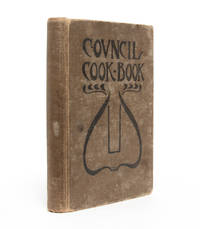
19093212San Francisco: International Printing Company 1909. First edition. Original publisher's cloth binding. Fraying to corners and extremities of spine. General spotting to cloth. In a contemporary hand several names and addresses of women from San Francisco and Atlantic City to the pastedowns and endpapers. Generally toned with occasional staining; in the same hand as the preliminaries occasional additions modifications and annotations to recipes. Quite a scarce community cookery particularly in such presentable condition it has the distinction of being the first Jewish cookery published in California and among the earliest west of the Mississippi.<br/><br/>An excellent early example of women's use of the domestic space as a site for social activism. Organized in 1893 and based out of Chicago the National Council of Jewish Women worked to "shape the destinies" of Jewish women and families by offering community support in the form of assisting immigrants with integration advocating for women's rights and providing support including financial assistance and job training. Under the leadership of Hannah Greenebaum Solomon the women desired to carve out space for Jewish women's identities and contributions operating on a model similar to other national figures such as Jane Addams and Susan B. Anthony. Within seven years the San Francisco section was founded and ran under the leadership of Hattie Hecht Schloss a philanthropist and the wife of a progressive associate justice of the California Supreme Court. With her guidance "the Council established San Bruno Settlement House to aid newcomers to San Francisco with classes for boys and girls.Aiding immigrants and later veterans.these issues at the forefront then prompted petitioning for legislative reforms such as immigration equal suffrage child labor human trafficking abolition and health centers for women and children" NCJWSF. The present text was published at a time when a number of women's groups were realizing that community cookeries were effective methods of fundraising and promotion. Drawing strength and authority from the expectation that they feed and nourish their families the women of the Council could justify feeding nourishing and otherwise supporting the community at large; and the money from this cookery supported a number of their programs. Notably this California chapter of the NCJW did include a chapter on Passover Dishes; yet they also include a range of dishes traditionally not considered Jewish or acceptable in Jewish households including lobster and other shellfish dishes common to the region. An excellent opportunity to research Jewish women's contributions to California culture and the extent to which regional foods shape Jewish households in the West. International Printing Company unknown books
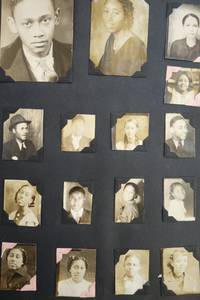
1950List1810Mostly Atlanta 1950. Leatherette album measuring 12 x 9 inches. With over 225 images most 4 ½ x 2 ¾ inches. Very well preserved and nearly complete with three empty slots about fine overall. Near Fine. A compelling visual record of the childhood of Mable Williams of Atlanta Georgia a high school student at Booker T. Washington High School in Atlanta the first public high school for African-American students in the state. Williams graduated from Booker T. Washington High School in 1953 per a newspaper article included here and would attend Spelman College. Composed mostly of snapshot photographs of her friends and family as a group the album provides a visual record of a vibrant network of family and friends in Atlanta during the time period. <br /> <br /> The album begins with a picture showing her as a girl alongside a picture of a house perhaps hers and traces her life through early adulthood through snapshots and family photographs. We find records of Williams performing at the Greater Atlanta Music Festival in 1950 as a representative of her high school. A newspaper article laid in shows Williams in a newspaper showing her graduation picture and stating that she will attend Spelman College in Atlanta in September of 1953. Pictures show her in New York City visiting a friend at N.Y.U. She would later marry Billy Reid a local jazz musician from Atlanta and would remain active in the Spelman community after graduating in 1957. <br /> <br /> Overall a very well preserved document of the African-American community in Atlanta during the 1940s and 1950s. unknown
200021905Emmaus Pennsylvania U.S.A.: Rodale Pr. New. 2000. Paperback. 1579540376 . FREE UPGRADE to Courier/Priority Shipping Upon Request - IN STOCK AND IMMEDIATELY AVAILABLE FOR SHIPMENT - 342 pages -- Pages are intact and tight to the spine. Interior text is clean and tight. -- with a bonus offer--; 4to - over 9¾" - 12" tall . Rodale Pr paperback
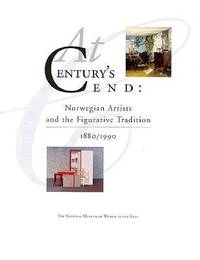
199639490Washington D.C. U.S.A.: Natl Museum of Women in the Arts. New. 1996. Paperback. 0940979322 . FREE UPGRADE to Courier/Priority Shipping Upon Request IN STOCK AND IMMEDIATELY AVAILABLE FOR SHIPMENT - FLAWLESS COPY BRAND NEW PRISTINE NEVER OPENED - 32 works catalogued and illustrated. Among the artists represented: K. Ytreberg; A. Norregaard; H. Backer and others. -- with a bonus offer-- . Natl Museum of Women in the Arts paperback
193361492Tacoma Lakota Beach & Seattle WA: Fay Muridge 1933-1985. 8vo. 230 pp unpaginated. With ink sketches pencil sketches watercolour paintings drawings inserted and tipped-in photos business cards drawings & paintings in process clippings and even a 3 pp. ALS from Fay to her mother Naomi Muridge 1878-1967 on Elysees-Star Hotel stationery dated June 1960. Blue cloth enhanced with a Areovias Reforma precursor to Aeromexico sticker and laminated over later some edgewear rubbing still a VG exemplar. This outstanding artist’s manuscript sketchbook traces the development of this noted Seattle/Tacoma artist and window display designer from high school into the 1980’s. The opening pages dated 1933-1934 for her Architecture class at Stadium High School in Room 400 indicate an early advanced skill set with architectural renderings details house plans and more. At some point about 1950 following her divorce she restarts her career as a window designer for the Bon Marche and as contract artist filling the notebook over the succeeding 35 years with ideas paintings sketches. and pen & ink nude sketches at the end from her Sketch Classes in 1952. She documents her trip to Mexico in 1954 with a sketch of the engine cowling and then details of a Chinese Garden in Mexico the Iglesia de Santa Prisca in Taxco Mexico the Taberna del Greco and architectural details she comes upon. She appears to have subsequently stopped off in Los Angeles for an extended inspiration tour as she includes 20 pages of quick sketches of display cases window displays floor display equipment and lighting at various department stores and retailers including Robinsons Haggerty’s Bullocks Saks Fifth Ave. and Mildred Moore in Beverly Hills. Together with quick sketches of your 7-year old daughter Fay Marie 1947-2018 at ballet class in 1952 she has also included three Christmas-related sketches apparently related to her work on Bon Marche holiday windows. This sketchbook also contains several full watercolour paintings and dozens of sketches in colour with water colour paintings of the Muckleshoot Indian Missionary Church June 18 1952; Spring Gultch Campsite - Bitterroot River; Big Horn Mountains -- S.E. Sheridan June 20 1983; Near Sun Dance Wyoming along Hwy I-90 East 1983; Big Hole Country Wisdom MT 1983 and many others some showing progression. Muridge 1917-2007 was born in California but then grew up in Seattle and Lakota Beach near Tacoma WA and during the 1930’s after attending the University of Washington she was a popular window display designer for the Bon Marche often creating elaborate automata and manikins. She married Ray Suttles in 1941 and was divorced with custody of her daughter by 1950 designing windows & floor displays for Bon Marche in Seattle and Tacoma Frederick & Nelson and Bremer’s in Bremerton WA. She traveled extensively taking her daughter on the Cunard Line Queen Elizabeth in 1958 and again in 1960 to Paris leaving her daughter with her mother as indicated in the laid-in ALS. She was also known not only for her displays for Northwest Orient airlines but well-known as well for creating “cachets†for envelope covers and post cards often with military themes. See: Cachet Maker Marie Fay Muridge Naval Cover Museum 2024; Doug Henkle U.S. First Day Cover Cachet Display Catalog: Philadelic Birth Dates Indiex & Links 2024. Fay Muridge, hardcover
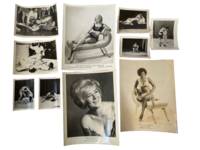
1940206421940. Women's Sports Women's wrestling photograph archive documenting amateur competitions gymnasium training and professional wrestling performers between the 1940s and the 1970s. The images record women participating in a sport historically dominated by men illustrating the gradual emergence of female wrestling as both an amateur athletic activity and a professional entertainment circuit during the mid twentieth century.<br /> <br /> Archive of ten photographs including nine black and white silver gelatin prints and one sepia toned image measuring approximately 3.5 x 4.5 inches to 8 x 10 inches. Several early photographs from the 1940s depict women grappling in an indoor ring during staged matches. Later images show girls wrestling during a gymnasium class setting while classmates watch from the sidelines. Three studio photographs from the 1970s portray professional wrestlers associated with promoter Mary Lillian Ellison known professionally as The Fabulous Moolah.<br /> <br /> Portraits include full length promotional photographs of Joyce Grable of Ozark Alabama Lilly Thomas of Memphis Tennessee and a headshot of Paulla Kaye of Oklahoma City Oklahoma. These performers were active on the professional wrestling circuit during a period when women's wrestling was gaining visibility in regional promotions across the United States. Female wrestling remained controversial throughout much of the twentieth century facing both cultural criticism and sensationalized marketing. Light wear consistent with age. Very good condition. A visual record of women participating in amateur and professional wrestling across several decades of American sports culture. unknown
1944235151944. Women's Royal Naval Service photograph album documenting life at HMS Royal Arthur the Royal Navy's training camp establishment at Skegness where a prewar holiday camp was transformed into a military training and accommodation center during the Second World War. Named individuals throughout with handwritten identifications the album follows Dorothy Gardner and other Wrens serving in the expanding wartime navy while also capturing the theatrical entertainment routines featuring cross dressed men and ceremonial duties that shaped daily life away from the front lines. Beyond its images of uniformed women the album records a military community of offices dining halls stages chalets and training facilities that supported Britain's wartime naval operations at a camp which was bombed by German aircraft on February 21st 1942.<br /> <br /> Photo album of approximately 73 silver gelatin photographs various sizes ranging from 1.5" x 1.5" to 8.5" x 6.5" chiefly HMS Royal Arthur Camp Skegness Lincoln and other British locations c. 1944. Large group portraits are captioned "H.M.S. Royal Arthur July 1944" showing rows of Wrens in naval caps and dark uniforms. Several photos show soldiers by artillery navy men on small military boats and canons. Multiple group photos show men and women in Navy uniform. The photographs place women within the essential but often overlooked machinery of wartime naval administration including supply clerical work communications camp management transport and food service. Captions identify Peggy Marjorie Dorothy Margaret Joan Harry Blake Farnsworth Bernard Cavanagh Dennis Leo Dugay May of Glasgow Geoffrey Roy Bluemel Mrs. Thomason of Leigh Pat Taylor Nancy and Cynthia of HMS Ariel. Additional off camp photographs show bicycle outings skating scenes shipboard snapshots barracks and chalet interiors social gatherings and a guard of honour at Lincoln near the cathedral. Particularly notable is the album's extensive documentation of entertainment and morale-building activities. Several photographs are captioned "Up Spirits" and "concerts at H.M.S. Royal Arthur" revealing an active performance culture within the camp. Sailors appear in theatrical productions alongside women in costume while musicians perform with accordions and pianos before assembled audiences. One series features actor Charles Redgrave "with the girls" and another photograph captures the wartime tradition of gender-crossing stage entertainment in which male servicemen performed in women's clothing for camp audiences. These scenes provide an unusually vivid record of military leisure performance and social life within a wartime naval community.<br /> <br /> HMS Royal Arthur was bombed by German aircraft on 21 February 1942 The album therefore records daily life at a site that was both a military workplace and a target of wartime attack. By 1944 the Women's Royal Naval Service had expanded dramatically from its earlier First World War role with women serving in hundreds of naval occupations while remaining largely excluded from combat at sea. The photographs capture that transformation through named individuals workplace groups ceremonial events friendships and recreational activities illustrating how women became integral to the operation of Britain's wartime navy. The album documents the social world created when thousands of servicewomen and servicemen lived and worked together inside one of Britain's largest naval shore establishments. Sailors Wrens airmen Canadians civilians performers and local acquaintances appear throughout its pages creating a rich portrait of wartime relationships and community formation. Album shows handling wear page wear and a few removed photographs; handwritten captions remain extensive and legible throughout. Overall in good condition. An unusually dense and highly personal record of women's naval service wartime labor military entertainment gender performance and everyday life at HMS Royal Arthur during the Second World War. unknown
1930List328Boston 1930. Oblong quarto 49 pp. With appx. 1400 photos most measuring less than an inch square with roughly 175 in larger formats up to 3 ½ by 5 inches. Very Good. A wonderful labor of photographic love created by an unidentified young woman with ties to the Cabot family of Beacon Hill. The album composed largely of tiny contact prints glued in neat grids. Off-kilter compositions - a portion of a steeple against the sky the tail of a dog etc. - are mixed in with more traditional landscapes leading one to question whether the photographer had modernist aspirations or just took a lot of pictures.<br /> <br /> The photographer is unknown but our best guess is that it was someone who was a friend of Ellen Cabot of Beacon Hill perhaps while both were students or just after. Ellen Cabot the most frequent subject of the album is shown in a variety of settings often accompanied by her dog Prowler. Aerial photography the New England coastline camping life in Cambridge and equestrian competition are all on display. Other highlights include a dog named Benito Mussolini and artful shots of a monk’s torso. A portion of the photos perhaps five or ten percent are not present though the album is otherwise in excellent condition. Handwritten label on the front reads “Newport Races to Topsfield autumn 1930â€. Overall the album is a testament to the energy and spontaneity of youth and the possibilities of the photographic form as well as an intimate look into Boston’s storied upper class. unknown
192512981Laredo TX 1925. 118pp. of content of various types including thirty-six photographs most once in mounting corners but now loose plus 41pp. of manuscript inscriptions to Gonzalez an original drawing and various kinds of mounted ephemeral items. Contemporary scrapbook 8.75 x 6 inches. Ownership signature on early page. A well-used personal scrapbook lacking spine and rear cover front cover detached and with significant wear. Front free endpaper also detached. Some photographs somewhat worn but contents generally sound though dust-soiled. Good condition overall. A unique record of a young Texas woman Elena Gonzalez and her experiences as a senior at Laredo High School in 1925 containing numerous photographs a legion of manuscript messages to her from fellow students and dozens of ephemeral items related to her educational experiences in a prominent Texas border town. The book includes thirty-six photographs which mainly picture Gonzalez and her fellow students in individual portraits small groups and class photos almost always in outdoor settings. The photos also include two slightly larger studio portraits of Gonzalez each measuring about 8 x 5 inches.<br /> <br /> The work also includes about forty pages of manuscript inscriptions from fellow students to Gonzalez dated mostly in March and April 1925. Many of the messages take up most or all of an entire page with Gonzalez's classmates sharing memories funny stories good wishes for the future and so forth. Interestingly but not surprising considering where Elena lived several of the manuscript inscriptions are written in Spanish. In addition to the personal inscriptions to Gonzalez the book also contains an eleven-page "Prophecy of the Class of 1925" handwritten by Phyllis Ellis "Prophet of Class of '25." The prophecy was "read in the Laredo High School Auditorium Thursday night May 21 1925 by the writer." Ellis's prediction for Elena is as a model for the Tar Soap Company "to pose for magazine pictures showing the benefits of their products to one's hair." The photographs and manuscript elements are complemented by various kinds of ephemeral items including calling cards programs program clippings mementos from school events clippings from school publications and newspapers including numerous jokes and funny story clippings in both English and Spanish and so forth. Though the condition of the memory book has seen better days the fact that it survives at all is a feat in itself. A wonderful primary source for Mexican-American life in the borderlands. unknown
1930List328Boston 1930. Oblong quarto 49 pp. With appx. 1400 photos most measuring less than an inch square with roughly 175 in larger formats up to 3 ½ by 5 inches. Very Good. A wonderful labor of photographic love created by an unidentified young woman with ties to the Cabot family of Beacon Hill. The album composed largely of tiny contact prints glued in neat grids. Off-kilter compositions - a portion of a steeple against the sky the tail of a dog etc. - are mixed in with more traditional landscapes leading one to question whether the photographer had modernist aspirations or just took a lot of pictures.<br /> <br /> The photographer is unknown but our best guess is that it was someone who was a friend of Ellen Cabot of Beacon Hill perhaps while both were students or just after. Ellen Cabot the most frequent subject of the album is shown in a variety of settings often accompanied by her dog Prowler. Aerial photography the New England coastline camping life in Cambridge and equestrian competition are all on display. Other highlights include a dog named Benito Mussolini and artful shots of a monk's torso. A portion of the photos perhaps five or ten percent are not present though the album is otherwise in excellent condition. Handwritten label on the front reads "Newport Races to Topsfield autumn 1930". Overall the album is a testament to the energy and spontaneity of youth and the possibilities of the photographic form as well as an intimate look into Boston's storied upper class. unknown books