237 résultats
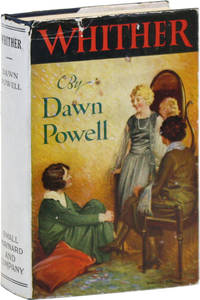
192546542Boston: Small Maynard & Company 1925. First Edition. Octavo 19.5cm; navy blue cloth with titles stamped in gilt on spine and front cover; dustjacket; iv23-3053pp. Spine ends very gently nudged hint of dustiness to upper edge of textblock else a fresh Fine copy. In the dustjacket designed by Harold James Cue priced $2.00 on front flap; light shelfwear touch of dust-soil to spine rear panel and flap edges with a few short tears and attendant creases upper edge of front panel and upper rear joint shallow loss to spine ends none affecting lettering and a dozen small soil spots to panels; still a bright substantially complete and Very Good example unrestored. Attractive copy of Powell's first novel an autobiographical work recounting the story of an idealistic Midwestern girl who moves to New York aspiring to be a playwright. She settles into a boarding house for women surrounded by a cast of characters who are perpetually out of money deeply concerned with their wardrobes and trying to find a man. She finds fulfilling work as a copy writer navigates her way throughout a string of suitors all the while soliciting advice from her housemates quits her job and briefly entertains the idea of taking up with a Greenwich Village bohemian and writing plays full-time; she abandons her dreams after accepting an eleventh hour proposal from a wealthy suitor embarks on a steamship to London with her man and sails off toward her new life with the words "Is the world really so gorgeous as this" <br/><br/>The earlier part of the novel at least somewhat mirrors Powell's own experiences. She led a somewhat unhappy childhood in Ohio where her stepmother took pleasure at burning her early attempts at poetry and fiction; after moving in with a supportive aunt and attending Lake Erie College she moved to Manhattan to pursue a career as a writer finding work as a publicist for several organizations before marrying her husband an advertising executive named Joseph Gousha and settling in Greenwich Village where she would live out the rest of her life. Her marriage allowed her to quit her job and focus on her writing full-time "using the Children's Reading Room of the New York Public Library on Fifth Avenue as the place to write. What became the classic elements of Dawn Powell's work were in evidence from the outset. Her first novel Whither.has the characteristic satiric tone mordant wit and unforgiving eye for the foibles of middle-class Americans whether they lived in the Middle West the setting for her early work or were newly arrived midwestern émigrés to the big city of New York desperately seeking sophistication" Carnes Mark C. "Dawn Powell." Invisible Giants: Fifty Americans Who Shaped the Nation but Missed the History Books p.232. Powell disavowed her literary debut leaving it out of lists of her publications throughout her lifetime and referring to She Walks In Beauty 1928 as her first novel. An uncommon debut published in small numbers and rare in dustjacket; we find no copies for sale in the auction record and OCLC notes a scant 11 holdings in U.S. institutions. SMITH P-576. Small, Maynard & Company unknown books
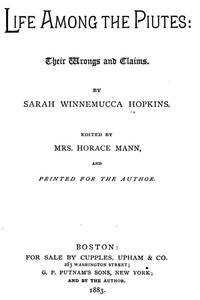
19963406V.p. 1996. A collection of 410 titles concerning Women in the West. Condition Statement: Overall most of the books in the collection are in "good" or "good" condition which typically describes a book that is sufficiently worn the binding soiled scuffed stained or spotted and may have loose joints hinges pages etc. To a lesser extent there are books in "fair" condition namely a well-worn book that has complete text pages including those with maps or plates but may lack endpapers half-title etc. The binding and/or jacket may also be worn. Women in the American West: Books and Ephemera from the Collection of Dorothy Sloan. SEE DETAILED FINDING AID on our website. <br/><br/>Dorothy Sloan b. 1943 is justly considered to be one of great scholar-booksellers of Western Americana Texana and Latin Americana. Dorothy Sloan Rare Books auction catalogues are recognized as models of their kind and feature an unusually broad array of printed books maps manuscripts and ephemera and are particularly strong in 19th-century materials. In many instances Sloan's bibliographic descriptions have become the description of record.<br/>She began her career at John Howell in San Francisco and thence to Jenkins Company in Austin. She issued her first rare book catalogue in 1984 and her first auction catalogue in 1994. Suffice it to say that as a woman she was literally a pioneer in such an endeavor. <br/><br/>Over the years she built a collection of Women in the West which is described in the 29-page Inventory below. Here is a collection of both women authors and women as the subject of historical and literary narrative. Most of the collection was kept in storage for the last twenty-eight years awaiting cataloguing and eventual sale. As we all know "Life" often interferes with our plans particularly as we grow older. <br/><br/>When Dorothy retired last year we acquired the collection of Women in the West. We are pleased to offer it en bloc for the price of $8200 which includes free shipping in the Continental United States. <br/><br/>Of the 410 titles in the collection nearly 25% are more than a century old. The earliest book in the collection is Sally Hastings' Poems on different subjects. To which is added a descriptive account of a family tour to the West. Lancaster 1808. The author describes her travels from Lancaster County to Washington PA. through the Alleghenies and gives an account of the Ohio River at Pittsburgh.<br/><br/>Only a handful of titles in the collection were published in the last 30 years the "newest" one dated 1996 namely: Anne Butler and Ona Siporin Uncommon common women. which contains culturally and ethnically diverse accounts of women who lived in the American West.<br/><br/>The physical size of the collection is considerable. Without any packing material it would encompass 15 large boxes. There are photographs gum cards engravings various inscribed books plays of the California Gold Rush memoirs and captivity narratives travelogues captivity narratives autobiographies Western novels pamphlets private press material a few 'zines journals catalogues and magazines. It is the culmination of decades of labor spanning all genres in the Western Americana tradition. The collection represents women's voices of a myriad of ethnicities including various Native American tribes African and African-American women Hispanic women prostitutes madams cowgirls ranchers pioneers and their struggles in the face of physical social and cultural adversity. <br/><br/>We are reluctant to mention "highlights" as it would suggest that "lowlights" do not merit attention from scholars and bibliophiles alike. We invite readers to peruse the Inventory of the collection capably prepared by Hunter Corb to allow readers to make that determination for themselves. <br/><br/>Included is the first edition of Miriam Colt's autobiography which describes her ill-fated expedition to Kansas Went to Kansas 1862 in which she traveled more than 1300 miles to establish a communal vegetarian colony. Colt provides vivid and frightening details of a family's ordeals on the frontier landscape including severe illness and encounters with lawless gangs. Defrauded of their investment in the Vegetarian Settlement Company the Colts left Kansas in the fall of 1856. Colt's husband and son died en route leaving only mother and daughter to return to New York. <br/><br/>Another work of interest is Sarah Hopkins's Life Among the Piutes an autobiography written at the encouragement of Ralph Waldo Emerson. This is considered to be the first book written and published in English by a Native American woman. It provides "extensive information about pre-White northern Paiute culture the types of foods marriage and other social practices as well as political leadership" Paher while simultaneously increasing awareness and sympathy for the plight of Native Americans. <br/><br/>Melinda Rankin's Twenty Years Among the Mexicans describes her missionary labor in south Texas and Mexico. Herein are depicted the experiences of the first Protestant woman missionary in Latin America. Although laws in Mexico at the time forbade the introduction of any form of Protestantism into the country Rankin traveled there in 1852 and established the first Protestant mission in Northern Mexico continuing her work there for a few decades before returning to the United States due to health problems. This narrative describes not just Rankin's missionary labors but also many dramatic events in Texas and Mexico including revolutionary turmoil the American Civil War and her capture by the notorious military leader rancher and outlaw Juan Cortina.<br/><br/>From early settlers of the West during and shortly after the American Revolution; to ranchers and pioneering women in the early days of the Republic of Texas and the fight for independence; to overland travels in covered wagons on the famed Oregon Trail at the outset of the American Civil War; to excursions into Mexico and Latin America at the end of the 19th and into the 20th centuries. Over two hundred years of women's experiences can be found within this collection and as such there is something for every student and subject matter.<br/><br/>SEE DETAILED FINDING AID ON OUR WEBSITE which enumerates each and every one of the 410 titles:<br/><br/>https://www.michaellaird.com/cat.phpid=307. unknown books
192639273Tashkent Uzbekistan: Women of the Central Asian Office of the Organizational Bureau of the Central Committee of the Communist Party of the Soviet Union 1926. Quarto 30.5cm.; publisher's white pictorial staplebound wrappers printed in red blue purple and black; 30pp.; text illus. throughout including photographs and a 2-pp. comic strip printed in red blue and black. Some minor wear and dust-soil to wrapper extremities else a Very Good or better bright and unopened copy. Quite an attractive Communist women's liberation journal published in Tashkent in the Uzbek Soviet Socialist Republic promoting women's education and generously illustrated with political cartoons and comics. Women of the Central Asian Office of the Organizational Bureau of the Central Committee of the Communist Party of the Soviet Uni unknown books
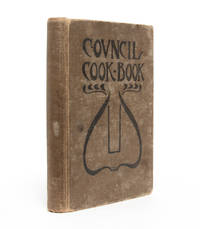
19093212San Francisco: International Printing Company 1909. First edition. Original publisher's cloth binding. Fraying to corners and extremities of spine. General spotting to cloth. In a contemporary hand several names and addresses of women from San Francisco and Atlantic City to the pastedowns and endpapers. Generally toned with occasional staining; in the same hand as the preliminaries occasional additions modifications and annotations to recipes. Quite a scarce community cookery particularly in such presentable condition it has the distinction of being the first Jewish cookery published in California and among the earliest west of the Mississippi.<br/><br/>An excellent early example of women's use of the domestic space as a site for social activism. Organized in 1893 and based out of Chicago the National Council of Jewish Women worked to "shape the destinies" of Jewish women and families by offering community support in the form of assisting immigrants with integration advocating for women's rights and providing support including financial assistance and job training. Under the leadership of Hannah Greenebaum Solomon the women desired to carve out space for Jewish women's identities and contributions operating on a model similar to other national figures such as Jane Addams and Susan B. Anthony. Within seven years the San Francisco section was founded and ran under the leadership of Hattie Hecht Schloss a philanthropist and the wife of a progressive associate justice of the California Supreme Court. With her guidance "the Council established San Bruno Settlement House to aid newcomers to San Francisco with classes for boys and girls.Aiding immigrants and later veterans.these issues at the forefront then prompted petitioning for legislative reforms such as immigration equal suffrage child labor human trafficking abolition and health centers for women and children" NCJWSF. The present text was published at a time when a number of women's groups were realizing that community cookeries were effective methods of fundraising and promotion. Drawing strength and authority from the expectation that they feed and nourish their families the women of the Council could justify feeding nourishing and otherwise supporting the community at large; and the money from this cookery supported a number of their programs. Notably this California chapter of the NCJW did include a chapter on Passover Dishes; yet they also include a range of dishes traditionally not considered Jewish or acceptable in Jewish households including lobster and other shellfish dishes common to the region. An excellent opportunity to research Jewish women's contributions to California culture and the extent to which regional foods shape Jewish households in the West. International Printing Company unknown books
1930List328Boston 1930. Oblong quarto 49 pp. With appx. 1400 photos most measuring less than an inch square with roughly 175 in larger formats up to 3 ½ by 5 inches. Very Good. A wonderful labor of photographic love created by an unidentified young woman with ties to the Cabot family of Beacon Hill. The album composed largely of tiny contact prints glued in neat grids. Off-kilter compositions - a portion of a steeple against the sky the tail of a dog etc. - are mixed in with more traditional landscapes leading one to question whether the photographer had modernist aspirations or just took a lot of pictures.<br /> <br /> The photographer is unknown but our best guess is that it was someone who was a friend of Ellen Cabot of Beacon Hill perhaps while both were students or just after. Ellen Cabot the most frequent subject of the album is shown in a variety of settings often accompanied by her dog Prowler. Aerial photography the New England coastline camping life in Cambridge and equestrian competition are all on display. Other highlights include a dog named Benito Mussolini and artful shots of a monk's torso. A portion of the photos perhaps five or ten percent are not present though the album is otherwise in excellent condition. Handwritten label on the front reads "Newport Races to Topsfield autumn 1930". Overall the album is a testament to the energy and spontaneity of youth and the possibilities of the photographic form as well as an intimate look into Boston's storied upper class. unknown books
1940List329Haverhill 1940. First Edition. Seven journals each approximately 70 pages with pages measuring 4 ½ x 2 ½ inches. Near Fine. These journals by an unnamed member of the Dean family of Haverhill were assembled around 1940 from collected family and historical photographs. Taken as a whole they provide a richly detailed social history of the region from the perspective of a well-to-do military family with many ties to the local business community. They bridge the gap from the post-Civil War era with reference to G.A.R. reunions and the like to the late 1920s. The author's perspective - conservative sometimes horribly bigoted with a penchant for underlining key passages of her own writing - is on full display throughout. We have not identified the author though she is shown in several photographs. <br /> <br /> Much of the journals recount the details of civic-minded local life often with surprising detail. On an evening in city hall she writes "the walls hung with banners - flags and scrolls of all descriptions front of boxes were elaborately draped the stage represented a campground. " Two entries for 1886 log a fire in Music Hall followed by an account of the "First Hebrew Jew Wedding" about which she writes "too bad it wasn't the last no doubt the people of Haverhill would have been just as well off and I believe better." Some entries show the way in which information from the outside world was filtered by various family members who left Haverhill. An account of a family member's adventures in the Alaskan gold fields " It was very interesting to hear them tell of their experience.the picnic parties and good fishing for salmon and trout in the summer when the weather is warm and nice. Also the Ways of the eskimo. the gold nuggets nice to look at too;" <br /> <br /> Interspersed with the diary entries are many cut photographs and postcards some of family and some of the region and the author weaves her entries onto the versos of the photographs from the diary paper. The photographs are meticulously trimmed in a uniform rounded edge with an impressive aesthetic result. The diaries were likely assembled in the late 1930s or early 1940s as one mentions the hurricane of 1938. Overall they show an uncommonly detailed and lengthy account of a family's life in Massachusetts with much information about the civic history of the Haverhill region. Well preserved in near fine condition with minimal normal wear. unknown books
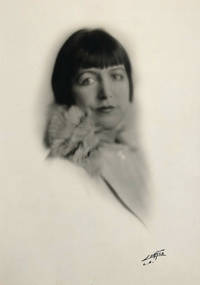
1927List325Los Angeles: Edward Curtis 1927. Silver Gelatin Print 5 x 7 inches with Curtis's Biltmore Hotel address and Unsell's name to verso. Signed by Curtis in ink on recto. Excellent. Eve Unsell was a highly prolific scenarist who wrote for over 95 films during her active period from 1914 to 1933. She first trained for the Kansas City Post before spending a year at Emerson College. Unsell impressed the theatrical agent Beatrice deMille with one of her short stories. Hired by deMille as a play reader Unsell learned the art of plot construction while reading plays. She met David Belasco through deMille and after a short career performing turned her career to writing by 1913. She sold two several scenarios to Pathes Freres and Kalem getting her big break in 1914 when Kalem produced Unsell's scenario The Pawnbroker's Daughter. She would go on to enjoy a lengthy career as a writer oscillating between freelance and contract work. She wrote under her own name and also used the pseudonym Oliver W. Geoffreys as her name E. M. Unsell as was common for women screenwriters at the time. <br /> <br /> Edward Curtis best known for his work photographing American Indians moved to Los Angeles in 1919 with his daughter Beth following a divorce. He opened a studio at the Biltmore Hotel. To finance his field work Curtis worked for Cecil B. DeMille as a still photographer and cameraman. Curtis lived off and on in Los Angeles until his death in 1952 leaving in 1927 to complete the final volume of his North American Indian series. At some point probably in the early 1920s whether through the DeMille friend circle or elsewhere Unsell had her picture taken by Curtis in his Biltmore Hotel studio. The image shows Unsell in the customary style of the time with Curtis's name etched into the negative. Near fine condition overall with a few slight indentations. Overall a wonderful and scarce image showing an important figure in Hollywood. Edward Curtis unknown books
1920List330New York: Arnold Genthe 1920. Silver gelatin print 6 ¾ x 9 ¼ inches on larger mount. Signed by Genthe on the mount inscribed by Marlowe as Marlowe Sothern on the mount as follows: "To Jean: our little comrade on our walks in Beautiful Stockbridge. In remembrance also of 'Sun Yat Sen' and Choo-Chio Chow. September. 1940. Julia Marlowe Sothern. Very Good. An uncommon image of the actress feminist and suffrage advocate Julia Marlowe who adopted the name - though never legally - Julia Marlowe Sothern after working with the Shakespearean actor E.H. Sothern. Ill health led Marlowe to retire from the stage in 1924 and she was seldom seen in public. This photograph inscribed later in her life is an uncommon relic from her reclusive later years. We can find no record of a Jean or the names mentioned. <br /> <br /> Arnold Genthe who famously photographed the San Francisco Earthquake of 1906 from the site of his destroyed studio moved to New York in 1911 where he became a portrait photographer. He most likely took this picture in his stint on the east coast. We find no other record of this specific portrait of Marlowe. Some silvering at margins otherwise excellent with some light normal tanning to mount. Arnold Genthe unknown books
197027588Washington DC: Off Our Backs 1970-1978. First Edition. 52 tabloid issues 43cm. with publication sequence as follows: Vol. 1 nos. 5-7 & 11-24; Vol. 2 nos. 2-10; Vol. 3 nos. 1-12; Vol. IV nos. 1-6 9-12; Vol. V no. 5; Vol. VI no. 3; Vol. 7 no. 2; Vol. 8 no. 4. Format slighty varying all issues with vertical or horizontal fold as issued; uniformly toned else a Near Fine collection. Large collection of one of the longest-running feminist newspapers co-founded by Marilyn Webb which only ceased publication in 2008. Published by the oob collective which originally consisted of Webb Marlene Wicks Heidi and Nan Steffens Norma Lesser and Nancy Ferro OOB was produced as a general newssource often with themed issues with a radical feminist slant. Among the most notable columns present here is "Survival" a nonsexist how-to guide covering spermicides nutrition fertility and home breast exams. Despite the emphasis on the collective there was some unrest within OOB beginning as early as 1971 when the lesbian element of the collective left to found their own periodical Furies. See Kathleen L. Endres & Therese L. Lueck's Women's Periodicals in the United States: Social and Political Issues 1996 pp. 265-273. Off Our Backs unknown books
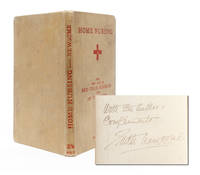
19163202London: The Scientific Press 1916. First edition. Very Good . Scarce first edition of a Red Cross manual designed both for emergency workers and women in the home. Original publisher's cloth binding titled in red on spine and front board. Boards a bit rubbed and soiled corners bumped. Faint offsetting to the endpapers. Inscribed by Edith Newsome on the front pastedown: "With the Author's Compliments Edith Newsome. 16.10.23." A scarce book institutionally and in trade OCLC reports only 11 copies in libraries this being the only one currently on the market. <br/><br/>Edith Newsome's first major work on nursing produced after she realized that her Red Cross lecture series could not provide complete enough information to train "those who have so nobly responded to the 'call of duty'; to do all that is in their power to tend and succour the brave men of our nation by proving themselves valuable and intelligent helpers." Indeed Newsome's work was released two years into World War I -- the first modern war which brought with it a horrifying number of previously unknown injuries and ailments. In addition to professional nurses women enrolled to assist as Volunteer Aid Detachments VADs because there simply were not enough women with medical educations to serve the nation's need. The present work is a stirring acknowledgement of this. Comprehensive in training VADs and new nurses in field operations it also contains information for women in the home who confronted infection illness or injury and served as domestic caretakers for men returning from the front. Very Good . The Scientific Press unknown books
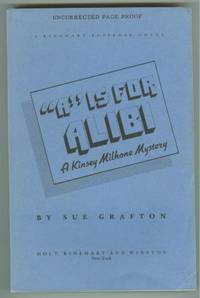
198240850NY: Holt Rinehart and Winston 1982. Uncorrected proof for the first edition. Signed by Grafton on the title page. Perfect-bound blue printed wraps. Small date stamped two times on topedge minimal soiling on topedge and foreedge shallow crease on front wrap bottom corner not immediately apparent and narrow 1.5 inch purple stain on spine. Very Good condition. Signed by Author. First Edition. Soft Cover. Very Good/Not Issued. 8vo - over 7¾" - 9¾" tall. Galley/Proof. Holt Rinehart and Winston Paperback books
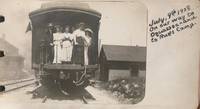
1913WRCAM54479Peoria Il 1913. 148 photographs 1 1/2 x 2 1/2 to 3 x 4 inches mounted on 40pp. Oblong folio. Medium-weight green card stock cord tied. Light wear at edges. Thoroughly captioned. Very good. An attractive handmade photograph album documenting a camping trip made by the Tjaden family in June and July 1913 to a place they call "Camp John" near Peoria. The album features original and quoted verse numerous manuscript illustrations and other exceptional embellishments. Half of the group was made up of young women and the majority of the photos feature their exploits including water activities life in camp hiking cooking and washing and provisioning from the local farm. In general the action centers around their tent compound with several side trips to settings such as the Illinois Valley Yacht Club. <br> <br> An extensively captioned and inventive memento of an early 20th-century camping vacation. unknown books
19229947Shanghai: World Book Co 1922. Modernized version of an ancient Chinese classic being the second volume of "One Hundred Beauties" with 50 full-page portraits and pictorial titlepage and colophon text in Chinese original green printed front wrapper and tan back wrapper hand-sewn. Wrappers a bit soild and worn at edges as are some pages but generally sound housed in custom-made black cloth over boards clamshell box. Issued during the Republic period when Shanghai was know as the Paris of the East and the Chinese cinema flourished as a new art form - that effect seen in the images in this book. World Book Co unknown books
197048787Falls Church VA: Woman Activist 1970-1976. First Edition. 37 staplebound newsletters 27.5cm. with publication sequence as follows: Vol. 1 nos. 1-13 1970/1; Vol. 2 no. 1-11 1972; Vol. 3 no. 12 1973; Vol. 4 nos. 1 3 & 8 1974; Vol. 5 nos. 1-6 & 9 1975; Vol. 6 no. 8 1976. Vol. 2 no. 8 titled "The Woman Activist Guide to the 1972 Elections: August 26th Commemorative Issue"; Vol. 2 no. 12 titled "The Woman Activist Guide for Woman Candidates--Campaign 73: December Gift Issue 1972"; Vol. 3 no. 12 titled "The Woman Activist Guide for Woman Candidates--Campaign 74: December Gift Issue 1973"; Vol. 4 no. 8 titled "The Woman Activist Guide to Lobbying: August 26 Commemorative Issue 1974." Accompanied by broadsheet order form verso providing a photocopy of the New York Times article "Feminists Rate House Members" Thursday January 20 1972. Trivial wear and occasioal toning to extremities else Near Fine overall. Newsletter published under the banner "An Action Bulletin for Women's Rights." The Bulletin was the brain child of Virginia feminist Flora Crater who also founded the Virginia chapter of the National Organization for Women NOW. Crater published The Woman Activist as an information newsletter on the activities of the National Ad Hoc Committee for the Equal Rights Amendment. Woman Activist unknown books
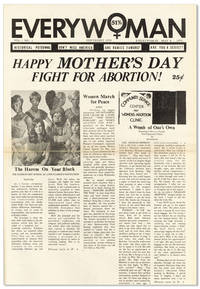
197026759Los Angeles later Venice CA: Everywoman 1970-1972. First Edition. 32 issues varying formats approx. 28-45cm.; illus. Tabloid issues with horizontal fold line as usual some light toning else a Fine collection. Color printing introduced in issue no. 5. Later published with the banner "Every woman is our sister" this California-based periodical was founded by Movement members Ann Forfreedom and housewife Verda One. The first issue which was published May 8 1970 commemorates Mother's Day with the heading "Happy Mother's Day / Fight for Abortion!" Among the recurring columns are "Manglish" a glossary of words with sexist implications "Hysterical" for example; and Forfreedom's biographical column "Herstory." Contents include poetry by Judy Grahn and two interviews with Anais Nin. Everywoman unknown books
1927440Little Rock 1927. Overall very good. Eleven items. Light wear and tanning. A representative group of materials published in the 1920s for use by the Women of the Ku Klux Klan. After the Klan was officially reformed in 1915 a women's branch of the organization was founded in Little Rock in 1923. The principal material present here comprises five pamphlets with rules oaths ceremonies and music for group meetings. They are as follows: 1 The Code of the Flag As Adopted by the National Flag Conference. cover title. Little Rock: Parke-Harper Publishing Co. 1923. 16pp. Stapled self wrappers. Small chip at top edge of final leaf. 2 Constitution and Laws of the Women of the Ku Klux Klan Adopted by the First Imperial Klonvocation at St. Louis Missouri on the Sixth Day of January 1927. Little Rock: H.G. Pugh & Company 1927. 71121pp. Original printed wrappers stapled. 3 Installation Ceremonies Women of the Ku Klux Klan. Little Rock: J.F.H. Co. 1923. 16pp. Original printed wrappers stapled. 4 Musiklan. Little Rock: Parke-Harper Publishing Co. 1925. 12pp. Original printed wrappers stapled. 5 Second Degree Obligation First Section. Property of Women of the Klu Klux Klan cover title. Little Rock. 1923. 4pp. Original printed wrappers stapled. Accompanying these are six ephemeral pieces that include a triplicate application form for the "Second Degree" level of the Women's Klan a notice of admission to the Klan examples of payable and receivable receipts a piece of "Tri-K-Klub" letterhead and an "Imperial Passport" allowing the bearer to attend the meetings of other Klaverns. Quite uncommon as a group. unknown books
195415968Orrville OH; 1954-1990. 4to. Hardcover binder with 99 clear plastic leaves holding hundreds of clipppings ephemera and 203 photographs 53 black and white snapshot; 122 color snapshot; 26 Polaroid instant color prints; 2 black and white enlargements. Contents laid into pages loose. Majority of photographs captioned to versos. Overall well preserved; about near fine. <br/><br/>A large scrapbook compiled by Dorothy Agnes Welsh b.1921-d.2001 documenting her 40-year career with the Schantz Organ Company of Orrville Ohio. Founded in 1870 Schantz was primarily a local operation until a national expansion in the years immediately following WWII. A turn-key firm responsible for all aspects of the design building installation service and renovation of many of the country's finest pipe organs its growth and many of its most ambitious projects are documented here including the firm's magnum opus: a massive 1950's installation in the Cathedral of the Sacred Heart in Newark NJ conatining nearly 9000 individual pipes. <br /> <br />Through article clippings images detailed captions and notes Dorothy documents the day-to-day at Schantz through her clear well composed views and uncomplicated text. Approximately 1/4 of the images are of employee gatherings primarily retirement parties though the majority of prints are occupational and provide clear views of the company's process and employees: woodworking intricate electronic designs antique organ restorations installations etc. from the early 1950's to 1990 and from the perspective of a female employee. <br /> <br />Welsh began work in the console department in January of 1951. During her four-decade long career she served in nearly all of the company's departments thus these images seem to document every aspect of the firm's work. Many employees were women. A telling bit of ephemere suggests what the workplace may have been like for Dorothy: an illustrated napkin disparaging women drivers along with a brief note on and 1965 photograph of the co-worker who left it for her Ray Eyster is among the ephemera. The incident seems to have stuck with Dorothy given its presence among the contents. "Eyster Put this on my work bench. I had been driving a car a short time when this show up. He work at Schantz a few yr. He was not happy .". <br /> <br />Clippings are often notated by Welsh and focus on local and national coverage of Schanz's projects and notable life events of her co-workers primarily obituaries. Additional are several photographic company brochures with detailed specs on organ installations at Lawrence University in Appleton WI: Trinity United Church of Christ in Canton OH; First Methodist Church in Glendale CA; Sharp Chapel at Tulsa University; and more. <br /> <br />A considerable primary record of women in an artisan workplace richly documenting in visual and written detail the myriad elements involved in the work of the Schantz Organ Company. hardcover books
19211885Chamberlain & Various Places in South Dakota 1921. About very good. 69 original photographs each measuring 2.5 x 3.5 inches plus six leaves of text twelve postcards other ephemera. Oblong album embossed calf boards string-tied. Moderate wear at edges some rubbing and scuffing to boards. Light dust soiling internally. Photos generally clear captioned in manuscript on album leaves. A engaging photo album compiled by a young South Dakota woman that documents her activities as a part of the Chamberlain Chapter of the Camp Fire Girls during the early 1920s. Vera Gilman and her friends were members of the "Naswawkee Camp Fire" founded in 1918 in Chamberlain South Dakota. As four leaves of introductory text explain Gilman joined the group whose Native American name was intended to translate to "Feathered Arrow" in 1920 when the chapter made a camping trip to American Island a large Missouri River island opposite Chamberlain that was submerged by the construction of the Fort Randall Dam in 1953. The first half of the album documents this excursion of the eleven members all of whom have "Indian names" and occasional appear in faux-Native American dress. The second part of the album documents a 1921 trip to the Black Hills and "Dakota Wonderland" which included the Badlands Deadwood Lead Canyon and other sights which the chapter funded from their performances of a theatrical production "A Perplexing Situation" in Chamberlain and nearby Ola. A lively record of this Plains small-town iteration of Camp Fire an outdoor youth organization founded in 1910 as the girls' alternative to the Boy Scouts. unknown books
198612113London: Macmillan 1986. First UK edition first prnt. Signed by Grafton on the title page. Apart from the beginning page toning common for this title in the Macmillan edition this is a bright tight copy in Fine condition in a Fine dustjacket with an archival cover. The second in Grafton's "Alphabet mystery" series. Signed by Author. First Edition. Hardcovers. Fine/Fine. 8vo - over 7¾" - 9¾" tall. Macmillan Hardcover books
1983WALTER-FILM004116Vintage original 30 x 20" 76 x 51 cm. double crown poster UK. Honey Adele Bertei dir: Lizzie Borden; Cinema of Women. London: Cinema of Women 1983. Folded as issued with small tears marginal chips and signs of light handling VERY GOOD-. <br /><br /> An exceedingly scarce poster from a landmark film in 1980s LGBTQ and African American film history. ""A documentary-style feminist fiction film by Lizzie Borden that explores racism classism sexism and heterosexism in an alternative United States socialist democracy.<br /><br />"<i>The plot concerns two feminist groups in New York City each voicing their concerns to the public by pirate radio. One group led by an outspoken white lesbian Isabel Adele Bertei operates 'Radio Ragazza'. The other group led by a soft-spoken African-American Honey Honey operates 'Phoenix Radio. 'The local community is stimulated into action after a world-traveling political activist Adelaide Norris Jean Satterfield is arrested upon arriving at a New York City airport and suspiciously dies while in police custody. Also there is a Women's Army led by Hilary Hurst Hilary Hurst and advised by Zella Flo Kennedy that initially both Honey and Isabel refuse to join. This group along with Norris and the radio stations are under investigation by a callous FBI agent Ron Vawter. Their progress is tracked by three editors Becky Johnston Pat Murphy Kathryn Bigelow for a socialist newspaper who go so far they get fired</i>.<br /><br />"<i>The story involves several different women coming from different perspectives and attempts to show several examples of how sexism plays out on the street and how it can be dealt with through direct action. At one point two men attack a woman on the street and dozens of women on bicycles with whistles come to chase the men away and comfort the woman. The movie shows women despite their various differences organizing in meetings doing radio shows creating art wheatpasting putting a condom on a penis wrapping raw chicken at a processing plant etc. The film portrays a world rife with violence against women high female unemployment and government oppression. The women in the film start to come together to make a bigger impact by means that some would call terrorism</i>.<br /><br />"<i>Ultimately after both radio stations are suspiciously burned down Honey and Isabel team up and broadcast 'Phoenix Ragazza Radio' from stolen U-Haul vans. They also join the Women's Army which sends a group of terrorists to interrupt a broadcast of the President of the United States proposing that women be paid to do housework followed by bombing the antenna on top of the World Trade Center to prevent additionally destructive messages from the mainstream</i>.<br /><br />"<i>Greg Baise of the </i>Metro Times<i> called it 'an early '80s landmark of indie and queer cinema.' The film has had experienced somewhat of a renaissance after the 35mm restoration print premiered in 2016 at the Anthology Film Archives. Richard Brody of </i>The New Yorker<i> wrote 'the free ardent spontaneous creativity of Born in Flames emerges as an indispensable mode of radical change -- one that many contemporary filmmakers with political intentions have yet to assimilate.' He also wrote 'Borden's exhilarating collage-like story stages news reports documentary sequences and surveillance footage alongside tough action scenes and musical numbers; her violent vision is both ideologically complex and chilling.' Melissa Anderson of </i>The Village Voice<i> wrote 'this unruly unclassifiable film -- perhaps the sole entry in the hybrid genre of radical-lesbian-feminist sci-fi vérité -- premiered two years into the Reagan regime but its fury proves as bracing today as it was back when this country began its inexorable shift to the right</i>.'" Wikipedia books
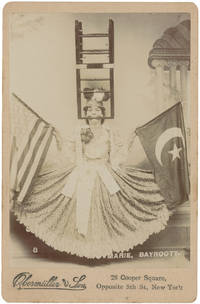
1905LIST114New York: Obermuller and Son 1905. Silver gelatin print 3 ¾ x 5 ⅜ inches on larger mount. Fine. Marie Bayrooty was the only female member of the Bayrooty Brothers Oriental Troupe who performed on the Barnum and Bailey Circus sideshow. A famous 'whirling dervish' - as members of the Mevlevi Order are known colloquially - she broke a record by whirling 2990 times in 37 minutes in 1906 per the The New York Times who described her as of Syrian descent. The Times in the typically dismissive tone of the day describe her performance as such: "Mary Bayrooty the Syrian girl who last year whirled for thirty-two minutes without cessation making something like 2240 revolutions established a new record yesterday afternoon in Barnum & Bailey's Freak Hall. She made 2990 twirls in thirty-seven minutes. This is a new world record. when the last note died and the last whirl had been achieved Marie was fresh as paint. She ran across the floor to the nearest reporter and pinned a rose on the lapel of his coat remaining until her fame had been suitably sounded. Then she sat down and gave the other freaks a chance." - New York Times April 2 1906. A fine example on a very good mount. Obermuller and Son unknown books
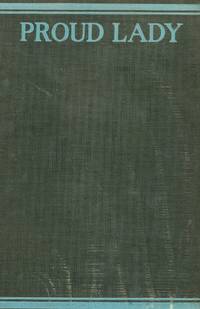
1923List327New York: Alfred A. Knopf 1923. First Edition. With an autograph letter signed with the envelope affixed to the front pastedown. With the bookplate of John and Rebecca Lowrie on front free endpaper. Lowrie reviewed the work for the New York Post and her review of the book affixed to the half-title. Very Good. Neith Boyce was an author and theater artist who worked across genres publishing a range of works and co-founding the Provincetown Players. Boyce and her husband Hutchins Hapgood were at the social center of a large circle of writers and artists including Gertrude Stein Georgia O'Keefe and Djuna Barnes. Their papers held at Yale provide rich insight into their artistic and literary era. <br /> <br /> Proud Lady was the second-to-last novel Boyce wrote and it was apparently her favorite. The novel is the story of Mary Carlin a woman who seeks spiritual perfection in others and who because of her pride cannot make herself leave her unfaithful husband. Rebecca Lowrie in her review written for the New York Post and included here states "all the vividness of the setting the touches which make the people so sure a part of their surroundings are secondary to the tragic figure of the proud lady and the victims of her pride."<br /> <br /> Boyce's letter to Lowrie effusively thanks her for her review of the book which from her tone appears to have been misunderstood by other critics. She writes "I have just seen your review of my novel Proud Lady. It is the most intelligent and best-written review that I have seen so far and I would like to convey to you my appreciation and the pleasure your attitude toward the book has given me." <br /> <br /> Overall a very nice association and a very good copy of an uncommon book. Some light wear and rubbing a few faint scuffs to cloth on the front board slightest bowing to spine but very good. Letter near fine with minimal wear. <br /> <br /> $450. Alfred A. Knopf unknown books
1914List520Nome: Lomen Brothers 1914. Silver gelatin print 6 1/2 x 9 1/2 inches. Fine. Women's baseball evolved alongside men's leagues beginning in the 1860s with many teams and leagues appearing throughout the following decades often playing indoors and often unrecorded in the annals of baseball history. Women's baseball was particularly popular in Minnesota and parts of the Midwest in the early part of the twentieth century. This photograph bears evidence as to the game's migration to Alaska Territory where long winters would have been particularly conducive to an indoor league. This photograph by the Nome Alaska firm Lomen Brothers shows the champion team of the Ladies Indoor Baseball League in Nome. We find no record in contemporary newspapers or anywhere else of the league. The Nome Brothers were a well-known photographic firm who migrated from Minnesota to Alaska at the height of the Nome Gold Rush in 1903. By 1909 at the end of the gold rush the population of Nome declined substantially to 2500 from 20000 just a few years earlier. This photograph shows interesting documentation of Nome post-rush and also of the spread of women's sports through migrant populations. We find one other example in the Fred Henton collection at the Anchorage Museum at Rasmuson Center. A fine example. Lomen Brothers unknown books
193837756Philadelphia: J.B. Lippincott 1938. First Edition. Advance Issue with "Advance Complimentary Copy" rubber-stamped to lower edge of textblock. Octavo 20.25cm; original wrappers bound into publisher's dustjacket; 1011-4773pp. Forward lean light wear to extremities with some vertical creasing to spine faint foxing to text edges with light dust-soil to wrappers; Very Good and sound. Uncommon format of the Pittsburgh author's first novel and one of the first works of fiction to deal in depth with the subject of artificial insemination. The novel is centered around Cindy Gaylord a wealthy young woman whose father is murdered while carrying on an affair. Deserted by her fiancé she grows to hate men and the way they are "degraded by the passion Nature has cursed him with." p.95. She attempts to manipulate the stock market in an attempt to ruin the man who shot her father; having succeeded and added substantially to her wealth she desires to satisfy her maternal urge through the means of artificial insemination noting "the individual doesn't count. It's on the race that's important. I'm willing to pay the man well if I can be sure he's American-born of Anglo-Saxon origin. And of course physically and mentally sound" pp.233-234. An early fictional treatment of a controversial topic; the first reports on human artificial insemination originated from Guttmacher 1943 Stoughton 1948 and Kohlberg 1953 cf. U.S. National Library of Medicine National Institutes of Health. OCLC notes 17 copies. HANNA 3647. J.B. Lippincott unknown books
19993041Athens: Hill Street Press 1999. First edition limited to 200 numbered copies signed by all contributors as issued. Copy #127. Full cloth with gilt-stamped lettering in cloth-covered slipcase. Issued without dustjacket. Edited by Pearl Amelia McHaney. Contributors include Bausch Chappell Douglas Gilchrist Grooms Hannah Hood Maxwell Price Wilbur et al. Black & white photographs. Issued without dustjacket. Slipcase. Unread copy in Fine condition in a Fine slipcase. Signed by Contributors. First Edition. Hardcovers. Fine/Not Issued. 8vo - over 7¾" - 9¾" tall. Limited Edition. Hill Street Press Hardcover books