2 006 résultats
1900231291900. Women's History Women's labor photo archive documenting women at work across millinery laundry commercial kitchen precision bench and wartime relief settings preserving a concentrated visual record of how female labor was publicly pictured in the years immediately preceding and overlapping World War I. Several photographs bear Brown Bros. New York stamps placing part of the group within the sphere of press photography while the verso inscription "Russian Women Filling Bandages for the front" situates one image within the culture of wartime female service and aid production. The photographs show women's work as a visible and varied part of early twentieth-century public life where skill repetition discipline and service shaped how female labor was pictured.<br /> <br /> Photo archive of 8 photographs 7 silver gelatin and one mounted sepia photograph ranging from 6 x 4 to 9.5 x 7 inches including New York and other unidentified locations circa 1900-1915. One Brown Bros. photograph shows a seated woman trimming or assembling hats at a worktable crowded with millinery forms and materials framing decorative labor as skilled commercial production rather than private handiwork. Another image shows four women and one man gathered around tables stacked with folded cloth corresponding to the handwritten verso note "Russian Women Filling Bandages for the front." A larger photograph inscribed on the verso "women workers / compass making" shows a woman seated at a bench adjusting a circular instrument with tools and components arranged before her. Another workplace view pictures a woman handling a metal object beside machinery and a crate with partial printed text ending in ".products. Cleveland." The photograph inscribed "women in Laundry" shows several women bent over long tables in a bright workroom lined with tall windows while the mounted sepia image depicts six apron-clad women at long counters beneath a large hooded vent in a commercial kitchen. Across the group aprons work dresses caps tables tools and stacked materials recur giving the photographs a shared emphasis on feminine labor as organized visible and socially legible.<br /> <br /> The archive belongs to a period when women's wage labor was expanding in both scale and visibility and when photography increasingly circulated images of female work as part of modern urban and wartime culture. Its strength lies in the range of roles pictured: decorative trade work industrial handling laundry labor food preparation and aid work directed toward the front all of which show how women's labor was understood through service dexterity endurance and collective effort. The bandage-making image is especially important because it connects ordinary workplace culture to the wartime recasting of women's labor as patriotic and humanitarian duty. Light surface wear scattered creasing minor silvering and fading and general handling wear; mounted sepia photograph with heavier toning. Overall good condition. A compact and pointed visual record of the cultural meaning of women's work at the point where everyday labor and wartime service converged. unknown
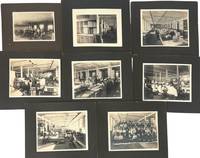
1918234351918. Women's industrial labor in an American textile finishing mill photographed likely between 1918 to 1922 documenting the inspection folding hemming and stamping of finished blankets and sheeting in the years around the First World War. The work shown belonged overwhelmingly to women who by 1920 made up about a fifth of the American labor force and were concentrated in exactly this kind of semiskilled textile work. The wartime labor shortage had pulled women deeper into industrial production and these images catch that expanded workforce on the floor before the 1919 recession and returning soldiers pushed women's share of factory labor back down. The conical galvanized fire buckets stenciled "Fire" mounted on posts in several frames date the images and tie them to the workplace fire safety reckoning that followed the 1911 Triangle Shirtwaist fire in which 146 workers most of them young women died.<br /> Photo archive of eight silver gelatin photographs approximately 6.5 x 8 inches mounted to card stock each measuring 12 x 10 inches with one smaller image American textile mill circa 1918 to 1922. Seven photographs show the mill interior: long finishing floors lined with cast iron columns and overhead pipe runs electric pendant lamps and tables stacked with uniform folded and rolled white goods tied with string. Women predominate at every station. They sit at inspection benches turning over folded cloth stand at long tables rolling and bundling sheeting and run a row of treadle and electric sewing machines hemming finished pieces with thread spools and machine heads sharp in the foreground. One worker operates a rack of hand stamps the date and numbering stamps used to mark finished goods before shipment. A few older men in vests dark suits and detachable collars stand among them as foremen and supervisors. One frame shows the shipping area with finished goods crated in wooden boxes stenciled for transport. The classroom image stands apart from the mill series: teenage students seated at ornate cast iron school desks a wall clock and a chalkboard covered in arithmetic. The eighth and largest subject is a full staff group portrait of roughly eighty workers overwhelmingly women posed on the production floor against stacked bundles of finished cloth with a length of white sheeting unrolled across the floor at their feet.<br /> The years these images were made were among the most volatile in American labor history. In 1919 more workers went on strike than in any year before some four million people twenty-two percent of the workforce and in June 1920 Congress created the Women's Bureau within the Department of Labor by Public Law 66-259 the first permanent federal agency charged with the welfare of wage-earning women which began studying the eight-hour day for women in 1921. The textile finishing trade these women worked in had been built on female labor since the start of the industrial revolution and the staff portrait records the scale and the gender composition of one such workforce directly. These photographs showing women's industrial work the fire buckets the stamping rack the sewing line the crated shipment ties the archive to specific developments in labor safety and women's employment law. Overall in very good condition with the mounts showing minor edge wear and some en verso pencil markings. unknown
1974ZB393093NY: Women Studies Abstracts 1974-1998. Volumes 3-26 1974-1998 partly bound library markings textually clean & tight price is for the lot. - If you are reading this this item is actually physically in our stock and ready for shipment once ordered. We are not bookjackers. Buyer is responsible for any additional duties taxes or fees required by recipient's country. Photos available upon request. NY: Women Studies Abstracts unknown
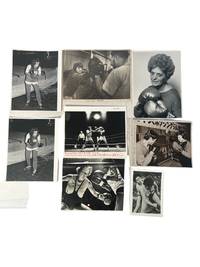
1970201881970. Women's boxing photograph archive 1974 to 1983 documents women as fighters trainers judges and sanctioned competitors during a period when boxing remained one of the most heavily gendered professional sports. The archive provides primary visual evidence of women's participation in combative athletics before women's boxing received Olympic recognition as a medal sport in 2012 and it records several forms of ring authority: women entering the ring as athletes women training male and female boxers and Eva Shain appearing as a pioneering judge. Shain became the first woman to judge a world heavyweight championship bout when she scored the 1977 Muhammad Ali and Earnie Shavers fight at Madison Square Garden placing one image in this group within the broader history of women claiming official authority in professional boxing.<br /> <br /> The archive consists of eight black-and-white silver gelatin photographs of women boxers and women in combat-sport settings circa 1970s to 1980s measuring from approximately 5 x 7 inches to 8 x 10 inches. One press photograph shows a co-ed boxing match between Sheila McGuire and Buddy DiBenedetto in a ring with a referee watching closely behind them. Another press photograph shows Eva Shain at age seventy-one wearing boxing gloves presenting her public identity through the equipment of the sport she judged. A 1983 photograph shows boxing coach Butch Fohndan training a young woman at Palmer Boxing Club in Alaska. A 1974 photograph from Japan shows Masako Takatsuki training a young male boxer; the attached press information identifies Takatsuki as a twenty-seven-year-old cosmetician and the only female boxing trainer-manager then licensed by the Japan Boxing Commission to spar and act as a second. Another action photograph shows an outdoor wrestling match between Gisa Pipa and Aggi Tillman with Tillman holding Pipa from behind. Two photographs show an unidentified woman near a boxing ring in a crouched stance with a direct combative expression suggesting training or promotional posing. The final 1975 photograph shows Sharon Allbery charging toward Zinda Foster at Seattle Center Arena in what contemporary women's boxing history sources identify as the first sanctioned female prizefight in Seattle Washington and the Pacific Northwest.<br /> <br /> The photographs are significant because they show women's boxing as a developing practice rather than a single symbolic breakthrough: fighters in sanctioned and mixed bouts a female judge associated with a heavyweight title fight a Japanese woman trainer-manager local gym instruction and women using combat poses to claim athletic presence. Their strongest research value lies in the way they document the infrastructure around women's boxing including referees licenses gyms press captions arenas and training relationships alongside images of women's physical force. Light handling wear and minor edge wear; press details present on several images; photographs remain crisp with clear ring gym and figure detail; overall very good. Concentrated women's sports photography archive documenting the contested expansion of women's boxing and combat-sport authority in the 1970s and early 1980s. unknown
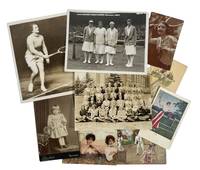
1900200841900. Women's tennis archive early 1900s to late 1930s documents female athletic participation across childhood portraiture illustrated popular culture press coverage and competitive play. The group is important for the history of women's sports because it records how women and girls were pictured entering a game that moved from elite recreation into organized competition during the late nineteenth and early twentieth centuries. The official history of Wimbledon notes that the Championships added Ladies' Singles in 1884 establishing one of the most visible formal venues for women's tennis and this archive preserves the visual culture that developed in the decades after that institutional change.<br /> <br /> The archive consists of ten visual items dated from the early 1900s to the late 1930s: three silver gelatin photographs one albumen cabinet card five brightly illustrated postcards and one real photo postcard with sizes ranging from approximately 1.75 x 2.75 inches to 6.5 x 8.5 inches. The largest press photograph dated 1933 shows Helen Jacobs in action and identifies her in the attached release as America's "outstanding woman athlete." Another press image shows four female champions standing side by side before a packed Wimbledon stadium with a newspaper article taped to the verso noting their scores. The earliest image an albumen cabinet card shows a little girl holding a small tennis racket while one illustrated postcard presents a co-ed trio on a tennis court in the early twentieth century. The remaining postcards and photographs extend the archive's range from playful and decorative representations of tennis to more direct evidence of women's organized competition. Half of the postcards bear handwritten inscriptions on the verso and two of the three press photographs retain original article clippings taped to the back.<br /> <br /> Taken together the group shows the changing public image of women's tennis from carefully posed early depictions shaped by restrictive dress codes to 1930s press photography centered on speed competition and celebrity. The official Wimbledon history also notes that equal prize money for men and women was not adopted there until 2007 a reminder that the athletic visibility seen in these images long preceded full institutional parity. Light handling wear overall with typical age toning and minor surface wear; inscriptions and verso attachments remain present; overall very good. Varied and visually engaging archive for the study of women's athletics press representation and the long development of competitive tennis culture. unknown
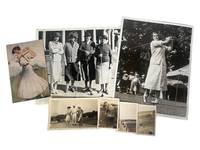
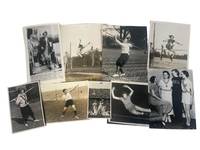
1910200811910. Women's competitive golf archive 1910s to 1930s documents women golfers in practice tournament and club settings during the formative decades of organized women's golf in the United States. The group provides visual evidence of women's athletic participation in a sport long associated with country-club respectability social access and gendered expectations about dress leisure and competition. The U.S. Women's Amateur Championship began in 1895 as one of the USGA's first three championships and the USGA identifies it as marking the beginning of women's competitive golf in the United States; these photographs and postcard show how that competitive culture appeared in everyday and press imagery in the decades that followed. <br /> <br /> The archive consists of seven items dated between the 1910s and 1930s: six silver gelatin photographs and one brightly illustrated postcard measuring from approximately 1.75 x 2.75 inches to 7.25 x 9 inches. The photographs include a 1934 press image of golfer Barbara Stoddard in a swing position; a 1935 lineup from the Annual Women's St. Valentine Golf Tournament identifying Helen Waring Sarah Fownes Wadsworth Myrom W. Marr and W.C. Fownes Jr.; three small circa 1928 photographs of women positioned with clubs on a golf range; and an early 1930s image of two women posed with a man at a country club the women holding several clubs with one woman wearing trousers. The illustrated postcard from the early twentieth century shows a woman swinging a club in an athletic outfit still shaped by long-skirted fashion rather than later sportswear. Across the group recurring details include golf clubs held as markers of athletic identity posed swings tournament lineup conventions country-club settings and changing women's clothing from long skirts to less restrictive dress.<br /> <br /> The archive records women's golf as both competitive sport and social performance making visible the relationship between athletic skill class-coded club culture and evolving public ideas about women's physical capability. Its strongest research value lies in the mix of press photographs vernacular practice images tournament documentation and illustrated popular culture allowing comparison between women as actual competitors and women as stylized sporting subjects. Light handling wear minor edge wear and typical surface wear to photographs and postcard; images remain clear and identifiable; overall very good. Cohesive women's sports archive documenting early twentieth-century women golfers as competitors club participants and subjects of changing athletic representation. unknown
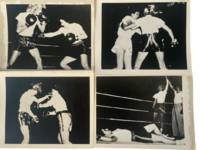
1910201861910. Women's participation in boxing long preceded formal recognition of the sport for female athletes developing through informal exhibitions training clubs and novelty bouts that challenged prevailing gender norms. Although women were largely excluded from organized boxing competitions during the nineteenth and early twentieth centuries scattered photographic evidence demonstrates that women continued to box recreationally and publicly despite social restrictions. This archive of photographs dating from the early twentieth century through the mid twentieth century documents women participating in boxing across a range of informal settings illustrating the gradual emergence of female athletic culture in a sport historically defined as masculine.<br /> <br /> Archive of sixteen black and white photographs including six silver gelatin prints and one real photo postcard measuring approximately 2.5 x 3.5 inches to 3.5 x 5.25 inches dating from the 1910s through the 1950s. The earliest image a real photo postcard dated August 1914 depicts two women wearing corsets and long dresses while sparring with boxing gloves before a mixed group of spectators. The postcard bears a pencil inscription on the verso reading "August 1914 For fun women boxers Francis Edith." Another early photograph shows two women posing with gloved fists raised before a snowy background with the inscription "Grace Miss Vandehei boxing This is Grace's roommate. A fine girl she's here now." Later photographs from the 1920s depict staged boxing encounters between a man and a woman with the female boxer dressed in athletic trousers and high heeled shoes reflecting the novelty and spectacle often associated with early female boxing exhibitions. One image shows the pair squared off with raised fists while another captures the moment of a punch landing against the man's chest. Another photograph shows two women sparring on a ship deck while surrounded by onlookers one boxer wearing a dress and curlers beneath her head covering while raising her gloved fists before a mixed audience of men and women.<br /> <br /> Boxing has historically generated controversy due to its physical intensity and female participation in the sport remained marginal for decades. Women occasionally boxed publicly as early as the eighteenth century yet organized opportunities remained rare. Women's boxing appeared briefly as a demonstration sport at the 1904 Olympic Games in St. Louis and training clubs such as Andrew Newton's Women's Boxing Club in London emerged during the 1920s. Nevertheless women's boxing did not become an official Olympic sport until the 2012 Olympic Games. The photographs in this archive illustrate the persistence of women athletes who trained and competed informally despite these restrictions offering visual evidence of women's athletic experimentation and resilience during a period of shifting gender expectations in sport. Sixteen photographs including silver gelatin prints and a real photo postcard measuring approximately 2.5 x 3.5 inches to 3.5 x 5.25 inches. Photographs clear and well preserved with light handling wear. Overall condition very good. unknown
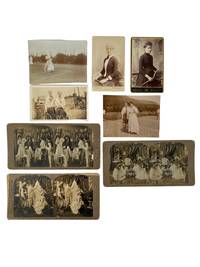
1880206021880. Unidentified photographers female tennis player photograph archive ca. 1880s-1910s documents women's participation in organized sport and recreational culture during the late nineteenth and early twentieth centuries supporting research into gender roles physical activity and educational environments for women in the Victorian and Edwardian periods. The group captures tennis as one of the few socially sanctioned athletic pursuits for women showing both formal portraiture and active play. The inclusion of seminary-based stereoviews alongside studio cartes-de-visite and outdoor scenes establishes a transatlantic visual record of how tennis intersected with women's education leisure and identity formation during a period of restricted physical and social mobility.<br /> <br /> Eight original photographs including five albumen prints and three stereoviews sepia toned ranging from approximately 2.5 x 4 inches to 3 x 4.5 inches. Two cartes-de-visite depict waist-length portraits of women holding tennis rackets dressed in late nineteenth-century attire including fitted bodices and high collars; versos bear photographer imprints for Hellis & Sons of London and George Goodman of Margate. Additional images show women engaged in doubles matches on grass courts including one action-oriented scene with players mid-swing wearing wide-brimmed hats and layered dresses. One photograph shows two young women in matching outfits possibly school uniforms standing in a yard holding rackets. The three stereoviews dated 1905 and issued by C.H. Graves of Philadelphia are captioned "A Masquerade at the Seminary Confidences" "Trying on the Costumes" and "Planning to Scare the Freshies" each depicting groups of young women in a dormitory interior; tennis rackets are visible mounted on the wall in the background linking athletic culture to residential school life. Based on the photographer and setting the images may relate to a women's seminary such as Darlington Seminary in West Chester Pennsylvania.<br /> <br /> Produced during the decades following the introduction of lawn tennis to the United States in 1874 the archive situates women's participation in sport within broader developments in leisure education and shifting norms of female physicality. The imagery documents the persistence of restrictive dress including corseted garments and long skirts even in athletic contexts underscoring the negotiation between mobility and propriety. Minor surface wear consistent with age with strong image clarity and tonal stability across prints. Overall in very good condition. unknown
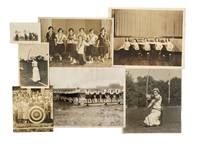
1910219051910. Archive of original photographs documenting women's participation in athletics and organized physical culture during the early twentieth century when women's sports and exercise programs increasingly became accepted within schools colleges camps and recreational organizations. The photographs show women engaged in archery synchronized gymnastics calisthenics and cheer leading during a period when female athletic participation expanded alongside broader debates concerning women's health education public visibility and social independence. The photographs provide visual evidence of the physical culture movement as it shaped women's recreational and educational environments in the United States and abroad preserving both formal athletic training and communal performance activities that contributed to changing expectations surrounding women's physical activity and public presence.<br /> Collection consists of seven original silver gelatin photographs dating approximately from the 1910s through the 1930s. The archive includes several photographs of women participating in organized physical education exercises and athletic activities while dressed in period sporting attire. One image dated July 5 1928 documents uniformed women performing synchronized gymnastic drills during a Sokol Festival dress rehearsal in Prague capturing rows of participants in coordinated motion during a major international physical culture gathering influenced by Central European nationalist and athletic traditions. Another photograph from the 1910s-1920s shows a group of young women posed with medicine balls Indian clubs and batons while wearing sailor-inspired gymnasium uniforms associated with school or collegiate athletic programs. A separate 1930s image depicts a cheerleading squad in matching lettered "S" sweaters posed in formation within a school auditorium. Archery appears prominently throughout the archive. One press photograph portrays Olympic diver and sportswoman Helen Meany Balfe standing with a bow on the grounds of White Sulphur Springs West Virginia as identified by a typed caption on the verso. Another image depicts Stella M. Ives identified in manuscript drawing a bow while dressed in full sporting attire. A vernacular photograph portrays four young women practicing archery in the hills above Troy New York including one identified as Louise Hatch of Troy with a handwritten verso inscription linking the group to Bridgewater Massachusetts. The final photograph shows a large assembly of young women gathered on outdoor steps beside a prominent archery target possibly at a camp or collegiate event emphasizing organized recreation and group participation.<br /> The archive documents the increasing visibility of women's athletic participation during the early twentieth century when organized exercise and sports became associated with women's education health reform and public modernity. Physical culture programs in schools colleges camps and civic organizations promoted athletics as both disciplined recreation and social training while sports such as archery and gymnastics offered women expanded opportunities for public competition and physical expression. Particularly notable is the range of activities represented from regimented calisthenic performance to recreational archery and cheerleading illustrating the broad spectrum of athletic environments available to women before the widespread professionalization of women's sports. Light wear and occasional handling marks consistent with age; photographs remain well-preserved overall in very good condition. A visually engaging archive documenting the growth of women's athletics and physical culture in the early twentieth century. unknown
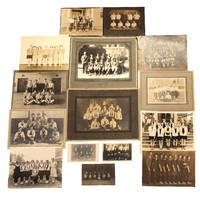
1918185121918. Women's basketball photograph archive 1918-1929 documents the early institutionalization of women's competitive athletics in the United States recording team organization uniform development and player identification in the decades following the sport's introduction to women's education. Basketball adapted for women in the 1890s under the direction of physical educator Senda Berenson at Smith College expanded into intercollegiate and regional competition by the early twentieth century despite ongoing debate over women's participation in organized sport. These images provide direct visual evidence of that expansion with named players and structured teams indicating the normalization of women's basketball within school and community settings during the interwar period.<br /> <br /> Archive of 15 silver gelatin photographs ranging in size from approximately 3.5 x 5.5 inches to 11 x 13 inches dating between 1918 and 1929. All images are formal team portraits with groups of six to twelve players in some cases accompanied by coaches. Many photographs include handwritten identifications on versos naming players or teams. Several compositions feature a central player holding a basketball marked with team initials and year. The photographs document changes in athletic dress including high top sneakers short skirts sailor style tops and later variations incorporating shorts reflecting evolving standards of movement and athletic practicality. Produced during a period when women's athletics expanded within educational institutions while remaining subject to cultural scrutiny the archive provides material for the study of gender norms physical education and the development of organized sport prior to formal Olympic inclusion of women's basketball in 1976. The progression of uniforms and team structures across the decade offers evidence of shifting expectations regarding women's physical activity and public visibility in competitive environments. Light edge wear and minor foxing to some prints; images remain sharp and fully legible. Overall very good condition. unknown
19992083002116411160Iwanamishoten 1999. Soft Cover. Fine. The book is in fine condition. Iwanamishoten paperback
1023921154.Ghardcover. Good. Access codes and supplements are not guaranteed with used items. May be an ex-library book. hardcover
1023926520.Gpaperback. Good. Access codes and supplements are not guaranteed with used items. May be an ex-library book. paperback
50665988like new. unknown
50650763like new. unknown
1940206421940. Women's Sports Women's wrestling photograph archive documenting amateur competitions gymnasium training and professional wrestling performers between the 1940s and the 1970s. The images record women participating in a sport historically dominated by men illustrating the gradual emergence of female wrestling as both an amateur athletic activity and a professional entertainment circuit during the mid twentieth century.<br /> <br /> Archive of ten photographs including nine black and white silver gelatin prints and one sepia toned image measuring approximately 3.5 x 4.5 inches to 8 x 10 inches. Several early photographs from the 1940s depict women grappling in an indoor ring during staged matches. Later images show girls wrestling during a gymnasium class setting while classmates watch from the sidelines. Three studio photographs from the 1970s portray professional wrestlers associated with promoter Mary Lillian Ellison known professionally as The Fabulous Moolah.<br /> <br /> Portraits include full length promotional photographs of Joyce Grable of Ozark Alabama Lilly Thomas of Memphis Tennessee and a headshot of Paulla Kaye of Oklahoma City Oklahoma. These performers were active on the professional wrestling circuit during a period when women's wrestling was gaining visibility in regional promotions across the United States. Female wrestling remained controversial throughout much of the twentieth century facing both cultural criticism and sensationalized marketing. Light wear consistent with age. Very good condition. A visual record of women participating in amateur and professional wrestling across several decades of American sports culture. unknown
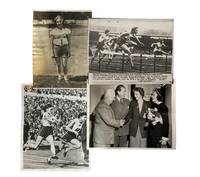
1925218901925. Women in Sports Archive of four photographs documenting women's track and field achievements from 1925 to 1956 highlighting pioneering female athletes in Olympic and exhibition competition. Includes NEA and United Press photo service stamps and typed caption slips on versos. The images span the 1920s to post-WWII era and depict notable moments in women's sports history from athletes representing Australia the Netherlands and beyond. They capture critical milestones in the visibility and legitimization of women in professional athletics especially in Olympic contexts where female participation was still relatively novel and contested.<br /> <br /> Included is a striking 1956 action shot of Australia's Shirley Strickland clearing the final hurdle en route to her gold medal victory in the 80-meter hurdles at the Melbourne Olympics where she set a new Olympic record of 10.7 seconds. The image is identified via an INP Radio Soundphoto caption. A 1952 United Press photo from Helsinki captures the dramatic baton drop in the women's 4x100 relay by Australia's Marjorie Jackson who had earlier taken gold in the 100-meter sprint; the caption dramatically underscores how the error "killed Australia's chances." A third image shows Dutch Olympic legend Fanny Blankers-Koen-winner of four gold medals at the 1948 London Games-greeted with tulips and accolades at New York's Idlewild Airport in May 1955. The accompanying caption notes her role as both a mother and athletic icon foregrounding the persistent framing of female athletes through maternal identity. Lastly a ca. 1925 press photo shows an unnamed track competitor on the field with the reverse stamped August 11 1925 suggesting the early presence of women in organized publicly documented competition during a decade when such participation was still controversial. All images well-preserved with clear annotations on three captioned photos. Overall very good condition. This archive offers an illuminating view into women's evolving presence on the global athletic stage highlighting moments of both triumph and adversity in a narrative of gender progress within competitive sports. unknown
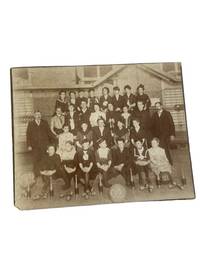
1902182601902. Original Albumen photograph of women in physical education class. 1902. Measures 9.75 x 8 inches. Mounted to photographer's board. Image shows 26 women and girls seated in tiers and posing with various early exercise equipment including dumbbells and large leather balls marked with the year. One man poses wiwth the women in suit and tie and two older men presumably instructors pose alongside the girls one of them extending a hand to touch the shoulder of the girl beside him who looks away. The women's eyes are turned from the camera expressions fixed and unsearchable. They appear to be in a school gymnasium a ladder hung like a track on the wall behind them and racks of free weights beneath it. Women's exercise was first introduced as calisthenics a European import in the 1830s which consisted of light choreographed movements not unlike dance steps. By the late 1800s exercise had been closely linked to women's educational reform. Educational activist Catherine Beecher advocated broadly for physical education as a safeguard for female health and for forming good physical habits in the young. Corner very slightly clipped on one side. Light sunning to image. Overall good condition. unknown
1921185131921. Unidentified photographers photograph archive of women's track and field athletes 1921 to 1949 documenting the expansion of women's participation in international athletics and Olympic competition during the early twentieth century. The material provides primary visual evidence of women competing in events historically excluded from female participation supporting research into gender and sport Olympic history and the institutional acceptance of women's athletic achievement across multiple nations.<br /> <br /> Archive of nine silver gelatin photographs many issued as press images with original article clippings or captions mounted on the verso while others include handwritten identifications of athletes. The photographs depict women actively engaged in track and field events including javelin throwing high jumping and discus. One press photograph shows Fanny Blankers-Koen arriving by airplane captioned as an Olympic champion and mother following her victories at the 1948 Summer Olympics where she won four gold medals. Another image issued as a photographic postcard captures Gisela Mauermayer mid-discussion throw during the 1936 Berlin Olympics with a full stadium and officials visible in the background. Additional photographs include three javelin throwers identified on the verso three high jumpers captured in motion clearing the bar and one press image depicting a coach with members of a women's Olympic track team in uniform accompanied by descriptive captions outlining their roles and achievements. The images emphasize athletic motion competition settings and formal presentation through press distribution.<br /> <br /> Nine photographs ranging in size from approximately 3.75 x 5.5 inches to 8 x 10 inches. These images emerge from a period in which women's track and field gained increasing international recognition following initial exclusion from Olympic competition with early twentieth-century advocacy and independent competitions contributing to eventual inclusion. The presence of Olympic medalists alongside lesser-known competitors situates the archive within a broader landscape of athletic participation and achievement. Minor edge wear and occasional surface markings including ink notation on one image; otherwise photographs remain clear and well-preserved; overall very good condition. A focused visual record of women's athletic advancement and Olympic participation in the early twentieth century. unknown
198030487Francestown: R.T. Risk 1980. First Printing one of 50 copies only. This copy Signed by the Author. 8vo publisher's original blue wraps the upper cover with label printed in blue. 12 pp. A very fine copy as pristine. FIRST EDITION AND ONE OF 50 COPIES ONLY. THIS COPY SIGNED BY THE AUTHOR. The book contains two of the author's poems "A Woman Striding" and "To A Traveler". R.T. Risk paperback
1944147961944. Bloom Barbara C. Typed Letter Signed to WAVES officer's mother and accompanying photographs 1944 documents United States Navy WAVES service during World War II and the recognition of women's military labor within the wartime home front. The material captures the relationship between enlisted women's service and familial acknowledgment situating women's naval participation within the broader Allied military campaigns against Germany and Japan. The letter explicitly ties the daughter's service to active wartime offensives while the accompanying photographs provide visual evidence of WAVES personnel in both formal and informal settings offering insight into daily life camaraderie and presentation of women in uniform during the final year of the war.<br /> <br /> Bloom Barbara C. Typed Letter Signed. Office of Naval Procurement December 1944. One page. Accompanied by six black-and-white photographs of Navy WAVES stationed aboard USS Hunter. The letter addressed to Mrs. Cadman praises her daughter's contribution to the war effort stating: "You have the right to be very proud of what your daughter has done in speeding our recent offensive ever closer to the heart of Germany and Japan" and includes statements attributed to Franklin D. Roosevelt and Ernest J. King recognizing the WAVES' service. It further references the daughter's conduct discipline and contribution to the reputation of the organization. The six photographs depict groups of uniformed WAVES women aboard USS Hunter including posed portraits group formations and informal off-duty scenes in which women are gathered socially. One larger photograph bears period handwritten identifications on the reverse naming the women pictured. Image sizes range from small personal formats to larger prints capturing both individual and collective representation.<br /> <br /> The Women Accepted for Volunteer Emergency Service WAVES program established in 1942 expanded the role of women within the U.S. Navy by assigning them to non-combat duties thereby releasing male personnel for deployment. By 1944 WAVES had become an established component of naval operations with thousands serving in administrative technical and logistical roles. The letter reflects official efforts to frame women's service as both militarily essential and socially respectable emphasizing family pride moral conduct and national duty. The photographs reinforce this narrative through visual presentation of uniformed discipline and group cohesion. Together the materials provide direct documentation of women's participation in wartime service and the integration of that service into domestic and public recognition structures during World War II. Light edge wear and minor foxing to photographs; one image with handwritten identifications on verso; letter with docket holes at top margin not affecting text; overall very good condition. A cohesive grouping linking official wartime communication with visual documentation of WAVES personnel. unknown
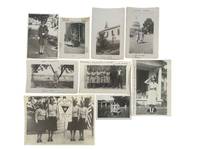
1943220591943. Women's Army Corps service photographs dated 1943 to 1944 document the participation of enlisted women in U.S. Army support operations during World War II with particular attention to transportation training environments and stateside military life. The images identify individual service members including Hilda Goble described in captions as an "ambulance driver during War II" and Abbie E. Bachelder situating named women within the broader expansion of female labor following the establishment of the Women's Army Corps in 1942. These photographs support research into women's military service wartime labor structures and the integration of women into logistical and medical support roles essential to the functioning of the U.S. Army during the war.<br /> <br /> Archive consists of 9 original silver gelatin photographs most approximately 3 x 5 inches several with scalloped or deckled edges and period ink captions identifying subjects and dates. Two portraits show Hilda Goble in full uniform standing before a porch and saluting each inscribed "Hilda Goble Ambulance driver during War II" documenting her role in transporting injured personnel within military systems. A group photograph captioned "Ambulance Driver Team War II Hilda Goble" depicts seven uniformed women indicating coordinated service within ambulance units. Additional images include a portrait labeled "Abbie E Bachelder / June - 1944" showing a uniformed WAC posed before a landscape of barracks buildings and another dated 1943 identifying Bachelder outside a wooden structure. A photograph captioned "Oct 29 - 1944 / Reims" shows two women identified as Roberta and Abbie posed on the grounds of the U.S. Capitol indicating travel or official assignment within government contexts. Other photographs depict WAC personnel standing near a military chapel and within training or hospital environments while one image titled "Marine Corps Wives of America - Hdqtrs Chap 1" shows four women beneath an organizational banner documenting affiliated civic or support networks connected to military service.<br /> <br /> These images documents the Women's Army Corps expantion to meet wartime labor demands assigning women to clerical transportation medical and logistical roles across domestic and overseas installations. The presence of ambulance drivers within the archive demonstrates the direct involvement of women in medical transport and support infrastructure while scenes at the U.S. Capitol and organized groups indicate both official recognition and the development of social and institutional networks among servicewomen. Light edge wear and minor creasing with one photograph showing tape residue; images otherwise clear with captions legible; overall very good condition. This archive provides a concentrated visual record of named WAC personnel and their roles within the operational and social framework of the U.S. Army during World War II. unknown
1976153831976. China WOMEN October League Marxist-Leninist. Chicago: October League 1976. 16 pages. 5.5" x 8.5" illustrated with black and white photos of Women's Day marches the woman are all performing tasks at work on the image. The Liberation of Women in China. Printed by Highland Park: Internationals Socialists n.d. 49 pages. 5.5" x 8.5" inches. Original wrappers Pamphlet. Argues that the liberation of women in China had become subordinate to the needs of the state and industrialization. Highland Park: International Socialists n.d. circa 1970s. Original printed wrappers 49 pages. 5.5 × 8.5 inches. Tables footnotes.<br /> <br /> A scarce radical pamphlet issued by the International Socialists examining the gender politics of post-revolutionary China. The work critiques the Chinese Communist Party's claims to women's emancipation contending that the liberation of women had been made subordinate to the demands of state-building and industrial growth. In opposition to official party rhetoric the pamphlet situates women's issues within the broader political economy arguing that while the Communist revolution opened limited avenues for women's participation in the labor force and public life genuine equality was sacrificed to the state's overriding needs of production modernization and social control. Tables and statistical data are included to support its argument with footnotes directing readers to both Chinese sources and Western Marxist analysis. Pamphlets from the International Socialists are relatively uncommon especially those with sustained attention to global feminist and socialist struggles. This text is significant in documenting how New Left and Trotskyist organizations in the United States attempted to reframe Chinese Communism through a feminist lens situating women's emancipation not as a fulfilled revolutionary promise but as a deferred and compromised project. For institutional collections it offers an important perspective on the intersections of gender Marxism and internationalism in the mid-20th century while also reflecting the intellectual currents of American socialist critique. Mild wear to wrappers otherwise well-preserved. Overall Very Good. unknown
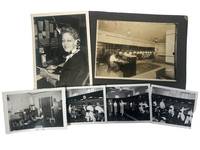
1900200911900. Telephone operator photo archive circa 1900 to 1958 documents women's labor within telephone exchange systems showing how urban communications depended on trained female operators seated at switchboards connecting calls handling information and maintaining the human infrastructure behind early and mid twentieth century telephone service. The material documents telephone communication labor through photographs of switchboard rooms operators wearing headsets plug boards supervisory presence and grouped clerical activity revealing how connection work operated in practice before automated dialing fully displaced manual exchange work. The archive supports research into women's wage labor communications history gendered office work New York telephone service and the disciplined workplace culture that positioned young women as the public voice and operational center of the telephone network.<br /> The archive consists of six black-and-white photographs including five silver gelatin photographs and one early albumen photograph with images measuring from approximately 3.5 x 4.25 inches to 7 x 9 inches. The date range appears to extend from the early twentieth century to 1958 based on the later dated images. Several photographs show women seated in tight rows facing large switchboards wearing heavy headsets with horn mouthpieces and working among dense arrangements of cords and plugs. The early albumen photograph shows a row of women facing the switchboards while a female supervisor watches over the room indicating both the gendered hierarchy and procedural discipline of the exchange floor. One image shows an operator turning toward the camera with a plug in hand smiling while gesturing toward the board. Four smaller photographs dated 1958 show teams of women moving between boards and a small group with paperwork behind the operating area; pencil inscriptions on the versos identify the location as New York.<br /> The photographs are valuable because they make visible the labor system behind telephone service: rows of operators standardized equipment supervisors paperwork and the coordinated manual routing of calls. They also record the gendered character of communications work in which women's voices posture speed and manner were made part of the service itself. Light handling wear minor edge wear and expected age toning; images remain crisp with equipment and personnel details clearly visible; overall very good. Strong women's labor and communications history archive documenting the human operation of telephone exchange systems across the first half of the twentieth century and into the postwar period. unknown
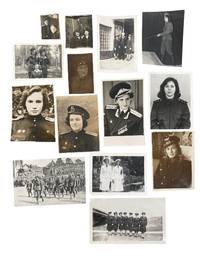
1941231851941. Women's HistoryMilitary Women's military service photo archive documenting the incorporation of women into military organizations in the United States Russia and Europe from the ear;y 40s through the end of World War II with especially strong evidence of uniformed training rank identity weapons instruction and military parades in the 1940s. The group shows women as enlisted or commissioned participants in military systems in portrait sittings unit groupings drill formal dress and liberation era parade culture. Several images center on Czechoslovak and Soviet aligned visual culture at the end of the war including a Prague parade photograph explicitly identifying women volunteers attached to the 1st Czechoslovak Army on 17 May 1945 placing female service on the public stage of postwar victory.<br /> Photo archive of 14 likely silver gelatin photographs ranging from 1.5 x 2 to 3 x 5.5 inches United States and Europe circa 1910s-1945. The archive includes formal studio portraits of individual women in military tunics with shoulder boards insignia peaked caps and medals; a close portrait of a decorated woman officer wearing a sash and multiple campaign medals; and a full length image of a young servicewoman holding a rifle on what appears to be a stage or drill platform. Group scenes include seven women in matching belted uniforms and caps posed outdoors near a long low building captioned 1944 three women in service dress photographed among trees and two women in white formal or naval style uniforms standing in a landscaped garden. A small early portrait shows a younger female figure in uniform beside an older woman extending the chronology back before the Second World War. The Prague parade image is the most textually grounded item: its printed Czech caption states that the military review of the 1st Czechoslovak Army was held in Old Town Square on 17 May 1945 in the presence of President Edvard Beneš and identifies the marching contingent as women volunteers assigned to that army. Recurring themes across the collection include rank display military insignia paired and group portraits emphasizing unit identity and the shift from informal military support to organized involvement and state recognition.<br /> Across the first half of the twentieth century women entered military institutions through auxiliary organizations medical and communications branches transport and administrative service anti aircraft and weapons training and in some national contexts direct incorporation into regular formations. This archive tracks that process through its own evidence: portraiture records accession into uniformed hierarchy group photographs show women organized in units the rifle image places female service within martial training rather than clerical abstraction and the Prague review demonstrates how women's wartime labor and service were folded into liberation politics and postwar state ceremony. The international span gives the group unusual strength for institutional collecting on women's military history because it places American and European service culture in one frame and shows the common mechanisms by which states made women visible disciplined and legible within military life between the two world wars and at the end of the second. Light to moderate wear scattered creasing edge wear handling marks and some fading or softness to several prints; overall good condition. This is a compact but pointed body of photographic evidence for how women were absorbed into military systems through uniform training ceremony and public recognition across the WWI-WWII era. unknown