2 371 résultats
français In-8 de 298-(6) pp.; broché de l'éditeur. Publications de la Bibliothèque nationale. Bibliographies et catalogues, 2.
244030Collection Histoire des idées et critique littéraire, 130.Genève, Droz, 1973 in-8, XVI pp., 408 pp., avec 15 illustrations dans le texte, toile Bradel blanche sous jaquette illustrée (reliure de l'éditeur).
1967115566Tunis, Publications du Secrétariat d’état à l’Information et au Tourisme 1967 In-4 36 x 27 cm. Reliure éditeur non paginé [58] pp., autoportrait de l’auteur en frontispice, 28 dessins en noir à pleine page hors texte avec commentaires en regard. Exemplaire en bon état.
New Turkish Paperback. Demy 8vo. (22 x 15 cm). In Turkish. 174 p., ills. Dünya haritasi ve cografya risalesi. Haci Ahmet was a purported Muslim cartographer linked to a 16th-century map of the world. Ahmet appended a commentary to the map, outlining his own life and an explanation for the creation of the map. But it is not clear whether Ahmet created the map, or whether he simply translated it into Turkish for use in the Ottoman world. Haci Ahmet appended a lengthy commentary to a 16th-century map of the world annotated in the Turkish language, known as The Ottoman Mappa Mundi of Haci Ahmet, amongst other titles, which opens with "Whoever wishes to know the true shape of the world, their minds shall be filled with light and their breast with joy.". The map is heart shaped, otherwise known as a "cordiform projection," a style that was popular in sixteenth century Europe, and the extant copy was printed from wooden blocks in Venice, Italy, in 1559. It was kept until the late 18th century in the archives of the Venetian Council of Ten. The map is now part of the Heritage Library in the Qatar National Library. Known as the "Mappamondo Haci Ahmet", the map outlines legends and place-names in Turkish, and it may be the first map in Turkish ever published for sale to an Ottoman audience. Whether the map is original, or was simply a translation into Turkish, it helps show how the people of the Ottoman Empire perceived themselves in relation to the wider world. Three small spheres appear below the main map at the bottom of the page - the central graphic represents Earth and a number of satellite planets, while the left and right depict constellations. Within the accompanying text of the map, Haci Ahmet explains that the map was created to share knowledge of the shape of the world, especially of the New World. Specifically, Ahmet points out that the classical philosophers, such as Plato and Socrates, did not know about the newly discovered continent, which he says shows that the world is round. He says that the New World demonstrates the "extent to which the Ottomans were participants in their own right in the process of physical expansion abroad and intellectual ferment at home that characterized the period of history commonly referred to as the Age of Exploration". Ahmet also assigns the Ottoman Empire's rulers and kingdoms to the celestial bodies represented in the lower quadrant of the map, a maneuver which has been interpreted as an effort to impose a hierarchical geopolitical system that preferences Ottoman rule above all other world powers. The map is considered unlikely to be original, and was probably translated into Turkish by Ahmet. The map has specific European characteristics, in that it includes the use of Western terms, suggesting Ahmet translated an older map into Turkish. In fact, throughout the map's accompanying text, Ahmet emphasizes translation, stating that he "translated it from the language and alphabet of the Europeans into that of the Muslims". A further argument made against Ahmet's authorship is that the "heart-shaped form of the map had already been used by earlier European cartographers". The map is "heart-shaped" and is constructed by a cordioform projection developed by 16th century cartographers and mathematicians including Johannes Werner (1468-1522), a German mathematician and geographer. The map has been tentatively linked to several other geographers, including Giovanni Battista Ramusio (1485-1557). It has also been argued that it shares similarities with a map by the French cartographer Orontius (1494-1555), published in 1534. Ahmet claimed the map was made for Ottoman princes, and some of the sons of Suleyman the Magnificent were interested in maps of the world and had looked to Venice for their production. This resulted in the development of Ottoman-Venetian relations, which offered "new interpretations of Venetian attitudes to the production of world maps for Ottoman clients".The map's printing in Venice hel
200370170Le Trésor du Patrimoine 2003 In-4 relié 30,1 cm sur 23,7. 176 pages. Très bon état d’occasion.
lxix + 442pp., 19cm., brochure originale (étiquette sur le premier plat), peu de rousseurs, bon état, C99923
1890GITg091Paris Ollendorff 1890. In-8 broché 507pp. Petit manque de papier en tête du dos de la couverture, rousseurs par endroits, bien complet de toutes ses pages.
214840Paris, Ollendorff, 1890; 2 vol. in-8, 545 pp. et 507 pp., front. au tome I, broché. Petits accrocs aux couvertures. Soulignures au crayon.
51892Paris Garnier Frères, Libraires-Editeurs 1863 in 12 (18,5x11,5) 1 volume reliure demi basane marron de l'époque, dos lisse orné de filets dorés, XI et 426 pages, des rousseurs. Corneille Trumelet, 1820-1892, capitaine adjudant-major au 1er régiment de Tirailleurs algériens. Bon exemplaire ( Photographies sur demande / We can send pictures of this book on simple request )
1881C99923Paris, Didier 1881 lxix + 442pp., 19cm., brochure originale (étiquette sur le premier plat), peu de rousseurs, bon état, C99923
217083Paris, Challamel Aîné, 1886 in-8, XXVII-516 pp., 8 pl. h. t. dt 4 dépl., demi-percaline verte, dos orné (reliure de l'époque).
244521Paris, Garnier, 1863, in-12, XI-426 pp., broché. Fortes rousseurs. Dos un peu abîmé.
236401Paris, Librairie des deux mondes, F. Bouriand, 1888 in-12, 451 pp., [3] ff. n. ch. de table, 8 pp. de catalogue, avec un portrait dans le texte, demi-chagrin maroquiné noir, tête dorée, couverture et dos conservés (Lobstein).
45591Sedes.1997.In-8,couv.souple ill.vert et blanc.348 p. TBE.
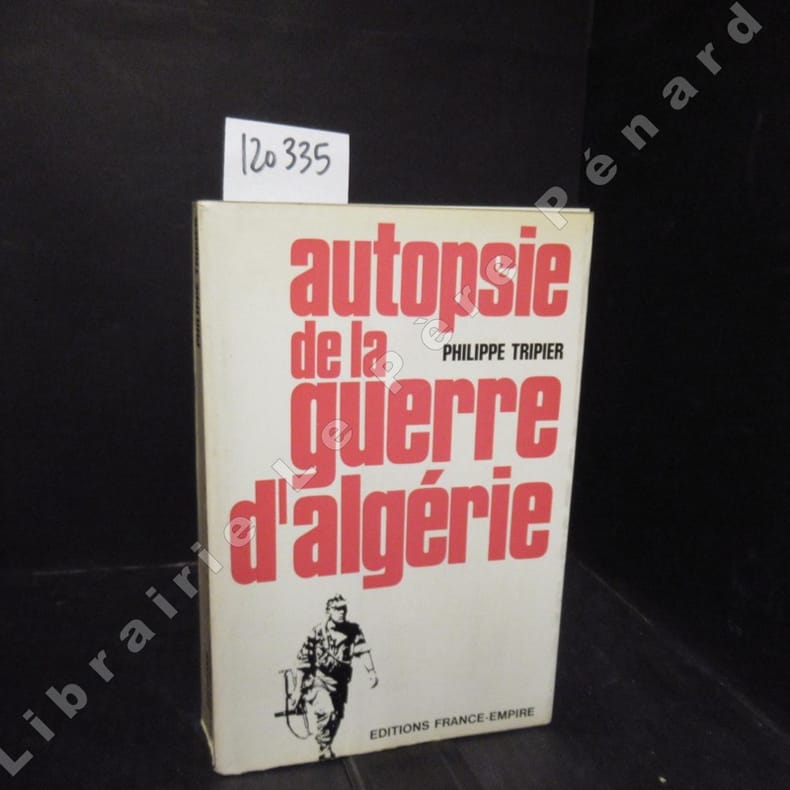
19721203351972 Editions France-Empire - 1972 - Fort in-8, broché couverture à rabats - 648 pages + Annexes non paginées in fine + Carte volante
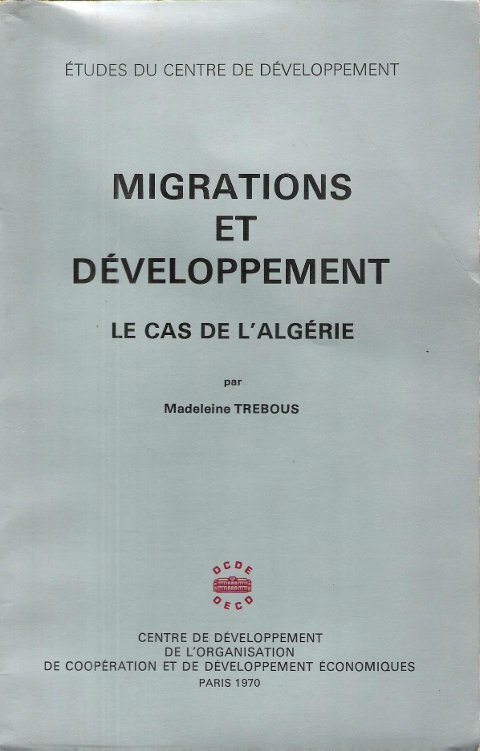
Collection " Etudes du Centre de Développement " . Illustré de tableaux . Histoire , Maghreb .- 244 p. , 500 gr.
1970022492Paris Centre de Développement de L'Organisation de Coopération et de Développement Economiques 1970 Grand In 8 Collection " Etudes du Centre de Développement " . Illustré de tableaux . Histoire , Maghreb .- 244 p. , 500 gr.
Very Good English Paperback. Pbo. Cr. 8vo. (19 x 13 cm). In Turkish. 32 p. A tractate on Tunis. Tunus faciasi. Nasil basladi, nasil devam ediyor.
129006The Pepin Press Amsterdam - Singapore 2000 In-8 carré ( 220 X 220 mm ) de 231 pages, broché sous couverture illustrée en couleurs. Très nombreuses illustrations hors-texte en couleurs et en noir. Texte en Anglais, Français, Allemand, Espagnol, Italien et Chinois. Très bel exemplaire.
Broch?. 200 pages.Traces de scotch au dos. Couverture d?fra?chie.
239pp., 24cm., édition arabe de 2006 de l'édition originale française, bel état, [étude sur la réforme de l'enseignement en Algérie; texte en arabe], ISBN 9947-20-012-4, C72547
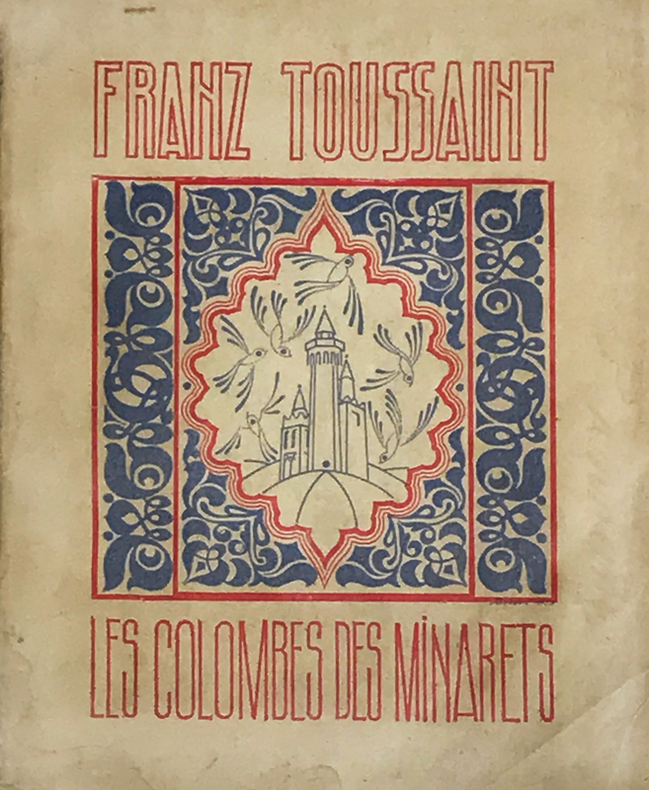
19282388Paris, Editions du Monde moderne, 1928 ; in-12, broché ; 174 pp. (1) f. (achevé d'imprimer) ; ornementation d'un motif et d'une colonne en bois gravés bleus reproduits sur chaque page ; couverture blanche illustrée en couleurs.
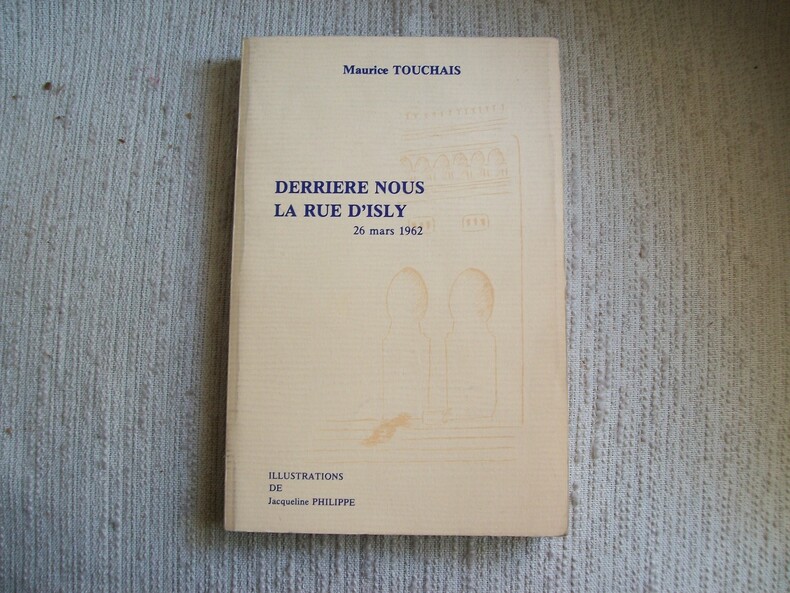
1977GITj027Salon-de-Provence Imprimerie Amigon 1977. In-8 broché couverture illustrée 170pp 3 feuillets non chiffrés. Orné de 24 illustrations de Jacqueline Philippe (1 dans le texte, 23 hors texte) + 1 illustration indépendante dépliante (vue plongeante des rues d'Isly et Bugeaud) + 3 articles découpés dans une revue non identifiée et la photocopie d'un poème dactylographié anonyme rendant hommage aux victimes. Exemplaire complet, en bon état de ce texte composé 2 ans après l'exode mais édité seulement en 1977. Présenté sous forme romancé et illustrée, ce texte se veut objectif pour dénoncer les tromperies politiques dont furent victimes les Français d'Algérie. (4734)
191316626Couverture rigide. Reliure toile de l'éditeur. 432 pages. 8, 5 x 14 cm.
192724763Paris, Editions de la Nouvelle revue critique, (1927). Un vol. au format pt in-4 (248 x 196 mm) de 9 pp., broché, sous couverture à rabats rempliés.