Un Contemporain [Joly, Maurice]Biblio.com
8 112 résultats
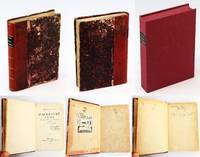
1864564j1976Bruxelles: Imprimerie de A. Mertens et Fils. Fair with No dust jacket as issued. 1864. First Edition. Hardcover. Is this book the plagiarized source of The Protocols of the Learned Elders of Zion "In his 1870 autobiography Maurice Joly 1829-1878 described how he conceived the idea of a dialogue between Montesquieu and Machiavelli. At that time it was forbidden to openly criticize the regime of Napoleon III but in this way it would be possible through the mouth of Machiavelli to expose the Emperor's motives and methods stripped of the usual camouflage. Thus this book was printed in Belgium and smuggled into France but was immediately seized by the police banned and Joly arrested. Thus few copies survive. Joly's reflections on the despotism of Napoleon III provide insights applicable to authoritarian regimes of today. Moreover something of Joly's insights even survived when his book was transformed into The Protocols of the Elders of Zion thus The Protocols often seem to forecast twentieth-century authoritarianism." - pages 73-76 of Warrant for Genocide by Norman Cohn in which he claims over 160 passages in the Protocols are clearly based on passages in Joly. "The Protocols of the Wise Men of Zion were first circulated in Russia in the early years of the twentieth century purportedly an account of a meeting between Jewish leaders in the fall of 1897. A horrible plot to undermine society overthrow governments and destroy Christianity is revealed. The 'minutes' are copied verbatim from A Dialogue in Hades Between Machiavelli and Montesquiou written by Maurice Joly. The 'Protocols' merely substituted the word 'Jew' for Joly's own devils." - Footnotes to pages 423-424 of Mein Kampf Reynal & Hitchcock 1939. Others argue that Joly's work was not the source of The Protocols. We leave it to the reader to decide. 4 i-iii iv 337 1 1 errata p. 18.0 x 12.4 cm. Text in French. Tight maroon quarter leather binding with new leather spine and leather title label. Wear to periphery of older marbled boards which are probably not original. Bookplate of Dr. J.A. Van Praag 1895-1969 inside front board. Van Praag was a lecturer at the University of Amsterdam when he acquired this book in 1931 and wrote his name atop the first blank leaf along with a comment about the purported connection of the book to The Protocols. He also wrote Joly's name on the title page. Pencil notes on pages 47 80 and 94. Evidence of moisture exposure to endpapers and more moderately to contents. Negligible if any waviness to contents. All text clearly legible with pages intact. Includes new custom acid-free clamshell with leather title label upon spine. A rare first edition example of this most contentious work. Provenance: Acquired from an Israeli dealer who purchased it at an Israeli auction which only sells books offered by Israelis. Our research indicates that at least some of Van Praag's books were looted by the Nazis in 1941. Apparently he retired in 1966 and attempted to rebuild his library. However after a fire in his widow's home in 1970 part of the library was destroyed or damaged and she sold the remaining books. We have no definitive way of knowing if this book was looted from Van Praag or if it was if he ever re-acquired it. Perhaps he did re-acquire it only to have it exposed to moisture per our description by firefighting efforts in his widow's home; 12mo . Imprimerie de A. Mertens et Fils hardcover
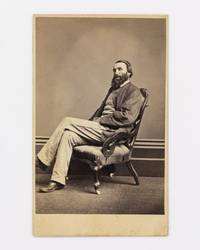
1866135300Adelaide: Townsend Duryea 1866. Adelaide Townsend Duryea printed circa 1866; original negative circa 1863. An albumen paper photograph 90 × 59 mm mounted on the original card 102 × 62 mm with 'T. Duryea Photographer to His Excellency 66 King William St. Adelaide' printed on the verso under the Vice-Regal Coat of Arms. 'Townsend Duryea began making cartes de visite in late 1862 or early 1863 and was advertising his "new" style of carte in May 1863' Bob Noye AGSA website. The portrait taken in Duryea's Adelaide studio shows Stuart after his epic crossing of the continent of Australia: he is visibly depleted - emaciated even - with his injured hand positioned awkwardly in his lap. The accident that caused this permanent injury occurred on 25 October 1861 the day the main party of the successful sixth expedition departed Adelaide. Stuart later described it in a letter to Charles Sturt: 'the accident I received from one of the horses being in a state of strangulation and endeavoured to release him reared up struck me in the temple knocked me senseless and springing again with his hind feet on my right hand has disabled me for life' Ian Mudie: 'The Heroic Journey of John McDouall Stuart' 1968 page 171. It is a most evocative image of the great explorer towards the end of his life. <p>The negative number 18592/3 is inscribed in ink on the verso below Duryea's imprint. This particular imprint dates to around 1866 see Noye and the negative number is consistent with this date. Noye notes that 'A carte with a number belonging to a much earlier number range would be a reprint from an old negative held in storage'; this suggests that this photograph is not printed from the original negative perhaps lost damaged or destroyed. This further suggests that this photograph is printed from a negative produced by rephotographing an existing print of the portrait of Stuart taken earlier by Duryea. This would explain why Stuart has what appears to be his left hand in his lap: the image is printed in reverse. <p>It was likely produced after news of the explorer's death in London on 5 June 1866 had reached Adelaide. A small item of local news 'Mr T. Duryea's Studio' in the 'South Australian Register' on 23 November 1866 lends weight to this possibility: 'A visitor to Adelaide may spend a very pleasant and profitable half-hour in Mr Duryea's photographic studio where a number of elegant photographs in every style of art are displayed. Mr. Duryea also exhibits some superior examples of photographs worked up in water-colours which are soft and some of them exquisitely finished. Amongst these there is a fine portrait of the late J.M. Stuart the explorer'. This carte de visite is clearly not that exhibition piece but it is most definitely a fine portrait. Townsend Duryea unknown
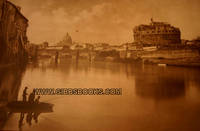
1870053004-KItaly 1870. Book. Illus. by Giacomo Brogi. Very Fine. No Binding. Albumen Mammoth Print c. 1870's By Giacomo Brogi 1822- 1881 Italian. Very rare photographic image by this artist in the original restored frame . This is not one of the standard tourist pictures that you find but a true work of art by this master photographer. Both Brogi and the Alinari Brothers worked as photographers and took the standard architecture ruins photos in Italy most being small 8"x10" Albumen prints but they did art photography also and to find one is a rare treat . This piece shows three men in a row boat on the Tiber River with Castel Saint`Angelo Mausoleum of Adrian on the right the Saint`Angelo bridge to the castle in the middle in the far distance you can see St. Peter's Dome . Looking around the photo the men in the boat you can see their reflection in the water. With sheep on the right shore and the clouds rolling by above it all this is a very importain photographic image by this artist . Please call for more information on this and other works of art. Size: 32 x 23. unknown
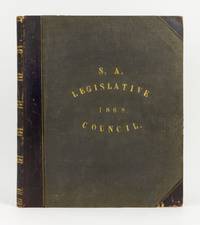
1868142860Adelaide: Townsend Duryea 1868. First Edition. Hardcover. Very Good. Adelaide Townsend Duryea 1868. A large quarto album approximately 415 × 365 mm containing 18 albumen paper portraits each approximately 280 × 210 mm mounted on the rectos of cloth-hinged thick card leaves interleaved with guards plus one leaf of letterpress see below. Contemporary half roan and cloth lettered and tooled in gilt with a binder's ticket on the front pastedown 'Bound at the "Register" Office Grenfell Street Adelaide'; covers slightly worn; leaves slightly cockled; one guard missing; most photographs lightly discoloured near the right-hand edge; a few light spots of foxing mainly to the guards and the versos of the mounts and some minor signs of age and handling but overall in excellent condition. The subjects include some of the most prominent figures in early colonial South Australia. In order of appearance the portraits depict John Morphett President Henry Ayers Charles Hervey Bagot John Henry Barrow Charles George Everard John Baker William Wedd Tuxford Thomas Elder William Peacock William Morgan Thomas Hogarth John Tuthill Bagot Thomas English Henry Mildred John Crozier William Parkin John Hodgkiss and Emanuel Solomon. <p>The 'South Australian Advertiser' for 20 August 1868 records that: 'Mr. Duryea is preparing a parliamentary group containing the members of both Houses of the Legislature which promises to be an effective affair. The members of the Council have already given him sittings and a fine series of portraits is the result'. In the subsequent months Duryea exhibited the photographs at his King William Street studio but most accounts refer to them assembled as a group around Morphett. This photo-collage with the portraits all heavily cropped is almost certainly the basis for a contemporary carte de visite published by Duryea see SLSA B 9258. However most of the images in this album appear to be rare or even unrecorded in their uncropped form; indeed the only other examples we located were of Henry Ayers and Charles Hervey Bagot. It is also rare to find photographs of early colonists at all let alone of this size quality and quantity. <p>The guard leaves for the portraits of Morphett Hogarth J.T. Bagot and Mildred contain manuscript biographical details in a single hand. Although we have not identified the writer it is likely to be one of the eighteen MLCs as he refers to 'our chamber' in the entry for Morphett. The portrait of C.H. Bagot is accompanied by a similar short biography but this time in letterpress and misspelling his middle name as 'Harvey'. C.H. Bagot English Mildred Crozier Parkin and Solomon are identified in another hand on the mounts beneath the image. Townsend Duryea] hardcover
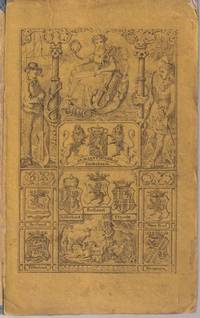
183911053Coblenz: Verlag Von K. Baedeker. 1839. First Edition. Hardcover. Very Good-. Yellow boards a bit browned and worn. Spine ends and corners lightly chipped. Pages clean and tight with occasional browned pages not affecting contents ; In 1839 with the publication of Holland Belgium and Rheinreise 3rd Edition the Baedeker series was launched. An extremely rare book in the original Biedermeier boards including a list of Baedeker's books in front and with a steel engraved fold out map in the back ; 16mo 6" - 7" tall; 212 pages . Verlag Von K. Baedeker hardcover
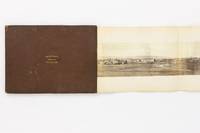
1866141595Adelaide: Townsend Duryea 1866. First Edition. Hardcover. Adelaide Townsend Duryea circa 1866. A photograph album 254 × 340 mm containing a magnificent panorama of Adelaide comprising five roughly uniform albumen paper photographs mounted as issued slightly overlapping to form a continuous image 124 × 880 mm on a linen-backed card mount 244 × 951 mm folded into three plus 12 albumen paper photographs nine of them around 130 × 200 mm or the reverse one 130 × 172 mm and the last two approximately 220 × 285 mm mounted on the rectos of stiff card leaves. Original russet pebble-grain cloth lettered in gilt on the front cover; cloth slightly flecked with minor wear to the extremities; endpapers foxed with slight loss to silverfish and the rear free endpaper is missing; leading edge ribbon ties appear never to have been inserted; mounts lightly cockled and occasionally lightly spotted and foxed; bottom margin of the final mount lightly stained with trifling loss to silverfish; minimal signs of age and use; overall a very pleasing copy with the photographs - and in particular the stunning panorama - in uniformly fine condition. The twelve individual photographs are captioned in pencil on the mounts: 'View in botanical gardens - showing Asylum' 'View in Botanical Gardens' 'View in Gardens' five captioned simply 'Botanical Gardens' 'Bridge between N & S Adelaide' 'near Willunga' and two captioned 'Willunga' both superb large-format prints. <p>New York-born Townsend Duryea 1823-1888 emigrated to Australia Melbourne in 1852 and commenced work as a photographer the following year. In 1855 he relocated his studio to Adelaide. By the early 1870s Duryea's panoramas royal portraits and prizes won in Society of Arts photographic competitions had made him famous 'Australian Dictionary of Biography'. Much more detail on Duryea may be had from the lengthy article in Joan Kerr's 'Dictionary of Australian Artists . to 1870'. However the panorama in this album is not the one described in Kerr 'a fold-out 360-degree panorama of Adelaide taken from the tower of Adelaide Town Hall in 1865 was the album's major feature' nor is it the larger panorama 'taken from the top of the GPO tower soon after it was completed in 1870'. The present panorama is taken from a local rise in North Adelaide and sweeps left to right from the hills towards the sea. All of these panoramas are very rare indeed not least because 'Duryea's studio and enormous collection of glass-plate negatives stated to number 50 000 were destroyed by fire in 1875'. This catastrophe effectively ended Duryea's career as a photographer. It must assuredly account for the genuine scarcity of material by Duryea on the open market other than bread-and-butter carte de visite portraits. <p>This album is very rare in our experience and if the available records are any guide for long before we came on the scene in the mid-1970s. Although this is the fourth example we have handled it is also only the fourth one we have seen on the open market in that time. We have inspected three other examples in institutions; all seven copies are bound similarly and contain the same panorama. However the balance of the contents varies in quantity and image selection in each instance. <p>Duryea began to advertise these albums in Adelaide newspapers in August 1866. One such from the 'South Australian Register' for 28 August 1866 reads: 'DURYEA'S VIEW ALBUMS. These Albums are neatly bound in cloth and form a beautiful acquisition either for the drawing-room table or transmission home. A PANORAMIC VIEW of the CITY of ADELAIDE and the SUBURBS three feet in length has been introduced as a Frontispiece; and as a further advantage purchasers have the privilege of choosing Photographs from a large Album containing 90 of the most interesting and picturesque Views of Adelaide and the Country. The above are open to the inspection of the public at Mr. Duryea's Studio 66 and 68 King William-street. Any of the Views mentioned above can be had separately. Photographs of Gentlemen's Country Seats Business Offices Shops &c. taken at the shortest notice by Ross's Improved Wide Angle Lens'. <p>Provenance: Edwin Ashby 1861-1941 South Australian property developer and naturalist; by descent. While Ashby was obviously not the first owner of this album its numerous images of the Botanical Gardens must have appealed to him. The fine gardens he established at his property 'Wittunga' at Blackwood in the Adelaide hills after the turn of the century were later donated to the State by his heirs and are now the Wittunga Botanic Garden. Townsend Duryea hardcover
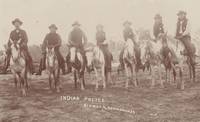
1900List1916Purcell 1900. Unmounted gelatin silver prints and one mounted boudoir card most images measuring 8 x 5 and 7 x 4 ½ inches. Varying levels of fading else about fine. With gallery stamps of Fenn Gallery Santa Fe verso. Near Fine. In the years following the Land Run of 1889 which opened land in Indian Territory to Euro-American settlement professional and amateur photographers alike moved to the region. Their motives varied with some attempting to document the vanishing indigenous culture and others trying to capitalize on the Euro-American demand for photographs of Native Americans in both traditional and western attire. Some studios would use single sets of props for different tribes. Despite these issues the images from the period do illuminate the period of acculturation and displacement in the history of the Southern Plains Indians tribes and also provide a record of the motives of the Euro-American photographers behind the camera. <br /> <br /> William J. Lenny and William L. Sawyers were photographers working out of Purcell in the years immediately following the land rush. They photographed the tribes on the Kiowa-Comanche-Apache and Wichita-Caddo reservations. Lenny was a field photographer and likely took most of the photographs while Sawyer managed the studio. Offered here are a very extensive group of photographs taken by the duo - twenty-seven in total - giving a visual record of the Kiowa and other tribes during this period. Some of these images - though not these copies - were included in the Museum of the Great Plains Exhibition In Citizen’s Garb and we have included their reference numbers where applicable. <br /> <br /> Overall an uncommonly large group in fine condition with some fading. From the collection of Forest Fenn the noted Santa Fe gallerist. <br /> <br /> 1. Indian Police / Kiowa and Comanches Supplied Title. The images shows seven mounted police officers with the one furthest to the left appearing to be Euro-American. <br /> <br /> 2. Arko Captain of the Indian Police Comanche. Supplied Title Indian police commonly earned $8-$10 per month to work on the reservation where their duties included expelling intruders bringing children to the schools curbing crime and preventing the sale of alcohol. He’s dressed traditionally including a single feather worn as a headdress. In Citizen’s Garb 32<br /> <br /> 3. Chief Tow-Wac-A-Ny and Wives. Wichitas. Supplied Title. A portrait of ‘Towacany Jim’ a famous military scout posed with a Navajo-style blanket along with his two wives. The women are wearing purchased shoes common in this period. He earned $10 per month as leader of the Indian Police and traveled to Washington D.C. on diplomatic missions. Fine contrast. <br /> <br /> 4. Big Tree’s Boy and Girl. Kiowas. Supplied Title A portrait of two children of the chief Big Tree. The pair wear traditional dress. Faded. <br /> Big Tree. <br /> <br /> 5. Kiowa Chief. Supplied Title A portrait of A’Do-Ette or Big Tree the Kiowa chief. Fine contrast. <br /> <br /> 6. Portrait of A’Do-Ette . He wears the same costume used by the photographers for various other tribal leaders including a large headdress. Faded. <br /> <br /> 7. Chief Big Tree’s Daughters. Kiowas. Supplied Title The image shows two girls identified as Alma left and Leena right. Alma wears a dress of dark buckskin. Both girls have beaded bags known as “Strike-a-Light†bags hanging from belts. <br /> <br /> 8. Lone Wolf. Kiowa Chief. Supplied Title A photograph of Mamay-day-te or Lone Wolf the Younger in the same costume used for O’Do-Ette’s portrait and others. Some fading.<br /> <br /> 9. Photograph of Laura Dunmore or Laura Pedrick. Dunmore was a graduate of Carlisle School and sister of Chief Aptone. She is pictured here with a parasol tartan cloth and tinkling cone earrings providing a striking study in fashion during this period. Fine contrast. <br /> <br /> 10. Photograph of a Camp Scene in Summer on a Reservation. This scene perhaps a Kiowa-apache camp contains a tipi made of canvas instead of hides. A man in an expensive set of purchased clothing sits in the foreground. Excellent contrast. In Citizens Garb 9<br /> <br /> 11. Photograph of a Camp Scene in Summer. A variant of our no. 10 showing the same scene from a different angle. Excellent contrast. <br /> <br /> 12. Chief Wild Horse Supplied Title Title written in ink on margin. A photograph of Kobay-O-Burra second chief of the Quahadi who took over principal chieftanship when Parra-o-Coom died in 1874. <br /> <br /> 13. Photograph of Mamay-Day-Te Lone Wolf. A variant pose as number 8 with the same dress. <br /> <br /> 14. Photograph of Five Comanche in Mixed Attire. They have been identified as Pah-do-pony top left To-pooh bottom right and Big Kiowa bottom left brother of Pah-do-pony and Perk-a-Quannard. In Citizens Garb 14<br /> <br /> 15. Apache Papoose Supplied Title. A photograph of a child in traditional dress. Faded. <br /> <br /> 16. Photograph of Four Indigenous Subjects in Mixed Attire. A portrait of a man and three women the man in a Euro-American style suit and the women in a mix of traditional dress using trade fabrics. Excellent contrast. <br /> <br /> 17. Portrait of an Unidentified Man. A portrait of a man in heavy fringe breechcloth and fringed leggings. This was marketed under the name “Big Tree’s Son†in the 1890s and the subject is identified as Kiowa in the In Citizens Garb catalog. In Citizens Garb 16<br /> <br /> 18. Kiowa Squaw and Papoose Supplied Title. A photograph of a woman and a child in a studio setting. Very good contrast. <br /> <br /> 19. Portrait of Zah-Tay or Lizzie Woodward. Zah-Tay appeared in other photographs with her niece and son. <br /> <br /> 20. Portrait of Cora Caruth. A portrait identified as Cora Caruth who graduated from an Indian School perhaps Carlisle and eventually worked as an interpreter for Wichita at Anadarko. Fine contrast. <br /> <br /> 21. Portrait of a Man in a Serape. A portrait of a seated man in a serape or striped Mexican blanket. A breechcloth legging and moccasins can be seen under the serape. In Citizens Garb 23<br /> <br /> 22. Chief Cat. Kiowa. Supplied Title A photograph of Ba’o Cat also Goon-Saudle-Te who wandered from camp in Colorado when he was twelve and was not recovered for five years. Comanches sheltered him. Fine contrast.<br /> <br /> 23. Kiowas. Supplied Title A portrait of Lizzy Woodward Oliver and her niece posed in Kiowa clothing. Oliver is in a beaded cradleboard Lizzy’s dress was tied with Tartan cloth and wears traditional Kiowa moccasins. In Citizen’s Garb 10<br /> <br /> 24. Portrait of Lizzy Woodward Her Niece and Oliver. A variant of our no. 23 with Oliver and Woodward in different dress. Fine contrast. <br /> <br /> 25. Portrait of Two Kiowa Girls. Two girls pose one in buckskin dress decorated in paint. Buckskin would become less frequent. Fading. In Citizen’s Garb 2<br /> <br /> 26. Big Tree’s Papoose. Kiowa. Supplied Title. A portrait of Alma later known as Mrs. Ahote. Fine contrast. <br /> <br /> 27. Kiowa Braves. Supplied Title A photograph of two young men on horseback. Very good contrast to foreground slight fading to background.<br /> <br /> 28. A Young Kiowa Warrior Supplied Title. A photograph of Enoch Smokey later known as Apenguadal who lived near Verden Oklahoma. His mother was noted as a beadworker and his horse is fitted with unusually decorative gear. His personal dress includes a hairpipe breastplate and a pelt around his arms. In Citizens Garb 36<br /> <br /> 29. Portrait of a Standing Kiowa Man. He wears the same headdress used in other studio photographs. Some fading. <br /> <br /> 30. Unidentified Man Possibly Euro-American Posed in a Headdress in Studio Setting. This is a mounted image unlike the others with the Lenny & Sawyers mount. The subject appears to be Euro-American and wears the same headdress used by the Indigenous subjects in several of the earlier photographs. He holds a prop bow and arrow. <br /> <br /> An uncommonly large group of images which in total provide an impressive visual record of this period of forced acculturation and transition in dress. unknown
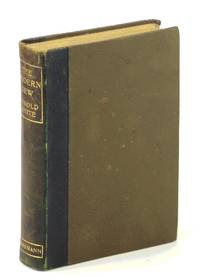
1899163H3899London: William Heinemann. Good. 1899. First Edition. Hardcover. "The circumstances under which the wealth the power and the numbers of the Jewish race domiciled in this country are likely to be indefinitely increased seem to call for more prescience and thought at the hands of our rulers than have yet been bestowed upon them. To make people think is the object of this book. Should they refuse they will wake up one morning only to discover that they have parted with the realities of national life and are dominated by cosmopolitan and materialist influences fatal to the existence of the English nation." - Introduction. Chapters include: What is a Jew; The Problem in Russia; The Jew in Austria/America/France/England/The Argentine Colonies; The Aloofness of Israel; Money Lenders; The Destitute Alien in Great Britain; Zionism; "Darkest Russia"; The Conversion of the Jews; Jewish Humour. pp xvii 301 32 ads. 7.5 x 5.3 inches. Quarter-bound in black leather and olive cloth. Gilt lettering to spine. Top edge gilt. Modest lean to spine. Binding intact. Prior owner's name dated 1899 inked atop front free endpaper. Large rectangular tanned area upon front free endpaper presumably caused by an item formerly laid-in. Average wear. Faint spots upon front board perhaps from water droplets. SINGERMAN 46.; 12mo - over 6¾" - 7¾" tall; Modern Jew Arnold White Anti-Semitism Zionism Argentina Relocation Russian Jews Usury Conversion Money Lenders Chedorim Lord Rothschild Rev. J.E. Salkinson Great Britain Immigration Jewish Question . William Heinemann hardcover
185612958NY: Derby & Jackson. Very Good with no dust jacket. 1856. Second Edition; First Printing. Hardcover. The spine is dulled with wear to the spine ends & corners light rubbing to the covers. ; Inside the front cover is an inscription gifting the book to Jefferson Davis from "M. P. Abbott . " Also inside the front cover is an inscription telling how the owner's brother was a forager with the Union Army who took the book from Davis' library at his brother's plantation near Vicksburg where it had been moved deemed safer than on his plantation. An anti-slavery book from Jefferson Davis' own library. Wonder what he was thinking when he read it. Brings to mind all the conflicts he had when he took his post with the Confederacy. What an association! ; 12mo 7" - 7½" tall; 298 pages . Derby & Jackson hardcover
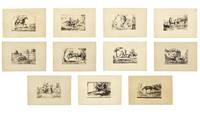
1864142931Adelaide: The Author 1864. Fine. Adelaide The Author 1864. Eleven albumen paper photographs approximately 88 × 134 mm mounted on the recto of individual cards approximately 165 × 240 mm neatly captioned below the plate with the title at the head of the first one with all captions by George Hamilton himself. A few light spots and marks to some of the cards; essentially in fine condition with the photographs uniformly rich in colour. The Art Gallery of South Australia has all 11 original artwork - pen and ink with wash - in its collection. The 'Adelaide Observer' on Saturday 27 August 1864 contains a review of Hamilton's recently self-published book 'a well-conceived well-written neatly-printed and elegantly-illustrated brochure under the above title'. It describes at length the illustrations '11 in number photographed from the author's drawings by Colonel Biggs Mr. Baines and Professor Hall and they bear ample evidence of the artistic taste as well as the correct judgment displayed in the spirited originals'. <p>Robert Holden 'Photography in Colonial Australia. The Mechanical Eye and the Illustrated Book' 1988 describes this book and one other Molesworth Jeffrey's 'Various Exercises and Fragments in Metre by Divers Authors' Hobart 1864 as being the 'first recorded use of original photographs as illustrations in commercially produced and dated books' in Australia. His descriptive bibliography records that the published work indeed contains 'Photographs of eleven drawings . by Colonel Briggs sic from rough sketches by the author. It would appear that these images were printed eleven to a sheet and then arranged in random order throughout the text'. His collation of the three copies in the State Library of South Australia indicates the individual print sizes range from 20 × 35 mm to a maximum of 40 × 60 mm. <p>The present offering clearly predates the published use of these images and its presentation is much to be preferred. The first and most obvious difference is the superior size and quality of the prints. However the captions greatly enhance the images; when they are read and viewed in the intended order numbers 1-11 are lightly pencilled in the top right-hand corner of the cards this becomes a proto-photobook of the highest order . and far from being a prosaic account of how to look after a horse as the title might suggest it is a searing indictment of the widespread ill-treatment of horses. 'Mr. Hamilton proceeds with pen and pencil to describe and portray some of the trials a horse has to undergo from the time his liberty is first invaded in the bush until in the last scene of all that ends this painful history he is reduced to the drudgery of a hackney car'. <p>See Ferguson 10180b and 10181a; Holden 50 and 51 plus pages 13-21. Both bibliographies contain errors. 11 items. The Author] unknown
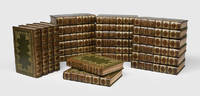
1900168277Philadelphia: George Barrie c.1900. An attractively bound set Limited edition number 262 of 1000 sets printed on japon with this set printed for Mr Thomas Breslin. This is an attractive and richly illustrated work on European court intrigue which includes works on the courts of Marie Antoinette and Napoleon. Provenance: with the bookplate of William Lawrence O'Neill 1935-2016 to the front pastedowns and his initialled inscriptions dated December 1932 to the front free binder's blanks of volumes V and IX. 24 vols octavo 215 x 140 mm. Frontispieces in coloured and uncoloured states richly illustrated with all plates in two states all with tissue guards. Contemporary green morocco by Stikeman for Brentano's titles to spine gilt spine decorated gilt in compartments covers elaborately gilt wide turn-ins marbled endpapers top edges gilt others untrimmed. Spines toned occasional rubbing to extremities; an excellent set. unknown
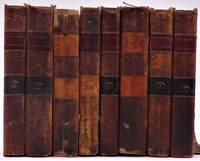
1804009517New York and Washington City: Printed By C. Wiley Isaac Riley and Daniel Rapine 1804. Book. Fine. Imitation Leather. First Edition. 8vo - over 7¾" - 9¾" tall. The complete set in nine volumes published 1804 1812 1816 and 1817. Recently professionally rebound in full dark brown goat sweps imitation leather spines with two new imitation labels similar to original saving original flysheets and adding new parchment end papers while retaining the original bookplate in Volume One of John H. Peyton John Howe Peyton 1778-1847 a Virginia lawyer and planter who served in both houses of the Virginia General Assembly. Volume One is a First Edition Washington City Published for John Conrad and Co. Volumes Two-Four are Second Editions so stated at title page printed in New York in 1812 by C. Wiley. Volumes Five and Six are First Editions printed in New York in 1812 by Isaac Riley. Volumes Seven - Nine are First Editions printed in Washington City by Daniel Rapine Vols. Seven and Eight in 1816 and Vol. Nine in 1817. Published over a period of fourteen years in three different cities by three different printers RARE in either the First or Second Editions of any of the volumes. Near Fine uniform browning and scattered toning to interiors in lovely new bindings that can be handled for years to come. Front end pages Vols. 2-9 with the small stamp of Brownlee & Brother. Title pages Vols. 2-9 inscribed by D. D. Pratt with his blindstamp. Daniel Darwin Pratt October 26 1813 - June 17 1877 was a United States Senator from Indiana 1869 - 1875 and Commissioner of Internal Revenue holding that office in 1875 and 1876. A complete set with Vol. One added to the Pratt Volumes Two-Nine with good historical provenance. William Cranch was the 2nd Reporter of Decisions of the Supreme Court of the United States from 1802 to 1815. Cranch's Reports contain accounts of over 350 cases from the court of Justice John Marshall including Marbury vs. Madison that are basic to the history of the Supreme Court and helped to form the backbone of our American Constitutional system of law. RARE. Printed By C. Wiley, Isaac Riley and Daniel Rapine Hardcover
18544200Lindsay & Blakiston Philadelphia 1854 First edition. Original green cloth-covered boards gilt spine lettering still bright blind-stamped front and rear boards 9 x 5 7/8 inches 80 pp. 3 leaves of plates including frontispiece. Very good mild warp boards; modest edgewear and staining cloth; offsetting endpapers; focal mild foxing; small damp stain upper spine aspect of first few leaves; moderate pencil marginalia in a neat hand; otherwise pages clean and binding sound. A rare first edition. "Thomas Story Kirkbride July 31 1809 December 16 1883 was a physician advocate for the mentally ill and founder of the Association of Medical Superintendents of American Institutions for the Insane AMSAII a precursor to the American Psychiatric Association. In 1840 Kirkbride became superintendent of the Pennsylvania Hospital for the Insane. In 1844 Kirkbride helped to found AMSAII becoming secretary and treasurer and subsequently its president from 1862 to 1870. Kirkbride pioneered what would be known as the Kirkbride Plan to improve medical care for the insane as a standardization for buildings that housed the patients. Kirkbride's influential work On the Construction Organization and General Arrangements of Hospitals for the Insane with Some Remarks on Insanity and Its Treatment was published in 1854 and again in 1880. Kirkbride's ideas brought about mixed feelings in both patients and peers. Some in the medical community saw his theories and ideas as stubbornly clinging to ideals that hindered medical progress while others supported his ideas and saw them change the treatment philosophy for the mentally insane. In his patients he sometimes inspired fear and anger even to the point that one attempted to murder him but he also believed that the mentally ill could be treated and possibly cured and in fact Kirkbride after the death of his first wife married a former patient. Kirkbride was an advocate of building hospitals for the mentally ill in a style which he believed promoted recovery and healing. This style was used on many late 19th century hospitals including St. Elizabeths Hospital in Washington D.C. Many of these buildings designed by leading architects of the time are in ruins or decay. An estate now known as "The Village" previously Traverse City State Hospital was saved from destruction and beautifully restored." K073. 1st Edition. Hardcover. Very Good/No Jacket. Lindsay & Blakiston, Philadelphia hardcover
1899111095London: Macmillan and Co. Limited 1899. Very Good. London Macmillan and Co. Limited 1899. Octavo xx 671 pages with 12 unnumbered line illustrations of churingas a map and 130 illustrations mainly after photographs plus 2 folding maps 3 folding charts 4 folding chromolithographic plates and an erratum slip tipped in at page 1 noting that on page 570 the tassel should be 'pubic' not 'public'. Olive-green gilt-pictorial buckram a little flecked and rubbed with the spine a little sunned; all edges uncut; scattered light foxing; minimal chipping to some uncut leading edges; an excellent copy. The head of the title page is signed in ink by both authors as 'W. Baldwin Spencer' and 'F.J. Gillen'. Inscribed in indelible pencil before the signatures in an unknown hand is 'With Kindest Regards from'. <p>The 'Australian Dictionary of Biography' makes short work of the significance of the book and by extension this signed copy in its entry on Sir Walter Baldwin Spencer 1860-1929: 'The 1894 Horn scientific exploring expedition to central Australia recruited Spencer as zoologist and photographer. Because of friction between members and their sponsor Spencer later combined mediation with editorship of all four volumes of reports. His own seminal contribution included his classic biogeographic interpretation of Australian faunal distribution. This expedition rekindled his anthropological interest when he met F.J. Gillen the Alice Springs postmaster Francis James Gillen 1855-1912 ethnologist. What began as his offer to assist in publishing Gillen's ethnological notes matured into an enduring partnership and a landmark in anthropological history. <p>In 1896 Spencer joined Gillen for the most intensive field-work then attempted in Australia. "The Native Tribes of Central Australia" 1899 which resulted was to influence contemporary theories on social evolution and interpretations of the origins of art and ceremonial. It impressed Sir James Frazer author of "The Golden Bough" who developed a lifelong friendship with Spencer'. Macmillan and Co. Limited unknown
18615032Hong Kong : London Mission Society Press c1861 ; Shanghai : Shanghai Shangye Yingshuguan n.d. 1861. Hardcover. Very Good. 1 298 378 pp. ; bound in Chinese fashion with folded sheets right to left in a western-style mid-nineteenth century cloth board cover binding with decorations ; James Legge the famous Scottish sinologist and missionary of the London Missionary Society was born in Huntly Aberdeenshire Scotland on Dec 20th 1815. He graduated from Highbury Theological College in 1837 joined the London Missionary Society in 1838 and went to Malacca in 1839 as a missionary. In 1843 Legge arrived in Hong Kong and remained there until 1873 except for three short trips back to Scotland. In 1876 Legge became the first professor of Chinese at the University of Oxford and died in 1897 ; This is the first volume of Legge's monumental translation of nine sacred books of Chinese literature in a very probable 1st edition 1st Chinese printing with mixed asian and western binding materials and containing the texts of the da xue or Great Learning zhung yong Moderation or Doctrine of the Mean lung yü The Analects of Confucius and meng zi Mencius ; with Chinese text printed at top translation in the middle and commentary at bottom ; while this is clearly Legge's text the author's name is given in Chinese fashion as Gu Lu or loosely translated "Watchman Deer" which more probably and properly should be rendered "Lu Gu" for "Leg-ge" ; The difficulties of printing this first volume were recounted by the author's daughter: "The printing office being under his control he had to superintend the publication and binding of his works and to send to England for paper printing ink etc. Among his minor worries was the fact that the volumes of Classics had to come out in various bindings. Uniformity of binding could not be secured because materials were scanty in Hong Kong. Also owing to the lack of English booksellers he had to get the storekeepers to sell the Classics on commission among their other wares. On one occasion the ship containing all his printing paper and ink struck upon a rock and went down within sight of her anchorage in Hong Kong harbour. Her masts sticking up above the sea were visible from his verandah. 'It gave me quite a turn he said my first thought was that the fates were fighting against my getting oin with the publication of my volumes. I have since been able to look the event in the face. There must be some delay in the commencement of printing but I shall be so much more advanced with my manuscripts that we can start with five men instead of three. I had engaged Sow-lung and two other men to begin printing on the first of June. If he begins now in November or December with four other men we shall be in six months nearly as far as we should have been. In the meantime I telegraph by the mail--Replace invoice immediately sending one half by Suez Canal and one half round Cape--this will divide the risk.' After printing the books in Hong Kong he had to write to England for cases to be sent out in which to pack them and send them to England to his bookseller. 'Four hundred cases for one volume ought to be here any day and four hundred for the other volume next month. Those cases will cost me about fifty pounds.' .Another time certain cases of his books.arrived after having been for a long time under water in the hold. 'I insured them for £250--I shall claim for at least £80. Meantime the ruin of many books and the spoiling of others is a great vexation.' He sent several of his books to a friend to sell in Amoy and received the following letter: 'Alas for your Classics. Macgregor delivered them in the condition he got them out of the wreck. I had them put in the sun and thoroughly dried but I could not offer them to subscribers. The mould has got into the inside and even if rebound they will never be sightly. It is a sad loss.' ; after Legge's death in 1897 in a sermon given by Dr. Edkins at Shanghai Legge's work was described as: "His object was to unf <br/> <br/> [Hong Kong : London Mission Society Press, c1861] ; ??????? [Shanghai : Shanghai Shangye Yingshuguan, n.d. hardcover
1838021038London: T. McLean D.& P. Colnaghi and John F. Lewis 1838. 1838. Book. Illus. by John F. Lewis. Near Fine. Hardcover. First Edition. Folio approx. 55 x 36.5cm. Complete with all Lithographic plates as called for; tinted frontispiece tinted title-vignette further 27 tinted views on 25 leaves all by Lewis after Coke Smyth. A very clean bright copy. Finely bound in modern brown morocco to style with gilt lettering to the spine and gilt bands to the top and bottom of the spine. Contents clean and tight new light brown endpapers in keeping with the new binding two blank leaves to the front and rear all pages have been professionally cleaned and restored by a paper conservator minimal and unobtrusive water staining remains to some pages and plates mostly confined to the margins and blank areas most plates unaffected new archival paper guards to all plates no inscriptions. A fine complete copy beautifully rebound. References -. Abbey Travel II 394; Atabey 722; Blackmer 1015; Contominas 413; RIBA 1886. T. McLean, D.& P. Colnaghi and John F. Lewis [1838]. Hardcover
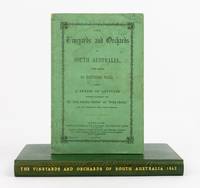
1862140418Adelaide: Printed and published at the 'Advertiser' and 'Chronicle' Offices 1862. First Edition. Paperback. Very Good. Adelaide Printed and published at the 'Advertiser' and 'Chronicle' Offices 1862. Octavo 78 xxii advertisements pages plus advertisements on both sides of the rear wrapper. Original green wrappers with the title page details repeated within a different border on the front cover; wrappers a little marked and creased with some slight wear at the corners affecting also the bottom corner-tip of the last few leaves; spine a little cracked but sound with minimal loss at both ends; minor signs of age and use but overall an excellent copy of a rarity seldom found in any condition - let alone as pleasing as this - now housed in a fine mid-green morocco Solander box by Sangorski & Sutcliffe. Descriptions 'are given of most of the most important vineyards and of some of the less important of them having due regard to age extent and quality of produce. South Australia will without doubt become one of the most important Wine countries of the world. The experiments of the past twenty years have proved the advantage of its soil and climate and enough practical knowledge has been acquired to enable its Vignerons to guard against the common errors which so frequently produced discouragement in the earlier days of the Colony'. The original articles are here supplemented 'by revision and some trifling annotations'. <p>Ferguson 18189 noting only green cloth boards. Printed and published at the 'Advertiser' and 'Chronicle' Offices paperback
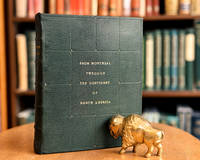
1801079699London: T. Cadell Jun. & W. Davies 1801. First edition. Leather Bound. 4to. 20th century fine leather binding. Folding maps with expert repairs. Wagner-Camp notes that 'Mackenzie discovered the river that now bears his name and descended it to the Arctic Ocean in 1789. In 1793 he became the first European to cross the North American continent north of Mexico'. Peel 55: "After the preface there follow 132 pages on the history of the fur trade in the North West. Some authorities think this was written by his cousin Roderick MacKenzie. According to the Dictionary of National Biography Voyages 1801 was compiled by William Combe from Mackenzie's notes. Includes vocabularies of the Knisteneaux Algonquin Chepewyan Nagailer and Atnah Indian languages." Sabin 43414 calls this the "first and finest edition T. Cadell, Jun. & W. Davies unknown
1865219705Shanghae sic & London.: London Mission Press and Trubner & Co. 1865. Two volumes in one: <br>Volume I. ii Title i-x Advertisement Preface 762 pp including Index of Chinese characters pp 1-99 pagination duplicated for pp 224 & 239. <br>Volume II. ii Title 724pp iv List of the Radicals of the Chinese Language. <br> <br>22 x 15 cms contemporary half calf spine gilt between raised bands expertly rebacked mounting the original spine numerous annotations and underlinings in pencil a handful in ink at the head the final blanks with notes and translation age-toned and worn boards rubbed but a good complete copy of the scarce reprint. <br> <br>Provenance: <br>With the early inked signature of "Hugh Wadell Newchwang 1869" the pioneering missionary whose work laid the foundation for the Irish Presbyterian Church's long-term presence in East Asia. In 1869 Waddell 1839–1901 landed at Newchwang now Yingkou where he established a mission station that included a church school and dispensary. His daughter was Helen Waddell poet scholar and theological novelist. <br> <br>Recent signature of A. Allan Shearer Wellington. Scarce reprint of the second part of Morrison's Dictionary first published between 1815 and 1823 with a notable provenance. The 1865 reprint was issued as a single volume combining the second part of the dictionary with an index of characters arranged according to the Kangxi radicals. <br> <br>"The Second Part of Morrison's Dictionary has been generally commended by experienced Sinologues as the most perfect and useful of the whole. The present is merely a reprint of it with such slight modifications as are mentioned at the close of the original preface." Preface <br>Löwendahl 1334 . London Mission Press [and] Trubner & Co. hardcover
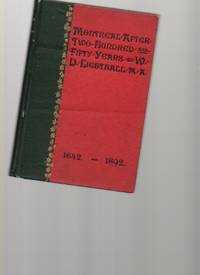
189228822Montreal: F. E. Grafton & Sons. Very Good. 1892. 1st Edition limited. Numbered and signed by the author. Large 12mo hardcover in duo-tone cloth cover: dark green spine over red buckram cloth separated by a vertical wreath of Maple leaves tight textblock pages clean bright and unfoxed the cover has a trace of rubbing at tips front hinge weak endpaper loose book plate of Frances Silcox McDowell else VG. Attractive copy in the duo tone cloth. 149pp illustrated all present including dramatic Victoria Bridge maps top edge gilt. Quite scarce; 12mo 7" - 7½" tall . F. E. Grafton & Sons hardcover
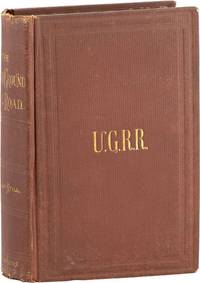
187284883Philadelphia: Porter & Coates Publishers 1872. First Edition. Thick octavo 24.5cm; variant in the publisher's terracotta fine English cloth binding with titles stamped in gilt on spine and front cover; dark brown clay-coated endpapers; 4pp.ads iv7802pp with an engraved frontispiece portrait of Still and 43 plates of illustrations. Gently spine-sunned spine ends pushed and a bit worn minute board exposure to corners some light surface wear and dust-soil to cloth with some partial cracks to front hinge and a small one to lower rear hinge; some light foxing and occasional finger-soil to margins of plates with some staining to lower third of pp.50-51 and the plate in between; a solidly Very Good unrepaired copy.<br /> <br /> A historically significant document by Still a free-born Black man who became an author and abolitionist movement leader in Philadelphia PA. The volume documented the stories of escaped slaves and remains "the only first-person account of Black activities on the Underground Railroad written and self-published by an African-American.William Still was a major contributor to the success of the Underground Railroad activities in Philadelphia and a part of Philadelphia's free Black community that played an essential role in the Underground Railroad. He personally provided room and board for many African Americans who escaped slavery and stopped in Philadelphia on their way to Canada. Through his work with the Pennsylvania Society for the Abolition of Slavery's Vigilance Committee he raised funds to assist runaways and arrange their passage to the North. He was instrumental in financing several of Harriet Tubman's trips to the South to liberate enslaved Africans" Turner Diane D. "William Still's National Significance." Web blog post. William Still: African American Abolitionist. Temple University n.d. 18 August 2016. <br /> <br /> Still kept meticulous notes concerning the many escaped slaves who passed through the Philadelphia "station;" he took pains to record names brief biographies and the destination for each individual along with any adopted aliases in hopes of reuniting family members who were separated by slavery. He kept his notes secret hidden in diaries he kept during those years and published them after the Civil War. The Underground Rail Road went through three editions and was displayed at the Philadelphia Centennial Exhibition in 1876. SCHOMBURG p.7 394; WORK p.338. Porter & Coates, Publishers unknown
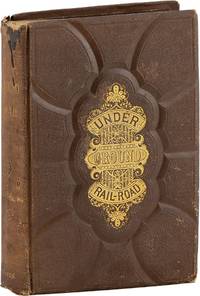
187284792Philadelphia: Porter & Coates Publishers 1872. First Edition. Thick octavo 24.5cm; variant bound in the publisher's paneled-style brown pebbled cloth with titling and decorations stamped in gilt on spine and covers; dark brown clay-coated endpapers; all edges gilt; 4pp.ads iv7802pp with an engraved frontispiece portrait of Still and 43 plates of illustrations. Modest rubbing to the binding wear and shallow loss to heel with gentle sunning and biopredation to spine resulting in some erosion to the cloth; a few thin partial cracks to hinges two of them showing evidence of being re-glued with textblock starting to sag very slightly; early owner's small label and neatly rubber-stamped name John D. Harrison on preliminary blank and pp.101 400 and 780 with a small loss to margin at pp.45-46 and two pages with small marginal tears; Very Good.<br /> <br /> A historically significant document by Still a free-born Black man who became an author and abolitionist movement leader in Philadelphia PA. The volume documented the stories of escaped slaves and remains "the only first-person account of Black activities on the Underground Railroad written and self-published by an African-American.William Still was a major contributor to the success of the Underground Railroad activities in Philadelphia and a part of Philadelphia's free Black community that played an essential role in the Underground Railroad. He personally provided room and board for many African Americans who escaped slavery and stopped in Philadelphia on their way to Canada. Through his work with the Pennsylvania Society for the Abolition of Slavery's Vigilance Committee he raised funds to assist runaways and arrange their passage to the North. He was instrumental in financing several of Harriet Tubman's trips to the South to liberate enslaved Africans" Turner Diane D. "William Still's National Significance." Web blog post. William Still: African American Abolitionist. Temple University n.d. 18 August 2016. <br /> <br /> Still kept meticulous notes concerning the many escaped slaves who passed through the Philadelphia "station;" he took pains to record names brief biographies and the destination for each individual along with any adopted aliases in hopes of reuniting family members who were separated by slavery. He kept his notes secret hidden in diaries he kept during those years and published them after the Civil War. The Underground Rail Road went through three editions and was displayed at the Philadelphia Centennial Exhibition in 1876. SCHOMBURG p.7 394; WORK p.338. Porter & Coates, Publishers unknown
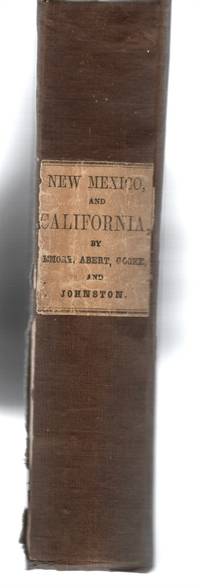
184830143Wendell and Van Benthuysen. Very Good. 1848. First Edition . Hardcover. Compact octovo hardcover 614 pages tight and square spine/binding pages clean untorn and unmarked text has a scintilla of foxing covers have light wear with intact and readable spine label else VG. Contains 67 plates including Indians flora fauna buildings full page maps etc. Two large folding maps: laid in is "Map of Territory of New Mexico" by Kearney "under instruction from Emory" 1846-47 and "Sketch of part of the march & wagon road of Lt. Colonel Cpple from Santa Fe to the Pacific Ocean 1846-47". Both are serviceable one reattached to stub with archival tape the other laid loose with no tears. Overall solid and intact. ; 8vo 8" - 9" tall . Wendell and Van Benthuysen hardcover
1834809Edinburgh: Waugh and Innes 1834. First edition. Hardcover. Very Good. 8vo green cloth boards with gilt tiles on spine. Library rebound with name in gilt on front cover. Scarce first edition of this treatise on superstitions their origins and the customs associated with them. Contents include chapters on Evil Eye Invocations and Maledictions; Occult Infection and Cure of Maladies; Miscellaneous Remedies or Antidotes to Disease; Amulets; Analogies to Propitiatory Sacrifice; Propitiatory Charms; Faculties Ascribed to Sorcerers; Superstitions Relative to Marriage; Doctrine of Sympathy; Ingredients and Instruments Superstition and Sorcery; Mystical Plants; Mystical Animals; Mystical Mankind; Prognostication Divination; Imaginary Beings; Spectral Illusions; The Tongues; Tests Trial Conviction and Punishment of Sorcery. With errata Addenda and index. A fascinating book. Ex reference library with minimal markings pictorial bookplate on front pastedown handwritten library number to reserve of title page and single stamp to rear endpaper. Very occasional marks to inner book generally in excellent clean condition. Waugh and Innes hardcover
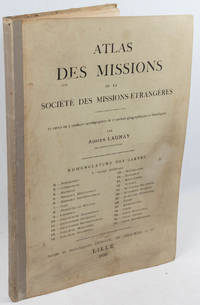
1890219322Lille.: Société de Saint Augustin. 1890. Large thumb-indexed atlas 27 full page colour maps with accompanying text 53 x 38 cms; original paper covered boards a little stained and abraded front hinge tender but sound a few gatherings loosening front free endpaper chipped at the lower corner prelims and thumb tabs soiled but the maps in very good clean condition. Adrien Launay 1853 - 1927 a Catholic priest in the Société des Missions Étrangères was the author of many books on the Society's history and that of many of the individual missions. His atlas now scarce on the market gives maps and a gazzetteer of the Société's missions in Asia. . Société de Saint Augustin. hardcover