66 723 résultats
Engberg, JensIn Pristine Condition. unknown
1790ST19326Amsterdam: H. Keyzer H. Gartman en W. Vermandel 1790. 555 x 345 mm. 21 7/8 x 13 3/4". 2 p.l. 62 folding plates. <br/> Attractive late 19th or early 20th century retrospective polished brown calf by L. Guétant stamp-signed in gilt on tail of spine double gilt-ruled border floral cornerpieces raised bands spine panels with scrolling floral borders and central flower ornament gilt titling. With title vignette and 62 ENGRAVED FOLDING PLATES ALL WITH BEAUTIFUL HAND COLORING AND HIGHLIGHTED WITH GOLD depicting Bible scenes from the Old and New Testament 61 of which are by Jan Luyken. A Large Paper Copy. For earlier editions: Graesse IV p. 308; Brunet III 1245-46; Klaversma & Hannema 159-164. Light rubbing to joints and edges boards just a little marked trivial foxing and faint spots here and there but A REMARKABLY FINE COPY the binding lustrous and showing little wear the paper extremely bright and fresh the margins immense and the paint and gold unusually vibrant.<br/> <br/> The marvelous illustrations of Dutch engraver and poet Jan Luyken comprise this collection of "remarkable stories" from the Bible each depicted with panoramic grandeur and enhanced with a wide range of finely applied colors and gold. Luyken 1649-1712 had written and illustrated erotic poetry as a young man but later became a devout Pietist after reading the works of German mystic Jakob Böhme. He became a member of the Baptist Church in 1673 and thereafter devoted his talents to producing religious works. The vast scenes here are notable in their scale detail and animation. There are a number of battle scenes from the Old Testament as well as dramatic depictions of the plagues and a fascinating episode from the histories of Josephus depicting Herod's soldiers being lowered down the side of a cliff in large boxes suspended from chains in order to attack the thieves hiding in caverns on the cliffside. There is a majestic portrayal of the Queen of Sheba arriving at the court of Solomon a peaceful scene of Adam naming the beasts in the Garden of Eden and a festive celebration of the Feast of Tabernacles. New Testament scenes include a terrifying final judgment a blinding conversion of St. Paul and scenes from that Apostle's travels. The engravings have one common trait: they are heavily populated whether by men or beasts and one of Luyken's special gifts is to render every person in the crowd as an individual with his own concerns and reactions to the events at hand. The engravings while already greatly pleasing in black and white are even more stirring and memorable when seen in the full color and gold used here. Expansive tableaus are given greater definition and clarity and events such as Noah’s flood and the destruction of Sodom and Gomorrah are rendered even more successful in expressing the awesome powers of the Almighty. The illustrations are quite definitely Protestant in point of view: there are no depictions of the Virgin Mary not even a Nativity scene. Except for engravings of the Annunciation to the Shepherds and the Massacre of the Holy Innocents the illustrations focus on Jesus as an adult and on the work of his Apostles spreading the gospel. There were earlier editions containing Luyken's 62 large plates which originally appeared without text as here in 1708 and they appeared again with a text in Dutch in 1729 and in French in 1732. Copies of these editions appear with some regularity in the marketplace but are usually not colored and are often found incomplete or with other major condition issues. We can trace no record in RBH or OCLC of a copy of our 1790 edition and we can find nothing that compares with the quality of coloring and grand height attained by the monumental margins seen here. H. Keyzer, H. Gartman en W. Vermandel unknown
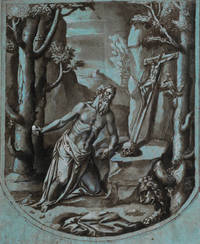
B96280-3Spain circa 1588. Pen and ink and brown wash heightened with white on 2 sheets of heavy blue paper joined together by the artist. Sight: 493 x 402 mm. ca. 19 3/8 x 15 3/4 inches. This is one of a well-known group of drawings for liturgical vestments made by Spanish artists active at the Escorial between 1587 and 1598. Miguel Barroso 1538-1590 who trained with Gaspar Becerra arrived at the Escorial in 1587 and worked there continuously for the rest of his career; he was named painter to Philip II in 1589. Along with his contributions to the frescos and altarpieces in the chief cloister under the direction of Pellegrino Tibaldi he is known to have worked as a draughtsman for embroideries of the vestments of the Monastery of El Escorial and a number of drawings by him for these are conserved at the Library at the Escorial bound together in a single folio. Priscilla E. Muller reviewing the discussion of these in Angulo and Pérez Sánchezs Corpus of Spanish Drawings notes that Twelve drawings by Miguel Barroso a Spaniard of Italianate training who was engaged for work at the Escorial from 1587 until 1590 constitute a group of New Testament scenes drawn in 1588 for the embroidery of vestments several of which remain at the Escorial. Deliberately linear and compositionally stylized the drawings do not reflect a personal manner. as might be expected of any drawings that might be uncovered relating to his Escorial paintings which are less bluntly narrative if hardly less Mannerist than the New Testament embroidery drawings. Angulo and Pérez Sánchez note that additional pattern drawings for these vestments attributed to other masters are also conserved in a second folio at the Escorial Library Corpus catalogue nos. 309-385 and they go on to point out that additional drawings are known to have left the Escorial in the course of the nineteenth century mentioning sheets at the Biblioteca Nacional in Madrid the National Gallery in Edinburgh and the Musée des Beaux-Arts in Orléans; others are known in the collections of the Louvre the Yale University Art Gallery the Metropolitan Museum of Art and the Pierpont Morgan Library. Apart from these few Spanish designs for embroideries seem to have survived. This particular drawing would appear to have been designed for a cope. Whether it relates directly to the groups above remains to be determined given among other things its comparatively high degree of finish and especially its very large size which noticeably exceeds the dimensions of the drawings catalogued by Angulo and Pérez Sánchez; it is also on blue paper whereas most of those are on greenish-grey. That it is neither signed nor pricked for transfer as many but not all of those are is not conclusive. Spain, circa 1588. unknown
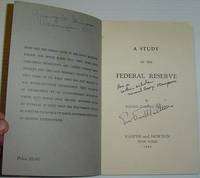
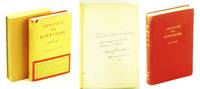
1952327a2087New York: Kasper and Horton. Good. 1952. First Edition. Paperback. Stellar provenance for this signed first printing example inscribed by Mullins 1923-2010 to dedicatee of a subsequent printing George Stimpson upon title page. Also signed by Stimpson inside front cover. In the Foreword to the 1991 printing of this title Mullins paid tribute to Stimpson by saying he and Ezra Pound were "two of the finest scholars of the twentieth century who generously gave of their vast knowledge to a young writer to guide him in this field which he could not have managed alone. The research for this book at the Library of Congress was directed and reviewed daily by George Stimpson whom the New York Times on September 28 1952 called 'A highly regarded reference source in the capital'". The first nationally circulated revelation of the secret meetings of the international bankers at Jekyll Island Georgia 1907-1910 where the draft of the Federal Reserve Act of 1913 was written. "Has the honor of being among the first books burned by the freedom-loving Allies in Germany after World War II had bailed out the bankers once again." - Robert H. Weems in 'A Populist Bibliography'. Average wear and soiling. Binding intact. A truly extraordinary signed first printing example of what is quite possibly the king of conspiracy titles. Singerman 0865. 8.7 x 5.5" ; 8vo - over 7¾" - 9¾" tall; Mullins on the Federal Reserve Bank the Fed Privately Owned Central Bank President Woodrow Wilson Colonel Mandell House Jekyll Island meetings Rothschild Rockefeller Paul Warburg; Signed by Authors . Kasper and Horton paperback
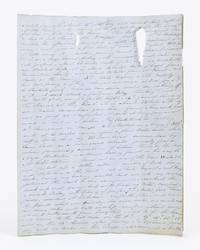
135288Fair. Quarto 12 pages last two blank. A saddle-sewn gathering of blue paper; two holes to each leaf apparently insect damage with some minor loss to the text; some marks and short edge tears; nevertheless an extraordinary relic in decent condition overall. The first nine pages closely written in ink in a single hand which we know to be that of pastoralist Alfred Barker 1812-1880 contain a version of Stuart's journal for the period from 31 March the beginning of the expedition to 17 May 1859 with some significant variation from the published versions. Importantly the final half-page of text is unmistakably in the hand of John McDouall Stuart himself. This passage - an addendum written in pencil and comprising material not included in published versions of the journal - describes the extent of Stuart's claims of pastoral land at Chambers Creek. The journal is accompanied by a loose bifolium containing manuscript directions to Chambers Creek quarto 2 pages also in Barker's hand with a small diagram of Hummock Hill. <p>The journal ends after the entry for 17 May 1859. Published accounts of the expedition indicate that Stuart spent the following three days in camp finalising his report on the survey of Chambers Creek which was sent back to his patrons James and John Chambers and William Finke on 20 May by way of one of the expeditioners Campbell. The specific nature of the variations from the published versions leads us to conclude that Stuart sent with this material an edited version of his field journal to that date the originals of both manuscripts are now lost. Barker brother-in-law and business partner of the Chambers brothers would have copied the present manuscript directly from Stuart's original manuscript. It pays scant attention to the daily happenings of the expedition but records detailed information about the country with a particular regard to its suitability for pastoral use precisely the information most valuable to patrons intent on building a pastoral empire. <p>Stuart's manuscript addendum to Barker's copy of his report must have been written in the short period between his return on 3 July 1859 and the departure in August of the same year of his third expedition into the interior. He had given John Chambers power of attorney in relation to his claims on the runs at Chambers Creek where he had claimed a staggering 1500 square miles of land. The matter had still not been settled at his departure and Stuart's precise description of the extent of his claim were evidently intended to allow his patrons to consolidate it in his absence. <p>The detailed manuscript text on the separate bifolium also supports a date from the middle of 1859. It gives a set of straightforward directions to Chambers Creek via the crucial series of waterholes that Stuart had identified as well as some details of the surrounding country. Barker was soon to follow this route north to stock Stuart's empty cattle runs the explorer lacking the resources to do so himself. While these instructions are in Barker's hand they must have been prepared in consultation with Stuart in preparation for the cattle drive north. <p>Returning from his third expedition Stuart was pleased to find Barker's cattle thriving on the saltbush on his land. After great difficulty and scandal the grant was finally made for an unprecedented area of 1000 square miles but many suspected that the beneficiary of the vast territory would be Chambers and Finke not the explorer Barker's contribution going unremarked in newspaper accounts of the time. This would be borne out in the coming years. <p>The textual history of the journal of Stuart's second expedition makes the survival of this document all the more important. In her introduction to the edition of the journal published by the Friends of the State Library of South Australia 2002 Valmai Hankel writes: 'This expedition is the only one for which no manuscript diary or fair copy survives. As it was regarded as a private venture unlike the five other expeditions its results were not reported to Parliament so its journal was not published as a parliamentary paper. The only known versions are those published in the "Journal" of the Royal Geographical Society RGS vol.31 1861 pp.65-83 and in "Explorations in Australia. The Journals of John McDouall Stuart during the years 1858 1859 1860 1861 & 1862" edited by William Hardman London: Saunders Otley 1864 .'. <p>The RGS and Hardman versions of the text are generally more discursive but both are the result of editing by third parties and would have been based on fair copies of the journals. Hardman in particular was an unsympathetic editor 'Stuart seems to be almost an illiterate person .' and often redrafted Stuart's matter-of-fact observations to fit more closely the mould of a Victorian travel narrative. Our manuscript on the other hand is not only contemporaneous with the expedition but also likely closer in content to the lost field journals before editorial intervention and judicious redaction and revisions for political and commercial considerations. <p>A full transcription of the journal is available as are a list of variations from the published version. One example will suffice to indicate the significance of this manuscript. Hankel's introduction states that 'The expedition's main aims were to survey the Chambers Creek lease and to prospect for gold . Stuart's major discovery was more links in the chain of springs later known as mound springs which Warburton and Babbage had found in 1858. Hergott found the first on 13 April; although Stuart named them after their discoverer he does not say so in either version of his journal' page x. The manuscript states that 'on the 13th Hergott after finding St Stephens Pool dry and no water in the Range - discovered a batch of Springs South of the Pool - abundance of Water - distance from this camp to Hergotts Springs 30 Miles - Native Cucumbers found here'. <p>These documents were purchased together with an important archive relating to Alfred Barker's pastoral properties offered separately and now sold. The archive contains letters that substantiate serious irregularities in the handling of Stuart's pastoral lease at Chambers Creek which when read in conjunction with the above material make the story of his final years even more distressing. Copies of the relevant letters are included with the manuscript. unknown
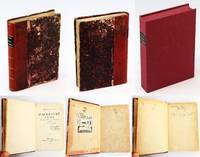
1864564j1976Bruxelles: Imprimerie de A. Mertens et Fils. Fair with No dust jacket as issued. 1864. First Edition. Hardcover. Is this book the plagiarized source of The Protocols of the Learned Elders of Zion "In his 1870 autobiography Maurice Joly 1829-1878 described how he conceived the idea of a dialogue between Montesquieu and Machiavelli. At that time it was forbidden to openly criticize the regime of Napoleon III but in this way it would be possible through the mouth of Machiavelli to expose the Emperor's motives and methods stripped of the usual camouflage. Thus this book was printed in Belgium and smuggled into France but was immediately seized by the police banned and Joly arrested. Thus few copies survive. Joly's reflections on the despotism of Napoleon III provide insights applicable to authoritarian regimes of today. Moreover something of Joly's insights even survived when his book was transformed into The Protocols of the Elders of Zion thus The Protocols often seem to forecast twentieth-century authoritarianism." - pages 73-76 of Warrant for Genocide by Norman Cohn in which he claims over 160 passages in the Protocols are clearly based on passages in Joly. "The Protocols of the Wise Men of Zion were first circulated in Russia in the early years of the twentieth century purportedly an account of a meeting between Jewish leaders in the fall of 1897. A horrible plot to undermine society overthrow governments and destroy Christianity is revealed. The 'minutes' are copied verbatim from A Dialogue in Hades Between Machiavelli and Montesquiou written by Maurice Joly. The 'Protocols' merely substituted the word 'Jew' for Joly's own devils." - Footnotes to pages 423-424 of Mein Kampf Reynal & Hitchcock 1939. Others argue that Joly's work was not the source of The Protocols. We leave it to the reader to decide. 4 i-iii iv 337 1 1 errata p. 18.0 x 12.4 cm. Text in French. Tight maroon quarter leather binding with new leather spine and leather title label. Wear to periphery of older marbled boards which are probably not original. Bookplate of Dr. J.A. Van Praag 1895-1969 inside front board. Van Praag was a lecturer at the University of Amsterdam when he acquired this book in 1931 and wrote his name atop the first blank leaf along with a comment about the purported connection of the book to The Protocols. He also wrote Joly's name on the title page. Pencil notes on pages 47 80 and 94. Evidence of moisture exposure to endpapers and more moderately to contents. Negligible if any waviness to contents. All text clearly legible with pages intact. Includes new custom acid-free clamshell with leather title label upon spine. A rare first edition example of this most contentious work. Provenance: Acquired from an Israeli dealer who purchased it at an Israeli auction which only sells books offered by Israelis. Our research indicates that at least some of Van Praag's books were looted by the Nazis in 1941. Apparently he retired in 1966 and attempted to rebuild his library. However after a fire in his widow's home in 1970 part of the library was destroyed or damaged and she sold the remaining books. We have no definitive way of knowing if this book was looted from Van Praag or if it was if he ever re-acquired it. Perhaps he did re-acquire it only to have it exposed to moisture per our description by firefighting efforts in his widow's home; 12mo . Imprimerie de A. Mertens et Fils hardcover
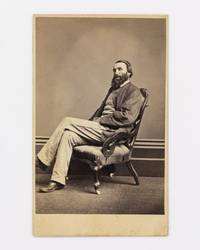
1866135300Adelaide: Townsend Duryea 1866. Adelaide Townsend Duryea printed circa 1866; original negative circa 1863. An albumen paper photograph 90 × 59 mm mounted on the original card 102 × 62 mm with 'T. Duryea Photographer to His Excellency 66 King William St. Adelaide' printed on the verso under the Vice-Regal Coat of Arms. 'Townsend Duryea began making cartes de visite in late 1862 or early 1863 and was advertising his "new" style of carte in May 1863' Bob Noye AGSA website. The portrait taken in Duryea's Adelaide studio shows Stuart after his epic crossing of the continent of Australia: he is visibly depleted - emaciated even - with his injured hand positioned awkwardly in his lap. The accident that caused this permanent injury occurred on 25 October 1861 the day the main party of the successful sixth expedition departed Adelaide. Stuart later described it in a letter to Charles Sturt: 'the accident I received from one of the horses being in a state of strangulation and endeavoured to release him reared up struck me in the temple knocked me senseless and springing again with his hind feet on my right hand has disabled me for life' Ian Mudie: 'The Heroic Journey of John McDouall Stuart' 1968 page 171. It is a most evocative image of the great explorer towards the end of his life. <p>The negative number 18592/3 is inscribed in ink on the verso below Duryea's imprint. This particular imprint dates to around 1866 see Noye and the negative number is consistent with this date. Noye notes that 'A carte with a number belonging to a much earlier number range would be a reprint from an old negative held in storage'; this suggests that this photograph is not printed from the original negative perhaps lost damaged or destroyed. This further suggests that this photograph is printed from a negative produced by rephotographing an existing print of the portrait of Stuart taken earlier by Duryea. This would explain why Stuart has what appears to be his left hand in his lap: the image is printed in reverse. <p>It was likely produced after news of the explorer's death in London on 5 June 1866 had reached Adelaide. A small item of local news 'Mr T. Duryea's Studio' in the 'South Australian Register' on 23 November 1866 lends weight to this possibility: 'A visitor to Adelaide may spend a very pleasant and profitable half-hour in Mr Duryea's photographic studio where a number of elegant photographs in every style of art are displayed. Mr. Duryea also exhibits some superior examples of photographs worked up in water-colours which are soft and some of them exquisitely finished. Amongst these there is a fine portrait of the late J.M. Stuart the explorer'. This carte de visite is clearly not that exhibition piece but it is most definitely a fine portrait. Townsend Duryea unknown
20212081502111902788national library 2021. Soft Cover. Fine. The book is in fine condition. national library paperback
95963The archive comprises nearly 440 pieces each approximately 320 × 510 mm or larger many from the later 1970s when Mitchell was at the height of his powers. A unique commentary on the personalities and events of the times: when Hawke Fraser and Dunstan were in power Nixon went to China the war in Vietnam ended and the first wave of 'boat people' began to arrive here many Indigenous Australians were in a parlous state cricket and cricketers still caused grief . Approximately 440 items. unknown
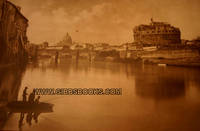
1870053004-KItaly 1870. Book. Illus. by Giacomo Brogi. Very Fine. No Binding. Albumen Mammoth Print c. 1870's By Giacomo Brogi 1822- 1881 Italian. Very rare photographic image by this artist in the original restored frame . This is not one of the standard tourist pictures that you find but a true work of art by this master photographer. Both Brogi and the Alinari Brothers worked as photographers and took the standard architecture ruins photos in Italy most being small 8"x10" Albumen prints but they did art photography also and to find one is a rare treat . This piece shows three men in a row boat on the Tiber River with Castel Saint`Angelo Mausoleum of Adrian on the right the Saint`Angelo bridge to the castle in the middle in the far distance you can see St. Peter's Dome . Looking around the photo the men in the boat you can see their reflection in the water. With sheep on the right shore and the clouds rolling by above it all this is a very importain photographic image by this artist . Please call for more information on this and other works of art. Size: 32 x 23. unknown
OH-15Shanghai China: Yinwen Yinshu Guan The official histories of China are compilated to the corpus of Twenty-five Histories Ershiwu Shi which comprise this 50-volume complete set. The 25 26 Official Dynastic Histories includes: Shiji Records of the Grand Scribe a universal history compiled by Sima Tan and his son Sima Qian ends in 93 BC Hanshu Book of Former Han compiled by Ban Gu in 83 AD Houhanshu Book of Later Han compiled by Fan Ye in 445 Sanguozhi Records of the Three Kingdoms compiled by Chen Shou in 289 AD Jinshu Book of Jin compiled under Fang Xuanlingin 648 Songshu Book of Liu-Song compiled by Shen Yue in 488 Nanqishu Book of Qi in the South compiled by Xiao Zixianin 514 Liangshu Book of Liang compiled under Yao Silian in 635 Chenshu Book of Chen compiled under Yao Silian in 636 Nanshi History of the South compiled by Li Yanshou in 659 comprising the history of Liu-Song Qi Liang and Chen dynasties Beishi History of the North compiled by Li Yanshou in 659 comprising the history of Northern-Wei Eastern and Western Wei Northern Qi and Northern Zhou; for the sixteen states of north China there is a kind of semi-official history called Spring and Autumn of the Sixteen Kingdoms Shiliu Guo Chunqiu; the biographies of these northern rulers can also be found in the Jinshu 101-130 Songshu 98-99 Nan-Qishu 59 Weishu 87 Beishi 93 Weishu Book of Northern Wei Tuoba compiled by Wei Shou in 554 Beiqishu Book of Northern Qi compiled by Li Baiyao in 636 Beizhoushu Book of Northern Zhou compiled under Linghu Defen in 636 Suishu Book of Sui compiled under Wei Zheng in 636 Jiutangshu Old Book of Tang compiled by Liu Xu in 945 Jiuwudaishi Old History of Five Dynasties compiled by Xue Juzheng in 974 Xintangshu New Book of Tang compiled under Ouyang Xiu in 1061 Xinwudaishi New History of Five Dynasties compiled under Ouyang Xiu in 1072 for the ten states of south China there is a kind of semi-official history called Spring and Autumn of the Ten Kingdoms Shi Guo Chunqiu published by Wu Renchen in 1793 Songshi History of Song compiled under Tuo Tuo Toktoghan in 1345 Liaoshi History of Khitan-Liao compiled under Tuo Tuo Toktoghan in 1344 Jinshi History of Jurchen-Jin compiled under Tuo Tuo Toktoghan in 1344 Yuanshi History of Yuan compiled under Song Lian in 1370 Xinyuanshi New History of Yuan compiled by Ke Shaomin in 1920 Mingshi History of Ming compiled under Zhang Tingyu in 1739 Qingshigao Draft to a History of Qing compiled under Zhao Erxun in 1927 another semi-official history of the Qing dynasty is Qingdai Tongshi compiled under Xiao Yishan . Green cloth hardcover texts. Gilt spine and embossed title on front cover. Date of publication not stated presumed to be circa 1960's. Each volume is approximately 750 pp. in length. Text in Chinese. Heavy item. . No Stated Edition. Cloth. Fine/ . 4to - over 9¾" - 12" tall. . Yinwen Yinshu Guan Hardcover
19470008116Jerusalem Israel British Mandated Palestine. Good. 1947. On offer is a unique historically significant journal handwritten during the final days of British Mandated Palestine most entries made immediately prior to the Declaration of Independence. This is a one-year page a day journal for the Jewish year of 5708 September 1947 to October 1948 has about 50 entries with most entries made between September 1947 and December 1947 and few brief records scattered over the next few months - the last one is dated June 7. It measures 7' by 5' the hardcover is slightly soiled but otherwise the journal is in very good condition. The text is in Hebrew the handwriting is mostly legible. Author's name is not identified but there is a note on the front page: "Vaad Hakehilla. Hanala Klalit" Local Community Council. General Management. It is clear from this note and from the context that the journal was kept by a member of the Hebrew Community Council in Jerusalem the body that was established in 1917 and coordinated and represented different groups of Jerusalem Jews during the British Mandate. Vaad Hakehila was responsible for different aspects of Jewish life in the city including economic and social assistance to the residents. It had a social services department and a society of assistance to kindergartens issues related to them are mentioned in the journal several times. Most entries are the minutes of the Council meetings. Some entries deal with organizational and financial matters taxes elections complaints dispute settlement work of social services purchase of fire engines but most meetings reflect increasingly tense situation in the city and concern food and fuel supply food rationing security and organizing Mishmar ha'am National Guard - unit of volunteers established in September 1947 in Jerusalem for maintenance of public order. The Council was constantly in contact with the state authorities political and religious leaders various Jewish organizations trying to solve various problems facing Jewish community in the city. Among the names mentioned in the journal are Yitzhak Ben-Zvi David-Zvi Pinkas a Zionist activist politician a signatory of the Declaration of independence and a future minister Mordechai Shatner a signatory of the Declaration activist and politician one of the founders of Yad Va-Shem who then was a member of the Jewish National Council Ben-Zion Meir Hai Uziel the Sephardi chief rabbi of Mandatory Palestine who appeared before the Mandatory government as representatives of the Jewish community and on missions on its behalf Itzhak HaLevi Herzog the first Chief Rabbi of Ireland and then the Ashkenazi Chief Rabbi of Mandatory Palestine and of Israel Menashe Elassar a noted Jerusalem businessman and many other. The first entry is dated September 15 and mentions a meeting with Mr. Ben-Zvi who had been the President and a member of the Vaad Haleumi the National Council a post in which he served as the chief representative of the Jewish community vis-a-vis the mandatory authorities. His name is mentioned several times throughout the journal in relation to various matters. A council meeting on September 17 dealt with several issues including social work and house confiscation order of the Babayoff family: "Military Commander refused a request to postpone confiscation order for the Babayoff's House till after the holidays . Chief Rabbi Uziel was asked to speak with the commissioner about postponement of the confiscation order. Rabbi Herzog was also asked to speak with the Military Commander regarding the same matter". Many entries mention searches conducted by the British Army in Jewish neighbourhoods one of such searches on Yom Kippur Eve finished with desecration of a synagogue: "Search in Nachlat Zvi Jerusalem neighbourhood. After we received information regarding the desecration of the synagogue by the army during their search R' Nattan and I went to check if the information was correct. We reached the location after the search had finished and the army left the place. All the synagogue benches the tables chairs and pillows were upside down. All of the study books Mishnayot Zohar Gemaras were scattered on the floor. The holy ark was open and the Torah scrolls were open ." Some of the entries refer to property damage caused by bombings that the council members were assessing: "After the two nights that passed in Jerusalem Shabbat night and Motzei Shabbat when tens of thousands of bullets were shot towards the all the Jewish areas of the city I got up early . to visit the places that were the primary targets of the bullets of the police and soldiers. The primary target was again the homes near the police dormitory in the hospital of the English Mission. The view of the horrifying sight of the destruction caused to these homes and the miracle that nobody's life was taken . testimonies were collected from dozens of people."Nov. 16. One of the constant subjects was ensuring food and fuel supply in the city: "Meeting of the supply committee with bakery owners to ensure sufficient flour supply in case of emergency" ".To bring all wholesalers and demand from them to increase supplies in Jerusalem." they meet with members of the Jewish National Council JNC and devote many meetings to this matter. As part of their activity they meet with mukhtars heads of Arabic neighbourhoods. Va'ad had limited means to cope with the worsening situation and in December the Jerusalem Emergency Committee was set up that took upon itself civil administration of Jewish Jerusalem which explains why there are almost no entries after November. Though it includes only about 50 entries of varying length the journal provides a lot of details from the months preceding the Declaration of Independence and contains names of many people who played an important role in creation of the Israeli State. Overall it's a fascinating document of the life of Jewish community in Jerusalem during the last months of the British Mandate and activity of the Jewish Community Council in Jerusalem.; Manuscript; 12mo - over 6¾" - 7¾" tall; KEYWORDS: HISTORY OF 20TH CENTURY 1940s POST-WW2 ERA MIDDLE EAST ISRAEL JERUSALEM JEWISH QUARTER CREATION OF ISRAEL JEWS OF JERUSALEM BRITISH MANDATE DECLARATION OF INDEPENDENCE MANDATORY PALESTINE BATTLE OF JERUSALEM 1947 BOMBINGS IN JERUSALEM JEWISH SELF-GOVERNING BODIES IN MANDATORY PALESTINE MISHMAR HA'AM NATIONAL GUARD IN JERUSALEM LOCAL COMMUNITY COUNCIL IN JERUSALEM VA'AD HAKEHILA VAAD HAKEHILA JERUSALEM LOCAL AUTHORITIES LEADERS OF JEWISH COMMUNITY OLD CITY PARTITION BRITISH ARMY IN MANDATORY PALESTINE SOCIAL SERVICES DURING THE BRITISH MANDATE ISRAEL BEFORE INDEPENDENCE SELF-GOVERNMENT OF JEWS IN JERUSALEM JEWISH COOPERATION WITH BRITISH ADMINISTRATION IN PALESTINE YITZHAK BEN-ZVI DAVID-ZVI PINKAS MORDECHAI SHATNER END OF THE BRITISH MANDATE FOOD RATIONING IN JERUSALEM FOOD SUPPLY TO JERUSALEM ZIONISM ZIONIST ACTIVISTS JEWISH NATIONAL COUNCIL JNC VAAD HALEUMI 1947 JERUSALEM RIOTS JERUSALEM RELIGIOUS LEADERS HEBRAICA JEWISH HISTORY HANDWRITTEN MANUSCRIPT DOCUMENT LETTER AUTOGRAPH WRITER HAND WRITTEN DOCUMENTS SIGNED LETTERS MANUSCRIPTS DIARY DIARIES JOURNALS PERSONAL HISTORY SOCIAL HISTORY HISTORICAL HOLOGRAPH WRITERS AUTOGRAPHS PERSONAL MEMOIR MEMORIAL ANTIQUITÉ CONTRAT VÉLIN DOCUMENT MANUSCRIT PAPIER ANTIKE BRIEF PERGAMENT DOKUMENT MANUSKRIPT PAPIER OGGETTO D'ANTIQUARIATO ATTO VELINA DOCUMENTO MANOSCRITTO CARTA ANTIGÜEDAD HECHO VITELA DOCUMENTO MANUSCRITO PAPEL . hardcover
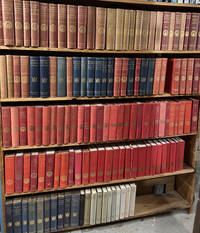
108858Toronto: The Champlain Society and The Hudson's Bay Record Society Book. Very Good. Hardcover. First Edition. RARE complete run of the CHAMPLAIN SOCIETY PUBLICATIONS plus THE COMPLETE HUDSON'S BAY RECORD SOCIETY PUBLICATIONS and THE COMPETE ONTARIO SERIES within the Champlain Society set This includes 113 Champlain Society books from 1907 to 2015 inclusive plus an additional 21 volumes from the Hudson's Bay Record Society that are not within the publications listed for the Champlain Society. Note 12 of the Hudson's Bay Record Society books are within the listing of the Champlain Society publications as are all of the 16 Ontario Series. The only missing items are 2 of the 3 "occasional papers" within the Champlain Society publications list. All are hard cover books except for the 1 Occasional Paper; 10 of the Hudson's Bay books have dust jackets. All in very good condition a couple have minor wear and or marks. Shipping will be based upon the weight of these books 370 pounds with packing materials and the location they will be sent to. Thus shipping costs will be more than this system allows us to note - please contact us for the exact shipping cost to your location approximately $280. The Champlain Society and The Hudson's Bay Record Society hardcover
1998214h5886Singapore: Prentice Hall. Very Good in Very Good dust jacket. 1998. Hardcover. 0130208035 . Signed and inscribed upon title page by Lee Kuan Yew to Valéry Giscard d'Estaing dated October 1998. "The first volume of the memoirs of Lee Kuan Yew 1923-2015 the man who planted this island state firmly on the map of the world. In Intimate detail Lee recounts the battles against colonialists communists and communalists that led to Singapore's independence. Lee brings the reader into his personal life with unusual candour and the occasional touch of humour. He also shares insights into the men who shaped the times." - dust jacket. "For a country to rise from the threshold of subsistence to one of the highest living standards in the world in 30 years is no common achievement. At the root of this success lies the genius of one man Mr. Lee Kuan Yew." - Jacques Chirac. "Lee Kuan Yew is one of the seminal figures of Asia and this book does justice to his extraordinary accomplishments." - Henry Kissinger. "Senior Minister Lee Kuan Yew is one of the brightest ablest men I have ever met. This book is a must read for people interested in a true Asian success story. From this book we also learn a lot about the thinking of one of this century's truly visionary statesmen." - George Bush Sr. Valéry Giscard d'Estaing was President of France from 1974-1981 and hosted the author several times in France. 5-680 pp. Chronology. Index. Black and white reproductions of photos. Unmarked with light wear. A special copy.; 8vo; Signed by Author . Prentice Hall hardcover
1953214h6109Appleton Wisconsin: C.C. Nelson Publishing Company. Fair in Good dust jacket. 1953. Second Printing With Revisions. Hardcover. Charles A. Lindbergh's copy signed and inscribed to him by his fellow seeker of peace justice and historical truth Harry Elmer Barnes 1889-1968 whom Murray Rothbard eulogized as "the last of the truly erudite historians." A truly magnificent provenance for this work which "shows how the extension of military operations to civilian populations and property and the increasingly destructive nature of total warfare menace the very future of humanity and Western civilization. This work makes it clear how the Nuremberg war-crimes trials far from curbing the barbarism of present-day warfare will make it absolutely certain that every known form of destructiveness and mass-murder however fiendish and devastating will surely be brought forth in the desperate effort to avoid a defeat which in all future wars will mean the summary liquidation of the political leaders and top military officers of the vanquished countries." - dust jacket. Saddam Hussein and Muammar Gaddafi among others would probably concur. As the most prominent spokesman for the America First Committee which sought to keep America out of WWII Lindbergh most likely endorsed the conclusions of this book first issued in England in 1948 under a nom de plume by Veale "a lawyer and student of history with a lifelong interest in the cause of peace and international justice." - xi. On page vii Veale refers specifically to Barnes by stating "in accordance with what Dr. Harry Elmer Barnes has called 'The Historical Blackout' the bulk of the British press newspaper and periodical alike rigidly ignored the first edition of this book. Not one London newspaper with a nation-wide circulation reviewed it." Eventually this work was issued in 18 editions and three languages. pp. xvii 1 305. Index. Bibliography. Black and white reproductions of photos. Unmarked with average wear to publisher's red cloth lettered in gilt. Narrow openings along each hinge bear narrow remnants of earlier tape repairs. Small erasure patch atop front free endpaper. Tanning to photo endpapers. Moderate wear to dust jacket now preserved in archival-grade Brodart. Housed in new custom acid-free slipcase. An extraordinary memento from the collection of Charles Lindbergh 1902-1974 the legendary American aviator who rose to global prominence in 1927 by being the first to fly nonstop from New York to Paris. Stimely p.61 Select Bibliography of Revisionist Books p.21.; 8vo; Signed by Notable Personage Related . C.C. Nelson Publishing Company hardcover
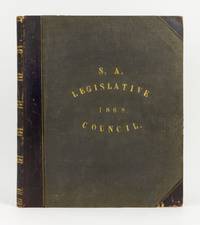
1868142860Adelaide: Townsend Duryea 1868. First Edition. Hardcover. Very Good. Adelaide Townsend Duryea 1868. A large quarto album approximately 415 × 365 mm containing 18 albumen paper portraits each approximately 280 × 210 mm mounted on the rectos of cloth-hinged thick card leaves interleaved with guards plus one leaf of letterpress see below. Contemporary half roan and cloth lettered and tooled in gilt with a binder's ticket on the front pastedown 'Bound at the "Register" Office Grenfell Street Adelaide'; covers slightly worn; leaves slightly cockled; one guard missing; most photographs lightly discoloured near the right-hand edge; a few light spots of foxing mainly to the guards and the versos of the mounts and some minor signs of age and handling but overall in excellent condition. The subjects include some of the most prominent figures in early colonial South Australia. In order of appearance the portraits depict John Morphett President Henry Ayers Charles Hervey Bagot John Henry Barrow Charles George Everard John Baker William Wedd Tuxford Thomas Elder William Peacock William Morgan Thomas Hogarth John Tuthill Bagot Thomas English Henry Mildred John Crozier William Parkin John Hodgkiss and Emanuel Solomon. <p>The 'South Australian Advertiser' for 20 August 1868 records that: 'Mr. Duryea is preparing a parliamentary group containing the members of both Houses of the Legislature which promises to be an effective affair. The members of the Council have already given him sittings and a fine series of portraits is the result'. In the subsequent months Duryea exhibited the photographs at his King William Street studio but most accounts refer to them assembled as a group around Morphett. This photo-collage with the portraits all heavily cropped is almost certainly the basis for a contemporary carte de visite published by Duryea see SLSA B 9258. However most of the images in this album appear to be rare or even unrecorded in their uncropped form; indeed the only other examples we located were of Henry Ayers and Charles Hervey Bagot. It is also rare to find photographs of early colonists at all let alone of this size quality and quantity. <p>The guard leaves for the portraits of Morphett Hogarth J.T. Bagot and Mildred contain manuscript biographical details in a single hand. Although we have not identified the writer it is likely to be one of the eighteen MLCs as he refers to 'our chamber' in the entry for Morphett. The portrait of C.H. Bagot is accompanied by a similar short biography but this time in letterpress and misspelling his middle name as 'Harvey'. C.H. Bagot English Mildred Crozier Parkin and Solomon are identified in another hand on the mounts beneath the image. Townsend Duryea] hardcover
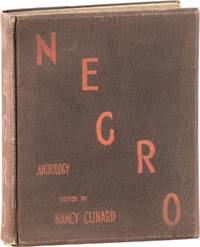
193488436London: Nancy Cunard at Wishart & Co 1934. First Edition. One of 1000 copies. Large quarto 31.5cm; publisher's dark brown buckram with titles stamped in red on spine and front cover and a map of "The Black Belt of America" on rear cover; dark brown topstain; viii23-855pp; with numerous half-tone and other illustrations throughout including the color fold-out map of Africa tipped in between p.584-585. Modest external wear particularly to base of spine and upper and lower front joint gently spine-sunned light wear to topstain with a touch of dust-soil to covers and faint foxing to endpapers and text edges occasionally extending into the margins; small closed tear to lower edge of title page with a tiny puncture to one lower fold on the map; hinges sound; a solidly Very Good copy. <br /> <br /> A monumental work compiling some 250 contributions by more than 150 authors two-thirds of whom were Black privately published and financed by Cunard a direct descendant of Benjamin Franklin and heiress to the Cunard shipping fortune. Blockson notes Cunard's "bohemian spirit" and "unbending devotion to ending racial prejudice" and calls Negro "a landmark in African-American literature see BLOCKSON 71 p.53-5. Cunard stated her purpose in publishing Negro was to show "that there was no superior race merely cultural differences that racism has no basis whatsoever." Among the impressive list of contributors were Langston Hughes W.E.B. Du Bois Zora Neale Hurston Jomo Kenyatta Samuel Beckett Ezra Pound Theodore Dreiser Countee Cullen Sterling Brown Claude McKay and many other key figures in the Harlem Renaissance. Of the 1000 copies printed many hundreds were destroyed during the blitz of London -- an assertion that was long offered by dealers without documentation but which is indeed supported by an annotation in Cunard's own copy held by the Ransom Center dated October 1941: ".what remained of the whole edition has been destroyed by bombs and fire last years Sept. save 10 copies saved by E.E. Wishart as if in prevision." This fact along with the book's unwieldy size and fragile binding accounts for the scarcity of attractive copies in the marketplace; the present example being among the nicer copies we have handled. BLOCKSON 71; PERRY 761 The Harlem Renaissance: An Annotated Bibliography and Commentary. 88436. Nancy Cunard at Wishart & Co unknown
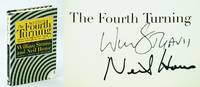
1997541H2157New York: Broadway Books. Good in Very Good dust jacket. 1997. First Printing. Hardcover. 055306682X . Signed without inscription by both authors upon half-title page. "Offers an utterly persuasive prophecy about a new American era that will begin just after the millennium." - dust jacket. xiv 382 pages. Footnotes. Index. Light overall wear. Binding tight. Yellow high-lighting to eight pages. Dust jacket now in glossy new archival protection. A rare double-signed first printing example of this most extraordinary work. ; 8vo - over 7¾" - 9¾" tall; United States History Cycles Forecasts Future Signed Twenty-First Century Strauss-Howe generational Theory Steve Stephen Bannon Donald Trump Presidential Campaign 2016; Signed by Authors . Broadway Books hardcover
108073The very fine portrait visible image size 545 × 395 mm in its original ornate gilt frame external dimensions 740 × 595 mm is exquisitely hand-painted and signed by the famous colonial photographer Townsend Duryea 1823-1888. His original label is affixed to the paper backing on the verso of the frame 'T. Duryea Artist Photographer 66 and 68 King William Street Adelaide' and in our opinion he has created a masterpiece as both artist and photographer with this work. James Hurtle Fisher commenced practice as a solicitor in London in 1816 and 'was drawn into the colonizing movement in 1835. He was selected as resident commissioner one of the most important offices under the South Australian Act . second only to the governor'. Fisher 'left England in July 1836 with the governor's party in the "Buffalo" arriving on 28 December 1836 at Holdfast Bay where the official oaths were administered a proclamation was read and a ceremony marked the beginning of settlement. <p>In January 1837 Fisher erected his reed hut and Land Office near the survey camp of Colonel William Light at the north-western corner of the new capital site; the destruction of these temporary buildings by fire on 23 January 1839 caused both men serious loss. Fisher had been allowed to draft his own instructions which were not shown to Governor Sir John Hindmarsh. Disputes between the two men over their respective powers had begun on the voyage and were soon revived in the new Council of Government and more violently outside and led in February 1837 to the Resident Magistrate's Court binding the participants over to keep the peace towards each other. The new governor George Gawler was appointed both governor and resident commissioner a radical departure from the principles on which the colony had been founded' ADB. <p>Fisher returned to his profession and became a leader of the South Australian Bar. In October 1840 he was elected first mayor of Adelaide; in 1860 he became the first resident South Australian to be knighted. Townsend Duryea was at the King William Street address from 1858 until his illustrious career as a photographer 'was cut short when his studio and entire collection of 50000 negatives were destroyed by fire on 18 April 1875' ADB. We suggest as a date for this magnificent portrait 'circa 1870'. unknown
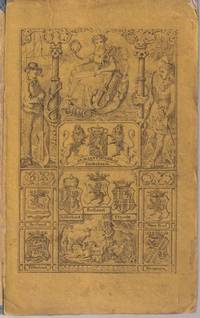
183911053Coblenz: Verlag Von K. Baedeker. 1839. First Edition. Hardcover. Very Good-. Yellow boards a bit browned and worn. Spine ends and corners lightly chipped. Pages clean and tight with occasional browned pages not affecting contents ; In 1839 with the publication of Holland Belgium and Rheinreise 3rd Edition the Baedeker series was launched. An extremely rare book in the original Biedermeier boards including a list of Baedeker's books in front and with a steel engraved fold out map in the back ; 16mo 6" - 7" tall; 212 pages . Verlag Von K. Baedeker hardcover
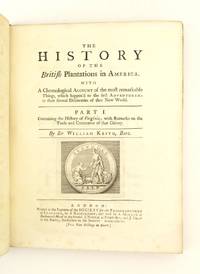
1738ST16322London: Printed for the Society for the Encouragement of Learning by S. Richardson 1738. FIRST EDITION. 240 x 186 mm. 9 1/2 x 7 1/4". 4 p.l. 187 1 pp. <br/> Contemporary sprinkled calf raised bands red morocco label. With engraved device of the Society on title page and final page engraved tailpiece and TWO FOLDING MAPS. Church 930; Howes K-36; Sabin 37240; ESTC T115083. Front joint cracked but the cover still firmly attached thin half-inch chip to spine at tail of front joint other minor signs of wear to the leather but the original unsophisticated binding sound and pleasing. Light scattered foxing mostly confined to margins one leaf with a tiny hole affecting a couple of words other trivial imperfections but A FINE COPY INTERNALLY the paper fresh and clean the maps remarkably free from any tears.<br/> <br/> Tracing the history of Virginia from the earliest English settlements through the first quarter of the 18th century with valuable notes on the colony's economy and trade this is a scarce and valuable work by a former colonial official with direct knowledge of the region. The history draws on earlier accounts most notably the 1705 work of Jamestown-born historian Robert Beverley ca. 1667-1722 but the more contemporary observations including those related to agriculture and economy come from the firsthand experiences of author William Keith 1680-1749 who went to Virginia in 1714 upon his appointment as surveyor-general of customs for the southern colonies in North America. According to ANB he toured Virginia the Carolinas Pennsylvania and Jamaica over the next two years charming all he met. In 1717 he became governor of Pennsylvania and ANB notes "for five years from 1717 to 1722 Keith was the most popular governor since the founding of the colony." During his service in the American colonies Keith wrote reports to the British government that ANB says "helped shape royal policy well into the 1760s." Knowledge gleaned in producing these reports is shared in the present work which features two fine maps: "A New and Correct Map of America" measuring 560 x 475 mm. showing North and South America with California as an island with inset views of Port Royal Boston Georgia North Pole and a Newfoundland cod fishery as well as "A New Map of Virginia" measuring 340 x 235 mm. by Thomas Fairfax dated 1738 showing the Tidewater region of the Mid-Atlantic states centering on Virginia with Maryland and New Jersey to the north and North Carolina to the south. Thomas Jefferson was familiar with this work remarking in "Notes on Virginia" that it is "agreeable enough in style and passes over events of little importance." Keith intended this to be the first in a series on the British colonies in North America--thus the "End of Vol. I" notation on the final page--but the project was abandoned for lack of funds. This work is rare in the marketplace: just two copies complete with maps one of these in a modern binding have appeared at auction since 1991. [Printed for] the Society for the Encouragement of Learning by S. Richardson unknown
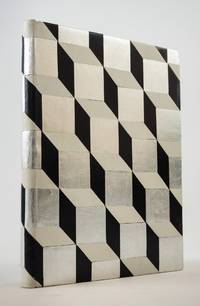
1912ST20811Paris: Eugène Figuière et Cie 1912. FIRST EDITION. PRESENTATION COPY. 240 x 185 mm. 9 1/2 x 7 1/2". 44 pp. 2 leaves. <br/> STRIKING 3-D OPTICAL ILLUSION BINDING BY A. CONTRERAS stamp-signed on front turn-in WITH AN ALL-OVER DESIGN OF CUBES rendered in black white and silver morocco smooth spine. In older probably original brown woodgrain drop-back box backed with black buckram. With 26 black & white photographic reproductions of works by Cézanne Picasso Derain Braque Metzinger Laurencin Gleizes Léger Duchamp Picabia and original owner Juan Gris printed on glossy white paper. WITH A HALF TITLE INSCRIPTION in French OF GREAT IMPORTANCE FROM ONE OF THE CO-AUTHORS translated as: "To the painter Juan Gris with all my best wishes Metzinger." Occasional underlinings in blue pencil. Text leaves with overall light browning and occasional foxing due to paper stock lower corner of half title restored and fore edge with minor chipping otherwise a fine copy the plates clean and bright and the binding unworn.<br/> <br/> Penned by two Cubist artists this is a highly resonant association copy of the first major treatise on the Cubism movement presented to noted Cubist painter Juan Gris and later put into an illusionistic binding composed of variably colored cubes that seem to jump off the surface. Albert Gleizes 1881-1953 and Jean Metzinger 1883-1956 had painted in both Post-Impressionist and Fauvist styles before their interest in exploring form and structure as well as light and color led them to the style that would become Cubism. Influenced by Cézanne's "brick-by-brick" technique and Poincaré's writings on space and time the new movement sought to examine objects from a mobile perspective and to depict multiple views of a subject in one painting. In "On Cubism" they explain: "An object has not one absolute form; it has many. It has as many as there are planes in the region of perception." The work features black & white illustrations of Cubist paintings by the authors and by fellow pioneers Picasso Braque Derain and Juan Gris to whom this copy was presented by Metzinger. Born in Madrid as José Victoriano González-Pérez 1887-1927 Gris studied engineering before moving to Paris to pursue art. First working as an illustrator for periodicals he was inspired by Metzinger to begin painting seriously. His training in engineering helped him appreciate the importance of mathematics in painting a realization triggered according to art historian John Richardson by Metzinger's painting "Le Goûter Tea Time" exhibited at the Salon d'Automne in 1911. Our volume was later in the collection of and probably bound for Chilean architect and collector Carlos Alberto Cruz 1939-2022. We have been unable to find more information on our binder "A. Contreras" but it seems possible that he was also Chilean as the Valparaiso-based Cruz owned a number of bindings signed with that name. Eugène Figuière et Cie unknown
1930112h6061Durham NC U.S.A.: Duke University Press. Very Good in Fair dust jacket. 1930. First Edition. Hardcover. "The notion of identifiable 'lost tribes' involves certain presuppositions concerning Hebrew history and masses of supposed local evidence in many parts of the world. These presuppositions and the assumed evidence require a candid and searching anthropological historical examination. This book has no other purpose or method. But the examination brings to light a great body of the real facts of Hebrew history." - Preface. "The main thrust of Godbey's work is to disprove the assumption that the northern tribes taken into captivity by Sargon II in 722/1 B. C. were lost in the welter of international movements following that event." - J. M. Myers. "Godbey is fascinating. He is well worth reading - for his consummate passion for detail for his marvelously intricate tapestry of scholarship in an area where so much is tricky territory. He tells us a great deal about the horizontal development of Judaism." - Dr. Morris Epstein. "Fascinatingly erudite." - Michael Pollack in "Mandarins Jews and Missionaries. "Allen Howard Godbey 1864-1948 of Missouri was a Methodist minister Methodist historian and teacher writer and scholar in the field of the Old Testament Hebrew history archeology and Semitics. He was a professor at Duke University 1926-1932." - SNAC. pp. Xx 2 802 42 black and white plates. Extensive bibliography. Index of scripture passages. Topical index. Footnotes. Errata slip affixed at xi. All three foldout maps present and in excellent condition. Bright gilt lettering upon backstrip. Akkadian bust embossed upon front board. Fore- and bottom edges untrimmed. Binding tight. Clean and unmarked with light wear to publisher's black cloth. Two-inch clear archival-tape repair to fore-edge of page 429. Above-average wear to dust jacket now in archival protection. A quality copy of this extraordinary work.; 8vo - over 7¾" - 9¾" tall; Lost Tribes Jews Jewish HIstory Revisionism . Duke University Press hardcover
2011347H4160Singapore: Straits Times Press. Very Good in Very Good dust jacket. 2011. Fifth Impression. Hardcover. 9814266728 . Signed and dated 2012 by Lee Kuan Yew without inscription upon title page. "Lee Kuan Yew's name is nearly synonymous with modern Singapore. Prime Minister for 31 years from 1959 to 1990 he was in the public eye for over 60 years as a revolutionary leader who steered Singapore to independence as a determined Prime Minister who transformed the country and finally as an elder statesman. This book picks up from his memoirs of 2000 as Lee engages a group of journalists over issues that a younger more critical population has raised." - dust jacket. Clean bright and unmarked with very light wear. Unopened DVD inside back board. A wonderful memento of this extraordinary statesman.; 8vo - over 7¾" - 9¾" tall; Lee Kuan Yew - Interviews Lee Kuan Yew - Political And Social Views Prime Ministers - Singapore - Interviews Singapore - Politics and Government - 21st Century Singapore - Social Conditions - 21st century Signed; Signed by Authors . Straits Times Press hardcover
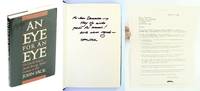
1993214h1742USA: Basic Books. Very Good in Very Good dust jacket. 1993. First Edition. Hardcover. 0465042147 . Signed and inscribed upon front free endpaper by John Sack to producer Jean Doumanian. "Set in Poland in the last days of World War II and the period immediately thereafter when the USSR was ethnically cleansing the region of Germans this book tells of the internment camps set up by the Soviets in Poland sometimes re-using camps captured from the Germans in which they placed captured Germans and over which they set as administrators several of the Jews who had been interned in the Nazi camps. James Bacque sparked controversy in 1989 with his book 'Other Losses' about Germans who died in internment camps under General Eisenhower in roughly the same period. Sack's book was for reasons that should be plain even more controversial. Sack it should be noted was of Jewish ethnicity." - Gerry T. Neal. "Nothing has ever been written about this. To unearth the story the author spent seven years doing research and conducting interviews in Poland Germany Israel and the United States. Sixty-five pages of notes and sources testify to the accuracy of the reporting." - dust jacket. An unattributed online synopsis states "Not for sixty years has a book been so brutally and in the end unsuccessfully suppressed as 'An Eye for an Eye'. One major newspaper one major magazine and three major publishers paid $40000 for it but were scared off. One printed 6000 books then pulped them. Two dozen publishers read and praised it but all rejected it. Once published it became a best-seller in Europe but was so shunned in America that it became in the words of New York Magazine 'The Book They Dare Not Review'". "John Sack 1930-2004 was an American literary journalist and war correspondent." - Wikipedia. Laid-in is a signed letter on Sack's letterhead to Doumanian in which he explains "The story is true. It has been corroborated by 60 Minutes and The New York Times. From this day on let no one say 'They don't write parts for women'". He goes on to itemize the actions of "real-life heroine Lola" which are recounted in this book. Perhaps Doumanian who produced several Woody Allen films considered making a movie based on this book. In a 1999 talk available online Sack describes visiting Yad Vashem in 1989 to conduct research saying "As you know Yad Vashem has fifty million documents about the Holocaust. I asked what they had about Jews in the Office of State Security. They said 'Nothing'. I said 'It had Jewish Commandants and Jewish Directors.' The Chairman of Yad Vashem replied 'It sounds rather imaginary' and the Director of Archives said to me 'Impossible.'" p. xii 2 252. Clean bright tight and unmarked with light wear. Dust jacket now preserved in archival-grade Brodart. A very special example.; 8vo; Signed by Author . Basic Books hardcover