Hardy RenéLivre Rare Book
34 résultats
19709316ROBERT LAFFONT 1970 284 pages 14x2x20cm. 1970. Broché. 284 pages. Le Fer de Dieu est un roman de René Hardy qui traite de la guerre d'Indochine dépassant le simple récit historique pour explorer la tragédie de l'homme moderne tiraillé entre l'emprise de la matière et la nostalgie de l'esprit
19927789<p>Editalia Rome 1992 Fine Hardcover / Fine Dustjacket 206 pages 8.5" x 12". Text in Italian.</p> Editalia, Rome, hardcover
2000LFA-126746783Un ouvrage de 374 pages, format 155 x 230 mm, illustré, broché, publié en 2000, Editions Grancher, bon état
197213262Gerfaut 1972 218 pages in8. 1972. broché. 218 pages. Le livre 'Commando de salopards' de Harry Woodley publié par Gerfaut en 1972 est un roman de guerre qui suit le sergent de Marines Harry Doyle un personnage qui se considère comme un dur mais qui se retrouve confronté à des adversaires encore plus redoutables. L'histoire se déroule dans le contexte de la guerre avec une unité surnommée 'commando de salopards'
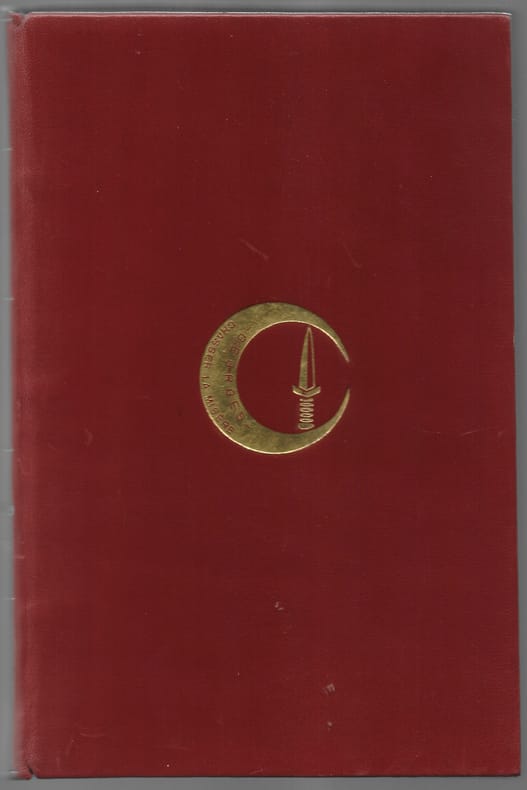
199013190Important ouvrage sur la guerre d'Algérie, vue du terrain. Très nombreuses photos. 1 des 1030 exemplaires numérotés comportant une belle dédicace de l'auteur. Pleine basane rouge, dos long, emblème du commando sur le plat supérieur. Très bon Paris Grancher 1990 1 volume in-8°
1985140351Couverture souple. Recueil de deux revues, 162 + 130 pages.
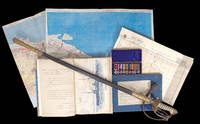
1912232381912-1945. Top Secret D-Day BIGOT maps used by Beachmaster Commando Redevers Michael Pryor Two lithograph maps one lithograph chart; together with concertina photograph album; together with midshipman's journal; together with a naval sword; together with a set of miniature medals. Top Secret 'Bigot' D-Day maps and other personal effects from the estate of Commando Redevers Pryor Beachmaster for the 'Juno-Mike Red' sector as part of Operation Overlord and a veteran of five Second World War beach assaults! Operation 'Overlord' Operation 'Overlord' was part of a large plan designed to bring about the defeat of Germany by heavy assaults on German-occupied Europe from the United Kingdom the Mediterranean and Russia. The outline of the plan was completed in July 1943 and the particular assault on the Normandy beaches from the UK and the English Channel elaborated under the title of Operation 'Neptune' in February 1944. It involved preparatory aerial and naval bombing of German coastal positions before the historic landings of D-Day itself: the largest amphibious operation in history and a pivotal moment in the course of the Second World War which eventually resulted in the liberation of western Europe from German occupation. The coastline was divided up into sectors code-named by their main beaches 'Utah' 'Omaha' 'Gold' 'Juno' 'Sword' and 'Band' though the assault on 'Band' was cancelled at the last moment. Utah and Omaha beaches were by far the bloodiest areas of conflict largely due to their positions either side of inland passage towards the Route Nationale. The Germans ensured that the inlet between the two sectors was strongly defended with machine guns during the assault. As a result the Allied forces suffered extremely heavy casualties with thousands of U.S. British Canadian and French soldiers killed or wounded. Many of the men were shot down or scattered as soon as they reached the sand or even while still in the water meaning that by mid-morning the situation was so bad that President Eisenhower considered recalling the mission. Largely thanks to individual acts of bravery by certain soldiers however the troops were able to attack some key German strongpoints from the side or the rear and eventually overturn their defences. By the end of the day the battle had been won by the Allies at a terrible cost. The BIGOT classification Two of the maps in the collection are marked "BIGOT MOST SECRET" and "BIGOT TOP SECRET". Introduced during the Second World War BIGOT was the highest-level military security classification above Top Secret. Some sources suggest that it was an acronym for "British Invasion of German Occupied Territory;" others that it was a "backronym" for "To Gib" the code stamped on the papers of officers headed to Gibraltar in advance of the 1942 North Africa invasion. Whatever the origins of the term extraordinary efforts were made to protect BIGOT-level material. When for example a practice landing "Operation Tiger" on the Devon coast was ambushed by U-Boats Eisenhower himself ordered the recovery of the bodies of the ten known victims with BIGOT clearance. This was necessary to prove that they had not been captured alive as their capture would have compromised the invasion plans and necessitated its cancellation. Commander Redevers Michael Pryor 1893-1964 Commander Redevers Michael Pryor DSO DSC M.P. RN known as Michael Courtenay Holland-Pryor until 1924 had served as a submariner in the Great War and was a veteran of five wartime beach assaults. He first served aboard HMS 'Neptune' as midshipman between 1912 to 1914 when was promoted to acting sub-lieutenant making full lieutenant in 1916; he would be promoted to lieutenant commander in 1924. He left the service by the late 1920s. At the outbreak of the Second World War he rejoined the Royal Navy first in charge of the anti-submarine trawler Angle and then the trawler Ruby. At the end of May 1940 he saw action at the Dunkirk Evacuation for which he was awarded the Distinguished Service Cross. He was promoted to Royal Navy Beach Commando on the unit's foundation in 1942 and acted as beachmaster to the Canadians in the raid on Dieppe. He was severely wounded during the raid and taken prisoner. However he managed to escape - from the train transporting him to the P.O.W. in Germany - near the Belgian-German border. From there he made his way along the north French coast viewing the construction of the Atlantic Wall - the extensive series of defences that the Nazis constructed along the French coast and which would be one of the greatest obstacles to D-Day's success. Heading south he made it to Paris in late 1942 where he made contact with the local resistance. His plan was to continue south and make his escape through Marseille. However he was recaptured and imprisoned in Grenoble. By early 1943 with the help of Donald Caskie he had made his escape and by March he was back in England where he was made Companion of the Distinguished Service Order for his troubles. Remarkably the same year he stood successfully as the Conservative candidate in the Birmingham Aston by-election and gave a notable speech to Parliament on the subject of the war and his experiences of the Nazis which earned him praise from Churchill and a role supplying information to Naval Intelligence. In 1944 he returned to the Commandos in time for the D-day landings and was appointed Beachmaster to 'Mike Red' Sector on Juno Beach. He also led the Commandos ashore at Flushing for the assault on Walcheren in November 1944 and was duly awarded a second Distinguished Service Cross. After the War he stood down as M.P. but continued his work with the intelligence services during the beginnings of the Cold War. The collection consists of: 1. THE WAR OFFICE. Calgary. BIGOT MOST SECRET. London based on an edition of Jul. 1943 but printed March 1944. Lithograph map printed in colours overprinted in red to mark military hazards with manuscript annotations. Dimensions: 490 by 610 19.25 by 24 inches. Top Secret BIGOT map detailing the Calgary Section of Juno Beach. To the right of the map are manuscript annotations: 'Mike Green/Red' and 'Nan Green/White'. Pryor was in charge of Mike Red. Coded place names defence positions and remarks on the terrain are overprinted in red. Scale: 1:25000. 2. THE WAR OFFICE. Cairo. BIGOT TOP SECRET. London Based on Edition of Jul. 1943 but printed March 1944. Lithograph map printed in colours overprinted in red to mark military hazards with manuscript annotations. Dimensions: 495 by 618mm 19.5 by 24.25 inches. Top Secret BIGOT map detailing the Cairo Section of Juno Beach. To the left of the map are manuscript annotations: 'Nan. Red' a continuation from the Calgary map. Coded place names defence positions and remarks on the terrain are overprinted in red. Scale: 1:25000. 3. THE ADMIRALTY. "Juno Area". Beach Chartlet. London The Admiralty 18th Feb. 1944. Dimensions: 580 by 480mm 23 by 19 inches. Lithograph chart overprinted in red. Chart of the whole of the Juno section providing information on the approaches to the beach. Although not labelled Top Secret a note to the upper right states: 'For Official Use Only. Its contents are not to be communicated either directly or indirectly to the Press.'. The chart is numbered F.1016B the code for the area of Juno Beach. The areas Mike - Green/Red/White and Nan - White/Red together with "conspicuous objects"; Pryor was in charge of 'Mike Red'. Scale: 1:37500. 4. INTER SERVICE TOPOGRAPHIC DEPARTMENT France North Coast Photographic panorama of the French northern coast from Haut Lion to La Riviere. Oxford Inter Service Topographical Department March 1944. Panorama consisting of 21 plates each plate made from three or four joined photographs annotated with numbers and place names some minor wear to joints folding into blue buckram covers with photostat typed label to upper cover lettered "J" with title and notes. Dimensions: approx. 200 by 7000mm 8.25 by 275.5 inches. This photographic coastal profile was produced by the Inter Service Topographic Department a military and civilian department based in Oxford and tasked with gathering topographical information on the continent in the lead up to D-Day. In 1942 ISTD made an appeal on BBC radio for postcards and photographs that British people might still have from pre-war holidays on the continent. In the first post 30000 letters were received and in the end over ten million photographs were sent in. As well as analysing and gathering information they also produced these profiles of the French coast which were carried by D-Day commanders to insure that their landing craft disembarked in the correct location. The note to the cover states: "the silhouette is intended as an aid to coastal recognition and is NOT intended for navigational purposes" and that "due to the overlap of photographs and divergences in scale the background is repeated in some cases". 5. HOLLAND-PRYOR Redevers Journal for use of Midshipmen. 12th January 1912- 8th May 1914. London Waterlow & Sons 1911. Folio 310 by 200mm 98 page journal printed title-page with manuscript insertions document appointing Holland-Pryor as Acting Sub-Lieutenant in May 1914 bound in before title illustrated with 50 well executed pen and ink sketches diagrams and maps several with water colour some folding modern half cloth preserving original red morocco label lettered in gilt. A midshipman's journal kept by the then 19 year old Redevers Holland-Pryor he would change his name by deed poll in 1924. Just before the outbreak of World War One Pryor served aboard the dreadnought battleship Neptune: the most modern battleship when she was launched in 1911 she would become the flagship of the Home Fleet and saw extensive service during the War. As well as numerous maps and other illustrations Pryor painted a fine profile of the 'Neptune' at the beginning of the journal. Pryor clearly acquitted himself well during his time aboard as a document dated May 1914 promoting him to Acting Sub-Lieutenant is bound in before title. 6. Royal Navy Regulation Pattern Naval Officers Sword dated to 1827. The sword was presented to Redevers Holland-Pryor the blade with etched frosted details for the maker Henry Wilkinson and the recipient 'R.M.G. Holland-Pryor' the reverse of the blade with the recipient's unique issue number '44360' shagreen grip with brass guard and fouled anchor device leather scabbard with all brass fittings and sword knot contained in canvas sword bag. 7. Group of Redever Pryor's miniature medals. The set comprises nine medals all housed in a black leather display case. List of Medals: Distinguished Service Order; Distinguished Service Cross G.V.R. with second award bar; 1914 Star; British War Medal; Victory Medal with M.I.D. oakleaves; 1939-1945 Star; France and Germany Star; Defence Medal; War medal 1939-45 with M.I.D. oakleaf. hardcover
19521110991952 Editions France-Empire - 1952 - Petit in-8, broché, sous jaquette illustrée - 316 p. - Quelques reproductions photographiques hors-texte en N&B
199817708-CD<p>Small tear in wrap still shrink-wrapped/new.</p> J. E. Records unknown
19862090502113717124Not Available 1986. Soft Cover. Fine. The book is in fine condition. Not Available paperback
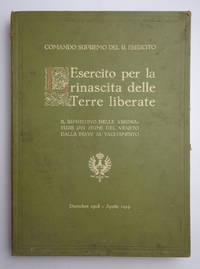
1919034583<p>Bologna: Stabilimento tipo litografico militare 1919. Un volume 235x325 cm di 157 pagine legatura editoriale in tela con titolo e decorazioni al piatto. Legatura un po' allentata con qualche usura al margine e una gora all'angolo posteriore. Margini delle pagine bruniti staccata la pagina di Premessa. Firma di possesso alla pagina bianca. Uno strappo senza perdite alla carta geografica finale. 126 foto in b/n fuori testo una carta idrografica 7 tavole ripiegate 2 grafici e una grande carta ripiegata in fine. Volume non comune e ricercato soprattutto per la storia locale. Peso: 2000 gr.</p> Stabilimento tipo litografico militare hardcover
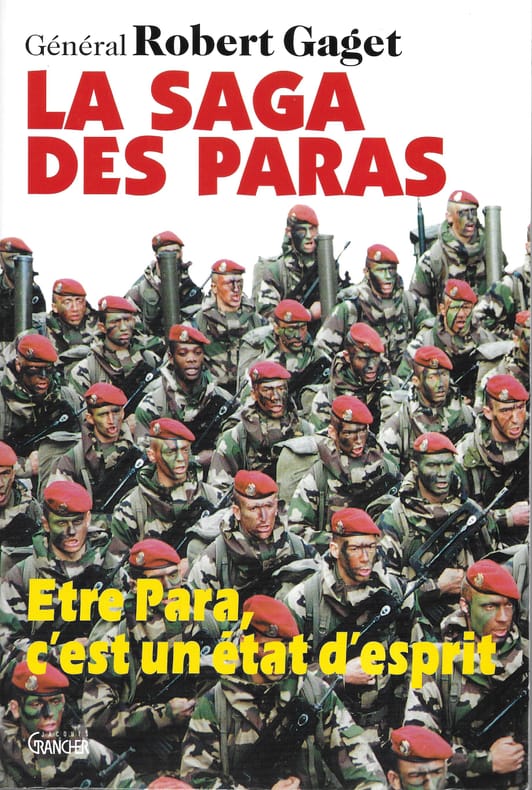
199813193Important ouvrage sur les parachutistes par l'un d'entre eux. Très nombreuses photos. Belle dédicace de l'auteur. Broché sous couverture illustrée Très bon Paris Grancher 1998 1 volume in-8°
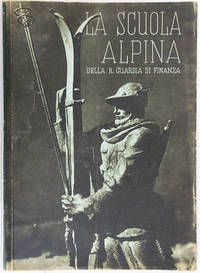
194112024Milan Italy: Luigi Alfieri 1941. Soft cover. Good. La Scuola Alpina. Della R. Guardia Di Finanza. Predazzo 1921-1941. A Cura Del Commando Generale. Soft cover publication in good condition. Numerous black and white photographs of military personnel in training in the mountains and ski slopes. <br/> <br/> Luigi Alfieri paperback
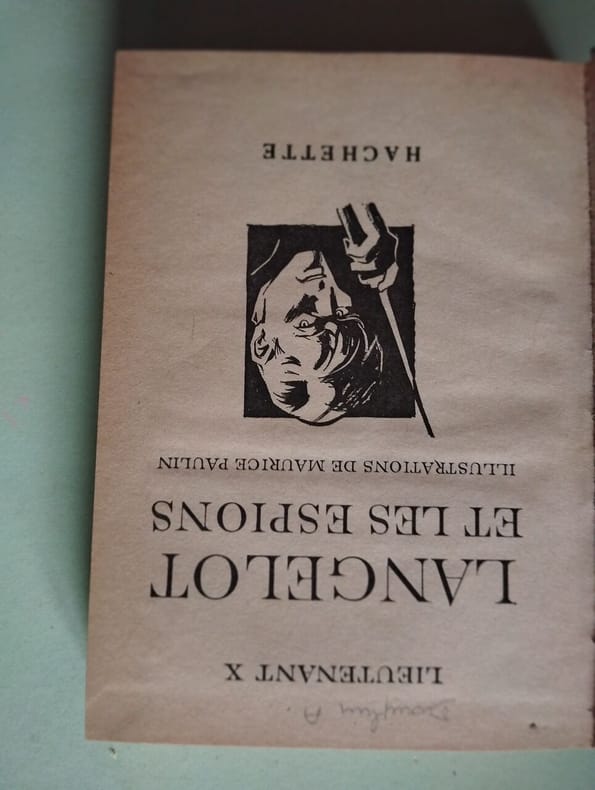
1977500330810HACHETTE Bibliothèque Verte 1977 1977. Langelot et les espions est le deuxième roman de la série Langelot écrite par le Lieutenant X (Vladimir Volkoff). L'histoire suit le sous-lieutenant Langelot 18 ans membre d'un commando chargé de protéger (ou d'enlever préventivement) un spécialiste français des fusées cosmiques 'Monsieur Propergol' menacé par des espions étrangers. Au sein de l'opération Langelot apparemment le membre le moins important voit ses camarades plus expérimentés être éliminés un par un par les services adverses
19601113301960 Editions France-Empire - 1960 - Petit in-8, broché, sous jaquette illustrée - 293 p. - Rares reproductions photographiques hors-texte en N&B
199331837Metz Éditions Serpenoise 1993 In 8 Collection "Lorraine en guerre " - Envoi signé de l'auteur - 370 pp + 1 ff table des matières
1985100151779F/EMPIRE 1985 in8. 1985. Broché. Cet ouvrage de Norbert Hugedé relate la prise du pont Pégase un petit pont sur le canal de Caen lors du débarquement allié du 5 juin 1944. Le récit vivant et fidèle à la vérité historique plonge le lecteur dans l'attente les combats le courage et la peur des protagonistes. Il s'agit d'une réédition numérique d'un livre paru au XXe siècle
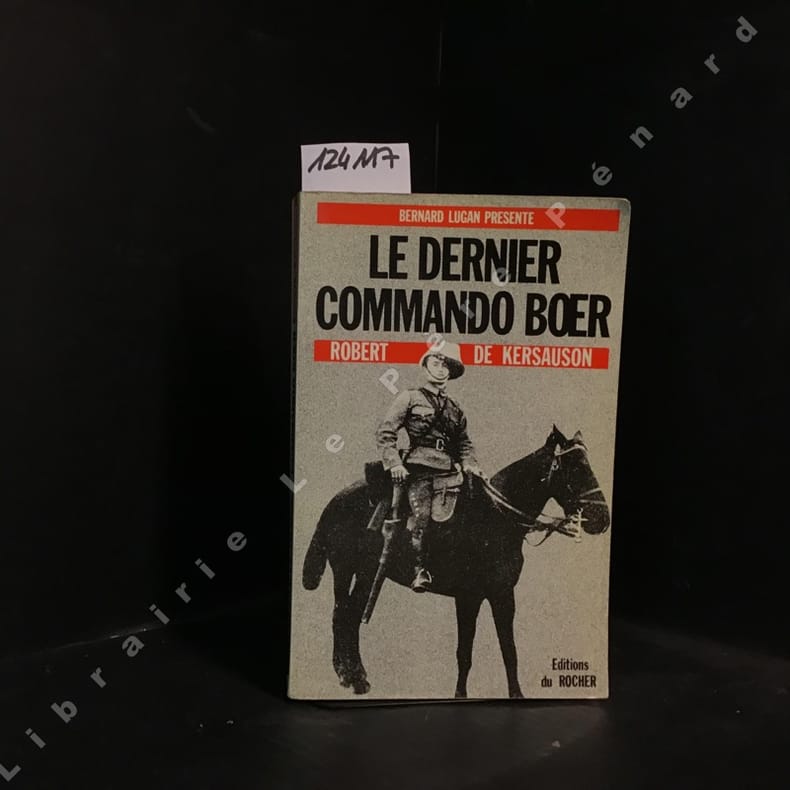
19891241171989 Editions du ROCHER, collection "Aventure et Aventuriers" - 1989 - In-8, broché, couverture illustrée - 316 pages - Illustrations hors-texte - Représentations cartographiques en N&B hors-texte - Cahier photographique en N&B au centre de l'ouvrage.
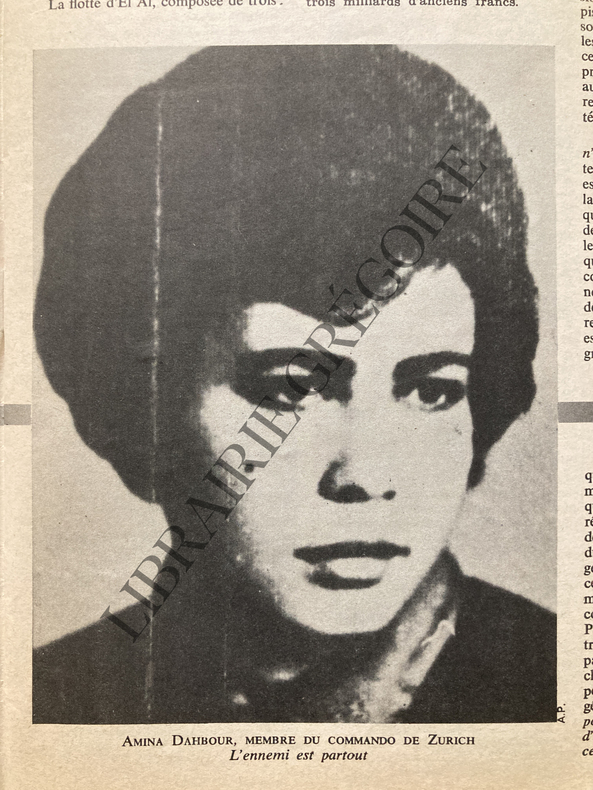
1969ABE-1702388132917FORMAT 27 CM X 35 CM-56 PAGES-ENTRETIEN DE MICHEL ROCARD A PROPOS DU REFERENDUM DU 27 AVRIL 1969 SUR LA REFORME REGIONALE, 2P-UN ETUDIANT NOMME CLAUDE KRIEF, 1P-GREVES A LA FACULTE DE NANTERRE; GREVE DE LA FAIM DE QUATORZE ENSEIGNANTS, 2P-TELECOMMUNICATIONS PAR SATELLITES; LE CIEL PARLERA L'AMERICAIN, 1P-PROCHE ORIENT: LA "DISSIDENCE SAUVAGE" DES PALESTINIENS DU F.P.L.P. 1P-ISRAEL FACE AU TERRORISME AERIEN, 1P-CHINE: L'AN PROCHAIN A VARSOVIE, 1/2P-I.B.M.: BATAILLE POUR UN GATEAU, 1P-FRANCIS ET ALINE FOURQUET, LES ENFANTS DE L'INJUSTICE, 8P-AFFAIRE JEAN MARIE DEVEAUX; UN "COUPABLE" SUR MESURE, 2P-CULTURE: L'ENFER DE LA BIBLIOTHEQUE NATIONALE, 3P-POESIE: DES MILLIARDS DE POETES, PAR CLAUDE ROY, 2P-UN CHEF DE CHARME; NOMINATION D'HERBERT VON KARAJAN AU POSTE DE CONSEILLER MUSICAL DE L'ORCHESTRE DE PARIS, 1P
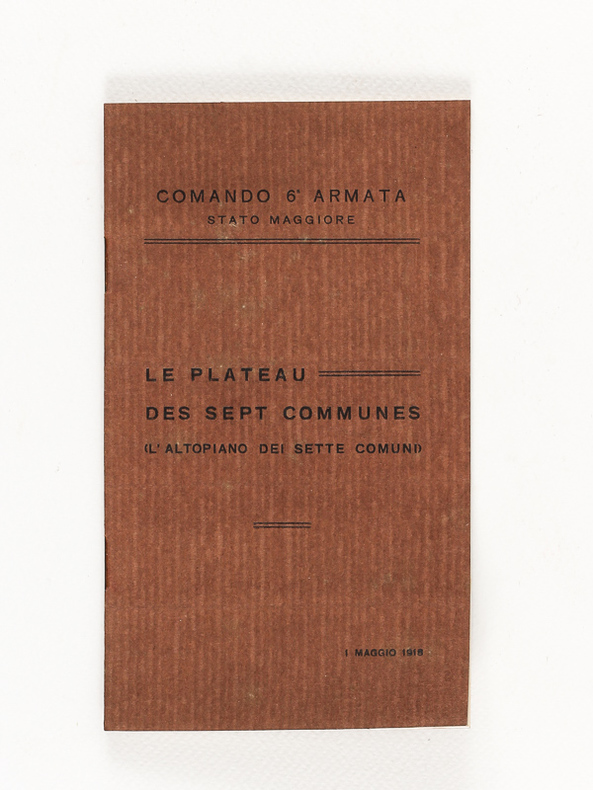
1918477681 brochure in-8 agrafée, Comando 6e Armata, Stato Maggiore, 1 Maggio 1918, 15 pp.
1973115641973. Paris Nouvelles Editions Latines 1973 - Broché 13 5 cm x 18 cm 189 pages photos hors-texte du fim tirées du livre : « Les Déracinés » - Texte de Richard Marillier envoi de l'auteur - Cachet de l'ancien propriétaire bon état
1964101027Paris, Collection “Action” 1964 In-8 21 x 13,5 cm. Broché, couverture crème, jaquette blanche, titre en rouge sur le dos et le premier plat illustré, 249 pp., table des matières. Une déchirure en tête de jaquette, sinon exemplaire en bon état.
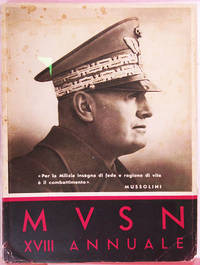
194112019Rome Italy.: Instituto Grafica Tiberino 1941. Soft cover. Good. M.V.S.N. XVII ANNUALE. Commando Generale M.V.S.N. Large format 24 x 33cm soft cover yearbook of the MVSN. 1940 the 18th year of the Fascist Era. Good condition. Illustrated soft cover no pagination numerous photographs and illustrations of the Fascist combat units and of their leader Benito Mussolini. The Milizia Voluntaria per la Securezza Nazionale was established as the squadristi in 1919 consisting of around 20000 disgruntled former soldiers by the time of Mussolini's March on Rome in 1922. On 1st February 1923 they became the MVSN and reached a total strength in excess of 300000. Members of the MVSN were more commonly known as the "Blackshirts" and although originally envisioned as reformers their methods became harsher as Mussolini's power grew and they used violence intimidation and murder against Mussolini's opponents. One of their distinctive techniques was the force feeding of castor oil often laced with petrol. The ethos and sometimes the uniform were later copied by others who shared Mussolini's political ideas including Adolf Hitler in Nazi Germany who issued brown uniforms to the SA and black uniforms to the SS. The MVSN was disbanded following the Italian Armistice in 1943. Quite scarce in any condition. <br/> <br/> Instituto Grafica Tiberino paperback
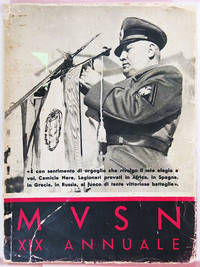
194212022Rome Italy.: Instituto Grafica Tiberino 1942. Soft cover. Good. M.V.S.N. XIX ANNUALE. Commando Generale M.V.S.N. Large format 24 x 33cm soft cover yearbook of the MVSN. 1941 the 19th year of the Fascist Era. Fair condition. Illustrated soft cover no pagination numerous photographs and illustrations of the Fascist combat units and of their leader Benito Mussolini. The Milizia Voluntaria per la Securezza Nazionale was established as the squadristi in 1919 consisting of around 20000 disgruntled former soldiers by the time of Mussolini's March on Rome in 1922. On 1st February 1923 they became the MVSN and reached a total strength in excess of 300000. Members of the MVSN were more commonly known as the "Blackshirts" and although originally envisioned as reformers their methods became harsher as Mussolini's power grew and they used violence intimidation and murder against Mussolini's opponents. One of their distinctive techniques was the force feeding of castor oil often laced with petrol. The ethos and sometimes the uniform were later copied by others who shared Mussolini's political ideas including Adolf Hitler in Nazi Germany who issued brown uniforms to the SA and black uniforms to the SS. The MVSN was disbanded following the Italian Armistice in 1943. Quite scarce in any condition. <br/> <br/> Instituto Grafica Tiberino paperback
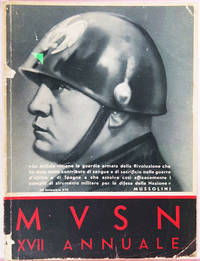
194012017Rome Italy.: Instituto Grafica Tiberino 1940. Soft cover. Good. M.V.S.N. XVII ANNUALE. Commando Generale M.V.S.N. Large format 24 x 33cm soft cover yearbook of the MVSN. 1939 the 17th year of the Fascist Era. Good condition. Illustrated soft cover no pagination numerous photographs and illustrations of the Fascist combat units and of their leader Benito Mussolini. The Milizia Voluntaria per la Securezza Nazionale was established as the squadristi in 1919 consisting of around 20000 disgruntled former soldiers by the time of Mussolini's March on Rome in 1922. On 1st February 1923 they became the MVSN and reached a total strength in excess of 300000. Members of the MVSN were more commonly known as the "Blackshirts" and although originally envisioned as reformers their methods became harsher as Mussolini's power grew and they used violence intimidation and murder against Mussolini's opponents. One of their distinctive techniques was the force feeding of castor oil often laced with petrol. The ethos and sometimes the uniform were later copied by others who shared Mussolini's political ideas including Adolf Hitler in Nazi Germany who issued brown uniforms to the SA and black uniforms to the SS. The MVSN was disbanded following the Italian Armistice in 1943. Quite scarce in any condition. <br/> <br/> Instituto Grafica Tiberino paperback