1 314 résultats
181154628E-172: Longman Hurst Rees Orme and Brown. Very Good. 1811. First Edition; First Printing. Hardcover. Leather. 4to. Printed in London for Longman Hurst Rees Orme and Brown Paternoster-Row. 1811. 436 pgs. Fine folding engraved map "of the Interior of Louisiana with a part of New Mexico" and full-page map of ". The Mississippi River from its source to the Mouth of the Missouri." Bound by in full calf leather. Spine has been rebacked with contemporary leather spine and gilt titled spine label. Boards are scuffed and worn with wear present to the edges of the boards. Small name present to the reverse of the front board. Both maps present however the first map has a small piece missing and has been rebacked with linen. Foxing present. Text is free of marks. Binding tight and solid. The first U. S. Government exploration of the American southwest. In 1805 Wilkinson ordered Pike to find the source of the Mississippi River so Pike traveled into the northern Louisiana Territory newly purchased from France. In 1806 Pike led an expedition to the southwestern borders of the land acquired by the United States through the Louisiana Purchase. One of the most important inland travel narratives giving an account of the South-west including the author's description of his earlier journey to explore the headwaters of the Mississippi. The two maps are among the first of the area executed by a government expedition. After Pike returned from this first expedition General Wilkinson almost immediately ordered him to mount a second expedition this time to explore map and find the headwaters of the Arkansas and Red rivers. Additional objectives of this exploratory expedition into the southwestern part of the Louisiana Territory were to evaluate natural resources and establish friendly relations with Native Americans. Beginning July 15 1806 Pike led what became known as the "Pike Expedition". General Wilkinson's son James served as one of his lieutenants although it now seems that Wilkinson planned that the Spanish who controlled Mexico would capture him and his men. Over 100 years later France released official records showing General Wilkinson received personal trade concessions and thus could be labeled a spy for Spain at the time. Sabin 62837; Howes P373 e-172; 8vo 8" - 9" tall . Longman, Hurst, Rees, Orme, and Brown hardcover
193693139ABWiesbaden, Matthias-Grünewald-Verl., 1936. Gr.-8°. Mit 50 Abb. a. Taf., 32 Kartenskizz. i. Text, 1 Übersichtskarte u. 7 Karten a. 1 mehrf. gefalt. Tafel. 14, 536, 1 S. Roter OLwd. m. goldgeprägt. Rt. u. goldgeprägt. Deckelillustr. - Unbedeutend fleckig, gutes Ex.
19252081502111808809Not Available 1925. Soft Cover. Fine. Volume: 1 Not Available paperback
8vo., First Edition, with frontispiece, plates, and maps on japon (many folding and coloured in outline); ivory boards, upper board blocked with regimental crest in gilt, gilt back, gilt top, uncut, covers heavily age-marked and faded else a very good, bright, crisp working copy. Sutcliffe, p.101; White, p.67. SCARCE.
First edition, square 8vo, 87, [1]pp., orig. blue publishers cloth, lettered in silver to upper cover, some minor spots of staining.
8vo., First Edition, with numerous photographs in the text; yellow cloth, gilt back, a near fine copy in unclipped dustwrapper. SIGNED BY AUTHOR AND HORROCKS ON TITLE. Published in Horrocks' concise Famous Regiments series. SIGNED COPIES ARE SCARCE. Sutcliffe, p.226.
8vo., First Edition, with numerous photographs in the text; original series binding of red cloth, gilt back, a near fine copy in unclipped dustwrapper. Published in Hamilton's concise 'Famous Regiments' series. Sutcliffe, p.226.
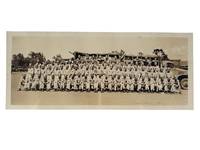
1943217311943. Japanese American soldiers associated with the 442nd Regimental Combat Team appear in these World War II panoramic photographs documenting Nisei military units training in Hawaii during the early stages of the regiment's formation. The 442nd Regimental Combat Team was composed primarily of second generation Japanese Americans who volunteered for military service during World War II while many of their families remained incarcerated in U.S. internment camps following the Executive Order 9066. Organized in 1943 and later deployed to Europe the regiment became one of the most decorated units for its size and length of service in United States military history. These photographs record the logistical and engineering personnel who supported that combat formation capturing the organization of Nisei soldiers stationed at Schofield Barracks during the training period preceding overseas deployment.<br /> <br /> Archive of two panoramic silver gelatin photographs taken outdoors at Schofield Barracks each measuring approximately 19.5 × 8 inches and stamped by Schofield Studio and Supply. Both photographs bear manuscript annotations on the versos identifying the images as taken while the writer served in a "Dump Trk. Co." at the "motor pool" indicating a transportation or engineering support unit attached to the broader 442nd organizational structure. The first photograph depicts approximately ninety Japanese American servicemen posed in uniform before two covered military transport trucks with soldiers seated in the vehicle beds and arranged in rows on the ground. Uniform details include khaki service uniforms garrison caps and visible rank insignia identifying several sergeants and noncommissioned officers seated in the front row. The second panoramic photograph shows a larger company of more than two hundred soldiers assembled on an open field beneath trees and utility poles. A banner marked "H & S" identifies Headquarters and Service Company and the front row includes a small group of white officers seated among the Nisei troops including a commanding officer identified in the caption as "my C.O Lt. Smejkal from Houston."<br /> <br /> These photographs illustrate the organizational structure of Japanese American military units during World War II when Nisei soldiers frequently served in segregated formations led by white officers under prevailing U.S. Army policies. Units associated with the 442nd Regimental Combat Team and related engineer and service companies trained extensively in Hawaii before later deployments connected to major European campaigns. The images therefore document a transitional moment in American military and social history when Japanese Americans sought to demonstrate loyalty to the United States through military service despite the wartime incarceration of their families in camps administered by the War Relocation Authority. Both photographs retain clear detail and legible manuscript annotations. Rolled with scattered foxing and light toning consistent with age; overall condition very good. unknown
1862es2009Providece: Sidney S. Rider 1862. Octavo burgundy cloth hardcover gilt letters 260 pp. Cracked hinges wear to covers; interior clean & tight. Sidney S. Rider, 1862. hardcover
1862es2009Providece: Sidney S. Rider 1862. Octavo burgundy cloth hardcover gilt letters 260 pp. Cracked hinges wear to covers; interior clean & tight. Sidney S. Rider, 1862. hardcover books
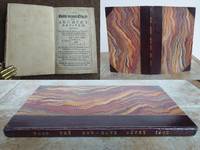
168252208<p>London printed by Samuel Roycroft and are to be sold by Edward Gough at Cow-Cross 1682. TITLE CONTINUED:As by their several gracious Commissions here recited may appear. With a brief Relation of the Manner of the Archers marching on several days of Solemnity. FIRST EDITION 1682. Small slim 8vo approximately 170 x 110 mm 7 x 4½ inches pages: xvi 1-78 lacking last leaf "Post Script" many copies are lacking this leaf pages 1-31 mostly printed in black letter then a new title page "A Remembrance of the Worthy Show and Shooting by the Duke of Shoreditch" followed by roman text bound in 19th century in maroon half roan over marbled boards marbled endpapers with bookplate of Fox Pointe Manor Library on first pastedown. Slight rubbing to binding pale stain affecting the lower inner margins of first 7 leaves including title page tiny repair to blank side of lower edge of title page slight shelf wear to edges and corners 3 corner tips neatly repaired not affecting text small closed tear to 1 margin and top margin of last page both neatly repaired not affecting text some very light soiling and staining to margins a very good copy. See Sotheby's Library of the Earls of Maccclesfield Part 10 page 364 No 3850; Catalogue of The Famous Library of Henry Huth Volume 9 page 2254 No. 8182; ESTC R22583. MORE IMAGES ATTACHED TO THIS LISTING ALL ZOOMABLE FURTHER IMAGES ON REQUEST. POSTAGE AT COST.</p> London, printed by S[amuel] R[oycroft] and are to be sold by Edward Gough at Cow-Cross, 1682. hardcover
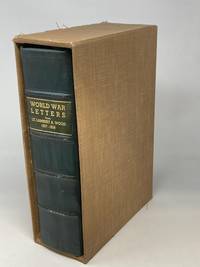
191888062SELF PUBLISHED 1918. Manuscript. Very Good Plus. Half-bound dark green morocco over light brown woven linen. A large sturdy hand-crafted book with sewn signatures 11 3/4 in. x 8 in. x 3 in. housed within a sturdy wooden slipcase covered with woven linen matching the cover of the book itself. Letters envelopes official documents etc.are displayed behind within clear plastic "jackets" each mounted to individual pages of thick card stock. The large tipped in photo shows some spotty residue and the slipcase shows a bit of edgewear.<br /> <br /> The archive consists of 77 detailed letters written by Lieutenant Wood 9th Infantry Regiment 2nd Division who was commanding his machine gun company and was killed during combat July 18 1918 southeast of Soissons France. <br /> <br /> A collection of remarkable letters reflecting an extraordinarily deep and philosophical grasp of both the lofty purpose justification and horrors of war "I am fighting for our very civilization" with none of the details left out "I have seen men die smiling." or "I haven't been out of my clothes for 30 days."<br /> <br /> Roughly half of this notable 77-letter archive are addressed to both parents with some addressed individually to "Mother" "Father" "Dad" and the other half -- 36 letters -- addressed to M____S____ his sweetheart. Woven throughout so many of the letters is Lambert Wood's profound and unstoppable sense of duty and responsibility and consistent view of himself as a crucial component of a much larger grand effort than merely his individual self -- one utterly dependent upon his steady and ferocious all-in participation. Further as an officer he felt his comportment had to be visibly far and above that required of the ordinary soldier - on a number of occasions he mentioned to M____S____ depriving himself of sleep and duly awarded leave - because he felt compelled to set an example -- yet with no trace of egoism or grandstanding; Lambert Wood was fighting the good fight the real fight and coming to realize and mentioning that it was the big brave two-fisted men who were the wons who would win this very tough war. Apparently he had encountered those who were ambivalent about what was required for a war effort.<br /> <br /> In his absolutely devoted deep and very sweet letters to M____S____ he explained both the logistics of his various responsibilities and placements -- instructor in Gas warfare for example -- and seldom neglected to delve deeper into the reasons behind waras if in explaining it to his beloved M____S____ he was also explaining it to himself; the young man was clearly a highly articulate writer who was able - at 22 and 23 - to clearly and convincingly convey the American sense of righteousness against a loathesome enemy. Somewhat alarmingly reading through the letters one sees this soldier-leader's growing -- it must be called "joy" for he himself terms it so in this and other synonymous words in KILLING the enemy the cold and dispassionate"otherizing" which steadily grows to supplant his still youthful and natural 23-year old boyish innocence and permits the taking of human life behind a script of justification.<br /> <br /> Lambert Alexander Wood age 23 was killed in action on July 181918 southeast of Soissons France while in command of his machine gun platoon on a flank movement against an enemy group which was enfilading the advancing infantry line 9th Infantry Regiment 2nd Division.<br /> <br /> Reading through this remarkably articulate archive one follows along the horrific yet fascinating path through the eyes of an educated and perhaps privileged son of Portland Oregon gradually transform into a focused and efficient killing machine a capable and effective instructor and leader of other men who had no choice but becoming the same if they were to survive. Their unit was the first in the actual trenches.<br /> <br /> Wood was the son of Dr. William Lee Wood a physician and Elizabeth Lambert Wood a Northwest author best known for her adventure stories for boys. His grandfather was J.H. Lambert Oregon pioneer horticulturist and originator of the Lambert Cherry. He grew up in Portland Oregon. While attending Willliams College in Massachusetts Wood enrolled in the vollunteer pre-enlistment training program in Plattsburgh New York as part of the "Preparedness" movement before actual U.S. involvement in World War I sailing for France in March of 1917. Note: The soldier Lambert Alexander Wood was the son of Oregon/Washington/Arizona author Elizabeth Lambert Wood. Two books comprising excerpts from these very letters were published and are included with the purchase of this letter-archive: The first entitled HIS JOB: LETTERS WRITTEN BY A 22 YEAR-OLD LIEUTENANT IN THE WORLD WAR TO HIS PARENTS AND OTHERS IN OREGON was published in 1936 by the Metropolitan Press of Portland OR. <br /> <br /> The second which appears to be a reissue but which may contain an edited selection of letters is entitled CERTAIN BRIEF CONCLUSIONS: FROM SELECTED LETTERS OF LAMBERT WOOD was issued by publishers Binfords & Mort Portland OR in 1939 and also printed by the Metropolitan Press in Portland OR. <br /> <br /> This copy includes the tipped-in photograph of Lambert Wood opposite the titlepage and a tipped-in handwritten presentation slip written and signed by his mother Northwest author Elizabeth Lambert Wood "With the compliments of soldier-author's mother. Elizabeth Lambert Wood".<br /> <br /> Wood served with the Machine Gun Company 9th Infantry Regiment 2nd Division. unknown
0656978295.Ghardcover. Good. Access codes and supplements are not guaranteed with used items. May be an ex-library book. hardcover
191022010030038xbvkLeipzig - Berlin, Druck und Verlag von B. G. Teubner, 1910. XXIV, 964 Seiten, 1 ausfaltbare Texttafel 'Symmetrieformeln. . .'; (4) S. Verlagswerbung. - Grüner Original-Leineneinband mit goldgeprägtem Deckel- und Rückentitel; lex.-8vo.(ca. 23 x 18 x 6 cm; ca. 1,5 kg.).
Sm. 8vo., neat contemporary inscription on half-title; original decorative cloth, gilt back, a very good, clean copy
8vo., First Edition, with 4 maps (one double-page); green cloth, upper board lettered and blocked with regimental badge in gilt, gilt back, a near fine copy. An important post-war history covering as it does both the Malayan Emergency and Mau-Mau in Kenya before service with BAOR. Includes honours & awards, casualties and officers. Sutcliffe, p.82.
8vo., First Edition, with 4 maps (one double-page); green cloth, upper board lettered and blocked with regimental badge in gilt, gilt back, a near fine copy. A PRESENTATION COPY FROM THE AUTHOR WITH HIS SIGNED HOLOGRAPH INSCRIPTION ON FRONT PASTE-DOWN. The recipient is Drum-Major Nosworthy. An important post-war history covering as it does both the Malayan Emergency and Mau-Mau in Kenya before service with BAOR. Includes honours & awards, casualties and officers. Sutcliffe, p.82.
Przemysl and the Battles of the Mountains and Rivers. Przemyssl and the Advance of the Great German Phalanx. Photos and illustrations: last moments of the H.M.S. Majestic; A Trench in Flanders; Where the ground bristled with bayonets; the Fongorijski Regiment; Russian troops in full dress; and more. Covers secured by tape. Somewhat above-average wear. Book
Front cover portrait of The King of Italy - Victor Emmanuel III. Italy and the War. Centerfold features illustrations of Italians in action. The Battles of Hooge, Rouges Bancs, and Festubert. Photos and Illustrations: life in the trench; full-page portrait of General Count Luigi Cadorna, Italian Commander-in-chief; Italy's famous soldier-mountaineers - the Alpini; photos from Italy; the 81st Italian Regiment; and more. Covers secured by tape. Faint ink stamp to front cover. Book
Pages 113-140. Contains the conclusion of Chapter VIII and the first part of Chapter IV entitled "The German Host Falls on Belgium. Over fifty war illustrations/photos including: Hard-fought British retreat in Belgium; British Marines protect Ostend; Heroic defenders of Belgium; Germans in Liege; Belgium's King Albert on horseback; Antwerp defenses; Belgian lancers; German spy caught in Montreal; Zepellin bombardment of Antwerp in defiance of the Hague Convention; Centerfold illustrations of the British navy and its leaders; German cavalry raiders in canvas boats; French Cavalry moving to Namur; Indian troops for Europe; Sikh regiment; American volunteers for the French army on their way to enlist; and more. Sound unmarked copy with somewhat above-average wear. Book
Cover portrait of M. Millerand, the French Minister of War. The French advance toward Lense and the battle of "the Labyrinth". Remarkable camera-picture of a brilliant charge by a regiment of French Zouaves. Full page portrait of General Sir Bruce M. Hamilton, K.C.B., commanding the Sixth Army. Many scenes of destruction in France. Average wear. Covers and centerfold seperated from contents but present. Binding otherwise intact. Unmarked. Sound copy. Please note: this copy does not include the photogravure plate of Lt. Warneford. In its place we include the plate of Rear Admiral The Hon. Horace L.A. Hood, who was lost with his flagship, the Invincible, in the battle of Jutland. This plate originally was issued with part 101 of this series). Book
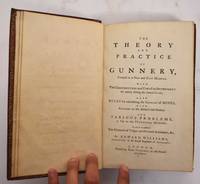
1766177778London: Printed for Paul Vaillant in the Strand 1766. Leather bound. VG soiling but otherwise bright and very clean inside a superb copy. Full red leather with extensive gilt tooled border on both covers all edges gilt marbled endpapers. 5 raised bands with extensive and detailed gilt tooling in the compartments. 8 302 pages 9 unnumbered leaves of plates Tables 1-5 Plates I II III IV. The last four leaves of plates are numbered I-IV. A superb copy of a book rarely encountered either in the trade or at auction. Printed for Paul Vaillant, in the Strand unknown books
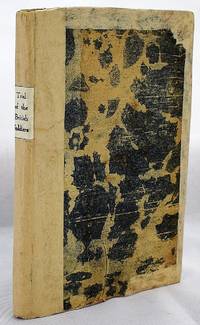
18071812290002Boston: Beecher & Armstrong 1807. Hardcover. Acceptable. Boston Massacre Early American Printing Contemporary boards conserved and rebacked on modern spine. Ink and perforated stamps on title page. 120 p. First published in 1770 under the title: The trial of William Wemms James Hartegan etc. Taken in short hand by John Hodgson. <br> Future President John Adams successfully represented the accused British soldiers in the tumultuous trial. <br> "The trial of the British soldiers of the 29th Regiment of Foot : for the murder of Crispus Attucks Samuel Gray Samuel Maverick James Caldwell and Patrick Carr on Monday evening March 5 1770 before the Honorable Benjamin Lynde John Cushing Peter Oliver and Edmund Trowbridge esquires justices of the Superior court of judicature Court of assize and general gaol delivery held at Boston by adjournment November 27 1770." <br> From the library of Richard Manning Hodges 1827-1896 noted American surgeon Harvard College 1847 Harvard Medical School 1850. Boston: Beecher & Armstrong hardcover
8vo., First Edition, with photographs and maps in the text; riginal pictorial wrappers, a near fine copy. In September 1916 over 200 men of the Herefordshrie Regiment were transferred to 11 Border Regiment to make up for losses on the Somme. Fify-four died at Redan Ridge. Sutcliffe, p. 214.
19105224EBBerlin, Ernst Siegfried Mittler und Sohn, 1910. 8°. 22,5 cm. X, 456 Seiten, 2 Faltkarten. Original-Halbleinenband.