Jomini, General Antoine-HenriBiblio.com
431 résultats
383817139X.Gpaperback. Good. Access codes and supplements are not guaranteed with used items. May be an ex-library book. paperback
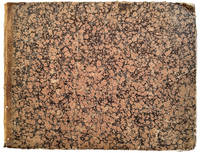
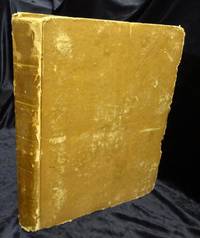
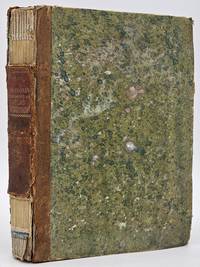
1811S14191Paris: ca.1811. 1811. ATLAS : Oblong folio. Contains 41 engraved plates many folding 13 of which are heightened with hand coloring two with added flaps. Original quarter calf marbled boards dual red gilt-stamped spine labels ; speckled all edges well worn front joint reinforced with kozo rear joint cracked a few white paint speckles dotting the cover. Bookplate of Francisci Carafeae Ducis de Forli et Comitis Policastri Ex libris of Francesco Carafa 1781-1846. The maps are perfectly preserved. Lacks the text volumes. Generally a very good copy. This is the inspiration of Antoine-Henri Jomini in compiling his notable 'Treatise on Major Military Operations and Critical History of the Campaigns of the Revolution.' From my perspective it seems the publication of this work is complicated. Jomini seems to have issued his maps and texts in parts and the remaining extant copies each have different aspects different numbers of plates one stating 42 plates others with variable numbers of maps say up to 29 – clearly incomplete and the history of the texts and how they relate to the issued maps when is all vague. There were at least two editions issued. With the present Atlas there is no date on the title-page however one map shows an 1808 imprint. As the second edition was issued in 1811 this 41-map Atlas could be from that printing or perhaps the earlier. Another issue is dated 1816 also called a 'second' edition thus perhaps issued from 1811-1816 and the volumes of text are as many as 8 or they could be bound in other formats – each should be considered via the publisher's name and the pagination – neither of which are answerable with this assemblage of numbered plates. / Antoine-Henri Jomini was a Swiss military officer who served as a general in French and later in Russian service and one of the most celebrated writers on the Napoleonic art of war. Jomini was largely self-taught in military strategy and his ideas are a staple at military academies the United States Military Academy at West Point being a prominent example; his theories were thought to have affected many officers who later served in the American Civil War. He may have coined the term logistics in his Summary of the Art of War 1838. / In 1798 at time of the establishment of the Helvetic Republic Jomini was an eager revolutionary and an associate of Frederic-Cesar de La Harpe. He soon found a position in the new Swiss government as a secretary for the Minister of War with the rank of captain. In 1799 after being promoted to the rank of major Jomini took responsibility for reorganizing the operations of the ministry. In that capacity he standardized many procedures and used his position "to experiment with organizational systems and strategies". / After the Peace of Luneville in 1801 Jomini returned to Paris where he worked for a military equipment manufacturer. He found the job uninteresting and spent most of his time preparing his first book on military theory: Traite des grandes operations militaires Treatise on Major Military Operations. Michel Ney one of Napoleon's top generals read the book in 1803 and subsidized its publication. The book appeared in several volumes from 1804 to 1810 and was "quickly translated and widely discussed" throughout Europe. / Jomini served in the 1805 campaign by serving on Ney's staff. Jomini fought with Ney at the Battle of Ulm and in December of that year he was offered a commission as a colonel in the French Army. / In 1806 Jomini published his views as to the conduct of the impending war with Prussia. That along with his knowledge of Frederick the Great's campaigns which Jomini had described in the Traite led Napoleon to attach him to his own headquarters. Jomini was present with Napoleon at the Battle of Jena and at the Battle of Eylau where he won the cross of the Legion of Honour. / After the Peace of Tilsit Jomini was made chief of the staff to Ney and as well as a baron. In the Spanish campaign of 1808 his advice was often of the highest value to the marshal but Jomini quarrelled with his chief and he was left almost at the mercy of his numerous enemies especially Louis Alexandre Berthier the emperor's chief of staff. Complete list of maps available on request. PROVENANCE: The Carafa sometimes also referred to as Caraffa or Carrafa are a noble and ancient family of Neapolitan origin descended from the even more ancient Caracciolo family. Divided into numerous branches the main and most important of which are the Carafa della Spina and the Carafa della Stadera and decorated with the highest titles reaching the peak of its power with the election to the papal throne of Gian Pietro Carafa pope with the name of Paul IV. Francesco Carafa Duke of Forlì Count of Policastro last Baron of Pesco Sannita died in 1768. Nobili napoletani. See: 150th anniversary celebration of the life and legacy of General Antoine-Henri Jomini 1779-1869. Washington DC: Embassy of Switzerland in the United States of America 2019. Pavillon Olivier. General Antoine-Henri Jomini 1779-1869. Payerne 1969. Exposition . . . organisee par le Comite du centenaire du general Jomini en collaboration avec la Bibliotheque cantanale et universitaire de Lausanne. [ca.1811]. hardcover
MILI0592Paris Magimel 1811. 4° Tit. 395 S.; Tit. 395 S.; mit einigen mitgez. Falttaf. Ppbd. d. Zt. stark berieben Kanten u. Ecken bestoß. u. tlw. geplatzt Rückenkanten rissig u. tlw. aufgeplatzt ungleicher welliger Schnitt einige altersbed. Stockfl. Exlibris ""CS"" aus der Bibliothek des Fürsten Carl zu Schwarzenberg auf vord. Innendeckel sowie alter Namens- u. Schriftzug auf Innentit. Dieser Teil des wichtigen militärhistorischen Werke behandelt die Felzüge von 1759 bis 1762. Paris, Magimel 1811. unknown
127133aafLeipzig, im October, 1813, in-8vo, 15 S. (+ 1 blanche), unbeschnittenes Exemplar, fester Pappband in Fantaisie-Papier gebunden, vergoldete Initialen ‘JVW’ auf Buchdeckel.
90389aafLausanne, B. Benda, 1886, gr. in-8vo, XXVIII + 322 p. + 5 cartes dépliantes (1 coloriée à la main) + 1 planche dépliante, timbre sur garde, faux-titre et ff. de titre, reliure en demi-cuir originale.
111421aafBruxelles, Chez J.B. Petit Libr.-Éditeur pour l’Art Militaire, 1840, gr. in-4°, oblong, Feuille de titre lithogr. avec vignette + 36 p. à double col. + 1 ff. ‘désignation des cartes’ + 37 cartes, num. de I à XXXVI (avec une carte II BIS, VI & VII sur 1 f. et la carte générale de l’Allemagne sans n° ), dont 19 doubles et 17 simples, traces d’eau au milieu des qqs cartes, reliure en d.-cuir originale plats en papier marbré, pièce de titre en cuir brun au milieu du premier plat. Mouillures.
126775aafBruxelles, Chez J.B. Petit Libraire-Editeur pour l’Art Militaire, 1841, in-folio, Feuille de titre lithogr. avec vignette ‘l’Aigle couronné’ + 2 ff. (table des cartes et plans- + designation des cartes’) + 36 p. de texte à double col. + 37 cartes, num. de I à XXXVI (avec une carte II BIS, VI & VII sur 1 feuille et la carte générale de l’Allemagne sans n°), dont 19 doubles et 17 simples, taches et rousseurs par-ci par-là , généralement un très bon exemplaire, reliure en d.-cuir originale, dos orné or, plats en papier fantaisie d’époque, coiffe sup. avec traces d’usage., reliure en bon état.
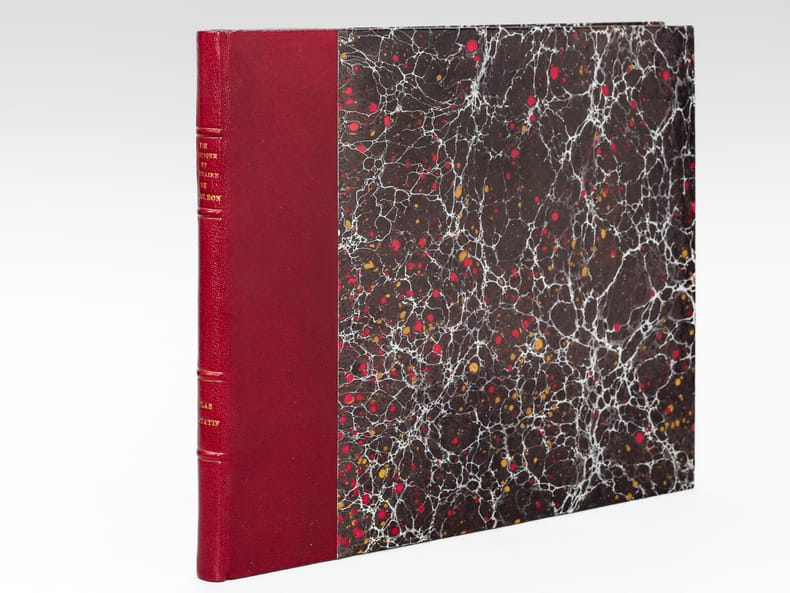
1841681491 vol. petit in-folio oblong (29 x 36,5 cm en reliure) reliure postérieure demi-chagrin maroquiné bordeaux, dos à 5 nerfs, couverture conservée, Librairie Militaire de J.-B. Petit, Bruxelles, 1841, 1 f. (titre) et 36 cartes dont 5 grandes cartes dépliantes (2 cartes générales d'Allemagne, une carte d'une partie de la Prusse et de la Russie, une carte générale d'Espagne et de Portugal et une carte générale de la France), souvent rehaussées en couleurs.
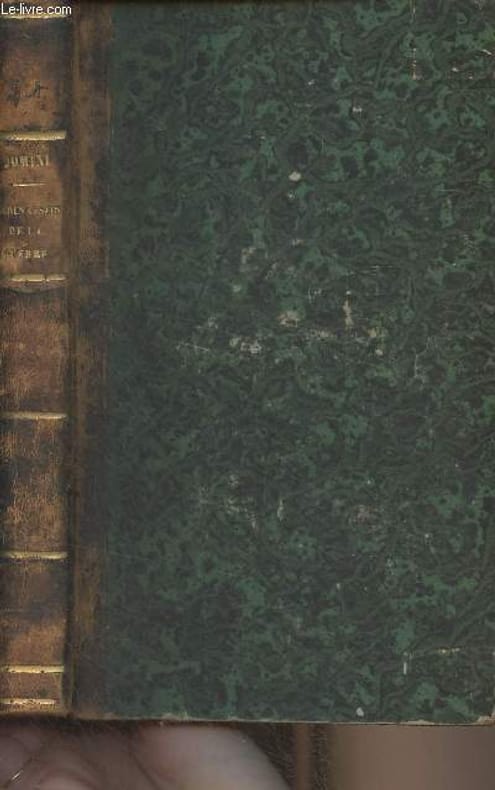
18116287Chez Magimel 13 x 20,5 Paris 1811 Deux volumes in-8, 1811-1816, reliure demi-veau moderne, dos lisse orné de frises et de de fleurons dorés, auteur, titre et tomaison dorés, plats et gardes marbrés, tranches marbrées de l'époque. Volume I: Première partie, Magimel, 1811, deuxième édition, page de titre, 356 p., 3 tableaux d'ordre de bataille dépliants. [1] f. titré " Suite du traité des grandes opérations militaires, tome sixième". Deuxième partie, Magimel, 1811, deuxième édition, page de titre, 245 p., un tableau dépliant. Volume II: Troisième et dernière partie, Magimel, Anselin et Pochard, 1816, deuxième édition, titre, avis de l'éditeur, avertissement II-VIII-709 p. en pagination continue, mais séparée après la p. 336, par une page de faux titre intitulée "Suite du traité des grandes opérations militaires - tome huitième" suivie d'une page de titre, 6 tableaux dépliants. Notre exemplaire, qui constitue un ouvrage distinct, correspond aux tomes 5, 6 (1811) et 7, 8 (1816) de l'ensemble que Jomini avait intitulé en 1807 "Traité des grandes opérations militaires". Les campagnes de 1792-1793 et celles de 1794-1797 sont analysées de manière très didactique. Jomini conceptualise la "guerre moderne" en comparant Frédéric II et le système de guerre de Napoléon. Il trace les lignes de fractures stratégiques provoquées par la Révolution et l'Empire. Le système autrichien de défense "en cordon", de "vouloir tout couvrir", ou l'obsession "des boulangeries" y sont largement critiqués. Jomini démontre l'avantage à concentrer des forces sur une position centrale. L'intérêt de notre exemplaire en deuxième édition est la présence en fin de partie d'une conclusion en 1811 sous forme d'observations générales et d'un "Exposé des principes généraux sur lesquels l'art de la guerre repose" en 1816 (chapitre XL et dernier). Jomini avait rédigé ce chapitre à Posen en 1806. Il avait été imprimé pour la première fois dans une revue allemande en 1807. Jomini y développe treize principes "invariables", qui influencèrent profondément au XIXe siècle la pensée stratégique et les principes de la guerre. Elégante et très belle reliure, intérieur frais, étiquette de la librairie Roumanille (Avignon) au centre du premier contre plat.Très bon exemplaire.(B49)
18116287Chez Magimel 13 x 20,5 Paris 1811 Deux volumes in-8, 1811-1816, reliure demi-veau moderne, dos lisse orné de frises et de de fleurons dorés, auteur, titre et tomaison dorés, plats et gardes marbrés, tranches marbrées de l'époque. Volume I: Première partie, Magimel, 1811, deuxième édition, page de titre, 356 p., 3 tableaux d'ordre de bataille dépliants. [1] f. titré " Suite du traité des grandes opérations militaires, tome sixième". Deuxième partie, Magimel, 1811, deuxième édition, page de titre, 245 p., un tableau dépliant. Volume II: Troisième et dernière partie, Magimel, Anselin et Pochard, 1816, deuxième édition, titre, avis de l'éditeur, avertissement II-VIII-709 p. en pagination continue, mais séparée après la p. 336, par une page de faux titre intitulée "Suite du traité des grandes opérations militaires - tome huitième" suivie d'une page de titre, 6 tableaux dépliants. Notre exemplaire, qui constitue un ouvrage distinct, correspond aux tomes 5, 6 (1811) et 7, 8 (1816) de l'ensemble que Jomini avait intitulé en 1807 "Traité des grandes opérations militaires". Les campagnes de 1792-1793 et celles de 1794-1797 sont analysées de manière très didactique. Jomini conceptualise la "guerre moderne" en comparant Frédéric II et le système de guerre de Napoléon. Il trace les lignes de fractures stratégiques provoquées par la Révolution et l'Empire. Le système autrichien de défense "en cordon", de "vouloir tout couvrir", ou l'obsession "des boulangeries" y sont largement critiqués. Jomini démontre l'avantage à concentrer des forces sur une position centrale. L'intérêt de notre exemplaire en deuxième édition est la présence en fin de partie d'une conclusion en 1811 sous forme d'observations générales et d'un "Exposé des principes généraux sur lesquels l'art de la guerre repose" en 1816 (chapitre XL et dernier). Jomini avait rédigé ce chapitre à Posen en 1806. Il avait été imprimé pour la première fois dans une revue allemande en 1807. Jomini y développe treize principes "invariables", qui influencèrent profondément au XIXe siècle la pensée stratégique et les principes de la guerre. Elégante et très belle reliure, intérieur frais, étiquette de la librairie Roumanille (Avignon) au centre du premier contre plat.Très bon exemplaire.(B49)
19986645Hachette Littératures 11 x 18 Paris 1998 Broché, 439 p. Format livre de poche. Collection "Pluriel". Dos et couverture sans pliure, très bon intérieur. Ex-libris sur la première page.Très bon exemplaire.(C116)
19986645Hachette Littératures 11 x 18 Paris 1998 Broché, 439 p. Format livre de poche. Collection "Pluriel". Dos et couverture sans pliure, très bon intérieur. Ex-libris sur la première page.Très bon exemplaire.(C116)
1246425629.Gpaperback. Good. Access codes and supplements are not guaranteed with used items. May be an ex-library book. paperback
101053548X.Gpaperback. Good. Access codes and supplements are not guaranteed with used items. May be an ex-library book. paperback
0837150140.Ghardcover. Good. Access codes and supplements are not guaranteed with used items. May be an ex-library book. hardcover
3732696057.Gpaperback. Good. Access codes and supplements are not guaranteed with used items. May be an ex-library book. paperback
3842473648.Gpaperback. Good. Access codes and supplements are not guaranteed with used items. May be an ex-library book. paperback
1816357367Paris.: Magimel. 1816. 4to. Hardcover. Contemporary quarter brown calf over marbled boards. Fair. Upper and lower parts of spine missing hinges split maps are all in good condition with some closely trimmed outer margins. 21.5x16.5x3.3 cm. French text. Maps of the major European battles of the Seven Years War and the wars of the French Revolution. Jomini if famous for his “Precis de l'Art de la Guerre†a perennial reference on strategy and logistics. Complete with all maps. weight: 1.3 lb. 29 engraved folding battle plans some with had color. [Magimel]. hardcover
1974.1aaf1871, Blatt 23x32.5 cm. Lithographie aus: Alfr. Hartmann: Gallerie berühmter Schweizer der Neuzeit. Leicht stockfleckig. + 4 S. Text. 1 Blatt.
183059509Paris Anselin 1830. Uncut in original printed wrappers. A corner of upper wrapper gone. Stamp on title-page. X299 pp. 2 large folded engraved plates. Faint dampstain on half-title and title-page. Faint scattered brownspots. Stitching loosening. Wrappers taped to spine. unknown
183059509Paris, Anselin, 1830. Uncut in original printed wrappers. A corner of upper wrapper gone. Stamp on title-page. X,299 pp., 2 large folded engraved plates. Faint dampstain on half-title and title-page. Faint scattered brownspots. Stitching loosening. Wrappers taped to spine.
1830R300325179Chez Anselin. 1830. In-8. Relié demi-cuir. Etat d'usage, Couv. légèrement passée, Dos frotté, Rousseurs. 299 pages. Tampon en pages de titre et de faux titre. Etiquettes collées sur le 1er contreplat. Plats et tranches des plats frottés. Dos cuir à titre, auteur et filets dorés. Accroc sur le cuir du 1er plat.. . . . Classification Dewey : 303.66-Guerre
20096566Edité par Un Demi-Solde 12 x 18 Paris 2009 Broché, 34 p. (Le général Jomini par Ferdinand Lecomte, Lire Jomini par Bruno Colson), suivies du texte de Jomini, LI-216-[2] p. Ces "Souvenirs" furent publiés la première fois par Ferdinand Lecomte en 1891 dans la "Revue militaire suisse", puis en 1892 sous la forme d'un volume édité par la librairie militaire Baudouin et Cie. Le présent ouvrage a été achevé d'imprimer en novembre 2009 et édités à cent exemplaires numérotés, celui-ci portant le numéro 86/100. Exemplaire à l'état quasi neuf.(C22)
20096566Edité par Un Demi-Solde 12 x 18 Paris 2009 Broché, 34 p. (Le général Jomini par Ferdinand Lecomte, Lire Jomini par Bruno Colson), suivies du texte de Jomini, LI-216-[2] p. Ces "Souvenirs" furent publiés la première fois par Ferdinand Lecomte en 1891 dans la "Revue militaire suisse", puis en 1892 sous la forme d'un volume édité par la librairie militaire Baudouin et Cie. Le présent ouvrage a été achevé d'imprimer en novembre 2009 et édités à cent exemplaires numérotés, celui-ci portant le numéro 86/100. Exemplaire à l'état quasi neuf.(C22)