World War IIABAA
580 résultats
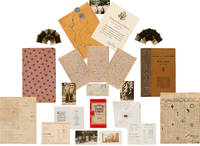
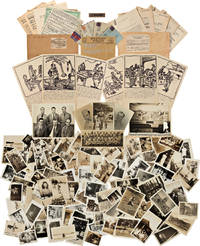
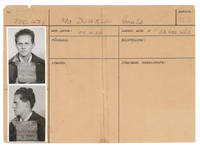
1945264850Krems Austria 1945. 4to and smaller. Some toning overall very good. 4to and smaller. STALAG 17B. Identity documents and ephemera of American Air Force tail gunner Sgt. Gerald McDowell 1923-2002. McDowell and the flight crew of the B17 nicknamed Hell's Belle survived being shot down over Germany in 1943 and were interned at Stalag 17B in Austria. At the war's end the camp guards marched American prisoners west to meet the U.S. Armored Division at Braunau and avoid the Soviet troops occupying eastern Austria. McDowell wrote a memoir of his war experiences A Tail Gunner's Tale 1991. Stalag 17 gained notoriety from the 1953 Hollywood film of the same name staring William Holden.<br/><br/>Comprising:<br/><br/>1. Camp identification document for Gerald McDowell no. 100478 with two photographs side and profile with chalk board identity number. Old fold splt repaired on verso. With corresponding stamped metal badge. Illustrated at p. 114 of his book<br/><br/>2. Broadside: Kgf.-M.-Stammlager XVII B. Teillager der Luftwaffe. Lagerführung. Gneixendorf June 11th 1944. Warning ! 1. Any P.o.W. touching or crossing warning wire during day-time will be fired upon immediately. . Stencil printed signed in ink by "E-" above stencil legend: Hauptmann and 1st Lageroffizier. Old folds. Tipped onto card. Illustrated at p. 90 of his book. Of extreme rarity.<br/><br/>3. BATCH D.B. Pencil portrait of Gerald McDowell Signed and dated lower right D.B. Batch P.O.W. 13/1/45 Krems Austria. 9 x 6 inches. Tipped onto card. Framed.<br/><br/>4. Recipes for "D-Bar Spread" "Chocolate Cream Pudding" "Gallop" and other P.O.W. dishes using D-Bars C-Rations "Jerry" sugar etc. 5 small cards closely written on versos of typed prisoner ID fiches 4 x 2 inches. Tipped onto card. Toned.<br/><br/>with:<br/>5. PHELPER Ben H. Kriegie Memories title from cover. Photographs and handwritten text. 64 pp. Aurora Illinois: Printed by Barker printing Co. 1946. Blue leather grained cloth upper cover titled in gilt. OCLC: 85169189 4 copies. Inscribed by the author on the first blank "Jerry: May you always be free and happy. Good luck Ben". Rare privately printed account of experiences inside Stalag 17B by "Luftgangster No. 113204" with photographs of camp life and of the march towards liberation in May 1945. With a dozen annotations by McDowell usually in red ink indicating himself or other fellow inmates in the photographs including a picture in the "Cardboard Playhouse" of McDowell in a dress captioned in the text "a glamour shot of one of our boy actors . Some of the lads sure did look good when they made up as a girl." Presentation copy of an astonishing illustrated narrative<br/><br/>6. MCDOWELL Gerald. E. A Tail Gunner's Tale. Vantage Press 1991. Review copy as new. unknown books
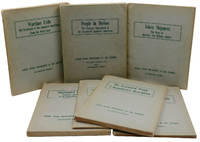
1946140941373Washington D.C.: U.S. Government Printing Office 1946. First Edition. Very Good. First edition first printings. Seven titles: Wartime Exile 167pp.; Impounded People 239pp.; The Relocation Program 105pp; Administrative Highlights of the WRA Program 82pp.; Token Shipment 104pp.; The Evacuated People 200pp.; People in Motion 270pp. Good. Wraps worn some soiled foxed chipped or stained; People in Motion has a long tear to the rear cover. Handwritten titles on spines which are also creased and chipped with loss to spine ends. Pages toned sometimes creased. <p><br /> <br /> Rare documents of the American government's official record of its WWII internment of people of Japanese descent one of the most controversial official programs in American history as reported by the War Relocation Authority. The WRA managed the forced confinement of people of Japanese ancestry in America during World War II as well as their return to civilian life with the commencement of the war. U.S. Government Printing Office unknown books
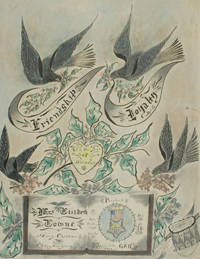
1926List302Massachusetts 1926. Ink on paper 18 ½ x 23 ½ inches. Excellent. Alexander Johnson an African-American musician from New Bedford enlisted in the army at age 16 and was believed for some time to be the first African-American musician in the Union Army. He mustered into mustered into Company "C" of the Massachusetts 54th Infantry under Colonel Shaw. The 54th Massachusetts was the second African-American regiment in the Union army formed only after the 1st Kansas Colored Volunteer Infantry. New Bedford had a large population of escaped slaves and African-Americans from the city enrolled heavily. Johnson had been orphaned at a young age and his adopted father William Henry Johnson strongly advocated for African-American enrollment in the Union army a factor which most likely played a part in the young Alex's enrollment at age sixteen. <br /> <br /> Johnson served in the 54th for the duration of the war including the bloody charge of Fort Wagner on Morris Island on July 18 1863. The 54th lost 272 of its 600 men on that day including Colonel Shaw. Johnson's musical acumen was widely acknowledged and he became known - erroneously it would later turn out - as being the first African-American musician in the Union army. After the conflict ended Johnson settled in Worcester organizing a band called "Johnson's Drum Corps" and instructing young musicians. <br /> <br /> Augustus St. Gaudens famously erected a monument to the 54th at the Massachusetts state house. Johnson visited the monument at a G.A.R. event in 1904 and noted to others in attendance the similarity between his own likeness and that of the drummer boy in St. Gaudens monument. This proved to be pure coincidence as St. Gaudens had based his work on models but the idea persists to this day that Johnson is the drummer boy pictured.<br /> <br /> Johnson painted this memorial to the Ladies of the G.A.R. in 1926 at age seventy-nine four years before his death. The painting shows two birds with banners reading "Friendship" and "Loyalty" over a heart reading "Honor the Boys / of / 1861-1865" with a book open to pages reading "Mrs Elizabeth / Towne / Merry Christmas / and A / Happy New Year" and "President / Of / Gen. / Chas. Deven / Circle / No / 30 / Ladies of the GAR / 1926." Most of his comrades-in-arms were likely dead at this point and we find no record of Elizabeth Towne. A wonderful folk art memorial to the 54th Massachusetts well preserved and attractive in very good condition overall with light normal wear. <br /> <br /> <br /> References: Coddington Ronald. Colonel Shaw's Drummer Boy. New York Times March 5 2013. unknown books
1919WRCAM55901Various locations including Ohio Georgia France Luxembourg Germany and Belgium 1919. Folio manuscript diary 153pp. one printed book and various family papers certificates dog tags photographs and more. In very good condition overall. An important and informative World War I archive belonging to Wilson Kappel of Bolivar Ohio including a phenomenal starkly-written and uncensored diary kept by him throughout his service detailing war deaths mustard gas attacks and the notable Meuse-Argonne offensive near the end of the war. Kappel 1893-1979 served as a mechanic with Company C of the 6th Infantry of the United States Army. He registered for the service on June 5 1917 was drafted in July shipped out to training in October and served until his return from Europe on July 31 1919. Kappel spent significant time in France Luxembourg Belgium and Germany during his service all of which he details here. <br> <br> By far the most significant item in the present archive is Kappel's manuscript diary which covers in amazing detail every aspect of his service from home to Europe and back again. The diary which Kappel titles in manuscript on the first page DIARY OF THE WORLD WAR is large format and closely written for over 150 pages in an eminently readable and uncensored style. It is likely that he either wrote out this diary from notes made during the war or wrote it out from memory shortly after the war. The text conveys a sharpness that immediacy that would likely have been slightly dulled by the passage of time. The diary begins with the line "I registered June 5th 1917" and takes Kappel first to the mobilization camp at Camp Sherman in Chillicothe Ohio and thenceforth to basic training at Camp Forrest in Georgia. Kappel writes in unhurried detail about training on the rifle range in Georgia traveling to Hoboken New Jersey to board a troop ship to Europe and writes extensively about his experiences overseas. <br> <br> Kappel's European diary entries begin with his arrival at the "sorting yards" at Brest France. He continues to various locations in France namely Barsubaube Soulaine Pagny- Sur-Meuse Remiremont and Le Tholy before arriving at the front and the front line trenches near Gerardmer in mid-June of 1918. At the front Kappel and his unit experience their first encounter with enemy shellings and the types of activity faced by soldiers near the front lines: <br> <br> "We all got scared as none of us ever heard a shell before and we thought they were going to hit us but they went way above our heads and went crashing against the hill side we could hear it echo many times. We got orders to lay in the ditch along the road till they stopped shelling. I and Corporal Fox of Massillon was together in the ditch he said to me 'I wish we would be back in Massillon Ohio instead of being in this ditch.' As soon as they stopped shelling we went on again. When we got within about two miles of the front line trenches the Germans must have heard us walk as they had a powerful search light on top of a high hill and they shined that down direct on us for about ten minutes and then it went out again." <br> <br> Kappel spent almost a month at the front where he writes about getting shot at by German snipers cooking clandestinely in the basement of a French church encountering a private who shot off his own finger while on guard duty firing on German patrols encroaching into the American side a strange incident in which a corporal intentionally blew his own hand off with a grenade presumably in order to avoid further service and much more in often astonishing detail. <br> <br> On July 16 Kappel and his unit left the front lines near Gerardmer continuing to St. Die and then arriving again at the front lines this time at St. Claire. On August 15 Kappel and his unit were caught in a mustard gas attack which he recounts in excruciating detail. The Germans in the area "shot over a large number of mustard gas shells all along the front.I and about fifty more soldiers all ran down in a dugout that was gas proof but the gas came in through the cracks of the door and we all had to wear our gas masks for about an hour.The gas was so strong that it got in between our shoes and leggings and many of us got blisters on our ankles." <br> <br> Two days later Kappel participated in the attack on the German border town of Frappell. Kappel writes that "The American barrage started Aug 17th 1918 at three-fifty a.m." and was met with a German response that "killed many Americans." As usual Kappel's recounting of the battle is unusually detailed and affecting ranging over several pages and including meticulous accounts of the horrors of battle. He writes in part: "At one place four American soldiers carried a wounded soldier on a stretcher in a trench. The trench was not wide enough around a corner so they had to lift him up out of the trench. Just as they were doing this a German shell came and killed all five of them." Later he writes: <br> <br> "The first shell that the Germans fired on his headquarters made a direct hit on the closet and was all blown to pieces with several soldiers in it and a few standing out around the building. I was half asleep in my dugout at the time. I had my pack rolled in the morning but I jumped up when the first shell hit. Mechanic White was with me he told me 'It is time to go' we both ran out of our dugout because it was not shell proof and just as we got outside of the door Private Raymond Barmos was rolling his pack. We both jumped over him and that was the last that was ever seen of him. He was blown to pieces a few seconds after we had jumped over him." <br> <br> Kappel's diary continues in much the same manner and with the high level of detail throughout the remainder of the text. He and his unit continue to Pouxeux St. Nicolas St. Christophe Martin Court Saint Mihiel Avirinville Rigny and Verdun. Just north of Verdun Kappel participates in the historic Meuse-Argonne offensive from September to November 1918. Kappel's account of the Meuse-Argonne offensive occupies ten pages of his diary and is typically thorough in relating the specific brutalities heaped upon the young soldiers during the Great War. A few excerpts will relay the flavor of Kappel's narrative of the offensive: <br> <br> "When we started over the top we had to cross a valley this was full of gas. The Captain told us to put on our gas masks. I put my gas mask on quick and started to walk away a German shell came and exploded to the right side of me and a piece of shrapnel went through my gas mask. I pulled my gas mask off quick and walked back a little ways and took a gas mask off a dead American soldier and put that over my face. The Germans were only a few rods away from us. We started to shoot at them they did the same. We killed some and captured a few the rest ran over the hill. We kept going after them the whole day. One German shell came and made a direct hit on Lieutenant Roche of our company. He was blown to little shreds." <br> <br> "The Germans had many barbwire entanglements here. It was a common sight to see from six to ten American soldiers lay on a pile dead. They shot a German spy at this front. He was in the American Artillery and was always shooting short. The Artillery Sergeant killed him with his revolver." <br> <br> "We stayed here for one day and night. We dug our shelter trenches two soldiers for each shelter trench.The bullets were flying thick. We had to stop digging several times and crawl behind the fresh dug grounds for safety. When Private Pike of our company was done digging his little shelter trench he reached up with his hand to tear some weeds off so he could see out better a bullet came and went right through the middle of his hand.From this place when we looked back we could see the canal river railroad and the city of Brieulles. It was nice to watch the German big shells explode. Some would hit right in the river. It would throw the water up about forty feet in the air. Some shells would hit the buildings at Brieulles and tear them all to pieces." <br> <br> "We went past a cabbage patch. We made out that in coming back that we were going to take some cabbage along with us. When we got down into Brandyville the Germans started to bombard the town. I gave the message to an officer. It took him about one hour to write out another message for me to take back. I was looking every minute for the house to get hit by a shell.I finally got my message and we all ran out of town till we got to the cabbage patch. There we stopped. Just as each one of us was going in the patch a big German shell hit right in the center and surely did make the cabbage heads fly. I got one big head and some of the others got two heads a piece. This we took back to our company and at midnight we all had raw cabbage to eat." <br> <br> After the Meuse-Argonne offensive Kappel moved on to Liny Brandeville Louppy Marville and Rehon in France then spent a short time in Luxembourg Belgium and Germany before shipping back to the States. <br> <br> In the final eighteen pages of his diary Kappel records a short history of the USS America; a couple of poems; a detailed list of Army pay with title and monthly pay; a list of Army divisions with enlistments casualties captures wounded and more; a complete roster of Company C from March 1918 "just a few days before we started for France" which includes a list of all the men who were in the unit from March 1918 to March 1919 and what happened to them during the course of the war; a list of divisions to which each unit belonged; and ending with four small color drawings and descriptions of the principal airplane markings belonging to England France the United States and Germany during the war. <br> <br> In addition to his diary the present archive is rounded out with a batch of personal papers and other material kept by Kappel and his family. These additional items include a war-dated letter from Wilson Kappel to his brother Owen sent home from France in September 1918; five early Kappel family photographs showing Wilson and Owen; a printed certificate from President Jimmy Carter honoring Kappel's service sent to Owen after Wilson's death; Kappel's dog tags; twenty-two later small photographic negatives; a Civil War bullet passed down through the family and with a note by William Kappel; a portion of the January 17 1919 issue of STARS AND STRIPES; Kappel's 8th and 9th grade report cards; his address book; Kappel's funeral notice indicating he died on Oct. 22 1979; and a hardcover book entitled THE OFFICIAL HISTORY OF THE FIFTH DIVISION U.S.A. Washington D.C.: The Society of the Fifth Division 1919 with original shipping box addressed to Wilson Kappel. <br> <br> An historically important and uncensored firsthand account of the First World War that reads like an undiscovered classic from the Lost Generation rounded out with a small selection of the soldier's personal war- related material. hardcover books
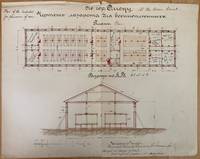
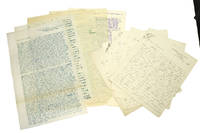
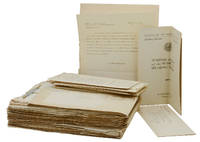
1916List1025Siberia Petrograd et al. 1916. First Edition. Various documents and letters most legal format roughly 200 pages in total with three publications and several newspapers on the subject and thirteen hand drawn architectural plans for a new camp at Omsk measuring between 25 x 17 and 13 x 8 inches. During World War One a staggering number of prisoners - roughly 2.4 of the five million in total who were sent to the Eastern Front - ended up as prisoners of war in Russia. Of that number roughly two million were from Austria-Hungary. Though often neglected by historians due to the attention given to the Russian Civil War and the atrocities of World War Two the subject has drawn increased historical interest with the historian Gerald H. Davis and others calling attention to its importance in the 1980s. Davis and others have written on the relationship between the large prisoner population and the dissolution of their nations as well as the abhorrent conditions many were forced to endure partially due to hierarchical structure of treatment due to differing attitudes by their Russian hosts toward different nations and ethnicities and partially due to the lack of appropriate infrastructure and resources to support such a large prisoner population. <br /> <br /> Offered here are the papers of Herbert H.D. Pierce the Special Aide to Embassador George T. Marye in Petrograd containing a substantial amount of firsthand accounts of prison conditions from the early years of the war as well as a striking series of manuscript architectural plans for a new prison camp that was built in Omsk. Pierce a diplomat who was most famously involved with a case involving seal fishing in the Berings Strait was appointed as a Special Aide out of his retirement and served until his death in 1916. It is possible that he was assigned the task of dealing with the prisoner of war situation as nearly all of his papers that we recovered from his estate from this period deal with the subject. Pierce was involved specifically with the disbursal of relief funds received from the German and Austro-Hungarian governments that were to be disbursed to their citizens. <br /> <br /> The highlight of the collection is a series of hand drawn architectural plans for a series of POW camp structures in Omsk bearing the signature of a N. Alexandrow architect. It is unclear what Pierce's exact relationship was to this project. The plans are translated into English in ink. Of particular interest are the separate officers' barracks plans as one of the violations of POW laws in Russia was the varying levels of treatment given to different prisoners in particular in their recognition of German and Austro-Hungarian ranking officers. There were twenty-eight prison camps in Omsk this one is not identified specifically. The Siberian camps often held up to 35000 prisoners this one shows plans for 10000. There were 128 camps in the Moscow region where camps typically housed 2000-5000 prisoners. The conditions of the camps were generally abysmal with camp capacities routinely exceeded by roughly 50-100%. Frequent disease outbreaks killed thousands of prisoners during the conflict in Omsk Novo-Nikolaevsk Sretensk and Totskoe specifically. <br /> <br /> The group includes letters written to Marye describing conditions in the camps as well as reports of the Americans' own observations in Siberia Moscow and elsewhere. Most are in English though several original documents in German are included. Also included are Pierce's working copies of the Second Hague Convention guidelines of 1907 Order 697 of the War Department that established the regulations regarding prisoners of war in 1914 and a copy of the agreement made between Germany and Russia in August of 1914 which allowed for all women and all men over 45 years and younger than 17 to leave the country unheeded. Some of the letters document violations of this agreement for example a fifty-five year old Austrian man writing to the embassy stating that he had been detained. The authorship of some of the reports is often unclear - one report is credited to "A Russian Lady" another from Krasnaya-Ratchka near Khabaraovsk is an uncredited 18 page description of prisoner conditions. One uncredited report nineteen pages long on the conditions of prisoners in the Moscow Circuit may have been written by Pierce himself and is addressed to Marye. Another 44 page report on Siberian prison conditions is uncredited and likely produced by the embassy itself. A portion - perhaps 25% or so - of the reports are incomplete or unclear in origin though there is much to glean from them regardless. <br /> <br /> Also included are three printed publications. The first is entitled Rapport du Conseiller Prive E.G. Chinkevitch Membre du Comte special de secours aux prisonniers de guerre sur la visite des camps des prissoniers Austro-Hongrois dans l'arrondissement militair d'Omsk printed in 1915. OCLC locates a single copy in France. The report outlines the observed conditions and includes twenty-six photographs of prisoners. The second is a forty-three page report addressed to James Gerard the American ambassador in Berlin by an unidentified author which outlines the prisoner of war conditions in England written in February of 1915. The third is a scarce map of Russian prisoner of war camps printed by L. Friederichsen in Hamburg in 1915 entitled Karte vom Europäischen und Asiatischen Russland mit Angabe der hauptsächlichsten Orte in denen sich Kriegsgefangene und zurückgehaltene Zivilpersonen befinden sowie mit Bestimmungen über den Postverkehr nach diesen Orten. The map shows locations of prison camps throughout the Russian Empire and also shows the mail routes. It is in fine condition overall and we locate six copies in OCLC. <br /> <br /> Overall a scarce survival of primary source material on a somewhat overlooked but important period in Russian history with relevance to diplomatic historians as well worthy of further study. <br /> <br /> Works cited: <br /> <br /> Grekov N. V.: Germanskie i avstriiskie plennye v Sibiri 1914-1917 German and Austrian prisoners in Siberia 1914-1917 in: Vibe P. P. ed.: Nemtsy. Rossiia. Sibir' Germans. Russia. Siberia Omsk 1997 p. 159.<br /> <br /> Nachtigal Reinhard: Seuchen unter militärischer Aufsicht in Rußland. Das Lager Tockoe als Beispiel für die Behandlung der Kriegsgefangenen 1915/16 in: Jahrbücher für Geschichte Osteuropas 48/3 2000 pp. 367-368; Brändström Kriegsgefangenen 1922 pp. 41-48.<br /> <br /> Nachtigal Reinhard; Radauer Lena: Prisoners of War Russian Empire. In: 1914-1918 Online. https://encyclopedia.1914-1918-online.net/article/prisoners_of_war_russian_empire Accessed 5/21. unknown books
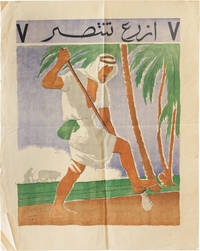
194344248Baghdad: S.i. ca.1943-44. Original illustrated poster offset printed in five colors on beige stock measuring 56.75cm x 72.75cm 22.25" x 28.5". Signed "FAIK H" in plate at lower left corner. Two old folds smoothed out trivial wear to intersection of folds at center with a handful of short marginal tears and attendant creases; unbacked; Very Good. Superb example of this agricultural-themed wartime propaganda poster designed by Iraqi painter Faeq Hassan 1914-1992 widely heralded as "the father of Iraqi modern art." Born poor in Baghdad Hassan showed an early aptitude for art. When he was 12 he visited his uncle a gardener in the royal palace for King Faisal I; when the King saw his drawing of a horse drinking from a river he recognized his talent instantly and offered him a scholarship. Faisal died in 1933 while Hassan was still in high school though his successor King Ghazi carried out his father's will and send him to the École des Beaux-Arts Paris in 1935. After returning from Paris Hassan founded Al-Ruwad The Pioneers Group a group of Iraqi artists who eschewed the traditional studio atmosphere; while engaging with nature and choosing the chronicle the daily realities of Iraqi life through their art the group played a critical role in bridging the gap between heritage and modernity. <br/><br/>Little scholarship exists regarding Hassan's activities or artistic output during World War II though the present example suggests he put his talents to some use creating home front propaganda after the Anglo-Iraqi War. The poster depicts a male laborer in traditional garb digging in a field with a bag of seeds tied at his waist beneath the slogan "If You Plant You Will Win" flanked by twin V's. Despite the traditional Iraqi setting the message is similar in tone to the American propaganda campaign encouraging the populace to plant victory gardens to help the war effort. A notably early work by Hassan and a rare survival with no examples found in the auction record and none found in the holdings of any OCLC member institution. cf."Profile: Faik Hassan." Al Jazeera 30 October 2005. S.i. unknown books
194119803Various Fort Lewis WA and The Pacific Theatre ca. 1941-1944. Four reels of 8mm film stock. Majority color with some black and white. Approximately 800ft. total. Metal reels in two-piece outer cans. Cans with etched titles and dates and mounted labels. Stock clean playback clear. Very good overall. A preliminary digitization of the films is available. <br/><br/>Freshly-discovered 8mm color film footage of World War II service shot by Montana-native Charles W. Hash b. 26 May 1910 d. 26 Feb 1998 of the 41st Infantry Division. Spread across four approximately 200-foot reels of film totaling some 45 mintues the action covers Hash’s stateside training at Fort Lewis and combat duty with the 41st in Australia near Rockhampton Hollandia New Guinea Biak and The Philippines. Highlights include: the immediate aftermath of the Battle of Biak with soldiers walking around the smoldering ruins of bombed villages; ground advancement and rural airstrip scenes of The Philippines with views of period planes nose art and the like; a beach landing and other troop and operations maneuvers; soldiers climbing among the wreckage of several crashed combat planes; intimate and candid footage of fellow soldiers drinking eating cooking bathing and shaving; and extended scenes of Pacific-Island natives. The second of the four reels could be mistaken for more pedestrian tourist scenes of Australia though the remaining three are all of service footage with majority of that in-theater. Throughout Hash displays a strong cinematic eye: filming for example the advance of ships presumably toward action in the Philippines through an unusual vantage point tucked behind a ship’s rope with the sea and ships in a soft focus. He often seems to be constructing scenes and/or directing others to either humorous or in the case of a young Filipino woman alluring effect. And the footage is creatively titled using homemade screens of white pegboard letters laid over a standard G.I. wool blanket to mark dates locations and settings. He was clearly an avid hobbyist with a strong documentarian instinct that belies what must have been his normal day-to-day responsibilities. Hash enlisted in the Army in 1930 served in World War II Korea and Vietnam — earning multiple decorations including the Silver Star for actions in the Papuan Campaign. He was commissioned as a captain during WWII commanding Company H a rifle division of the 163rd Infantry Regiment of the Montana National Guard. He later commanded the entire Army Reserve Forces of Northern California and retired a Colonel in 1965. Despite his clear interest and skill we find no evidence that Hash was officially involved in film at any point in his long and distinguished military career. Therefore the footage here offered represents an unfiltered vernacular look into the daily lives of ordinary combat soldiers. This is especially noteworthy because strict censorship regarding photography was in place during the War. And while many GIs captured snapshots of combat and wartime service only a handful of similar moving picture footage is known. A motion picture camera would have been much more difficult to conceal than a standard film camera though Hash’s advanced rank perhaps made this less of an issue and shooting in color would have been both prohibitively expensive and techincally difficult for most soldiers of the era. Indeed it wasn't until the 1990s when dramatic 16mm European Theatre footage shot by Hollywood director-turned-G.I. George Stevens was discovered that color film of the war by Allied forces was even known to exist this footage was later condensed into a short documentary GEORGE STEVENS: D-DAY TO BERLIN. Since then several troves of official color footage have emerged. The National Archives holds thousands of reels of news and officially captured footage of the War much of it mined for the recent epic documentaries THE SECOND WORLD WAR IN COLOUR 1999 and THE WAR 2007. And in 2016 the Marine Corp unearthed and subsequently donated a large collection of sanctioned color war films to the University of South Carolina for preservation. Nevertheless primary soldier-level film is almost unheard of. Indeed at the time Stevens' was thought to be the only soldier-shot wartime color footage known; and only a handful of later discoveries including a trove of German-shot film seem to have surfaced since. As Stevens' son said in the wake of the discovery of his father's footage: "World War II was a black-and-white war. That's how we see it. That's how we saw it. And suddenly to see it in colour it just took on a whole other dimension." Skillfully and intimately captured Hash's footage vividly documents the ground-level reality of wartime soliders in the tropics. Quite possibly the only entirely amateur WWII color footage by an American soldier extant. Rare important and worthy of preservation prominent institutional placement and further study. unknown books
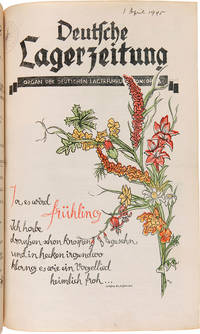
1945WRCAM55330Concordia Ks.: Camp Concordia 1945. Two volumes. Vol. 1: Nos. 34-35 1944 2. Jhrg. Nos. 1-3 6 8-13 1945; Vol. 2: Nos. 1-12 1945. Two-sided sheet laid into Vol. 1 with an essay on peace from Karl Teufel on one side and an anonymous reflection on the German occupation of Holland on the other. Folio. Original three-quarter green cloth and paper-covered boards manuscript title in green on cover of Vol. 1. Minor wear and spotting to covers tidelines to front cover of Vol. 1 stain to upper corner of Vol. 2 reaching corners of about half the pages no text affected. Trimming to lower margins with slight loss of text to a few pages. Tight binding partially obscures inner margin in a few issues. Many issues have purple ink stamp and initials of the camp censor; occasional manuscript annotations including translations. Front free endpaper of Vol. 2 is a dedication page: "To Captain Karl C. Teufel as Souvenir for the Time from June to September 1945 signed Dr. Georg Graf Kesselstatt Editor DER AUSBLICK." Occasional tanning. Very good overall. Collected issues of a German prisoner-of-war camp weekly newspaper which began as NEUE STACHELDRAHT NACHRICHTEN LAGER CONCORDIA NEW BARBED WIRE NEWS CAMP CONCORDIA. With issue number eight in the second year March 11 1945 the title changed to DEUTSCHE LAGERZEITUNG: ORGAN DER DEUTSCHEN LAGERFÜHRUNG CONCORDIA "GERMAN CAMP NEWSPAPER: ORGAN OF THE GERMAN CAMP COMMAND CONCORDIA" likely to align with titles of newspapers at other prisoner-of-war camps. After the war ended the title changed again to DER AUSBLICK: ZEITUNG DER DEUTSCHEN KRIEGSGEFANGENEN LAGER CONCORDIA THE OUTLOOK: NEWSPAPER OF GERMAN PRISONERS OF WAR. This collection contains some two dozen issues from the final years of World War II. <br> <br> The layout and printing of all versions of the newspaper is sophisticated. The title piece of NEUE STACHELDRAHT is hand-designed possibly a linocut featuring an image of a watch tower. The article text was initially produced on a typewriter but the rest of the paper's contents - illustrations maps titles and captions - are all hand-drawn and then reproduced along with the typed content via offset printing. The issues are inconsistently paginated and most articles are unsigned unless reproduced from external sources; translators are sometimes noted. The editorial staff is not mentioned in earlier issues although some articles are signed "Hrg." "Ed.". The issue for April 1 1945 is the first to name an editor "Schriftleitung: Oblt. Walberg". <br> <br> The U.S. agreed to construct P.O.W. camps initially to support the British who were running out of room for prisoners. The U.S. camps grew quickly; by the end of the war there were some 400000 German prisoners held in the U.S. Camp Concordia operated from 1943-1945 and primarily housed German Army prisoners captured in North Africa including Rommel's notorious "Afrika Korps." Concordia was the largest P.O.W. camp in Kansas averaging 4000 prisoners during its operation. The camp's aptly-named assistant executive officer and head of indoctrination Capt. Karl C. Teufel Teufel can mean "devil" in German described the prison population as follows: "For the most part they were members of the crack German Afrika Korps which had fought under Rommel and had nearly won the North African Campaign.No better German soldiers existed anywhere and these men came to this country still proud of their accomplishments still assured of the coming victory of National Socialism over the rest of the World still confident and arrogant in their own strength and fully prepared to make things as difficult for their custodians as safely possible. There were a thousand Officers among them ranging from second lieutenants to Colonels two of whom were later promoted to General rank and hence some of Hitler's best military brains were here also." Healthy enlisted prisoners were required to work mostly on neighboring farms. Non-commissioned officers could only work in supervisory positions and while officers could not be forced to work they could volunteer. All prisoners were paid for their work in scrip which could be spent in the camp canteen or used to buy newspapers like these books and magazines. <br> <br> The first issue in these volumes is the "Christmas Issue" No. 34 December 24 1944 which calls on the prisoners to rebuild their physical strength and mental toughness in order to continue the struggle against the Allies. It also reproduces an article from the Associated Press exaggerating the impact of the V-2 rocket attacks on England. Later articles criticize the Allied bombing of German cities for the loss of German civilian lives and historic buildings. Also included are updates about battles and German military advances. But then there are schedules for Christmas services for both Catholics and Lutherans Christmas hymns and stories announcements of concerts including Rossini and Tchaikovsky updates on camp sports mainly soccer and handball upcoming film screenings and a list of birthdays for the week. Nevertheless keeping the peace in the camps was challenging. One of Capt. Teufel's main jobs at Concordia was weeding out the hardcore Nazis from the merely patriotic soldiers and then relocating them to Camp Alva in Oklahoma a maximum security facility specifically for uncompromising Nazis. This not only served to maintain peace in the camps for the American guards but also kept average German soldiers safe from more extreme soldiers. <br> <br> The newspaper content was inspected and censored before publication. Blatantly pro- Nazi messages were prohibited though oblique references slip in but patriotic sentiment is allowed. Subsequent issues have similar recurring content as in the Christmas issue especially pro-German material such as uplifting passages to stay strong in the "Kampf" and slanted articles highlighting German successes in contrast to Allied laziness and incompetence. For instance in a recurring section "Kultur und Leben" Culture and Life in the issue from January 14 1945 there are several articles on Heinrich von Kleist 1777-1811 a Romantic poet who had been appropriated by the Nazis for his nationalistic leanings. Included is a passage from Kleist: "Was gilt es in diesem Kriege.Eine Gemeinschaft gilt es deren Wurzeln tausendästig einer Eiche gleich in den Boden der Zeit eingreifen; eine Gemeinschaft.in deren Schoss die Götter das Urbild der Menschheit reiner als in irgendeiner aufbewahrt hatten." What is important in this war.It is a community whose roots branch into the soil of time like an oak; a community.in whose lap the gods had kept the archetype of humanity more pure than in any other. The article concludes: "Uns hat dieser Krieg reif und hart gemacht auch für ein letztes Begreifen jener Kleistschen Welt." This war has made us ripe and ready for a final realization of that Kleistian world. <br> <br> There are regular updates from the Pacific front but also a wide variety of general interest articles and stories including: oilfields in the Middle East and the evolving "concession areas" in Saudi Arabia Iran Iraq et al.; German history; the Chinese Civil War; Japanese culture; astronomy historical and contemporary; U.S. politics and history along with feature articles on various states; economics and biographies of important industrialists; health concerns; and reviews of local beers. There are also lists of new books purchased or donated to the camp library on topics from German history to agricultural engineering to quite surprisingly Aaron Copland's WHAT TO LISTEN FOR IN MUSIC in English; and crossword puzzles and other games. <br> <br> The April 15 1945 issue is the first to acknowledge that the Nazis may not in fact be winning the war after all. The cover features the first stanza "Daimon" of Goethe's ominous poem "Urworte Orphisch" Orphic Primal Words: "Wie an dem Tag der Dich der Welt verliehen/Die Sonne stand zum Grusse der Planeten/Bist alsobald und fort und fort gediehen/Nach dem Gesetz wonach Du angetreten./So musst Du sein Dir kannst Du nicht entfliehen/So sagten schon Sibyllen so Propheten;/Und keine Zeit und keine Macht zerstückelt/Geprägte Form die lebend sich entwickelt." As on the day you were granted to the world/The sun stood to greet the planets/You likewise began to thrive forth and forth/Following the law that governed your accession./You must be so you cannot flee yourself/Thus sibyls long ago pronounced thus prophets/And neither time nor any power can dismember/Characteristic form living self-developing. There is no editorial acknowledgement of Germany's occupation but there are several translated excerpts from TIME magazine noting Gen. Lucius Clay's appointment as "der Spitze der Zivilverwaltung" "Head of Civil Administration" for occupied Germany. <br> <br> The final iteration of the camp newspaper DER AUSBLICK: ZEITUNG DER DEUTSCHEN KRIEGSGEFANGENEN LAGER CONCORDIA inlcudes a monthly insert on current affairs entitled QUERSCHNITT CROSS-SECTION along with a less regular insert on arts and culture entitled SYMPOSION SYMPOSIUM. A brief editorial introduction to the new newspaper sets forth a stark assessment of the prisoners' situation: "Wir beurteilen unsere Lage nüchtern und haben nur ein Ziel: alle Kraft so rasch wie möglich unserem deutschen Vaterland zur Verfügung stellen zu können. Wenige in der Heimat werden den kommenden Aufgaben körperlich und geistig so gut gewachsen sein wie wir. Est ist unsere Pflicht unsere Leistungsfähigkeit immer weiter zu steigern.Möge sie dazu beitragen unsere Lagergemeinschaft sachlich und klar zu unterrichten und zum Nachdenken anzuregen." We assess our situation soberly and have only one goal: to be able to provide all our strength as quickly as possible to our German Fatherland. Few at home will be as physically and mentally up to the tasks ahead as we are. Thus it is our duty to keep enhancing our abilities.This paper will help keep our camp community objectively informed and will stimulate thought. The introduction goes on to note that they really do intend to provide objective information without aligning to any particular party. After all: "Denn jeder von uns ganz gleich wie er zur Vergangenheit eingestellt sein mag muss in voller Klarheit erkennen dass das System des Nationalsozialismus mit seiner Staatsform nicht mehr besteht." Because each of us no matter how he feels about the past must recognize with complete clarity that the system of National Socialism no longer exists as a form of government. Not much has changed with the paper otherwise all features about camp life etc. are still included. The QUERSCHNITT features reprinted and translated articles from major publications NEW YORK TIMES MAGAZINE BUSINESS WEEK TIME FOREIGN AFFAIRS et al. but there is very little editorial comment. <br> <br> Interestingly in the June 17 1945 issue of DER AUSBLICK there is a full page letter from the Senior German Spokesman Col. Eduard Waltenberger: "Ich bin überzeugt im Sinne des Lagers zu sprechen wenn ich folgendes festelle: Die durch den vorgeführten Film und die uns vorgelegte amtliche Broschüre belegten Grausamkeiten und Massenmorde in den Konzentrationslagern erfüllen uns mit tiefstem Abscheu gegen jeden der in irgend einer Form schuldhaft an ihnen beteiligt war. Wir sind der Auffassung dass die Täter und ihre Auftraggeber den deutschen Namen auf das schändlichste befleckt und sich für immer aus der Gemeinschaft aller ehrenhaften Deutschen ausgeschlossen haben. Wir deutschen Soldaten des Kriegsgefangenenlagers Concordia haben offen und anständig unter Einsatz des eigenen Lebens für unsere Heimat gekämpft. Weder wir an der Front noch unsere Angehörigen haben gewusst dass gleichzeitig in den deutschen Konzentrationslagern ein Verbrechertum der niedrigsten Art am Werk war. Wir halten es für ein Gebot unserer Soldatenehre zu erklären dass wir mit ihm nichts gemein haben." I am convinced that I speak for the whole camp when I set forth the following: The atrocities and mass murders in the concentration camps documented by the film shown and the official brochure presented to us fill us with the deepest disgust towards anyone who was guilty of them in any form. We are of the opinion that the perpetrators and their associates have stained the German name in the most shameful way and have forever excluded themselves from the community of all honorable Germans. We German soldiers from the Concordia Prisoner of War Camp risked our own lives fighting honorably for our homeland. Neither we on the front line nor our relatives knew that at the same time there was a crime of the lowest kind going on in the German concentration camps. We think it is imperative to our soldier's honor to declare that we have nothing in common with them." There is no mention of Jews however there is an article on mass movements and mass psychosis later in the issue. <br> <br> One month later in the July 15 1945 issue there is a brief article in German and English from Capt. Teufel. Attempting to calm prisoners' anxiety about repatriation timelines Teufel explains that he simply does not know what the repatriation procedure will be: ".it is my opinion that repatriation may not come for many months. This is only a personal opinion and not to be construed as an official statement. The fact that some men are being transferred out of this camp is not proof that they are being repatriated immediately. The fact that you have not been transferred out is equally not an indication that you will be repatriated later than those who have been transferred nor that there is necessarily a prejudice against you." Of course while the war was over in Europe at this point the war in the Pacific continued. The August 5 1945 issue included extended treatment of the Potsdam Conference and Declaration and then the August 12 1945 issue begins with the article "Am Ende des 2. Weltkrieges." At the End of the Second World War. A few pages later there is a brief article inset titled "Heimkehr der PoW" Homecoming of the P.O.W. which begins: "Am letzten Donnerstag gab Unterstaatssekretär im Kriegsministerium Patterson in Washington bekannt die Amerikaner beabsichtigen 400000 deutsche und italienische Kriegsgefangene so bald als praktisch möglich - aus den Vereinigten Staaten nach Europa zurückzuführen." Under- Secretary of State Patterson at the Department of War announced in Washington last Thursday that the Americans intend to return 400000 German and Italian prisoners of war from the United States to Europe as soon as it is practical. <br> <br> The postwar articles tend to focus on rebuilding in Germany and speculation on when the prisoners will finally return but most continue the regular content of reproduced news articles and so forth. However some policy developments have immediate repercussions in the camp. As is usually the case in POW camps the Nazi soldiers continued to wear their uniforms during their detention with American uniform manufacturers providing replacements as time went on. In the August 30 1945 issue there is a brief inset article announcing updates to the uniform regulations: "Durch Verordnung der letzten noch zu Recht bestehenden Deutschen Regierung unter Gross- admiral Dönitz wurde die Einheit von Partei und Staat sowie von Partei und Wehrmacht aufgelöst. Da das mit dem Hakenkreuz versehene Hoheitsabzeichen auf den Uniformstücken kein militärisches Abzeichen sondern das Symbol der Einheit Partei- Wehrmacht darstellt entspricht das Tragen dieses Abzeichens zumindest aber des daran befindlichen Hakenkreuzes weder der entsprechenden Verordnung der letzten Deutchsen Regierung noch den inzwischen eingetretenen Verhältnissen." By decree of the final legitimate German government under Grand Admiral Dönitz the unity of party and state as well as the unity of the party and the armed forces has been dissolved. Since the sovereign swastika is not a military symbol but the symbol of the Wehrmacht Nazi armed forces party unit wearing uniform devices with the swastika on it does not correspond to the decree of the last German government or the current conditions. In the same issue is the announcement that the U.S. government will start returning German P.O.W.s to assist with reconstruction as soon and as quickly as is feasible. However no timeliness are provided. <br> <br> The final issue in this collection as possibly the last one produced is that of September 9 1945. On the first page is an announcement from the editor: "Mit dem Grossteil unserer Kameraden haben von vierzehn ständigen Mitarbeitern des "Ausblick" elf in dieser Woche Concordia verlassen. Die heutige Ausgabe kann daher nur in gekürzter Form gebracht werden." Along with the majority of our comrades eleven out of the fourteen permanent employees of AUSBLICK left Concordia this week. Today's edition can therefore only be published in abbreviated form. Indeed the issue is less than half the size of previous issues. The sole article on the first page is titled "Courage" which means the same in German and English and includes encouraging words about rebuilding a broken Germany. The rest of the issue includes similar articles and updates but with much less flourish as one would expect with a diminished staff. Nevertheless there's one more soccer game announced before all the prisoners departed in October and the camp finally closed in November. <br> <br> This newspaper is rare with most institutional holdings being incomplete and then often only in microfilm. The Deutsche Nationalbibliothek holds almost the same physical copies as found here starting with No. 34 suggesting there may have been additional similar collections assembled. We were unable to identify any complete physical collections with the possible exception of the Kansas Digital Newspapers program at the Kansas Historical Society. OCLC 15160000 84823569 Deutsche Nationalbibliothek 15155315 15155342. Karl C. Teufel "The History of Camp Concordia from Site Survey to Deactivation." Record Group 389 Box 1612 Washington D.C.: National Archives 1945. Mark P. Schock "Bloodied Kansas: Nazi Retribution in a Kansas POW Camp" in FAIRMOUNT FOLIO JOURNAL OF HISTORY Vol. 7 2005: pp.45-56. Kirk Wetters DEMONIC HISTORY: FROM GOETHE TO THE PRESENT Evanston Il.: Northwestern University Press 2014. [Camp Concordia] hardcover books
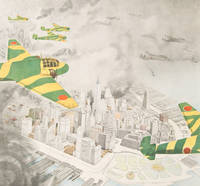
1943260152Tokyo: Dai Nihon Kaiyo Bijutsu Kyokai Greater Japan Pacific Art Association 1943. 35 mounted color plates with captioned tissue-guards. 1 vols. Oblong folio. Publisher's blue cloth boards printed paper label on cover. Fine. 35 mounted color plates with captioned tissue-guards. 1 vols. Oblong folio. The Japanese Bomb Lower Manhattan. "The purpose to publish this book is nothing but to let the people in Japan understand well the bravery and activity of the Japanese Navy. Every picture contained in this book signifies how vigorous and brave our Navy is fighting a desperate battle in the Pacific ." translated from the Preface. An imposing and colorful work of WWII propaganda by Imperial Japan illustrating events both true and wished-for. In the former category are the bombing of Pearl Harbor the sinking of the British Prince of Wales and Repulse at the Battle off Molaya the Japanese occupation of Singapore the Japanese assault on Wake Island showing captured Allied soldiers stripped to their briefs and waving a white flag and the Japanese landing on the Alaskan Aleutian Islands. In the latter category a Japanese plan to attack New York City showing Japanese bombers assaulting lower Manhattan. Dai Nihon Kaiyo Bijutsu Kyokai [Greater Japan Pacific Art Association] unknown books
1901303348VP including Ladysmith Geluk Farm Vluchfontein et al. 1901. Nine ALS three TLS eight carbons. 64 pp in total. Folio & 4to. Very good some tiny chips to carbons and one two spots of minor dampstaining not affecting legibility. In manilla folder. Nine ALS three TLS eight carbons. 64 pp in total. Folio & 4to. FIRST-HAND ACCOUNT OF THE SIEGE OF LADYSMITH. A fine group of letters by an English intelligence officer steadily rising through the ranks. In 1899 he is "sleeping in the open air only one blanket & one waterproof sheet." Within a year he was Lord Roberts' private clerk and in December 1900 he is stationed at the Commander-in-Chief's Office Kitchener's doing "confidential military work for the Military Secretary to Lord Kitchener." <br/><br/>Although part of the intelligence service Carter saw more than his share of fighting. He describes the march to Ladysmith and the action at Elands Laagte Station noting "a bullet going through the top of my helmet and cutting off some of my hair but without even scratching the skin."<br/><br/>The next four letters were written from Ladysmith and provide a full account of the siege. "The Boers had big siege guns mounted on the hills around Ladysmith which quite outclassed our light field guns . They'd completely invested Ladysmith & cut the telegraph lines & pulled up the Railway . Then began the long dreary siege." Carter reports using "a lot of pigeons" and the cost of Kaffir and Zulu runners to get letters out of Ladysmith and at least one of his letters not here was published in the Hamilton Spectator.<br/><br/>The siege is depicted much like a holiday camp citing football matches swimming races water polo cricket. "We got so indifferent to the Boer 'snipers' that you would see most of our chaps having an afternoon siesta behind their trenches while bullets would be chipping the stones around them. We also used to organise pools when we could see some of the Boers and have a long range shooting match the man who bowled the first Boer over taking the pool." Yet there is also much on troops movements information on the Boers the conditions of Ladysmith accounts of engaging the enemy and reflections on the experience of combat: "the actual fighting is all right as the excitement deadens your faculties but after a battle when . you see your poor companions who a few hours before were joking with you lying dead or else writhing in the agonies of pain caused by frightful wounds then you feel your courage leaving you and your nerves getting like wax." <br/><br/>The remaining correspondence includes three letters as Carter's regiment treks across the Transvaal through August and September 1900. These too are full of detail of life in the field bivouacking scouting enemy positions and action: "There was a grand opportunity for our Field Artillery. They simply pumped shrapnel into them the Artillery Officers going mad at the sight and shrieking to the gunners 'fire! fire! hurry up you b----- fools you never had such a chance fire!' . You could see at every discharge of the guns the Boers falling and at the same time our splendid Infantry running for all they were worth trying to get at them with the bayonet . It is very seldom the Boers leave any wounded or dead behind them and it proves how hard we pressed them . It was like a shambles . one two or more bodies horribly mutilated by the effects of the Lyddite."<br/><br/>The final group commences with Carter being stationed at the Commander-in-Chief's office and he wastes no opportunity to use the special mail service for his own correspondence. He describes Kitchener at work and provides insight to life in the office. Yet beneath this is a yearning for the war to end and a frustration that it can't be done in one swift battle: "We cannot get a good fight out of the beggars they simply have a few shots at us and as soon as we get near enough to do some damage off they go helter-skelter." <br/><br/>This group were all addressed to Carter's long time friend we know only by the name of Jose. Given the warmth and detail included here it's possible that he was using these letters as a substitute for a diary. Carter served with some distinction in 1st Manchester Regiment and was mentioned in the despatches. unknown books
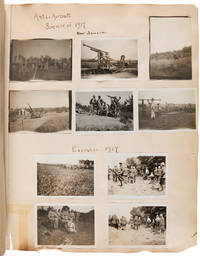
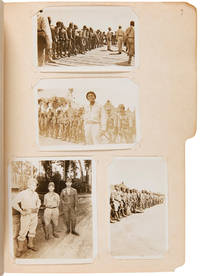
1919WRCAM55818France 1919. Three photograph albums one small framed photograph one small portfolio one book. 1115 photographs most mounted in albums ranging from 1 3/4 x 2 1/2 to 7 1/2 x 5 inches; 162 pieces of ephemera most mounted in albums. Two photograph albums: Folio. Olive green buckram both with burgundy morocco labels on front board and spine with gilt initials "WBO JR" and volume number. Minor wear to extremities some leaves slightly cockled due to photo mounting small chips and closed tears to margins of leaves. Third photograph album: Oblong octavo. Black limp cloth boards with black cord binding. Some wear to extremities some closed tears to leaves a few photographs cut out. Framed photograph: Glass cracked some tarnishing to frame. Portfolio: Tan leather with a snap clasp. Pocket partially torn well worn. Book: Publisher's half red cloth with illustrated paper boards inscription on front free endpaper. Front board and spine starting to detach from text block first few leaves detached but present. The archive in very good condition overall. An engaging and carefully assembled collection of photographs recounting the World War I service of 1st Lt. William B. Olmsted Jr. along with a substantial collection of ephemera and letters described below. The photographs document all aspects of his war service showing the aftermath of important battles American soldiers French soldiers and civilians scenes of the countryside and devastated towns and villages moments of calm and recreation and images in France from the period of the Armistice and in the months after. The ephemera provides a detailed paper record of Olmsted's service in France. <br> <br> William Olmsted Jr. 1893-1948 was born in Southboro Massachusetts. His father the Rev. William B. Olmsted was the Headmaster of Pomfret School in Connecticut. Olmsted was Yale Class of 1915 and also did graduate work at Trinity College. After the war he joined the staff of American Viscose Corporation and was Vice-President in Charge of Sales and a director at the time he died. Olmsted volunteered for the American Field Service formerly the American Ambulance Field Service in France in June 1917 and then enlisted in the American Expeditionary Forces later that year. He attended French Officers' School at Meaux and was commissioned Second Lieutenant in February 1918. Olmsted served in the Réserve Mallet a French army unit made up of American volunteers who transported ammunition and trench equipment and anything else that needed transporting wherever it was most needed. <br> <br> The first olive green album begins with a large page in manuscript recording Olmsted's service in France. The next page has "Volume 1 1917-1919" in manuscript and Olmsted's Registration Certificate i.e. draft card June 1917 affixed below. Photos begin on the following page starting with "Chevigny Farm" in August 1917. Olmsted annotates some photos individually but there are also titles and dates for each section which are grouped geographically but not chronologically. The subjects are wide- ranging - Olmsted's photos feature fellow American and French soldiers including the Army of Africa French civilians scenes of the countryside as well as ruined buildings and landscapes military encampments and cemeteries. There are also photos of airplanes both ready to fly and shot down a gas alarm and a Fourth of July gathering. <br> <br> Many of Olmsted's photos are candid and some can be haunting as well. One set chronicles the devastation following the Battle of Montdidier. Part of the second phase of the larger Battle of Amiens the conclusion of this offensive was later known as "the black day of the German Army" and was a major turning point in the war. Nevertheless hardly a structure is left standing in Olmsted's photos. Happier scenes are featured at La Capelle for the Armistice on November 11 1918 including cars that ferried German delegates there to negotiate the peace. The photos feature German as well as French and American troops. Even after the peace was signed however Olmsted still has much devastation to document. He also includes a series of photos he acquired from German soldiers depicting a funeral for a fallen aviator and German soldiers "at play." At this point Olmsted's combat travels take him to Paris and then this sequence ends. <br> <br> The next series of photos begins with the heading "Trip in Ford. 16 days - Cost of car rent gas oil $137.50." Accompanied by his wife Margaret this is clearly a tourist trip albeit a somber one beginning in Soissons and ending in Argentan. Olmsted includes photos of cathedrals and repairs to cathedrals cafés the American cemetery at Belleau Woods as well as French and German graveyards shots of trenches and forts near Rheims and friends and families he meets along the way. This sequence ends with scenes aboard a ship. <br> <br> The second olive green album "Volume 2 1917-1919" begins with "French Tanks Going into Action." Photos in this album are often annotated but there are fewer locations noted. There are some apparent combat scenes in this album as well as more devastation from shelling and bombing and a short sequence of airplanes including a downed German fighter. A sequence titled "Pictures taken by Capt. F.O. Robinson" finishes the photo section. Robinson's pictures do not vary substantially in form or content but add areas not covered by Olmsted particularly in and around Bazoches. <br> <br> The last two-thirds of this album is titled "Volume 3 1917-1919" and consists of ephemera and letters. It begins with a comic sketch of Olmsted and a cloth insignia of his unit the Réserve Mallet. Then follows all of the official documentation of Olmsted's military service including his commission and promotion and ultimately his discharge papers. Also included are Olmsted's folio sheet-size passport with photograph and a substantial collection of orders leave permissions and other administrative documentation from both French and American forces issued to Olmsted. In the midst of these materials he has mounted his American Field Service Medal and Victory Medal with battle clasps: Somme-Defensive Aisne Montdidier-Noyon Aisne-Marne Somme- Offensive Oise-Aisne Defensive Sector along with an envelope labeled "From Cathedral at Rheims" holding pieces of broken blue glass and a small card wishing him happy new year from the superior and sisters at Crecy-en-Brie. Olmsted also preserved a few watercolors one depicting a soldier possibly Olmsted himself with the sisters at Crecy-en-Brie another of a man in a horse-drawn carriage and a larger one of Olmsted standing next to a monument displaying an American eagle and shield and with a truck in the background. There are several sketches by the same artist included as well. Towards the end Olmsted has mounted his dog tags and two pamphlets about the Réserve Mallet. <br> <br> The smaller black photo album seems to overlap somewhat timewise but features photos primarily in the United States many of which are annotated in white pencil in a hand different from that of Olmsted. It may have been created by his wife Margaret. There are several photos taken in the Bay Area of northern California including the campus of the University of California and Golden Gate Park. Interspersed are photos from an apparent road trip including "Dallas" "New Orleans Docks" "Camp Sheridan" Nebraska and "Montgomery" Alabama. <br> <br> Final material relating to Olmsted's life include a small leather portfolio of clippings of his obituary printed in papers around the country and other ephemera. Among this material is an envelope labeled "Bearers at my funeral." with notes inside from Olmsted on whom he wants to conduct his funeral hymns to be included and so forth; an enveloped labeled "Lily from my Wedding bouquet June 23 1917" and a condolence letter to his widow Margaret. Included loose are a menu from a restaurant in Paris 1917 a portion of a letter on teaching military strategy that begins in code and two documents related to Margaret being named a Chevalier of the Légion d'Honneur by the French government for her work directing overseas activities of the American Aid to France foundation during World War II. Finally there is a well-worn dedication copy of "I WAS THERE": WITH THE YANKS ON THE WESTERN FRONT 1917-1919 by C. Leroy Baldridge New York: G.P. Putnam's Sons 1919 given to the Olmsteds by the commandant of the Réserve Mallet. <br> <br> A truly impressive collection chronicling an American's service in France. hardcover books
194019884Various ca. 1940s. Thirteen brown paper leaves loose from a presumably perished scrapbook holding 57 black and white silver print photographs and dozens of ephemeral articles clippings postcards documents etc. tape-mounted to rectos and versos. Prints ranging in size from approximately 1.5” square to approximately 8” x 10” 42 of the 57 photos approximately 1.5” square contact prints. WITH Two ALS totaling approximately 650 words. Letters good to very good. WITH About 35 pieces of loose ephemera: military correspondence personal clippings and photographs etc. Scrapbook pages worn flaking at edges loose contents often with tape remnants or residue from previous mounting. Contents overall about good. Pearl Harbor letter very good with folds from mailing light toning and a small chip from right margin. <br/><br/>A small archive of World War II service and personal materials belonging to a Gerald Maynard Watkins of Memphis Tennessee highlighted by a monumental Pearl Harbor eyewitness letter written by Watkins to his mother less than 2 weeks after the Japanese attack. <br /> <br />Watkins was stationed at the Kanehoe Naval Air Station on the East side of the island of O’ahu site of the first Japanese attack carried out just minutes prior to Pearl Harbor approximately 30 miles to the West. His approximately 575 word letter of December 20 1941 describes the surprise onslaught in vivid and revealing detail exceprt: <br /> <br />"Then it happened. Never til my dying day will I forget. Bombers. They came from nowhere – Seemed to just be there. I looked up just in time to see them drop their eggs. For one startling second the world stood still as I followed the bombs line of drop with my eyes. I couldn’t help it. Fascinated by it all I watched until thy hit. That broke the spell. Courage – Every man there was a hero. <br /> <br />I rushed over to the hangar after the debris had settled. The first person I saw was Lawrence. He was just lying there kind of white looking and awful still. My throat tightened until it was hard to swallow. I knew he was dead." <br /> <br />This remarkable eyewitness account one of the best pieces of World War II correspondence we’ve seen is certainly the highlight of the group and its remaining contents are largely typical of World War II-era scrapbooks and archival material with several dozen photographs of his later service in the War many from Canton Island airfield in the Pacific with the decorated Patrol Bombing Squadron VPB-52. The balance of contents consist of personal clippings marriage photographs 3 pages seeming to be the fitful beginnings of an attempt at an early draft of a memoir of his Pearl Harbor Day experience and a second wartime ALS written on Christmas Eve 1941 in which he follows up his December 7 experience with a report on a mild injury he suffered during the attack: “Now that I am well and health once more I can tell you this. I had a very small piece of shrapnel from one of the bombs that were dropped here hit me in the shoulder. I didn’t even have to go to bed. I feel like a veteran now.” <br /> <br />Watkins left the Navy in 1946 after six years of service and went on to a career as a commercial airline pilot. His 2006 obituary notes he entered the University of Miami Law School at 67 years old passing the Florida Bar at 70 to become a practicing lawyer in retirement. <br /> <br />A handful of primary written accounts of the Pearl Harbor attack are known notably the diary of George Macartney Hunter whose family privately holds the manuscript but have made it available in multiple venues including for use in the 2003 PBS documentary THE PERILOUS FIGHT. The offering of similar materials in commerce appears to be rare with a significantly less impressive letter by a civilian witness to Pearl Harbor several miles from the battle itself making approximately $1200 nearly tripling its high estimate at a small regional auction in 2011. <br /> <br />A rare thoughtful and exceptionally revealing participant account with important supporting documentation lending additional context of arguably the defining event of the 20th century. unknown books
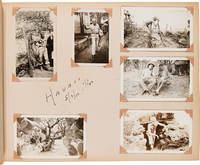
1948WRCAM54508Various places including North Carolina San Francisco but mostly Hawaii 1948. 225 photographs; thirteen photographic negatives; six letters and telegrams; two folders of Brotherton's military paperwork; three original pencil sketches; eight large- format ink and pencil captioned cartoons of the 551st Ordnance H.M. Co.; Brotherton's wife's identification card for Fort McPherson Georgia; a small nameplate for "Lt. Henry Brotherton"; and a Nov. 27 1948 issue of the ARMY TIMES newspaper listing Brotherton as a major under the "Warrant List." Some insect damage to the pencil sketches and one cartoon otherwise generally very good or better condition. A nice collection of material on the wartime experiences of Maj. Henry Alton Brotherton 1920-86 a Warrant Officer from Iredell North Carolina. The numerous photographs feature a variety of settings and subjects. The majority of the photographs emanate from Hawaii showing Brotherton and his wife who apparently joined him at some point after his assignment there either to live for a while or visit other officers and soldiers at work and play studio portraits of Brotherton a handful of 8 x 10-inch press photos and a 4 x 10-inch panorama of the 551th Ordnance Company. Over thirty of the photographs are annotated mostly identifying Brotherton his wife or military subjects in Hawaii in 1945 with three photographs showing the 551st at a "Beer Party." <br> <br> Among the letters and telegrams are a small handwritten note by Brotherton to his wife in North Carolina wishing her congratulations on their wedding anniversary and a Western Union telegram wishing the same dated a day apart from each other; a Dec. 31 1945 telegram from Brotherton to his wife saying that he expects to "be home soon." <br> <br> A Dec. 22 1944 five-page letter from Brotherton's wife Polly includes extremely romantic and borderline racy content from a homefront wife to her husband while he was in training in San Francisco: "My Darling Husband I'm wanting you so terribly much tonight I hardly know how to begin my letter.If I dared put all my emotions on paper this letter would be scorched with passion Brother. I love you I love you I love you!!" <br> <br> The folders of documents include official army service forms rosters reports etc. Notable among the papers are a packet of documents relating to the visit of the President of Mexico to Kansas City in 1947 which Brotherton was tasked with coordinating; a certificate of training for "Mess Management;" a 1946 application for commission in the regular army as well as one for extended active duty; a list of Brotherton's ordnance depot bowling league in which Brotherton is listed near the top with a 163.1 average; and a snarky letter from Brotherton's superior commenting on a traffic citation received by Brotherton: "If all officers had the same attitude as Lt. Brotherton toward parking rules this post would have to have an M.P. on every street and intersection which is neither feasible nor desirable." <br> <br> Perhaps the most notable portion of the archive lies in the nine large black-and- white ink and pencil cartoons on eight sheets. They depict soldiers performing various ordnance tasks on a base presumably somewhere in the central Pacific accompanied by humorous commentary. Six of the cartoons directly reference either the Pacific or California. One cartoon pictures "the men most commonly called as the Bull Gangers who work on the big weapons which give Japs lead poisoning." A few cartoons picture palm trees or reference pineapples. Another cartoon shows two soldiers in conversation with a thought bubble above them showing the Golden Gate Bridge; the caption reads: "I figure that my new tool will speed this war up so fast that we will see the Golden Gate in forty eight." One of the cartoons includes a sign reading: "551st Ord. H. M. Co" Heavy Maintenance Company. These pieces are unsigned so it is unclear if they are Brotherton's work but some of the soldiers depicted are named e.g. Eddie Blackford Mullins and "Big Joe" Galecki. <br> <br> An unusually dense and diverse World War II archive with photographs military documents and original artwork relating to the Pacific Theater of the war. unknown books
1918140941439Washington D.C.: Committee on Public Information Division of Women's War Work 1918. Approximately 450 mostly mimeographed press releases spanning from February 1918 until July that same year many of which are 8.5" x 11" or 14" others of which are newspaper column-size 3" x 21" or varying lengths. Three groupings of the releases are claspbound the rest are loose. Includes Bulletins Nos. 1 & 2 both printed in January 1918 by the Government Printing Office folded in half vertically with reply card. Includes a TLS from Guy Stanton Ford Director of Civic and Educational Publications later President of the University of Minnesota to the President of Rice University. Very Good overall lightly toned with age a little chipped along edges folded horizontally two or three sheets torn in half.<br /> <br /> <p>A collection of pieces attempting to mobilize domestic support for the US in World War I issued by the women's division of the Creel Committee an independent agency in the Wilson administration. The Creel Committee attempted an unprecedented full court press of propaganda aiming to reach every stratum of American society. Many a budding public relations figure cut his teeth in the agency including Edward Bernays and Carl R. Byoir. The particular division from which all these pieces were issued focused on American women: variously promoting the work of journalist Ida Tarbell and the YWCA soliciting women to become Morse code telegraphers spreading anti-German and pro-Ally stories trying to get women of any number of religious denominations or ethnic groups to directly contribute to the war effort. This archive illuminates how American war propagandists saw women at the twilight of WWI. Specifically it reveals how civic participation technology military service and information theory were gendered in mass society-- or at least as observed and molded in that society by a particular body of elites. Committee on Public Information, Division of Women's War Work unknown books
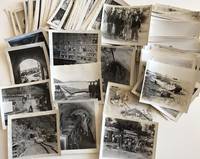
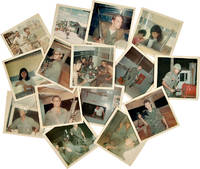
19461299Okinawa 1946. Overall very good. 363 original photographs most 3.25 x 4.5 or 3.75 x 5 inches. Loose photos some curling to approximately half of group. About 200 images neatly removed from previous album or other housing with adhesive remnants on blank versos. Pencil annotations with dates and locations on a substantial minority of photographs. Occasional minor wear some fading to several photos but mostly clean crisp images. A remarkable and large collection of over 360 vernacular photographs taken by an American soldier on Okinawa and several other outlying islands in the Amami and Tokara chains following the final surrender of Japanese forces and the end of World War II. The images present here depict a wide array of subjects including the destruction on Okinawa the building of American military camps cleanup and disarmament of Japanese military installations remnants of local villages and Japanese residents attempting to resume their lives.<br/><br/>One of the most fascinating and extensive series of images present here documents the disarmament and deconstruction of Japanese island military installations carried out by their own soldiers still in uniform. Numerous photographs depict soldiers carrying bombs arms and equipment out of bunkers and other installations being dismantled under the supervision of American forces. Many images incongruously depict American and Japanese officers deep in consultation or mixed groups of enlisted men working or milling about together. Several shots show Japanese soldiers Japanese soldiers posed at stations in the bunkers as if they were still on duty.<br/><br/>A second significant run of images present here depict life such as it was for surviving residents of the islands. Many photographs show rebuilding in progress men and women scavenging materials and farmers working fields and harvesting hay and grasses. Others document aspects of town life -- small gatherings of villagers children playing men returning from a fishing expedition women washing clothes in an irrigation ditch. A few photos show a group of women from the local red light district.<br/><br/>Overall these images give an excellent and detailed view of the situation on the outlying islands of Japan just after the conclusion of the war. The photographer clearly had license or orders to travel fairly widely and his photographs are taken from varied locations on Okinawa and several other islands south of the Japanese mainland including Tokunoshima Amami Oshima and Takarajima. The landscape on these as it appeared in the direct aftermath of the war is extensively documented.<br/><br/>Although the photographer is not identified he is clearly the subject of several portraits posed in front of military airplanes on ships with groups of soldiers and with local Japanese people. The images display a good sense of composition and a keen eye for interesting subject matter and given the access that many of these subjects required it seems clear that the photographer had some training or professional experience and was employed by the military. Nevertheless 170 of the images are clearly his own personal vernacular photography thereby making the scope and extent of this group all the more remarkable. An excellent and sizable group of postwar Pacific photographs and an outstanding visual document of Okinawa soon after one of the bloodiest and most desperate island campaigns of the war. unknown books
1970WRCAM55101Biên Hòa Nha Trang Long Binh and other locations in Vietnam plus Luzon Philippines and Osan South Korea 1970. 469 black-and-white or color photographs measuring between 3 1/2 x 3 1/2 inches and 8 x 10 inches either mounted or laid-in to acetate sleeves almost all annotated in ink on the bottom margin or on the verso. Contemporary three-ring thick quarto-size binder black cloth over boards. Joints partially split some abrading and dust- soiling to covers. Slight fading to some of the color photos. Overall very good. An exceptional vernacular photograph album by a talented but unknown amateur photographer recording a wide variety of experiences on American Air Force bases in South Vietnam and Asia during peak years of the Vietnam War. <br> <br> The photographer was likely a member of the motor pool or a mechanic as the shots seem to center around truck airplane and helicopter maintenance. Most of the photographs capture scenes on or around the various bases with shots both inside and outside of barracks airplanes including several shots of a U2 spy plane bombed-out equipment and numerous photos of the people and structures in the "Vietnamese Area." A few images capture distant shots of the aftermath of a "rocket attack" on December 12 1969; shortly thereafter the photographer and his friends celebrate Christmas. Some of the more interesting photographs during the photographer's time in Vietnam include "VC Prisoners" "Group of Zips" "Papa-San Working His Rice Paddie" "Vietnamese Guard Tower" "Church on the West Side of Biên Hòa" "Refueling at Phan Rang Run" "Bring the Wounded Out" and several pictures labeled "Buddha Hill" likely the Long Son Pagoda in Nha Trang. Notably and for no obvious reason in two separate images the photographer snaps a picture in a magazine of the famous photograph of ThÃÂch Quang Duc the monk who burned himself alive at a busy intersection in Saigon in 1963. Several times the photographer takes a picture of another picture an interesting practice in the context of so many original photographs. <br> <br> A handful of images of the photographer himself can be seen in the album. In a couple of shots he is posed with his pet lizard. Later he and his fellow soldiers adopt a pet monkey who features in several photographs. There are also a healthy amount of aerial images featuring the South Vietnamese landscape notably rice fields villages rivers "bomb craters" and cities among other locations. Also the photographer identifies dozens of fellow soldiers by name throughout the album in both single portraits and in group photos. <br> <br> The album contains numerous shots both black-and-white and in color taken from the crowd and later on the runway during a December 28 1969 U.S.O. show at Long Binh with several images each of Bob Hope Neil Armstrong Connie Stevens Suzanne Charny Teresa Graves Les Brown the Golddiggers and others. One photograph of Neil Armstrong is captioned "Biggest Hit of the Show." This is understandable given the fact that Armstrong landed on the moon just five months before this U.S.O. show. There is also an 8 x 10 photograph of Connie Stevens inscribed to "Ron" either the photographer's first name or an autographed picture he received from a friend. After the U.S.O. show the photographer snaps several closer shots of Bob Hope Connie Stevens and others climbing into cars to leave. <br> <br> In April or May 1970 the photographer was shipped out to Osan Air Base in South Korea. Along the way he spends a couple of days at Clark Air Base in Luzon in the Philippines where he snaps a few shots of the base. By early May he has arrived at the Osan Air Base near Songtan Station in the city of Pyeongtaek South Korea just south of Seoul. He seems to be happy with his appointment at Osan; he captions one photograph "Home Sweet Home" and a few shots of the countryside as "Paradise." Here he also photographs Korean farmers their families villages a marketplace a church a school and other landmarks. The final two images dated in August 1970 show the photographer on an airboat on an unidentified Korean river. <br> <br> Personal photographic records by soldiers in Vietnam are growing ever more scarce in the market. This collection is one of the best we've encountered and most certainly informs the overall record of the war during perhaps its lowest point of public support. hardcover books
1966148795N.p.: N.p. 1966. Collection of 20 vintage borderless photographs from the 1966 film 18 reference photographs and 2 fashion photographs of Rosaleen Murray and Ann Norman. Mimeo snipes on the verso of three of the photographs. <br/><br/>Inspired by the 1959 short story "Las Babas del Diablo" by Julio Cortazar.<br/><br/>Michelangelo Antonioni's first English-language film marking the beginning of the final phase of his work co-produced by companies in Italy the United States and the United Kingdom and featuring an international cast. The director's brash use of color set design non-standard editing techniques and typical emphasis of atmosphere over plot would carry over into the two major films that followed "Zabriskie Point" 1970 and "The Passenger" 1975. <br/><br/>In his 2009 essay on the film Danny Lyon notes "It is apt that through his established style Antonioni made a movie that is perhaps closest to communicating the myth of the swinging Sixties scene but also the confusion of the time. . Britain's new and very chaotic cultural revolution was perhaps most effectively captured by an Italian."<br/><br/>Winner of the Palme d'Or. Nominated for two Academy Awards for Best Director and Best Screenplay.<br/><br/>8 x 10 inches. Lightest edgewear else Near Fine. <br/><br/>Complete collation details available on request.<br/><br/>Criterion Collection 865. Ebert I. Grant UK/Italy. N.p. unknown books
19171993Chicago: Mayhart Studio 1917. Very good. Large panoramic photograph 8 x 90.5 inches. Rolled. Light wear at edges with a couple of small chips and very short closed tears along top edge. minor dust soiling and toning. A fabulous and extremely long panoramic photograph measuring approximately 7.5 feet in length that depicts Camp Bowie in Fort Worth during October 1917. At this time the camp was still under construction but also housed an entire infantry division in training for World War I. Ongoing construction efforts are clearly evident as piles of lumber in various states of organization occupy the field in the center foreground. Already completed barracks and other out buildings occupy the right of the image and thousands of army tents sweep into the background of the center and left portions of the image. A group of standard houses likely for officers and their families is located at the lower left of the image. The photographers Mayhart Studio of Chicago were responsible for a number of military and patriotic views during the United States' involvement in the Great War including the well-known "Living Flag" image of thousands of servicemen composing an American flag.<br/><br/>"Construction of Camp Bowie began on July 18 1917. The camp in the Arlington Heights neighborhood about three miles west of downtown Fort Worth was established by the United States War Department to give training to the Thirty-sixth Infantry Division. Local officials expected financial gain and urged that the camp be located at Fort Worth. Including the adjacent rifle range and trench system the site encompassed 2186 acres. Camp Bowie's greatest average monthly strength was recorded in October 1917 as 30901. For about five months after the departure of the Thirty-sixth for France in July 1918 the camp functioned as an infantry replacement and training facility with monthly population ranging from 4164 to 10527. Shortly after the Armistice on November 11 1918 Camp Bowie was designated a demobilization center. By May 31 1919 it had discharged 31584 men. The heaviest traffic occurred in June when it processed thousands of combat veterans of the Thirty-sixth and Ninetieth Texas-Oklahoma divisions. The demobilization having been concluded Camp Bowie was closed on August 15 1919" -- Handbook of Texas Online.<br/><br/>A quite remarkable photographic document of this short-lived World War I-era army camp in Fort Worth whose grounds and surrounding neighborhood are now touted by the municipal tourism office as "the city's premier commerce corridor." We locate no other examples of this excellent and large panorama. Mayhart Studio unknown books
19171992San Antonio 1917. Very good. Large panoramic photograph 8 x 92 inches. Rolled. Minor wear at edges with one very short closed tear at top edge. Light blemish in negative at center of image. Light dust soiling and toning. An outstanding and extremely long panoramic photograph measuring well over 7.5 feet in length that depicts Camp Travis in San Antonio following its recent opening. Although the camp was open and housing an entire division-in-training at the time of this image the camp was still under construction as evidenced by the organized piles of lumber at the far right of the image and the incomplete barracks building in the center foreground. The panorama nevertheless gives a sense of the scope and size of the training camp with barracks and outbuildings stretching almost as far as the eye can see in the center and left sections of the photograph. Structures are more sparse in the right-hand side of the image both because they as yet unbuilt and because some of the training fields were located in this part of the camp. The photographers Mayhart Studio of Chicago were responsible for a number of military and patriotic views during the United States' involvement in the Great War including the well-known "Living Flag" image of thousands of servicemen composing an American flag. <br/><br/>"On July 15 1917 after its selection as the training site for the Ninetieth Texas-Oklahoma Division of the army Camp Wilson was renamed Camp Travis in honor of Alamo hero William B. Travis. The camp was ready for occupancy on August 25 1917. Additional land was subsequently acquired for vital training facilities and numerous structures were erected by the soldier welfare agencies. Camp Travis comprised 18290 acres of which 5730 were on the main campsite adjoining Fort Sam Houston. The Ninetieth Division was organized at Camp Travis in September and October of 1917. During the summer of 1918 Camp Travis served as an induction and replacement center with an average strength in July of about 34000 White and Black troops. On December 3 Camp Travis was named as a demobilization center. The facility was also designated a local recruiting station and a regional recruit depot in March 1919. Some 62500 troops were discharged at Camp Travis in about eight months. The camp then became the home station of the Second Division. Its service as a separate entity was terminated however upon its absorption by Fort Sam Houston in 1922" -- Handbook of Texas Online.<br/><br/>A quite fascinating view of this enormous World War I-era training camp in San Antonio now a part of the even larger Fort Sam Houston military base on the east side of the city. We locate no other copies of this large and remarkable panorama. unknown books
19141820Various places in Germany mostly Darmstadt as well as England Holland the Atlantic Ocean New York and Allentown 1914. Good plus. 144pp. with ten original photographs and printed document mounted at rear. Quarto commercial journal. Black cloth boards edges dyed red. Spine perished boards attached with amateur tape repairs. Text block solid. Minor offsetting from photographs; a bit of soiling to first leaf; light even tanning. Accomplished for the most part in highly legible hand; approximately 17500 words in total. A remarkable manuscript travel journal that documents the European trip of a 22-year-old Pennsylvania woman its interruption by the outbreak of World War I her subsequent stranding in Germany and her trials in securing passage back to the United States. Anna F. Weil b. about 1892 the daughter of an Allentown grocer John Weil departed New York on June 29 1914 aboard the S.S. Rotterdam a 3400 passenger luxury cruise liner operated by the Holland America Line. She arrived in Rotterdam Germany on July 9th and proceeded to connect with family and sightsee in Germany and the Netherlands with plans to proceed to Switzerland and Germany which were cut short by the declaration of war between Germany and England:<br/><br/>"Wed. July 29. To-day war was declared I have many postal cards written to send to American but was told not to send them as they would not reach their destination so all communication with outside countries is cut off. The harbor is closed and no ships can leave or enter German ports. The English cut the German cable a few days ago before war was declared so now we can't even send a telegram from Germany." p.68<br/><br/>At first the war is present in daily life but still seems some distance from it:<br/><br/>"On Sunday Aug. 23. I saw the first wounded French soldiers saw a wagon full but there were well treated by the Germans and the people expressed pity for them as they were a sad looking party. We were at Frankenstein's Castle a ruin on the mountain which can be seen way in the distance from Darmstadt. It was a very nice ramble through the woods and part of the castle is used as a restaurant where we had some thing to eat and drink before resuming our ramble in and about the castle. When at the top of the town it was nice to look over the tops of the trees over the fields and see the villages and the city away off in the distance." <br/><br/>The reality of the situation however quickly becomes more evident and more pressing:<br/><br/>"Aug. 28. Friday. Received a letter from Angeline dated July the 23d. also one from Frank dated August the 4th. Saw hundreds and hundreds of horses which are taken and sent to battle with the men. Saw many companies leaving it was a beautiful sight to see them march as one man. As they passed through the streets the women came and greeted them and gave them flowers. Horses wagons men every thing was covered with the acorn leaves the German emblem of victory and as the women gave the flowers they were placed among the acorn leaves and so they left their homes families and country with flowers and song and their flags waving high above them. It was a beautiful and inspiring sight to see them go but to think of their return made one's heart grow sad. One company that I saw Company 115 had but 30 men left after the battle the rest were dead or wounded."<br/><br/>Throughout the account her German heritage shapes a favorable view of the Germans in the war:<br/><br/>"In Belgium the Germans were very much ill treated they had to flee the country in 1 hours notice and leave every thing back Elizabeth Buehler and her brother as well as other Germans who were living in Belgium in the city of Antwerp had to flee for their lives and all their belongings were taken from them they arrived in Darmstadt with nothing but what they had on their bodies. When the war first broke out the Russians who were in Germany threw bombs and tried various ways of doing mischief. So all were given a chance to leave and got to their own country. Those who refused and did any mischief were taken into custody and placed under guard until the war is over. Those who did any wrong were sentenced to death were shot. This was at least more human that the way some of the Belgians and Russians treated and mutilated the Germans when they had done no wrong and deserved no punishment. War is war and there are rules which we cannot change and are considered honest in warfare but I don't think it right to torture or mutilate a wounded soldier whether friend or foe."<br/><br/>She remained with family at an estate on Dieburger Strasse in Darmstadt Germany until she was able to secure an emergency passport from the American Consul in Frankfurt on September 15th. The return passage was fraught as Holland America misplaced her reservation the ship was delayed and she was forced to find temporary lodgings in Rotterdam when she arrived on October 1st:<br/><br/>"When we got there the proprietor said all was taken this made the porter cross and he said he would find some kind of place for us but we were not going to take any kind of a make shift so we turned and hurried back to the station the porter took hold of my arm and tried to detain us but I broke loose and Mrs. Kramer and I ran as fast as could when we reached the station we were just in time to catch the other four who were driving away in carriages. The eldest one saw us running and stopped the team and waited for us. We got in and such a time till we found lodgings. Every thing was taken which was due to so many Americans and fleeing Belgians. We succeeded in finding a place at 2.30 am where all six of us stayed. Then there was trouble with the driver and one of the Americans went out and called a police-man and settled the trouble and we retired at 3am."<br/><br/>She eventually landed back in The States after a return trip that saw rough seas and an intense scrutiny of passengers upon landing in New York:<br/><br/>"At Staten Island the doctor came to our ship with a yacht flying the yellow flag. Here we stopped for some time the mail ship came and all mail bags were given over to this ship. Then another yacht crowded with American custom officers arrived on the scene and boarded our ship. Then we all had a hurried lunch as there was no time for supper. All had to go on deck until the dining room was in readiness for the officers. It was dark by this time and the ship under way again. When all was ready we had to stand in line with our yellow tickets. Only a few at a time were allowed to enter the dining-room. When once inside we had to look about for the table bearing the number of our ticket. Here we were interviewed by the officer at that table. Some people had a great deal of trouble and were sent from one table to another. Others were refused admission into the United Sates and some had to go to Ellis Island."<br/><br/>The rear pages of the journal are illustrated by 10 mounted original photographs of her initial journey family some sightseeing and her return passage; also tipped in are her emergency passport and a typed letter from the American consul. Overall the journal is a detailed and eventful original woman's travel manuscript as well as a rich primary record of an American civilian caught in Europe during the outbreak of the Great War. A partial transcription with additional excerpts is available upon request. unknown books
1945WRCAM55788Morotai Bougainville Green Island and other locations in the South Pacific 1945. Three clasp-bound collections of manila folders containing 113 mostly vernacular photographs occasionally captioned in pencil two divisional newsletters copies of Japanese surrender documents and numerous news clippings and assorted ephemera related to the soldier's war experiences. Minor dust-soiling to folders some toning to contents. Overall very good. An informative collection of photographs documents and clippings related to the World War II experiences of the African-American 93rd Infantry Division in the South Pacific. The 93rd Infantry Division was a segregated "colored" unit formed first during World War I and reactivated for service in 1944. The unit was shipped to the Pacific Theater where they served primarily in construction and defensive infrastructure operations. The 93rd occupied Morotai in the Dutch East Indies from April to October 1945 where they witnessed the surrender of the Second Japanese Army. <br> <br> The material in the present collection is organized in three compilations of clasp- bound manila folders with the contents of each compilation annotated in pencil on the front cover. The chief feature of the collection are the 113 photographs arranged thematically throughout the first two folders. <br> <br> Folder One contains photographs and documents pertaining to the Japanese surrender to the division's commander Major General Johnson. There are also photographs showing various Japanese troops surrendering to Australian officers including one of a Japanese officer surrendering to Gen. Thomas Blamey at Australian field headquarters in Morotai. A few photographs emanate from a Japanese hospital ship "taken over by our Div." showing "a few in the hospital." One photograph features an African-American soldier perhaps the compiler of this collection smiling in front of a line of surrendering Japanese soldiers. In the first folder there are also two copies of divisional newsletters: one from the 13th Jungle Air Force; and another titled IGUANA which was the daily newsletter for the 93rd Infantry we could locate no copies of IGUANA in OCLC. Rounding out the first folder are copies of an address on Japanese surrender delivered by Gen. Sir Thomas Blamey to Lieutenant-General Teshima Commander of the Second Japanese Army "On the occasion of the signing of their Surrender Morotai 9th September 1945" and a lithographic copy of the "Instrument of Surrender" between the two combatants. <br> <br> The front cover of Folder Two is titled in pencil "Places and People in the Netherland East Indies and Green Is. in the Northern Solomons and Bougainville." This folder contains images of Australian soldiers in Morotai; numerous pictures of indigenous Morotain people including men women and children; the entrance to the Morotai War Cemetery; photos of the 13th Australian Air Force; overhead images of an active volcano in Bougainville; pictures of Bob Hope Carol Landis a popular Hollywood actress who performed extensively for troops during the war and others on a U.S.O. mission at Bougainville; images of various aircraft including B-29 nose art and Japanese planes; a few pictures of dead Japanese soldiers in Morotai captioned "Good Japs"; photographs featuring the invasion of Morotai; and other images of the South Pacific islands where the compiler was stationed. <br> <br> Folder Three is labeled "Places I've Seen" and is composed of beer labels the compiler collected during his service along with numerous newspaper and magazine clippings memorializing his unit's service. The clippings indicate the compiler also served at Leyte in addition to Morotai Bougainville and Green Island in the Dutch East Indies. <br> <br> An interesting collection of firsthand photographs of an African-American unit's service in the South Pacific during the Second World War. unknown books
194520240The Hague ca. 1945. Hardcover. Near fine. Two oblong 8vo. albums. First album: 11.5" by 9" approx. String-tied faux-alligator boards. 43 gelatin-silver prints majority 3.75" by 2.5" but many 5.5" by 3.25" mounted to stiff gray leaves with cobweb-patterned tissue guards on each and handwritten captions in Dutch. Apparently complete. Near fine with several photos mildly yellowed but majority bright and sharp. <br /> <br />Second album: 13'' by 9'' approx. String-tied grey textured paper boards. 91 gelatin-silver prints of various sizes from 3.75'' by 2.5'' to 5.5'' by 3.25'' most of the latter size on stiff blue paper with tissue guards and handwritten captions in Dutch. Also contains an anti-Hitler card affixed to the front paste-down several cards with art and verse and two sepia-toned photographs on the final page. Two 5'' scuff marks to front board album corners and edges worn and bumped otherwise near fine with bright and sharp photographs. <br/><br/>A pair of carefully assembled albums possibly compiled for official use. The majority of the photos in both albums record the aftermath of a botched Allied bombardment in the Hague on March 3 1945; the attack claimed the lives of 511 civilians and left over 20000 people homeless. Targeted at a German missile base in the occupied Netherlands bombs deployed by the Royal Air Force landed instead in the adjacent Bezuidenhout neighborhood in the Hague destroying thousands of homes business and public buildings. The photos show several bombed-out churches and many apartment buildings with street names captioned underneath. Near the end of the first album three images show the burning of the Schevenigen Pier near the Hague which the compiler blames on the Germans but whose exact cause has never been established. The album forms a direct account of wartime destruction in the Netherlands. <br /> <br />The second album much more extensive includes some of the same material along with many other photographs. Affixed to the front paste-down is a black-bordered satirical memorial card for Hitler reading in Dutch "He came.but not to England / He saw.Moscow / He lost.the war." Beginning with two views of The Hague one in 1930 and one apparently mid-bombardment labeled March 3 1945 it also includes numerous scenes of destroyed buildings and monuments identified by street name. Some of these overlap with images from the first album; many do not. In addition to those showing the aftermath of the bombing several photos show intact monuments and buildings from neighboring cities like Middelburg possibly as a point of comparison with the ones destroyed. A few pages show photographs of various Bailey bridges at unspecified locations and other wartime construction. The final page of uncaptioned photos includes a shot of a pro-Hitler slogan painted in Dutch on a bridge underpass and a photo of several posters including a Dutch advertisement for "De Eeuwige Jood" The Eternal Jew a German propaganda film. A final leaf follows with two pro-R.A.F. cards with verses and drawings and three souvenir cards of Queen Wilhelmina Princess Juliana and her children Beatrix and Irene. The final page has two sepia-toned photos of a parade presumably celebrating the war's end. An important act of witnessing from an unfortunate event. hardcover books
1972WRCAM55575Various places in Vietnam 1972. 145 photographs all but thirteen in color most approximately 3 1/2 x 3 1/2 inches. Majority of photographs mounted on black paper stock with non-archival adhesive tape some photos retain remnants of tape at corners. Some images a bit faded but generally in very good condition. A tremendous collection of photographs depicting the personal life and military service of an unidentified African-American soldier with the last name "Williams" serving in Vietnam during the war and with numerous family photographs at home. The majority of the photographs are undated but those that are dated place the collection roughly between 1968 and 1972. Other identifying characteristics in the photographs indicate that the soldier was likely part of the United States Air Force 93rd Security Police Squadron which provided security and air base defense during the Vietnam War. There is a photograph of Williams leaning against the sign for the 93rd SPS dormitory. <br> <br> Notable in the sixty or more photographs from the soldier's time in Vietnam are images from an unidentified American Air Force base depicting soldiers in the barracks a mess hall and fraternization among soldiers; additional photographs show a heavily-armed Williams manning a bunker holding an EBONY magazine posing with a South Vietnamese soldier in an urban setting and staring strikingly at the camera wearing machine gun ammunition and a hand grenade. A series of thirteen images were taken at "Le Van Loc" a popular Vietnamese night club located on the Tan Son Nhut Air Base near Saigon indicating Williams may have been stationed at or near that base. Personal photographs show individuals of varying ages presumably family members who appear alone or in groups and at times are photographed with Williams. Several of these photographs feature children presumably Williams' at home and at an Elmhurst School function. Williams seems to have been especially proud of his motorcycle as it features in a few shots. <br> <br> A collection of both service and family photographs capturing a young African- American serviceman during the Vietnam War. unknown books
1945WRCAM55773Philippines New Caledonia Guadalcanal New Zealand Hawaii 1945. 213 photographs from 2 3/4 x 2 1/4 to 6 1/2 x 8 1/2 inches corner-mounted; plus twenty-two pieces of ephemera mounted or laid in including two mimeographed pamphlets. Oblong quarto album. Red silk boards blue silk ties with stylized Japanese figure on center of front board. Some fraying to edges and corners some loss to silk on rear board minor soiling. Photographs in excellent condition overall. Very good. A dramatic photograph album from Harvey D. Burgstresser's 1912-83 service in the U.S. Army artillery during World War II. Although most photos are not labeled individually they are labeled by group and track Burgstresser's travels through various combat stations during the war in the Pacific. The first photo labeled "Fayetteville NC" shows Burgstresser on left in uniform with another solider walking along a city street. The first section follows and is labeled "Hawaii 5/7/42-11/1/42" and consists mostly of photographs of soldiers at-ease playing with radio equipment and goofing around likely as they wait for deployment to the front. The next section "Guadalcanal 11/15/42-12/1/43" is short but more somber including photo prints of indigenous people of the island the corpse of a soldier and a photo of a sign posted on a roadside reading: "Kill the Bastards! Down this road marched one of the regiments of the United States Army Knights Serving the Queen of Battles Twenty of their wounded in litters were bayoneted shot and clubbed by the yellow bellies. Kill the Bastards!" <br> <br> Next is a section entitled "Auckland New Zealand 12/1/43-3/1/44" a small and peaceful section featuring photos of couples a few female friends and shots of Burgstresser's battery and company in formation 90th Field Artillery Battalion 25th Infantry Division. From there he was off to "New Caledonia 3/1/44-12/15/44" with a joint force of ANZAC soldiers. Most of these shots are also at- ease and around camp several featuring a truck marked "NZ Mail." From here he moves to "Luzon P.I. 1/9/45 to 10/2/45" the final section and the place where things get a bit more serious; this is also the largest section in the album. Several images show soldiers setting up artillery stations laying wire and organizing ammunition. One image in this section is labeled "V-J Day" and this is the only mention Burgstresser makes about the progress of the war. There are scenes of buildings damaged from war along with a few scenes of combat and more of the aftermath of combat including downed planes and destroyed tanks and several quite explicit images of corpses. In the midst of this are images of Filipino women and men in traditional attire and likely some from New Caledonia and Guadalcanal as well including several shots of topless Filipino women likely not taken by Burgstresser. <br> <br> Various pieces of ephemera are in the album including a twenty-eight-page mimeographed pamphlet entitled WELCOME 25th. INF. DIV. with sections corresponding closely to Burgstresser's arrangement of this album; and a six-page mimeographed pamphlet entitled THE SEA BREEZE "Souvenir Edition" October 23 1945 issued to those aboard the troop ship USAT "Cape Meares." Also included is Burgstresser's military "Motor Vehicle Operator's Permit" authorizing him to drive automobiles large trucks and a "Vehicle wheeled combat;" an invitation to ceremonies honoring General Douglas MacArthur's return to the U.S.; Burgstresser's "Good Conduct Pass" for Auckland; a few newspaper clippings; and pieces of Japanese currency including two pieces of Japanese government- issued "fiat pesos" which the Japanese issued during their occupation of the Philippines. <br> <br> According to his obituary PHILADELPHIA DAILY NEWS April 25 1983 Burgstresser had graduated from Bucknell University; after the war he went into the insulation business and was eventually president of the Philadelphia Asbestos Corporation. His album ably captures both the camaraderie and the horror of the war in the Pacific. hardcover books
1925536421925. Folio. Eight pages approximately 2750 words; accompanied by another autograph letter from Russell to Trowbridge 14 March 1925; 4to four pages approximately 750 words with more information on the political situation in Missouri on the eve of war and an autograph transcription by Russell of the long poem "The Battle of Wilson's Creek August 10 1861" folio two pages with his own commentary on the poem. Folded. Insect damage to the poem and first leaf of the longer letter resulting in the loss of a number of letters but quite legible throughout. 813. Russell a native of St. Louis enlisted under Lincoln's first call for troops and served in a Missouri regiment through the summer of 1864. Following an outline of sectional struggle from 1820 and early events of the war given in the first half of the longer letter Russell describes the events of the Wilson's Creek Campaign and then his own eyewitness to history: "The Kansas boys like ourselves were resting when all at once the rebels crept up the hill to the top of the crest opened a tremendous fire right into the Iowa boys and our regiment but we went at them anyway and a hand to hand struggle began . My Captain Cary Gratz was killed . I was wounded four times and the Kansas boys were holding their own. Capt. Lyon had been hit twice once a scratch along the forehead and a light superficial wound in the knee. I was carried down the hill and placed on the hill side opposite the line of battle the valley being merely a hollow. I had a good view of the fight as it went on. My first attention was attracted to my right as I lay there and watched Capt. Lyon trying to rally the Iowa boys who were in a panic their Colonel had been killed and although the Kansas boys had saved them Capt. Lyon was rallying them into formation to use as they were then near the front. All at once I saw him rear off that dople sic gray horse and fall to the ground. Maj. Schofield also ran to his side a messenger sent for our surgeon Dr. Comyns . Capt. Lyon was carried down the hill he was shot nearly half way up from the hollow to the battle lines. The bullet had struck him squarely in the breast and had gone through his hear and he had lost the pleasure of seeing the victory his indomitable courage had won."_The Confederates commanded by Gen. Sterling Price made another assault following the death of Lyon but Samuel Sturgis rallied the Union troops and the Federal lines held. Sturgis then left the field toward Springfield and the Confederates did not pursue him. "The campaign marked the beginning of the war in Missouri and the trans-Mississippi. Afterward the Federal army withdrew to rolla Missouri leaving the Southerners in possession of most of the southwestern region of the state" "Encyclopedia of the Confederacy"._Lyon 1818-1861 a Connecticut native graduated from West Point in 1841 served in the Mexican War and on the western frontier most of the time to the eve of Civil War in "Bleeding Kansas" becoming involved in the political issue of slavery in the territories. Appointed brigadier general in May 1861 to command the Union forces in St. Louis he also led discussions with Confederate sympathizers on Missouri's position in the union; when compromise failed he launched his first military campaign which culminated in his death at Wilson's Creek. "The entire north mourned his death and he immediately became a national hero and martyr . his brilliant work had done much to hold Missouri for the Union" DAB. <br/><br/> unknown books