The War Relocation AuthorityBiblio.com
34 049 résultats
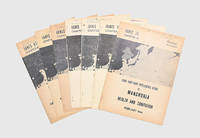
1956140943102Various Places: The War Relocation Authority 1956. A substantial archive of over 300 individual documents plus a few duplicates<br /> relating to Japanese internment during WWII<br /> forming a very thorough view of the federal agency that directed their imprisonment The War Relocation Authority. Such a sizeable collection of WRA documents is extremely rare in commerce.<br /> <p>All the major facets of the dark disturbing episode of Japanese internment are represented in this archive: its basic legal and historical outlines the WRA's publicity and propaganda and its reception<br /> in the US the WRA's groundbreaking use of social sciences in service of repressive American policies life and death in the camps and the ending of internment.<br /> <p>The essential history of internment can be said to begin with Franklin D. Roosevelt's Executive Order 9102 establishing the War Relocation Authority included in mimeograph format. Around that time and later an Index-Digest of Opinions by the Office of the Solicitor compiles legal opinions about<br /> internment with commentary by regional attorneys.<br /> <p>Additionally included are many of the WRA's<br /> quarterly and semi-annual reports as well as a<br /> nearly 300-page contemporary history of the<br /> agency by an unknown author untitled and likely written in late 1944.<br /> <p>The publicity campaigns of the agency are reflected in collections of the propaganda leaflets the WRA issued a near-complete run of the abstracts the WRA prepared on press coverage it faced mimeographed speeches presented by WRA head Dillon S. Myer and other agency figures and a file of documents relating to the WRA's investigation by<br /> the House Committee on Un-American Activities<br /> HUAC which would become famous under<br /> Joseph McCarthy in the early 1950s. The WRA's sensitivity to criticism is readily apparent especially in their robust reaction to HUAC's critiques.<br /> <p>One of the most controversial sections of the WRA the Community Analysis Section is heavily represented in this archive by near-complete runs of their Community Analysis and Project Analysis Reports. The Community Analysis Section was largely composed of social scientists primarily anthropologists who studied life in America's WWII concentration camps. Their aim was to aid Franklin D. Roosevelt's administration in running the camps with as little resistance as possible by applying lessons learned in the disciplines of Japan studies<br /> and the human sciences. Although some<br /> Community Analysts voiced objections within<br /> restricted internal communications few brought<br /> these objections before the American public.<br /> Throughout the next six decades anthropologists psychologists and sociologists would become increasingly integral in US military operations and counterinsurgency campaigns leading to controversy with the revelation of their complicity in acts of torture by the American military in Iraq and Afghanistan.<br /> <p>Life and death in the camps is revealed in the previously mentioned reports of the Community Analysis Section as well as in detailed reports of Americans of Japanese ancestry who died in the camps and in military service Cumulative<br /> Casualties by Center documents about Tule<br /> Lake and a death there. The thoroughness of<br /> these reports is undoubtedly of use to future<br /> historians looking into various rebellions within<br /> the camps and the repression which followed<br /> as well as deaths of Nissei in WWII.<br /> A smaller collection of documents outlines the<br /> closing of the camps and attempts to transition<br /> their residents back to normal life.<br /> <p>Most are stapled mimeographed documents; a<br /> few are carbon copy typescriptsas indicated in<br /> their descriptions. Very Good condition overall.<br /> Around ten of the documents are ex-library<br /> copies with their stamps and "discard" written on<br /> them. Occasional holograph notations for<br /> routing in the WRA bureaucracy. Some<br /> documents marked "Confidential" and "Do Not<br /> Publish." Manuscript annotations to some<br /> leaves.<br /> <p>A remarkable collection of documents that<br /> reveal not only what the WRA did but how its<br /> bureaucrats perceived it and themselves. There<br /> is a strange but quintessentially American<br /> mixture of professionalism media savviness<br /> cruelty optimism and racism for historians and<br /> researchers to study here and hopefully for us<br /> all to learn from.<br /> <p>DETAILED DESCRIPTION OF CONTENTS AVAILABLE UPON REQUEST. The War Relocation Authority unknown
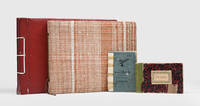
1936142062Spain & northern Europe: 1936-41. Auf-zum! so ging es tagtäglich" "Off we go! That's how it went every day" An exceptional and unusually complete archive documenting the career of Leutnant Konrad Ellermann a decorated airman who served with the Condor Legion in Spain and later in flying-boat operations on the Eismeer Front. Centred on two meticulously compiled photograph albums and augmented by scarce supporting documents it offers a rare coherent visual record of theatres where comprehensive personal archives seldom survive. The first album charts his Condor Legion service beginning with 43 tourist views of Spain and 25 informal images of squadron life followed by sequences showing Heinkel 59 flying boats in preparation and in flight with aerial views of enemy positions and bomb damage. Ellermann dedicates a page to comrades killed in March 1938 almost certainly the crew of the HE 59 downed near Cambrils and records their funerals and repatriation. Additional images include Condor Legion fighters He 51 He 112 Bf 109 long-range raids from Portbou to Oropesa and bombed railway lines. A section headed "Einiges von den Taten!" depicts two merchant vessels sunk by his unit - the British SS Jean Weems and the Danish SS Edith - alongside further action shots. The album closes with off-duty scenes and high-quality aerial photographs of Pollença Tangier and Portbou. The second album covers northern service. It opens with trials of the Dornier Do 26 flying boat in late 1938 with fine airborne views images of the second prototype and photographs of Dornier staff at work. Other aircraft represented include the Blohm & Voss Ha 139 the Latécoère 521 and the Dornier Do 18. Around 20 aerial views of Norway follow including encounters with He 111s and Ellermann's aircraft moored in Rombaken fjord culminating in a medal ceremony featuring Oberleutnant Karl Otto Max Barth. A final section documents his posting with Flussklärungsfliegerstaffel 1/125 in Finland with portraits of his Heinkel HD 114 scenes in Helsinki and Turku maintenance shots and a concluding portrait of Ellermann. Born in Geisingen in 1915 Ellermann began as a funkmeister before becoming an observer in 1938. He received the Iron Cross First and Second Class the Narvikschild the Frontflugspange für Kampfflieger in gold and silver the Luftwaffe Honour Cup and the Deutsches Kreuz in Gold. His service included AS-88 in Spain 1937-38 Sonderstaffel Tr. O 1939-41 Küstenflieger-Staffel 1/406 in Norway 1942-43 and Seeaufklärungsgruppe 131 1943-45. His surviving logbook records 484 flights between October 1937 and March 1944 378 of them operational including 62 Condor Legion sorties on ships and towns such as Barcelona Sagunto and Alicante. Later missions encompassed reconnaissance and anti-submarine patrols over the North Sea and Norwegian coast one section countersigned by Captain Martin Harlinghausen later the Luftwaffe's leading ship-killer of the Second World War. 4 items. Album 1: 245 x 320 mm original pale red and white rough-weave cloth punch holes at spine golden brown fastening cord bookseller's ticket of Otto Memmert Kiel; 222 original photographs on 24 black card leaves mainly deckle-edged snapshot images most 60 x 90 mm some larger up to 110 x 170 mm manuscript "title page" in coloured chalks with crossed Spanish and Nazi flags. Album 2: 250 x 330 mm original dark red faux leather punch holes to spine white coated-wire fastening tape bookseller's ticket of Bohrer & Co Kiel; 171 original photographs 50 x 60 mm to 240 x 180 mm on 24 tan card leaves glassine guards; manuscript "title page" with illustration of Nazi eagle above legend; 2 divisional pages first with watercolour drawing of unit insignia ram's skull above title; second with watercolour drawing of unit insignia penguin wearing clogs and flying over sea above title. Soldbuch: 28 pp 145 x 100 mm original blue card printed wrappers Ellerman's photograph mounted on inside front cover punch holes with metal eyelets to front cover. Log book: 100 x 155 mm pp. 114. Original marbled sides green cloth spine paper label on front cover. Album 1 in very good condition; Album 2 with a little wear to binding shallow indentations to covers leaf loose; Soldbuch: general signs of handling paper sometime taped around spine; Log book with some loss of marbled paper from front cover a little finger soiling. A well-preserved group. Sebastian Cox & Peter Gray eds Air Power History: Turning Points from Kitty Hawk to Kosovo 2002. hardcover
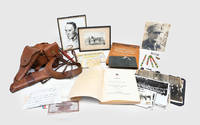
1945172534Various dates primarily 1945-47. The end of the war in south-east Asia A collection reflecting Fuller's important role in South East Asia Command including proof copy number 142 of Mountbatten of Burma's post-war official report inscribed by Mountbatten to Fuller as well as a short snorter signed by General Raymond Wheeler and other members of the US delegation to the Japanese surrender of Singapore. Also present is Fuller's copy of a photographic portfolio documenting the ceremony. A member of West Point's class of 1909 Fuller 1886-1966 gained command of the 41st Infantry Division in 1941 and was promoted to the temporary rank of major-general in December. In late 1944 he succeeded Wedemeyer as deputy chief of staff at SEAC under Mountbatten holding the position during the crucial closing period of the war in Asia. The proof copy of Mountbatten's report is inscribed on the inner front cover "To Horace Fuller Deputy Chief of Staff SEAC in gratitude and appreciation of his loyal support and friendship from Mountbatten of Burma." An accompanying letter from Mountbatten to the general addresses the recent publication of a book mentioning differences between Mountbatten and Stilwell. "I discussed this matter with General of the Army Eisenhower when he was in London in 1946 and he agreed that I should not now omit reference in my Report to any controversial matter published. The two Governments may well not wish the whole of this Report to be published. I would therefore impress upon you that this is a personal copy to enable you to make any last minute comments if you find any factual inaccuracy." On 10 September 1945 Fuller travelled to Singapore as a member of General Wheeler's official party for the signing of the instrument of surrender. The souvenir portfolio of US Army photographs lettered with Fuller's name on the front cover chronicles events between 9 and 13 September. The images show the arrival of Wheeler's group at Kallang Airfield - in a group portrait in front of their C-54 transport plane Fuller stands next to Wheeler - and Wheeler's inspection tour of Changi prison and other sites. Photographs also show the surrender ceremony and a dinner given in Wheeler's honour at Raffles Hotel during which Fuller sat between Brigadier-General Thomas S. Timberman SEAC and Margaret "Peggy" Wheeler a civilian employee of OSS and the general's daughter. Accompanying the portfolio is another souvenir: a banknote signed on 12 September 1945 by members of Wheeler's party perhaps at the Raffles dinner. Among the signatories are Wheeler himself Brigadier-General William H. Tunner Air Transport Command Margaret Wheeler Major-General Thomas J. Hanley United States Air Force and Lieutenant-Colonel Walter H. Skielvig Fuller's executive officer. The note is also signed on the reverse by members of the C-54's flight crew. Alongside these core items is a gelatin silver portrait of General Douglas MacArthur inscribed "To Horace Fuller. With the affectionate regards of his old comrade-in-arms. Douglas MacArthur" and recalling Fuller's command of the 41st Infantry as well as a charcoal portrait of Fuller by McClelland Barclay 1891-1943 executed after Fuller's promotion to major-general. A full listing of the other items in this archive such as ribbon racks photographs and badges is available on request. Together 6 core items: quarto report original buff wrappers front cover lettered in black inscribed by Mountbatten of Burma to Fuller; single-sheet typed letter signed 250 x 200 mm from Mountbatten to Fuller; Japanese Invasion Money 100-dollar banknote 170 x 85 mm inscribed "Singapore Surrender 12 September 1945" at head and signed by Fuller and 16 other individuals on one side and further 6 individuals on other and known as a "short snorter"; Fuller's souvenir portfolio of US Army Signal Corps photographs from surrender of Singapore original wooden boards with photostat reproduction of Instrument of Surrender 36 large gelatin silver photographs 210 x 270 mm 4 leaves duplicated typescript captions; gelatin silver portrait 247 x 197 mm of General Douglas MacArthur inscribed by MacArthur to Fuller; charcoal portrait of Fuller contemporary frame and glaze 260 x 220 mm. Together with material concerning Fuller's military career full inventory available on request. Wrappers of report repaired Mountbatten letter with small loss top-left not affecting text boards of portfolio somewhat worn and caption leaves browned MacArthur portrait with some silver mirroring charcoal portrait with wear to frame other material showing signs of handling: generally a very good collection. hardcover
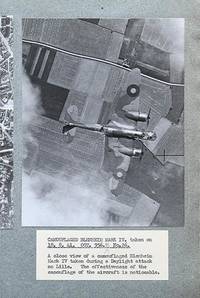
1942173506London: Royal Air Force 1942. A turning point in the air war from the air A high-quality comprehensively captioned album likely prepared in early 1942 for high-level review documenting RAF bombing and reconnaissance operations from May to December 1941 - the pivotal months in which the Luftwaffe lost the initiative and the RAF began to strike deep into Axis territory. The photographs cover Western and Central Europe North Africa and the Middle East recording attacks on major cities and strategic targets - including Berlin Cologne Hamburg naval and military bases factories and infrastructure - together with a stark reconnaissance view of Dachau and two large photo-mosaics of Persian oil facilities. The album demonstrates the breadth of the RAF's offensive and intelligence-gathering capability at the moment when its position in the air was rapidly strengthening. The accompanying commentary situates these operations in the critical pre-American phase of the air war when Britain and its Commonwealth allies faced the Luftwaffe alone. Despite Germany's early technical and tactical superiority - honed through clandestine rearmament the Spanish Civil War and a substantial training programme - its advantages eroded through strategic miscalculations: the failure to win the Battle of Britain the ineffectual Blitz and the diversion of resources to the Russian front. By late 1941 the RAF with improved materiel and better-trained crews was able to conduct long-range raids and detailed reconnaissance deep into increasingly thinly defended airspace. The album's index singles out 13 photographs as exemplary though the technical precision throughout renders such distinctions narrow. Particularly striking sequences include low-level obliques around Flushing analysing camouflage on local defences; large-scale "dicing" images at Étaples revealing dummy gun positions and trench systems; night photographs of Berlin and Kassel illuminated by flak searchlights and incendiaries; daylight images of Blenheim attacks on Cologne power stations some framed by the photographing aircraft; and a sequence tracking the movements of the Admiral Scheer from Denmark to Swinemünde. Two photographs of the December 1941 Halifax bomber raid on Gneisenau Scharnhorst and Prinz Eugen at Brest taken seconds apart show the attack unfolding with exceptional immediacy. The album concludes with the first photographic coverage of Iceland nine images illustrating its striking terrain. A full list of images is available on request. Landscape folio 300 x 380 mm 4 pp. indexes by place and subject full-page mounted photo-reproduced "Sketch-map shewing Locations of Places" 159 silver gelatin original photographs mounted either side of 51 leaves of pale green light card stock formats ranging between 260 x 325 mm and 90 x 135 mm the majority between these at around 200 x 170 mm all with meticulous typescript captions logging date location and the nature of the operation with detailed interpretation of the image Original black pebble-grain morocco-finish roan lettered "VOL I" in gilt on the spine with gilt ruled compartments concentric panels in blind to covers strong blue on very light greenish blue hammer finish endpapers dark olive green linen hinges. Binding a little rubbed some light abrasions and scratches to covers some inevitable scuffing at the extremities; text pages lightly toned as also the mounting leaves but just marginally so and with occasional light soiling binding a little open between a few leaves but sound the photographs themselves remain pin-sharp and dark retaining excellent definition and tone; very good. unknown
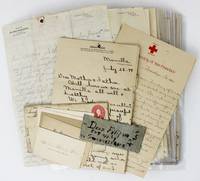
19015206San Francisco and various locations in the Philippine Islands 1901. Very good. 101 manuscript letters totaling approximately 360 pages and around 38000 words plus an assortment of related correspondence and documents. All letters and documents sleeved in chronological order in two modern three-ring binders. Original mailing folds general overall wear with a few letters closely trimmed and four of the letters incomplete. An important archive documenting the experiences of a young soldier from Omaha Nebraska named Louis C. Swartzlander during his time in training in California and at war in the Philippines at the turn of the 20th century. After graduation from Omaha High School seventeen-year-old Louis Carver Swartzlander 1882-1922 lied about his age to enlist for three years in an Omaha cavalry troop recruited to suppress the Aguinaldo Insurrection also known as the Philippine-American War following U.S. colonial occupation of the Philippines in 1898. Sixty-five of the present letters were written by Private Swartzlander to his family including over twenty from the Presidio in San Francisco while awaiting transport to the Philippines and over forty from military posts during his time in Manila Balinag Bayambang Dagupan and other locations on Luzon before during and after combat against the Aguinaldo insurgents. All of the letters were written during the heart of the conflict between May 17 1899 and September 15 1901. Swartzlander’s letters ultimately shed light on this controversial though obscure episode of the United States's imperialist activities in the Philippines as well as Louis’s other military and battle experiences his impressions of Philippine life culture and internal politics his racial attitudes and much more. In one letter on June 15 1900 Louis mentions the burning of the insurgent town of Dasal Luzon by the 25th Colored Infantry a notable but still-obscure moment in African-American military history. In another letter Louis mentions to his brother that he plans to send him a patch of cloth from a dead insurgent soldier; the collection includes a small rectangular swatch of cloth with the following inscription: "Dead Filipino cut off by Swartzlander 4th Cav."<br /> <br /> The archive also includes over thirty letters written to Louis from his father Dr. Frederick Swartzlander his mother and brother; many of these letters concern their efforts to have Louis discharged from service before his enlistment had ended so that he might join his brother a medical student at Stanford University which the family ultimately accomplished. Following Louis's final letter here on September 15 1901 is a printed special order granting his discharge. Louis then traveled to Palo Alto where he enrolled at Stanford though he apparently did not graduate from there; his obituary in 1922 states that he obtained a medical degree from Creighton University before dying unexpectedly from a short illness.<br /> <br /> The following excerpts from just five of Louis's letters provide an overall picture of his writing style and the content of his letters. We also have a forty-three-page printed document of excerpts from the letters prepared by a previous owner of the archive that we can share upon request providing much more information on the composition of both Louis's and his family's correspondence during this time.<br /> <br /> 1 Louis Swartzlander to his parents San Francisco Ca. May 30 1899: “Today another one of the boys…and I took in Chinatown and it is the dirtiest hole I have ever been in. The streets are of ordinary width although some are about like alleys. All along the sidewalks are chinamen fixing and making opium pipes. You can see Chinese men women and children all the way from 1 to 60 or 70 yrs of age. One street or alley is devoted to the fish market and you can smell it for two blocks and fish! Why I never saw so many fish in a pile in my life all kinds from a devil fish which looks exactly like an octopus only smaller to a shark. Also live turtles by the bushel and all kinds of stuff that nobody but a chinaman could eat. I was vaccinated again today as the other two vaccinations did not take. I hope I will get to go aboard the Sheridan for the Philippines next June 7<br /> <br /> 2 Louis Swartzlander to his parents Manila P.I. July 28 1899: "Well here we are at Manilla all well and healthy. We had an excellent voyage with a peaceful ocean. I saw lots of small flying fish sea gulls sharks etc. We left San Francisco June 24 at 6 oclock and arrived at Honolulu July 2nd. Most of the boys succeeded in going ashore but I could not. We arrived at Manilla July 25th. When about 10 days out after leaving Honolulu we saw an active volcano in the Ladrone Islands. We are stationed about 2 miles from the heart of Manilla. We are stationed in large bamboo barracks each of which will hold about 25. I was in the old walled city and it is a queer place. It is composed mostly of immense cathedrals. The city walls are about 10 feet thick and 15 high but are beginning to crumble as they were built before this century. All stone used in this country is made of cement. There seems to be lots of good fishing here. Yesterday I went out to the famous bone pile that you read about in Omaha. It is a terrible sight with bones piled up and skulls lining the walls but these people don’t seem to care for their dead at all. If the deceased has money he can have a vault if not he goes to the bone pile. It is not so very hot here. At a guess I would say it is about 100 in the sun and 90 in the shade. Tobacco is very cheap here. I can buy a box of good 10 ct cigars for 50 cts American money. I have seen the Pasig river. It separates old Manilla from new Manilla. It is a muddy stream about 200 feet wide with almost no current. This country is covered with palms banana trees etc. All the banana trees are covered with green bananas but none are good to eat as they are too green. The native horses here are about like Shetland ponies and it looks queer to see a troop of the 4th Cavalry mounted on such small horses. We are having the best of eating the best I have had since I enlisted."<br /> <br /> 3 Louis Swartzlander to his brother Manila P.I. December 22 1899: “You seem to think that I am a great fellow just because I came out here. Of course it was hard very hard at first but it is easy now. I am more than pleased to hear that you are doing so fine with your studies and now just keep at them and you will turn out a finely educated man. I am also pleased to hear that you think you will be a doctor as I long ago decided I should. If I can get back to the states and get my discharge we can both study medicine together. Well I have been.in the hospital with the itch but it is now O.K. I will soon again join my troop Fighting K. I am feeling good though not so strong as when I was in the states. Our troop is I believe east of the railroad about 20 miles from here. Say Joe the first chance I get I am going to kill a goo goo niggar for you and if I can I will get a piece of his uniform such as it is and send it to you. I’d get a piece of his doggoned hide if it didn’t stink. Remember this goo goo is to be plugged for you. On the firing line we have a pretty good time. You see when things are quiet we get up at 6 oclock care for our horses eat breakfast lay around until 8 oclock then if we neither go out scouting or drill we have nothing to do until 4 oclock when we again look after our horses eat at 5 answer retreat at 6 oclock and nothing until taps at 9 when we must all be in quarters and lights out. Sometimes we are divided up so that about 3 men are in a shack and then if we can get a candle we play cards tell stories play a mouth organ or whatever there is to pass away the time. Every once in a while the niggars will fire a volley into the town and then we turn out and give them what they need. In the morning we generally find from 5 to 15 dead goo goos laying around. They very seldom hit any of us because they cant shoot and so soon as we yell we charge and they don’t know any thing but to get. Our troop commander will let us get all the chickens we want the pigs are no good but the caribou are O.K. just like beef and so you bet we don’t go hungry so very long at a stretch."<br /> <br /> 4 Louis Swartzlander to his parents Bayambang P.I. June 15 1900: "We are still at Bayamban. We are doing just the same duty as when we first arrived here last November that is two posts to walk one serving as an out post and the other the stables guard. From the present outlook of things we will stay here for the rainy season as our shacks are being repaired and a bamboo stable is being built for our horses. The stable is about 300 feet long by 40 wide and will shelter 11 horses and 15 mules besides 12 native ponies. To give you a description of one of our trips through the country.I don't claim to be a writer or reporter so you must excuse my poor attempt. As our last trip was a fairly good one.I will attempt to tell you about it. We first received orders on the morning of April 15th to be ready for a trip within the next 24 hours and by a little hustling and packing we were soon ready. On the morning of the 16th we saddled up and within a half hour were off.we rode about seven miles to a small town called Urbiztando. At that place we unsaddled our horses first the saddles and other equipments except our guns on three small rafts which were pulled across the river. The command was then given to mount and having done so we started in and in five minutes time every man and horse was safe on the west side of the Agno river. We again saddled up and by riding two miles further arrived at a pretty little town called Mangaterem. The town covers about four square blocks and contains a large church besides several fair sized houses. In front of the church is a large plaza which is about a block square. In one corner of this plaza and beneath a large stone monument are or were buried two American soldiers who were killed while taking the town. We stayed in Mangaterem overnight sleeping out on the plaza. The next morning at 530 we were aroused by first call. We then fell in line for roll call and after this fed and brushed off our horses then ate a breakfast of two slices of bacon four hardtack and a half a cup of coffee. At 615 we saddled up and started for another fair sized town 12 miles distant called Salasa. This town is as well as Mangaterem garrisoned by the 36th U.S.V. There at Salasa you get a fine ocean breeze as we were then getting close to the coast. Upon arriving at Salasa we unsaddled and turned our horses loose in herd and made preparations for the night. At four oclock we caught up our hoses fed and groomed them after which we got our own supper. After this the most of us went down to a river close by and had a fine swim after which we all turned in for a good rest. In the morning after being joined by 50 men of M troop of the Fourth Cavalry we started for Sual a town about 11 miles distance and on the Gulf of Lingayen. We arrived at Sual at about 1 oclock. We were then quartered in the church which was made of bamboo and mud. That evening after having a good dip in the Gulf we rolled in for another good nights rest. In the morning we started for the town of Alaminos which is about the same size as Maregaterem. Here we had to water our horses out of a well as there is no river within two miles distance. We here slept in what appeared to be an old school house or cottage of some sort. Here I bought a package of smoking tobacco and a pipe also a can of jam which came in handy with the hardtack. Well the next morning left for Dasol a town about 17 miles. We arrived at a small town called Balincagin at about 11oclock where we rested a half hour and then started on to Dasal here we arrived at about 3 oclock. Dasal never was a town of much importance but now it is no town at all or at least it was not when we arrived there. The 25th Infantry Colored had a fight there and after driving every insurgent not dead or wounded over the hills and far away they set the town on fire and it has always been an insurgents place of meeting and once before when we were there they shot into us doing no harm however. Well we here slept out on the old plaza and in the morning started to Santa Cruz arriving there at about noon after crossing about forty small rivers. Santa Cruz is a pretty little town situated on the bay. The town itself covers about eight square blocks and contains a large stone church and convent also a school house and several large houses. That is large for this country about the size of a barn in the states. It also contains like all other towns hundreds of little nipa shacks."<br /> <br /> 5 Louis Swartzlander to his parents Bayambang P.I. October 31 1900: "Well the 17th Infantry had another scrap last night at a small town beyond Camaling. I do not as yet know just where it took place but I am told about 20 miles from here. It seems that there were just sixteen American soldiers in the town and when the goo-goos opened up they grabbed their guns and rushed outside their quarters. They then returned the fire hot and heavy for about 5 minutes when they saw that the goo-goos were advancing. At once the command 'fill magazines' was given and then charge. With a yell they were after the goo-goos firing as they charged. Well now no goo-goo can face a hot fire and worse of all the Americans yell and they broke and ran every goo-goo for himself. Our boys could not get close to them as they can run like a deer but when the thing was over 5 dead goo-goos lay dead with holes in them while on our side only one man had been hurt and he only slightly - a Mauser ball had passed through his arm including between the elbow and wrist. He was sent to the Dongupan hospital today. It is estimated that there were 200 bolo men and 25 rifle men and so you can see how easy it is for us to put largely superior numbers to flight. It has been rumored here that after the presidential election is over that the U.S. soldiers are going to make a grand cleaning up of this island and its goo-goos. That will mean that we will show them no mercy and every time we see a goo-goo we will 'soak it to him' you know that that means but I have great doubts as to whether or not they will do any such thing as that would end their trouble too quickly and some of those muck a mucks in Manila would lose a good job. If they wanted to end this trouble all they would have to do is turn the soldiers loose and we wouldn't do a thing to them. As it is we are not allowed to lay a hand on them or to touch a hair of their heads. We will capture 50 or so of them then our officers turn around and put them on confinement for 3 or 4 days and then turn them loose. How are we ever going to end this war when they do that way. I would like to know. But such is the case and I have seen it done several. In all probability if we should capture Aggie they would take him to Manila and give him some good government position. They finally captured Genl. Del Pilar and what did they do turned around and told him if he would take the oath of allegiance to the U.S. that they would turn him loose. Of course he did so for what do these people care for the oath of allegiance and today he is again with the insurgents. I tell you that the people in the U.S. have the wool pulled over their eyes in regards to this matter on Luzon and they will learn after a few thousand more of our boys are killed or die of sickness. This whole thing could have been ended in less than six months at the start but the officers had too good a thing of it and the longer it lasts the better it suits them. When I started to write this I did not intend to criticize the authorities and so will quit writing on this subject. Be sure and do not print in a newspaper what I have here written as I might get into serious trouble."<br /> <br /> 6 Louis Swartzlander to his parents Dagupan P.I. April 18 1901: "I have just returned from an open air concert which was given by the 17th Infantry band on the plaza which is located in the center of Dagupan. The band is composed of nearly thirty pieces and all its members are good musicians. Several of Sousa's pieces were played.as well as.the Star Spangled Banner. The concert lasted nearly two hours.very enjoyable. I am still at 3rd District Headquarters Dagupan as orderly for General Smith. The General himself is at present in the town of Iba to which place he went three days ago for the purpose of inspecting the military prison. The two of Iba is situated in the Zambales province and is about 65 miles from here.we used to pass through Iba on your hikes to Subig.in the early part of 1900. K troop is.on a hike in the mountains in the vicinity of the town of Camaling which is about 12 miles south of Bayambang. I am glad that I am not with them as I have had about all the goose chases that I care to take part in…all the rest of the men in K troop are tired of hiking but that makes no difference for if Captain Benson wishes to go out in the mountains he details about 60 men and they have to go whether they want to or not. Should any man having been detailed to on any such hike fail to do so when hot prevented by sickness or other necessary cause he would be thrown into the guard house and be tried by a general court martial. There was a public hanging in the town of Bennmollie which is three miles west of here.the accused murdered some friendly natives some time ago and when caught was tried by the military authorities found guilty of murder in the 1st degree and was sentenced to hang. The victim dropped at 1023am and was pronounced dead in just 7 minutes. I wished very much to go myself but it being as I was on duty that day I could not; however I will yet have plenty of chances as natives who have been convicted of murders are being hung in different parts of these islands nearly every Friday. I never as yet have witnessed a hanging and I wish to do so before returning to the U.S. Never since last August when you first made application for my discharge did I have the least expectation that it would be granted as I know too too well how hard it is for a soldier in the regular army to obtain a discharge by favor purchase ora ny other way before his time of enlistment has expired. I also know that unless the soldier has a very strong pull in Washington it is almost impossible. I think it best to drop all hopes of my discharge before May 11 '02 at which date they are compelled to let me go and then I will lose no time between here and San Francisco. Heaven help the poor lads who were enlisted in Omaha for the 10th Cavalry and sent to the Philippines. In all probability they will have to serve their entire enlistment over here/ Where the sun is as hot as fire/ Mosquitoes as large as bumble bees/ Where all is mud and mire/ Where nothing grows but mango trees/. And I fear that before they are over here very long they will be singing Army turn backward turn backwards tonight. Out of these islands out of these fights with mosquitoes. Out of these mud holes with mud that will stick to your old army rags until it bakes into brick."<br /> <br /> Louis's letters as well as his family's are generally long and detailed with all but five of them totaling at least two pages and almost half of the letters clocking in at four pages or more. As such this correspondence constitutes a deep and intensely researchable collection documenting Louis's military activities and experiences in the Philippines during an important time in the history of U.S.-Filipino relations as well as how his family dealt with his service on the home front. A wonderful archive with outstanding research potential. unknown
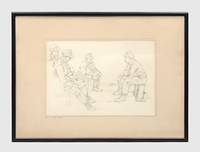
19421366441942. Original artwork from the Western Desert executed by Rommel's Kriegsmaler Wilhelm Wessel Three fine studies by Wilhelm Wessel Rommel's war artist Kriegsmaler executed in the field while serving as an officer with the Afrikakorps. Wessel 1904-1971 studied briefly with Kandinsky at the Bauhaus and then with Kurt Schwitters in Berlin. In 1924 he began a four-year journey through Turkey Greece Palestine and Egypt. From 1927 to 1931 studied Sumerian and Byzantine archaeology at the University of Berlin at the same time studying under expressionist painter Karl Hofer whose work was later branded as degenerate by the Nazis and included in their entartete kunst exhibition. Between 1931 and 1939 he taught art in Berlin and Westphalia. He served throughout the Second World War in France Russia North Africa and Italy initially as an officer with a Panzergrenadier regiment. In 1941 he was severely wounded during the opening of Operation Barbarossa and after recuperating joined Rommel in North Africa as a Kriegsmaler. His book Mit Rommel in der Wüste With Rommel in the Desert was published at Essen in 1943. At the conclusion of hostilities he was briefly a prisoner of war before resuming his career as an artist. "As a promoter of abstract art Wessel organized the first post-war German art exhibition at the Stedelijk Museum in Amsterdam. and took part in a number of group exhibitions" from Venice to Tokyo and "had solo exhibitions in Berlin Wüppertal Wiesbaden Vienna Stuttgart Munich Paris and elsewhere" Benezit. He was the first chairman of the West German Artists' Federation and as such sponsored an early exhibition of American art in Düsseldorf in 1956. Some of his war prints were loaned to NATO in Brussels. Provenance: acquired in 1975 from the artist's widow Irmgard Wessel-Zumloh 1907-1980 herself an accomplished artist by an American army veteran J. William Keithan Jr. 1925-2010. Keithan served with the 42nd "Rainbow" Division and after the war had a long career as an executive with the Westin Hotel chain in charge of the design and construction of over 50 hotels around the world. He has provided a 3-page typed account of the acquisition of this group in which he says: "We talked of many things. Of how General Rommel and Wessel were good friends and how after World War II Frau Rommel and son Manfred were frequently visitors to her home in Iserlohn. She was adamant in her refusal to sell or contribute any of Wessel's work to the German people or the German government". Together with a substantial album comprising 39 photographs of Wessel's war images acquired from the Canadian War Museum and Archives of New Zealand. Auction records for Wessel's post-war work are plentiful but we have not found a single example of any of his original war art appearing at auction or being otherwise offered for sale. Charcoal pastel and pencil drawings. The group comprises: a Original black-and-white charcoal drawing on pale grey paper signed "Wih. Wessel 42" measuring 460 x 590 mm; inscribed lower left corner in pencil "Hinter den Stützpunkten bei Eluel El-Aggara" "Behind the bases at Eluel El-Aggara"; Al 'Aqqarah Libya lies some 100 km west of Tobruk. An attractive and atmospheric evocation of the Libyan desert at dusk: against a low horizon a column of German lorries negotiates hills and scrubby terrain plumes of smoke billow in the distance. Reproduced in Mit Rommel in der Wüste colour plate 15. b Original coloured pastel drawing unsigned and untitled; image: 330 x 465 mm mounted overall: 500 x 620 mm. A striking image of a desert dawn patrol by three German armoured vehicles two Sd. Kfz. 222 scout cars and a Sd. Kfz. 231 armoured car their wheels kicking up sand; the low horizon line rising sun and big sky with flaring white cloud make for a most dramatic picture. Not reproduced in Mit Rommel in der Wüste and presumably unpublished. c Original pencil drawing signed "Wessel 42" entitled "German Soldiers Talking" inscribed in pencil on mount; image: 235 x 350 mm mounted framed and glazed overall: 410 x 570 mm. Label on verso noting its purchase from Wessel's widow in 1975. Reproduced as a half-page illustration in Mit Rommel in der Wüste p. 45. All pieces in excellent condition. unknown
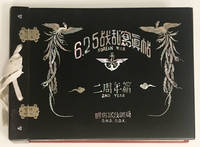
1951BBO25<p>Korean War<br /></p><p><i>Commemorative Album of Photographs on the Second Year Anniversary of the Korean War</i>.</p><p>Ministry of National Defense Republic of Korea 1951.</p><p>Oblong 4to 31 leaves with protective tissue; with commemorative text: 6.25 Korean War emblem: winged five-point star and anchor 2nd Year D.N.D. R.O.K. flanked by Birds of Paradise executed in mother of pearl woven silver silk tie. </p><p>Containing 77 original photographs documenting the events and players in the war including President Syngman Rhee Douglas MacArthur etc. with typed captions a page of dedication with presentation To Ambassador De Tervarent … Tao-Yong Shinn Minister of National Defense Republic of Korea . </p><p>An official album presented to the Belgian Ambassador and Plenipotentiary Minister in Japan Chevalier Guy de Schoutheete de Tervarent 1891-1969 Belgium being one of the 17 countries which furnished military forces in support of the United Nations Security Council resolution to defend South Korea. Most likely each of the Allied nations received such an album as a souvenir.</p><p><br /></p> Ministry of National Defense hardcover
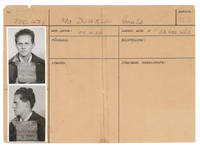
1945264850Krems Austria 1945. 4to and smaller. Some toning overall very good. 4to and smaller. Identity documents and ephemera of American Air Force tail gunner Sgt. Gerald McDowell 1923-2002. McDowell and the flight crew of the B17 nicknamed Hell's Belle survived being shot down over Germany in 1943 and were interned at Stalag 17B in Austria. At the war's end the camp guards marched American prisoners west to meet the U.S. Armored Division at Braunau and avoid the Soviet troops occupying eastern Austria. McDowell wrote a memoir of his war experiences A Tail Gunner's Tale 1991. Stalag 17 gained notoriety from the 1953 Hollywood film of the same name staring William Holden.<br /> <br /> Comprising:<br /> <br /> 1. Camp identification document for Gerald McDowell no. 100478 with two photographs side and profile with chalk board identity number. Old fold splt repaired on verso. With corresponding stamped metal badge. Illustrated at p. 114 of his book<br /> <br /> 2. Broadside: Kgf.-M.-Stammlager XVII B. Teillager der Luftwaffe. Lagerführung. Gneixendorf June 11th 1944. Warning ! 1. Any P.o.W. touching or crossing warning wire during day-time will be fired upon immediately. . Stencil printed signed in ink by "E-" above stencil legend: Hauptmann and 1st Lageroffizier. Old folds. Tipped onto card. Illustrated at p. 90 of his book. Of extreme rarity.<br /> <br /> 3. BATCH D.B. Pencil portrait of Gerald McDowell Signed and dated lower right D.B. Batch P.O.W. 13/1/45 Krems Austria. 9 x 6 inches. Tipped onto card. Framed.<br /> <br /> 4. Recipes for "D-Bar Spread" "Chocolate Cream Pudding" "Gallop" and other P.O.W. dishes using D-Bars C-Rations "Jerry" sugar etc. 5 small cards closely written on versos of typed prisoner ID fiches 4 x 2 inches. Tipped onto card. Toned.<br /> <br /> with:<br /> 5. PHELPER Ben H. Kriegie Memories title from cover. Photographs and handwritten text. 64 pp. Aurora Illinois: Printed by Barker printing Co. 1946. Blue leather grained cloth upper cover titled in gilt. OCLC: 85169189 4 copies. Inscribed by the author on the first blank "Jerry: May you always be free and happy. Good luck Ben". Rare privately printed account of experiences inside Stalag 17B by "Luftgangster No. 113204" with photographs of camp life and of the march towards liberation in May 1945. With a dozen annotations by McDowell usually in red ink indicating himself or other fellow inmates in the photographs including a picture in the "Cardboard Playhouse" of McDowell in a dress captioned in the text "a glamour shot of one of our boy actors . Some of the lads sure did look good when they made up as a girl." Presentation copy of an astonishing illustrated narrative<br /> <br /> 6. MCDOWELL Gerald. E. A Tail Gunner's Tale. Vantage Press 1991. Review copy as new. unknown
1945264850Krems Austria 1945. 4to and smaller. Some toning overall very good. 4to and smaller. STALAG 17B. Identity documents and ephemera of American Air Force tail gunner Sgt. Gerald McDowell 1923-2002. McDowell and the flight crew of the B17 nicknamed Hell's Belle survived being shot down over Germany in 1943 and were interned at Stalag 17B in Austria. At the war's end the camp guards marched American prisoners west to meet the U.S. Armored Division at Braunau and avoid the Soviet troops occupying eastern Austria. McDowell wrote a memoir of his war experiences A Tail Gunner's Tale 1991. Stalag 17 gained notoriety from the 1953 Hollywood film of the same name staring William Holden.<br/><br/>Comprising:<br/><br/>1. Camp identification document for Gerald McDowell no. 100478 with two photographs side and profile with chalk board identity number. Old fold splt repaired on verso. With corresponding stamped metal badge. Illustrated at p. 114 of his book<br/><br/>2. Broadside: Kgf.-M.-Stammlager XVII B. Teillager der Luftwaffe. Lagerführung. Gneixendorf June 11th 1944. Warning ! 1. Any P.o.W. touching or crossing warning wire during day-time will be fired upon immediately. . Stencil printed signed in ink by "E-" above stencil legend: Hauptmann and 1st Lageroffizier. Old folds. Tipped onto card. Illustrated at p. 90 of his book. Of extreme rarity.<br/><br/>3. BATCH D.B. Pencil portrait of Gerald McDowell Signed and dated lower right D.B. Batch P.O.W. 13/1/45 Krems Austria. 9 x 6 inches. Tipped onto card. Framed.<br/><br/>4. Recipes for "D-Bar Spread" "Chocolate Cream Pudding" "Gallop" and other P.O.W. dishes using D-Bars C-Rations "Jerry" sugar etc. 5 small cards closely written on versos of typed prisoner ID fiches 4 x 2 inches. Tipped onto card. Toned.<br/><br/>with:<br/>5. PHELPER Ben H. Kriegie Memories title from cover. Photographs and handwritten text. 64 pp. Aurora Illinois: Printed by Barker printing Co. 1946. Blue leather grained cloth upper cover titled in gilt. OCLC: 85169189 4 copies. Inscribed by the author on the first blank "Jerry: May you always be free and happy. Good luck Ben". Rare privately printed account of experiences inside Stalag 17B by "Luftgangster No. 113204" with photographs of camp life and of the march towards liberation in May 1945. With a dozen annotations by McDowell usually in red ink indicating himself or other fellow inmates in the photographs including a picture in the "Cardboard Playhouse" of McDowell in a dress captioned in the text "a glamour shot of one of our boy actors . Some of the lads sure did look good when they made up as a girl." Presentation copy of an astonishing illustrated narrative<br/><br/>6. MCDOWELL Gerald. E. A Tail Gunner's Tale. Vantage Press 1991. Review copy as new. unknown books
19451017761945. WORLD WAR II KEYES Geoffrey Lt. Gen. Archive: Hand-colored and annotated map outlining the division of Germany; 25 contemporary V-Mail letters from Keyes to his wife. Waiblingen-bei-Stuttgart Germany: 649th Engineer Topographic Battalion June 1945. Broadside map measures 22 by 29 inches titled ""Administrative Map of Western-Germany June 4 1945."" V-Mail letters each measure 4-1/4 by 5-1/4 inches. $12000.Lieutenant General Geoffrey Keyes' unique hand-colored and annotated map outlining the division of Germany per the Berlin Declaration produced just after Germany's unconditional surrender along with 25 contemporary letters by Keyes to his wife discussing the dramatic events of these historic times.It was agreed at the Yalta Conference held in Crimea February 4-11 1945 that after the war Germany would be split into four occupied zones: American British French and Russian. On May 7 1945 Germany signed an unconditional surrender at Allied headquarters in Reims France to take effect the following day. The Berlin Declaration of June 5 1945 confirmed the division of Allied-occupied Germany into four occupation zones according to the Yalta Conference. The map is titled ""Administrative Map / Western-Germany"" dated ""4 June 1945"" printed by the 649th Engineer Topographic Battalion 649th Engr. Top. Bn 1945"" in Waiblingen-bei-Stuttgart. The landkreise rural district stadtkreis urban district within landkreis and land boundaries made up of adjoining stadtkreis are noted. Identified with flags there are three Region Headquarters Darmstadt Marburg Stuttgart and five R.B. Headquarters Frankfurt Kassel Wiesbaden Mannheim Karlsruhe.Eight areas are outlined by hand in various colors. There are 17 landkreis at the western and southern borders of this map which are not outlined. These areas are in the French occupied zone. France was not represented at Yalta and Russia would only agree to a separate French occupation zone ""within the British and American zones."" It is possible that when this map was printed it was not yet determined if the 17 non-outlined landkreis were American. The four divisions were not confirmed until the Berlin Declaration on June 5 1945 the day after this map was published. The French zone includes the stadtkreis Baden-Baden and Bavaria. The French zone bordered mostly France and Switzerland but also small parts of Belgium Luxembourg and Austria. Included is a color photocopy of the four occupied zones indicating the area depicted in the Administrative Map of Western-Germany here offered.Also present are 25 pages of V-mail each 4-1/2 by 5-1/4 inches from Lieutenant General Keyes to his wife May-August 1945. She was living at the Hotel Tayer West Point. V-Mail used standardized stationery and microfilm processing to produce lighter smaller airplane cargo making space available for war supplies. V-Mail was used from mid-1942 to the end of 1945. Excerpts: ""The capitulation of the Germans yesterday has us all on the humpjust as much so as while we were still fighting We are still awfully busy even if the fighting has ceased on this front VE Day!! Now if we can quickly wind up the Jap affair we can really relax We move to Salzburg this week Well here we are installed in the Archbishop's Palace sweetheart each room is large enough for a battalion almost flew to 3d Army to attend the homecoming ceremonies for Gen. Patton. It really was a great show and he was in rare form Had a nice visit with him With the approaching end of the Jap war it will certainly be open season on generals! Sunday is to be a gala day All the High Commissioners of Austria are gathering and Gen Clark's guests and others are going to the music Festival just had a call and a concert by the Vienna Boys Choir This afternoon the No 1 British French & Russian VIPs are coming to Salzburg as Gen Clark's guests and big festivities are slated "" From the estate of Lieutenant General Geoffrey Keyes.Map folded into quarters with a few minor wrinkles pinholes at corners from posting it on a wall or bulletin board. Near-fine condition an exceptional archive. unknown
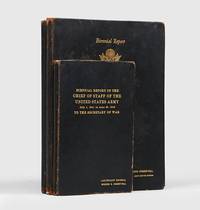
1943190146Washington: United States Government Printing Office 1943-45-46. Presentation copies from General George Marshall to his "miracle worker" General Brehon B. Somervell A complete set of the original official US Army wartime reports handsomely produced the personal copies of General Brehon Burke Somervell 1892-1955 George Marshall's commander of Services of Supply the first two being presentation copies from Marshall the cover of each volume gilt lettered with Somervell's name and rank. Services of Supply was one of the three "superagencies" organized by the US Army after the United States's entry into the war in December 1941 - the other two being Army Ground Forces and Army Air Forces - and gathered under its overarching aegis Quartermaster Corps Chemical Warfare Service Signal Corps Corps of Engineers Ordnance Department Medical Corps and Transportation Corps. "General George C. Marshall the army's chief of staff during World War II held Somervell in high regard for his ability to perform monumental tasks and was willing to overlook his penchant for antagonizing others. "What he did was a miracle" said Marshall in a postwar interview. The U.S. Army in World War II was probably the best-supplied army that had ever gone to war. Much of the credit for that accomplishment goes to Somervell who provided the "sinews of war" for a military effort that literally spanned the globe" American National Biography. Somervell is mentioned directly by Marshall in his concluding remarks to the first volume where he notes "The requirements of logistics are seldom understood. The burdens they impose on the responsible military authorities are rarely appreciated. The conflicting demands of our theater commanders of Allied sovereign powers and of the home front pose difficulties never before approximated in war. The necessity for a high degree of efficiency in management is evident and it has been found in the coordination of all the various supplies and administrative departments of the Army under the command and leadership of Lt. Gen. Brehon B. Somervell. "Published at two-year intervals these reports provide a comprehensive picture of global war as seen from the perspective of the Chief of Staff. The first report describes the race to mobilize an unprepared country and Marshall's appeal on the eve of war for the renewal of Selective Service a reminder of how far the U.S. Army had to come to meet the Axis challenge. The second recounts the initial defeats after Pearl Harbor and the ultimately successful efforts of the United States and its Allies to turn the tide. The final report describes the drive to victory and outlines Marshall's analysis of the reasons for the Allied triumph. Summaries give an overall view of the progress of the war but the scholar and military professional will find most interesting Marshall's comments on such topics as technology the "90-division gamble" the replacement system troop morale and the citizen-soldier and demobilization. These comments and the other material presented in the reports provide not only a fresh perspective on the myriad problems of conducting a global war at the highest levels but also renewed appreciation for the man whom Churchill appropriately called 'the organiser of victory'" Brigadier-General John W. Mountcastle foreword to the 1996 Center of Military History edition. This is a set of the scarce original edition produced by the United States Government Printing Office in Washington; trade editions were also produced by the Infantry Journal Press in the US and HMSO in Britain. The set comprises: Biennial Report of the Chief of Staff of the United States Army July 1 1941 to June 30 1943 to the Secretary of War. Octavo pp. v 56. 6 folding maps and 19 folding charts. Presentation copy from General George Marshall inscribed on a preliminary blank: 'To General Somervell with appreciation and warm regard G. Marshall". Biennial Report of the Chief of Staff of the United States Army to the Secretary of War July 1 1943 to June 30 1945 to the Secretary of War' Quarto pp. iii 123. bound with the supplementary Atlas of World Battle Fronts in Semimonthly Phases to August 15 1945 pp. 101. Presentation copy from General George Marshall inscribed on a preliminary blank: "Dear Somervell - Please accept this copy of my final report as Chief of Staff with appreciation of your tremendous service to the army and support of me with my affectionate regards - G. Marshall October 5 1945". Report by the Supreme Commander to the Combined Chiefs of Staff on the Operations in Europe of the Allied Expeditionary Force 6 June 1944 to 8 May 1945. Quarto pp. x 123. Several colour maps. 3 vols one octavo 232 x 135 mm 2 quarto 305 x 210 mm. Contemporary black pebble-grained skiver gilt lettered on front covers first 2 vols with dark blue vertical-rib cloth endpapers third with white moiré silk-effect endpapers. Bindings a little worn at extremities some mottling to covers scattered foxing otherwise very good. hardcover
1904150900Berlin: Kartographische Abteilung der Königlich Preußischen Landesaufnahme 1904. One of just two known complete sets An exceedingly rare large 15-sheet map of China's strategically pivotal Liaodong Peninsula printed for senior German military commanders during the Russo-Japanese War and the Japanese siege of Port Arthur. We have traced one complete set at the Berlin State Library and the University and State Library Darmstadt has an incomplete set of six sheets. For the German army possessing up-to-date information on Liaodong was pressingly essential. Despite being officially neutral during the conflict Germany had significant geopolitical interests in north-eastern China having acted with Russia and France in 1895 to curtail Japanese expansion in East Asia after the First Sino-Japanese War. Russian-Japanese hostilities in particular the gruelling engagements around Port Arthur also threatened to spill over into Germany's nearby maritime territorial concession Qingdao. This highly detailed cartographic production printed at a scale of 1:42000 from Russian military maps from 1898-99 shows settlements of every size topography and spot-heights roads railway lines and other information of use in any potential military operation. 16 untrimmed photolithographed sheets 670 x 630 mm to 170 x 510 mm colour and black and white including 15 map sheets combining to form one large map as well as one key sheet with contemporary supplementary annotations. Generally clean and bright several sheets with fraying in margins 1 sheet with few tape repairs on verso 2 sheets with small loss at head in 1 case just crossing neatline occasional creases. A well-preserved set. unknown
1910138398London: His Majesty's Stationery Office 1910-20. With over 100 maps and plans First edition one of only 250 possible complete sets with the bookplate of Thomas Beaumont Hohler Second Secretary at the British Embassy in Tokyo from 1902 to 1905. During the Russo-Japanese War Hohler visited the front as an observer and enjoyed a strong relationship with the commander of the Japanese navy Vice-Admiral Saito Makato. The last complete set to appear at auction sold at Sotheby's in 1982. "As record of what actually happened this is probably the best account of the Russo-Japanese War produced by any general staff in Europe. Reports of the British observers and the official accounts of Austria Germany the United States Russia and Japan were all consulted; Russian authorities provided much useful information and the proofs were 'very carefully revised' by Japanese military officers in Tokyo" Higham. The volumes were compiled by a team led by Sir Ernest Swinton 1861-1951 the head of Historical Section of the Committee of Imperial Defence and the future inventor of the tank while Russian documents were translated by Archibald Wavell 1883-1950 later Viceroy of India. Swinton's group completed the series by 1914 but the outbreak of war delayed the printing of the third volume until 1920. Of Volume II only 250 copies were printed compared to 2000 for Volume I and 1500 for Volume III. Working under the leadership of Sir Claude Macdonald Hohler 1871-1946 monitored the course of the war and advised Britain's Japanese allies. Re-assigned in 1906 he later served as Secretary of Legation Mexico 1910-17 and was the diplomat responsible for intercepting the Zimmerman Telegram. Further postings took him to the US Turkey Hungary and Denmark. His describes his time in Japan in his Diplomatic Petrel 1942. Together 3 vols and 3 map cases octavo. vols with half-tone frontispieces 20 plates 18 folding views sketch 17 maps/plans 16 folding 7 folding tables 2 folding diagrams; 4 folding tables in appendices vol.; 95 folding maps and plans 1 on wax linen housed across 3 map cases. Original blue cloth spines lettered in gilt. Vol. III map case with appendices volume in original printed wrappers as issued. Ownership signature in each volume and case of one G. D. Dixon stating that set was purchased on 17 November 1951 on the Charing Cross Road London. Cloth soiled in places extremities worn; Vol. I front inner hinge tender Vol. II with professional repairs to spine joints and hinges Vol. III with old and crude brown tape repairs to front inner hinge frontispiece and first few leaves; Vols II & III map cases repaired and strengthened a little lettering re-touched; a few folding illustrations creased or proud where sometime incorrectly refolded several maps plans and views with old and crude tape repairs occasional negligible stub tears a few items in Vol. III map case with losses at corners and several annotated with numbers: a very good set. Higham p. 492. hardcover
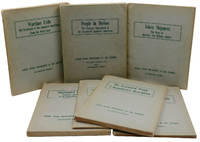
1946140941373Washington D.C.: U.S. Government Printing Office 1946. First Edition. Very Good. First edition first printings. Seven titles: Wartime Exile 167pp.; Impounded People 239pp.; The Relocation Program 105pp; Administrative Highlights of the WRA Program 82pp.; Token Shipment 104pp.; The Evacuated People 200pp.; People in Motion 270pp. Good. Wraps worn some soiled foxed chipped or stained; People in Motion has a long tear to the rear cover. Handwritten titles on spines which are also creased and chipped with loss to spine ends. Pages toned sometimes creased. <p><br /> <br /> Rare documents of the American government's official record of its WWII internment of people of Japanese descent one of the most controversial official programs in American history as reported by the War Relocation Authority. The WRA managed the forced confinement of people of Japanese ancestry in America during World War II as well as their return to civilian life with the commencement of the war. U.S. Government Printing Office unknown
1946140941373Washington D.C.: U.S. Government Printing Office 1946. First Edition. Very Good. First edition first printings. Seven titles: Wartime Exile 167pp.; Impounded People 239pp.; The Relocation Program 105pp; Administrative Highlights of the WRA Program 82pp.; Token Shipment 104pp.; The Evacuated People 200pp.; People in Motion 270pp. Good. Wraps worn some soiled foxed chipped or stained; People in Motion has a long tear to the rear cover. Handwritten titles on spines which are also creased and chipped with loss to spine ends. Pages toned sometimes creased. <p><br /> <br /> Rare documents of the American government's official record of its WWII internment of people of Japanese descent one of the most controversial official programs in American history as reported by the War Relocation Authority. The WRA managed the forced confinement of people of Japanese ancestry in America during World War II as well as their return to civilian life with the commencement of the war. U.S. Government Printing Office unknown books
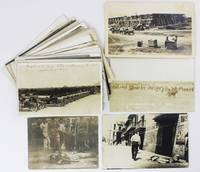
19216158Various places in Mexico Texas and Arizona 1921. Overall about very good. 106 real photo postcards including six duplicates. Varying sizes but most approximately 3.5 x 5.5 inches. Scattered contemporary and later manuscript annotations. Light wear at edges occasionally a bit heavier. Some scattered damp and dust soiling. A substantial collection of over 100 real photo postcards that depict scenes from the Mexican Revolution and the related border war interventions of the United States Army. The images included here some quite violent in nature are dated from 1913 to 1922; most are captioned in the negative. They show ruined buildings military encampments injured soldiers and corpses on both sides of the U.S.-Mexican border and in Veracruz. Also included are identified portraits of individuals such as Francisco Madero Pancho Villa on his deathbed and American General John Pershing. Many of the images are by El Paso photographer W.H. Horne who was one of the most prominent photographers of Border War incidents captured the Columbus Raid in New Mexico and photographed skirmishes near his home in El Paso. Also present are a short series of images by Cal Osborn who documented border incidents near Douglass Arizona and a group by William Hadsell William Hadsell an American resident of Veracruz who ran a Kodak store and was a prolific recorder of events there. Several Mexican photographers are represented as well. Many of the photos are quite gruesome in nature and show corpses in various states of decomposition as well as the aftermath of battles and executions but in all provide an arresting visual document of the interventions by the United States in Mexico during the 1910s. Powerful images of the Mexican Revolution and the resulting upheaval there and along the border with the United States. unknown
19431050611943. WORLD WAR II. Archive: Wake Island Raid maps photographs and documents. Near Wake Island: Intelligence Center Pacific Ocean Areas October 5-6 1943. Sixteen maps photographs and documents; maps range in size from 8 by 8 inches to 18 by 21-3/4 inches; photographs range from 6-1/4 by 8 inches to 18 by 9-1/4 inches. $9500.Superb archive of rarely seen map and photographs used in planning and documenting the October 5 1943 raid on Wake Island which was taken by the Japanese only weeks after the Pearl Harbor attack.Wake Island a U.S. airbase located approximately 2200 miles west of Pearl Harbor was captured by the Japanese in late December 1941. The island remained under Japanese control until the garrison there surrendered on September 7 1945. In October 1943 a U.S. task force conducted a two-day air raid on the island. The Japanese commander Shigematsu Sakaibara convinced the raid was the beginning of an attempt to retake the island marched 98 American civilian prisoners of war to a remote corner of the island and executed them. Following the war Sakaibara was tried and executed for war crimes. Of particular interest is a large map on thick stock folded into quarters and reinforced with tape on the verso bearing copious pencil annotations documenting the second day of air raids on the island recording various points in the action from the initial takeoff from the carrier at ""0515"" through the squadron's departure around ""0745."" The pilot carefully draws the route of two bombing runs the first against the runways on the main island of Wake and the second targeting the barracks and ammunition storage on nearby Peale Island. The pilot noted the direction of anti-aircraft fire positions of guns as well as the wind and the general weather conditions: ""Cumulus @ 2500 strong vertical development Squalls to and from island."" The pilot recorded damage sighted including ""Red flame black smoke 0710"" coming from an underground storage area adjacent to Runway A. On his second run he observed ""Black smoke 0706-0715still going strong at 0725"" near the barracks on adjacent Peale Island. The archive also features four large highly detailed reconnaissance photographs of Wake island together with a large body of smaller maps all used in the planning of the October raid. Also of interest is a mimeographed document titled ""U.S.S. Yorktown Air Department Plan of the Day Tuesday 5 October 1943"" which details the schedule of the first day of operations beginning at ""0245"" and ending prior to sunset at ""1645"" noting the planned launchings and landings of seven major sorties against Wake. Several of the items are stamped ""VT-5 Air Intelligence""; VT-5 was a torpedo bomber squadron stationed on the Yorktown during the war. All items apparently from the collection of Lt. H.T. Reynolds of torpedo bomber Squadron VT-5 stationed aboard the U.S.S. Yorktown. One of the photographs of an Avenger in flight over Wake Island is captioned ""Lt. Reynolds U.S.S. Yorktown 1943.""Typical folds and other wear consistent with use though generally very well preserved in excellent condition overall. A superb collection of original materials used in the planning and subsequent reports on this historic attack. unknown
19451175421945. WORLD WAR II. Mimeographed typescript of the USS Salamaua News. No place September 3 1945. Two sheets of beige paper staple-bound as issued each measuring 8 by 13 inches; pp. 2. $9500.Original mimeographed USS Salamaua News newsletter containing detailed news of Japanese surrender preliminary reports on POWs in Japan and their treatment by the Japanese Japanese reactions to the surrender brief news from around the world and baseball standings accompanied by a black-and-white photograph of the newsletter's owner Lt. Commander Fred R. Salisbury II of the Salamaua.This newsletter was issued for crewmen on the USS Salamaua best known for being attacked on January 13 1945. This ship newsletter from nine months after the attack kept the crew of approximately 570 officers and enlisted men informed of world eventsparticularly those relevant to their service. This issue of the newsletter provides details of the Japanese surrender; initial reports on prisoners in Japanese prison camps; and other world news including standings for the National League and American League baseball teams.Notable quotations from the newsletter include: ""TOKYO BAY Japan surrendered formally and unconditionally to the United States and its allied partners today MacArthur told the Japs that 'As supreme commander for the allied powers I announce it is my firm purpose in the tradition of the countries I represent to proceed in the discharge of my responsibilities with justice and tolerance while making all necessary dispositions to insure that terms of surrender are fully promptly and faithfully complied with President Truman speaking over a radio hookup proclaimed Sunday September 2nd as 'V-J Day' The day of formal surrender by Japan Liberated allied prisoners of war Sunday recited more instances of beating hunger and humiliation There was no indication of deliberate German scale mass extermination Approximately 4200 Americans British and Dutch remain in camps in the Tokyo-Yokohama area TOKYO The Japanese said Saturday that for two days after Emperor Hirohito told his people the war was over several planes evidently flown by fanatical suicide pilots dropped pamphlets on major Japanese cities asking the people to disregard the Emperor's word and fight on ""The USS Salamaua had participated in the invasion of Lingayen Gulf in the Philippines. A kamikaze attack carried out by a Ki-84 airplane left a 16-foot by 32-foot hole in the Salamaua's flight deck. It also sparked a number of fires. The plane had carried two 551-pound bombs allowing it to penetrate deeply into the lower decks. One bomb detonated near the tank tops just above the bilge and narrowly missing the bomb stowage compartment. The blast sent debris and fuselage across the flight deck collapsing a number of bulkheads. The second bomb failed to explode and was ejected through the starboard side of the ship at the waterline. The 20-inch hole it left allowed seawater to rush into the ship. As a result the ship lost power communications and steering becoming a sitting duck.While the Salamaua sat immobile two more planes tried to strike it. One crashed into the sea while another detonated in mid-air as it approached. The failure of those pilots meant that the attack killed only 15 of the Salamaua's crew. Another 88 crewmen were injured some seriously.When Rear Admiral Calvin T. Durgin in command of a task force asked for the origin of the smoke he saw coming from the Salamaua he received the reply ""Something just went through our flight deck."" The starboard engine was submerged and the ship listed 8 degrees to starboard. Yet the crew managed to get the ship functional using only the portside engine. Ten long hours after the attack the Salamaua was able to break away to Leyte for repairs. An entire day of pumping failed to alleviate the flooding so the ship merely underwent stabilization repairs before being sent to San Francisco for two rounds of repair. The Salamaua returned to the Philippines in May and eventually was retired from service in 1946 earning the dubious distinction of being the last ship to be successfully attacked by a kamikaze. From the collection of Lt. Commander Fred R. Salisbury II of Minnesota. Salisbury worked in his father's business a furniture manufacturer until the outbreak of World War II Salisbury enlisted in the U.S. Navy in February of 1942 and was assigned to be lieutenant commander of the USS Salamaua a Casablanca-class escort aircraft carrier. Salisbury was released on inactive duty in March 1946 and became vice president of the family business. Laid-in photograph of Salisbury in Guam in 1945.A fascinating World War II artifact. unknown
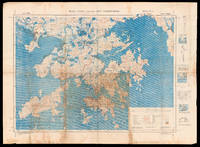
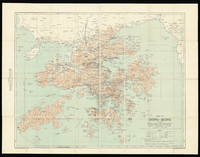
194516008London : War Office August 1945. 780 by 1050mm. 30.75 by 41.25 inches. Chromolithograph map with manuscript annotations in pencil and pen with three insets and diagrams to right margin minor browning a few nicks and tears to margins. A unique map of Hong Kong and the New Territories with contemporary manuscript annotations showing the liberation of Hong Kong from Japanese occupation. This map which shows Hong Kong Kowloon and the New Territories was first published by the British War Office in 1936. The present example a second edition was published shortly after the end of the Second World War when Britain reoccupied the islands following four years of Japanese occupation. Thick red lines across the map indicate the "all weather roads" that could be relied upon for travel and communications across the region. Extending from Lantau Island to the west to Mirs Bay in the east from the Chinese city of Shenzhen in the north to the southern Soko Islands it is generally considered one of the most detailed maps of Hong Kong made in the early twentieth century. The present example is made more interesting by the copious manuscript annotations that appear across the centre of the map. A grid has been drawn over Hong Kong in pencil marking the lines of longitude and latitude more precisely. Discolouration indicates that it this lower central portion that was the primary focus of the map during its use. Annotations in pen identify features such as "Dockyard Stores" "Canal" and "Coal Dump" and military information including "Officers Mess" and "2 AA Guns". There are also numerous annotations listing the number of Japanese soldiers in Victoria these include "3000 Japs" together with a further 200 with horses and the Japanese Officer's Mess. Japanese troop numbers are noted on Kowloon totalling just under 2000 men. More annotations can be seen further north near modern day Shenzhen marking the location of the Head Quarters for both the Hong Kong Artillery Force and the Defence Force as well as military companies and infantry divisions. A note in the upper right margin identifies it as the hand of "Capt Owens" an officer in the British Task Force that landed in Hong Kong on 30th August 1945 to take back control of the territory from the Japanese. Established in 1857 the British War Office was the governmental department responsible for the administration of the British Army until 1964 when its functions were transferred to the Ministry of Defense. During this time it produced many maps with the number of publications increasing rapidly during years of conflict. War Office, unknown
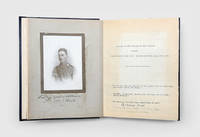
1918156559India Mesopotamia and Persia: December 1914 - July 1918. I have come to the conclusion that the war out here is much more pukka campaigning than in France An unpublished and otherwise untraced First World War album recording the experiences of an officer serving in India Mesopotamia and with Dunsterforce in Persia. It preserves his lively letters home and over 150 photographs taken on duty the final letter written only days before he was killed in action at Resht. Most letters are addressed to his mother Ada Eliza Wilkinson née Machin and the album opens with his formal portrait signed by her on the verso. Beginning with his voyage to India in December 1914 he records life in Port Said the Suez transit and his posting to Quetta where he lived comfortably but grew frustrated at being far from the fighting. Throughout 1915 he describes training frontier camps and the slow grind of the war his early enthusiasm giving way to weariness and disillusion. In late 1916 he finally volunteered for active service in the Middle East reaching Basra in October and soon taking part in mobile desert operations railway protection and frequent skirmishes with Turkish forces. His letters convey both the hardships and the relative freedom of campaigning compared with the Western Front. Wounded by a sniper in early 1917 he recuperated briefly in India before returning to the field. In December 1917 he joined Dunsterforce in Persia reporting on the weakening Ottoman position. He was killed in action at Resht on 20 July 1918 and buried with military honours at the Russian consulate. The album concludes with numerous letters of condolence from senior officers and comrades. The photographs document Bombay Quetta Delhi and daily military life in India as well as Basra Amara Beit Nama and operations in Mesopotamia and Persia including irrigation works armoured cars and troop movements. Loosely inserted are three autograph letters a postcard and a 1949 British Legion Service of Remembrance. No other manuscript or typescript copies of the letters are known. The family also compiled a memorial volume for Wilkinson's brother Geoffrey Miles Wilkinson killed later in the war. Quarto 255 x 205 mm. Occasional contemporary manuscript annotations. Together 258 typescript sheets each with text one side only 153 mounted photographs with typescript captions mostly gelatin silver snapshots photographic portrait mounted on card. Bound in contemporary black leatherette front cover monogrammed "J.G.W." Binding with some wear typescript sheets toned some photos oxidized as expected foxing and adhesive marks to opening portrait: a very good example. hardcover
192214937Hong Kong 1922. 665 by 860mm. 26.25 by 33.75 inches . Colour lithographed map dissected and mounted on linen folding map. An early attractive and detailed map of Hong Kong and the New Territories first published in 1905 and re-issued with additions in 1922. From another example of this chart we have handled it appears that the coastline from Sai Kung to Mirs Point onwards was taken from Admiralty charts; that of Deep Bay from the mouth of the Sham Chun River to South-West Point from a survey by the P.W.D.; thence northward and westward from Admiralty charts; that of Lan Tao and adjacent islands from a 1-inch map compiled by Tate; and the New Territories from a map compiled by W. J. Newland in 1903-04 with additions and revisions by P.W.D. in 1913 and 1922. As listed in the Reference table the map shows Important Villages & Market Places; Villages; Churches & Mission Stations; Pagodas & Temples; Pass; Heights in Feet above Sea Level; Bridges; Limit of Navigation for Large Junks; Cart Roads; Pack Roads & Paths; Telegraphs; Tramways; Boundary of British Territory; and Railways. "The local spelling of place-names has been followed". This map has been compiled from Existing Intelligence Division maps of Hong Kong; Admiralty Charts; Map of New Territory Kowloon compiled by Mr. Tate for Colonial Government Survey 1899 1900; Survey of Kowloon and part of New Territory 8 In. 1 Mile carried out in 1902-1903. The boundary along the Shores of Mirs Bay and Deep Bay is the High Water Mark. It has not yet been surveyed and is only shown provisionally. Geographical Section General Staff No. 1393. Additions Mar. 1922 War Office Aug. 1905. Scale 1:84480 or ¾ Inch to 1 Mile. unknown
1944188792Washington DC: Joint Intelligence Study Publishing Board 1944-46. The lead compiler's copies Classified material from the first significant US joint-intelligence programme each with the lead researcher's ownership signature "Capt. H. Kuhlenbeck" at the head of the front wrapper and all but the first identified as a "contributor's advance copy" in his hand. Established in 1943 the JANIS programme produced comprehensive reports on different strategic theatres and involved personnel from military naval and air intelligence as well as the Office of Strategic Services and the Office Chief of Engineers. For each area either a country or a subregion JANIS operatives compiled briefings on geography climate demographics communications military facilities and health and sanitation. By the end of the war the reports had become the model for all strategic intelligence work and long-term planning. In 1947 the programme was absorbed into the CIA. A naturalized American citizen Hartwig Kuhlenbeck 1897-1984 was recruited into the US Army Medical Corps in 1944 at the rank of captain. Having travelled in Asia and been a visiting professor in Tokyo in the 1920s he was assigned to the Office of the Surgeon General as an expert in health and sanitation in East Asia. His reports here on Manchuria China and parts of Japan provide assessments and recommendations concerning environmental conditions public health facilities and the spread of major diseases. For the China East Coast volume he was assisted by Dr E. A. Struthers a British medical officer in Malaya. Kuhlenbeck remained with JANIS until 1946 returning to his successful academic career shortly after a promotion to major. Loosely inserted in three of the works are memoranda from the Joint Intelligence Study Publishing Board that list the programme's participating personnel. Kuhlenbeck is identified as the lead for the health reports and reachable on a War Department landline. 7 works folio. With folding maps in 2 works illustrations and tables in text; 3 works with loosely inserted memorandum. Original buff card front covers printed in black hole-punched as issued. Housed in custom green cloth portfolio spine lettered in gilt. General signs of handling some wrappers toned: a well-preserved collection. hardcover
1944150498May-July 1944. Eyes over Normandy - the Reich in ruins Taken between February and July 1944 these remarkable large-scale images portray major operations against Axis infrastructure and the preparations for and execution of the Allied invasion of Europe. This is a well-curated selection in terms of both subject matter and size and quality of the prints. We have traced one other copy in institutional libraries at the Library of Congress donated by General Carl Spaatz commander of Strategic Air Forces in Europe in 1944. The shots gathered here include the bombing of Berlin "vast areas of Berlin in ruins"; the destruction of aircraft factories at Limoges Gotha Leipheim and Marienburg and of the railway marshalling yards around Paris; 14 images relate to the D-Day landings and the operations immediately following including landing craft protected by war ships off the coast and at the beaches temporary harbour with "breakwater which consists of Merchantmen and old warships anchored in a continuous line while special pontoon sections make up another and also piers and jetties"; Horsa and Hamilcar gliders at Caen; the bombardment of Caen; Tirpitz at her moorings in Kaafjord; oil refineries at Hamburg in flames; 13 images relating to the V Weapons project: Bois Carré the first V1 launch site to be identified before and after bombing; a V1 in the air pursued by a Hawker Tempest photographed from an American Lockheed Lightning; attacks on the V2 site at the "La Coupole" bunker complex at Wizernes and "the massive concrete structure at Mimoyecques. probably connected with Germany's V.2 rocket weapon" but which was actually intended to house a battery of V-3 cannons the "London Gun" supergun the site was put out of commission by 617 Squadron - "The Dambusters" - with 11900lb Tallboy bombs. A full listing of the photos is available on request. Contemporary landscape quarto post-backed album 288 x 367 mm black sand-grain cloth black marbled paper pastedowns. Containing 54 large-format original photographs 200 x 230 mm to 230 x 330 mm mounted on 27 leaves of heavy grey paper stock all with detailed typed captions giving location details of the events portrayed and in most cases date aircraft crew and height. Calligraphic title page. Binding lightly rubbed the mount leaves lightly rippled but the attached plates in excellent state; overall very good indeed. hardcover
1926List302Massachusetts 1926. Ink on paper 18 ½ x 23 ½ inches. Excellent. Alexander Johnson an African-American musician from New Bedford enlisted in the army at age 16 and was believed for some time to be the first African-American musician in the Union Army. He mustered into mustered into Company "C" of the Massachusetts 54th Infantry under Colonel Shaw. The 54th Massachusetts was the second African-American regiment in the Union army formed only after the 1st Kansas Colored Volunteer Infantry. New Bedford had a large population of escaped slaves and African-Americans from the city enrolled heavily. Johnson had been orphaned at a young age and his adopted father William Henry Johnson strongly advocated for African-American enrollment in the Union army a factor which most likely played a part in the young Alex's enrollment at age sixteen. <br /> <br /> Johnson served in the 54th for the duration of the war including the bloody charge of Fort Wagner on Morris Island on July 18 1863. The 54th lost 272 of its 600 men on that day including Colonel Shaw. Johnson's musical acumen was widely acknowledged and he became known - erroneously it would later turn out - as being the first African-American musician in the Union army. After the conflict ended Johnson settled in Worcester organizing a band called "Johnson's Drum Corps" and instructing young musicians. <br /> <br /> Augustus St. Gaudens famously erected a monument to the 54th at the Massachusetts state house. Johnson visited the monument at a G.A.R. event in 1904 and noted to others in attendance the similarity between his own likeness and that of the drummer boy in St. Gaudens monument. This proved to be pure coincidence as St. Gaudens had based his work on models but the idea persists to this day that Johnson is the drummer boy pictured.<br /> <br /> Johnson painted this memorial to the Ladies of the G.A.R. in 1926 at age seventy-nine four years before his death. The painting shows two birds with banners reading "Friendship" and "Loyalty" over a heart reading "Honor the Boys / of / 1861-1865" with a book open to pages reading "Mrs Elizabeth / Towne / Merry Christmas / and A / Happy New Year" and "President / Of / Gen. / Chas. Deven / Circle / No / 30 / Ladies of the GAR / 1926." Most of his comrades-in-arms were likely dead at this point and we find no record of Elizabeth Towne. A wonderful folk art memorial to the 54th Massachusetts well preserved and attractive in very good condition overall with light normal wear. <br /> <br /> <br /> References: Coddington Ronald. Colonel Shaw's Drummer Boy. New York Times March 5 2013. unknown books
195310075Herman Manasse 1953. Quarter Leather. Very Good binding. Oblong folio. 3 61 ll. Photographic reproduction. All pages are photographic paper likely sliver gelatin prints stubbed and bound in cloth boards backed in morocco. Binding is 16" x 19." Cover titled in gilt with presentation name in gilt below: "Mr. and Mrs. T. Harry Gatton." The first leaf is a photographic reproduction of the endpaper of the original copy capturing an ownership note in French dated 1952. This note along with a printed inclusion also part of the photograph identifies the copy used for reproduction as belonging to G. M. ver Hulst having come to him from his uncle the Comte Francois de Montholon who died 23 December 1951. The printed inclusion notes that this reproduction was done "by Herman Manasse especially for Mr. & Mrs. T. Harry Gatton of Raleigh North Carolina." We use the endpaper inscription as the earliest possible date of reproduction. Based on the physical aspects of the book it was probably done not long after that time. <br /> <br /> Only light wear to the binding. The "contents" leaf has a small closed tear to the top margin; rippling to the photographs throughout. It appears that during the rephotographing process the border of each photograph was masked off except for each photograph's title. Count Montholon's copy was exceptionally clean making this a remarkably good reproduction a couple of the images capture some abrading to the original but generally these are very clean bright images of one of the great American photographic works. As official photographer of the Military Division of Mississippi Barnard photographed Sherman's march to the sea capturing the devastation left in the wake of the general's controversial scorched earth campaign. The images are indeed striking. A contemporary review calls this "a splendid volume containing 61 imperial photographs embracing scenes of the Occupation of Nashville the Great Battles around Chattanooga and Lookout Mountain the Campaign of Atlanta March to the Sea and the Great Raid through the Carolinas. These photographs are views of important places of noted battle-field of military works; and for the care and judgment in selecting the points of view for the delicacy of execution for scope of treatment and for fidelity of representation they surpass any other photographic views which have been produced in this country—whether relating to the war or otherwise." Harper's Weekly Dec. 8 1866. p. 771. And indeed it has held up as a monument of American photography. While the first edition does come to market periodically it realizes some extraordinary prices. <br /> <br /> We've been unable to determine how many copies of this full-sized reproduction were created. Though the inclusion on the first leaf specifically states that this copy was for Gatton a series of cards could have been substituted as the leaf was repeatedly photographed individualizing each copy. So while it is certainly possible that this is a one-off it is more likely that a very small number were reproduced and presented to friends family and notables. To that end Thomas Harry Gatton 1918-2001 was a notable North Carolinian. Beyond his professional endeavors he was a World War II veteran chairman of the North Carolina Historical Commission and was appointed to the American Battle Monuments Commission by presidents Kennedy Johnson and Carter. In short one to whom this presentation would have been warranted and meaningful. Howes B-150; Sabin 3462; De Renne p.1317 all for the first edition Taft Photography and the American Scene p. 232 486. Herman Manasse unknown