3 992 résultats
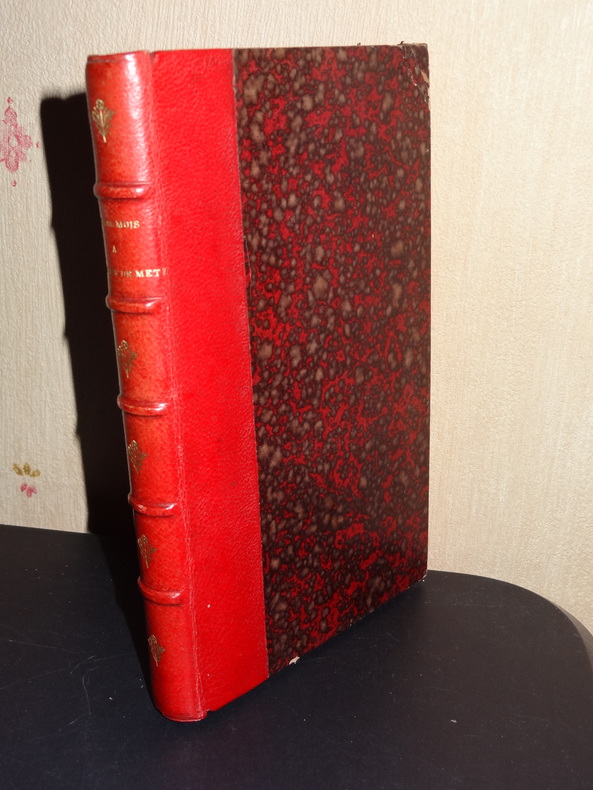
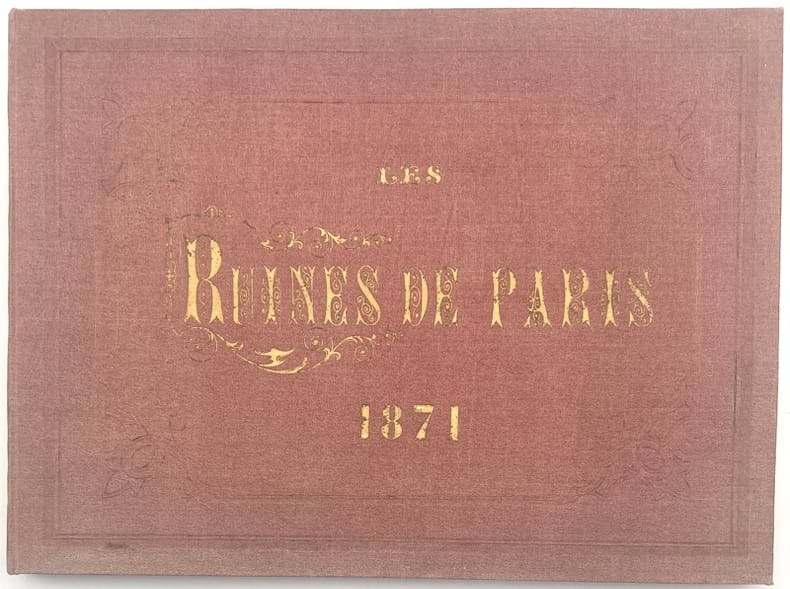
187114503Paris, Plon, 1871. In-12 de VII-316 pp., demi-chagrin brun, dos à nerfs, pièce de titre en maroquin vert, premier plat de couverture illustrée conservé (reliure de l'époque).
187140896Paris, Plon, 1871. In-12 de VII-316 pp., 12 planches hors texte, demi-chagrin noir, dos à nerfs (reliure de l'époque).
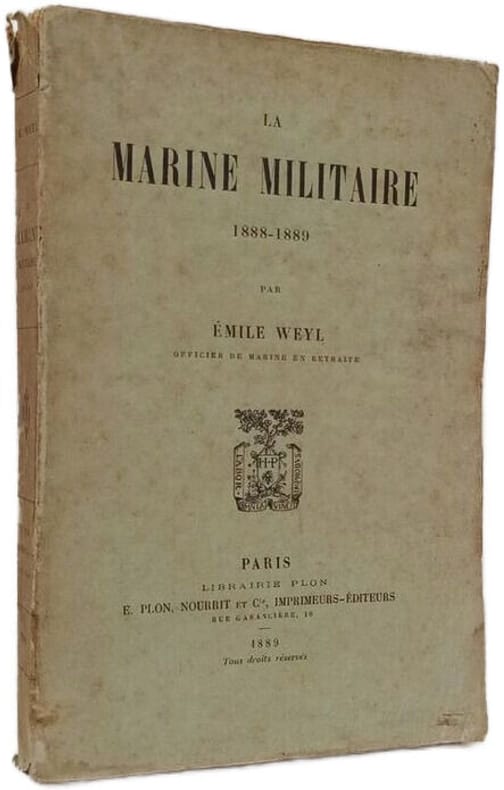
1889100151993E. Plon Nourrit et Cie imprimeurs-éditeurs 1889 in12. 1889. Broché. Ouvrage de référence sur la marine militaire française pour les années 1888-1889 rédigé par Émile Weyl officier de marine et ancien élève de l'École Navale. Publié par Plon en 1889 il traite de la flotte de guerre et des arsenaux
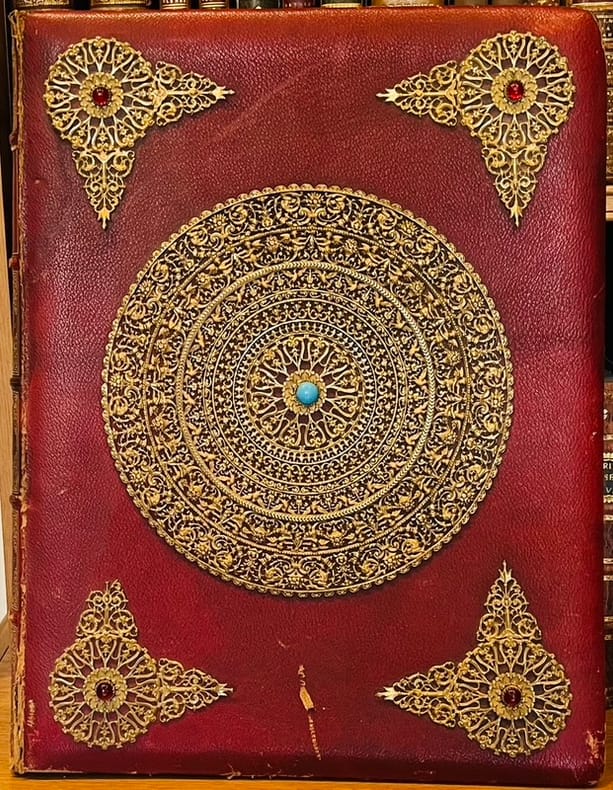
188044443, , (Vers 1870-1880). Grand in-folio manuscrit (54 x 41 cm) de 52, 50 ff. enluminés sur peau de vélin à l'encre et aquarelle rouge, vert, bleu et or, chagrin rouge, dos orné à nerfs, décor sur le plat supérieur d'écoinçons et d'une grande plaque circulaire ajourés en laiton avec incrustations de cabochons de pierres, sur le second plat quatre plaques d'angles circulaires ajourés en laiton avec incrustations de cabochons de pierres, dentelle intérieure, gardes de papier dominoté (reliure de l'époque).
1863954<p>Octavo 9 by 5 3/4 inches New York: Loyal Publication Society of New York "No. 26." 1863. First Edition very good condition 18 pages original stitched wrappers with stab marks along the spine and minor chipping to edges; not affecting contents which are intact and clean; Wm. C. Bryant & Co. Printers.</p><p>Hamilton was a "Southern Union man." He opposed secession and slavery; he eventually became Governor of Texas.His letter to Lincoln dated July 28 1863 shortly after Gettysburg supports the Emancipation Proclamation. He proclaims slavery an enemy of the nation and states that former slaves are " . capable of being made allies in the common cause of freedom justice and humanity."</p> Loyal Publication Society of New York "No. 26."
1864101456Pamphlet 8vo removed illustrated 86 pp. Probably lacking self wrappers dbd removed some notes on title last leaf folded in the lower corner; normal aging and browning; otherwise a good copy. This pamphlet is a U.S. Sanitary Commission report that includes four pretty dramatic illustrations taken from photographs of Union soldiers in a very emaciated condition. The photographs were taken shortly after the prisoners returned from Belle Isle. The commission appears to be headed by Valentine Mott former head of the medical department at the University of New York who was to find out if the sufferings of the POWs were a deliberate action of the Rebel Government or were the result of matters a beyond their control. Another edition of this work was published in Philadelphia in the same year. A map of the Andersonville prison is also included. books
1864101456<p>Pamphlet 8vo removed illustrated 86 pp. Probably lacking self wrappers dbd removed some notes on title last leaf folded in the lower corner; normal aging and browning; otherwise a good copy. This pamphlet is a U.S. Sanitary Commission report that includes four pretty dramatic illustrations taken from photographs of Union soldiers in a very emaciated condition. The photographs were taken shortly after the prisoners returned from Belle Isle. The commission appears to be headed by Valentine Mott former head of the medical department at the University of New York who was to find out if the sufferings of the POWs were a deliberate action of the Rebel Government or were the result of matters a beyond their control. Another edition of this work was published in Philadelphia in the same year. A map of the Andersonville prison is also included.</p>
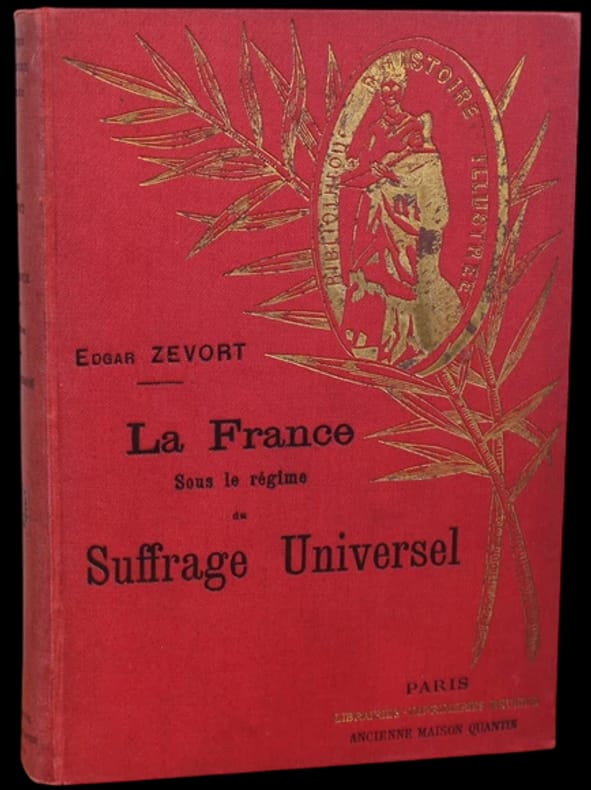
1894112590P., Ancienne Maison Quantin, Librairies-Imprimeries réunies, s.d. (1894), gr. in-8°, 263 pp, 118 portraits et gravures dans le texte et à pleine page, reliure percaline carmin de l'éditeur, dos lisse avec titres dorés et fleuron en noir, 1er plat illustré d'une vignette et de deux branches dorées, trace de mouillure ancienne au bas des plats, sinon bon état (Bibliothèque d'Histoire illustrée)
1894126750P., Ancienne Maison Quantin, Librairies-Imprimeries réunies, s.d. (1894), gr. in-8°, 263 pp, 118 gravures et portraits dans le texte et à pleine page, reliure demi-percaline carmin à coins, dos lisse avec titres dorés et caissons à froid, tranche sup. dorée, fer doré “Association Polytechnique” au 1er plat, bon état (Bibliothèque d'Histoire illustrée)
184596474[Ca. 1845]. 5 x 4,5 cm. Feinkartonpassepartout.
184594075[Ca. 1845]. 5 x 4,5 cm. Feinkartonpassepartout.
187113801871 P., Plon, 1871, in 12 relié demi chagrin tête de nègre, dos à faux nerfs, 67 pages ; quelques infimes défauts.
1871RO80101924PLON Henri. 1871. In-16. Relié demi-cuir. Bon état, Couv. légèrement passée, Dos satisfaisant, Intérieur acceptable. 66 pages. Etiquette de code sur la coiffe en-tête et tampons de bibliothèque sur la page de titre et dans quelques marges.. . . . Classification Dewey : 944.0811-Guerre et révolution de 1870/1871
187113791871 Paris, Plon, 1871, in 12, relié demi chagrin marron, dos à faux nerfs, 67 pages ; quelques infimes défauts.
1871RO80100992PLON Henri. 1871. In-8. Relié demi-cuir. Etat d'usage, Couv. défraîchie, Dos satisfaisant, Intérieur acceptable. 375 pages. Titre et filets dorés sur demi-chagrin bleu foncé, à 5 nerfs. Quelques légères épidermures sur le dos. Etiquette de code sur la coiffe en-tête et tampons de bibliothèque sur la page de titre et dans quelques marges.. . . . Classification Dewey : 944.0811-Guerre et révolution de 1870/1871
187128905Plon, 1871, gr. in-8°, 375 pp, reliure demi-chagrin vert bouteille, dos à 5 nerfs soulignés à froid, titres et caissons dorés (rel. de l'époque), coiffe sup. lég. frottée, bel exemplaire
1871112276Plon, 1871, gr. in-8°, 375 pp, reliure demi-chagrin chocolat, dos à 4 nerfs soulignés à froid, titres et fleurons dorés (rel. de l'époque), bel exemplaire
1896495031896 18 photographies N. & B. 9 x 6, 2 cms - Certaines légendées - Bon état - Réf. 49503
1871180557Bruxelles; C. Muquardt, 1 volume de format 18 x 11,5 cm, reliure demi chagrin, 272 pages, 1 carte dépliante, ex-libris, dos en très bon état, les coins sont un peu frottés, bel état intérieur, sans rousseurs, petite déchirure sans manque à la carte.
1863144848Stuttgart, Nitzschke 1863. VI, 349 Seiten. Beschädigter Kart.-Einband der Zeit. (Einband mit Fehlstellen und sehr stark berieben. Papier teils etwas stockfleckig). 21x14 cm
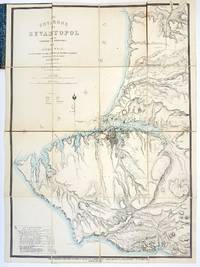
1854510936James Wyld Geographer to the Queen 1854. Hardcover. GOOD. Second Edition printed 10th October one week after the first. Hand-colored lithographic map. 27.5' x 20' dissected and laid down onto linen bound in plain blue cloth with marbled endpapers. Some foxing to the linen covers faded along the edges map remains very clean and bright. James Wyld, Geographer to the Queen hardcover
1887128777Berlin. Ernst Siegfried Mittler und Sohn 1887. VI, (1), 96 (von 103) Seiten. Ohne die Tafel und ohne Einband. (Es fehlen die Seiten 97 bis 103 mit dem Schlußartikel "Bereitstellung der Wurf-Batterien im Frieden" und dem "Inhaltsverzeichnis". Titelblatt teils eingerissen21x14 cm).
187144394Paris, , 1871. In-4 oblong, 20 photographies (15 x 21 cm) montées sur carton fort, table, toile rouge, titre doré sur le premier plat (reliure de l'éditeur).
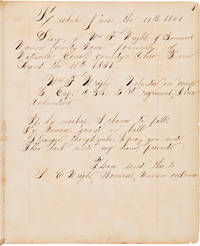
1861WRCAM56124Various places in Iowa and Missouri as described below 1861. 1022pp. approximately 16000 words. Contemporary half sheep and marbled boards. Boards detached but present worn and rubbed. Bookseller stamp on front free endpaper. Pages loosening but all present pages 33-34 with old repairs to a vertical tear running the length of the page. Occasional spots of soiling throughout but overall the text is quite clean and very easily read. Overall very good. An engaging account of the early days of the Civil War in Missouri by William F. Wright a Union volunteer from Somerset Iowa. Missouri was a highly-contested border state with both Union and Confederate supporters. It sent soldiers and arms to both sides was represented with a star on both flags maintained dual governments and featured a vicious intrastate war within the larger national war. William Wright's journal of his service in the first year of the war ably communicates the dangerous and unprecedented nature of guerilla warfare in the western theatre of the Civil War. <br> <br> Wright 1837-1905 enlisted in the 3rd Iowa Infantry Regiment in May 1861 responding to President Lincoln's first call for troops. Much of the diary centers on the months from July to September 1861 as his unit traveled back and forth across Missouri facing a guerrilla enemy with no clear battle lines. Unlike the large armies and massive battles further east Wright's regiment was frequently on the move by rail and foot often splitting off into companies squads and scouting parties prone to ambush by raiding parties with small detachments occasionally getting picked off by snipers. In addition to Confederate soldiers Wright's regiment also faced bands of pro-Confederate irregulars known as "bushwhackers." The war in Missouri was continuous from 1861 to 1865 with conflicts throughout the state. There were over 1200 distinct engagements in the state during the war; only Virginia and Tennessee exceeded this total. <br> <br> Wright is generally stoic throughout though he does admit to occasional homesickness and is justifiably distressed over a case of ague that comes on in August. When not drilling or recounting recent attacks Wright frequently mentions attending church prayer meetings and Bible study though he does not seem overly picky as to where. He attends a Catholic mass and a Presbyterian service on the same day and on another attends Episcopal Methodist and Presbyterian services on the same day. <br> <br> The diary begins on May 27 1861 as Wright puts his affairs in order and travels to Indianola where he "was sworn into the state service for three years" after which he proceeds with other recruits to Keokuk Iowa a major staging area for Union forces. His unit is officially sworn into "United States service" on June 8 receive their rifles on the 23rd and then assemble in camp on the 26th. The next day they receive word that they are heading to Missouri in the morning: "we received orders to cook enough provisions for three meals the drum would beat at 3 in the morning at which time we were to pull up stakes." They march to the docks board several steamships and head south on the Mississippi to Hannibal Missouri. Upon disembarking Wright comes across two men taken prisoner by the home guard "and I had for the first time the privilege of seeing a secession prisoner." <br> <br> The next day July 1 they board trains and head west: "I was surprised to see so many fine residences also quite a number of slaves were to be seen at work in the fields who cheered lustily as we passed.We passed several encampments of soldiers on the way who were all in good spirits. We hauled up at Utica in Livingston Co. slept in the cars." After a couple of weeks of false alarms of pending attack mysterious shots at night low rations and rumors of murdered soldiers the company was on edge. On July 18 Wright and nine other men were detailed to guard the railroad station in Utica after reports "that the enemy was going to burn it." During their watch "a spy came in with the information that from 500 to 800 men on Spring Hill were making preparations for an attack at the bridge and station simultaneously." No attack materialized however: "Daylight came and no enemy we were disappointed as we were well prepared for them and would have been pleased to have seen from 50 to 100 make their appearance." <br> <br> Tensions continued in a similar vein for the next few weeks as they shifted back east to Kirksville. Wright reports of all-night guard duty multiple nights in a row and frequently going without meals due to inadequate rations. On August 19 they received warning of a pending enemy attack which ends up as a small skirmish: "Six of our scouts were surrounded by 25 of the enemy. They killed Corporal Dix. The others made their escape after killing 3 or 4 of the enemy." Not long after they start heading south and while passing through Shelbina Missouri three of their men were shot one died by an enemy squad hidden in the brush. Circling back to Shelbina to rest they find the town partially destroyed by Rebel forces. Wright's unit then finished the task which he describes neutrally: ".the boys were allowed to go where they pleased and they took and destroyed ev'y thing in town. When ever a chicken was heard to crow a dozen men were ready to start for the place. Chickens and pigs were killed women's dresses taken children's playthings &c &c." Passing through Macon Missouri Wright and his comrades "dropped into a Brewery. There were quite a number of the boys there. Some of them were trading their shoes some shirts and others drawers for beer. I do not know whether they were their own clothes or whether they had stolen them. Saw three fights today." <br> <br> Heading west just outside of Kansas City they notice enemy scout activity. After more than two months of skirmishing and sniping the regiment saw its first pitched battle. On September 17 "3 p.m. we started from Liberty about 600 strong in the direction of the river. The enemies scouts were retreating as we went forward. The enemy killed 4 and wounded one of our men. About 4 o'clock we were fired into by the enemy which was the first that we knew of their position. We were within about 100 yds of their lines when we were fired on.We fought about an hour and 20 minutes when we were ordered to fall back as they had three men to our one and were flanking us. Four of the artillery men were kiled & four wounded which did not leave enough to man the gun and she was only fired three times when we had to haul her back by hand.we had 17 killed about 60 wounded and a number missing.it is reported that there were over 100 enemy killed and wounded." This was the Action at Blue Mills Landing also known as the Battle of Liberty. The next day Wright wrote "I have been helping to make coffins for our killed 12 bodies which will be buried in the evening.The most shocking scene that I have ever witnessed is one of the dead men whose face has been skined said to have been done by his brother-in-law." <br> <br> Wright had reported on his unit's tendency to loot earlier in the diary and now makes an interesting clarification: "When in the free State of Kansas the boys behaved very well. But since we have again come into Mo. they have began their old tricks. Last night there were quite a number of chickens stolen and a calf taken out of a man's dooryard." Perhaps in fairness to the Iowa troops they regularly went without rations or were given only flour and because they were often in hostile territory they rarely had permission to hunt or fish for their meals. <br> <br> Until this point Wright does not mention any direct encounters with African Americans but on October 18 as they depart Kansas City he notes they ".took three slaves with us who had run away from Lexington." Upon reaching Quincy Illinois "Will Newton and I went down town and got lodging for the three darkys who came from Kansas City. We left them with the supt. of the Colored Peoples Church." <br> <br> For the remainder of this diary Wright was stationed at the Benton Barracks in St. Louis; some of these entries are slightly out of order chronologically as though Wright inadvertently skipped pages. On December 1 he writes "In the evening one of Co. K was killed by accident. One of his comrades cocked his gun not knowing that it was loaded and shot the top of his head off. It was the most horrible sight that I have yet seen." Not much else happens until the end of the month when they get word that they'll be heading back out soon and start prepping their equipment. Leading up to Christmas he notes many of the men planning a big Christmas dinner: "For my part do not feel like celebrating the day. Think it will not pay here will pass it by as other days for this time." <br> <br> Wright's final entry on Christmas Day is also introspective. Having reflected on his past seven months in the army the things he has seen and how frequently he has been spared he concludes: "I do not like a sol. life. Would be far from following it from choice but believe that it is my duty as we are engaged in a just and noble cause trying to sustain one of the best governments ever formed. Co. G is not drunk to night but slightly inebriated." <br> <br> At the end of the diary Wright has transcribed a letter from a rebel which gives a sense of some the psychological warfare practiced during the conflict. Dated at Fillmore Missouri July 18 1861 it reads in part: "I hope when this letter comes to hand you may have time to read it. And I think that I shal be nearby. And then as soon as it is red I shal be near enough to nock your life out of you. I hope the time may come when the flag of the fifteen glorious states may fly over the free and independent.Instead of one thousand of us there is about 8000 of us and we are coming there as soon as we can get there." <br> <br> Wright reached the rank of sergeant in 1863 and survived to muster out in 1864. After the war he married raised a family and farmed in Kansas and Nebraska. <br> <br> A detailed and informative diary of the brutal and chaotic early months of the Civil War in Missouri. hardcover books
184594071[Ca. 1845]. 5 x 4,5 cm. Feinkartonpassepartout.