3 995 résultats
1884R320104005DENTU E.. 1884. In-8. Broché. Etat d'usage, Couv. convenable, Mors fendus, Intérieur frais. XV + 304 pages + 2 CARETES DELIANTES en noir et blanc en fin de volume - Etiquette collée en coiffe en pied - Tampon sur la page de faux-titre - . . . . Classification Dewey : 944.0811-Guerre et révolution de 1870/1871
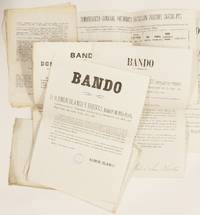
1896RF 818<p><i><b>Collection of 23 original edicts February 1896-September 1898 by the Captain Generals of Cuba 19 by General Valeriano Weyler 4 by General Ramón Blanco the last Spanish Captain General of Cuba. The edicts concern the attempts by the Spanish authorities to control the insurrection. They range from Weyler's efforts to concentrate the population in fortified encampments a measure often considered the precursor of concentration camps to Blanco´s establishing of a ceasefire in 1898.</b></i></p><p>23 ORIGINAL EDICTS; some manuscript annotations and the stamp of the Army of Cuba on some communiqués. The collection includes three items of related ephemera.</p><p>Notable collection of original edicts from Spanish authorities who participated in the Cuban War of Independence and attempted unsuccessfully to end the insurrection. The Cuban War of Independence the War of 1895 is the name given to the final Cuban war against Spanish domination. It is one of the last American wars against the Kingdom of Spain. The war began on 24 February 1895 with a simultaneous insurrection in 35 Cuban localities known as Grito de Oriente formerly known as Grito de Baire and ended in 1898 with the surrender of the Spanish Colonial army to the U.S. military advance with the assistance and support of <i>mambises</i>members of the Independentist Cuban army in the conflict known as the Spanish-American War. </p><p>Details on each of the edicts available on request. G. 11653/ RF 818. X99X001160 </p>
1873R320059558PLON HENRI. 1873. In-8. Broché. Etat d'usage, Couv. convenable, Dos satisfaisant, Intérieur acceptable. 442 pages - Coiffes en tete et pied abimées -. . . . Classification Dewey : 944.0811-Guerre et révolution de 1870/1871
1873R320059561PLON HENRI. 1873. In-8. Broché. Etat d'usage, Couv. convenable, Coiffe en tête abîmée, Intérieur frais. 308 pages - Coiffes en tete et pied abimées.. . . . Classification Dewey : 944.0811-Guerre et révolution de 1870/1871
1873R320059562PLON HENRI. 1873. In-8. Broché. Etat d'usage, Couv. convenable, Coiffe en tête abîmée, Pliures. 400 pages - Coiffes en tete et pied abimées.. . . . Classification Dewey : 944.0811-Guerre et révolution de 1870/1871
1871R320103997"PLON HENRICAMPAGNE DE 1870-1871"". 1871. In-8. Broché. Etat d'usage, Couv. convenable, Dos frotté, Intérieur frais. 662 pages - Des dechirues sur les tranches du 1er plat et premieres pages, sans conséquence réelle sur la lecture - Etiquette collée en coiffe en pied - . . . . Classification Dewey : 944.0811-Guerre et révolution de 1870/1871"
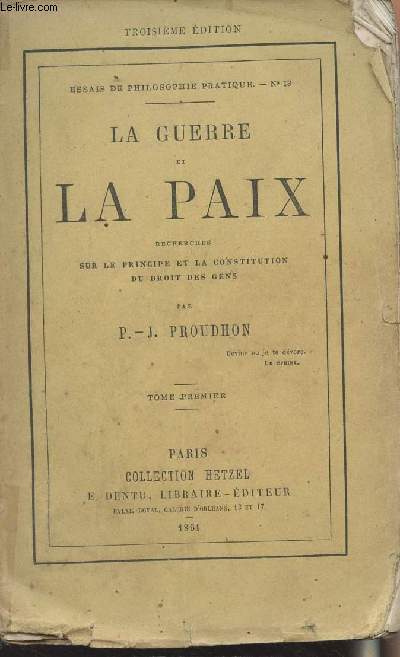
1861R240162710E. Dentu. 1861. In-12. Broché. Etat d'usage, Couv. légèrement passée, Dos plié, Quelques rousseurs. 404 + 16 pages. 1er plat légèrement déchiré. Dos plié, scotch en renfort.. . . . Classification Dewey : 303.66-Guerre
18999270Tours MAME 1899 1 Tours, Mame, 1899, percaline rouge, plats décorés, scène de croisade estampée dorée, encadrée large bande motifs géométriques et floraux, titre dans un large ruban sous des armes, tranches dorées, 398 pp.
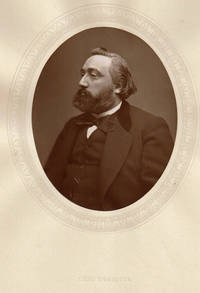
187596430Lock and Whitfield circa 1875. 1875. Very good. - A richly hued 4-1/2 inch high oval woodburytype portrait of Leon Gambetta mounted onto 11-1/4 inch high by 8-1/2 inch wide stiff cream stock. A light gray printed decorative frame highlights the image. The subject's name is printed in the same light gray centered within the lower half of the sheet. "Lock and Whitfield" and "Woodbury Process" are printed at left and right along the lower edge. There is a light vertical crease in the mat and a tiny stain to it's right edge. Very good. <p>The French statesman Leon Gambetta 1838-1882 was admitted to the bar in 1859 and the Conference Mole in 1861. In 1868 Gambetta was selected to defend the journalist Delescluze who was being prosecuted for promoting the erection of a monument to Baudin who'd been killed resisting the 1851 coup d'etat. Gambetta used the occasion to both attack the coup d'etat and the government. He was elected to the assembly by both a district in Paris and one in Marseille. Initially opposing the war with Prussia he gradually came to accept the patriotic line and called for strong measures following the disaster at Sedan. It was he who proclaimed the deposition of the emperor at the corps legislatif and the establishment of a republic at the Hotel de Ville. As one of the first members of the new Government of National defense he became Minister of the Interior. When the delegation to organize resistance in the provinces failed Gambetta set off in the "Armand-Barbes" a coal gas-filled balloon to take control as minister of the interior and of war in Tours. With his assistant secretary of war and the young officer of engineers Freycinet Gambetta organized an army which might have successfully relieved Paris if Metz had not fallen. He later faded from politics after his republican party was defeated by the conservatives and monarchists.<p>Both a printing process and the print which it produces Woodburytype was invented and patented by Walter B. Woodbury in 1864. A photomechanical process Woodbury type prints are made from exposing a dichromate-sensitized sheet of gelatin to UV light shining through a photographic negative. Each area of the gelatin hardens to a depth in proportion to the amount of exposure to the light before it is then soaked in warm water. The relief image is then pressed onto a sheet of lead to create an intaglio metal printing plate. Lock and Whitfield, circa [1875]. unknown
1873R320059559PLON HENRI. 1873. In-8. Broché. Etat d'usage, Couv. défraîchie, Dos satisfaisant, Intérieur frais. 446 pages - Coiffes en tete et pied abimées.. . . . Classification Dewey : 944.0811-Guerre et révolution de 1870/1871
189947205New York: Underwood & Underwood Publishers 1899. Now housed in an archival mylar sleeve. Some wear & soiling to card. A bit of yellowing to image. A VG example. Caption printed to verso in 6 languages. Stereo image separate domed mounted to stiff-stock concave card. Oblong format: 3-1/2" x 7". Rounded corners. <br/><br/> Underwood & Underwood, Publishers unknown books
1873R320059563PLON HENRI. 1873. In-8. Broché. Etat d'usage, Tâchée, Coiffe en tête abîmée, Intérieur acceptable. 444 pages - Coiffes en tete et pied abimées.. . . . Classification Dewey : 944.0811-Guerre et révolution de 1870/1871
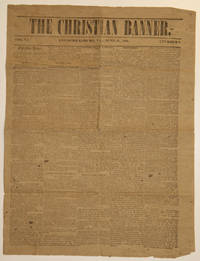
186221798<p><i>"The colored population of Fredericksburg are strolling about town and seem to be perfectly happy our country is ruined and slaughtered worse than beeves all on account of the negroes! Can it be possible that man will sacrifice their country for the negro…"</i></p><p>A fine war-date newspaper published in Fredericksburg Virginia. Articles on the front page describe the destruction of President Jefferson Davis's Mississippi plantation the Battle of Memphis military actions near Richmond and an account of operations near Charleston South Carolina. Several other articles deal with the subject of slavery.</p> <b>CIVIL WAR – CONFEDERACY.</b>Newspaper. June 11 1862. <i>The Christian Banner</i> Fredericksburg Va. J.W. Hunnicutt Vol. 1 Number 6. 4 pp. large folio.<p><b>Excerpts</b></p><p>"<i>We learn that the vandals have come off their boats and battered down and utterly destroyed the residence of Jeff. Davis and also that of Joe Davis. Their acts of destruction and vandalism in that neighborhood were complete leaving nothing behind but a bleak and desolate track behind them</i>."</p><p>"<i>African Slavery. The fact can be no longer disguised; let this war result as it may African Slavery in Virginia is already virtually swept from her territory. If she would lay down her arms and return to the Union her citizens might receive some remuneration for their servants from Government</i>"</p><p>"<i>Submission … This is submission with a tyrant's rod and a vengeance. And all who were opposed to secession have been forced to </i>submit<i> because a Military despotism has been hanging over them ever since. and this is freedom—Independence!"</i></p><p>"<i>The word submission has produced a greater terror over the Southern people than any word in the world. Submission! Submission to what Submission to Old Abe Lincoln Submission to Black Republican rule what power had he Lincoln none whatever! If all the States had remained quietly and peacefully in the Union. Lincoln could not have inaugurated a civil war upon the South</i>"</p>
186221798<p><i>"The colored population of Fredericksburg are strolling about town and seem to be perfectly happy our country is ruined and slaughtered worse than beeves all on account of the negroes! Can it be possible that man will sacrifice their country for the negro…"</i></p><p>A fine war-date newspaper published in Fredericksburg Virginia. Articles on the front page describe the destruction of President Jefferson Davis's Mississippi plantation the Battle of Memphis military actions near Richmond and an account of operations near Charleston South Carolina. Several other articles deal with the subject of slavery.</p> <b>CIVIL WAR – CONFEDERACY.</b>Newspaper. June 11 1862. <i>The Christian Banner</i> Fredericksburg Va. J.W. Hunnicutt Vol. 1 Number 6. 4 pp. large folio.<p><b>Excerpts</b></p><p>"<i>We learn that the vandals have come off their boats and battered down and utterly destroyed the residence of Jeff. Davis and also that of Joe Davis. Their acts of destruction and vandalism in that neighborhood were complete leaving nothing behind but a bleak and desolate track behind them</i>."</p><p>"<i>African Slavery. The fact can be no longer disguised; let this war result as it may African Slavery in Virginia is already virtually swept from her territory. If she would lay down her arms and return to the Union her citizens might receive some remuneration for their servants from Government</i>"</p><p>"<i>Submission … This is submission with a tyrant's rod and a vengeance. And all who were opposed to secession have been forced to </i>submit<i> because a Military despotism has been hanging over them ever since. and this is freedom—Independence!"</i></p><p>"<i>The word submission has produced a greater terror over the Southern people than any word in the world. Submission! Submission to what Submission to Old Abe Lincoln Submission to Black Republican rule what power had he Lincoln none whatever! If all the States had remained quietly and peacefully in the Union. Lincoln could not have inaugurated a civil war upon the South</i>"</p> books
1873R320059560PLON HENRI. 1873. In-8. Broché. Etat d'usage, Couv. convenable, Coiffe en tête abîmée, Intérieur frais. 196 pages - Coiffes en tete et pied abimées.. . . . Classification Dewey : 944.0811-Guerre et révolution de 1870/1871
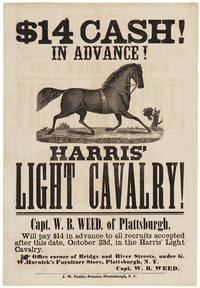
1861WRCAM54022Plattsburgh N.Y. 1861. Printed broadside 13 3/4 x 20 inches. Matted. Mild offsetting of text from being previously folded minor restoration in left margin light folds and toning. Very good. A rare Civil War recruitment broadside stating that Captain W.B. Weed will pay $14 in advance to all Union recruits accepted after October 23 in the Harris' Light Cavalry. Signed in type by Captain Weed who enlisted with the 2nd New York Cavalry in September 1861 only to be discharged less than a year later on June 24 1862. The broadside includes a large and well-executed engraving of a cavalry horse. <br> <br> Named in honor of Senator Ira Harris of Albany Harris' Light Cavalry the 2nd New York Cavalry was organized at Scarsdale New York during the summer of 1861 and over the course of four years' service earned one of the most illustrious records in the Army of the Potomac. The 2nd Cavalry lost heavily during Pope's Campaign in the late summer of 1862 and again before and after Gettysburg losing almost 50 at Aldie alone with equal losses later in the year at Liberty Mills and Buckland Mills. During the summer of 1864 the regiment took part in Wilson's raid on the South Side and Danville Railroads and it fought in the Shenandoah Campaign when the tide was finally turned against the Confederates. The 2nd New York Cavalry is one of the 300 fighting regiments mentioned by Colonel Fox and ranks eighth in the list of mounted regiments which lost the most men killed and fatally wounded in action during the Civil War. unknown books
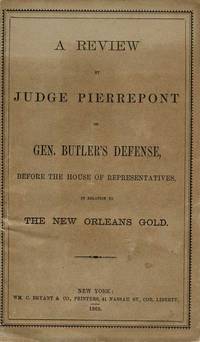
186521232New York: Wm. C. Bryant & Co 1865. Very good condition. Review concerning the Union General Benjamin Butler notorious for issuing "The Woman Order" General Order No. 28 during the 6 months May - October 1862 he was the military governor of New Orleans. It essentially ordered that any woman showing contempt for a Union soldier "shall be regarded and held liable to be treated as a woman of the town plying her avocation" in other words a prostitute. Butler nicknamed "The Beast" was also charged with looting gold and other valuables from New Orleans mansions and banks the subject of this review. 8vo 27pp. Tan printed wrappers title in black at front wrapper. Wrappers a bit sunned. OCLC: 5728749. Wm. C. Bryant & Co unknown
186223685New York: G. Savage 1862. Fine. Civil War era addenda to the Municipalist a New York magazine published following the "Separation of the United States". The first sentence reads "Since the preceding Letters have been published the United States of America have been dissevered and a new federation under the name of Confederate States of America formed". The Municipalist was first published in 1858; the second edition in 1859. <br /> <br /> Contents include secession enforced union convention of the states Abolitionists Shay's Rebellion the United States a great people no nation; and more.<br /> <br /> Plain paper wrappers. 16mo 303-348pp 1pp "Some Private Opinions". Stitched. Sabin 51330. OCLC: 950932219 one copy at the American Antiquarian Society. G. Savage unknown
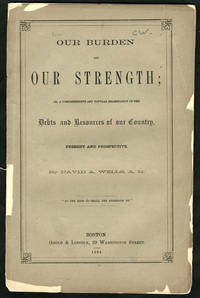
186423679Boston: Gould & Lincoln 1864. Very good - condition. Civil War era publication assessing the resources and debt paying capacity of the US "Can we pay our present and prospective National Debt . p1 written by American economist and advocate of low tariffs David Ames Wells.<br /> <br /> Wells 1828 - 1898 was a strong supporter of Abraham Lincoln during the war writing pamphlets reassuring investors on Lincoln's financial policies. <br /> <br /> 'Our Burden and Our Strength' established Wells' reputation as a political economist. Wells' analysis attracted the attention of Lincoln who in 1865 appointed him chairman of the National Revenue Commission. In this role Wells was the first to collect economic and financial data for government use; the Commission's recommendations became law in 1866.<br /> <br /> 8vo 39pp. Original printed paper wrappers with chips around the edges wrappers loose but present. OCLC: 12120949. Gould & Lincoln unknown
1864156661864 reliures éditeur (usagées, rousseurs à la deuxième série). 2 vol. in-folio oblong, 212 et (8ff.), 208pp. P. L'autographe 1864-1872
187043891870 in-12, demi-velin, titre et dessin à l'encre sur le dos.
1869124472Londres, Bruxelles, Paris, 1869-1871, 4 vol. in-12, 256, 268, 67 et 35 pp, réunion de 4 ouvrages peu courants reliés ensemble en un volume demi-basane verte, dos lisse avec titres et triples filets dorés (rel. de l'époque), dos lég. frotté, bon état
1860F0003Milan, Ricordi um 1860. 9 teils farbige Titelblätter, Halblederband der Zeit mit geprägtem Rückentitel ("Musica sacra"). Guter Zustand, Decke etwas fleckig, Ecken bestoßen, Vorderdeckel unten u. unterer Schnitt kleine Tintenkleckse, Exlibris am Spiegel, etwas fingerfleckig,
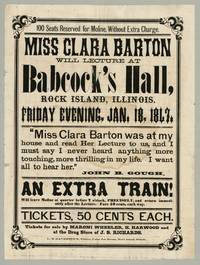
186713091Rock Island IL: L.M. Haverstick Printer Union Job Rooms 1867. Broadside 24 x 18 inches. Old folds minor creasing a few small chips short closed tear to left edge near the "B" in "Babcock's" faint circular dampstain in center minor scattered foxing. Withal very good condition. A visually appealing and seemingly unique surviving broadside advertising a January 18 1867 lecture by Clara Barton. At the time Barton was touring with her lecture entitled "War & Incidents of Army Life" part of a popular post-Civil War series of talks she delivered across the United States. Barton spent two years touring and recounting her battlefield experiences which helped popularize her and fund her subsequent efforts to locate missing soldiers. The present lecture was delivered at Babcock's Hall in Rock Island Illinois. In addition to the bold title containing the relevant information on the lecture and the information on obtaining tickets at the bottom the middle portion of the broadside prints a quote by noted temperance lecturer John B. Gough praising Barton's lecture: "Miss Clara Barton was at my house and read Her Lecture to us and I must say I never heard anything more touching more thrilling in my life. I want all to hear her." Below this quote is a notice that although Moline and Rock Island are only a few miles apart "An Extra Train" on the famed Rock Island Railroad will be provided to transport attendees of the lecture from Moline for a ten-cent fare. Typographically the broadside is interesting for employing several sizes and types of fonts likely wooden type which provides multiple opportunities for catching the eye of the observer. This includes a rather Gothic-style font when printing the date of the lecture.<br /> <br /> Clara Barton 1821-1912 was a noted educator and humanitarian who helped distribute needed supplies to the Union Army during the Civil War and later founded the American Red Cross. Barton garnered nationwide recognition for her efforts during the war and quickly became known as the "Angel of the Battlefield." After the war Barton's lecture tour brought her in contact with other notables of the day including Susan B. Anthony and Elizabeth Cady Stanton and also Frederick Douglass who involved her in the suffrage and civil rights movements respectively. In the Fall of 1866 Barton began to lecture on her Civil War experiences in lyceum halls churches town halls and schools. Though she never felt comfortable in front of an audience wherever she spoke Barton was well received. Her contemporary biographer Percy Epler wrote that "a tear-stained multitude thronged everywhere to hear her" as she had made it her mission to show not "the glories of conquering armies but the mischief and misery they strew in their tracks; and how while they march on.some one must follow closely in their steps crouching to the earth faces bathed in tears and hands in blood. This is the side which history never shows."<br /> <br /> From 1866 through 1868 Barton delivered over 200 lectures throughout the northeast and midwest regarding her Civil War experiences. She shared platforms with other prominent figures including the aforementioned Douglass as well as Ralph Waldo Emerson William Lloyd Garrison and Mark Twain. She often earned $75 to $100 per lecture. Original broadsides advertising her lectures are exceedingly rare to say the least. We could locate just a single result in auction records of a much smaller example and OCLC reports just one institutional holding of any Barton lecture broadside again much smaller for an 1867 event in New Haven located at the Library of Congress. L.M. Haverstick, Printer, Union Job Rooms unknown