United States War DepartmentBiblio.com

11 490 résultats
0484853945.Ghardcover. Good. Access codes and supplements are not guaranteed with used items. May be an ex-library book. hardcover
45379154like new. unknown
a102881Washington 1944 first edition. GPO. TM 5-240. 4to wraps. 111p. some photo illus. Good plus. . paperback
19651115z1965. Soft Cover. Good. PB/pub. 1965/Gd. condition/415 pages - Issued by the Chief of Naval Operations Aviation Training Division. J11115z paperback
20001317z2000. Hardcover. Good. Hardcover/pub.2000/VG. condition/640 pages - The Journey of Flight.J21317z hardcover
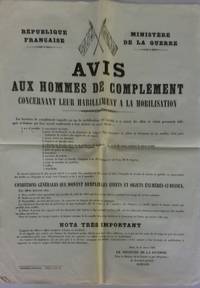
1936143948Imprimerie Nationale 1936. Loose leaf. Affiche non illustrée. <b>Vieux papier en français</b>. - Une feuille repliée. 45 x 55 cm. <i>ref. 143948</i> Imprimerie Nationale unknown
1782665749.Gpaperback. Good. Access codes and supplements are not guaranteed with used items. May be an ex-library book. paperback
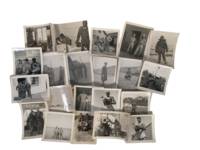
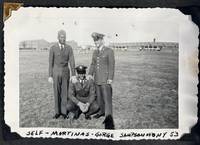
1957193551957. Vernacular photograph archive of African American soldiers in integrated U.S. Army units circa 1950s documents the early implementation of military desegregation following Executive Order 9981 and provides visual evidence of Black and white soldiers serving together during and after World War II including the Korean War. The photographs place African American servicemen within the first generation of formally integrated military units preceding broader civil rights gains in civilian society. Scenes of joint training transport and daily life show Black soldiers operating alongside white counterparts in contexts ranging from shipboard movement to antiaircraft defense positions indicating the practical realities of integration in active and post-conflict environments. The archive captures both structured military activity and informal moments offering a record of service that contrasts with the segregated conditions that had defined earlier periods of U.S. military history.<br /> <br /> United States and Korea circa 1950s. Archive of 21 silver gelatin vernacular photographs with several images bearing manuscript captions on the verso identifying individuals and locations including one noting Korea 1957-1958. Photographs depict a range of settings including military bases in Korea stateside camps shipboard scenes and antiaircraft gun emplacements in snowy terrain. Multiple images show interracial groups of soldiers posing with rifles and submachine guns while others capture informal activities including one sequence featuring a soldier holding an inflated puffer fish aboard a ship. One photograph includes a note written in Italian on the verso indicating cross-cultural contact or circulation. Composition and subject matter vary from posed group portraits to candid operational and leisure scenes.<br /> <br /> Created during the first decade of enforced military integration these photographs align with the transitional period in which desegregation policies were implemented unevenly across the armed forces with fuller integration not realized until the mid-1950s. The Korean War served as a critical testing ground for integrated units accelerating changes in military structure and social dynamics within the ranks. This archive provides a ground-level view of those developments documenting both the normalization of interracial military service and the persistence of shared routines duties and environments across racial lines. Light wear from handling with minor surface marks and occasional verso annotations; overall very good condition. unknown
1964197821964. Anonymous photographs of African American soldiers stationed in Korea and Europe produced c. 1960s document Black military service during the Cold War and provide primary-source evidence for the study of U.S. Army deployments racial integration in the post-World War II military and lived experience within forward operating environments near geopolitical flashpoints. The images place African American servicemen at installations including Camp Kaiser in South Korea located within proximity to the Korean Demilitarized Zone and in European urban and alpine settings indicating rotational or multi-theater deployment. The archive supports research into the role of Black soldiers in Cold War containment strategy as well as the everyday conditions mobility and social environments encountered by enlisted personnel across Asia and Europe during a period of sustained global military presence.<br /> <br /> Archive of 24 original black and white silver gelatin photographs c. 1960s primarily measuring approximately 4" x 3". At least half of the images are identified as taken in Korea with multiple captions including "Camp Kaiser" "Korean Home" "Village" and "CO Area" situating the group within a U.S. Army installation environment composed of cinder block structures and Quonset huts approximately 60 miles north of Seoul and within range of North Korean artillery positions. One overhead view shows the full layout of Camp Kaiser while other images depict African American soldiers in field conditions described as "Cold Wet" trekking and camping in rugged terrain. Additional Korean scenes include a soldier leaning against a tank marked "Kimchee" and an airfield photograph showing a chrome fighter jet surrounded by personnel alongside additional aircraft including a biplane. European photographs include a parade observed from an apartment window in a German-speaking alpine town featuring a float labeled "General Knuller" as well as street-level images of crowds deployed fire engines and soldiers observing from a Volkswagen Beetle. One image shows an African American soldier standing outside a synagogue marked by a Star of David with a flag bearing the inscription "Troop Att 1964" indicating interaction with local religious or commemorative sites.<br /> <br /> The photographs align with the global positioning of U.S. forces during the Cold War particularly in South Korea following the Korean War armistice and across Western Europe as part of NATO-aligned defense strategy. African American soldiers serving in an officially desegregated military after 1948 participated in these deployments while navigating both military hierarchy and broader social transformations associated with the Civil Rights era. The archive captures a range of activities from patrol and training environments to civic encounters and public events offering a geographically dispersed visual record of Black military presence within U.S. Cold War operations. Light wear and minor handling present; captions and details remain legible; overall very good condition. unknown
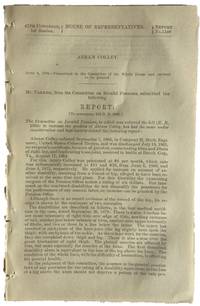
1873175241873. United States Congress pension reports concerning Private Daniel Wooden Abram Colley and Sarah E. Wheeler 1873 to 1904 documenting federal pension advocacy for African American Civil War veterans and their families. The material documents federal pension administration and legislative intervention through committee reports submitted to Congress revealing how disability claims for formerly enslaved soldiers and their dependents were reviewed contested and advanced and providing primary-source evidence for the study of postwar veteran welfare racialized access to federal benefits and the long-term consequences of military service in the American Civil War.<br /> <br /> Three printed congressional reports submitted by the Committee on Pensions and the Committee on Invalid Pensions concerning Private Daniel Wooden of the 64th United States Colored Troops 1873 Abram Colley of the Sixth United States Colored Troops 1882 and Sarah E. Wheeler widow of Elijah Wheeler 1904. The reports detail service-related injuries and subsequent disability claims including Colley's documented wound described as "gunshot comminuting tibia and fibula of right leg and implicating knee-joint received in battle at Dutch Gap VA. August 17 1864" resulting in his discharge on a surgeon's certificate in 1865. The documents outline the petitions for increased pension support based on worsening physical conditions that rendered sustained labor difficult or impossible and they reflect the evidentiary standards and narrative frameworks used to justify federal compensation. The 1873 report is printed single-sided while the 1882 and 1904 reports are printed double-sided all in pamphlet-style formats measuring approximately 8.75 x 5.5 inches.<br /> <br /> These reports emerge from the broader postwar pension system one of the largest federal expenditures of the late nineteenth century through which Union veterans and their families sought financial support for service-related disabilities. African American soldiers many of whom served in the United States Colored Troops frequently faced additional scrutiny and bureaucratic barriers in securing equitable compensation. The inclusion of both veteran and widow claims illustrates the extension of pension advocacy across generations particularly in cases where injuries produced long-term incapacity or death. Minor edge wear along the left margins paper stable and legible; overall very good condition. A focused group of congressional documents illuminating the intersection of race military service and federal welfare policy in the post-Civil War United States. unknown
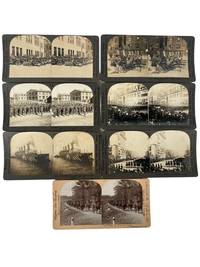
1918205021918. Buffalo Soldier regiments depicted in stereoview photographs from the World War I era document African American cavalrymen and infantry units serving in segregated formations of the United States Army during the early twentieth century. These images record soldiers from several historically significant Black military units including the 9th U.S. Cavalry the 10th Cavalry and the 369th Infantry Regiment. African American soldiers served in large numbers during World War I despite segregation in the armed forces and the war marked a turning point in public recognition of Black military service. The photographs capture cavalry movement machine gun training and celebratory returns from the European front preserving visual evidence of the military presence and public visibility of Buffalo Soldiers during the conflict.<br /> <br /> Archive consists of seven stereoview photographs published by the Keystone View Company during the World War I period. The views depict soldiers from the 9th U.S. Cavalry the 8th Regiment of Colored Troops the 10th Cavalry the Chicago Regiment of Colored Troops and the 15th Regiment of the 369th Infantry. Two stereoviews show Black machine gun companies operating Lewis guns one of the principal light machine guns used on the Western Front during the war. Another view shows Troop K of the 10th Cavalry moving on horseback at Camp Chickamauga in Georgia. Additional stereoviews depict African American soldiers returning from European service and marching in public celebrations including scenes of troops parading along major boulevards such as Fifth Avenue in New York.<br /> <br /> The Buffalo Soldier regiments had already established a long military record before the First World War. Units such as the 10th Cavalry formed part of the segregated Regular Army created after the Civil War and served in campaigns across the western United States during the Indian Wars later participating in the Spanish American War the Philippine American War and operations during the Mexican Revolution. World War I marked one of the final periods in which cavalry units remained visible in American military organization as mechanized armor and motorized vehicles soon replaced mounted troops. At the same time Black soldiers who returned from service were celebrated in wartime parades yet continued to face segregation and racial discrimination within American society. Stereoview cards remain well preserved with light age wear typical of early twentieth century photographic prints. Very good condition overall and a visually compelling record of Buffalo Soldiers during the World War I era. unknown
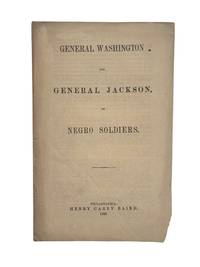
1863217941863. General Washington and General Jackson on Negro Soldiers 1863 a Civil War pamphlet advocating for the enlistment of African American soldiers in the Union Army. The pamphlet addresses Union military recruitment wartime policy and political arguments for Black enlistment. Drawing on historical precedent and wartime necessity the text argues for the integration of African American troops into Union forces.<br /> <br /> Unknown author. General Washington and General Jackson on Negro Soldiers. Philadelphia: Henry Carey Baird 1863. First edition. 8 pages. The pamphlet presents a structured argument combining moral appeal and military strategy asserting the necessity of Black enlistment for Union victory. It cites "authentic documents" including letters attributed to George Washington and Andrew Jackson Congressional records and state proceedings to demonstrate historical precedent for African American military service. A passage from Jackson's 1814 address to Black troops in New Orleans praises their endurance and discipline while references to Revolutionary War service describe free Black soldiers serving alongside white troops in Massachusetts. The text argues that millions of enslaved and free African Americans could contribute to the Union war effort emphasizing both their willingness to fight and the strategic advantage their enlistment would provide.<br /> <br /> Issued during a pivotal moment in 1863 following the Emancipation Proclamation and the formal authorization of Black troops the pamphlet reflects ongoing debates over military policy and racial inclusion within the Union Army. Its combination of historical documentation and forward-looking argument places it within broader efforts to legitimize African American service and reshape public opinion in the North. The text supports Civil War propaganda recruitment strategy and federal policy regarding Black soldiers. Light toning small separation along the spine of the final leaf; overall very good condition. A concise example of wartime advocacy for African American military participation. unknown
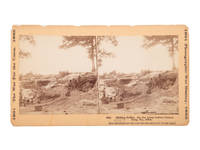
1864186031864. War Photograph & Exposition Company. On the Lines Before Petersburg Va. 1864 documents the presence and daily conditions of United States Colored Troops during the prolonged siege of Petersburg one of the final campaigns of the Civil War. The image captures four African American soldiers seated at the entrance of an earthen bombproof shelter while another prepares coffee over an open fire situating the scene within the entrenched warfare that defined operations outside Petersburg from 1864 to 1865. The photograph places Black soldiers within the logistical and survival routines of siege warfare providing visual evidence of their role in sustaining Union military operations during a campaign that culminated in the collapse of Confederate defenses and the end of the war.<br /> <br /> On the Lines Before Petersburg Va. 1864. Hartford CT: War Photograph & Exposition Co. circa 1864. Stereoview photograph measuring approximately 6 1/4 x 3 1/8 inches on a cardstock mount with series imprint image number and caption on recto. The image depicts four African American soldiers seated at the mouth of a dugout shelter with a fifth soldier below tending a large kettle over a fire. Visible objects include tin cups attached to long wooden handles likely used for heating over flames along with a pickaxe wooden barrel and a washbucket fashioned from a halved barrel. The verso includes a printed description noting that the view "gives a glimpse of the bomb-proofs in which our soldiers tried to live during the long siege at Petersburg 1864-1865; the campfire and the coffee-kettle look as familiar as in those days of yore" along with promotional text from the publisher concerning the difficulty of producing such wartime images.<br /> <br /> By late 1864 African American troops were consolidated into large formations including the XXV Corps of the Army of the James representing the largest organized body of Black soldiers in the war. Images such as this one provide direct documentation of their presence in front-line siege environments where extended encampment engineering labor and constant exposure to enemy fire defined daily life. The photograph contributes to the visual record of Black military service by focusing on routine activity within fortified positions rather than formal portraiture offering material for the study of labor survival and military organization among United States Colored Troops. Light toning and minor paper loss to mount edges and corners not affecting image or text; overall very good condition. unknown
1953212881953. African American military photo album 1953-1960 documenting the service and personal life of a Black U.S. Air Force serviceman across multiple postings during and after the Korean War. The album records military duty daily routines and interpersonal relationships within an increasingly integrated armed forces providing visual evidence of African American participation in Cold War military infrastructure. The material captures both overseas deployment in Korea and domestic life across U.S. bases situating individual experience within broader patterns of military service and social change following desegregation.<br /> <br /> Album comprises 101 black-and-white silver gelatin photographs most measuring approximately 3.5" x 3.5" mounted on black pages with corner mounts. Early images place the serviceman at Kessler Air Force Base in Mississippi followed by extensive documentation of his time in Korea likely associated with the 650th Aircraft Control and Warning Squadron as indicated by a tent marked with unit insignia. Photographs show military encampments with tents and barracks vehicles including trucks and jeeps and groups of soldiers engaged in daily routines. One caption identifies "Our home in Korea" accompanying images of base infrastructure. Additional scenes include a USO performance at "K-6 Korea 54" where servicemen gather beneath a "Camp Shows" banner. The album continues with postings at Ellsworth Air Force Base in South Dakota and locations in Alaska where winter conditions specialized vehicles and outdoor activities are visible. Social and interpersonal life is extensively documented with repeated appearances of individuals identified as "Daril" "Bunky" "Peanuts" and others shown in uniform at leisure and in group settings. Domestic scenes include family gatherings such as "Roger's Birthday Party June 59" and images of women and children identified as "Mary" "Rochelle" and "Teresa" indicating sustained family connections. Travel photographs include roadside markers such as "Welcome to Illinois" and "Entering Indiana" while Alaska-based images depict community events including dog sled races and local festivals.<br /> <br /> Created during the transitional period following the desegregation of the U.S. military these photographs provide a sustained record of African American service members operating within integrated units while maintaining personal and family networks across geographic distances. The combination of overseas deployment domestic postings and family life offers a comprehensive view of military and social experience during the 1950s. Album pages show some loss and covers are detached; photographs remain sharp with strong tonal quality and are largely well-preserved; overall very good condition. This album offers an extensive documentary record of African American military life and community formation in the Korean War and early Cold War period. unknown
1500389668.Gpaperback. Good. Access codes and supplements are not guaranteed with used items. May be an ex-library book. paperback
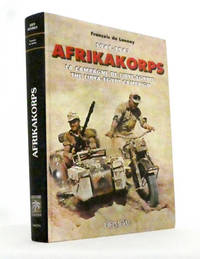
2002BIB330900Bayeux France: Heimdal. 2002. Quarto Size approx 22x30cm. Near fine condition in pictorial laminated boards. Illustrated with Colour and Black & White Photographs. Maps. Text in English and French. Robust professional packaging and tracking provided for all parcels. 432 pages. . Near Fine. 1st Edition. Hardback. Heimdal hardcover
KOS01201005Fuso Sankei Shimbun news service 1999. Soft Cover. Fine. KOS01201005 Fuso Sankei Shimbun news service paperback
1999KOS01202459Fuso Sankei Shimbun news service 1999. Soft Cover. Fine. KOS01202459 Fuso Sankei Shimbun news service paperback
2012x-3642318088Springer-Verlag New York Inc 2012. Paperback. New. 2012 edition. 167 pages. 9.25x6.10x0.38 inches. Springer-Verlag New York Inc paperback
2019x-3030143090Springer-Verlag New York Inc 2019. Paperback. New. revised edition. 120 pages. 9.25x6.10x0.28 inches. Springer-Verlag New York Inc paperback
2024x-3031611535Springer-Nature New York Inc 2024. Paperback. New. 195 pages. 9.25x6.10x9.25 inches. Springer-Nature New York Inc paperback
1390321436.Gpaperback. Good. Access codes and supplements are not guaranteed with used items. May be an ex-library book. paperback
1391305477.Ghardcover. Good. Access codes and supplements are not guaranteed with used items. May be an ex-library book. hardcover
1390452751.Gpaperback. Good. Access codes and supplements are not guaranteed with used items. May be an ex-library book. paperback
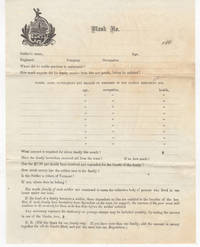
186044818Vermont 1860. Very good soiled along edges and folds. 1 sheet. 7.5 x 9.75 inches. Blank form to be completed by families of Union soldiers requesting funds and other types of aid during wartime. The form contains the Vermont seal on the upper left corner. Asks such questions as: <br /> What amount is required for above family this month<br /> Have the family heretofore received aid from the town<br /> Has the $7.00 per month been received and expended for the benefit of the family<br /> How much money has the soldier sent to his family Is the Soldier a citizen of Vermont <br /> If not where does he belong<br /> And more. unknown