Sommelius, TorgnyMareMagnum
STEPHEN L BOSNIA,Biblio.com
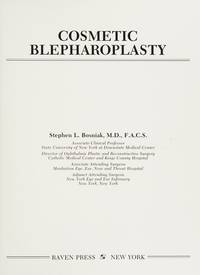
COSMETIC BLEPHAROPLASTY
1990AME_9780881676433ravepr 1990. 1st. Hardcover. New/New. ravepr hardcover
350 résultats
Observations of a Swedish writer describing his travels around Tito's Yugoslavia in the 1950's. Translated from the Swedish by Naomi Walford.205p. plates,Clean neat copy, minimal signs of library ownership Ex-Library
Mm 120x170 Collana "Poesia" - Brossura editoriale con bandelle, 130 pagine con una introduzione di Andrea Zanzotto; testo a cura di Dubrako Pusez. Libro in stato di nuovo. SPEDIZIONE IN 24 ORE DALLA CONFERMA DELL'ORDINE.
This American journalist was an eye-witness to the suffering of the ordinary people and the devastation caused in the Balkans and Greece by the German invasion in 1941 (SEE : From the Land of the Silent People, 1942) and now records his impressions of the ordinary people of Yugoslavia in 1947 as they try to rebuild their lives after WWII (Autograph on half-title) 395p. maps . 353p. Book
Monographien...Mit 49 abbildungen...4 farbigen tafeln und einer karte - Allgemeine Landestunde - Die Landschaft - Literaturnachweis 1 25x17 cm., legatura in tela bicolore, titoli in oro, astuccio illustrato, pp. 46, 49 abbildungen, 4 tafeln a colori, 1 carta geografica pi? volte ripiegata, in tedesco, carattere gotico, buone condizioni
1990AME_9780881676433ravepr 1990. 1st. Hardcover. New/New. ravepr hardcover
In-8, brossura, sovracoperta, pp. LX,75,(5), con 90 illustrazioni in bianco e nero nel testo e 1 carta geografica fuori testo. In buono stato (good copy).
194788371947 ZAGREB, 1947 - En portefeuille In-4, 26 dessins légendésde la construction du chemin de fer- 1 page de texte - Propre - Réf. 8837
ZAGREB, 1947 - En portefeuille In-4, 26 dessins légendésde la construction du chemin de fer- 1 page de texte - Propre - Réf. 8837
Very Good Turkish, Ottoman (1500-1928) Paperback. Chipped on margins. Some owner notes. Otherwise a good copy. Roy. 8vo. (24 x 18 cm). In Ottoman script. 32 p. This rare book includes the royal travel of Sultan Abdülmecid in 1262 AH [1846 AD] to Roumelia. From Edirne, Abdülmecid proceeded to Eski Zagra (Stara Zagora), Kizanlik (Kazanluk), Gabrova (Gabrovo), Tirnova (Turnovo), Rusçuk (Ruse), Silistre (Silistra), and Varna. The route of the 1846 tour followed closely, except in reverse order, Mahmud II's tour of 1837. According to witness accounts, along the way, the sultan was greeted everywhere with poetic recitations and songs of praise and prayer, both in Ottoman and Bulgarian. The pride of place among welcoming parties invariably fell on students, of all creeds, most clad in white uniforms, some in solemn church-going attire, with flowers and green branches in their hands. At every stop, ceremonial cannon salvos were fired during the day and elaborate firework illuminations were performed at night. In the town of Kizanlik, known then as now for the most fragrant roses and the best rose oil, the sultan's visit coincided, possibly by design, with the rose harvesting season. So the locals sprinkled rose water and poured rose oil before the sultan's cavalcade. According to Hristo Stambolski, in the three days of the sultan's stay in town, no rose harvesting was done so that the whole area would be exquisitely scented in his honor. For his part, the sultan had doctors vaccinate all children against smallpox in public before sending each one off with a small gift of money. Even people with rare diseases were, on occasion, summoned to the sultan's presence so his doctors could cure them. The sublime visit caused the locals, who were unaccustomed to direct contact with the center of power, quite a stir. The most detailed account, albeit from a hostile source, relates the sultan's visit to Rusçuk, which, at four days, may have also been the longest. According to Nayden Gerov, the greeting ceremonies proceeded on a communal basis, with the Jews being placed closest to the town walls, next to them the Armenians, then the Bulgarians, and finally, the Muslims, situated the farthest from town, yet being the first to see and welcome the sultan. As the sultan approached, each group of youngsters would in turn sing for him, everyone else bowing profusely. Based on Gerov's description, it seems that Abdülmecid was dressed in a slightly more luxurious fashion than during state ceremonies in Istanbul. ((Source: Sultan Abdülmecid's Tour of Rumelia and the Trope of Love by Stephanov). The sultan began to travel by the way of the gate of Yedikule in Istanbul in May 6, 1846. He followed the way of Ayastefanos, Silivri, Çorlu, Burgaz, Edirne, Zagra-i Atik, Kizanli, Trnova, Rusçuk, Silistre, Rusçuk, Shumnu, and Varna and came back to Istanbul by way of the sea on June 14, 1846. During this travel, the Sultan listened to people's problems and ordered the authorities to be solved with those problems. He received successful military and administrative authorities in settlements on the way of travel and rewarded them. He also received the governors of Serbia, Eflak and Bogdan, and the representatives of foreign states. With this travel, the Sultan aimed to strengthen the connection to the center of people and administrators in provinces. Özege 17910. First Edition.
New English Paperback. Pbo. Roy. 8vo. (24 x 17 cm). In English. 240 p. Acknowledgments. Note on Transliteration. Abbreviations. Introduction 1. Mustafa Muhibbi, Sarajevan Kadi and Dervish 2. Book Culture, Reading and Writing 3. Muhibbi's Inscriptions, Muhibbi's World 4. The End of an Epoch Appendix I: Muhibbi's Necrology and Chronicle Records Appendix II: List of the Manuscripts of the Muhibbic Family Collection. Glossary. Bibliography. Index.
Fine English Paperback. Pbo. Roy. 8vo. (24 x 16 cm). In Turkish and English. [xLvi], 410 p. Bosnia-Herzegovina bibliography.= Bosna-Hersek bibliyografyasi.
Milano, 1956, stralcio con copertina posticcia muta, pp. 51/64 con fotografie, tavole fotografiche ed una cartina. - !! ATTENZIONE !!: Con il termine estratto (o stralcio) intendiamo riferirci ad un fascicolo contenente un articolo di rivista, sia che esso sia stato stampato a parte utilizzando la stessa composizione sia che provenga direttamente da una rivista. Le pagine sono indicate come "da/a", ad esempio: 229/231 significa che il testo è composto da tre pagine. Quando la rivista di provenienza non viene indicata é perchè ci è sconosciuta. - !! ATTENTION !!: : NOT A BOOK : “estratto” or “stralcio” means simply a few pages, original nonetheless, printed in a magazine. Pages are indicated as in "from” “to", for example: 229/231 means the text comprises three pages (229, 230 and 231). If the magazine that contained the pages is not mentioned, it is because it is unknown to us.
New Turkish Original bdg. HC. Folio. (34 x 24 cm). In Turkish. 144 p., color and b/w ills. Bosna'dan Bursa'ya çengiç beyleri. [Exhibition catalogue]. Eylül 2013 - Mayis 2015. Curated by Ahmet Ö. Erdönmez. "Kanuni Sultan Süleyman settle a family in Bosnia which is border region of Ottoman because of their usefulness showed in Anatolia. After that time, story and fortune of the family was changed completely. Today, when you come to Bosnia, you are welcomed by the story of family everywhere in Bosnia. Mosques, Madrasahes, bridges, castles, districts and towns shout out their names: Çengiçler. The exhibition, consisted of personel effects, documents and pictures belong to Ismail Aga Çengiç, Ali Pasha, Bekir Pasha, Cafer Pasha, Dervish Salih Pasha, Haydar Bey, Ismail Yümni Bey and Riza Bey who are known Çengiç Beyleri and represented Ottoman Empire in Balkans for centuries: donated by Leyla Ilova who is from Ilova family last member of Çengiç Beyleri was exhibited a year long. This exhibition was not only event but a story of Ottoman adventures in Balkans based on a family's effects as well. We have witnessed the sexcentennial cultural and historical association between Anatolia and Balkans by the documents.".
376 pages. Index. Footnotes. Black and white photographic plates. "From the almost unknown campaign in Java and Sumatra in 1945-7 which saw British troops operating alongside their recent enemies, the Japanese, to Bosnia and Kosovo in the closing years of the twentieth century, fifteen major conflicts are covered. Each is described by a contributor who either served in the campaign, saw it first-hand as a journalist or is an acknowledged expert on it." - from dust jacket. Average wear. Usual library markings. A sound working copy. Book
8886Berlin, Ernst Wasmuth, Editeur, 1926. 1 fort volume in-4, reliure pleine toile, 34 pp. de texte et 96 planches en couleurs avec texte explicatif, très bon état.
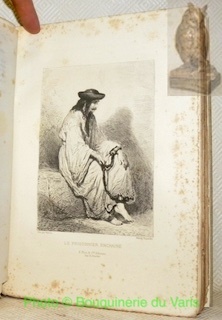
188312345Paris, E. Plon et Cie, 1883 ; in-4, demi-chagrin maroquiné rouge cerise à coins, dos à nerfs soulignés de filets à froid et dorés, caissons richement décorés et dorés, titre doré, doubles filets dorés sur les plats, tête dorée, non rogné (reliure de l’époque) ; (6), 412 pp. ; 10 planches en héliogravure et 1 carte dépliante en couleurs hors-texte, très nombreuses illustrations in-texte, 17 à pleine page.
30444Paris, Plon 1883, 295x205mm, 412pages, pleine toile, étiquette de titre au dos, couverture conservée, tranches non rognées, reliure moderne, quelques rousseurs au début et à la fin du livre.
pp. 621-694,[6], 3 pls. of photos (mostly of ammonites), 2 fold. diagrs., 25 ilus. in text, refs. Large 8vo. Wrs. - Triassic.
191154482London-New York, John Lane, 1911. Gr.-8°. Mit einem Titelbild, 104 Tafeln u. einer gefalt. Karte. XXXV, 472 S., Illustr.-OLwd. m. Kopfgoldschnitt.
8vo. Pp. [iv],453, figs., bibl., index. Orig. quarter cloth. Fine. - With short summary in English.
New English Paperback. Demy 8vo. (21 x 14 cm). In Bosnian. 244 p. Alahimanet Bosno: Migracija Bosnjaka na teritoriju Osmanskog carstva. U misaonom svijetu Bosnjaka nastala je istinska pomutnja kada su 1878. godine prepusteni upravi Austro-Ugarske. Osmanlije su se povlacile sa prostora Balkana zbog cega su Bosnjaci, kao muslimanska zajednica usred Evrope, osjecali se nezasticeno. Cekati povratak Osmanlija donekle ih je tjesilo. Ipak, sta ako se ne vrate? Sta ako privremeno prepustenu upravu ne budu mogli preuzeti ponovo? Upravo tada bi se morali naci odgovori na sljedeca pitanja: Gdje je domovina Bosnjaka? Da li je to Bosna kao naslije?e predaka ili je to zemlja Osmanlija gdje bi mogli zivjeti u skladu sa muslimanskim identitetom? U ovoj knjizi, u svjetlu arhivskih izvora govori se o raspravama Bosnjaka o migraciji, o putovanju u "zemlju snova", mjestima u Anadoliji i Rumeliji u kojima su se nastanili, o novom zivotu, radosti, tugi, sreci i razocarenjima.
Q-8426435696Editorial Lumen 1900. Hardcover. New. In shrink wrap. Looks like an interesting title! Editorial Lumen hardcover
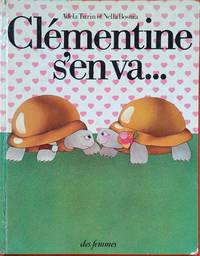
1976148996Editions des femmes 1976. Board Book. <b>Livre en français</b>. Couverture rigide. Du côté des petites filles. Cartonné. 34 pages coins légèrement frottés. <i>ref. 148996</i> Editions des femmes unknown