350 résultats
191924Paris, Dumaine, 1881 in-8, 380 pp., 57 figures in-t. et 15 plans et pl. dépl., une carte en couleurs, demi-chagrin bordeaux, dos lisse, filets dorés (rel. de l'époque). Cachet (annulé).
2 vols., 8vo., Third Impression, with 32 plates and endpaper maps (front endpaper maps in red and black); green buckram, gilt backs, green tops (mildly faded), a very good, bright, crisp copy in unclipped dustwrapper, the wrappers sunned at backstrips. Bright set of Dame Rebecca West's account of her journey through the Balkan states, one of the outstanding travel books of the twentieth century. Published four months after the first edition. NCBEL IV, p.770 (recording the first US and UK editions).
New English Paperback. Pbo. Large roy. 8vo. (25 x 17 cm). In English and Turkish. 4 volumes set: (655, [1] p.; 460, [2] p.; 637, [3] p.; 461, [3] p.). Balkan studies. 4 volumes set: Vol. I: Geography & geostrategy. Vol. II: History & literature. Vol. III: Living together & culture & education. Vol. IV: Economics & law & health.
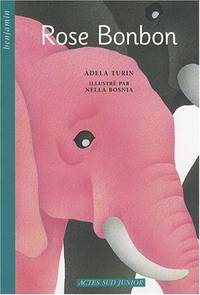
BN324342Actes Sud. Softcover. Rose Bonbon <br/><br/>Rose Bonbon Adela Turin et Nella Bosnia Actes Sud paperback
1913A111-216Wien, Kaiserlich-K?nigliches Milit?r-Geographisches Institut, 1913. Hochformat, ca. 42 x 55 cm, Ausgabe: mehrf?rbig; Zustand: gut +
1914A111-081Wien, Kaiserlich-K?nigliches Milit?r-Geographisches Institut, 1914. Hochformat, ca. 42 x 55 cm, Ausgabe: mehrf?rbig; Zustand: gut +
1915A111-080Wien, Kaiserlich-K?nigliches Milit?r-Geographisches Institut, 1915. 2. Ausgabe, Hochformat, ca. 42 x 55 cm, Ausgabe: mehrf?rbig; Zustand: gut +
1913A111-072Wien, Kaiserlich-K?nigliches Milit?r-Geographisches Institut, 1913. Hochformat, ca. 42 x 55 cm, Ausgabe: mehrf?rbig; Zustand: gut +
Outside dimensions 10.75" x 14.5". Unmarked with light wear and soiling. An attractive vintage copy. Book
191154482London-New York, John Lane, 1911. Gr.-8°. Mit einem Titelbild, 104 Tafeln u. einer gefalt. Karte. XXXV, 472 S., Illustr.-OLwd. m. Kopfgoldschnitt.
1910K-2191Gotha, Justus Perthes, um 1910. original Leinenmappe, und 48 Seiten Registerheft, 8?, Landkarte, mehrfarbig, 73 x 87,5 cm in 32 Segmenten auf Leinen aufgezogen,mit handschiftlicher Zahl auf dem Leinenband, guter - sehr guter Zustand
Artaria & Comp., Wien, 1865. Grande carta telata divisa in 36 riquadri, in litografia e con tratti di confine in coeva coloritura a mano, cm 88 x 112 circa (il foglio), tabelle, scale grafiche e legenda, chiusa e quindi completa. Usuale ingiallimento con alcuni sporadici punti di ossidazione e alcuni difetti marginali ma nell'insieme in buono stato di conservazione.
Dalla “Carta Amministrativa del Regno d’Italia co' suoi stabilimenti politici, militari, civili e religiosi e con una parte degli stati limitrofi. Costrutta nel Deposito della Guerra per ordine del Ministro della Guerra e Marina nell'anno MDCCCXI, aggiunta e corretta nell'anno 1813”, edita a Milano nel 1813 (una grande carta composta da più fogli quadrettati e applicati su tela d'epoca, ciascuno di cm 54 x 67 circa per un perimetro totale di cm 1400 x 1100 circa), bella carta relativa alla costa più settentrionale del Mare Adriatico, con segnalati il Golfo del Quarnaro, il Vallone di Cherso, l'Isola di Veglia, tutte le isole Quarnerine e il Canale della Montagna o Morlacca e il Cnale di Pago; a est l'Istria, la Dalmazia, la Morlacca e la Croazia. La carta è composta da un foglio, numerato come foglio XV sulla parte incisa, e con il numero 15 al retro della tela. Benedetto e Gaudenzio Bordiga furono incisori e cartografi, originari della Valsesia e attivi a Milano nella prima metà del XIX secolo, un periodo caratterizzato da alterne vicende storico politiche, in cui realizzarono un discreto corpus incisorio. L'opera più importante cui contribuirono fu la “Carte générale du Théâtre de la Guerre en Italie”, una grande carta commissionata, nel 1797 dallo Stato Maggiore dell'Armata Francese di Napoleone, al capo battaglione Bacler d'Albe, capo del Gabinetto Cartografico Francese: la carta, celebrativa della prima campagna d'Italia, fu in gran parte realizzata a partire da carte preesistenti, fu realizzata in cinquantaquattro fogli sotto la direzione di Giacomo Pinchetti e fu appunto incisa dai fratelli Benedetto (1800 - 1834) e Gaudenzio Bordiga. Gaudenzio Bordiga (Camasco, Varallo, 10 febbraio 1773 – Milano, 18 gennaio 1837), seguì a Varallo studi letterari e di disegno. Stabilitosi a Milano con il fratello Benedetto, fu capo incisore dell'Istituto Geografico Militare e mantenne tale carica anche dopo l'occupazione austriaca. Senza la collaborazione del fratello Benedetto, Gaudenzio disegnò, e a volte incise, varie carte geografiche militari (“Carta delle stazioni militari in Italia”, 1804; “Carta militare del Regno d'Etruria e del principato di Lucca”, 1806) e scrisse opere di erudizione storico – artistica (“Notizie intorno alle opere di Gaudenzio Ferrari, pittore e plasticatore”, Milano, G. Pirotta, 1821; “Storia e guida del Sacro Monte di Varallo“, Varallo, 1830). Molto buono lo stato di conservazione.
188312345Paris, E. Plon et Cie, 1883 ; in-4, demi-chagrin maroquiné rouge cerise à coins, dos à nerfs soulignés de filets à froid et dorés, caissons richement décorés et dorés, titre doré, doubles filets dorés sur les plats, tête dorée, non rogné (reliure de l’époque) ; (6), 412 pp. ; 10 planches en héliogravure et 1 carte dépliante en couleurs hors-texte, très nombreuses illustrations in-texte, 17 à pleine page.
Profusely illustrated with black and white photos and illustrations. Features: "Mad Mike" - Part I - The adventures of a well-known South Seas character, including his romantic connection with the beautiful half-caste Laumona; The Forest Dwellers of Arabuko - Photo-illustrated article on the shy and elusive East African Sanya race; My Wife's Double - told by Sidney Fitzgerald, now chief engineer with a firm in Portuguese East Africa; In Quest of the Unknown - Part I - F.A. Mitchell-Hedges meets the strange islanders of the San Blas Archipelago and the mysterious Chucunaque - illustrated with photos; My Chinese Crystal - This story of events surrounding an ancient crystal, believed to be stolen from a Chinese temple, will keenly interest students of the occult; The Very Keen Man - How an energetic Central African Native Commissioner conceived a Great Scheme - and what happened to it; The Great Pay-Train Hold-Up - For several years the police of Pittsburgh, Pennsylvania were at their wit's end to deal with an epidemic of pay-roll robberies; The Big-Game Trapper - R.D.S. describes some thrilling experiences encountered by well-known trappers; Through Savage Europe - Part III - Richard Carline describes his holiday painting tour through Serbia, Bosnia, and Montenegro - with photos; "Down Texas Way" - The wife of a Texas rancher tells the tale of three high-spirited youngsters, a desperate gang of escaped convicts, a night alarm, and a mysterious disappearance; Across the Great Sahara - Part IV - The story of a wonderful exploit - a camel-back journey from south to north through the Sahara - with photos; Donnelly's Luck - An old prospector strikes it rich, only to fall into the hands of rascally claim-jumpers; Twenty-Three Hours of Horror - A young fireman, Clermont Lafayette Staden, falls overboard from the American oil-tank steamer Fred W. Weller in the shark-infested waters of the Pacific; and more. 88 pages plus 16 pages of nostalgic ads. Nibbling to backstrip, otherwise clean and unmarked with light wear. A nice copy of this great vintage issue. Book
Profusely illustrated with wonderful black and white photos and illustrations. Features: Hunting the Opium Smugglers - Author attempts to capture Chinaman who was causing much trouble by smuggling opium into a South Sea Island; Photograph from Hong Kong of a "Punishment Chair" upon which a bound criminal sat upon eleven knives and was then carried through the streets as a lesson to others; With "Lizzie" to the Edge of Beyond - An old Ford car takes four passengers and a heavy load seven hundred miles through Central Africa; The Faithful Burglar - a story involving psychic phenomena from Ray Bell's Tie-Camp at Shabaqua, Ontario - with photo; Through Savage Europe - Part II - Richard Carline continues to describe his painting tour through Serbia, Bosnia, and Montenegro; The Devil Panther - Two British hunters pursue a feared killer panther in India; What Happened to Hubbard? - Sequel to "Where the Gold Went" in which Charles A. Siringo described how Schell and Hubbard stole a quantity of gold from the famous Treadwell Mine in Alaska - describes how Hubbard went on to success in Dawson City; Roaming the Wild South Seas - Part IV (conclusion) - Jack McLaren describes the romance and adventure of the South Sea Islands - article with photos; A Run for Money - Author attempts to smuggle a ranch payroll through a Mexican rebel zone; Photo of Filipino "Tom Thumb", Panglima Diki-Diki; The "Human Bomb" - Update on a 1913 story about Carl Warr who walked into the Los Angeles Police Headquarters with enough dynamite to blow it up; Across the Great Sahara - Part III - A journey by camel across the Sahara from bottom to top - article with many excellent photos; The Sheep-Shearer - A sailor's amusing story about a machine invented by his second engineer; At Grips With a Python - Nighmare experience for a South African farmer; The Ghost of Ardtrea - An odd story from County Tyrone, Ireland describing events in an old rectory; A Week End in Bulgaria - Quaint glimpses of Bulgarian manners and customs by traveller Ralph Michaelis. 88 pages. plus 16 pages of nostalgic ads. Nibbling to backstrip has left the back cover barely holding, otherwise clean and unmarked with light wear. A quality vintage copy. Book
189612070Paris, Librairie Hachette et Cie, 1896 ; in-4, demi-chagrin maroquiné havane à coins, dos à nerfs, titre doré (reliure de l'époque) ; (4), VIII, 350 pp., 154 illustrations dont 9 à pleine page, 2 cartes dont 1 dépliante hors-texte en couleurs.
55831Paris, 1896, EDITION ORIGINALE, librairie Hachette et Cie, in-4, demi-chagrin orange à coins, plats papier "cailloux" rose/jaune/gris, titre doré sur dos (reliure moderne), couverture conservée, VIII + 350 pp, 154 illustrations dont 9 en pleine page, 2 cartes dont 1 grande dépliable hors-texte en couleurs, très bon état de la reliure, manques à la couverture ancienne, restaurations au papier, rousseurs sur la grande carte dépliable, tranches non rognées; les livres sur cette partie de l'ancienne Yougoslavie sont très rare et celui-ci est un extraordinaire voyage décrivant l'architecture et les coutumes du pays; belles photographies en noir
45729Np:nd Sarajevo ca 1940s. Original machine-lithographed poster in colors 38" x 27". Horizontal fold at center. On thin paper toned and slightly weak a centerfold and margins; B. A dramatic and handsome post-war Bosnian poster promoting the health-resorts of the newly-formed state along with the treatments associated with each. Among the place-names listed are some that would become infamous during the Bosnian conflict of the 1990s such as Srebenice and Sarajevo. unknown books
5210An album of 36 photographs of Bosnia & Herzegovina depicting the considerable natural wonders of the area along with views of cities including the bridge at Mostar & the residents in their native costumes. 18 stiff leaves each with two pockets designed to insert photographs. Oblong 8vo orig. cloth upper cover with a mounted color photograph. N.p.: n.d. but ca. 1909. A photographic album assembled by or for Maria Theresia Henriette Dorothée of Austria-Este 1849-1919 the last queen of Bavaria. Fine copy. With her ownership inscription dated 1909 on inner front cover. From the Wittelsbach library of the dukes and kings of Bavaria. hardcover books
Very Good Turkish, Ottoman (1500-1928) Paperback. Chipped on margins. Some owner notes. Otherwise a good copy. Roy. 8vo. (24 x 18 cm). In Ottoman script. 32 p. This rare book includes the royal travel of Sultan Abdülmecid in 1262 AH [1846 AD] to Roumelia. From Edirne, Abdülmecid proceeded to Eski Zagra (Stara Zagora), Kizanlik (Kazanluk), Gabrova (Gabrovo), Tirnova (Turnovo), Rusçuk (Ruse), Silistre (Silistra), and Varna. The route of the 1846 tour followed closely, except in reverse order, Mahmud II's tour of 1837. According to witness accounts, along the way, the sultan was greeted everywhere with poetic recitations and songs of praise and prayer, both in Ottoman and Bulgarian. The pride of place among welcoming parties invariably fell on students, of all creeds, most clad in white uniforms, some in solemn church-going attire, with flowers and green branches in their hands. At every stop, ceremonial cannon salvos were fired during the day and elaborate firework illuminations were performed at night. In the town of Kizanlik, known then as now for the most fragrant roses and the best rose oil, the sultan's visit coincided, possibly by design, with the rose harvesting season. So the locals sprinkled rose water and poured rose oil before the sultan's cavalcade. According to Hristo Stambolski, in the three days of the sultan's stay in town, no rose harvesting was done so that the whole area would be exquisitely scented in his honor. For his part, the sultan had doctors vaccinate all children against smallpox in public before sending each one off with a small gift of money. Even people with rare diseases were, on occasion, summoned to the sultan's presence so his doctors could cure them. The sublime visit caused the locals, who were unaccustomed to direct contact with the center of power, quite a stir. The most detailed account, albeit from a hostile source, relates the sultan's visit to Rusçuk, which, at four days, may have also been the longest. According to Nayden Gerov, the greeting ceremonies proceeded on a communal basis, with the Jews being placed closest to the town walls, next to them the Armenians, then the Bulgarians, and finally, the Muslims, situated the farthest from town, yet being the first to see and welcome the sultan. As the sultan approached, each group of youngsters would in turn sing for him, everyone else bowing profusely. Based on Gerov's description, it seems that Abdülmecid was dressed in a slightly more luxurious fashion than during state ceremonies in Istanbul. ((Source: Sultan Abdülmecid's Tour of Rumelia and the Trope of Love by Stephanov). The sultan began to travel by the way of the gate of Yedikule in Istanbul in May 6, 1846. He followed the way of Ayastefanos, Silivri, Çorlu, Burgaz, Edirne, Zagra-i Atik, Kizanli, Trnova, Rusçuk, Silistre, Rusçuk, Shumnu, and Varna and came back to Istanbul by way of the sea on June 14, 1846. During this travel, the Sultan listened to people's problems and ordered the authorities to be solved with those problems. He received successful military and administrative authorities in settlements on the way of travel and rewarded them. He also received the governors of Serbia, Eflak and Bogdan, and the representatives of foreign states. With this travel, the Sultan aimed to strengthen the connection to the center of people and administrators in provinces. Özege 17910. First Edition.
<p>Grande carta geografica incisa su rame. 5 fogli divisi in 39 sezioni montate su tela. I fogli sono numerati al verso e misurano rispettivamente: Foglio 1 (23,5 x 49 cm); Foglio 2 ( 37 x 58 cm); Foglio 3 (37 x 48 cm); Foglio 4 ( 37 x 58 cm); Foglio 5 ( 37 x 48 cm). Misure complessive della carta 106 x 97,5 cm. Sul Foglio 4 oltre alla carta geografica compare un grande titolo calcografico, con note in lingua tedesca, sulle fonti e sul grado di affidabilità cartografica dei diversi Stati rappresentati segue la eggenda dei simboli. Scala - <span>Maßstab </span> 4.000 <em>Klafter (5,5 cm). </em>I fogli ripiegati sono entro custodia cartonata coeva "da viaggio" in mezza tela con piatti marmorizzati. </p>
Very Good Serbo-Croatian Paperback. Roy. 8vo. (23 x 15 cm). In Aljamiado (Serbo-Croatian in Arabic letters), Arabic, and Persian with an introduction in Arabic. The third revised edition of the Waqf Directorate in Sarajevo. 104 p., 4 unnumbered b/w plates. "Ilmihal" [i.e. Catechism] recommended to all who want to know and learn Islamic ceremonies and practice. Learn how to pray, what are basic principles of the Islamic faith, what are the Islamic duties, what are the Islamic holidays, what constitutes proper Islamic behavior, and lots more. This extremely rare catechism book printed in Sarajevo in Croatian with Arabic letters (Aljamiado). This book is one of the late examples of Aljamiado literature beginning in early Andalusia and constitutes one of the rarest examples of the Ottoman book tradition. Aljamiado or Aljamía texts are manuscripts that use the Arabic script for transcribing European languages, especially Romance languages such as Mozarabic, Portuguese, Spanish or Ladino, and Bosnian with its Arebica script. According to Anwar G. Chejne, Aljamiado or Aljamía is "a corruption of the Arabic word ?ajamiyah (in this case it means foreign language) and, generally, the Arabic expression ?ajam and its derivative 'Ajamiyah are applicable to peoples whose ancestry is not of Arabian origin". During the Arab conquest of Persia, the term became a racial pejorative. In linguistic terms, the Aljamía is the use of the Arabic alphabet to transcribe a Romance language. It was used by some people in some areas of Al-Andalus as an everyday communication vehicle, while Arabic was reserved as the language of science, high culture, and religion. The systematic writing of Romance-language texts in Arabic scripts appears to have begun in the fifteenth century, and the overwhelming majority of such texts that can be dated belong to the sixteenth century. A key aljamiado text was the mufti of Segovia's compilation Suma de los principales mandamientos y devediamentos de nuestra santa ley y sunna, of 1462. In later times, Moriscos were banned from using Arabic as a religious language and wrote in Spanish on Islamic subjects. Examples are the Coplas del alhichante de Puey Monzón, narrating a Hajj, or the Poema de Yuçuf on the Biblical Joseph (written in Aragonese). Aljamiado played a very important role in preserving Islam and the Arabic language in the life of the Moriscos. After the fall of the last Muslim kingdom on the Iberian peninsula, the Moriscos (Andalusian Muslims in Granada and other parts of what was once Al-Andalus) were forced to convert to Christianity or leave the peninsula. They were forced to adopt Christian customs and traditions and to attend church services on Sundays. Nevertheless, some of the Moriscos kept their Islamic belief and traditions secretly through the usage of Aljamiado. In 1567, Philip II of Spain issued a royal decree in Spain, which forced Moriscos to abandon using Arabic on all occasions, formal and informal, speaking and writing. Using Arabic in any sense of the word would be regarded as a crime. They were given three years to learn the language of the Christian Spanish, after which they would have to get rid of all Arabic written material. Moriscos translated all prayers and the sayings of their prophet Mohammed into Aljamiado transcriptions of the Spanish language while keeping all Qur'anic verses in the original Arabic. Aljamiado scrolls were circulated amongst the Moriscos. Historians came to know about Aljamiado literature only in the early nineteenth century. Some of the Aljamiado scrolls are kept in the Spanish National Library in Madrid. The word aljamiado is sometimes used for other non-Semitic languages written in Arabic letters. For example, Bosnian and Albanian texts written in Arabic script during the Ottoman period have been referred to as aljamiado. However, many linguists prefer to limit the term to Romance languages, instead of using Arebica to refer to the use of Arabic script for Slavic languages... Not in OCLC.
Very Good English Modern full leather each volumes in traditional Ottoman style. Roy. 8vo. (25 x 17 cm). In Ottoman script. Last 2 volumes are in Modern Turkish. 10 volumes set: ([23], 674, [10] p.; 479, [5] p.; 534, [5] p.; 432, [4] p.; 602, [6] p.; [4], 554, [5] p.; [21], 912 p.; [1], [5], 786, [4] p.; 892 p.; 1112 p)., folding maps, b/w plates. 1896 - 1938. Their contents are: Vol. 1: Description of Contantinople and environs, as of 1631. Vol. 2: Journey to Brousse and Nicomedia, 1640, Pontus, Caucasus and Crimea, 1640-44.i expedition to Crete, 1645; journey to Erzerum and Caucasus, 1648. Vol. 3: Syria, Kurdistan, Armenia, 1650; Roumelia, Bulgaria and Dobrudja, 1655-56. Vol. 4: Persia and Iraq, 1655-56. Vol. 5: Journey to Moldavia and expeditions to Transylvania and Russia, 1658; to Anatolia, then across the Dardanelles to Adrianople, 1659; expeditions to Moldavia and Dalmatia, 1660. Vol. 6: Expedition to Transylvania and journey to Albania, 1661-62; expeditions to Hungary, Montenegro and Croatia, 1663-64. Vol. 7: Austria, Crimea, Daghestan, Caucasus, Astrakhan. Vol. 8: Crimea, Crete, Salonica, Roumelia (Greece). Vol. 9: Pilgrimage to Mecca and Medina. Vol. 10: Egypt. Evliya Çelebi was son of the chief court jeweler, he was educated in a madrasah (Islamic college) and a Qur?an school in Constantinople; and, excelling as a Qur'ân reciter, he was shown favour by the reigning sultan, Murad IV. Entering the Ottoman palace school, he developed skills in Arabic, calligraphy, and music. Under the patronage of the court he began the journeys that took him from Belgrade to Baghdad and from Crimea to Cairo, sometimes as an official representative of the government and sometimes on his own. The result of these travels was his masterwork, the Seyahatname (1898-1939; 'Book of Travels'). This work is also referred to as the Tarih-i seyyah ('Chronicle of a Traveler'). Evliya possessed a vivid imagination, occasionally mixing fact and fantasy; he described places he could not possibly have visited. Noted for his fascinating anecdotes and charming style, he wrote about the ethnography, history, and geography of the Ottoman Empire and neighbouring lands and about the inner workings of the Ottoman government during the 17th century. (Source: Britannica). Currently there is no English translation of the entire Seyahatname, although there are translations of various parts. The longest single English translation was published in 1834 by Joseph von Hammer-Purgstall, an Austrian orientalist: it may be found under the name "Evliya Efendi." Von Hammer-Purgstall's work covers the first two volumes (Istanbul and Anatolia) but its language is antiquated. Other translations include Erich Prokosch's nearly complete translation into German of the tenth volume, the 2004 introductory work entitled The World of Evliya Çelebi: An Ottoman Mentality written by University of Chicago professor Robert Dankoff, and Dankoff and Sooyong Kim's 2010 translation of select excerpts of the ten volumes, An Ottoman Traveller: Selections from the Book of Travels of Evliya Çelebi. Evliya is noted for having collected specimens of the languages in each region he traveled in. There are some 30 Turkic dialects and languages cataloged in the Seyâhatnâme. Çelebi notes the similarities between several words from the German and Persian, though he denies any common Indo-European heritage. The Seyâhatnâme also contains the first transcriptions of many languages of the Caucasus and Tsakonian, and the only extant specimens of written Ubykh outside the linguistic literature. First Printed Set of Evliya Chalabi's book(s) of travels. Voyages and Travels in Greece, the Near East and adjacent regions made previous to the year 1801; being a part of a larger catalogue of work on geography, cartography, voyages and travels, in the Gennadius Library in Athens, compl. by Shirley Howard Weber, Vol. II: 1631.; TBTK 10360.; Özege .; Only 2 copies located in OCLC as set: 80395042. Rare as set.
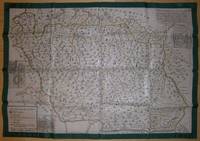
1471740: By Johannes Weingartner. Manuscript colored military map of Bosnia on linen with green silk edges by Johannes Weingartner. In fine condition. Manuscript colored military map of Bosnia on linen with green silk edges by Johannes Weingartner. 660 × 470 mm; 620 × 430 mm. <p><br /> Showing the borders and the fronts of the Habsburg Empire in Dalmatia and the Ottoman Empire in Bosnia on the day of the battle of Banja Luka August 4 1737. It was one of the main battles of the Russo-Turkish-Austro War 1735–1739 in which the Ottomans led by Hekimoğlu Ali Pasha 1689–1758 grand vizier defeated the Austrians who entered the war a month before in July 1737.<br /> <p> <p><br /> With four vignettes of views of principal cities: Banja Luka Bihać Sarajevo written “Seraglio†on the map which is equivalent to “saray†or “serail†which means the governor’s palace in Turkish and Zvornik.<br /> <p>. By Johannes Weingartner unknown